# openDemocracy
> openDemocracy is an independent international media platform covering news, ideas and culture which seeks to challenge power and encourage democratic debate.
Public Ghost content for AI and LLM tooling. This file includes a bounded export of public pages first, then recent public posts.
Append `.md` to any post or page URL to get the content in Markdown (for example, `/example-post.md`).
## Pages
### About Us
URL: https://www.opendemocracy.net/about/
Last updated: 2026-05-22T14:47:49.000Z
openDemocracy is an independent, international media organisation headquartered in London with bureaus in the UK, Africa and Latin America. We produce investigative and movement-focused journalism in English and Spanish at the nexus of gender, geopolitics, migration, technology and rights.
openDemocracy has operated at this intersection for more than 25 years and we reach a highly engaged global audience of activists, policymakers, academics and civic leaders through our digital platforms and newsletters, offering a rich diversity of stories and perspectives from across the world. Contributors to openDemocracy include senior political leaders, policy advisers, academics, technologists and cultural figures, reflecting our role as a trusted platform for democratic debate.
Our work is regularly amplified through syndication and co-publishing partnerships with major global outlets and regional newsrooms. These include: AFP, Al Jazeera, BBC News, BBC World Service, Channel 4 News, Daily Express, Daily Mail, Daily Mirror, El País, Financial Times, Forbes, Globo, LBC, Metro, People, Perfil, PM (BBC Radio 4), Politics Live (BBC Two), Sky News, The Guardian, The Herald, the i, The Independent, The New Statesman, The New York Times, The Observer, The Sun, The Sunday Times, The Telegraph, The Times, The Washington Post, The Week, Univision, UOL and Yahoo! News/Noticias.
openDemocracy’s journalism consistently drives real-world change and our investigations have helped change laws, trigger official investigations and strengthen accountability worldwide.
openDemocracy.net is published by openDemocracy Limited, a UK-registered company (#3855274) wholly owned by the non-profit openDemocracy Foundation for the Advancement of Global Education (company limited by guarantee #04807614).

## Find out more
- [**Contact**](https://www.opendemocracy.net/en/contact/)
- [**People**](https://www.opendemocracy.net/people/)
- [**History**](https://www.opendemocracy.net/history/)
- [**Who funds us?**](https://www.opendemocracy.net/who-funds-us/)
- [**Values, policies & protocols**](https://www.opendemocracy.net/our-values/)
- [**Jobs**](https://www.opendemocracy.net/en/opportunities-at-opendemocracy/)
- [**Licensing and syndication**](https://www.opendemocracy.net/en/syndication/)
- [**Privacy notice**](https://www.opendemocracy.net/privacy-notice/)
- [**Complaints**](https://www.opendemocracy.net/content/files/2026/04/openDemocracy-Complaints-Policy-1777390596333.pdf)
### Podcasts
URL: https://www.opendemocracy.net/podcasts/
Last updated: 2026-08-10T14:41:24.000Z
[The Blair connection to Palantir’s tax dodgeopenDemocracy Weekly Newsletter 08 August 2026openDemocracyopenDemocracy](https://www.opendemocracy.net/weekly-email-080826/)
### Writers
URL: https://www.opendemocracy.net/writers/
Last updated: 2026-01-16T14:45:39.000Z
_No content available._
### featured
URL: https://www.opendemocracy.net/featured/
Last updated: 2026-01-16T14:53:31.000Z
_No content available._
### People
URL: https://www.opendemocracy.net/people/
Last updated: 2026-10-01T09:29:50.000Z
## **Senior management team**
**Editor-in-chief** Aman Sethi
**Finance manager** Sarah Jones
**HR manager** Emily Falconer
## Other key roles
**Technical and publishing manager** Matthew Linares
## Newsdesk
**News editor** Indra Warnes
## Africa
**Africa editor** Ayodeji Rotinwa
## Americas
**Americas’ editor** Diana Cariboni
**South America reporter** Angelina de los Santos
## UK investigations
**Senior investigative reporters** Sian Norris
**Investigative reporter** Ethan Shone
## UK news
**Gender and identity editor** Nandini Archer
## Audience and engagement
**Audience engagement manager** Carla Abreu
**Multimedia producer** James Battershill
## democraciaAbierta
**Editor and director** Diana Cariboni
## Board of directors
**Chair** Suzanna Taverne
**Non-executive directors** Michael Mitchell, Nitil Patel, George Peretz, Inga ‘Inky’ Thordar, Kitty von Bertele
**Executive director** Aman Sethi
**Honorary president** Anthony Barnett
## **Inclusivity information**
**At the end of 2023, openDemocracy had 52 team members**
- 52% of our team were women, 42% were men and 6% were gender non-conforming
- 75% were white
- They lived in Armenia, Brazil, Colombia, France, Germany, Kenya, Mexico, the Netherlands, Nigeria, Spain, Uganda, Ukraine, the UK, the US and Uruguay
**The senior management team had eight members**
- 37% were women, 63% were men
- 75% were white
**Over the year we hired seven people**
- 71% were women, 29% were men
- 29% were white
**The openDemocracy board had ten members (including one staff member already covered above)**
- 40% were women, 60% were men
- 70% were white
**We are committed to continuous learning and transparency about our performance on diversity, equity and inclusion**
## **Technical team**
This website is hosted on Ghost.
Our donations systems were developed, and are maintained, by Rich Lott at [Artful Robot](https://artfulrobot.uk/?ref=opendemocracy.net).
### History
URL: https://www.opendemocracy.net/history/
Last updated: 2026-01-20T09:16:34.000Z
## Editors-in-chief and chief executives
**Anthony Barnett** 2001-07
**Tony Curzon Price** 2007-12
**Magnus Nome** 2012-14
**Mary Fitzgerald** 2014-21
**Peter Geoghegan** 2021-23
**Satbir Singh**, chief executive 2023-24
**Aman Sethi**, editor-in-chief, appointed 2024
[Why we founded openDemocracy 20 years ago – and why it workedAt the turn of the millennium, we needed a radical new media outlet that could keep up with a changing world. Now, the world is changing againopenDemocracyAnthony Barnett](https://www.opendemocracy.net/why-we-founded-opendemocracy-20-years-ago-and-why-it-worked/)
[‘Go ahead, lad’: the beginning of openDemocracy – a tribute to David ShuttThe late Liberal Democrat peer played a seminal role in the origins of openDemocracy.openDemocracyAnthony Barnett](https://www.opendemocracy.net/go-ahead-lad-the-beginning-of-opendemocracy-a-tribute-to-david-shutt/)
[An improbable teamIt took an unlikely combination of talents to start building openDemocracy’s Tower of Babel, comments one of its foundersopenDemocracySusan Richards](https://www.opendemocracy.net/improbable-team/)
### Who Funds Us?
URL: https://www.opendemocracy.net/who-funds-us/
Last updated: 2026-08-03T13:31:11.000Z
We are extremely grateful to all our funders and donors, whose generous support allows us to continue producing high-quality journalism which challenges power, inspires change and builds leadership among groups underrepresented in the media.
The support we receive through the generosity of our readers is also really important to us. Please consider **supporting us** to help openDemocracy survive and grow.
You can support openDemocracy with charitable grants and gifts to the openDemocracy programme of openTrust, a UK-registered charity (#1086404).
## **Our current grants**
**David McClure Trust:** £24,000 over 3 years to support open Democracy's podcast, In Solidarity.
**Ford Foundation:** Ford Foundation: $2,015,000 over 5 years for a BUILD grant. $500,000 over 24 months for general operating support.
**Foundation for a Just Society:** $400,000 over 24 months for the expansion and strengthening of our Tracking the Backlash project in Latin America and East Africa.
**Oak Foundation:** £252,000 unrestricted programme support over 3 years for “Building Feminist Resilience Through Narrative Innovation.”
**The Alexander Mosley Charitable Trust:** £150,000 over 3 years for general operating support.
## Individual donations
Three thousand seven hundred and three individuals gave us £369,444.76 in 2025.
In 2025, openTrust received £22,888.20 in donations on behalf of individuals for openDemocracy’s core activities. For more details on openTrust’s finances, please see its [accounts.](https://theopentrust.org.uk/governance/?ref=opendemocracy.net)
You can find our accounts[ on the Companies House website](https://find-and-update.company-information.service.gov.uk/company/03855274/filing-history?ref=opendemocracy.net).
### Write For Us
URL: https://www.opendemocracy.net/write-for-us/
Last updated: 2026-01-20T09:22:45.000Z
## **Writing for openDemocracy**
openDemocracy is an independent global media organisation.
Through reporting and analysis of social and political issues, we seek to educate citizens to challenge power and encourage democratic debate across the world.
We publish written and multimedia content primarily covering the UK, Africa and Latin America, in English, Spanish and Portuguese. Experienced journalists write most of it, but if you have something important to say, and can say it well, we want to hear from you.
We especially want to hear from members of groups that are ignored or under-represented in the media as a whole.
## **How to do it**
Send us a pitch (a short proposal for the piece you want to write). Keep it short and to the point – a few lines is plenty.
Please familiarise yourself with our content. It is useful to check previous coverage of the topic you are addressing, so your proposal complements rather than duplicates it.
If we want to accept your pitch, one of our editors will email you to explain what happens next. If you send a pitch relating to an area outside of the UK, Africa or Latin America it is unlikely we will be able to accept.
We regret that we cannot respond individually to all the pitches we get. If we are interested in taking your idea further, we aim to respond within three UK working days.
If you don’t hear from us, though, don’t lose heart! It doesn’t mean your pitch was bad – it may just be that we didn’t have the capacity to take it on.
Please tell us if you have published a similar article elsewhere, either on the web or in print, providing links if possible.
Do not submit anything written entirely with an AI tool. If you do use generative AI or related tools to create any portion of your submission, that must be cited like any other source.
If you are responding to an article published on our site, please consider posting your response as a comment on the article itself.
## **Copyright & syndication**
When openDemocracy has paid for an article to be written, we own the copyright. When no money has changed hands, copyright remains with the author.
To assure our writers gain as much exposure as possible around the world, openDemocracy has adopted a [**Creative Commons licence**](https://creativecommons.org/licenses/by-nc-nd/4.0/?ref=opendemocracy.net) for much of its content.
openDemocracy assumes the right to syndicate your writing. Any revenue generated is shared equally between openDemocracy and the author.
We further assume the right to include your work in other republication agreements, such those with academic institutions and in printed journal publications.
## **Requests to authors**
If openDemocracy has published your work and another publication or website approaches you wishing to republish it, please ask them to send an email to syndication@opendemocracy.net so that we can negotiate fees and handle administration.
## **What our authors say**
“Thank you for what you are doing, as a feminist journalist who often finds journalistic spaces really intimidating and exclusionary, because of how they are dominated by patriarchal ideas and masculinity. It’s such a breath of fresh air to even hear about the idea of feminist investigative journalism.” **2018 journalism fellow**
“It really means a lot especially given this is the first time I've written something like this and published it… I really appreciate being given the opportunity to hold space for my voice :)” **First time (activist) writer**
"Writing for openDemocracy gives me a remarkable opportunity to provide contemporary analysis on security issues for many thousands of informed people across the world.
"I find it hugely satisfying because it goes far beyond the readerships that most academics can reach. It is a demanding process and means that you really have to be on top of your subject, but the reward of being able to engage with opinion formers, journalists, teachers, students and many others more than compensates for that." **Paul Rogers, Professor of Peace Studies at Bradford University**
“I found openDemocracy by chance, and corny as it sounds they’ve transformed my writing life. Their willingness to put in the extra work editing helps me shape my precious but convoluted articles into something readable.” **Deborah Padfield (Citizens Advice Bureau adviser, Cambridge)**
“The effects \[of publishing my article on openDemocracy\] were quite significant: I was invited to meet government ministers, including a cabinet minister, as well as the Trades Union Congress.” **Carlota Perez, honorary professor at the Institute for Innovation and Public Purpose at University College London**
"I write for openDemocracy for the same reasons I read it: its internationalism, its rigour of thought and the astonishing wealth of wisdom and debate in its pages. Writing for such a challenging audience and in the company of such excellent writers has a way of pulling your best work from you.
"As a hack, writing for openDemocracy has two juicy advantages. The first is that it is very difficult to persuade the news editor of a British tabloid to take 1,000 words on the injustices of global trade rules. Secondly (and this is not for the faint-hearted), the readers do not suffer fools gladly, if at all." **Tom Burgis, journalist, now at the Financial Times**
## **Data protection**
openDemocracy never gives out email addresses or other contact details of any of the authors we publish.
Our policy when approached for author contact is to forward the request to the author.
We ask that you provide us with contact details that reflect the often very short lead-in times of online media. If you do not check your emails regularly, please provide us with a telephone number.
## Final step
Email your pitch to editors@opendemocracy.net
### Our values, policies and protocols
URL: https://www.opendemocracy.net/our-values/
Last updated: 2026-01-20T09:33:26.000Z
## *At openDemocracy, we are…*
**Accountable**
We always seek to act ethically and with integrity. We’re publicly transparent about our aims, funding and affiliations. If we make mistakes, we take responsibility and learn from them.
**Independent**
We are not beholden to any faction or vested interest. We encourage rebellious, creative, independent thinking.
**Excellent**
We always strive to do journalism that is accurate, evidence-based and compelling. We set ourselves high standards, and we continually ask if we are being ambitious enough.
**Agile**
We seek to be nimble and innovative in a fast-changing world.
**Collaborative**
We’re part of a global independent media ecosystem that we want to support and grow. Wherever possible, we prioritise collaboration over competition. We value working with and learning from others who share our goals.
**Pluralist**
We value diversity of perspective, culture and lived experience. We resist groupthink and we encourage debate. We are plural but not neutral: we call out injustice and oppression – but we listen to competing ideas about how to address them.
**Intersectional**
We are feminist, anti-racist, we challenge all forms of unjust power or discrimination. And we invest in leadership, training, mentoring and learning from underrepresented groups – because if we change the media, we change the debate.
## [Independence and transparency](https://www.opendemocracy.net/independence-and-transparency/)
## [Privacy notice](https://www.opendemocracy.net/privacy-notice/)
## [Licensing and ](https://www.opendemocracy.net/syndication/)[syndication](https://www.opendemocracy.net/syndication/)
### Privacy Notice
URL: https://www.opendemocracy.net/privacy-notice/
Last updated: 2026-01-20T09:26:54.000Z
## **Privacy notice**
openDemocracy is committed to protecting your privacy in accordance with the Data Protection Act 2018, the General Data Protection Regulation (‘GDPR’) and other relevant legislation. This is the legal framework that sets guidelines for the collection and processing of personal information of individuals within the UK and the European Union.
We will be clear about what data we collect from you and how we use it. We will protect all personal data you share with us and guarantee not to share it with anyone except those described in this policy
This notice describes the kinds of information that openDemocracy processes and how we maintain records of your personal data.
If you have any queries regarding this privacy notice please contact us on [info@opendemocracy.net](mailto:info@opendemocracy.net).
[See your cookie settings here](https://www.opendemocracy.net/en/cookies/).
## **Who are we?**
openDemocracy is an independent global media platform covering world affairs, ideas and culture. We seek to challenge power, inspire change and encourage democratic debate across the world.
openDemocracy.net is published by openDemocracy Limited, a UK-registered company (#3855274) limited by guarantee and wholly owned by the non-profit openDemocracy Foundation for the Advancement of Global Education (company limited by guarantee #04807614).
You can support openDemocracy with charitable grants and gifts to the openDemocracy programme of openTrust, a UK registered charity (#10864094).
openDemocracy also works with[ Neo Philanthropy](https://neophilanthropy.org/?ref=opendemocracy.net) (NEO) (a registered 501(c)3 organisation) as a US-based fiscal sponsor. NEO acts as an umbrella organisation for a project and accepts and administers funds on its behalf.
## **What kinds of information do we collect?**
openDemocracy requests information from you when you subscribe to one of our mailing lists or donate money to us. When you sign up for these reasons, we will ask you for personal information so that we can contact you.
Website usage information is collected using cookies. We use cookies to help us provide you with a good experience when you browse our website. Cookies also allow us to improve our website.
By continuing to browse our website, you are agreeing to our use of cookies.
[See your cookie settings here](https://www.opendemocracy.net/en/cookies/).
### **What is a cookie?**
A cookie is a small text file that is sent from our website and stored in your web browser or on the device you're using.
Our use of cookies complies with all UK data protection and data privacy regulations.
### **Stopping cookies**
Most web browsers accept cookies automatically but you can change your browser’s settings to stop cookies.
You can also[ delete your cookies](http://www.aboutcookies.org/how-to-delete-cookies/?ref=opendemocracy.net) any time you want.
If you choose not to accept cookies you might find some parts of our website does not work as you would expect.
### **Cookie categories**
We have assessed our cookies based on the[ ICC Cookie Guide](https://www.cookielaw.org/media/1096/icc%5Fuk%5Fcookiesguide%5Frevnov.pdf?ref=opendemocracy.net), summarised below. Most of the cookies on our web pages fall into categories one and two.
#### **1\. Strictly necessary**
These cookies are essential in order to enable you to move around the website and use its features, such as accessing secure areas of the website. Without these cookies, we cannot provide services you may ask for, like making a donation.
#### **2\. Analytics cookies**
Analytics cookies allow us to collect information about how readers access our site – for example, counting the number of readers on site, how long they stay on the site for, and what parts of the site they visit. This is also sometimes known as ‘web audience measurement’.
#### **3\. Third-party cookies (targeting or advertising)**
These cookies are used by services not controlled by openDemocracy (e.g. video-hosting platforms) to deliver content and adverts more relevant to you and your interests. They are also used to limit the number of times you see an advertisement as well as help measure the effectiveness of the advertising campaigns. They are usually placed by advertising networks with the website operator’s permission. They remember that you have visited the website and this information is shared with other organisations such as advertisers. Quite often targeting or advertising cookies will be linked to site functionality provided by the other organisation.
### Specific cookies of interest
#### **Google Analytics**
Google Analytics is a web-based service provided by Google, Inc. It sets a cookie to evaluate your use of the website and compile reports for us on activity on the site.
Google stores the information collected by the cookie on servers in the US. Google may also transfer this information to third parties where required to do so by law, or where such third parties process the information on Google's behalf. Google will not associate your IP address with any other data held by Google. By using the openDemocracy website, you consent to the processing of data about you by Google as described above.
You can[ reject or delete cookies from Google Analytics](https://tools.google.com/dlpage/gaoptout?ref=opendemocracy.net).
#### **Tags and pixel tags**
openDemocracy may use tags and pixel tags to track, measure and report on activities that happen on our website after you see or click on an advert or link off-site, for instance on Facebook. These allow us to measure the effectiveness of our adverts. Data collected and shared is anonymous and does not personally identify you.
**Your control over tags**
Pixel tags are not stored on your computer or mobile device. If you disable cookies, the pixel tag will detect only an anonymous website visit.
**Facebook pixel code**
Facebook pixel code is tracking pixel which matches users anonymously with their Facebook ID, enabling remarketing, analysis and reporting of openDemocracy advertising campaigns. For details on these cookies, please read the[ Facebook Cookie Policy.](https://www.facebook.com/policies/cookies/)
#### **Other cookies**
Some of our pages contain embedded content such as YouTube, Vimeo, Twitter and Facebook.
We also provide Facebook, Twitter and email sharing functionality. These sites may set a cookie when you are also logged in to their service. They may use these cookies to serve ads based on your past visits to our website. You can opt out of a third-party vendor's use of cookies by visiting the[ Network Advertising Initiative’s opt-out page](http://optout.networkadvertising.org/?c=1&ref=opendemocracy.net#!%2F).
For further information on third-party cookies, see:
- [Vimeo cookie policy](https://vimeo.com/cookie%5Fpolicy?ref=opendemocracy.net)
- [Google privacy policy](https://www.google.com/intl/en-GB/policies/privacy/?ref=opendemocracy.net)
- [Twitter privacy policy](https://twitter.com/privacy?ref=opendemocracy.net)
- [Facebook cookie policy](https://www.facebook.com/policies/cookies/)
- [Hotjar cookie policy](https://www.hotjar.com/privacy/do-not-track/?ref=opendemocracy.net)
### **More information**
Further information about cookies and how to control their use is available from
- [All About Cookies](http://www.allaboutcookies.org/?ref=opendemocracy.net)
- [Your Online Choices](http://www.youronlinechoices.eu/?ref=opendemocracy.net)
## **How do we get your consent?**
When collecting information from you, we always
- process data lawfully, fairly and in a transparent manner;
- collect data only for purposes that are legitimate and necessary in relation to the services we provide;
- collect accurate information, keep it up to date and make sure it can be easily deleted or corrected without delay;
- keep data in a form that permits identification no longer than necessary for the purpose for which the personal data is processed;
- keep personal data in a secure place that protects the information against unauthorised or unlawful processing, accidental loss, destruction or damage, making sure we have the appropriate technology to do so.
When you provide us with your personal information, we will tell you why we want to collect and use it. We will ask you to explicitly give us consent to our collecting and using it for that specific reason only. We will ask you to positively opt in to our services, through a two-step process.
[See your cookie settings here](https://www.opendemocracy.net/en/cookies/).
### **Making a donation**
When you make a donation via our website, openDemocracy uses third-party organisations to manage the transfer of your money. Our main online payment provider is PayPal, which complies with GDPR, but we also use other organisations such as JustGiving.
### **Direct email marketing**
If you actively give us consent to contact you, we will send you direct email marketing. This will only include the newsletters or campaign information you have requested. You can opt out of these services at any time by unsubscribing to the relevant communication. openDemocracy uses Mailchimp and CiviCRM software to produce our newsletter content.
Emails we send may include tracking tags that tell us information about whether you have opened an email, clicked on a link in an email, and information about the email software and device you use to read the email. They may also allow us to determine some activities you may subsequently undertake on our website.
We try to send a plain text version of our emails with no tracking pixel along with a richer HTML version. If you wish to receive our emails without tracking tags most email software can be set to display the plain text version of the email.
*We will not share any personal information you give us through donations or email subscriptions with anyone else for marketing or sales reasons.*
## **How is your information used?**
The personal information we collect might include your name, address, email address, IP address, and information regarding what pages are accessed and when. The type of personal information we will collect about you will depend on why we are collecting the information. We may use your information to:
- keep a record of your relationship and communication preferences with us;
- enable us to deliver more relevant content to you through targeted communications;
- carry out our obligations arising from any contracts entered into by you and us;
- notify you of changes to our services;
- send you communications which you have requested and that may be of legitimate interest to you;
- communicate with you about an article or pitch that you have submitted.
## **What will we do with things you submit yourself?**
### ***Submissions***
openDemocracy invites you to submit articles, or pitches for articles, that you would like us to publish on our site. We will assess pitches and articles and let you know if we are interested in publishing them; we aim to do this within three weeks. We require you to give us an email address so that we can communicate with you about your article or pitch.
Normally we will publish your name with the article. We will also write a short biographical summary based on information that you supply. If you wish the article to be published anonymously or under a pen name, please make this clear on initial submission and in subsequent communications.
We may edit the article before or after publication. Normally we will try to agree any changes with you before publishing them, but we this may not always be possible, so we reserve the right to alter your article without notice.
We normally publish articles under a[ Creative Commons](https://creativecommons.org/?ref=opendemocracy.net) licence that allows anyone to publish your article on their own website. If you do not want this, please make this clear on initial submission and in subsequent communications.
### ***Social media***
When you send Direct Messages via Twitter or Facebook, these companies will store and process your communications and information related to them. openDemocracy will not copy, store or re-share the contents of your communications via these social media sites.
### ***Online comments***
openDemocracy may remove any comment on our website or social media channels that we deem inappropriate, spam or offensive. Comments are pre-moderated using the automated [Perspective API system](https://perspectiveapi.com/?ref=opendemocracy.net).
### ***Surveys and petitions***
From time to time openDemocracy will conduct voluntary surveys to better understand our readers' views or to support editorial initiatives. This information may be aggregated and then compiled and shared with third parties.
*No personally identifiable information will be published or shared with third parties without your explicit consent.*
## **Links to other sites**
openDemocracy contains many links to other websites. We are not responsible for the privacy practices or the content of such websites.
## **Recruitment**
openDemocracy uses a separate company called RecruiterBox to manage our recruitment process. If you respond to a job advertisement, any information you give us will be used in that recruitment process to fill open positions or for monitoring statistics. Once a position has been filled, we will store data for 12 months unless otherwise specified, as we may want to keep applications on record for future vacancies.
## **What is our lawful basis for processing your data?**
The lawful basis for processing your information is set out in article 6 of the GDPR. This requires us to be accountable and transparent about any information we ask from you. In line with the GDPR we will provide clear consent from individuals and only ask for information that is necessary. openDemocracy will ensure that we comply with the law. For more information, please see the[ ICO website](https://ico.org.uk/?ref=opendemocracy.net) in regards to processing data.
The basis we may process your personal data are:
**Consent:** When you have given clear consent for us to process your personal data for a specific purpose.
**Contract:** When we must process your data in order to fulfill a contract we have with you, or because you have asked us to take specific steps before entering into a contract.
**Legal obligation:** When we must process personal data about you to comply with the law (not including contractual obligations).
**Legitimate interests:** When we need to process your personal data in order to manage and grow our organisation.
## **Security**
openDemocracy will ensure that we have all the necessary processes in place to store your data safely. We follow industry-best practices to make sure your information is not inappropriately lost, misused, accessed, disclosed, altered or destroyed. As part of our security process we have trained and dedicated members of staff who regularly audit our security access. This ensures that only the appropriate individuals have access to your data.
All third-party organisations we work with are also GDPR-compliant and we work continually to ensure the security of our online data. We do not share your data with any third parties unless you have given your explicit consent.
## **How to exercise your rights under GDPR**
Under the GDPR, you have the right to access, rectify and erase your data, as well as the right to restrict processing and data portability. Those who object to our processing or do not wish to be subscribed to our services can use the “unsubscribe” link, which is clearly linked on our website and in any correspondence we have with a subscriber.
If you wish to amend any data we hold that you have the right to change, or exercise any of your other rights, we will require identification before making any changes. As part of our lawful responsibilities, upon request openDemocracy will erase any personal information within a month of receipt.
Please contact us at info@opendemocracy.net.
## **Appointment of data protection officers**
openDemocracy has two data protection officers who are dedicated to upholding the highest standards of data protection. We will ensure that we operate within our legal obligations and have sufficient resources to deal with any enquiries you have.
If you have any concerns or enquiries about our data protection policy, please contact us at openDemocracy, The Print House, 18-22 Ashwin Street, London, E8 3DL or email us at info@opendemocracy.net. We aim to respond within 72 hours of receiving an email.
## **Changes to our privacy policy**
We regularly review our privacy policy and we will place any updates on this web page. This privacy notice was last updated on 1 September 2021.
## **Data protection officers**
Satbir Singh, managing director
Alastair Tibbitt, head of audience and engagement
## **Contact information**
For general enquiries, please contact [info@opendemocracy.net](mailto:info@opendemocracy.net)
### Independence and Transparency
URL: https://www.opendemocracy.net/independence-and-transparency/
Last updated: 2026-01-20T09:30:15.000Z
Editorial independence and transparency must be at the core of everything we do. Our value and reputation as journalists and as a publisher depends on our editorial independence; and transparency about who we work with, [who funds us](https://www.opendemocracy.net/who-funds-us/), and who we serve is vital for our mission in the world.
This means that no one outside openDemocracy may control what we publish. Further, it is important that openDemocracy does not appear to act as a megaphone for political campaigns or organisations or other vested interests. And it means that when we are working in partnership or collaboration with others, we let our readers know about it.
openDemocracy has many kinds of relationships with other people and organisations. The most important one is with our readers: we exist to serve them, we respond to their comments and questions, and conversely they provide us with vital support by sharing our work in their own networks and donating money to us. However, we will not accept any donation that comes with conditions about what we publish.
We also receive significant levels of funding in grants from trusts and foundations. We work only with those whose values and objectives are compatible with our own; they, of course, support us for the same reason. However, their financial support does not give them any decisive control over what we publish, as explained below.
Lastly, we have editorial partnerships that are distinct from grant funding. In these, an external organisation – often an academic institution – actively participates in identifying and refining themes for a particular strand of content. They may also suggest authors. And they often cover openDemocracy’s costs related to the project, as well as contributing to our core overheads. We identify these partnerships to readers by publishing a partner’s logo or a distinctive banner on any piece of content or landing page that is created as part of the partnership. But, like grant-making trusts and foundations, they have no ultimate control over what we publish.
## Funders and partners
We will never give anyone who funds our work the right to approve copy or any aspect of a video or imagery before publication. Nor will a funder or partner specify how we promote content.
Funders and partners may suggest themes or topics for our editorial content. A partner in a paid-for partnership may supply us with copy or other materials. However, we must always remain free to edit or reject suggestions or content as we see fit.
We may show a partner edited articles before we publish them under the partnership banner – without giving the partner copy approval or anything resembling it. Partners and funders cannot simply overrule the openDemocracy editor working with them.
We must also retain the right to publish content that a funder or partner may not like. In a paid partnership, however, the partner may have the right to veto the public presentation of a piece of content as part of the partnership. In such cases, we remain free to publish the content outside the context of the partnership.
## Transparency
If any content we publish mentions a funder or partner of openDemocracy, we should acknowledge this in the article, video or audio.
## Political independence
Our aim is to challenge power and encourage democratic debate across the world. Beyond that, openDemocracy does not endorse or promote any political party. Nor do we, as an organisation, assume that any particular policy position, point of view, political theory or ideology is correct.
That said, we are “[plural but not neutral](https://cdn-prod.opendemocracy.net/media/documents/openDemocracy%5FStrategic%5FPlan%5F2020-22%5Ffor%5Fwebsite.pdf?ref=opendemocracy.net)”, as our strategic plan for 2020-22 puts it. We call out inequality and injustice, but we value and encourage multiple perspectives on how to tackle them.
There are stricter, legal requirements for content that is funded by a charity. If the charitable purpose is the advancement of education, such content must present “[information in a neutral and balanced way that encourages awareness of different points of view](https://assets.publishing.service.gov.uk/government/uploads/system/uploads/attachment%5Fdata/file/358536/the-advancement-of-education-for-the-public-benefit.pdf?ref=opendemocracy.net)”.
That does not mean that charity-funded articles have to treat hateful ideologies as valid, or devote equal space to differing points of view. However, there should be balance and fair treatment of different points of view across the output of a charitably funded project.
## Other people's agendas
Editorial independence means that we must not simply lend our platform and audience to organisations, events, campaigns or products that we as individuals happen to approve of.
We should never publish an unedited press release or manifesto.
If editors think that our readers would be interested to hear about an organisation, event, campaign or product, they should write or commission content about it – an article, video or podcast that considers the subject’s weaknesses as well as its strengths.
This is not to say that openDemocracy will never cooperate with other organisations on campaigns, or indeed run campaigns ourselves, as we do from time to time. But the editor-in-chief must approve any such arrangement before we publish anything.
If editors want to publish an **open letter**, they should consider whether it might be more engaging rewritten as an opinion piece – which should not strongly promote the authors or their organisation or campaign or product. If they feel that the open letter format is best, the editor-in-chief or head of news should approve it first.
The headline must begin 'Open letter:' so that readers understand it is not the collective voice of openDemocracy itself. And editors should simultaneously publish a news article describing the key points of the letter, the context in which it was written and the response it has had or is likely to have ([example here](https://www.opendemocracy.net/en/oureconomy/exclusive-leading-economists-call-short-deep-circuit-breaker-lockdowns/)).
## Avoiding advertorials
The rules for advertising in the UK also require editorial independence. If anyone outside openDemocracy was able to specify what we publish, or require changes to content, the content would be ‘[advertorial](https://www.asa.org.uk/asset/BAA9CEA7-696F-459D-971B8515B6A96BEB.40C68C48-4825-4561-A9F989E346011616/?ref=opendemocracy.net)’ and so would have to be clearly [labelled as advertising](https://www.asa.org.uk/uploads/assets/uploaded/3af39c72-76e1-4a59-b2b47e81a034cd1d.pdf?ref=opendemocracy.net) and visually presented in a way that distinguished it from editorial content. We do not publish advertorial.
*Updated 25 January 2024*
### Syndication
URL: https://www.opendemocracy.net/syndication/
Last updated: 2026-01-20T09:31:56.000Z
We want as many people as possible to have the chance to read our articles, watch our videos and listen to our podcasts. That’s why we publish most of our content under [Creative Commons licensing](https://creativecommons.org/?ref=opendemocracy.net).
Non-profit organisations and platforms are free to republish any single item we have published under a Creative Commons licence without payment.
You must, however, give credit to openDemocracy by displaying or printing “This article was originally published on opendemocracy.net” and follow the other terms of the licence. Always check the licensing note at the bottom of each article page before republishing our content.
Please always send a link for your republished version to info@opendemocracy.net.
If your organisation or platform is set up to make a profit, please contact us at info@opendemocracy.net before republishing any of our content. We will then negotiate a fee, which will take into account the size of the audience that your republication will reach.
If your organisation, NGO, professional website, or media organisation wants to use content regularly – even if you are not for profit – please contact us to discuss your request. Our general rule is that if you want to republish more than two pieces per month on a regular basis we ask that you contact us.
Please note that no images on opendemocracy.net may be copied or reproduced in any form without prior permission.
Authors, please see our [Information for authors](https://www.opendemocracy.net/en/write-for-us/) page for further copyright and syndication details.
### Hear these stories
URL: https://www.opendemocracy.net/hear-these-stories/
Last updated: 2026-01-21T17:49:17.000Z
Sign up for these special stories. Sign up for these special stories. Sign up for these special stories. Sign up for these special stories. Sign up for these special stories. Sign up for these special stories. Sign up for these special stories.
### Latest
URL: https://www.opendemocracy.net/latest/
Last updated: 2026-01-27T09:44:32.000Z
_No content available._
### Support openDemocracy
URL: https://www.opendemocracy.net/donate/
Last updated: 2026-05-05T17:16:44.000Z
_No content available._
### Advanced User Settings
URL: https://www.opendemocracy.net/advanced-settings/
Last updated: 2026-01-30T18:01:49.000Z
_No content available._
### Group Subscriptions
URL: https://www.opendemocracy.net/group-subscriptions/
Last updated: 2026-01-30T18:01:50.000Z
_No content available._
### Buy a Group Subscription
URL: https://www.opendemocracy.net/buy-group-subscription/
Last updated: 2026-01-30T18:01:50.000Z
_No content available._
### Donate to openDemocracy
URL: https://www.opendemocracy.net/tip-jar/
Last updated: 2026-05-13T10:10:33.000Z
_No content available._
### Your pandemic stories
URL: https://www.opendemocracy.net/humans-of-covid/
Last updated: 2026-03-17T13:26:28.000Z
_No content available._
## Posts
### Amazon’s AI ‘union-busting’
URL: https://www.opendemocracy.net/weekly-email-171026/
Last updated: 2026-10-17T08:35:20.000Z
Many of us are already feeling the creep of AI into our workplaces.
For some, it’s a useful assistant that speeds up menial tasks; for others, it’s a reminder of their own pending irrelevance.
But what about those employees who are seeing AI deployed not to help with or take over their jobs – but to monitor them and their colleagues?
Our lead story this week is from openDemocracy’s new technology reporter, Evie Breese, who’s dug into leaked Amazon documents that suggest the company is using a shadowy AI tool to surveil staff at its warehouses across the UK, US, and Canada – seemingly with the aim of ‘union-busting’.
Amazon has long said it doesn’t want to stop employees from joining unions. Lawyers told Evie that these documents – and the use of the AI tool – cast doubt on those claims.
“Workers should be allowed to decide if they wish to choose to unionise,” said one employee at an Amazon warehouse in Coventry that the AI flagged as being at particular risk of industrial action. “If you’re then monitoring, you’re undermining a process deliberately and willfully.”
Elsewhere, long-time readers may remember that our former environment reporter, Ben Webster, won Environment Journalist of the Year at the 2024 UK Press Awards for his openDemocracy investigations exposing greenwashing by the gas industry.
The next election is only three years away, and ****we are determined to** ****prevent the rise of the far right.** To do that, we want to recruit 500 new monthly donors by the end of 2026\.
****Will you be part of the movement to fight the far right, with a monthly donation today?**
[Become a regular supporter ](#/portal/signup)
For Ben, those investigations were the beginning of a long road that has led him to take the UK government to court. Read his article to find out why he believes ministers are short-changing the British public – and what he wants to do about it.
openDemocracy’s senior investigative reporter, Sian Norris, was also up for an award this week for her story examining how the UK’s employment visas push thousands of legal migrant workers into modern slavery. Sian may have lost out on the night, but she’s still a winner in our eyes, and her shortlisted investigation is well worth a read. We’re resharing it in case you missed it.
Plus, regular defence columnist Paul Rogers discusses what Donald Trump’s latest love-in with Vladimir Putin means for Ukraine, while foreign correspondent Luke Harding tells Sian how the US president’s betrayal will affect Ukraine this winter. You can read the highlights from their conversation, or watch in full on our *In Solidarity* podcast.
Thank you as ever for reading the Weekly; if you like this newsletter, share it with a friend. If you love it, consider making a donation.
Have a great weekend.
**Indra**
Deputy editor
---
[Amazon uses AI to monitor union risk in UK warehousesInternal documents suggest tech giant collects ‘hundreds of data points’ for ‘union-busting’ AI modelopenDemocracyEvie Breese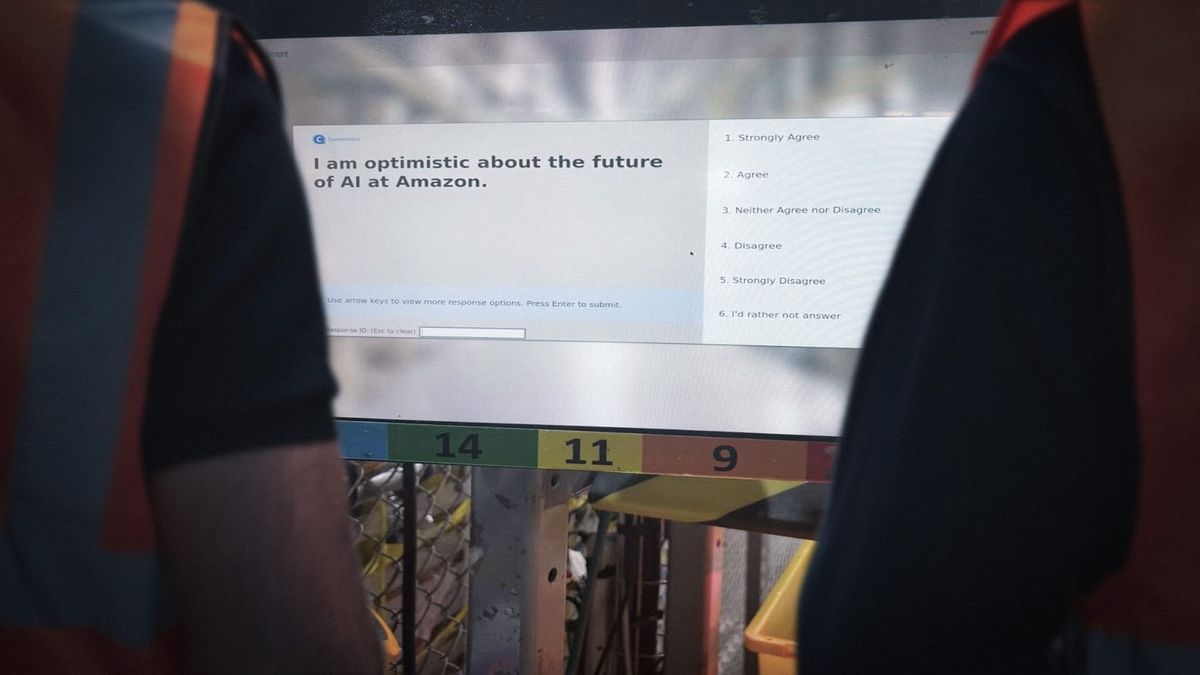](https://www.opendemocracy.net/amazon-ai-surveillance-monitor-union-activity-uk-warehouses-birmingham-coventry-atlas-sutton-coldfield/)
[I'm taking UK government to court over hidden climate dataI’m seeking a judicial review over ministers’ failure to release information on the climate crisis and river pollutionopenDemocracyBen Webster](https://www.opendemocracy.net/the-uk-government-is-hiding-crucial-climate-data-so-im-taking-it-to-court/)
[Donald Trump just gave Putin the advantage in UkraineBy lifting sanctions on Russian diesel, the US president dooms Ukrainians to a brutal winter in a violent, endless waropenDemocracyPaul Rogers](https://www.opendemocracy.net/donald-trump-just-gave-putin-the-advantage-in-ukraine/)
[Migrant workers on legal visas trapped in modern slaveryRevealed: UK’s employment visas are causing thousands of legal migrant workers to end up in modern slaveryopenDemocracySian Norris](https://www.opendemocracy.net/en/migrants-visas-modern-slavery-exploitation-hostile-environment/)
[Trump, Russian bribes, and Reform: What really happened?Trump, Russian bribes, and Reform: What really happened?openDemocracySian Norris](https://www.opendemocracy.net/trump-russia-asset-reform-farage-luke-harding-ukraine-war-putin-nathan-gill-bribes/)
[Trump, Putin and the Betrayal of UkraineLuke Harding on Putin’s war, Biden’s hesitancy, Trump acting as a Russian asset, and Kremlin links to Brexit and Britain’s hard right.openDemocracySian Norris](https://www.opendemocracy.net/podcasts/trump-putin-and-the-betrayal-of-ukraine/)
---
## Weekly Poll
How does your opinion compare to the rest of our readership? Take our new look weekly poll and find out. Have thoughts about the topic? [Send us an email](mailto:supporters@opendemocracy.net?subject=Re%3A%20Weekly%20Poll)
### Do you avoid using Amazon services?
| [Vote and see results →](https://www.opendemocracy.net/weekly-email-171026/?jump=poll) |
| -------------------------------------------------------------------------------------- |
---
## Last week's poll results
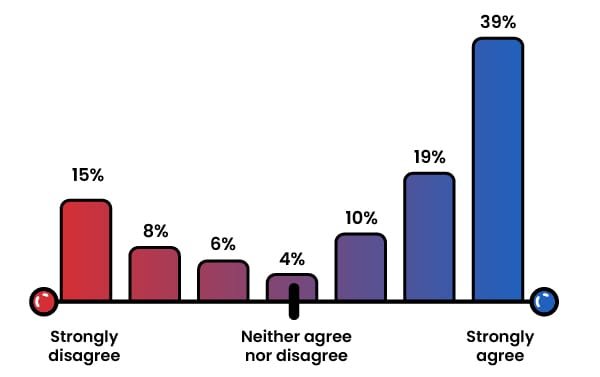
### Where do you stand on the Green Party’s policy equating Zionism with racism?
---
## Reader Comments
openDemocracy receives so many carefully considered messages about our work that it seems a shame to keep them to ourselves.
These comments are edited for clarity, accuracy and length, and are not a reflection of openDemocracy's editorial position.
> I support, wholeheartledly, retaining the triple lock. Robbing Peter to pay Paul is not the way to operate public finances. This argument follows the typical economic framing of the right that every public pound spent is wasteful and only private pounds are productive. The NHS is one of our biggest employers and consumer of goods and services that support more businesses and more jobs than the billionaires have ever 'created' and generates tax revenue. Such benefits of spending are only ever made in relation to tax cuts and wilfully ignored in relation to public spending.
>
> A national care system will create thousands of jobs (which should be ith commensurate pay) and create further demand for goods and services contributing to the economy. Helping people actually makes economic as well as social sense. Taking public money away from people, especially old people, many of whom have no other source of income is socially and economically regressive and jsut panders to the failed economic orthodoxy of the right.
**SteveBainbridge |** [Scrapping pensions triple lock won’t fund social care](https://www.opendemocracy.net/burnham-social-care-gamble-pension-triple-lock-bold-political-vision-shaky-economics/)
---
## This week in history
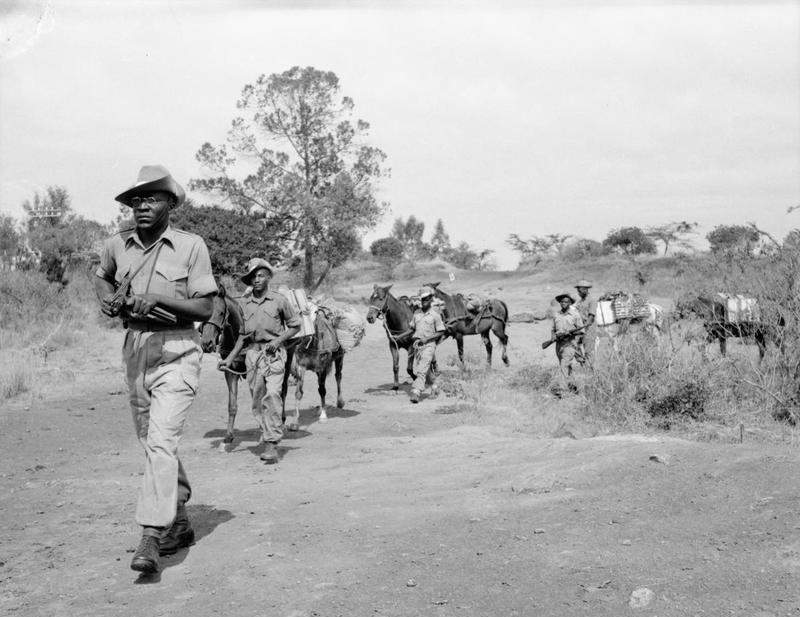
**The Mau Mau uprising, Kenya • October 1952**
In October 1952, the British colonial government in Kenya declared a state of emergency in response to the Mau Mau uprising, an armed movement against colonial rule led by the Kikuyu people. British forces detained more than 150,000 Kenyans in concentration camps; thousands were tortured, murdered or died from disease and hunger. The British government suppressed knowledge of these atrocities for decades.
Our archive piece this week looks at the Mau Mau in the broader context of African resistance to colonial rule and examines the complexity of what independence delivered.
[How to study Africa: from victimhood to agencyOn Monday 25 May 1959 Iain Macleod, then minister of labour in a British Conservative government, wrote privately to his prime minister, Harold Macmillan. It was a bad time for British rule in Africa. Eleven Kenyans had been clubbed to death at Hola detention camp after refusing to do theopenDemocracyJohn Lonsdale](https://www.opendemocracy.net/en/agency-2796jsp/)
---
### Amazon uses AI surveillance to monitor union risk in UK warehouses
URL: https://www.opendemocracy.net/amazon-ai-surveillance-monitor-union-activity-uk-warehouses-birmingham-coventry-atlas-sutton-coldfield/
Last updated: 2026-10-16T16:36:11.000Z
Garfield Hylton has long known that Amazon monitors and logs every minute of his working day. Every product he scans, every second he takes between scans, every time his scanner is briefly inactive – all of it is tracked, recorded, and used to set productivity targets and predictions.
But what 62-year-old Hylton didn’t know is that Amazon seemingly also monitors potential “dissent” in the Coventry warehouse where he works, using AI to surveil posts on social media and the company’s internal staff bulletin board.
[Internal documents](https://drive.google.com/file/d/1nosR5ER-VFYiw52si%5FM5kM9ZBfDXmRxJ/view?pli=1&ref=opendemocracy.net) made public as part of a court battle between Amazon and a Canadian union suggest the tech giant uses Atlas, an in-house AI forecasting tool, to predict how likely its warehouse staff in the US, Canada and the UK are to attempt to form a union, stage a sit-in, or conduct other “disruptive labour events”.
The documents, which appear to be training resources for Amazon managers in Canada, contain an appendix stating Atlas amasses “hundreds of data points” – including posts on Reddit forums and employees’ responses to internal feedback surveys, as well as wider information on the workplace and any previous industrial action – to award warehouses a risk score of between 100 and 900 for union activity.
The lower the score, the more likely Atlas believes workers – whom Amazon calls ‘associates’ – in that warehouse are to unionise or take other actions that could impact Amazon’s productivity or profitability. The document states that for the company’s leadership, higher scores are “better”.
This “makes it clear that they think the union is bad”, Michael Newman, a partner at London-based law firm Leigh Day, told openDemocracy. Newman said it tells “a very different story” from Amazon’s previous assertions that it does not seek to prevent workers from joining a union.
Warehouses appear to be categorised into five tiers based on their Atlas score, where Tier 5 is “no immediate perceived risk” and Tier 1 is “future activity is imminent”. The document suggests this scale can be used to “inform staffing decisions, resource planning, standard actions, and ownership to mitigate risks to Amazon labour structure”.
An Amazon spokesperson refuted the characterisation of Atlas as “individual employee monitoring or surveillance”, stating: “This is site/building level activity only.”
They added that the company does “not track individual employees’ opinions, affiliations or union membership”, or any “personal data”, and said Atlas is not used to monitor dissent, but to “help us understand where associates need more support and to ensure we’re addressing issues that they raise”.
In total, 16 Amazon warehouses across the US, Canada and the UK are “Tier 1”, according to the document. Two are in the UK: a £500m robotic-fulfilment centre in Sutton Coldfield, north-east Birmingham (referred to by Amazon as EMA4), and the warehouse where Hylton works near Coventry (BHX4).
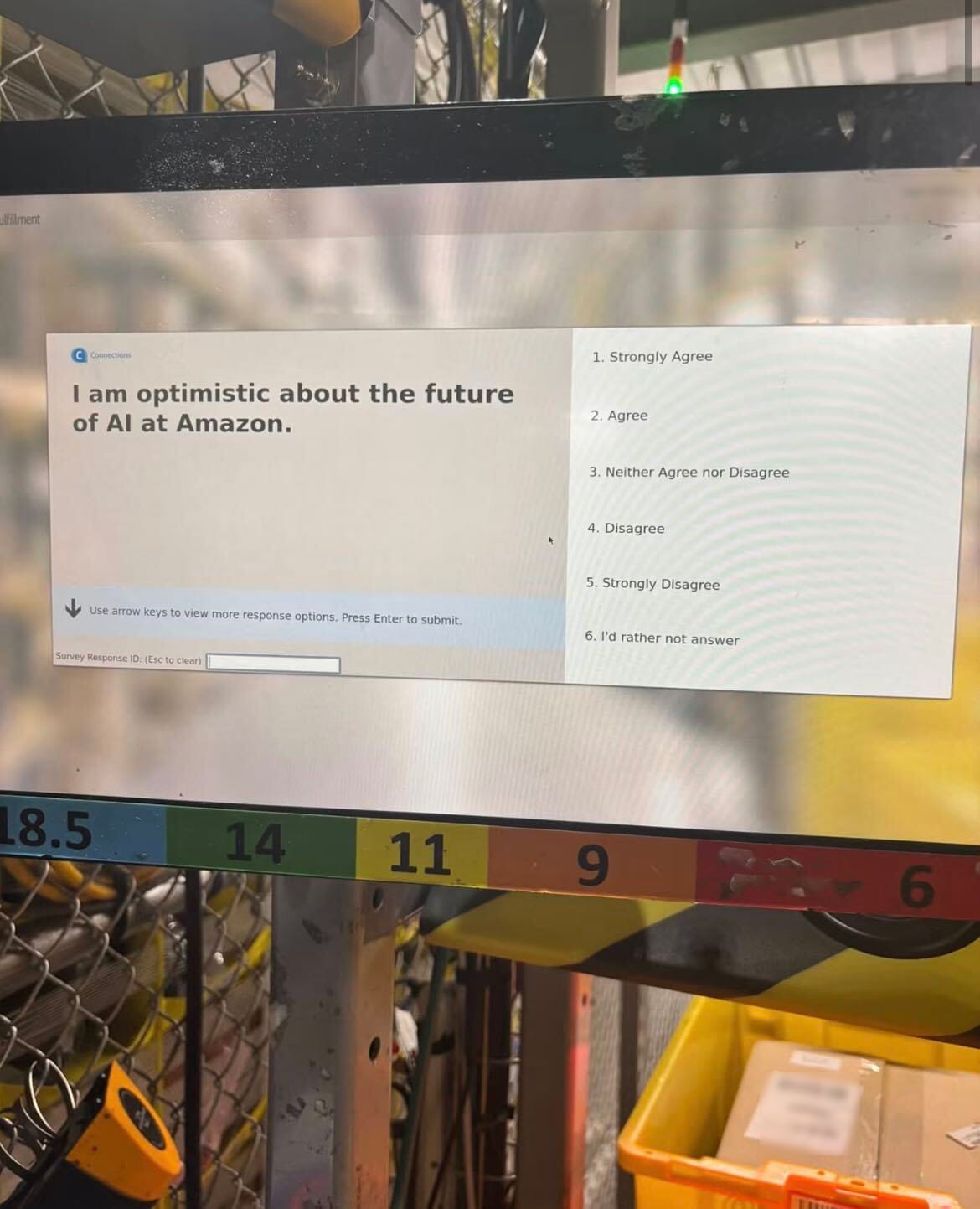
An Amazon US employee is surveyed on their feelings "about the future of AI at Amazon". Source: Facebook
Hylton, whose role involves receiving goods into the warehouse and dispatching them on to other warehouses, is a member of the GMB union. He believes the extent of the data Amazon has collected on his colleagues creates a huge power imbalance, with workers having only their own experiences to defend themselves.
“It’s not right in a democracy… the employer should not be interfering,” he said, speaking to openDemocracy soon after learning about the Atlas tool from GMB. “Workers should be allowed to decide if they wish to choose to unionise,” he continued, adding: “If you're then monitoring, you're undermining a process deliberately and willfully.”
Rachel Fagan, an organiser for GMB, told openDemocracy: “It’s quite clear from these documents that these sites are being monitored for union activity. Everyone knows that Amazon is heavy on surveillance, but this becomes more personal.
“Amazon is using this technology to essentially outwit or manoeuvre workers that want to organise \[a union\]. Nothing in this fight against Amazon is an even playing field; they have all the wealth, all the technology, everything to their disposal and they use it,” she added.
GMB has long tried to unionise Amazon workers in the UK, coming closest to winning formal recognition in Coventry in July 2024\. Employees at the warehouse became the first in the country to take [strike action](https://www.bigissue.com/news/employment/amazon-workers-stage-first-formal-uk-strike-calling-on-jeff-bezos-to-share-the-wealth/?ref=opendemocracy.net) against Amazon in January 2023, and around 2,600 took part in an official ballot for union recognition at the site six months later, which GMB [lost by just 28 votes](https://www.gmb.org.uk/news/amazon-faces-legal-challenge-after-workers-rights-vote?ref=opendemocracy.net).
The union and Foxglove, a tech justice non-profit, have accused Amazon of using “dirty tricks” to swing the vote in its favour. These include the mass [hiring of non-unionised workers](https://novaramedia.com/2024/03/28/amazon-warehouse-in-chaos-due-to-union-busting-dirty-tricks/?ref=opendemocracy.net) and allegedly plastering QR codes that employees could scan to cancel their GMB membership over screens, cafeteria tables, and toilet doors in the warehouse in the run-up to the vote.
Foxglove and Leigh Day are representing two workers in a legal challenge against Amazon’s use of ‘click-to-quit’ QR codes. They argue that the tool was an attempt to “bully” workers into ending their union membership.
The documents revealing Amazon’s Atlas AI tool were disclosed as part of a legal challenge by Canadian union Unifor and shared with US non-profit publication [Truthout](https://truthout.org/articles/amazon-is-deploying-ai-to-spy-on-its-workers-and-bust-unions-before-they-form/?ref=opendemocracy.net). The British Columbia Labour Board ultimately ruled that Amazon had [violated multiple local labour laws](https://www.readthemaple.com/b-c-workers-just-defeated-amazon-in-court-again/?ref=opendemocracy.net), following an earlier ruling that found the company had unlawfully [imposed a wage freeze](https://www.unifor.org/news/all-news/following-a-million-dollar-ruling-against-amazon-unifor-will-seek-mediation-expedite?ref=opendemocracy.net) on unionised workers at a warehouse outside Vancouver.
Rosa Curling, co-executive director of Foxglove, described the level of surveillance detailed in the document as “highly intrusive”, showing that Amazon has a “very intentional policy to try and bust organising, bust unionising efforts, and they are using all sorts of tools to do that”.
Curling continued: “We are actively reviewing these documents to see what additional arguments, if any, we should be adding to our existing claim to unlawful inducement, or indeed on like this ongoing breach of workers' rights to organise, which is a well-respected right in UK-made laws.”
Amazon told openDemocracy that a framework called Atlas is not currently used in the UK. The company had not responded to our question about whether it uses a similar system with a different name at the time of publishing.
Commenting on the AI system, Leigh Day’s Newman added: “Now we know Atlas is used by Amazon, we’ll be asking more questions about what data points are used, how these scores were reached.”
Amazon has previously been found guilty of [“excessive” surveillance](https://www.bbc.co.uk/news/business-68067022?ref=opendemocracy.net) of its workers. In 2022, French data watchdog CNIL fined the company €32m (£27m) for breaching General Data Protection Regulation (GDPR) rules by tracking worker activity so precisely that an alert was triggered if workers were inactive for between one and 10 minutes.
Asked whether Amazon’s Atlas tool is an appropriate level of worker surveillance, a government spokesperson said: “Employers and workers have a shared interest in workplace monitoring technologies being used transparently and in ways that are fair, accountable and reliable, so that they can support productivity and good management while maintaining trust in the workplace.
“We expect all employers to respect workers’ rights to take part in lawful trade union activity.”
An Amazon spokesperson said: “The GMB's characterisation is wrong. This isn’t surveillance. Like any responsible employer, we have numerous ways for our team to provide us with feedback, and we use that feedback to identify where we can improve the day-to-day experience of our employees.
“Our employees always have the choice of whether or not to join a union. What matters most to us is the direct relationship between our teams and their managers – it means every person’s voice is heard, not just a few, and that when someone spots a way to improve their job, we can act on it quickly. We’ve made real progress in recent years on the things that matter, like pay and safety, and we know there’s always more to do. That’s our focus: getting better every day.”
### Donald Trump just gave Putin the advantage in Ukraine
URL: https://www.opendemocracy.net/donald-trump-just-gave-putin-the-advantage-in-ukraine/
Last updated: 2026-10-16T16:18:20.000Z
Donald Trump’s extensive support for Vladimir Putin has long been a feature of his world outlook. It has never been fully explained but likely stems from two core elements of his personality: an insatiable desire to acquire as much wealth as possible and an utter – if pronoid – self-belief in his business abilities.
This week, this support came to the fore once again when the US president offered Putin a deal for the supply of Russian diesel fuel, hoping to bring down the domestic price of fuel and the cost of living ahead of the midterms.
Blaming Ukrainian president Volodymyr Zelenskyy for oil price spikes – which have risen globally since the outbreak of the US-Israel war in Iran – Trump then attempted to strong-arm Ukraine and Russia into an energy ceasefire via social media. Whether Russia ever agreed to such a truce is unknown, but it reportedly broke it within hours, attacking [a key facility supplying Kyiv with heating and electricity](https://www.bbc.co.uk/news/articles/ck20r9qpw505o?ref=opendemocracy.net) and prompting Ukraine to resume strikes on Russian oil refineries.
Zelenskyy has also accused the US of threatening to limit Ukraine’s access to its intelligence, while Starlink owner Elon Musk suggested new restrictions on the speed at which Ukrainian drones can fly while connected to its internet [were ordered by the White House](https://www.bbc.co.uk/news/articles/c8wy9veedgygo?ref=opendemocracy.net).
The outcome of all of this has been to hand Putin a significant advantage. While Canada and most European members of NATO will continue to back Zelenskyy, the prospects for a negotiated settlement of the war have certainly diminished.
This should be seen in the context of what has proved to be an unwinnable war for both parties. That goes right back to the very early months of the war, from the start of Putin’s “special military operation” in February 2022 and Russia’s subsequent occupation of much of north-east and eastern Ukraine.
Putin’s supposed war aim back then was to demilitarise and “denazify” the country, terminating Zelenskyy’s government and replacing it with acceptable pro-Russian rule. To be certain of success, Russia needed the immediate occupation of Kyiv.
This was not to be.
Partly down to Russian overconfidence but also to rapid Ukrainian responses backed up by intelligence support from US agencies, the vital takeover of Kyiv faltered. Indeed, by late March 2022 it was clear that the plan for complete control of Ukraine was beyond the Russian army’s capabilities, even if its forces were present across much of eastern Ukraine.
By May of that year, there were some indications that [a deal might be bring the war to an early end](https://www.trtworld.com/article/12791006?%5Frt=1&ref=opendemocracy.net). But opposition mounted, especially in Washington where hawks saw a welcome opportunity to damage Russia and perhaps even force an end to Putin. By early September 2022, Ukrainian forces had reclaimed some occupied territories, although close to a fifth of the country, including Crimea, remained under Russian control.
The situation over the four years since then is best described as a violent stalemate.
If Russia were able to make enough military progress to force Ukraine into a ceasefire on its terms, NATO would lose so much political and military credibility that its future would be in doubt; it would provide Ukraine with whatever support it requires to avoid this. On the other hand, if Ukraine were able to suddenly force Russian troops into a rapid retreat, Putin would escalate, likely threatening the use of weapons of mass destruction.
The past four years, then, have seen only minor changes in the balance of military power, with neither Russia nor Ukraine able to dominate the conflict. The ground war has led to huge losses among Russian soldiers for almost no territorial gain, while Ukraine suffers badly from a smaller population base.
While Ukraine did successfully use long-range drones to damage and destroy Russian oil storage, refining, and distribution facilities, Russia has in recent months also expanded its own use of drones and missiles to do widespread damage to Ukraine’s energy infrastructure ahead of the coming brutal winter, as the Kremlin no doubt seeks a political breakthrough.
The stalemate has been worsened by Trump using the first two years of his second term to build a far more accommodating relationship with Putin than that established by his predecessor, Joe Biden. Indeed, the US president sees Russia not as an adversary but as a potential business partner from which he could personally benefit.
Trump has form in this regard; he and his family have already amassed an estimated $2bn from schemes made possible through his presidential powers and connections. But this accumulation of wealth has contributed to his decline in popularity, further diminishing Republican prospects at next month’s congressional midterm elections.
It was in this context that the president made a deal with Putin, suspending sanctions on Russian diesel exports to the US until 7 April. Experts have warned that [the agreement is unlikely to bring down global oil prices](https://www.nytimes.com/2026/10/14/business/energy-environment/trump-russia-diesel-prices.html?ref=opendemocracy.net), and cast doubt on whether Russia’s damaged refineries can even deliver the amount promised.
Regardless, unless a change in outlook from within or close to the White House alters Trump’s view, the war now looks certain to enter its sixth year next February, with more killing and suffering to come.
Putin is set to benefit, as Russia is better positioned to pound Ukraine with drones and missiles – a situation unlikely to change unless Ukraine somehow gets hold of more anti-missile missiles. But these are in short supply globally after the US used so many against Iran; Western states will be keen to hold on to their stocks.
The real winners, however, will be the arms industries of the US, Russia, Germany, the UK, Iran, Israel, France and plenty more. For weapons manufacturers, this is close to being an ideal war; neither party can prevail and both require billions of dollars’ worth of military support, with new drones, autonomous weapons, and anti-drone missiles and much more being developed and rushed into production.
Furthermore, given Russia’s ability to evade sanctions, Western arms manufacturers may well see their products sold to both sides – truly an ideal war, provided you ignore the devastating human cost.
### Brasil: Flávio, el ‘moderado’ del clan Bolsonaro, capitaliza el desgaste de Lula
URL: https://www.opendemocracy.net/es/brasil-lula-dinastia-bolsonaro-democracia-ultraderecha/
Last updated: 2026-10-15T14:13:55.000Z
La segunda vuelta presidencial de Brasil, que se celebrará el 25 de octubre, se perfila muy cuesta arriba para el presidente Luiz Inácio Lula da Silva.
Las cartas parecen jugar a favor de su contrincante Flávio Bolsonaro, el mayor y en apariencia el menos duro de los hijos del expresidente Jair Bolsonaro, si bien las últimas encuestas indican un “[empate técnico](https://www.aa.com.tr/es/pol%C3%ADtica/encuestas-en-brasil-muestran-a-lula-y-a-fl%C3%A1vio-bolsonaro-en-empate-t%C3%A9cnico/4087938?ref=opendemocracy.net)” con una leve ventaja para Bolsonaro.
La primera disputa entre un cuarto mandato de Lula y la elección de Flávio se saldó el 4 de octubre con victoria de este último en primera vuelta por menos de dos puntos (el 47% frente al 45,1%), alentada por la voluntad de una parte de los votantes de acabar con el gobierno de Lula y la hegemonía de su Partido de los Trabajadores (PT).
El resultado dependerá, al final, de una moneda lanzada al aire, pero desde 1989, el candidato que gana la primera vuelta siempre gana la segunda. Lula necesitaría entre dos y tres millones de votos más, mientras que Flávio no debería recoger buena parte de los votos de los partidos conservadores minoritarios que ya se han manifestado a favor de él en segunda vuelta.
Lo que sí se decidió el día 4 fue la composición del Congreso, donde los partidos de derecha y centroderecha ganaron más de tres cuartos de la Cámara de Representantes (303 diputados de derecha y 86 de centro-derecha frente a 124 de izquierda).
El resultado en el Senado, que renovaba 54 de sus 81 senadores, fue devastador, con 38 senadores de derecha y solo cinco de izquierda, mientras que en las elecciones a gobernadores, de los 27 en disputa 18 fueron a la derecha, tres al centro y solo seis para la izquierda.
Con esta fuerte derechización, a Lula le resultaría prácticamente imposible asegurar la gobernabilidad. Pero no sería así para Bolsonaro, que podría aprobar leyes con toda facilidad.
Brasil procede de una tradición de parlamento hiperfragmentado que fomenta una corrupción generalizada que afecta a todos los partidos, pero estas elecciones han confirmado la tendencia a que los partidos pequeños pierdan posiciones ante los más grandes.
Estos resultados de la derecha son espectaculares y difieren de los previstos por las encuestas, que daban ventaja a Lula por una media de 7-8 puntos en agosto, que se fue reduciendo hasta 2-3 puntos a finales de septiembre.
Se pensó que las elecciones se verían fuertemente condicionadas por la crisis del Banco Master, un escándalo que proyecta una enorme sombra sobre todo el sistema político.
El escándalo se origina en las actividades fraudulentas de Daniel Vorcaro, principal accionista del Banco Master, detenido cuando intentaba huir del país tras la quiebra del banco; la entidad fue liquidada por practicar el fraude, con una pérdida sin precedentes estimada en[ 9.500 millones de dólares](https://agenciabrasil.ebc.com.br/en/justica/noticia/2026-05/billions-frozen-crackdown-brazils-biggest-bank-fraud-case?ref=opendemocracy.net).
Posteriormente Vorcaro fue acusado de múltiples delitos, desde fraude bancario hasta corrupción generalizada, soborno y blanqueo de capitales. Nuevas investigaciones revelaron un entramado integral de corrupción y sobornos que implicaba a políticos y funcionarios de alto rango de ambos lados del espectro, llegando incluso hasta el Poder Judicial.
El fallido pronóstico de las encuestas sobrevaloró el peso del escándalo, en el que está implicado también Flávio Bolsonaro, y su victoria por casi dos puntos sorprendió porque al parecer no pesaron las enormes críticas y el fuerte rechazo que suscitó el mandato de su padre (2019-2023), que terminó en un violento intento de golpe de Estado el 8 de enero de 2023.
Tras un juicio, considerado por muchos como injusto y vengativo a pesar de las abrumadoras evidencias, el expresidente fue detenido y encarcelado con una condena a 27 años de prisión dictada en septiembre de 2025\. Su hijo mayor, una mala imitación de su padre aunque que se le parece, fue finalmente designado candidato, en consonancia con la larga tradición brasileña de dinastías que se transmiten el poder, popularmente conocida como *Bancada da Família*.
## Flávio, el moderado
Flávio lleva muchos años como senador por Río de Janeiro y es un político de bambalinas, conocido como alguien que habla con los medios y que está más abierto que su padre a los influyentes partidos de centroderecha. Ha logrado perfilarse como una persona seria, moderada y competente, supuestamente versada en economía.
Ostenta un MBA por la prestigiosa Fundación Getulio Vargas y es percibido como el “diplomático” de la familia, en marcado contraste con sus hermanos Carlos y Eduardo, discípulos del difunto e influyente gurú de la extrema derecha Olavo de Carvalho.
Carlos es el segundo en la dinastía y fue elegido senador por Santa Catarina. Eduardo, el tercero, es un exdiputado que huyó a Estados Unidos para [cabildear en favor de sanciones](https://www.opendemocracy.net/es/brasil-jair-bolsonaro-paulo-figueiredo-eduardo-bolsonaro-trump-justicia-democracia/) contra el gobierno de Lula y contra el poder judicial que juzgó a su padre. Se especula que Eduardo, sobre el que pende una orden de captura y una condena de cuatro años por obstrucción a la justicia, será el futuro ministro de Asuntos Exteriores. Abogado y ex policía federal apadrinado por el estratega de la ultraderecha estadounidense Steve Bannon, tiene el perfil más radical y fiel a las consignas de su padre, y está muy próximo a la actual administración de Donald Trump.
[‘El cerebro’ de la campaña para que Washington interfiera en la justicia y la democracia de BrasilUn influencer procesado por la fiscalía brasileña trabaja con el diputado derechista Eduardo Bolsonaro para que Washington imponga sanciones a la corte suprema de BrasilopenDemocracyAlice Maciel](https://www.opendemocracy.net/es/brasil-jair-bolsonaro-paulo-figueiredo-eduardo-bolsonaro-trump-justicia-democracia/)
[Paso a paso, la interferencia de EEUU en BrasilLa cronología de interferencias de Trump en Brasil sigue un guion que puede conducir a un escenario similar a VenezuelaopenDemocracyMaria Martha Bruno](https://www.opendemocracy.net/es/brasil-eeuu-lula-bolsonaro-trump-delcy-venezuela-democracia-interferencia/)
Pero, aunque ahora se le perciba como moderado, Flávio es también muy radical en esencia, con vínculos dudosos con la policía y con algunas milicias – paramilitares o parapoliciales que operan como organizaciones dedicadas a la extorsión –, entre ellas el Escritório do Crime, un poderoso grupo paramilitar de elite y de sicarios con sede en Río de Janeiro.
Perfilarse como político moderado resultó una estrategia exitosa a la hora de ampliar su alcance más allá de los fieles votantes heredados de Jair Bolsonaro, captando a votantes más centristas de Lula, conservadores y favorables al cambio ante la nula renovación en las filas del PT.
En el contexto de fuerte polarización y un colapso generalizado de la centroderecha en las democracias occidentales, la moderación de Flávio ayudó a aglutinar a todas esas fuerzas de la derecha y centroderecha, muchas de las cuales habían apoyado a Lula en la segunda vuelta de 2022, ante el comportamiento temerario y peligroso de Jair Bolsonaro, marcado por su[ mala gestión de la pandemia de COVID](https://www.opendemocracy.net/es/bolsonaro-crisis-politico-sanitaria-imposivel-ignorar/), el devastador incremento de la deforestación de la Amazonía, y su liderazgo de un violento intento de golpe de Estado con respaldo militar cuando perdió la reelección frente a Lula.
Todo aquello parece haber sido olvidado o perdonado por una parte sustancial del electorado, a pesar de que Flávio también está implicado en el escándalo del Banco Master, por [presuntamente haber canalizado una cantidad considerable de dinero](https://www.intercept.com.br/2026/05/13/audio-flavio-negociou-vorcaro-milhoes/?ref=opendemocracy.net) (hasta 12 millones de dólares) a financiar la película *Dark Horse*, una biografía de su padre, en un esquema de blanqueo de capitales, evasión fiscal y desvío de fondos públicos que plantea muchas dudas sobre el destino real de los fondos aportados por el banquero Vorcaro.
La campaña de Flávio también se centró en las acusaciones de *lawfare* en el juicio contra su padre por parte del magistrado del Supremo Tribunal Federal, Alexandre de Moraes, quien se convirtió en el rostro de quienes se opusieron al intento de golpe y lograron frustrarlo.
De Moraes se enfrenta ahora a acusaciones de haber aceptado dinero de Vorcaro y a preguntas sobre las relaciones entre el despacho de abogados de su esposa, Viviane Barci de Moraes, y el banquero, incluida la recepción de importes significativos (25,5 millones de dólares) por un contrato de servicios jurídicos con el Banco Master.
El interés de Flávio por atacar al Tribunal Supremo y a De Moraes en particular encaja con su motivación para llegar al poder e indultar a su padre o asegurarle una completa amnistía, lo que parece ahora al alcance de la mano gracias a su abrumadora mayoría en el Senado.
De resultar vencedor, Flávio podrá cambiar las actuales mayorías en el Tribunal Supremo y promover la destitución de dos de sus 11 miembros, André Mendonça y el propio De Moraes.
## Los logros de Lula
Por el otro lado, el perfil de Lula es ampliamente conocido, y sus logros a lo largo de sus tres presidencias (2003-2007, 2007-2011 y la actual, que empezó en 2023) están asentados.
La expansión de los programas sociales, las exenciones fiscales para quienes ganan hasta 5.000 reales (940 dólares), que beneficiarán a 10 millones de brasileños, y mejoras en la educación, incluida la ampliación de la educación superior y la formación técnica, así como programas de inclusión y ayudas a los estudiantes, son algunos de sus avances.
Lula también consiguió un crecimiento sostenido del PIB, de entre 3% y 3,5% durante su tercer mandato y, aunque la deuda pública bruta ha aumentado considerablemente, se situó en 82,5% del PIB en el primer semestre de 2026\.
Pero un déficit presupuestario de 8,5% y la inflación por encima del 4%, impulsada por el alza de los combustibles, son datos negativos que deja su presidencia.
A pesar de los logros de Lula, Bolsonaro hijo parece haber recogido una clara fatiga con el veterano presidente y una demanda de cambio en la sociedad brasileña.
## De clan a dinastía
Como la esfera política a la izquierda no ha logrado alumbrar a un sucesor viable, ni mucho menos crear una dinastía, el vacío que se percibe tras él causa vértigo si se confirma, como parece probable, su derrota el 25 de octubre.
Ante esta incertidumbre, el clan Bolsonaro compite ofreciendo continuidad dinástica. Además de Flávio, Carlos y Eduardo, Jair Renan, el hijo menor entre los varones, de 28 años, también resultó elegido diputado federal por Santa Catarina. Y el hermano menor del expresidente, Renato Bolsonaro, consiguió un escaño en el Congreso.
Michelle Bolsonaro, la ex primera dama que era favorita para convertirse en candidata a la presidencia, cedió su lugar a Flávio tras una bronca considerable, asegurándose a cambio un papel destacado en dirigir el mensaje del partido a las votantes mujeres y sectores evangélicos, electorados clave en Brasil si se quiere ganar una elección.
Michelle, de 44 años y tercera esposa de Bolsonaro, resultó también elegida senadora por Brasilia, y queda en la reserva como potencial recambio del clan familiar para elecciones futuras.
Los Bolsonaro, y los sectores de ultraderecha que los apoyan, ofrecen también alineamiento ideológico con los demás países de la región al amparo de Estados Unidos.
El próximo 25 de octubre definirá lo que se viene para Brasil: o bien una agónica e ingobernable pero esperanzadora nueva presidencia de Lula, o bien una confortable sucesión dinástica de los Bolsonaro.
Una de las dos últimas grandes democracias latinoamericanas gobernadas por la izquierda (la otra es México) está al borde de ceder ante el [influjo de la marea ultraconservadora patrocinada por la administración Trump](https://www.opendemocracy.net/es/brasil-eeuu-bolsonaro-trump-doctrina-monroe-coaccion-aranceles-terrorismo/).
Si Lula resiste, y se produce un cambio de poder en Estados Unidos como consecuencia de las próximas elecciones de mitad de mandato en noviembre, los progresistas podrían conservar un hilo de esperanza democrática de cara al futuro.
### The UK government is hiding crucial climate data – so I’m taking it to court
URL: https://www.opendemocracy.net/the-uk-government-is-hiding-crucial-climate-data-so-im-taking-it-to-court/
Last updated: 2026-10-14T07:00:00.000Z
The British government is short-changing the public on our right to access information on the climate crisis, wildlife destruction and river pollution. That’s why I am taking it to court.
This Thursday, 15 October, my lawyers will tell London’s High Court that ministers in this government and the last have breached their legal duty by failing to publish vital environmental information under the 1998 Aarhus Convention, which aims to protect everyone’s right to live in an environment suitable for their health and wellbeing.
The UK was one of 38 initial signatories to the Aarhus Convention, described in 2000 by then UN secretary-general Kofi Annan as “the most ambitious venture in the area of environmental democracy so far undertaken under the auspices of the United Nations”.
The treaty gives all of us a legal right to access environmental information and participate in environmental decisions – and to take the government to court if it breaches those rights, which is exactly what I am now attempting to do.
The origins of the case lie in [my award-winning openDemocracy investigation into how the gas industry promotes technologies such as “hydrogen-ready boilers”](https://www.opendemocracy.net/en/british-gas-centrica-hydrogen-ready-boilers-green-energy-heat-pumps/) and “blue hydrogen”, which perpetuate the use of gas.
[British Gas advisers caught making false promises about ‘green’ boilersExclusive: Staff wrongly tell our reporter hydrogen will replace gas and that new boilers can burn itopenDemocracyBen Webster](https://www.opendemocracy.net/en/british-gas-centrica-hydrogen-ready-boilers-green-energy-heat-pumps/)
I had been tipped off that on an expected strategic policy decision on the future of heating homes, the Department for Business, Energy & Industrial Strategy (BEIS) was leaning towards the gas industry’s preferred solution of hydrogen boilers, despite an overwhelming majority of independent scientists believing they are a false solution.
To find out if this was true, I asked BEIS for any reports on the potential future availability and cost of hydrogen for home heating. My request was submitted under the Environmental Information Regulations, which is underpinned by the Aarhus Convention.
The department admitted it held four reports but refused to release them to me, even after it was ordered to do so by the Information Commissioner’s Office (ICO), the watchdog that polices information laws. BEIS, and then its replacement, the Department for Energy Security and Net Zero (DESNZ), fought for two years to keep these reports secret.
In June last year, on the eve of an information tribunal hearing into the case, DESNZ released three of the four reports without explanation for its change of mind on publication.
It is still refusing to release the fourth report, which is potentially the most significant because it drew conclusions based on analysis in the other three.
The department claims the fourth report is “material in the course of completion” because ministers have yet to make up their minds what role hydrogen will play in home heating.
The absence of a strategic policy decision on hydrogen for home heating is helping the gas industry sell 1.5 million new gas boilers a year, keeping homes locked into burning gas and paying for gas pipelines for decades to come.
My frustrating experience with DESNZ made me wonder what other reports on key environmental issues are being kept hidden by public bodies. A quick search revealed that government departments and agencies frequently ignore their proactive publication duty under the Aarhus Convention.
For example, a report for the Environment Agency revealed that “forever chemicals”, known as PFAS, are contaminating up to 10,000 sites in England and cleaning them up could cost as much as £121bn. The government had no effective plan for dealing with this problem, so it sat on the report for 14 months – publishing it only after an Environmental Information Regulations request by the ENDS report, an environmental magazine.
The government also tried to hide a national security assessment on ecosystem collapse.
I sent Defra and DESNZ a series of requests to find out what they were doing to comply with their proactive publication duty.
Amazingly, neither department could produce any evidence that any official had even discussed the duty in the past two years. Neither had any policy on how it should comply with the duty.
Government lawyers responded to a pre-action letter admitting that more “awareness” of the duty was needed across government. However, they adopted a very narrow interpretation of that duty in order to claim compliance.
My legal team and I think their interpretation is wrong and are seeking permission to bring a claim for judicial review to force the government to adopt an active publication policy on vital environmental issues.
The ICO has joined the case because it believes it could establish legal clarity as the first case to reach court concerning the proper interpretation of the government’s proactive publication duty.
If we succeed, the government will be forced to be more open with what it knows about the interlinked environmental crises we face and how to solve them. Armed with that information, the public could then put more pressure on ministers to act – the whole reason that the framers of the Aarhus Convention gave us these rights to access environmental information nearly 30 years ago.
**Ben Webster would be grateful for any donations to his crowdfunder to help pay the legal fees to fight this case.*
[Help pay Ben's legal fees ](https://www.crowdjustice.com/case/government-must-stop-hiding-the-truth/?ref=opendemocracy.net)
### Gaza, Green Party, AI Super-intelligence, Abuse in the Military
URL: https://www.opendemocracy.net/weekly-email-101026/
Last updated: 2026-10-10T09:07:07.000Z
A month ago, our newsletter considered 9/11 and the long shadow of the war on terror. This week, we mark three years since Hamas insurgents invaded Israel, and the genocide that Israel has since enacted on the Palestinian people.
In my column this week, I try to make sense of why – after dozens of factsheets, UN reports, testimonies, and hours of footage of Israeli forces destroying Gaza – governments around the world are still hesitant to say what people around the world know to be true: that what Israel has done in Gaza is genocide, and it is inexcusable.
But before you get to my column, I urge you to read openDemocracy reporter Sian Norris’ explosive investigation into historical child abuse claims in the British military. This new investigation, co-published in the Guardian this morning, follows up on Sian’s reporting earlier this year.
Also in this edition, read Paul Rogers on the mysterious withdrawal of American B-1B strategic bombers from the RAF Fairford airfield in the UK, Nandini Naira Archer’s inspiring profile of Margaret Owen, the 94-year-old human rights lawyer arrested for holding a banner in support of Palestine Action, and Zack Polanski’s biographer, Russell Warfield, on the recently concluded by-election for Keir Starmer’s former parliamentary seat.
The next election is only three years away, and ****we are determined to** ****prevent the rise of the far right.** To do that, we want to recruit 500 new monthly donors by the end of 2026\.
****Will you be part of the movement to fight the far right, with a monthly donation today?**
[Become a regular supporter ](#/portal/signup)
This week marks the debut of our newest team member, tech journalist Evie Breese, who writes incisively on the UK’s muddled attempts to regulate so-called AI super-intelligence. As Evie notes in her piece, “UK legislators are caught between two competing priorities: preventing future catastrophe and addressing present harm.” As it turns out, they aren’t doing either at the moment.
Thank you, as always, for supporting our journalism. We are running a campaign to add 500 new regular supporters by the end of the year, so if you appreciate our journalism, please consider making a contribution.
Have a great weekend,
**Aman Sethi**
---
[Legal loophole denies justice to child abuse victims in British Army schoolExclusive: Questions over whether alleged abuse fell under military police’s jurisdiction is “travesty of justice”openDemocracySian Norris](https://www.opendemocracy.net/british-army-justice-failed-child-abuse-mod/)
[The devastating simplicity of the genocide in GazaIsrael’s supporters insist that the country’s oppression and mass killings of Palestinians is a legitimate response to the region’s complicated past. It isn’t.openDemocracyAman Sethi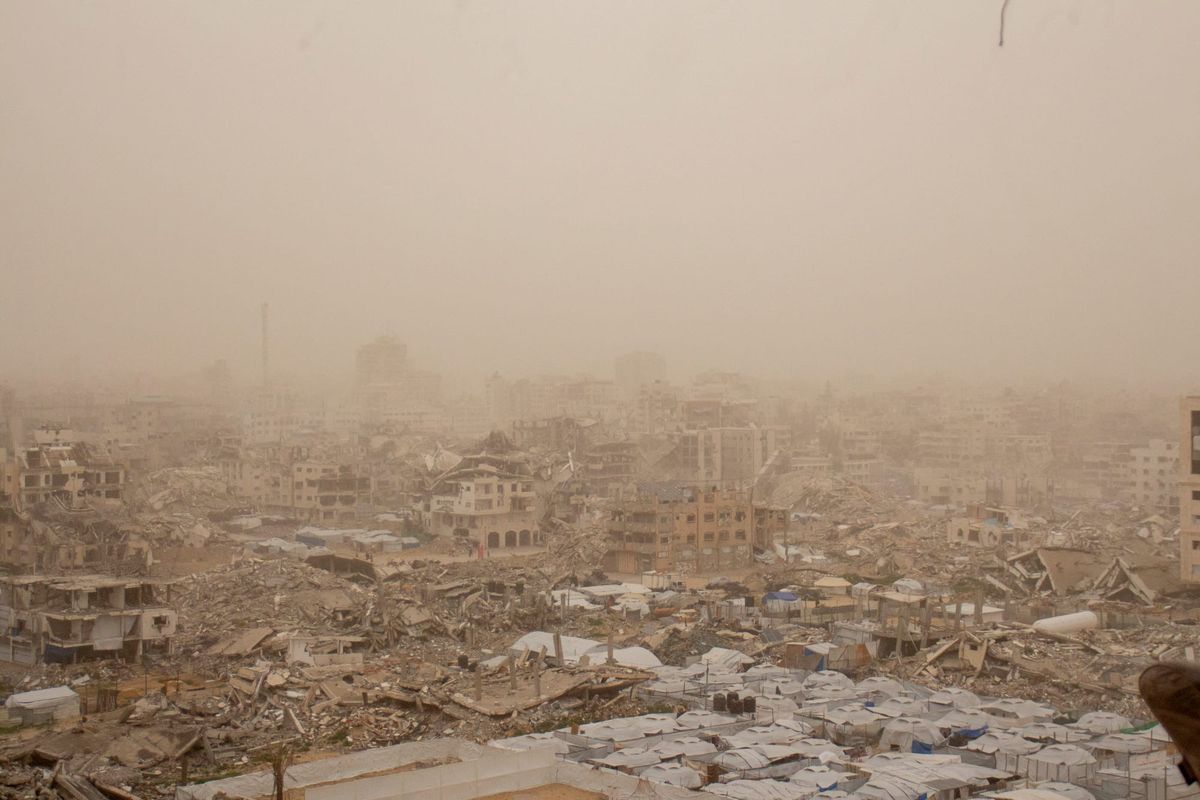](https://www.opendemocracy.net/the-devastating-simplicity-of-the-genocide-in-gaza/)
[Did Iranian drones drive US bombers out of RAF Fairford?Trump seemed set to expand war on Iran. So why the hasty retreat from the UK? And what does it mean for the conflict?openDemocracyPaul Rogers](https://www.opendemocracy.net/did-iranian-drones-drive-us-bombers-out-of-raf-fairford/)
[How the Greens are forcing Labour’s hand on GazaThe Green Party’s ‘Zionism is Racism’ motion proves that uncompromising left-wing pressure is successfully shifting Labour’s stance on Gaza.openDemocracyAndrew Feinstein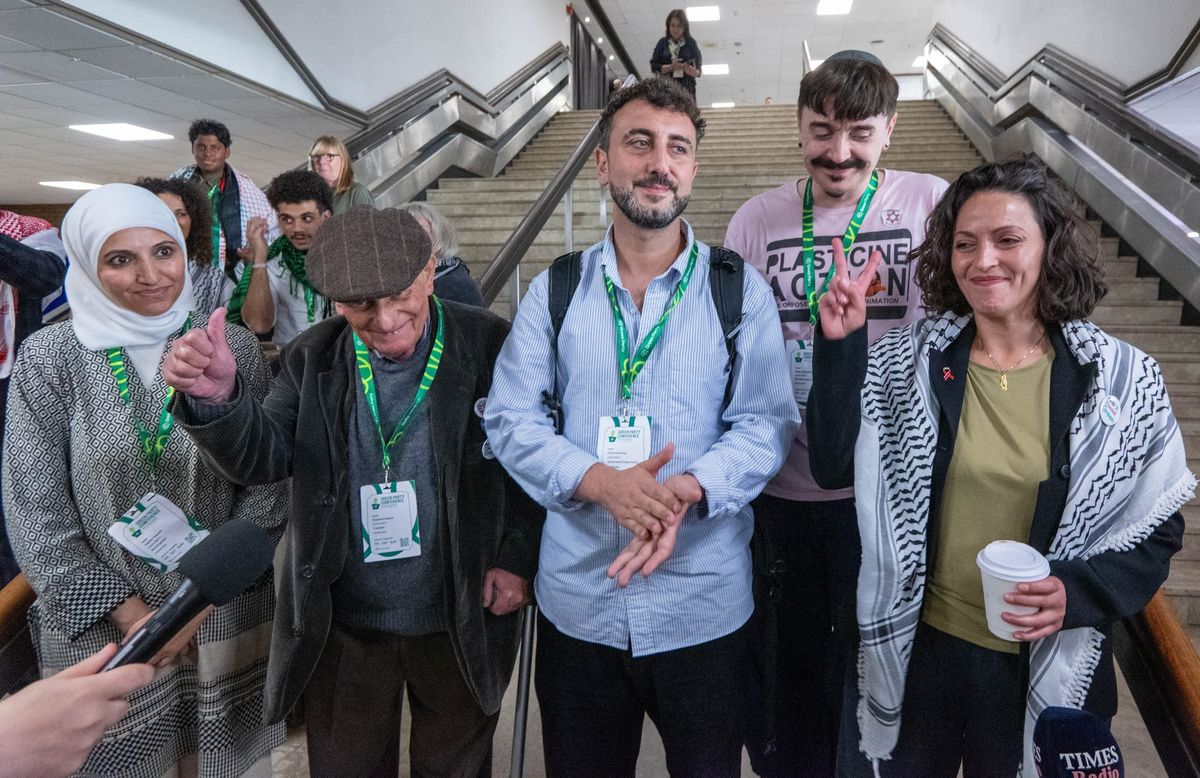](https://www.opendemocracy.net/how-the-greens-are-forcing-labours-hand-on-gaza/)
[Polanski’s Greens created prime minister Burnham. Holborn could yet undo himLabour is celebrating a by-election win. But it must not misread this tight result for a total victoryopenDemocracyRussell Warfield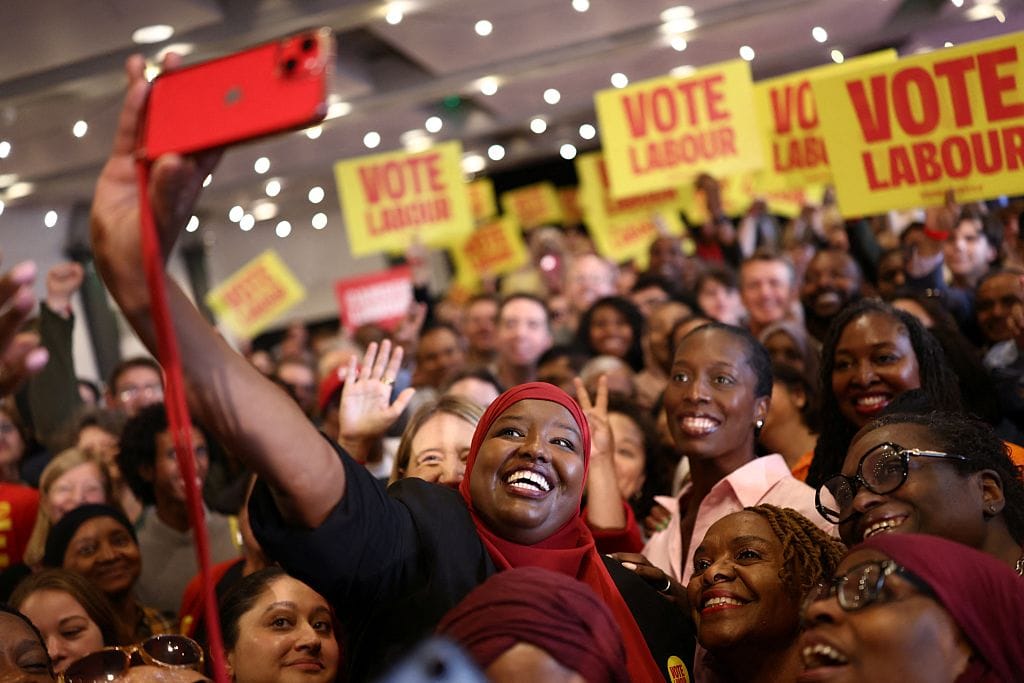](https://www.opendemocracy.net/polanskis-greens-created-prime-minister-burnham-holborn-could-yet-undo-him/)
[At 94, Margaret Owen was proud to be arrested for GazaFresh from her arrest at 94, veteran human rights lawyer Margaret Owen reflects on the criminalisation of protest and why Gaza’s widows must shape its future.openDemocracyNandini Naira Archer](https://www.opendemocracy.net/at-94-margaret-owen-was-proud-to-be-arrested-for-gaza/)
[UK wants to lead the world on frontier AI safety. It can’t decide where to startThe UK government is positioning itself as a global leader on AI regulation while struggling to agree on how far rules should go — and what risks they should address.openDemocracyEvie Breese](https://www.opendemocracy.net/uk-wants-to-lead-the-world-on-frontier-ai-safety-it-cant-decide-where-to-start/)
[Trump, Putin and the Betrayal of UkraineLuke Harding on Putin’s war, Biden’s hesitancy, Trump acting as a Russian asset, and Kremlin links to Brexit and Britain’s hard right.openDemocracySian Norris](https://www.opendemocracy.net/podcasts/trump-putin-and-the-betrayal-of-ukraine/)
---
## Weekly Poll
How does your opinion compare to the rest of our readership? Take our new look weekly poll and find out. Have thoughts about the topic? [Send us an email](mailto:supporters@opendemocracy.net?subject=Re%3A%20Weekly%20Poll)
### Where do you stand on the Green Party’s policy equating Zionism with racism?
| [Vote and see results →](https://www.opendemocracy.net/weekly-email-101026/?jump=poll) |
| -------------------------------------------------------------------------------------- |
---
## Last week's poll results
### Would you support changes to the pension lock scheme?
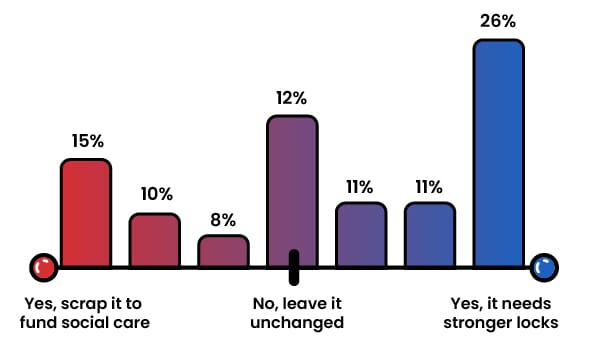
---
## Reader Comments
openDemocracy receives so many carefully considered messages about our work that it seems a shame to keep them to ourselves.
These comments are edited for clarity, accuracy and length, and are not a reflection of openDemocracy's editorial position.
> I respectfully disagree with the article's framing. In my opinion, anyone who deliberately commits criminal acts, destroys property and uses unlawful direct action to advance a political cause is employing terrorist tactics. These actions are not victimless. They are designed to create fear, intimidation and uncertainty among those targeted, including employees, contractors and others connected to the organisation.
>
> When people are made to worry that political activists may attack their workplace, damage property or target them because of their association with a particular organisation, that goes beyond protest and becomes coercion.
>
> While supporters may argue that the motives were noble, I do not believe that a cause justifies tactics intended to intimidate others or force political change through fear. For that reason, I regard those involved as terrorists rather than peaceful protesters.
**Aston411 |** [I was sentenced as a terrorist. Now my barrister is on trial for defending me](https://www.opendemocracy.net/palestine-action-filton-24-charlotte-head-rajiv-menon-kc-contempt-of-court-judge-johnson/)
---
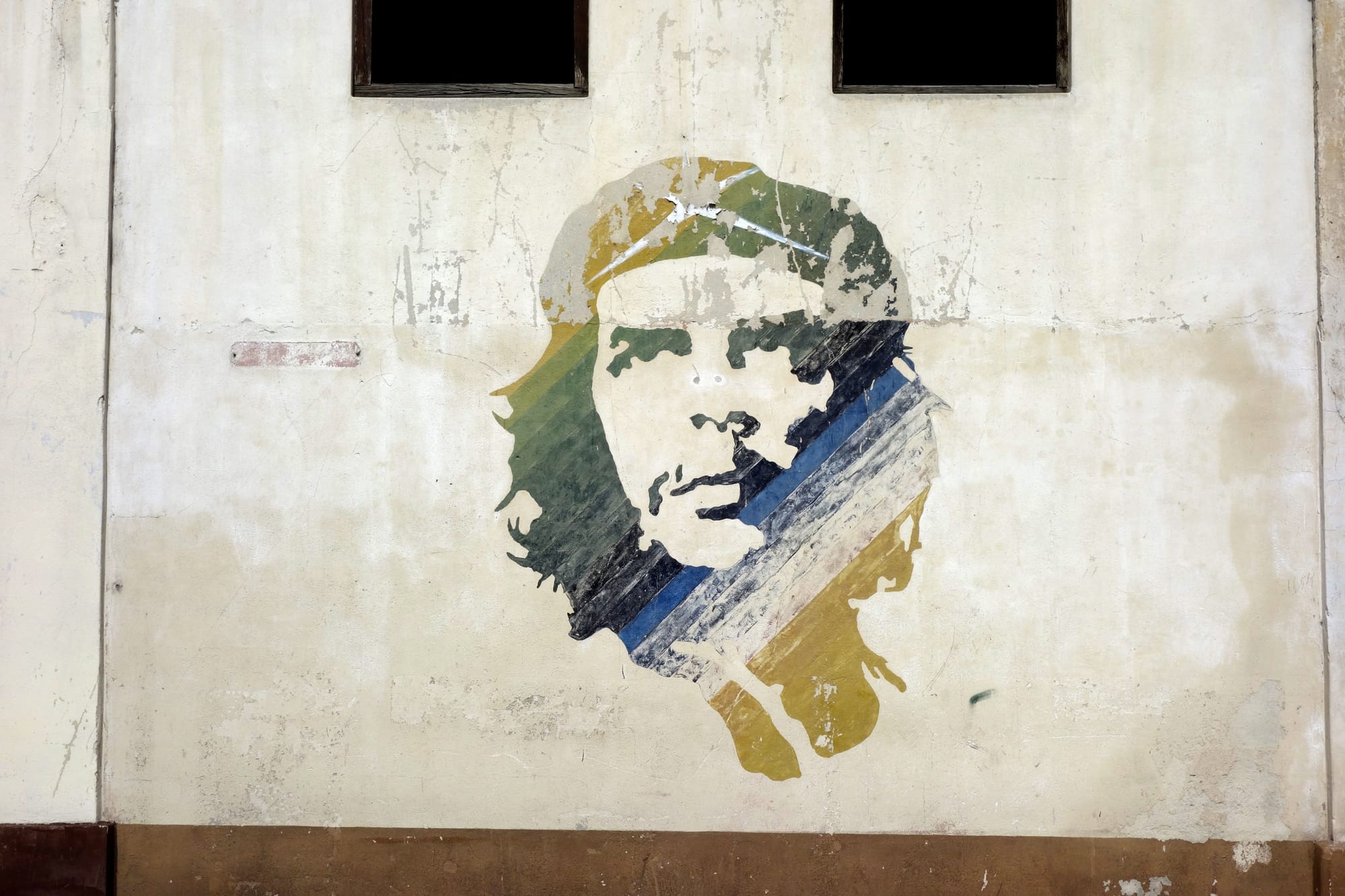
## This week in history
**The Bolivian revolution and Che Guevara's death • 9 October 1967**
Ernesto "Che" Guevara was captured and executed in Bolivia on 9 October 1967, having led a doomed guerrilla campaign to ignite revolution across Latin America. His death made him a global icon and led to his face being the most reproduced political image of the 20th century.
Our archive piece this week examines how the Zapatistas explicitly rejected the armed vanguard politics associated with Che, and why.
[Zapatistas: the fight goes onA number of initiatives of the Zapatista Army of National Liberation (EZLN) and native communities in 2018 illustrate the practice of resistance and rebellion in Mexico today. Español.openDemocracyKé Huelga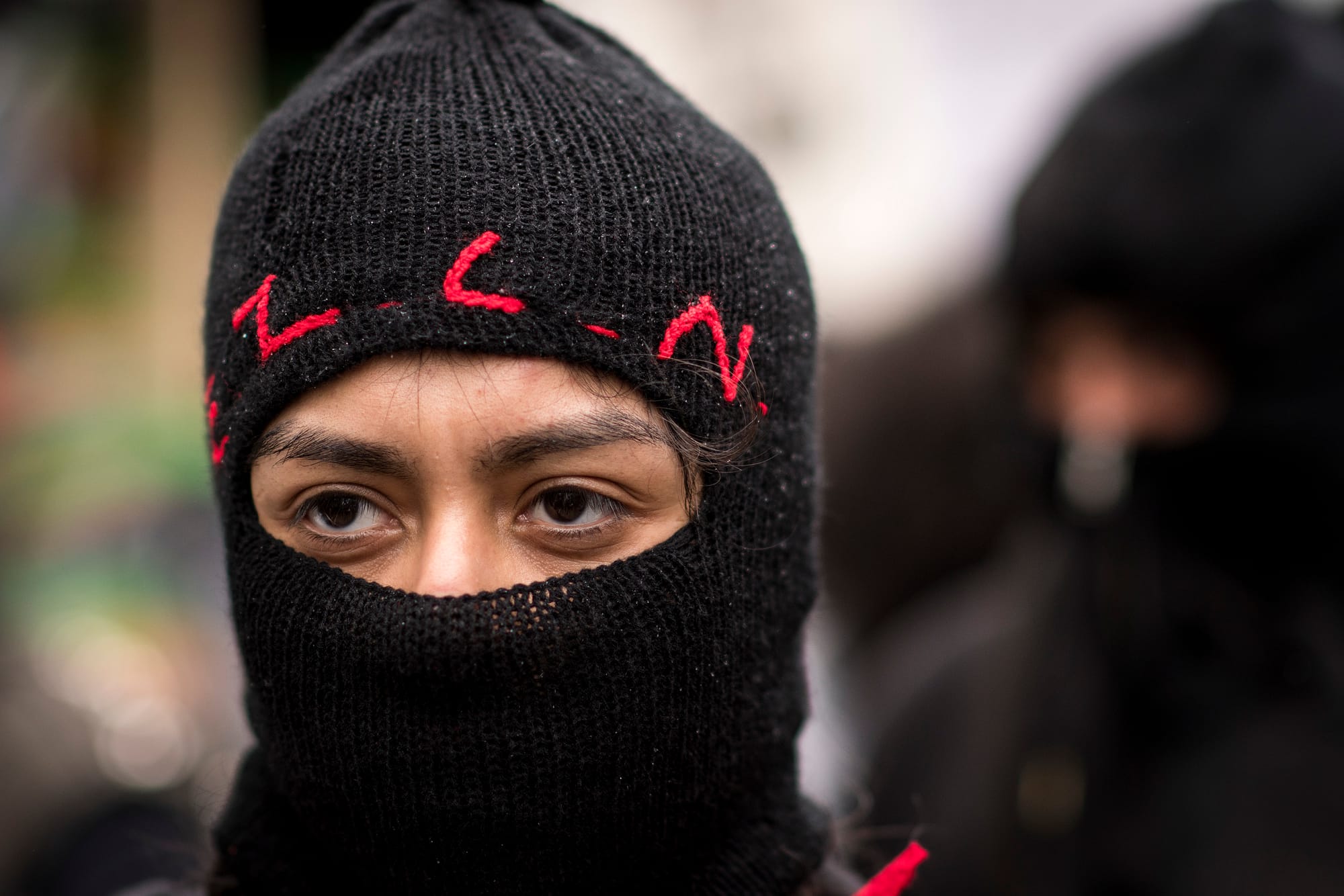](https://www.opendemocracy.net/en/zapatistas-fight-goes/)
---
### Legal loophole denies justice to child abuse victims in British Army school
URL: https://www.opendemocracy.net/british-army-justice-failed-child-abuse-mod/
Last updated: 2026-10-16T15:32:45.000Z
Anne and Jane\* were just 10 years old when they say they were sexually abused by a member of staff connected to their British Army-run school in Bünde, West Germany.
Now in their 50s, the women recall that he had “immense power, the run of the school”. That power, they said, gave him licence to remove girls from lessons to carry out his assaults.
“He used to knock on the door and say, ‘I need her to help me,’” Jane recalled. “I'd sit there absolutely frozen, looking at the teacher, thinking, please, please, don't say yes. And she'd say, no problem. And off I'd go...”
Jane described being “terrified” during a serious assault on school grounds while her fellow pupils were in class. “I couldn’t do anything,” she said. “I started crying.”
Now, an investigation by openDemocracy and the Guardian has revealed that the alleged abuser, a UK national and former soldier still residing in Germany, has benefited from a legal loophole that has allowed him to avoid justice, having never been interviewed by police or arrested.
Anne and Jane reported their “soul-destroying” sexual abuse 40 years after it took place. In July, the Ministry of Defence’s Defence Special Crimes Unit closed its investigation because it could not prove the MoD had jurisdiction over the man, now in his 80s.
If the suspect did not pay tax in the UK due to his employment status, MoD officers say they would lack the jurisdiction to charge him – despite the allegations that he used his connection to a British Army school to befriend, groom and assault girls on a British Army base. They say no records exist showing whether or not this was the case.
The women told openDemocracy and the Guardian that the police investigation was “flawed and feeble”.
“This feels like a travesty of justice,” Anne said. “It became very clear that \[the police\] did not know they did not have jurisdiction. They had surmised it and, for me, that wasn't good enough.” She added: “I am very aware that the army has marked their own homework and that feels complex.”
[Government spends £8m in compensation for child sex offences by British military membersTaxpayer payouts for historic child sex abuse paint ‘stark and worrying picture’ for Ministry of Defence, lawyers sayopenDemocracySian Norris](https://www.opendemocracy.net/en/armed-forces-child-sex-offence-compensation/)
NATO rules state that countries with armed forces abroad can apply their laws to people who fall under their jurisdiction, including serving members of the military and civilian employees.
But the absence of the man’s employment contract, along with no proof that he paid UK tax, meant the police could not prove he was employed on an MoD London contract, rather than a local contract. The result, Anne and Jane say, is a “disastrous” decision where the MoD has jurisdiction over some employees, and not others.
While local forces can investigate where the MoD does not have jurisdiction, German law has a time limit for investigating historic sex abuse allegations, which for Anne and Jane expired in 2020\. They turned to the military police, only to be failed – just as they had been as children.
“The MoD had a duty of care to us,” Jane said. “They were our caregivers and they were our education-givers. There was nowhere else we could be apart from that school, and in that school was a paedophile.
“It's simply wrong, and the fact that I was British, he was British, Anne's British, we were in Germany on British soil, sovereign soil, in a British military school run by the MoD and they had hired a British man and he sexually abused us,” she added. “Those issues are useless, worthless, and don't allocate accountability.”
The alleged abuse took place in the 1980s, but the women say it continues to affect them daily.
“I'm a car crash, basically,” Jane said. “He was my first sexual encounter at the age of 10\. I struggled with relationships at an early age… I've never ever been able to be in a loving relationship.”
Anne also says she has been left traumatised, suffering “a spiral of self-destruction” from a young age. “It destroyed my life,” she said. “100% destroyed my life.”
Both believe they will not be the only survivors of sexual abuse in military schools. “It was the Wild West from my perspective in that school,” Anne said. “There was no safeguarding.”
The Centre for Military Justice’s Emma Norton similarly warned that “given the number of overseas military schools, there is a serious risk this gap is likely to affect other victims too.
“To be told after so long and after having taken the incredibly brave step of reporting the abuse, that nothing now can be done because they appear to have fallen into a ‘jurisdictional gap’ is devastating,” she added.
Responding to our findings, Labour MP Jess Phillips said the case “exposes a cultural issue within the MoD”.
“The MoD needs to treat these two women as people who have been wrongfully treated while under their care. That wrongful treatment is the responsibility of the state. The actions of ‘computer says no’ does not suggest an organisation that wants to make change.”
Phillips urged the military not to “continue the cultural failing of the past”, saying: “We can make the future better.”
**A pattern of offending**
Anne and Jane felt they never quite fitted in on the Bünde base, a now-closed British military site that was, at its peak during the Cold War, home to roughly 1,000 personnel and their families. It was, said Jane, “a little England”.
“We found ourselves quite ostracised and isolated,” said Jane. “And then the grooming started.”
The alleged abuser, they said, “paid us a lot of attention. He made us feel special.”
As he befriended the girls, Jane described how he would “single us out to do special things around the school”. He took them out of lessons, and, “because he had this huge personality, he had the run of the school; whatever he said, you did”.
“That’s when everything changed,” said Anne. “And then it was just a catastrophe until I was sent to my next school.”
She described it as a nightmare she could not wake up from. “You lose childhood at that moment,” she said. “You have that stolen from you.”
The two women say the man abused them through inappropriate touching, sexual assault, and sexual assault by penetration. Fear became the defining emotion of their lives. The alleged abuser threatened that if they told anyone, their fathers would lose their jobs. “He terrorised us,” said Jane.
Although some offences took place outside of school, “the majority of the sexual abuse was on the school grounds of the British Army school,” Jane confirmed. “I would say perhaps 95% of the abuse was within the school or on the school grounds.”
**A long road to injustice**
In 2018, Anne reported what had happened to her as a schoolgirl to the Truth Project – an initiative encouraging survivors to share their experiences in tandem with the UK’s Independent Inquiry into Child Sexual Abuse. She consented to her report being referred to the authorities, but an error meant it was passed onto the Royal Military Police only in 2021\.
The police told Anne they needed to establish jurisdiction, and “when they told me three months later that they were going ahead, I assumed that meant they had it,” Anne said. But the RMP said they would need a second victim to proceed, so she told them about Jane, who she had lost touch with as a teenager.
It was another two years before the police showed up at Jane’s parents’ house to ask for her address. Their visit was a blunder that threw Jane into a “sheer panic”, forcing her to disclose to her family the abuse she had kept hidden for four decades.
This was one of many police failures. Documents seen by openDemocracy and the Guardian show the police interviewed only one witness outside of Anne and Jane’s families – a school staff member who referred to the alleged abuser as a “lovable rogue”. They also failed to examine important archive materials.
In June 2024, the police closed the investigation. “We were absolutely devastated,” said Anne. “We couldn’t make sense of it.”
The pair filed a complaint and received a written apology from a senior officer. “The handling of your case fell below the professional standards you had every right to expect,” they said.
The Defence Serious Crimes Unit, founded in December 2022 to deal with severe sexual offences in the wake of multiple abuse scandals in the British Army, re-opened the investigation. The decision, said Jane, meant “we had hope again."
Although the unit had evidence of his presence in the school, as well as witness accounts and photographs, it lacked tax records and employment contracts. It closed the case in July 2026, saying it was unable to prove jurisdiction as the alleged abuser had no UK tax records. “We asked if he definitely paid tax to the German authorities, and they didn't know,” Anne said.
The suspect was never interviewed. Instead, the Defence Serious Crimes Unit relied on evidence from a staff member at the German Enabling Office – an MoD body that supports the army’s work in the country – who said she believed the man would have been on a local contract. The police did not find a copy of his contract.
“So those two little bits of information, after four years and seven months, led them to shut the case,” said Anne. “So what do we do now?” We were told: Nothing. That's it. It is the end of the road for you. I asked the senior officer: what would you do if it was your daughter sitting here? He had no answer.”
A Defence Serious Crime Command spokesperson said:“Every child has the right to be safe at school, and our thoughts remain with the victims. We deeply regret that the initial handling of the case fell below the standards we expect and have formally apologised to the victims. A new investigation launched earlier this year concluded the Defence Serious Crime Command does not have jurisdiction to pursue charges.
“We have taken a number of steps to strengthen investigative practices across Defence and remain committed to ensuring every case is fully and thoroughly investigated to deliver justice for victims.”
Anne and Jane’s remaining hope is that speaking out will mean victims abused in army schools and denied justice will “have a voice, because at the moment the MoD is hiding from all accountability,” said Anne. “When you're abused as a child, it's all behind closed doors, and you're told to keep quiet. That's how people get away with bad things. The MoD is mirroring that behaviour right now.
“I want the MoD to feel shame that they allowed him into the school in the first place, and they allowed him to get away with it.”
The women have cross-party support, with both their MPs – one Labour, one Conservative – expressing concern about their treatment. openDemocracy is not naming the MPs, to protect the women's anonymity.
Jane’s MP described the women’s experience as “deeply troubling”, saying “it cannot be right that allegations of such depravity are allowed to disappear into loopholes about jurisdiction and a lack of accountability.”
“These two women have shown remarkable courage and tenacity in the search for justice,” said Anne’s MP. “Whatever the complexities about jurisdictions and the passage of time, it is essential that any possible avenues are pursued.”
While there is now no likelihood of a third police investigation, both women continue to fight for an acknowledgement of, and accountability for, how they were failed as children.
But they are pessimistic about anyone being held to account. “Hope feels like a very stupid act for me right now,” said Anne.
“As a 10-year-old girl I was controlled and powerless, and when they closed the case, I felt powerless and controlled again,” said Jane. “It was the MoD who continued that feeling that you are not worth fighting for here. That is perpetuating this endless ‘no.’
“We'd never have met him if we hadn't been forced to go to that British military school,” she added. “The whole thing comes back to who should take responsibility for this perpetrator, who he was accountable to, because the MoD, who employed him, wanted to wash their hands of it and claim it was nothing to do with them.”
*\*Names have been changed*
*If you believe you were also a victim or have a similar story you wish to tell, please contact Sian Norris at sian.norris@opendemocracy.net. We will protect your anonymity.*
### La ‘Doctrina Donroe’ en Brasil, Gaza y Maricarmen
URL: https://www.opendemocracy.net/trump-doctrina-donroe-brasil-gaza-maricarmen/
Last updated: 2026-10-09T20:25:08.000Z
### En la edición de esta semana:
- Brasil y la ‘doctrina Donroe’: Trump busca en las urnas lo que no logró imponer con sanciones
- El genocidio en Gaza: Por qué la complejidad no justifica la injusticia
- Tiene 94 años, fue arrestada por Gaza y aún guarda esperanza
- De un desahucio a una crisis nacional: la vivienda sacude a España
- **Bonus track:** Trump, sobornos rusos y el partido británico Reform
Tres asuntos articulan nuestras historias de esta semana: cómo se despliega la ‘Doctrina Donroe’ de Donald Trump en el proceso electoral de Brasil; cómo analizar el tercer aniversario del 7 de octubre de 2023; y cómo un desalojo abusivo de una persona frágil, de esos que ocurren por cientos o miles en el mundo, logró encender una chispa que puede cambiarlo todo en España.
La nostalgia por lo perdido anima al movimiento MAGA de Trump, que no hace más que mirar al pasado para prolongar el predominio de un imperio en decadencia. De allí su ‘corolario’ de la Doctrina Monroe, un pilar de la política estadounidense hacia América Latina en el siglo XX (y el motivo de la centenaria caricatura con la que se abre esta newsletter).
El pasado frente al futuro (China). La ‘Doctrina Donroe’, como la bautizó la prensa, se basa en preservar la supremacía estadounidense frente al avance chino, mediante un dominio estratégico de fuentes de energía, de chips, centros de datos y modelos de IA de frontera. “Cuando Washington no puede alcanzar una posición central en una red, se hace con el punto de estrangulamiento”, explica el economista brasileño **Pedro Paulo Zahluth Bastos**.
Su análisis nos muestra cómo esta estrategia se viene desplegando en Brasil, cuyas elecciones van a determinar si una pieza muy importante encaja o no en el tablero regional que está armando Trump.
[Brasil: la ‘Doctrina Donroe’ de Trump ante su prueba decisivaLa ‘Doctrina Donroe’ de Trump se basa en el petróleo, los chips y un continente americano aislado de China. ¿Funcionará en Brasil?openDemocracyPedro Paulo Zahluth Bastos](https://www.opendemocracy.net/es/brasil-eeuu-bolsonaro-trump-doctrina-monroe-coaccion-aranceles-terrorismo/)
Hoy, justamente, se anunció que el Premio Nobel de la Paz se entregará a la jurista sudafricana **Navi Pillay**, jueza del tribunal internacional que juzgó el genocidio de Ruanda, integrante de la Corte Penal Internacional (CPI) y presidenta de una comisión de investigación de la ONU que concluyó que Israel había cometido actos de genocidio en Gaza.
Un poco más tarde, Estados Unidos anunció nuevas sanciones a la CPI, en la semana en que se cumple el tercer aniversario del 7 de octubre. En la madrugada de ese día de 2023, integrantes del grupo terrorista Hamás ingresaron a territorio israelí desde Gaza y cometieron muchos crímenes.
“Comencemos reconociendo que nadie, y mucho menos quien escribe, justifica el asesinato de civiles, ya sean palestinos, libaneses, iraníes, yemeníes o israelíes. Reconozcamos la auténtica tragedia de la muerte de aproximadamente 1.200 israelíes y el trauma de quienes fueron tomados como rehenes por Hamás, 251 personas, de las cuales solo 165 regresaron con vida”, escribe en una columna de opinión nuestro editor en jefe, **Aman Sethi**. “Pero reconozcamos también que un genocidio no es una respuesta legítima a un ataque de terroristas armados. Que el genocidio no es una respuesta legítima a nada”.
[Gaza: La realidad frente a las narrativas de conflictoQuienes defienden a Israel insisten en que la opresión y la matanza masiva de palestinos son una respuesta legítima al complejo pasado de la región. No lo sonopenDemocracyAman Sethi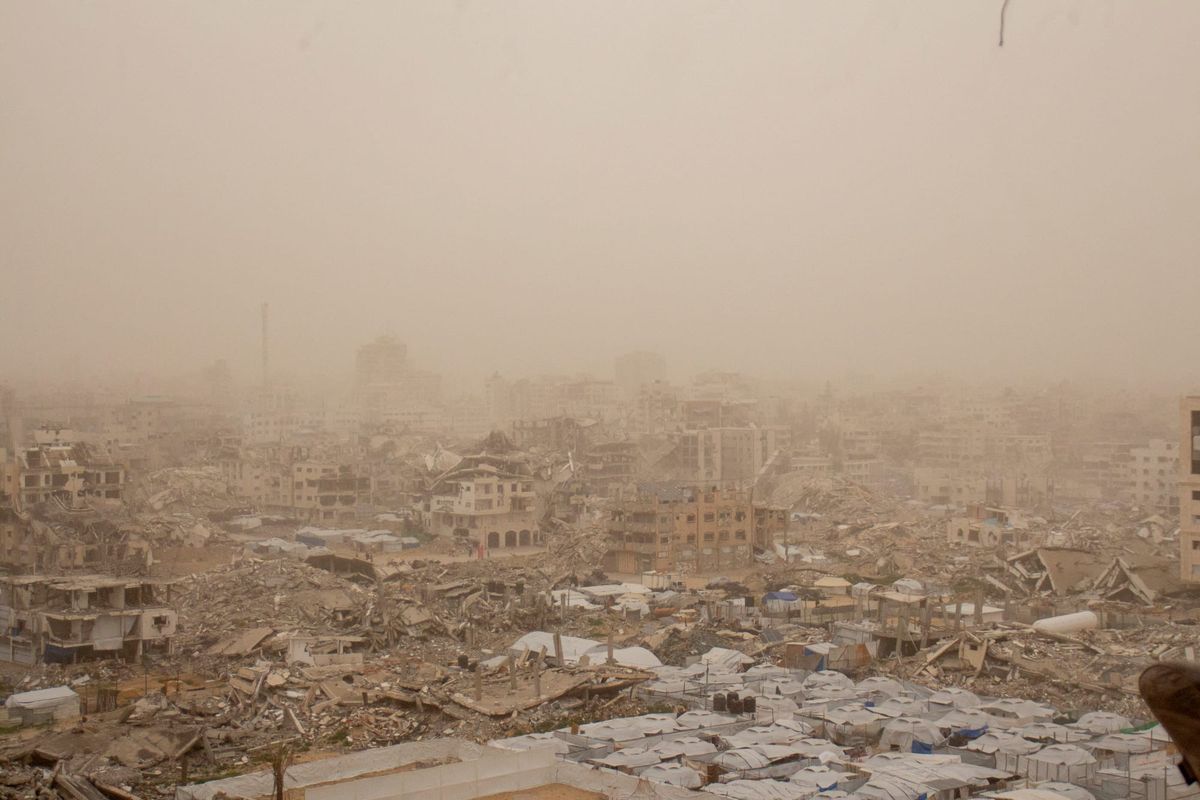](https://www.opendemocracy.net/es/gaza-israel-palestina-genocidio-hamas-7-octubre-netanyahu-terrorismo/)
Aman termina su artículo con una nota de esperanza en la gente que se organiza en protestas pacíficas, convoyes y caravanas de ayuda y solidaridad con los palestinos.
Esa esperanza es la que exuda una abogada británica de derechos humanos, **Margaret Owen**, de 94 años, que acaba de ser arrestada por sentarse frente a la sede donde sesionaba el Partido Laborista con un cartel de solidaridad con los palestinos y con activistas criminalizados por dañar una fábrica que enviaba armas a Israel.
[La abogada que desafía al gobierno británico por la tragedia en GazaLa abogada, detenida en Reino Unido por apoyar a Palestine Action, ve un ‘pequeño rayo de luz’ en el Partido Laborista y exige que se escuche a las viudas de GazaopenDemocracyNandini Naira Archer](https://www.opendemocracy.net/es/margaret-owen-veterana-arrestada-protesta-gaza-palestina-reino-unido/)
Ese hilo de esperanza también une a Owen con otra mujer anciana, **Maricarmen Abascal**, de 87 años, que protagonizó en las últimas semanas una lucha sin precedentes por el **derecho a la vivienda** en España.
Maricarmen, como ya se la conoce en todo el mundo, venía resistiendo hacía siete años, junto al **Sindicato de Inquilinas de Madrid**, para no ser desalojada de su casa por una empresa dedicada a la especulación inmobiliaria.
No pudo evitar el desalojo, y pasó sus últimos días en un hospital, mientras el país se movilizaba con marchas y acampadas en varias ciudades, y el gobierno convocaba a elecciones anticipadas.
La movilización hizo que los especuladores dieran marcha atrás y le ofrecieran a Maricarmen un contrato de ocho años por un alquiler que pudiera pagar, pero su salud no resistió. Murió el miércoles sin poder volver a casa, al día siguiente de que publicáramos un artículo de **Javier Rubio**, un abogado que ha liderado litigios estratégicos por el derecho a la vivienda.
Maricarmen dejó un mensaje a la gente movilizada: “Luchad y defended lo vuestro”.
[Un desalojo empuja a España a elecciones anticipadasHace 12 días, Maricarmen Abascal fue desalojada por la fuerza de su casa en Madrid. Las consecuencias pueden cambiar la política de ese paísopenDemocracyJavier Rubio](https://www.opendemocracy.net/es/espana-vivienda-digna-especulacion-desalojo-maricarmen-pedro-sanchez-elecciones-derecho-fondos-buitre/)
Por último, el **bonus track.** En una entrevista con nuestra reportera de investigación, **Sian Norris**, el primer periodista occidental expulsado de Moscú tras la caída de la Unión Soviética, **Luke Harding,** explica por qué **Trump es un activo del Kremlin** y cuánto falta conocer acerca del dinero ruso que fluye a partidos de la ultraderecha europea.
[Trump, los sobornos rusos y el partido británico ReformEl primer periodista occidental expulsado de Moscú tras la caída de la Unión Soviética, Luke Harding, analiza a Trump, la guerra en Ucrania y un caso de sobornos rusos en el Reino UnidoopenDemocracySian Norris](https://www.opendemocracy.net/es/trump-activo-ruso-reform-farage-luke-harding/)
Gracias por suscribirte, seguirnos y leernos. Que tengas un gran fin de semana.
**Diana Cariboni, Editora de América Latina**
[Suscribite a nuestra newsletter](https://www.opendemocracy.net/en/newsletters/opendemocracy-espanol-democraciaabierta-newsletter-email-espanol/)
[¡Queremos conocer tu opinión y tus ideas! Escribinos](mailto:info.demoabierta@opendemocracy.net)
*democraciaAbierta es un medio de noticias independiente y sin fines de lucro, que se especializa en un periodismo de investigación de alta calidad que cuestiona al poder, inspira cambios y fomenta la visibilidad y el liderazgo de grupos subrepresentados en los medios. Con sede en Londres, tenemos equipos de trabajo en tres continentes.*
### La devastadora simplicidad del genocidio en Gaza
URL: https://www.opendemocracy.net/es/gaza-israel-palestina-genocidio-hamas-7-octubre-netanyahu-terrorismo/
Last updated: 2026-10-09T17:47:52.000Z
Cada año desde 2023, debemos reflexionar sobre el 7 de octubre.
Los defensores de Israel dicen a cualquiera que intente comprender el verdadero horror de sus acciones en Oriente Medio que todo es increíblemente complicado.
Que lo que parece genocidio en Gaza, colonización y represión en Palestina, y guerra y ocupación ilegal en el Líbano, es en realidad una respuesta legítima que solo puede entenderse con un conocimiento cabal de cada resolución de la ONU, cada sección y subsección de cada acuerdo firmado, y cada matiz de quién tiene derecho sobre cada grano de arena en esa tierra empapada de sangre.
Por lo tanto, quienes decidan hablar sobre Israel deben medir cada palabra con mucho cuidado y comenzar cualquier conversación sobre Palestina y el pueblo palestino invocando el sufrimiento del pueblo israelí, reconociendo el derecho del Estado de Israel a existir y rechazando cualquier forma de protesta que vaya más allá de firmar peticiones en línea (o ni siquiera). Solo así se pueden comprender las consecuencias de la política de cerco, brutalidad y apartheid que el Estado israelí ha mantenido durante décadas.
Cuando se hace todo eso, uno termina lidiando con lo que el periodista estadounidense Ta-Nehisi Coates definió como "elevar la complejidad fáctica por encima de la moralidad evidente".
“Esta priorización de la complejidad sobre la justicia forma parte integral del esfuerzo por forjar una historia de Palestina contada únicamente por el colonizador”, escribió Coates en su libro *El Mensaje*. “Un esfuerzo que se extiende a la prohibición de boicots por parte de estados estadounidenses, la revocación de artículos por parte de revistas, la expulsión de estudiantes de universidades, el despido de presentadores de noticias por cadenas temerosas, hasta el asesinato de periodistas por francotiradores del ejército y los atentados con coche bomba contra novelistas por parte de agencias de inteligencia”.
Comencemos reconociendo que nadie, y mucho menos quien escribe, justifica el asesinato de civiles, ya sean palestinos, libaneses, iraníes, yemeníes o israelíes. Reconozcamos la auténtica tragedia de la muerte de aproximadamente 1.200 israelíes y el trauma de quienes fueron tomados como rehenes por Hamás, 251 personas, de las cuales solo 165 regresaron con vida.
Pero reconozcamos también que un genocidio no es una respuesta legítima a un ataque de terroristas armados. Que el genocidio no es una respuesta legítima a nada. Que lo ocurrido en Gaza es genocidio, como lo ha determinado la ONU, y que no hay excusa para las acciones del Estado israelí desde el 7 de octubre de 2023.
En los últimos tres años, las fuerzas israelíes han matado a más de 74.000 civiles. Pero es probable que esta cifra sea inferior a la real; el Ministerio de Salud palestino solo contabiliza las muertes en hospitales u oficialmente registradas, excluyendo a miles que siguen desaparecidos, muchos de ellos sepultados bajo los escombros. Informes de la ONU sugieren que las fuerzas israelíes han atacado deliberadamente a la infancia de Gaza, matando al menos a [20.000 niñas y niños](https://www.un.org/unispal/document/coi-report-23jun26/?ref=opendemocracy.net). Casi 50.000 mujeres y niñas han resultado heridas o muertas por las fuerzas israelíes en Gaza desde el 7 de octubre de 2023, [según ONU Mujeres](https://www.unwomen.org/en/news-stories/press-release/2026/10/media-fact-sheet-nearly-50000-women-and-girls-killed-or-severely-injured-in-gaza-in-three-years-of-war?ref=opendemocracy.net). Casi todas las mujeres y niñas de Gaza han sido desplazadas por el incesante bombardeo, según el mismo informe. Detengámonos aquí: casi todas las mujeres y niñas de Gaza han sido desplazadas.
Otro informe, esta vez de [UNICEF USA](https://www.unicefusa.org/stories/more-50000-children-killed-or-injured-gaza?ref=opendemocracy.net), estima que casi 64.000 niños resultaron heridos o muertos hasta octubre de 2025, un año atrás. En junio de este año, una comisión independiente de la ONU [concluyó](https://news.un.org/en/story/2026/06/1167790?ref=opendemocracy.net) que Israel continúa cometiendo genocidio en Palestina a pesar del anuncio de un supuesto alto el fuego en octubre del año pasado. Desde entonces, Israel ha asesinado al menos a 1.000 personas en Palestina, incluyendo niños.
Así describe un comisionado de la ONU una de estas muertes, en la que las fuerzas israelíes asesinaron a un adolesciente palestino de 14 años cuando salía de su casa. “Recibió un disparo, resultó gravemente herido y yacía en el suelo”, [declaró](https://news.un.org/en/story/2026/06/1167790?ref=opendemocracy.net) Chris Sidoti en una rueda de prensa en Ginebra. “Estuvo rodeado de un grupo de soldados israelíes que charlaron y probablemente algunos fumaron durante 45 minutos, mientras este niño de 14 años se desangraba hasta morir”.
El comisionado de la ONU no describe el caso de un niño atrapado en fuego cruzado; describe a un niño que se desangra en presencia de soldados israelíes. Esto no es complicado, es simple.
Cabe destacar que muchas de estas estadísticas se centran en las mujeres, las niñas y los niños palestinos asesinados por israelíes. “Miren”, parecen decir estas cifras escalofriantes, “se trata claramente de civiles inocentes. Sin duda, todos podemos estar de acuerdo en que los ejércitos no deberían atacar a los niños”.
Pero incluso estas estadísticas parecen insuficientes ante gobiernos, periodistas y comentaristas que insisten en que realmente no se conoce la verdad sobre lo que Israel ha hecho y sigue haciendo en Gaza y en Cisjordania..
La reiteración bienintencionada de estas estadísticas, incluso en esta columna, implica que todos los hombres palestinos, por definición, son presuntos terroristas. Me di cuenta de esto al leer *Víctimas perfectas*, un libro del escritor y poeta palestino Mohammed El-Kurd, como parte de la lectura para esta columna.
“Durante demasiado tiempo, los palestinos han sido reducidos a ‘mujeres y niños’. Esto implica, en parte, privar a las mujeres y los niños de su capacidad de acción y de sus contribuciones políticas o revolucionarias”, escribe El-Kurd. “Otra implicación es la demonización aún mayor de los hombres palestinos como seres que merecen la muerte e indignos de duelo, exiliados del abrazo de sus seres queridos”.
## Gaza y la izquierda
Desde hace algunos años, quienes se autodenominan – y hablan en nombre de – lo que generalmente se describe como “la izquierda” se lamentan de la falta de dinamismo en sus filas, en comparación con el auge de la derecha. Se ha vuelto común hablar de cómo la izquierda ha olvidado cómo organizarse y de cómo los activistas hiperconectados y excesivamente progresistas han perdido el contacto con sus comunidades.
Sin embargo, cualquiera que siga de cerca el fervor popular que recorre el mundo en apoyo a Palestina sabe que esto es un disparate. El año pasado, una red global de activistas logró organizar la [Flotilla Sumud](https://www.opendemocracy.net/i-was-kidnapped-by-the-israeli-navy-en-route-to-gaza/), de más de 40 embarcaciones que transportaban suministros médicos vitales y más de 500 participantes de al menos 44 países, que intentó navegar desde Europa y África hasta Gaza. Las embarcaciones fueron interceptadas, y los gobiernos europeos se quedaron de brazos cruzados mientras sus propios ciudadanos eran atacados por drones israelíes.
En la izquierda abunda la energía, pero sí hay una enorme falta de entusiasmo por las agendas centristas, obsoletas, vagamente progresistas y, en su mayoría, poco inspiradoras, que proponen muchos líderes de izquierda. Como [informó openDemocracy](https://www.opendemocracy.net/es/palestina-tunez-solidaridad-carcel-huelga-de-hambre-flotilla-israel-gaza/) el mes pasado, personas de todo el mundo siguen movilizadas por Palestina, incluso ante la brutal represión de gobiernos que temen molestar a Estados Unidos.
Resulta revelador que, en el Reino Unido, cuando el Partido Verde (un raro ejemplo de partido político en el que los militantes de base pueden presentar mociones) presentó esta semana una moción para calificar al sionismo de racismo, esta fuera aprobada, para gran disgusto de la dirección del partido. La prensa liberal criticó duramente a la dirección por no controlar a sus integrantes más rebeldes. Al igual que los miembros del Partido Verde, podemos debatir si el sionismo es racismo, pero la brecha entre la dirección y las bases resume a la perfección el estado actual de la política progresista.
Las encuestas revelan que las posturas sobre Israel que los medios de comunicación dominantes, incluida la prensa liberal, describen como extremas son, en realidad, bastante habituales.[ Una encuesta del Washington Post de 2025](https://www.washingtonpost.com/politics/2025/10/06/jewish-americans-israel-poll-gaza/?ref=opendemocracy.net) realizada entre judíos estadounidenses reveló que el 61% creía que Israel había cometido crímenes de guerra en Gaza, mientras que el 40% consideraba que Israel había cometido un genocidio.[ Casi la mitad de los judíos estadounidenses menores de 35 años](https://forward.com/news/827329/poll-american-jews-binational-state-anti-zionism/?ref=opendemocracy.net) creen que el conflicto israelí debería resolverse mediante la creación de un único Estado binacional – una versión de la solución de un solo Estado por la que miembros del Partido Verde británicos han sido duramente criticados.
## Estados contra pueblos
Como ciudadano de la India, un país gobernado por un régimen que ejerce sistemáticamente una violencia extrema contra sus propios ciudadanos, no me hago ilusiones de que el genocidio en Gaza ponga en entredicho las divisiones entre colonizadores y antiguos colonizados; entre el Sur Global y el Norte Global.
El partido gobernante de la India no experimenta ninguna disonancia cognitiva al venerar a Hitler mientras compra armamento israelí para sofocar la rebelión interna y espiar a los disidentes. A principios de este año, el primer ministro indio, Narendra Modi, visitó Israel, donde recibió la primera [Medalla del Knesset](https://www.france24.com/en/middle-east/20260226-brothers-in-arms-modi-and-netanyahu-deep-ties-remain-unshakable?ref=opendemocracy.net), un premio aparentemente inventado. “Eres un gran amigo de Israel. Eres más que un amigo. Eres un hermano”, [le dijo Benjamín Netanyahu](https://www.aljazeera.com/news/2026/10/8/how-gaza-war-sped-up-indias-shift-towards-israel-under-modi?ref=opendemocracy.net).
Si bien es cierto que algunos países, sobre todo Sudáfrica, han recurrido a su experiencia compartida del apartheid para solidarizarse con el pueblo palestino, ya no basta con utilizar la terminología y la teoría política del siglo XX para dar sentido al mundo que Gaza ha dejado al descubierto. No hay vuelta atrás posible, ni retirada hacia fronteras cómodas. En un mundo en el que los Estados-nación están completamente desvinculados de las aspiraciones de sus ciudadanos y de las normas del derecho internacional, nosotros, el pueblo, debemos unirnos y trazar el camino hacia el futuro en flotillas y caravanas de esperanza y solidaridad.
### Brasil, última batalla de Trump por imponer su doctrina imperial en América Latina
URL: https://www.opendemocracy.net/es/brasil-eeuu-bolsonaro-trump-doctrina-monroe-coaccion-aranceles-terrorismo/
Last updated: 2026-10-09T16:56:57.000Z
La segunda vuelta presidencial en Brasil, que se celebrará el 25 de octubre entre el actual presidente Luiz Inácio Lula da Silva y el senador opositor Flávio Bolsonaro, contestará la pregunta de si la ‘Doctrina Donroe’, impuesta por Donald Trump, puede ganar las elecciones que más le importan a Washington.
Flávio Bolsonaro, que se impuso por casi dos puntos porcentuales a Lula en la primera vuelta del 4 de octubre, ha prometido amnistiar a su padre, el expresidente Jair Bolsonaro, condenado y preso por liderar un intento de golpe de Estado luego de perder las elecciones en 2022.
Estas elecciones de Brasil son una pieza clave en la gran estrategia del segundo gobierno de Trump – [plasmada por escrito](https://www.whitehouse.gov/wp-content/uploads/2025/12/2025-National-Security-Strategy.pdf?ref=opendemocracy.net) –, cuyo objetivo es preservar la supremacía de EEUU frente a China, en un conflicto que sus responsables denominan “civilizacional”. Su núcleo material se sustenta en dos pilares.
El primero es el “dominio energético”, declarado el día de la toma de posesión y gestionado por[ ](https://climate.law.columbia.edu/content/president-trump-establishes-national-energy-dominance-council?ref=opendemocracy.net)un [consejo con sede en la Casa Blanca](https://www.whitehouse.gov/presidential-actions/2025/02/establishing-the-national-energy-dominance-council/?ref=opendemocracy.net). Sus funciones son prolongar la vida útil del capital fósil, suministrar energía barata a las fábricas que la política de aranceles pretende traer de vuelta a casa, atar a países aliados al gas estadounidense y controlar un punto estratégico del petróleo que importa un rival, China.
El segundo es la pila computacional, desde los chips hasta los centros de datos y los modelos de inteligencia artificial de vanguardia. En Beijing, en mayo, Washington negoció sobre la soja, los Boeing y las tierras raras, y[ se negó a ceder en los controles a la exportación de chips](https://orfonline.org/research/selective-cooperation-enduring-rivalry-reading-the-trump-xi-summit?ref=opendemocracy.net).
Ambos pilares convergen en el voraz consumo de electricidad de la inteligencia artificial. El método es el mismo en ambos casos. Cuando Washington no puede alcanzar una posición central en una red, se hace con el punto de estrangulamiento.
El continente americano es donde este método resulta más económico. La [Estrategia de Seguridad Nacional](https://www.whitehouse.gov/wp-content/uploads/2025/12/2025-National-Security-Strategy.pdf?ref=opendemocracy.net), publicada en diciembre de 2025, denominó este programa [Corolario de Trump a la Doctrina Monroe](https://breakingdefense.com/2025/12/national-security-strategy-nato-civilizational-erasure-monroe-doctrine/?ref=opendemocracy.net). La prensa lo llama ‘[Doctrina Donroe](https://cepr.net/the-donroe-doctrine-fan-club-kicks-off-in-miami/?ref=opendemocracy.net)’. Su objetivo es una base segura de petróleo, minerales, electricidad y territorio para centros de datos, aislada de China.
[Venezuela: De la Doctrina Monroe a la ley de la selva de TrumpEstados Unidos tiene una larga historia de intervenciones militares en América Latina. Nunca antes fueron tan descaradasopenDemocracyDiana Cariboni](https://www.opendemocracy.net/es/trump-maduro-golpe-venezuela-estados-unidos-america-latina-doctrina-monroe/)
Venezuela aportó la prueba. En agosto, Washington anunció[ el control mayoritario de 65.000 millones de barriles](https://www.opb.org/article/2026/08/29/trump-says-u-s-has-entered-deal-with-venezuela-to-take-control-of-65-billion-barrels-of-oil-reserves/?ref=opendemocracy.net) a través de una empresa conjunta en la que el Gobierno de EEUU [tendrá el 35%](https://www.opendemocracy.net/es/venezuela-eeuu-petroleo-delcy-rodriguez-donald-trump-betancourt-maduro/) y el derecho a comprar a precio de costo otro 20% de la producción, con concesiones de 100 años, y la Casa Blanca atribuyó al acuerdo haber restablecido la Doctrina Monroe. En septiembre, el secretario de Estado, Marco Rubio, realizó una gira por países andinos y[ regresó con un marco sobre minerales y un memorándum nuclear con Colombia](https://www.as-coa.org/articles/trump-latin-america-rubio-courts-allies-colombia-ecuador-and-peru?ref=opendemocracy.net), y con Perú uniéndose al ‘Escudo de las Américas’, una coalición informal de gobiernos afines a Washington para la guerra contra los cárteles.
Brasil es la pieza que le falta al bloque. Es el mayor productor de petróleo de América Latina,[ con 3,8 millones de barriles al día en 2025](https://diariodocomercio.com.br/economia/producao-petroleo-gas-pais-cresce-133-2025-bate-recorde/?ref=opendemocracy.net), de los que cuatro quintas partes proceden de los yacimientos presal, que se encuentran bajo una gruesa capa de sal bajo el océano Atlántico. Posee[ las segundas mayores reservas mundiales de tierras raras](https://www.netzerocircle.org/news/brazil-retains-second-place-in-global-rare-earth-reserves-despite-revised-estimates?ref=opendemocracy.net). Su red eléctrica es[ 89% limpia](https://ember-energy.org/countries-and-regions/brazil?ref=opendemocracy.net), razón por la cual Brasil ya alberga[ la mitad de la capacidad de centros de datos de América Latina](https://www.spglobal.com/energy/en/news-research/latest-news/energy-transition/082726-brazil-leads-latin-america-in-data-center-growth-on-renewable-energy?ref=opendemocracy.net).
El [expediente abierto](https://ustr-gov.translate.goog/trade-topics/enforcement/section-301-investigations/section-301-brazils-acts-policies-and-practices-related-digital-trade-and-electronic-payment?%5Fx%5Ftr%5Fsl=en&%5Fx%5Ftr%5Ftl=es&%5Fx%5Ftr%5Fhl=es&%5Fx%5Ftr%5Fpto=tc&ref=opendemocracy.net) por Estados Unidos a Brasil, bajo la Sección 301 de su ley de comercio, enumera el resto de motivos: el sistema público de pagos Pix, sentencias judiciales contra las plataformas de redes sociales, patentes y acceso al mercado del etanol.
Las concesiones que Brasilia ha indicado que no descarta son el refinado de tierras raras por parte de filiales estadounidenses y los centros de datos a hiperescala. El centro de datos es para este imperio lo que la concesión ferroviaria fue para el imperio anterior: la cláusula física de subordinación, inscrita en el territorio ajeno y alimentada a costa de otros.
### **Aprender a coaccionar**
En julio de 2025, Donald Trump[ impuso un arancel del 50% a las importaciones desde Brasil](https://www.federalregister.gov/documents/2025/08/05/2025-14896/addressing-threats-to-the-united-states-by-the-government-of-brazil?ref=opendemocracy.net) e incluyó el juicio a Jair Bolsonaro en el decreto. El Departamento del Tesoro[ sancionó al magistrado del Tribunal Supremo](https://home.treasury.gov/news/press-releases/sb0211?ref=opendemocracy.net) encargado del caso. Brasil no tomó represalias ni hizo concesiones. El tribunal condenó a Bolsonaro de todos modos. Los precios del café y la carne vacuna subieron en los supermercados estadounidenses, y el arancel se retiró en noviembre sin que Brasil hiciera ninguna concesión. En febrero, la Corte Suprema de EEUU anuló su fundamento jurídico.
La segunda ronda aprendió de la primera. En julio de 2026, Washington impuso[ un arancel del 25% en virtud de la Sección 301](https://ustr.gov/about/policy-offices/press-office/press-releases/2026/july/ustr-section-301-action-brazils-unreasonable-acts-policies-and-practices?ref=opendemocracy.net) con más de 1.000 exenciones: café, carne vacuna, jugo de naranja, aviones, todo lo que Estados Unidos necesita comprar. Un arancel menor puede suponer una coacción mayor. Y sus objetivos ya no eran los bienes. Estados Unidos registra un superávit comercial con Brasil,[ el mayor entre las economías emergentes](https://www.atlanticcouncil.org/blogs/new-atlanticist/the-numbers-that-define-the-us-brazil-trade-partnership/?ref=opendemocracy.net). Pix, el sistema gratuito de pagos instantáneos gestionado por el Banco Central,[ ha procesado más transacciones que las tarjetas de crédito y débito juntas desde 2023](https://finance.yahoo.com/news/instant-payment-system-pix-poised-100506841.html?ref=opendemocracy.net). No se lo ataca a pesar de que sea gratuito, sino precisamente porque lo es: demuestra que un sistema público puede superar a las redes de tarjetas. Las condiciones para el alivio, como[ señaló Guilherme Klein en una columna de democraciaAbierta](https://www.opendemocracy.net/brazil-election-lula-flavio-bolsonaro-trump-tariffs-shape-race-future-democracy/), incluían garantías para los “disidentes políticos”, en referencia a Bolsonaro.
Luego llegó la vía que no existía en 2025\. Tres días después de que Flávio Bolsonaro se reuniera con Trump en mayo, Washington[ incluyó a los dos grupos criminales más grandes de Brasil en la lista de organizaciones terroristas](https://agenciabrasil.ebc.com.br/en/internacional/noticia/2026-05/us-designates-two-brazilian-factions-terrorist-organizations?ref=opendemocracy.net), en virtud de una legislación redactada para Al Qaeda. Flávio afirma que él mismo lo pidió. La inclusión en la lista expone a cualquier banco o funcionario brasileño que se considere que presta “apoyo material” a esos grupos a sanciones secundarias. Un instrumento contra el crimen se convierte al mismo tiempo en una espada que pende sobre las finanzas brasileñas, Pix incluido.
La[ Estrategia Nacional Antiterrorista del 6 de mayo](https://www.armytimes.com/news/pentagon-congress/2026/05/07/white-house-casts-cartels-jihadists-and-left-wing-extremists-as-significant-and-pervasive-threats-to-us/?ref=opendemocracy.net) incluyó también a “[extremistas violentos de izquierda](https://www.opendemocracy.net/es/eeuu-propone-una-cruzada-de-persecucion-politica-a-escala-global/)” junto a cárteles y yihadistas. El 10 de junio, en la base naval de Guantánamo, el secretario de Guerra, Pete Hegseth, declaró ante América Latina:[ “Los estamos cazando como cazamos a Al Qaeda](https://morningstaronline.co.uk/node/250572?ref=opendemocracy.net)”.
[EEUU propone una cruzada de persecución política a escala globalCon la excusa del terrorismo, el gobierno de EEUU promueve una persecución política de escala globalopenDemocracyCentro de Estudios Legales y Sociales (CELS)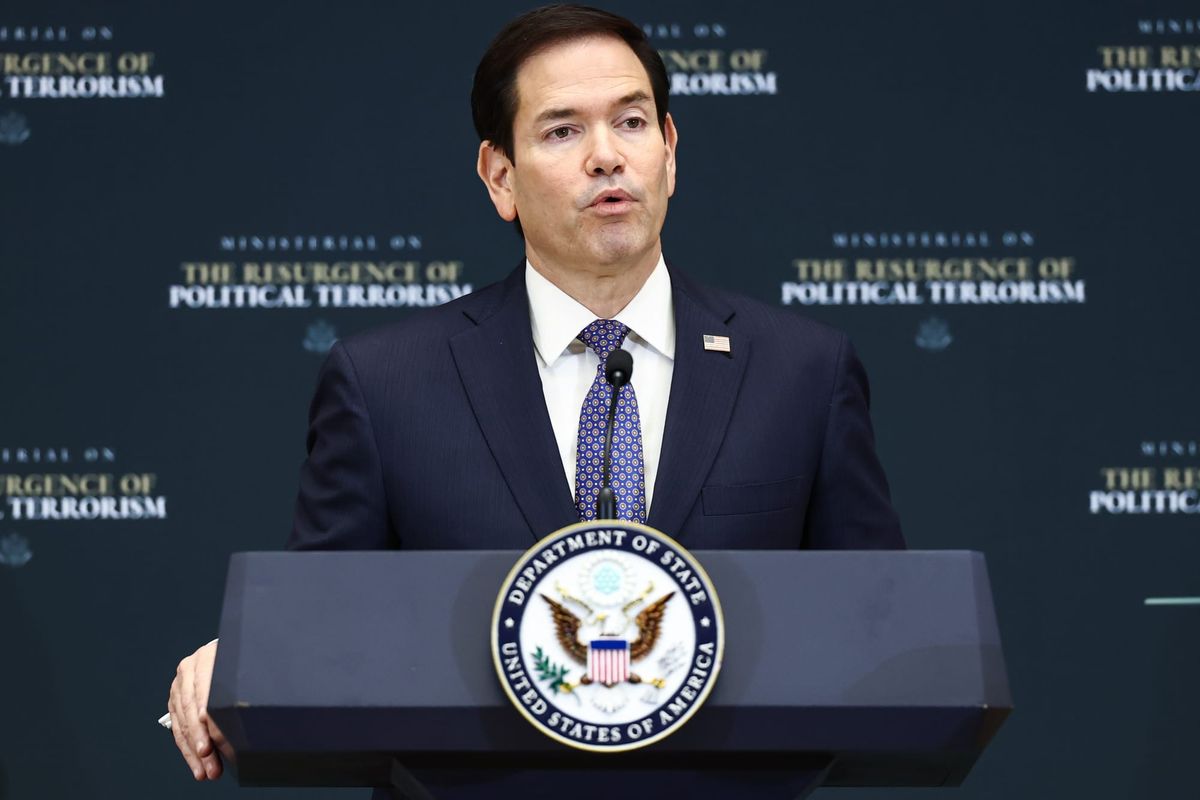](https://www.opendemocracy.net/es/eeuu-propone-una-cruzada-de-persecucion-politica-a-escala-global/)
Brasil, México y Colombia[ quedaron excluidos](https://www.stimson.org/2026/trumps-shield-of-the-americas-leaves-many-outside-the-armor/?ref=opendemocracy.net) del Escudo de las Américas cuando Trump lo puso en marcha en marzo. Colombia se sumó el mes pasado. Brasil entró en la guerra hemisférica contra el terrorismo no como aliado, sino como terreno de operaciones.
### **Por qué Brasil pudo resistir las sanciones**
La coacción es una relación, no un instrumento. En las décadas de 1980 y 1990, Brasil tenía una deuda en dólares, contaba con reservas de divisas para unas pocas semanas y seguía la política económica del Fondo Monetario Internacional. No hacía falta declarar la coacción. Estaba establecida por el contexto.
Dos décadas de creciente demanda china de materias primas brasileñas desmantelaron esa situación. En 2000, Estados Unidos aún absorbía el [24% de las exportaciones de Brasil y China, menos del 2%](https://datamarnews.com/noticias/exports-to-china-from-us1-billion-in-2000-to-more-than-us87-billion-today/?ref=opendemocracy.net). En 2025, China absorbía el [29% y Estados Unidos, el 11%](https://istoedinheiro.com.br/ranking-paises-exportacoes-brasil-importa-2025?ref=opendemocracy.net). Las reservas de Brasil superan los 300.000 millones de dólares. Y el país[ pagó su deuda al FMI en 2005](https://www.imf.org/external/np/sec/pr/2005/pr05275.htm?ref=opendemocracy.net).
Lo que sigue siendo susceptible de coacción es la capa de red: el sistema internacional de pagos en dólares, las plataformas, los chips. El camino que va de un arancel del 50% a uno “quirúrgico” y a la designación de organizaciones terroristas conduce hacia esos puntos de estrangulamiento.
Argentina, con reservas netas negativas y un *swap* del Tesoro de 20.000 millones de dólares, muestra la otra opción: el presidente Javier Milei firmó con Estados Unidos un acuerdo marco sobre minerales críticos junto con un acuerdo comercial después de que Trump le dijera que el salvavidas[ dependía de que su partido ganara las elecciones de mitad de legislatura](https://www.cnn.com/2025/10/14/politics/javier-milei-president-trump-argentina?ref=opendemocracy.net). La estructura determina la opción. Un Milei en Brasilia no podría entregar lo que Brasil no debe. Podría ceder lo que no se le puede quitar.
### **La dependencia como proyecto**
Washington no inventó los golpes de Estado en Brasil. Los abarató. En 1964, el embajador de EEUU se coordinó con los golpistas y una fuerza operativa naval esperaba en alta mar,[ tal y como muestran documentos desclasificados](https://nsarchive2.gwu.edu/NSAEBB/NSAEBB465/?ref=opendemocracy.net). Las felicitaciones del presidente Lyndon Johnson al nuevo gobierno se hicieron públicas el 2 de abril, al día siguiente del golpe,[ sin esperar lo que decidiera el Congreso de Brasil](https://history.state.gov/historicaldocuments/frus1964-68v31/d207?ref=opendemocracy.net). Pero los oficiales militares, los periódicos, los industriales y las clases medias que se manifestaron por “la tradición, la familia y la propiedad” eran brasileños. En 2016, la destitución de la presidenta Dilma Rousseff se basó en una operación anticorrupción cuyos fiscales[ cooperaron con el Departamento de Justicia de EEUU](https://www.intercept.com.br/2020/03/12/lava-jato-driblou-governo-ajudar-americanos-doj/?ref=opendemocracy.net) a espaldas de su propio gobierno. Cada golpe de Estado fue seguido de una entrega: petróleo, minería, bancos públicos, derechos laborales.
He denominado a este patrón “dependencia como proyecto”. Una clase dominante lo eligió porque la subordinación cuesta menos que compartir el poder y los ingresos en casa. Las elites, que se imaginan a sí mismas blancas en un país que no lo es, piden la intervención contra gobiernos cuyos votantes son más morenos y más pobres que ellas. La latinofobia estadounidense tiene su espejo distorsionado en el americanismo de la elite latinoamericana.
El exdiputado Eduardo Bolsonaro se trasladó a Estados Unidos a principios de 2025 para presionar a favor de sanciones contra los jueces de su país, y[ fue condenado en ausencia en junio](https://www.upi.com/Top%5FNews/World-News/2026/06/17/8871781723855/?ref=opendemocracy.net). En julio, su hermano Flávio[ solicitó al representante comercial de EEUU que suspendiera el arancel durante 180 días](https://www.thestar.com.my/news/world/2026/07/06/in-race-against-lula-flavio-bolsonaro-lobbies-washington-to-delay-brazil-tariff?ref=opendemocracy.net), hasta después de las elecciones. Un arancel ahora, escribió, “le daría al actual gobierno brasileño precisamente la victoria política que ha estado orquestando”. Su programa para la Amazonia, la minería ilegal de oro y en tierras indígenas, es una contribución brasileña a la base extractivista que Trump aceptaría con gusto y que, en este caso, ni siquiera tuvo que pedir. El argumento nunca tuvo que ver con los puestos de trabajo brasileños. Se trataba de quién gobernaría.
### **Las elecciones como teatro de la doctrina**
La doctrina Donroe no suprime las elecciones. Las orquesta. En junio, Colombia eligió a un candidato respaldado por Trump[ por un punto](https://www.aljazeera.com/amp/news/2026/6/22/colombian-right-wing-candidate-de-la-espriella-wins-tight-presidential-race?ref=opendemocracy.net), después de que Washington hubiera sancionado al presidente en el cargo. En Venezuela, las fuerzas estadounidenses[ detuvieron a Nicolás Maduro](https://www.cnn.com/2026/01/03/americas/venezuela-explosions-intl-hnk?ref=opendemocracy.net) en enero. En cuestión de meses, el petróleo fluía hacia empresas estadounidenses y una chavista gestionaba la concesión con la bendición de Washington. La democracia era el papel de regalo. Las concesiones eran el regalo.
No hemos vuelto a 1964, porque 1964 fracasó cuando se volvió a intentar. El intento de golpe de Estado de 2022 y 2023 se derrumbó, y el Tribunal Supremo juzgó a sus autores pese a las sanciones estadounidenses. La extrema derecha no pudo tomar el poder por la fuerza, así que está intentando tomarlo mediante los votos, con la amnistía para Bolsonaro como premio.
Washington, que no puede coaccionar el balance financiero de Brasil, está actuando en cambio sobre sus votantes. Brasil vota después de Chile, Honduras, Bolivia, Colombia y Perú, todos bajo la presión de Washington, pero ninguna otra elección se ha enfrentado a esta combinación: aranceles vinculados a un juicio, sanciones contra un juez, inclusiones en listas de terroristas que afectan al sistema financiero y un candidato que ha pedido todo ello.
La presión es más burda que en la Guerra Fría porque Estados Unidos está más débil: ni préstamos, ni promesas de modernización, solo aranceles y un candidato. Lo que está llegando a su fin es un imperio, la forma institucional que el poder estadounidense se otorgó a sí mismo cuando podía permitirse el consentimiento. Lo que persiste es la relación imperial, sin el traje del emperador.
### **Qué traerá cada resultado**
Una victoria de Flávio Bolsonaro diría a la región que el último contrapeso se ha alineado y que la ola de derechas ahora incluye a la mayor economía del continente. Diría a Washington que lo que la coacción no pudo obtener, lo puede proporcionar un gobierno cliente. El presal y la red eléctrica pasarían a formar parte de un bloque energético hemisférico. Las tierras raras se refinarían para las cadenas de suministro estadounidenses, los centros de datos se alimentarían a costa de Brasil, el Pix y las plataformas se abrirían a las redes de tarjetas y a las empresas tecnológicas. La designación de los grupos criminales como organizaciones terroristas se mantendría como una palanca permanente sobre las finanzas brasileñas.
Y le diría a cualquiera que intente un golpe de Estado en el continente que, si pierde, espere una amnistía. El Senado elegido el 4 de octubre contará a partir de febrero con[ 49 senadores de derecha](https://www.poder360.com.br/poder-eleicoes-2026/senado-sera-dominado-pela-direita-a-partir-de-2027/?ref=opendemocracy.net), exactamente el número necesario para reformar la Constitución y blindar una amnistía que el Supremo Tribunal Federal podría anular si se aprobara como ley ordinaria.
Una victoria de Lula confirmaría lo que el primer año de la estrategia de Trump ya puso de manifiesto. Sus dos pilares están en entredicho: una guerra librada para asegurar el estrecho de Ormuz ha convertido ese paso marítimo en una autopista con peaje iraní, y los modelos de IA chinos de peso abierto ahora eluden los controles sobre los chips.
En el continente americano, la doctrina no habrá podido hacer que la coacción funcione frente al tamaño y la diversificación, ni que sus gobiernos clientes renuncien a la demanda china; tampoco habrá podido ganar las elecciones que más le importaban. Brasil se mantendría donde ha estado: comerciando con todos, sin alinearse con nadie, una democracia que condenó a sus golpistas pese a sanciones extranjeras y votó en contra de quienes las solicitaron.
Queda una lección para la izquierda. Los brasileños no votaron a Flávio Bolsonaro en la primera vuelta pensando en la soberanía. Votaron pensando en las deudas. La mitad de los adultos están atrasados en el pago de sus cuentas debido al tipo de interés real más alto del mundo. La regla fiscal que mantuvo Lula congeló la principal transferencia de ingresos a las familias pobres (Bolsa Família) hasta 17 días antes de las elecciones. Esa misma regla es la razón por la que los vínculos de Brasil con China no han dado lugar a ninguna estrategia de desarrollo.
En términos concretos, la soberanía es también la capacidad de arbitrar entre polos de poder. Gana elecciones cuando da resultados. Esta semana, el Senado debate una enmienda para poner fin a la jornada laboral de seis días, algo que desean siete de cada 10 personas en Brasil y que el partido de Bolsonaro obstaculiza. Un cuarto mandato de Lula que rompa con su propia austeridad haría que la independencia de Washington fuera algo que pudiera sentir hasta la vendedora de una tienda. Así es como la dependencia deja de ser un proyecto.
*Pedro Paulo Zahluth Bastos es catedrático de economía política en la Universidad de Campinas, Brasil.*
### The devastating simplicity of the genocide in Gaza
URL: https://www.opendemocracy.net/the-devastating-simplicity-of-the-genocide-in-gaza/
Last updated: 2026-10-09T17:21:48.000Z
And so each year since 2023, as the summer gives way to autumn, we must consider and contemplate 7 October.
The thing that defenders of Israel say to anyone seeking to comprehend the true horror of its actions in the Middle East is that it is all incredibly complicated.
That what looks like genocide in Gaza, colonisation and unfathomable repression in Palestine, and war and illegal occupation in Lebanon, is actually a legitimate response that can be understood only with complete knowledge of every UN resolution, every section and subsection of every accord signed, and every nuance of who has rights over each grain of sand in this bloodsoaked land.
As a consequence, those who choose to speak about Israel must choose their words very, very carefully, and begin any conversation about Palestine and the Palestinian people with an invocation of the suffering of the Israeli people, an acknowledgement of the right of the state of Israel to exist, and the disavowal of any form of protest that goes beyond signing online petitions (and often even those). Only then can one contemplate the consequences of the Israeli state’s decades long policy of encirclement, brutalisation and apartheid.
By the time that’s done, one finds oneself wrestling what Ta-Nehisi Coates termed “the elevation of factual complexity over self-evident morality”.
“This elevation of complexity over justice is part and parcel of the effort to forge a story of Palestine told solely by the coloniser,” Ta-Nehisi Coates wrote in his book, *The Message*, “an effort that extends to the proscribing of boycotts by American states, the revocation of articles by journals, the expulsion of students from universities, the dismissal of news anchors by skittish networks, the shooting of journalists by army snipers, and the car-bombing of novelists by spy agencies.”
So let us begin by acknowledging that no one, let alone this writer, condones the killing of civilians – be they Palestinian or Lebanese, or Iranian, or Yemeni, or Israeli. Let us acknowledge the genuine tragedy of the deaths of the approximately 1,200 Israelis and the trauma of those taken hostage by Hamas.
But then let us then cut through all the supposed complexity to acknowledge that genocide is not a legitimate response to an attack by armed insurgents. That genocide is not a legitimate response to anything. That what has happened in Gaza is genocide, as the United Nations has determined, and that there is no excuse for the actions of the Israeli state since 7 October 2023.
Over the past three years, Israeli forces have killed over 74,000 civilians. But this is likely an undercount; the Palestinian Ministry of Health counts only deaths recorded at hospitals or officially registered, excluding the thousands still missing, many of them buried under rubble. UN reports suggest Israeli forces have deliberately targeted Gaza’s young, killing at least [20,000 children](https://www.un.org/unispal/document/coi-report-23jun26/?ref=opendemocracy.net). Nearly 50,000 women and girls have been injured or killed by Israeli forces in Gaza since 7 October 2023, [according to UN Women](https://www.unwomen.org/en/news-stories/press-release/2026/10/media-fact-sheet-nearly-50000-women-and-girls-killed-or-severely-injured-in-gaza-in-three-years-of-war?ref=opendemocracy.net). Nearly every woman and girl in Gaza has been displaced by the relentless bombardment, according to the same fact sheet. Let’s pause here: nearly every woman and girl in Gaza has been displaced.
Another factsheet, this time by [UNICEF USA](https://www.unicefusa.org/stories/more-50000-children-killed-or-injured-gaza?ref=opendemocracy.net), estimates that nearly 64,000 children were injured or killed as of October 2025 – that’s a year ago. In June this year, an independent commission of the UN [concluded](https://news.un.org/en/story/2026/06/1167790?ref=opendemocracy.net) that Israel continues to commit genocide in Palestine despite the announcement of a so-called ceasefire in October last year. Israel has killed at least 1,000 people in Palestine since then, including children.
Here is how a UN commissioner describes one such death, in which Israeli forces killed a 14-year-old Palestinian boy as he left his house. “He was shot, badly injured and was lying on the ground,” Chris Sidoti [said](https://news.un.org/en/story/2026/06/1167790?ref=opendemocracy.net) at a press conference in Geneva. “He was surrounded by a company of Israeli soldiers who were chatting and probably some of them smoking, over a period of 45 minutes, while this 14-year-old boy bled to death.”
The UN commissioner is not describing a case of a child caught in crossfire; he is describing a child bleeding to death in the presence of Israeli soldiers. This is not complicated, this is straightforward.
It is noteworthy that many of these statistics focus on the Palestinian women and children killed by Israelis. “Look,” these grim numbers seem to say, “these are *clearly* innocent civilians. Surely, we can all agree that armies should not target children.”
But even these statistics seem inadequate in the face of governments, journalists, and talking heads insisting that one really doesn’t know the truth of what Israel has done and continues to do in Gaza, in the West Bank, in Palestine.
Implicit in the well-intentioned reiteration of these statistics, including here in this column, is that all Palestinian men, by definition, are suspected terrorists. I realised this when I was reading *Perfect Victims*, a book by Palestinian writer and poet Mohammed El-Kurd, as part of my reading for this column.
“For far too long the Palestinians have been reduced to ‘women and children’. One implication here is robbing women and children of their agency and their political or revolutionary contributions,” El-Kurd writes. “Another is the further demonization of Palestinian men as deserving of death and unworthy of mourning, exiled from their loved ones’ embrace.”
## **Gaza and the left**
For some years now, those who claim to be on – and speak for – what is broadly described as “the left” have bemoaned the lack of energy on their side, compared to the ascendent right wing. It has become commonplace to talk about how the left has forgotten how to organise, how very online, overly woke activists have lost touch with their communities.
Yet anyone following the popular energy coursing around the world in support of Palestine knows this is nonsense. Just last year, a global network of activists managed to organise the [Sumud Flotilla](https://www.opendemocracy.net/i-was-kidnapped-by-the-israeli-navy-en-route-to-gaza/), an unarmed armada of over 40 boats carrying vital medical supplies and more than 500 participants from at least 44 countries, which attempted to sail from Europe and Africa to Gaza. The boats were intercepted; European governments stood by and watched as their own citizens were struck by Israeli drones.
There is no shortage of energy on the left, but there is a tremendous shortage of enthusiasm for the stale, vaguely progressive, mostly uninspiring centrist agendas put forward by many left leaders. As [openDemocracy reported](https://www.opendemocracy.net/around-the-world-people-fight-for-palestine-as-authorities-crack-down/) last month, people around the world are still agitating for Palestine even in the face of brutal crackdowns from governments afraid of upsetting the United States.
It is revealing that, in the UK, when the Green Party (a rare political party where ordinary members can table motions) this week tabled a motion labeling Zionism as racism, it passed; much to the discomfort of party leadership. The liberal press promptly castigated the party leadership for not taming their unruly followers. Much like the members of the Green Party, we can each debate if Zionism is racism – but the gulf between the leadership and the rank and file neatly sums up the state of progressive politics today.
Polling reveals that positions on Israel that the mainstream media, including the liberal press, describe as extreme are actually quite mainstream: [A 2025 Washington Post poll](https://www.washingtonpost.com/politics/2025/10/06/jewish-americans-israel-poll-gaza/?ref=opendemocracy.net) of American Jews found 61 percent believed Israel committed war crimes in Gaza with 40 percent believing Israel has committed genocide. [Nearly half of American Jews under the age of 35](https://forward.com/news/827329/poll-american-jews-binational-state-anti-zionism/?ref=opendemocracy.net) believe that the Israeli conflict should be solved by creating a single, binational state — a version of the one-state solution that the Green Party's members have been roundly criticised for supporting.
## **States versus People**
As a citizen of India, a country ruled by a regime that [routinely enacts hyperviolence ](https://www.opendemocracy.net/india-modi-cockroach-neet-protests/)on its own citizens, it is evident that the genocide in Gaza makes a mockery of the categories of colonisers and the formerly-colonised; of the so-called Global South and the Global North.
India’s ruling party experiences no cognitive dissonance in venerating Hitler while buying Israeli weaponry to quell internal rebellion and spy on dissidents. Earlier this year, the Indian prime minister Narendra Modi visited Israel, where he received the first-ever [“Knesset Medal”](https://www.france24.com/en/middle-east/20260226-brothers-in-arms-modi-and-netanyahu-deep-ties-remain-unshakable?ref=opendemocracy.net), a seemingly made-up award. “You are a great friend of Israel. You are more than a friend. You are a brother,” [Binyamin Netanyahu](https://www.aljazeera.com/news/2026/10/8/how-gaza-war-sped-up-indias-shift-towards-israel-under-modi?ref=opendemocracy.net) told Modi as he welcomed him to the Israeli parliament.
While it is true that some countries, most notably South Africa, have drawn on their shared experience of apartheid to stand with the people of Palestine, it is no longer enough for us to use 20th-century terminologies and political theory to make sense of the world that Gaza has laid bare. There is no walking back from this moment to a before time, no retreat into comfortable boundaries. In a world where nation-states are completely unmoored from the aspirations of their citizens and the diktats of international law, we the people must band together and navigate the future in the flotillas and caravans of hope and solidarity.
### How the Greens are forcing Labour’s hand on Gaza
URL: https://www.opendemocracy.net/how-the-greens-are-forcing-labours-hand-on-gaza/
Last updated: 2026-10-09T15:42:31.000Z
Taking aim at those campaigning against the genocide in Gaza, the new foreign secretary, Ed Miliband, declared at the Labour Party Conference: “You were right”. This acknowledgement followed a promise to “reset” the government’s stance on Israel, including taking bolder action on illegal settlements in the West Bank.
Many of us know this is not nearly enough – for instance, there has been no halting or slowing of arms exports to Israel – but it is, at least, a welcome change in rhetoric from that of the unflinchingly genocidal Starmer government. And it has only happened because there is now a substantial threat to Labour from the left: the Greens.
The extent to which this threat has spread fear amongst the media and political establishment can be seen in the backlash against the Green Party’s ‘Zionism is Racism’ motion. No matter that the motion was voted in by rank-and-file party members through a democratic process – something that could never currently happen in the other major parties – it has been used by the right against Zack Polanski during the Holborn and St Pancras by-election.
[The Greens did not win the by-election, but they did well against an entrenched Labour Party machine in Camden](https://www.opendemocracy.net/polanskis-greens-created-prime-minister-burnham-holborn-could-yet-undo-him/). Indeed, they built on the work done by my independent campaign in 2024 to further eat away at the Labour majority. The cooperation between the Camden People’s Alliance and the Greens has confirmed that Holborn and St Pancras is no longer a safe Labour seat. We have proved that the tireless campaigning of local people, independents, small parties and groups working ecumenically can have a considerable electoral impact.
Of course, the motion has created strategic difficulties for the Green Party, and an ideological distance has been created between a number of Green elected representatives, especially the MPs. This is the difficulty of a growing party, and one finding its place in the political landscape.
The Greens have engaged in an identity shift since Polanski was elected leader last year. Many ask whether the Greens should be a party focused exclusively on electoral gain, or primarily be a political megaphone? This is too simplistic an analysis.
The Green Party’s position on Palestine has reflected a wider debate in the country, which questions the validity of the Starmer government’s attitude to the genocide. The Greens are helping to push the new Labour government’s position further: the government’s rhetoric has changed, but the substance of the policy has not (yet). It is not an easy debate to have, but the debate around the motion has had an impact in shifting public opinion. The shift on the genocide mirrors debates around rent controls, wealth taxes and public ownership.
What is clear is that as the public is repeatedly let down by the major political parties, politics continues to fluctuate. The political establishment knows this, but does not have a convincing answer to it. And so, they tried to use the ‘Zionism is Racism’ motion to smear Polanski as he stood in the key by-election in Holborn and St Pancras.
The reality is that, as the only Jewish candidate, Polanski had already identified himself as anti-Zionist in a recent hustings held by the Board of Deputies of British Jews. This also resulted in a backlash, one which no doubt impacted who voted for him. In addition, there are some on the left who simply will not support the Greens, regardless of Polanski’s stance on the motion.
All these factors make it difficult to predict how the current trajectory of the Green Party will express itself electorally, and what position it will occupy in the political landscape going forward. Of course, the focus on electoral gains has made many green parties across Europe part of the political establishment. Equally, concentrating on being only a “megaphone” does not go far enough to change the character of state power. I would like to see the emergence of a class politics which takes a national form – something that the Labour Party has historically claimed to do, but failed. Whether or not the Greens can succeed in fulfilling this aim is for time to tell.
We must not forget that Zionism as a political project has been used to justify over a century of Palestinian dispossession and continues to underpin Israel’s genocide in Gaza today. What many people conveniently ignore (particularly the mainstream media and political establishment) is that anti-Zionism is as much, perhaps even more, a Jewish creation than Zionism. To label anti-Zionism as antisemitic is absurd, and intended to shut down meaningful debate about Israel’s indefensible conduct.
Whilst the Green Party establishes its position in British politics beyond a so-called minority party, it is worth remembering that political parties can have influence both within and outside of electoral politics. In fact, it is essential to do both. Capitulating to the current status quo on what is deemed politically “acceptable” is not going to bring about the systemic change that is needed. A parliamentary democracy should respond to voters, not speak to itself and suppress debate.
Whatever your thoughts on the ‘Zionism is Racism’ motion, we have to accept that democracy can be uncomfortable, and these discomforts are a necessary part of progress and of the democratic process itself.
*Andrew Feinstein was the Independent Candidate for Holborn and St Pancras constituency in the 2024 General Election. He is Executive Director of Shadow World Investigations and has a new book out, ‘Making a Killing: How the West Profits from Slaughter in Gaza and Yemen’. He is a member of Camden People’s Alliance.*
### Con 94 años, Margaret Owen está orgullosa de haber ido presa por Gaza
URL: https://www.opendemocracy.net/es/margaret-owen-veterana-arrestada-protesta-gaza-palestina-reino-unido/
Last updated: 2026-10-09T15:22:53.000Z
Margaret Owen tiene 94 años. El mes pasado, la policía le tomó las huellas dactilares y muestras de ADN luego de llevarla detenida frente al lugar donde el gobernante Partido Laborista celebraba su congreso, en Liverpool. Estaba sentada junto a otros manifestantes con una pancarta casera en apoyo a la organización Palestine Action, ilegalizada por las autoridades, y sabía que ir presa era una posibilidad.
Luego de casi tres años de protestas por el genocidio en Gaza – desatado por el gobierno de Israel en respuesta al ataque terrorista del grupo Hamás del 7 de octubre de 2023 que asesinó a 1.200 israelíes –, era algo que Owen esperaba.
"En Londres nunca me han arrestado", comenta la abogada especializada en derechos humanos y derechos de las mujeres. "Creo que no lo hicieron porque tengo 94 años y soy bastante conocida en el ambiente". En Liverpool fue diferente. "Nadie tenía la menor idea", dice entre risas. "Y me sentí muy orgullosa de ser arrestada y unirme a ese club".
Owen fue una de las 82 personas detenidas en la protesta del 27 de septiembre, mientras que otras 79 fueron emplazadas por la justicia, según la Policía de Merseyside. Palestine Action fue proscripta según la legislación antiterrorista, lo que significa que exhibir material de apoyo al grupo puede constituir delito.
La policía trasladó a Owen a un centro de detención en Wirral, donde le tomaron las huellas dactilares y una muestra de ADN. Asegura que "nunca tuvo miedo", ni cuando se sentó con su pancarta, ni durante el arresto, ni bajo custodia. "Sabía que estaba haciendo lo correcto", afirma, "en nombre de todas las personas que sufren terribles crímenes de guerra". Su voz se quiebra al hablar del sufrimiento del pueblo palestino y de la responsabilidad que, a su juicio, tiene su propio gobierno en eso.
El momento de esta entrevista es clave. Es 7 de octubre, a tres años de los ataques liderados por Hamás en Israel – que dejaron alrededor de 1.200 muertos y 251 secuestrados – y luego de tres años de una guerra devastadora en Gaza. Owen señala que los horrores del 7 de octubre no justifican lo que vino después. "Eso no justifica lo que Israel ha hecho en respuesta", afirma. "Es absolutamente espantoso".
La abogada de se opone al uso de las leyes antiterroristas contra quienes expresan su apoyo a Palestine Action, pero también a la enorme cantidad de dinero público que consumen estos arrestos. Enumera las horas extras de la policía, las fuerzas de seguridad traídas desde fuera de Liverpool, el uso de centros de detención y el traslado de detenidos por toda la región. Comenta que ha escrito para solicitar un cálculo del costo total. "Estamos hablando de millones", asegura, y detalla en qué se podría gastar ese dinero: "Cuidado infantil, educación, salud".
## Un “pequeño rayo de luz"
A pesar de la indignación, Owen no suena derrotada. Aunque se la llevaron presa en las puertas de la reuniópn laborista, cree que finalmente podría haber un pequeño cambio en la postura de Gran Bretaña hacia Gaza. Su inesperada fuente de optimismo es Ed Miliband, quien asumió como ministro de Asuntos Exteriores en julio.
"Por fin tenemos a un ministro de Asuntos Exteriores realmente valiente y bueno", opina Owen, evocando a Robin Cook, quien dimitió del gobierno del también laborista Tony Blair en protesta por la invasión de Irak. Sin embargo, no se hace ilusiones de que este cambio vaya tan lejos como a ella le gustaría: Miliband no ha calificado las acciones de Israel como genocidio, señala, ni se ha comprometido a suspender la venta total de armas.
Aun así, el énfasis del ministro en el derecho internacional y los derechos humanos le ha devuelto algo que no había sentido en los últimos tres años: esperanza. "Tal vez sea un pequeño rayo de luz", expresa. "Pero es muy significativo".
Esa esperanza no es una invitación a dejar de ejercer presión. "Necesitamos construir sobre ese pequeño rayo de luz y aprovecharlo como podamos", enfatiza Owen. Junto a otro activista de la organización Defend Our Juries, le ha escrito a Miliband para instarlo a levantar la prohibición sobre Palestine Action y a abordar la situación de las miles de personas arrestadas por apoyarla.
Sin embargo, cuando la conversación pasa de las detenciones en Gran Bretaña a otro grupo afectado por la guerra en Gaza, Owen se muestra más conmovida. "Me alegra mucho que preguntes eso".
Durante unos 20 años, la situación de las viudas ha sido un pilar fundamental en su trabajo por los derechos de las mujeres. Fundó Widows for Peace Through Democracy (WPD), una organización que, según admite con entusiasmo, "prácticamente funciona desde mi cocina porque nunca tiene dinero".
Su preocupación no abarca solo a las viudas, sino también a lo que Owen llama "medias viudas": aquellas cuyos esposos han desaparecido en guerras, ocupaciones o violencia política, dejándolas en la incertidumbre de no saber si son esposas o viudas.
"¿Están en una fosa común? ¿Están en alguna prisión?", se pregunta. "Están en un absoluto limbo legal. No pueden volver a casarse y no tienen derechos".
## Las mujeres que sostienen a la sociedad
Owen señala que hay al menos 28.000 viudas en Gaza desde que comenzó la guerra, y cree que la cifra real es probablemente mucho mayor dado el número de personas desaparecidas.
Sin embargo, lo que le preocupa no es solo la cantidad de mujeres que han perdido a sus esposos, sino lo que sucede después. "Estas viudas son las que mantienen unidos los restos de la sociedad", explica al describir a mujeres que cuidan a niños huérfanos, familiares de la tercera edad y heridos, mientras afrontan su propio duelo, desplazamiento e inseguridad. "Son lo mejor de la sociedad".
Pero no quiere que los elogios a la resiliencia femenina se conviertan en otra forma de invisibilizarlas. Cuando finalmente se tomen decisiones sobre el futuro de Gaza, Owen sostiene que las mujeres que han sobrevivido a la guerra deben formar parte de ese proceso.
"Siempre que haya acuerdos de paz, son ellas, estas viudas, las que deben estar en las mesas de negociación con sus testimonios", afirma. "Sus voces tienen que ser escuchadas".
Aun así, no tarda en hablar sobre la resistencia. "Son tan resilientes", destaca emocionada al nombrar a varias mujeres con las que trabaja en todo elmundo.
A sus 94 años, Owen pasa con facilidad de un centro de detención policial en Wirral a Gaza, Cachemira, el Congo o Kenia, y de vuelta a una conversación en la sala de su casa hace décadas. El hilo conductor es su insistencia en que las personas ignoradas por gobiernos e instituciones deben ser vistas y escuchadas, ya sea que se trate de manifestantes con pancartas caseras o de mujeres que sostienen a sus familias y comunidades tras una guerra.
A pesar de todo lo que describe, termina con un tono sorprendentemente cercano al optimismo. "Espero", dice, "que el Reino Unido esté ahora en camino de mejorar". Pero, insiste, esa no es razón para dejar de protestar, sino un motivo para presionar con más fuerza.
### At 94, Margaret Owen was proud to be arrested for Gaza
URL: https://www.opendemocracy.net/at-94-margaret-owen-was-proud-to-be-arrested-for-gaza/
Last updated: 2026-10-09T14:41:00.000Z
Margaret Owen is 94 years old. When she was finally arrested last week, she had been expecting it for some time. Police officers detained her outside the Labour Party Conference in Liverpool, taking her fingerprints and DNA.
At the time, Owen had been sitting with other protesters holding a homemade placard in support of Palestine Action, the pro-Palestine campaign group that the Labour government proscribed under terrorism legislation last year. After nearly three years of protesting over Gaza, she had long known arrest was a possibility.
“In London I've never been arrested,” the veteran women's rights barrister says. “I think they've never wanted to arrest me because I'm 94 years old and I'm fairly well known in the field of human rights and women's rights in London.” Liverpool was different. “Nobody had a clue,” she says, laughing. “And I was very proud to be arrested and join that club.”
Owen was one of 82 people arrested at the 27 September protest, while another 79 were reported for summons, according to Merseyside Police. She was “never frightened” – not when she sat down with her placard, not when she was arrested and not when she was taken out of the city to a custody suite on the Wirral.
“I knew I was doing the right thing,” she says, “on behalf of all those people suffering such terrible war crimes.” Her voice catches as she talks about the suffering of Palestinians and what she sees as her own government's responsibility for it.
The timing of our conversation matters. It is 7 October, three years after the Hamas-led attacks in Israel that killed around 1,200 people and saw 251 people taken captive, and after three years of devastating war in Gaza. Owen is unequivocal that the horrors of 7 October do not justify what followed. “That doesn't justify what Israel has done in return,” she says. “Absolutely appalling.”
Owen is furious about the use of terrorism powers against people expressing support for Palestine Action, but also about the sheer amount of public money being swallowed by the arrests. She reels off police overtime, forces brought in from outside Liverpool, custody suites and transporting detainees across the region. She says she has written asking for an estimate of the total cost. “I mean, we've come into millions,” she says, before listing areas where that money could be going instead: “Childcare, education, health.”
## A ‘tiny chink of light’
For all her anger, Owen does not sound defeated. Despite her arrest outside the conference of the governing party, she believes there may finally be a small opening in Britain's approach to Gaza. Her unlikely source of optimism is Ed Miliband.
“At last we've got a really courageous, good foreign secretary,” Owen says, invoking Robin Cook, who resigned from Tony Blair's government over the invasion of Iraq. She is under no illusion that the shift goes as far as she would like: she points out that Miliband has not described Israel's actions as genocide or committed to stopping all arms.
But his emphasis on international law and human rights has given her something she has not felt much of over the past three years: hope. “Maybe a tiny chink of light,” she says. “But it's a very significant one.”
That hope is not an invitation to stop applying pressure. “We need to build on that little chink of light and use it how we can,” Owen says. She and another campaigner from Defend Our Juries have written to Miliband urging him to lift the ban on Palestine Action and address the thousands of people arrested for supporting it.
But when the conversation turns from arrests in Britain to another group affected by the war in Gaza, Owen becomes even more animated. "I'm so glad you asked that."
For around two decades, widowhood has been an important strand of Owen's women's rights work. She founded Widows for Peace Through Democracy, or WPD, an organisation that, as she cheerfully admits, “practically runs from my kitchen because it never has any money”.
Its concern is not only widows but women Owen calls “half-widows”: those whose husbands have disappeared during war, occupation or political violence, leaving them uncertain whether they are wives or widows. “Are they in a mass grave? Are they in a prison somewhere?” she asks. “They're in an absolute legal limbo. They can't remarry. They have no rights.”
## The women holding society together
Owen says there are at least 28,000 widows in Gaza since the war began, and believes the true number is likely to be much higher given the number of missing people.
Yet what concerns her is not simply the number of women who have lost husbands. It is what happens next. “These widows are the ones that keep whatever the remnants of society – keep it together,” she says, describing women caring for orphaned children, elderly relatives and the wounded while coping with their own grief, displacement and insecurity. “They're the salt of the earth.”
But she does not want praise for women's resilience to become another way of rendering them invisible. When decisions are eventually made about Gaza's future, Owen argues, the women who have survived the war should be part of making them.
“Whenever there are any peace deals, it's they, these widows, who need to be at the tables with their testimonies,” she says. “Their voices need to be heard.”
And yet she is just as quick to talk about resistance. “They're so resilient,” she says, enthusiastically naming women she works with around the world.
At 94, Owen moves conversation easily from a police custody suite on the Wirral to Gaza, Kashmir, Congo and Kenya, and back to a chat she had in her own living room decades ago. The thread connecting them is her insistence that people whom governments and institutions overlook should be seen and heard – whether protesters holding homemade placards or women left holding families and communities together after war.
And despite everything she describes, she ends somewhere surprisingly close to optimism. “I hope,” she says, “that the UK now is on the up.” After three years, she thinks she can finally see the light at the end of the tunnel. But that is not a reason to stop protesting, Owen insists; it is a reason to push harder.
### Polanski’s Greens created prime minister Burnham. Holborn could yet undo him
URL: https://www.opendemocracy.net/polanskis-greens-created-prime-minister-burnham-holborn-could-yet-undo-him/
Last updated: 2026-10-09T12:36:08.000Z
Yesterday’s Holborn and St. Pancras by-election was the latest in this year’s trilogy of high-stakes by-elections. In June was Makerfield, when Andy Burnham successfully ran for Parliament to displace Keir Starmer as prime minister. But the vote that secured the path to his premiership came four months prior, in Gorton and Denton, when Labour’s National Executive Committee blocked Burnham from running. The Greens were victorious, pushing Labour into a distant third place. Had Reform, which came second, won that seat, the Starmer electoral strategy would have limped on: able to continue to tell itself that the path to 2029 victory lay in flipping mythical Labour-Reform swing voters. The NEC would not have reversed its decision to allow Burnham to run in June, and the Parliamentary Labour Party would have remained paralysed, seemingly incapable of acting to remove Starmer. Prime minister Burnham – and Labour’s leftward lurch – is a direct consequence of Zack Polanski, and the shock he delivered to Labour’s left.
If the Green wave crested at Gorton and Denton in February, the Holborn and St. Pancras by-election was framed as the rocks into which it risked crashing. At a surface level, critics have been vindicated by a Green loss, Polanski achieving 33% of the vote to Abdi-Wali’s 45\. In one sense the Greens are a victim of their own staggering success: swelling to a peak of 22% in the polls early in the year, and pushing Labour and the Tories into third and fourth respectively. Burnham’s resulting rhetorical commitment to a break from neoliberalism goes beyond what even Jeremy Corbyn ever said as Labour leader. The effects unleashed within the volatile electorate (of which around 30-40% reliably vote for precisely what Burnham is promising) were predictable, hitting the Greens hard in the immediate term. It is commonly assumed, however, that Burnham’s honeymoon will not last forever as the gap between rhetoric and reality widens over time. One wonders how the result might have panned out a year from now. Or indeed, in just a couple of weeks, after a budget trailed to contain some of the proverbial “difficult decisions” which forever plague our ruling class.
Holborn and St Pancras, a seat that has been held by Labour since its creation in the early 1980s, was not an obvious target seat for the Greens. Had a by-election taken place in some of the capital's other constituencies, such as Hackney or Lewisham, Polanski could have started recruiting parliamentary staff from the moment it was called, but he was never likely to win in Holborn. Nevertheless, in the face of the Burnham bounce and the damp squib of the Greens’ Manchester mayoral election earlier this summer, Polanski was compelled to recapture the initiative and throw his hat in the ring.
As a result, this by-election was the latest in a series elevated to the highest reaches of national politics. This one, however, has been subjected to a misreading. The prevailing narrative surrounding the poll was the question of whether the Greens would meet electoral oblivion. Could this be the end of Polanski?
In the mouths of opponents, the question took the form of wish fulfilment; politicians and pundits who spent the last year on studio sofas pining for the days that the Greens were friendlier, more serious, less angry, actually cared about the environment, or whatever else. The barely veiled subtext to all of these complaints was that they preferred the Greens when they languished at about 5% in the polls. For Polanski to be discussed as even having a political career to “end” is a new problem for a prominent Green, and a good problem to have, attendant upon the greater power and platform he has earned the party. At previous elections, the party’s leadership figures would often dutifully achieve a commendable fourth or third place, and carry on in the full expectation of running again next time in hope of improving their result; the future of their so-called political career was never called into question. Nor was it for Nigel Farage, who tried, and failed, to run for Parliament many times.
The future of Polanski and the Greens were not, however, the real stakes of this election. Instead, it was the future of the country. Given that Polanski was a necessary precondition of prime minister Burnham and his political programme, the ability of Labour (and the political class in general) to tell itself that the Green pressure from its left has been alleviated gives political space for Labour to revert to type: triangulation, capitulation and feeding the far right.
A Green victory would have benefitted the 30-40% of the country who want a proper break from Thatcherism: full nationalisations, wealth taxes and redistribution, rent controls and price caps. Burnham’s ambition is now compromised without an ascendant Green Party pushing him further, while the political centre of gravity has swung towards the most right-wing composition of the Parliamentary Labour Party in our lifetime. We now find ourselves in something like the alternative timeline in which Reform won in Gorton and Denton. Evidence of this will shortly present itself. The decision to approve new oil and gas drilling, for example, was reportedly delayed until after the by-election. If the government now gives it the green light, we will be given a decisive indication of its complacency regarding the electoral threat from its Green left.
Such complacency would be misplaced in the long run. In reality, the Greens remain in strong electoral contention. Yes, the party will have dared to dream about running Labour much closer. But to come within a few thousand votes of winning one of the safest Labour seats in the country, when Burnham is at his peak and the Greens arguably at their lowest ebb, is not the decisive vanquishing of Polanski of which his gleeful gravediggers are boasting. In 2024, the Greens won just 10% of the vote in this seat. Today, Polanski achieved a Green swing of 22% to triple the party’s vote share. In dozens of constituencies, a swing of that size would have resulted in a Green MP.
On the other side of the coin, Labour’s majority in the seat has been reduced by more than 6,000 votes, at the height of Burnham’s bounce. Labour will overlook that and be rightly pleased with this result. But it would be a mistake for the party to conclude that the threat from its left has been eliminated. If Labour reverts to isolating and ignoring the Greens, it will only strengthen Polanski’s position by the next general election.
### Did Iranian drones drive US bombers out of RAF Fairford?
URL: https://www.opendemocracy.net/did-iranian-drones-drive-us-bombers-out-of-raf-fairford/
Last updated: 2026-10-08T16:35:27.000Z
Last week, in [an openDemocracy column examining the US’s reliance on the B-1B strategic bombers stationed at the UK’s RAF Fairford](https://www.opendemocracy.net/raf-fairford-incident-highlights-uk-role-us-trump-failed-war-in-iran/), I argued that the thin-skinned Donald Trump was likely to escalate his failing war against Iran to avoid being seen to admit defeat.
And so it proved. Hours after my article was published on Thursday 1 October, the Pentagon announced a substantial increase in its naval and Marine Corps forces in the Middle East – a move strongly supporting the view that Trump wants yet more war.
That raises the question, then, why, on Sunday 4 October, did the Pentagon make the sudden and unexpected decision [to withdraw all 12 of the US Air Force’s strategic B-1B bombers – essential to any new offensive – from their forward operating base in Fairford](https://www.airandspaceforces.com/us-b-1-bombers-leave-raf-fairford-uk-base/?ref=opendemocracy.net)?
Various reasons were offered, ranging from a nonsensical re-ordering of the US’s overseas bases to Trump saying there were “some threats”. The latter is a drastic understatement of the most plausible explanation: US intelligence learned that Iran has gained the ability to launch a serious armed drone attack on Fairford, much like the one Ukraine launched on Russian strategic bombers to great effect in June last year.
That might seem far-fetched given the Ukrainian action took a year to prepare, but remember how frequently the Iranians have been able to catch the Israelis and the Americans off guard over the past seven months. It shouldn’t be surprising; the Iranian military has been preparing for war with the US for close to 40 years.
The substantial reinforcements the US had just sent to the Middle East at the time of the hasty Fairford retreat will add 9,000 sailors and Marines to the US’s overall force in the region. They are deployed across an aircraft carrier strike group centred on the USS *Theodore Roosevelt* and supported by destroyers and supply ships, along with an amphibious ready group, the 13th Marine Expeditionary Ready Group, on a flotilla headed by the USS *Makin Island,* with two more amphibious warfare ships.
These forces will arrive in place by early November, around the time of the US’s mid-term elections. They will join the two carrier strike groups and an amphibious warfare group already stationed there – the first time that three US carrier strike groups have been deployed to the Middle East at the same time for over 20 years.
These fresh deployments meant any expectation of a peaceful settlement between Iran and the United States was highly unlikely. The war is going terribly for the US, causing oil and gas prices on world markets to increase, but any current negotiated end would largely be on Tehran’s terms, with Iran’s armed forces time-and-again showing themselves to be ahead of the Pentagon in their planned responses to the US-Israeli assault.
In these circumstances, Trump’s circle of influence may view an all-out air assault on Iran, especially on its economic infrastructure, as a strong card to play, especially as its economy suffers substantially from the severe Western sanctions. The thinking is likely that it will take a sustained series of air attacks to force Tehran into any settlement agreeable to Trump.
This is where the retreat from RAF Fairford is so significant, even if it seems strange that withdrawing bombers from a single overseas base can be so relevant to the outcome of a war.
The Gloucestershire base would be essential for such air attacks. While the Pentagon’s three carrier strike groups are sufficiently well protected from Iranian attack, its land bases in or near the allied Gulf states have proved vulnerable on numerous occasions, much to its embarrassment – stationing the B-1Bs at these is not an option. And even if the bombers could attack Iran from the US, rather than Fairford, it would add many thousands of flight miles for every plane and bombing sortie, requiring a huge increase in air-to-air refuelling, increased crew fatigue and the much-increased risk of mistakes.
In short, the sudden B-1B retreat from RAF Fairford does serious damage to Trump’s chances of the war with Iran ending on his terms.
It also has a much wider significance.
On Sunday 4 October 2026, the most powerful forward-based bomber force of the world’s only military superpower had to retreat thousands of miles from its station in a friendly state to its own safe territory at a few hours’ notice. That alone should make the date one for every self-respecting student of international security to remember.
### UK wants to lead the world on frontier AI safety. It can't decide where to start
URL: https://www.opendemocracy.net/uk-wants-to-lead-the-world-on-frontier-ai-safety-it-cant-decide-where-to-start/
Last updated: 2026-10-16T15:30:51.000Z
**Listen to this article** [Sign up for a free account to do so](#/portal/signup)
Listen to this article. (14 min 23 sec)
15s 15s
Audio generated with a low-energy computer, no data-centre used.
The UK government is positioning itself as a global leader on AI regulation while struggling to agree on how far rules should go — and what risks they should address.
Andy Burnham, the nascent United Kingdom prime minister, has in recent weeks sought to position the UK as a global leader in AI safety. At his first party conference as Labour leader, Burnham said that he will use the [UK's G20 Presidency](https://labour.org.uk/updates/stories/andy-burnhams-speech-to-labour-party-conference-2026/?ref=opendemocracy.net) next year to put AI "centre stage," followed by the development of a "new global code to capture its benefits whilst being clear-eyed about its risks."
Also attending the Labour Party conference — his first as a member of the Cabinet — AI Minister Kanishka Narayan made the somewhat surprising pronouncement that the UK has already [effectively banned superintelligence](https://x.com/i/broadcasts/1kJzDPkLYoDKv?ref=themorningintelligence.uk). This would be a world first, given that no country currently has superintelligence-specific laws (though proposals have been put forward in the UK, EU and the United States).
Narayan explained that the UK does not have the physical infrastructure, such as energy or data centre capabilities, "to build superintelligence in this country," and besides, copyright laws make it illegal. "...It is currently illegal to develop a frontier large language model based on the transformer architecture, given the copyright position that we have," he told the [Politico Pub](https://x.com/i/broadcasts/1kJzDPkLYoDKv??ref=opendemocracy.net). Therefore, he argued, he is not going to "do a bill for the sake of doing a bill."
Pressure on Narayan and Burnham's government to legislate for frontier AI has built in recent weeks. Some have pushed even further, focusing their calls on a hypothetical form of AI they believe could surpass or outmanoeuvre human control, called "superintelligence," brought into widespread public consciousness by the [resignation](https://x.com/hilbertspaess/status/2097476196791709843?lang=en&ref=opendemocracy.net) of Anthropic researcher Jacob Coxon, citing the failure of AI companies to "act responsibly." Adding fuel to the fire were increasing reports of AI agents created by US-based frontier AI labs acting in unpredictable ways to conduct cyberattacks on government bodies in [Australia](https://abcnews.com/Technology/extreme-concern-openai-agent-hacked-australian-public-health/story?id=136707027&ref=opendemocracy.net), [the US](https://www.nytimes.com/2026/09/25/technology/openais-ai-us-government-websites.html?ref=opendemocracy.net) and [Canada](https://www.reuters.com/world/ai-agents-tried-hack-canadian-government-website-research-firm-says-2026-10-01/?ref=opendemocracy.net).
UK legislators are caught between two competing priorities: preventing future catastrophe and addressing present harm. Calls to mitigate existential risks — conceptualised by Coxon as the belief that "AI could kill us all by the end of the decade" — appear urgent and acute. But AI has already caused tangible harms, from a [false intelligence report](https://edition.cnn.com/2026/09/18/politics/us-military-ai-false-intelligence-china-ship?ref=opendemocracy.net) that could have escalated into warfare to widespread negative impacts on [mental health](https://www.hks.harvard.edu/faculty-research/policy-topics/science-technology-data/daily-ai-use-associated-depressive-symptoms?ref=opendemocracy.net).
Where does UK legislation currently stand on frontier AI and "superintelligence"?
Speaking to openDemocracy, AI partner at law firm CMS John Buyers said that while Narayan was "overstating the position under English law," the UK does regulate the input data needed to train frontier AI models. "Narayan is referring in practical terms to the commercial difficulty and expense of obtaining rights over the very large datasets needed to train transformers," he said. This is because training is only lawful if the developer uses licensed materials, its own materials, or obtains a licence to use materials.
But while training on unlicensed material can be copyright infringement, it is unlikely to be a criminal offence. Infringement of copyright law "is generally enforced by content rights holders through civil litigation," he said. In other words, a developer who trains on unlicensed material risks being sued by the owners of the material it copied, but this is different from being forbidden to train.
Dr. Gregor Schmid, partner at law firm Taylor Wessing, points to the Getty Images v Stability AI case as the closest the UK courts have gotten to testing copyright legislation in relation to AI development. Getty originally alleged several infringements, including that Stability AI copied its images to train Stable Diffusion, a deep learning text-to-image AI model. By trial, Getty accepted there was no evidence that training took place in the UK, so the Training and Development Claim was abandoned. Alleged infringements at the output stage were also dropped during the proceedings due to a lack of evidence.
A further claim of "secondary infringement" of copyright was [rejected by the High Court](https://www.judiciary.uk/wp-content/uploads/2025/11/Getty-Images-v-Stability-AI.pdf?ref=opendemocracy.net), as the AI model did not store copyrighted works. Getty's claim therefore failed. "To my knowledge, there's not a leading case in the UK on the training of AI with copyright-protected material," he told Tech Policy Press.
Narayan's comments on the UK's lack of compute stand in stark contrast to the government's data centre ambitions. In the same way that "superintelligence is not a defined legal concept," as stated by Dr. Schmid, there is also no consensus on how much compute would be needed to develop what is theorised as superintelligence.
Yet, Narayan told the [Politico](https://x.com/i/broadcasts/1kJzDPkLYoDKv??ref=opendemocracy.net): "We're on something like 1.4 (gigawatts). It'd be really nice if we could get to a similar single-digit number by the end of this decade so we can build a minimal level of sovereign capability that the British public demands." Narayan sees developing frontier AI models on British soil to be a national priority, but it's unclear at what point in development he would consider this posing enough risk to pull the plug. Contrary to the minister's figures, DSIT estimated the UK [already had 1.6 GW](https://www.gov.uk/government/publications/estimate-of-data-centre-capacity-great-britain-2024/estimate-of-data-centre-capacity-great-britain-2024?ref=opendemocracy.net) of data centre capacity in autumn 2024, and is [expected to reach](https://commonslibrary.parliament.uk/research-briefings/cbp-10315/?ref=opendemocracy.net) between 3.3 GW and 6.3 GW by 2030.
Aside from "sector-specific laws which may have applicability, including in relation to medical devices and financial services regulation, and very general sweeping laws dealing with emergencies (such as the Civil Contingencies Act 2004)", there is "nothing framed specifically at frontier models," said Buyers.
To do this, the UK would need to establish in law who is responsible when increasingly autonomous AI systems cause harm, whether existing or theoretical. "In the UK, which shares many common law similarities with Australia, AI agents appear [incapable of being held liable](https://www.pinsentmasons.com/out-law/analysis/medicare-hack-australia?ref=opendemocracy.net) for fraud, for example," said James Arnott, partner at Pinsent Masons, in response to the Australian cyberattack.
This summer's cyber hacks are only the latest in a series that have occurred "as a result of humans developing and deploying software, regardless of intent," Michael Birtwistle, Associate Director at the Ada Lovelace Institute, said. Birtwistle described how the developers and deployers of those AI agents – in this case, OpenAI – "are the only actors capable of holding responsibility, because they are the only actors that could have changed the outcome."
**AI doesn't need to be superintelligent to create a national security risk**
In a '[world-first](https://x.com/ControlAI/status/2097374482197340538?ref=opendemocracy.net)', Labour MP Alex Sobel introduced a [private members' bill](https://bills.parliament.uk/bills/4288?ref=opendemocracy.net) to Parliament in early September – drafted with [lobbying group ControlAI](https://controlai.org/?ref=opendemocracy.net) – seeking to prevent the development of artificial superintelligence (ASI).
His bill defines this as "an AI system which can cause serious damage to the security of the United Kingdom because of its capability to neutralise, displace, circumvent, subvert, or render ineffective relevant human authorities in the exercise of their functions." The bill has been popular among legislators, receiving the backing of [more than 70](https://www.theguardian.com/technology/2026/sep/11/mps-urge-andy-burnham-block-artificial-superintelligence-asi?ref=opendemocracy.net) MPs and peers. It parallels a comparable push in the US, where Senator Bernie Sanders has introduced the [Ban Artificial Superintelligence Act](https://www.sanders.senate.gov/press-releases/news-sanders-casar-introduce-legislation-to-create-new-federal-agency-to-ban-artificial-superintelligence-pause-advanced-ai-development/?ref=opendemocracy.net).
Sobel's concerns centre on how the development of AI is "moving from a human coding situation to an AI growth situation where the AI effectively generates its own code without human intervention." Sobel believes that if this trajectory continues, AI systems will become independently capable of reviewing and improving their own development at a rate and speed beyond human control.
The legislation would work by monitoring the state of ASI precursors, both domestically and abroad, against a set of "designated ASI development indicators" which include self-preservation capabilities and the ability to improve independently. Under the new law, it would become a criminal offence to develop ASI, with the Secretary of State granted the power to seize and destroy the compute behind it.
Sobel acknowledges that his proposed legislation has no power to prevent the development of such technology in the US or China, which is why, he said, pushing for a global treaty on international governance is the bill's overarching goal.
As a Labour Co-op MP first elected in 2017, Sobel also chairs the [Joint Committee on Human Rights (JCHR)](https://committees.parliament.uk/committee/93/human-rights-joint-committee/?ref=opendemocracy.net) and has a strong rebuttal to criticisms that focus on nonexistent superintelligence as a distraction from real, tangible AI-created harms today. "I'm absolutely not dismissing those," he told Tech Policy Press, "but secondly, a lot of those issues, hacking particularly, are precursive things on the road to ASI."
"We understand why policymakers are concerned about extreme risks stemming from AI, but we think that you do not need superintelligence for many of those harms to realise," said Birtwistle. Indeed, the cyberattacks of the summer, the security risks this creates, and unpredicted actions taken by AI agents — these were not undertaken by superintelligent systems.
What levers do middle powers, including the UK, have at their disposal?
In recently published research, the Ada Lovelace Institute explored [four scenarios](https://www.adalovelaceinstitute.org/feature/ai-regulation-options-uk/?ref=opendemocracy.net) for UK AI regulation. Option A is a continuation of business as usual: allowing existing regulators to govern AI in their sectors. The weaknesses in this approach are clearly detailed in a recent [inquiry](https://committees.parliament.uk/publications/54971/documents/304882/default/?ref=opendemocracy.net) from the Joint Committee on Human Rights (JCHR), chaired by Sobel, which concluded that existing regulators "lack the power to test and evaluate AI systems before they are publicly released, or to prevent their release if they are considered to pose unacceptable risks, except in very limited circumstances."
The regulatory challenges created by AI technologies were explored in the[ AI regulation white paper](https://www.gov.uk/government/publications/ai-regulation-a-pro-innovation-approach/white-paper?ref=opendemocracy.net) and the following [consultation](https://www.gov.uk/government/consultations/ai-regulation-a-pro-innovation-approach-policy-proposals/outcome/a-pro-innovation-approach-to-ai-regulation-government-response?ref=opendemocracy.net#a-regulatory-framework-to-keep-pace-with-a-rapidly-advancing-technology) run by the Sunak Conservative government in 2023/2024\. To address the gaps this work identified, Conservative peer Lord Holmes introduced the [Artificial Intelligence (Regulation) Bill](https://bills.parliament.uk/bills/3942?ref=opendemocracy.net) to create an AI Authority tasked with strengthening existing regulators. Birtwistle agrees that such legislation would go some of the way to filling in the gaps, yet even with expanded and strengthened powers, regulators may not have the resources to address the full range and extent of the threats posed by frontier AI.
Burnham has sought to convince global leaders that the UK's AI Security Institute (AISI) can play a [key role](https://www.bbc.co.uk/news/articles/c6rerlq99w30o?ref=opendemocracy.net) in testing the latest frontier models developed by labs across the world. Yet, AISI has already faced major stumbling blocks in doing so. Anthropic [delayed](https://www.ft.com/content/560e1c8b-f163-4fd6-b604-e905550ac870?syn-25a6b1a6=1&ref=opendemocracy.net) Claude Mythos 5.1 from AISI, choosing instead to hand its latest AI model to US organisations for pre-release testing.
Days after US President Donald Trump announced a ["morally-binding" AI agreement](https://www.reuters.com/world/us/trump-tech-executives-sign-morally-binding-ai-document-2026-09-29/?ref=opendemocracy.net) between leading tech executives, including Google's Sundar Pichai, Google announced that it had given its latest pre-release frontier model to the US government for testing. The company said it AISI would[ only receive it afterwards](https://www.politico.eu/article/google-bypasses-uk-ai-safety-testing-for-initial-release/?ref=opendemocracy.net), despite much of the development work taking place at London-based Google DeepMind.
In response to questions on the scope of AISI's work, the Department for Science, Innovation and Technology (DSIT) told Tech Policy Press that it does not provide a running commentary on the AI models the institute has tested. As a research institute, AISI [does not have regulatory powers](https://www.adalovelaceinstitute.org/feature/aisi/?ref=opendemocracy.net) to act on the harms it detects.
**A ban on superintelligence would have limits**
In scenario B: a ban on superintelligence, the Ada Lovelace report finds that Sobel's bill would be largely symbolic, given it can only cover what is built in the UK. Implemented in isolation, it would leave the UK vulnerable to AI systems already in use.
Focusing debate around an AI Bill too narrowly focused on the most severe risks, ranging from cybersecurity risks to superintelligence, would mean that "a large range of visible risks, like human influence, mental health effects of chatbots, how liability laws work in the UK won't be addressed," said Birtwistle.
Ada Lovelace concludes that a fourth scenario, D, a comprehensive AI bill, is the only scenario that would protect the UK from the full range of AI harms. This would involve an independent body with the remit to define what counts as a 'safe' AI system, and give mandatory pre-deployment testing powers to AISI. It would also hold developers and the platforms accountable for the technology they develop and deploy.
At present, however, the UK government appears most persuaded by "Scenario C": the introduction of narrowly scoped, binding regulation with a focus on preventing risks to national security. "I'm personally much more focused on cybersecurity and biosecurity risks because they are risks to the British public here and now, and risks that are also very material," Narayan told [Politico](https://x.com/i/broadcasts/1kJzDPkLYoDKv??ref=opendemocracy.net).
This scenario is favoured by many in the AI industry, including OpenAI's head of European policy, Tom Duff Gordon, who said legislation should be binding, but [narrowly focused](https://www.politico.eu/article/openai-uk-ai-artificial-intelligence-legislation-tom-duff-gordon/?ref=opendemocracy.net) on the most serious risks related to national security and cybersecurity.
This shift away from industry's long-standing preference for voluntary commitments could be read as a tacit admission that self-regulation has run its course. But a national security-focused AI bill built on capability-based rules would cover only the risks industry is already willing to see regulated, leaving most of the harms that matter to people's daily lives out of its scope.
There are others in Burnham's government that appear more wary of industry-backed regulation, with Foreign Secretary Ed Miliband telling the [Labour Party conference](https://labour.org.uk/updates/stories/ed-milibands-speech-to-labour-party-conference-2026/?ref=opendemocracy.net) that the "lesson of history is that we cannot leave it to corporations to put in place the guardrails to serve the public interest."
There is widespread agreement among politicians that the time to take action to regulate AI is now — if not years ago — but it remains to be seen which direction the government will take, and whether it'll be enough to earn the trust of global leaders for Britain's big break at the G20 next year.
### Trump, los sobornos rusos y el partido británico Reform
URL: https://www.opendemocracy.net/es/trump-activo-ruso-reform-farage-luke-harding/
Last updated: 2026-10-08T13:06:19.000Z
Luke Harding estaba en Kiev el 24 de febrero de 2022 como corresponsal del diario británico The Guardian cuando Rusia comenzó a invadir Ucrania. Cinco años después, sigue cubriendo ese conflicto. Rusia se convirtió en la historia determinante de su carrera.
Harding, que en 2011 fue el primer periodista occidental en ser expulsado de Moscú desde la caída de la Unión Soviética, es autor de *Betrayal: Trump, Putin and the New Age of Conquest* (Traición: Trump, Putin y la nueva era de la conquista). En esta entrevista con nuestra reportera Sian Norris cuenta cómo fueron los primeros días de la invasión y los errores cometidos por la Casa Blanca. También explica por qué considera que Trump es un agente que juega a favor del Kremlin.
También se refiere al caso del exeurodiputado Nathan Gill, exlíder del partido ultraderechista Reform en Gales, quien cumple una condena de 10 años y medio de prisión por aceptar sobornos rusos.
Harding advierte que aún no se conoce el fondo de la relación entre Rusia y el Brexit – impulsado por el líder de Reform, Nigel Farage – y del origen de la financiación de este partido.
Esta entrevista es un extracto del episodio del podcast *In Solidarity* (que puedes escuchar [aquí](https://www.opendemocracy.net/podcasts/trump-putin-and-the-betrayal-of-ukraine/), en inglés).
### **Estuviste en Ucrania cuando empezó la invasión rusa. ¿Cómo ves aquellos primeros días?**
Después de mi oscura experiencia en Rusia pensé, probablemente con razón, que conocía a esa gente. Entendí que no piensan como creemos en Occidente que deberían pensar, tal como me dijo un diplomático. En otras palabras, creen que Occidente es un enemigo, que Rusia está cercada y que es una víctima eterna.
También hay un fuerte impulso restaurador – para ser generoso –, de recuperar el imperio ruso, del cual se valió la Unión Soviética, en términos de una zona de influencia que se extienda por toda Europa Central y Oriental, abarcando los Países Bálticos, Asia Central, Polonia, Finlandia, etcétera.
De modo que hay un ambicioso proyecto neoimperial. Lo otro es que Vladímir Putin, cuanto más envejece, más adicto se vuelve a las soluciones de fuerza y a los desenlaces violentos.
A fines de 2021, pensé que algo malévolo se estaba gestando. Había pruebas que los estadounidenses y los británicos compartían con sus pares, que mostraban el despliegue de fuerzas, de tanques en Bielorrusia y de bancos de sangre en la Crimea ocupada. Se estaban montando los engranajes de la guerra.
Regresé a Ucrania. Recorrí Mariúpol \[ciudad portuaria sobre el mar de Azov, en el sudeste ucraniano, que los rusos tomaron en mayo de 2022\]. Fui a lo que entonces era la primera línea de las tropas de Ucrania. Le decía a todo el mundo, un poco como en [La balada del Viejo Marinero](https://editorial-alastor.blogspot.com/2016/08/samuel-taylor-coleridge-la-rima-del.html?ref=opendemocracy.net): “Ya viene. Va a haber un huracán”. No sabía con certeza qué forma tendría esta tormenta, pero estaba seguro de que Putin iba a hacer algo, mientras mucha gente, incluidos los jefes de los servicios de inteligencia francés y alemán y algunos colegas, pensaba: “Qué va, es puro teatro, es una amenaza”.
Cuando empezó, yo estaba en Kiev, con los tanques dirigiéndose hacia la capital ucraniana, explosiones en el horizonte, una sensación de pavor y pánico y millones de personas intentando huir hacia el oeste, a Polonia.
Rusia se ha convertido en la historia determinante de mi vida profesional. Sabía que esto era algo a lo que seguiría dedicado tanto tiempo como pudiera. Y sigo en ello, cinco años después.
### **¿En qué se equivocó el gobierno de Joe Biden?**
Una cosa que me sorprendió cuando estaba haciendo el libro fue que una fuente de alto nivel me dijo que Volodímir Zelenski y Biden se caían mal. Los ves en televisión y parecen cercanos. Biden fue a Kiev en 2023 y fue un gran defensor de la causa ucraniana,y dijo que la apoyaría “el tiempo que haga falta” porque era una “batalla por la libertad”, todo lo cual es cierto.
El problema era que Biden estaba esencialmente aterrorizado ante la perspectiva de una escalada nuclear. Describo esa perspectiva como un fantasma arrastrando sus cadenas de la Guerra Fría en el sótano de la Casa Blanca.
Biden entregó la ayuda a Ucrania con cuentagotas, ya fueran tanques – que Zelenski quería –, o aviones de combate o sistemas de artillería sofisticados. También impuso interminables líneas rojas a los ucranianos, diciéndoles que no podían atacar a Rusia en absoluto.
En la cabeza de Biden, Rusia y la Unión Soviética eran lo mismo. Y, por supuesto, no lo son. La Rusia de hoy se parece más al Irak de Sadam Husein. Es una especie de estado paria con un ejército muy poderoso y un dictador carismático al mando, pero no tiene la potencia ni la influencia de la Unión Soviética. Es una potencia más débil. Pero Biden la trató como a una suerte de superpotencia global, lo que de hecho también hace Trump.
### **Hablemos de Trump. ¿Es un agente de Rusia?**
La respuesta a grandes rasgos es sí. Estaba a mitad de la escritura de *Betrayal* cuando tuvo lugar la cumbre de Alaska entre Trump y Putin, el año pasado. Allí se produjo una escena surrealista. Trump llega en el Air Force One, baja la escalerilla, camina por la alfombra roja, y Putin aparece en la puerta de su avión. Trump, desprovisto de su habitual arrogancia de macho alfa, empieza a aplaudir. Ve a Putin y empieza a aplaudir.
Más allá de lo que pienses sobre su vínculo con Rusia, tienes que tener algún tipo de teoría para explicar este comportamiento. Quiero decir, es raro. Putin es un asesino requerido por la Corte Penal Internacional, es el instigador de la guerra más grande y mortífera en Europa desde 1945, y ahí está el presidente de Estados Unidos aplaudiéndolo.
Durante la cumbre, Trump se subordina a Putin, da un giro de 180 grados a la política estadounidense sobre Ucrania, y afirma: “No, no queremos un alto el fuego”, que era la posición estadounidense anterior. “Necesitamos un acuerdo integral, y entonces se podrá detener la guerra”. Adopta la posición rusa.
Todo lo que ha hecho desde que regresó a la Casa Blanca, ya sea recortar la ayuda militar directa, echar a Zelenski del Despacho Oval durante su famoso encuentro en febrero de 2025, o simplemente repetir la desinformación del Kremlin sin parar, ha beneficiado a Rusia.
Creo que hay tres factores superpuestos que explican esto. Uno es ideológico. Hay mucha gente en el ala MAGA del Partido Republicano que admira a Rusia y la ve como una sociedad conservadora, blanca, cristiana, nacionalista y orientada a la familia que odia a la gente como tú y como yo: liberales, progresistas, feministas, personas homosexuales.
Luego está la idea del “hombre fuerte”: Trump, cuando ve a Putin, envidia su libertad de acción.
Por último, está la historia del *kompromat* (material comprometedor). Sabemos que la policía secreta checoslovaca había estado espiando a Trump y a su familia desde la década de 1970, cuando se casó con una mujer checa, y que su interés creció a mediados de los ‘80, cuando Trump empezó a expresar el deseo de entrar en política \[y fue invitado a Leningrado\]. Realizó varios viajes de negocios consecutivos, incluido uno en 2013 para el certamen de belleza Miss Universo.
Desde luego que la KGB o el Servicio Federal de Seguridad (FSB) iban a vigilar a Trump o a cualquier estadounidense que se alojara en la suite principal del Hotel Ritz-Carlton, ya fueran los Obama, Hillary Clinton o quien fuera.
Habrá grabaciones de Trump, incluso en su dormitorio. Habrá un *dossier* detallado. Habrá reportes de espías a lo largo de décadas. El punto es que Putin sabe precisamente qué hay en ese expediente, y Trump sabe que Putin sabe.
Puedes llamarlo agente o puedes bajar un nivel en la jerga del KGB y llamarlo contacto confidencial o agente de influencia. Da igual. Él quiere que Rusia gane para poder negociar acuerdos comerciales con Rusia en petróleo, gas, el Ártico, etcétera. Aunque nos parezca demasiado, está claro que le resulta completamente indiferente lo que le ocurra a Ucrania y que todos los días mueran civiles por ataques de drones o misiles balísticos.
### **¿Y qué hay de la rama británica de la política MAGA: los problemas de Reform con Rusia y el caso de Nathan Gill, el ex íder galés de Reform cumpliendo condena por aceptar sobornos rusos?**
Es una historia realmente extraña. Gill, que es un tipo un poco peculiar, va a Bruselas como eurodiputado del UKIP \[Partido de la Independencia del Reino Unido\] y entabla amistad con alguien a quien conozco muy bien: un periodista ucraniano y exagregado de prensa del Ministerio de Asuntos Exteriores llamado Oleg Voloshin.
Voloshin es muchísimo más inteligente que Gill. Efervescente, con un inglés brillante, habla veloz, buen analista, alguien que no se guardaba sus opiniones prorrusas. Entabla amistad con Gill y luego empieza a pagarle 5.000 euros \[5.700 dólares\] envueltos en gomas elásticas dentro de sobres.
El epígrafe de mi capítulo sobre Gill es algo que Voloshin le envió a Nathan Gill por WhatsApp: “Yo lo escribiré todo”. Usó a Gill como una especie de títere, le escribía discursos para quejarse de las medidas de Ucrania contra los medios de comunicación prorrusos (incluido aquel para el que trabajaban él y su esposa), diciendo que Ucrania estaba retrocediendo en democracia y promoviendo una agenda de “paz”. Propaganda rusa disfrazada con el lenguaje de los derechos y la transparencia. Y esto se prolongó durante bastante tiempo. Fue una operación de espionaje masiva y multifacética.
¿Te imaginas si un diputado laborista hubiera aceptado entre 40.000 y 50.000 libras \[53.000 a 66.000 dólares\] de espías rusos? La noticia ocuparía portadas durante meses y meses. En cambio, se expone que un tipo de Farage es un traidor, y la noticia desaparece porque la prensa de derecha no tiene ningún interés en darle seguimiento.
La esposa de Voloshin, Nadia, le regaló a Farage una camiseta en la que salía \[el actor británico\] Roger Moore como James Bond y el lema “#Brexit, *leave and let die”*, \[sal y deja morir, juego de palabras en el que el verbo *leave* (dejar, salir) se pronuncia igual que *live* (vivir)\]. ¿Por qué Farage recibe camisetas de mal gusto de espías rusos?
No hemos llegado al fondo del asunto de Rusia y el Brexit porque no ha habido una investigación profunda. No hemos llegado al fondo de quién está financiando a Reform. Y creo que es crucial. Es crucial para nuestra democracia.
### Trump, Russian bribes, and Reform: What really happened?
URL: https://www.opendemocracy.net/trump-russia-asset-reform-farage-luke-harding-ukraine-war-putin-nathan-gill-bribes/
Last updated: 2026-10-08T14:58:48.000Z
Is Donald Trump a Russian asset? And what exactly happened between Welsh Reform and Russia?
To answer those questions and more, Luke Harding, senior foreign correspondent at the Guardian and author of *Betrayal: Trump, Putin and the New Age of Conquest,* sat down with our reporter Sian Norris to discuss his reporting on Russia’s full-scale invasion of Ukraine.
You can watch the podcast [here](https://www.opendemocracy.net/podcasts/trump-putin-and-the-betrayal-of-ukraine/), or read this shorter, edited extract from our conversation below.
**Sian Norris:** **You were in Ukraine at the start of the full-scale invasion. What was your assessment of those early days?**
**Luke Harding:** After my dark experience in Russia \[in 2011, Harding became the first Western journalist to be expelled from since the fall of the USSR \], I felt, probably rightly, that I knew those guys. I understood that they don't think the way people in the West think they should think, as one diplomat put it to me. In other words, they think the West is an enemy, that Russia is encircled, that it's an eternal victim.
There’s also a strong, if we want to be generous, restorationist drive to bring back the Russian Empire, which the Soviet Union enjoyed, in terms of a zone of influence stretching all the way across Central and Eastern Europe, encompassing the Baltics, Central Asia, Poland, Finland, and, and so on.
So there was an ambitious neo-imperial project. The other thing is that Vladimir Putin, the older he gets, the more he becomes addicted to force solutions, to violent outcomes.
By late 2021, I thought something evil was brewing. There was evidence which the Americans and the Brits were sharing with their counterparts, showing the deployment of forces, of tanks in Belarus and occupied Crimea, of blood banks. The mechanics of war were being assembled.
I went back to Ukraine. I toured Mariupol. I went to what was then the frontline with Ukrainian soldiers. I was telling everyone, a bit like the Ancient Mariner, “It's coming. There's gonna be a hurricane.” I didn't quite know what form this storm would take, but I was certain that Putin was going to do something, at a time when a lot of people – including the heads of the French and German intelligence services, and some of my colleagues – thought, “Nah, it's bluff, it's theatre, it's threat.”
Sure enough, when it began, I was in Kyiv; tanks rumbling towards the Ukrainian capital, explosions on the horizon, a sense of dread and panic, with millions of people trying to flee west to Poland.
Russia has become the defining story of my professional life. I knew this was something I would continue to go at for as long as I could. And, five years later, I'm still doing it.
[Trump, Putin and the Betrayal of UkraineLuke Harding on Putin’s war, Biden’s hesitancy, Trump acting as a Russian asset, and Kremlin links to Brexit and Britain’s hard right.openDemocracySian Norris](https://www.opendemocracy.net/podcasts/trump-putin-and-the-betrayal-of-ukraine/)
**I want to talk about the global response – we will come to Trump, but can we talk about where Joe Biden’s White House went wrong?**
One thing that surprised me when I was doing the book was that a senior person told me that Volodymyr Zelenskyy and Biden disliked each other.
You watch on TV, and they look close. Biden went to Kyiv in 2023 and was a big proponent of Ukraine's cause, talking about as long as it takes, battle for freedom, all of which is true.
The problem was that Biden was essentially terrified of the prospect of nuclear escalation. I describe it as a kind of ghost in the White House cellar clanking its chains from the Cold War.
He slow-rolled assistance to Ukraine, whether it was tanks, which Zelenskyy wanted, or fighter jets or sophisticated artillery systems. He also imposed endless red lines on the Ukrainians, telling them they couldn't really attack Russia at all.
In Biden’s head, Russia and the Soviet Union were basically the same thing. And of course, they're not. Today's Russia is more like Saddam Hussein's Iraq. It’s a sort of rogue state with a very powerful army and a charismatic dictator at the helm, but it doesn't have the might or the influence of the Soviet Union.
It's a weaker power. But Biden treated it as a kind of global superpower, as indeed does Trump.
**Let’s talk about Trump. Is he a Russian asset?**
The answer broadly is yes.
I was halfway through writing *Betrayal* when the Alaska Summit took place in the summer of last year between Trump and Putin. There was one scene that is just so bizarre: basically Trump flies in on Air Force One, goes down the steps, walks onto the red carpet, and Putin appears at the doorway of his plane. Trump, lacking his usual kind of alpha male swagger, starts applauding.
He sees Putin, he starts applauding.
And whether you think he's an asset or not, you have to have some kind of working theory to explain this surreal behavior. I mean, it's odd. Putin is a mass murderer wanted by the International Criminal Court. The instigator of the biggest and deadliest war in Europe since 1945, and there is the president of the United States applauding.
During the summit, Trump defers to Putin and flips American policy on Ukraine, saying, “No, we don't want a ceasefire,” which was previously the American position. “We need a comprehensive deal, and then the fighting can stop.”
He adopts the Russian position. Everything he's done since returning to the White House, whether it's cutting direct military aid or tossing Zelenskyy out of the Oval Office during their famous encounter in February 2025, or just repeating Kremlin disinformation endlessly, has helped Russia.
I think there are three factors which explain this, which are overlapping.
One is ideological.
There are a lot of people in, in the MAGA wing of the Republican Party who admire Russia and see it as a conservative, white, Christian, nationalist, family-orientated society which hates people like you and me, liberals, progressives, feminists, gay people.
Then there's the whole strongman theory that Trump, when he sees Putin, envies Putin's freedom of action.
Lastly, there's the whole story of kompromat. We know that the Czechoslovak secret police had been spying on Trump and his family since the 1970s when he married a woman from behind the Iron Curtain, and that their interest grew in the mid-1980s when Trump started expressing a desire to go into politics \[and he was invited to Leningrad\]. He made several repeat business trips, including in 2013 for the Miss Universe beauty pageant.
Of course the KGB or FSB would be surveilling Trump, or indeed anyone staying in the penthouse suite of the Ritz-Carlton Hotel \[in Moscow\] if they're American, whether it's the Obamas or Hillary Clinton or whatever.
There'll be tapes of Trump, including those shot privately in his bedroom. There will be an extensive personality profile. There'll be agent reports going back decades. The point is that Putin knows precisely what's in this file, and Trump knows that Putin knows.
You can call him an asset or you can take it down a step in KGB parlance and call him a confidential contact or an agent of influence.
It doesn't matter. He wants Russia to win. Even if you say, ‘no, that's too much’, it's clear he's entirely indifferent to what happens to Ukraine, to the fact that every day civilians are being killed by jet-powered drones and ballistic missiles.
[In Kyiv and Kharkiv, trade unions are fighting for Ukraine’s futureOn the bombed roof of a college in Kharkiv, we saw how trade unions support their members in times of waropenDemocracySian Norris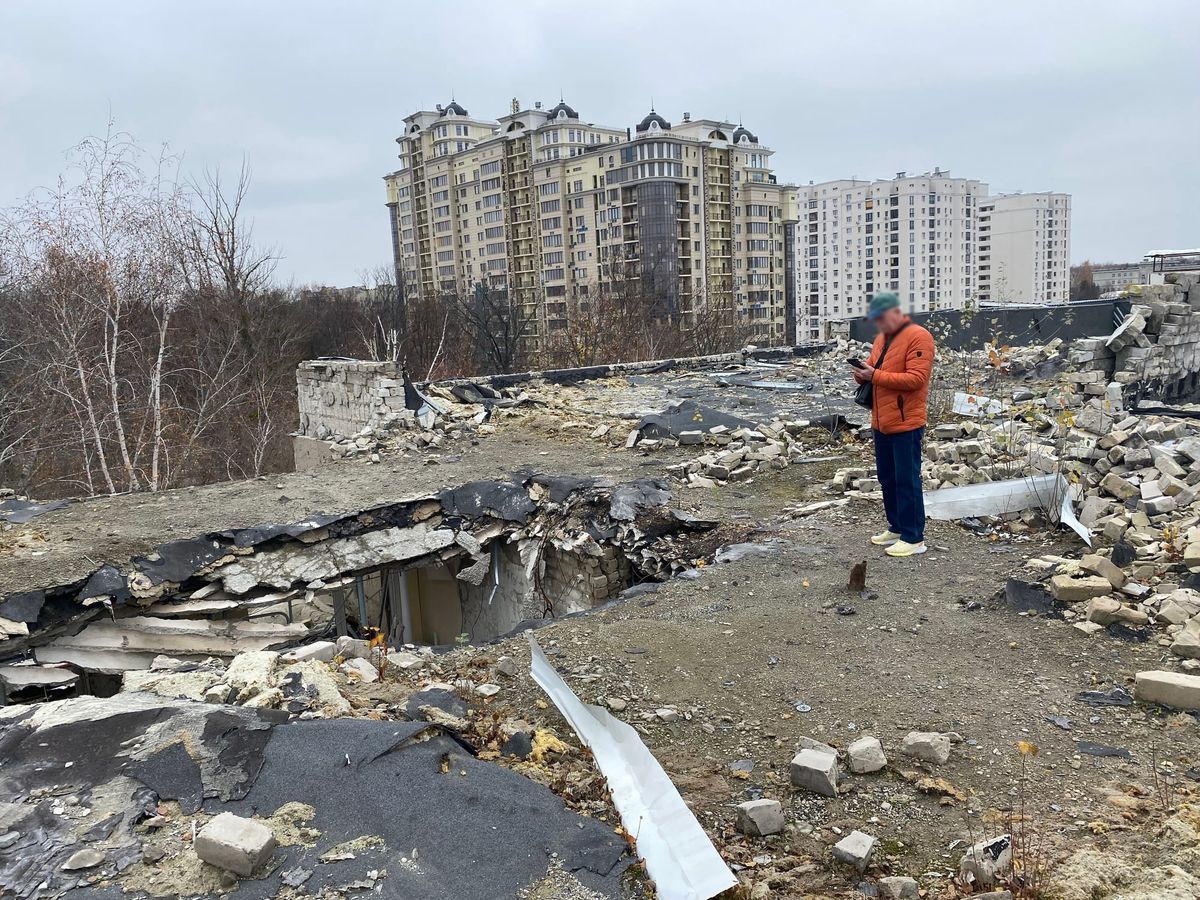](https://www.opendemocracy.net/en/from-frontlines-to-coal-mines-trade-unions-are-fighting-for-ukraines-future/)
**And what about our own branch of MAGA-style politics – and particularly the Nathan Gill case, with Reform’s former Welsh leader now serving a 10-year sentence for taking Russian bribes?**
It's really a strange story. So Nathan Gill goes to Brussels as UKIP MEP and he's befriended by someone I know very well, a Ukrainian journalist and former foreign ministry press attaché called Oleg Voloshin.
And Voloshin is way cleverer than Gill. Ebullient, with brilliant English, talking very fast, a good analyst, someone who made absolutely no secret of his pro-Russian views. Voloshin befriended Gill and then started paying him €5,000 wrapped in rubber bands in envelopes.
The epigraph of my Gill chapter is something that Voloshin sent Gill by WhatsApp, saying: “I will write everything.” He was using Gill as a kind of ventriloquist dummy, writing speeches complaining about Ukraine's clampdown on pro-Russian media outlets, including the one he and his wife worked for, saying Ukraine was backsliding on democracy and advancing a “peace” agenda.
This was Russian propaganda dressed up in the language of rights and transparency. And this went on for quite a long time. And it was a massive, multifarious espionage operation.
And what's astonishing is, as a thought experiment, can you imagine if a Labour MP had taken £40-50,000 from Russian spies? This story would be running for months and months. Whereas Nigel Farage's guy is exposed as a traitor, and the story vanished because the right-wing media had no interest in pursuing it. Voloshin’s wife, Nadia, gave Farage a T-shirt that had Roger Moore on it as James Bond and the slogan ‘#Brexit, leave and let die’. Why is Farage getting naff T-shirts from Russian spies?
I would just say, as a final thought: we haven't got to the bottom of Russia and Brexit because there's been no proper inquiry. We haven't got to the bottom of who is funding Reform.
And I think it's crucial. It's crucial for our democracy.
### Trump, Putin and the Betrayal of Ukraine
URL: https://www.opendemocracy.net/podcasts/trump-putin-and-the-betrayal-of-ukraine/
Last updated: 2026-10-10T07:56:51.000Z
[Listen now](https://pod.link/1790866829?view=apps&sort=popularity&ref=opendemocracy.net)
In this episode Sian Norris speaks with The Guardian’s Luke Harding about his book [**Betrayal: Putin, Trump and the New Age of Conquest**](https://uk.bookshop.org/a/8711/9781783353378?ref=opendemocracy.net), covering Harding’s 2007–2011 Moscow posting, FSB harassment and his expulsion while investigating Litvinenko and Putin’s wealth.
Luke argues Putin’s worldview is neo-imperial and explains how Western leaders misread Russia before the February 2022 full-scale invasion. He describes Biden’s fear of nuclear escalation and slow delivery of weapons, and says some Ukrainians hoped Trump might end the war, but Harding believes Trump behaves like a Russian asset, citing deference to Putin, policy shifts, cuts to Ukraine aid, and possible kompromat.
We also explore Kremlin ties to the British right, Brexit-era influence, Nigel Farage’s Russia Today appearances, and the Nathan Gill bribery case, before ending on Ukraine’s resilience, drone innovation, and a strategy of degrading Russia’s war economy.
00:00 Introduction
01:13 Expelled From Moscow
03:34 FSB Harassment Campaign
07:05 Warnings Before Invasion
10:17 Putin Mythology Ukraine
13:56 Biden Zelensky Tensions
17:51 Alaska Summit Deference
20:03 Why Trump Aligns Russia
23:42 Oval Office Ambush
26:15 Britain Right Russia Links
29:27 Nathan Gill Bribery Case
35:12 Far Right Influence Network
37:18 New Age Of Conquest
40:05 Drone Warfare Template
40:54 Ukraine Resilience Winter
43:49 Ukraine Innovation Victory
**Credits:**
Presented by Sian Norris
Produced by Harry Beney
### The next Venezuela? How a US pressure campaign threatens Brazil’s democracy
URL: https://www.opendemocracy.net/brazil-us-lula-bolsonaro-trump-delcy-venezuela-democracy-interference/
Last updated: 2026-10-07T18:54:38.000Z
Brazil’s first-round presidential vote last weekend exposed the consequences of US meddling – leaving the country’s sovereignty at stake as voters decide between two candidates.
This may seem far-fetched, but it follows a series of events in which far-right senator Flávio Bolsonaro, who may become Brazil’s next president, has played a leading role. Bolsonaro, the eldest son of former far-right president Jair Bolsonaro, won 47% of the first-round vote on Sunday, narrowly ahead of incumbent centre-left president Luiz Inácio Lula da Silva’s 45%. As neither won more than half the vote, a runoff will be held on 25 October, but the difference could prove insurmountable for Lula, and the new Congress will have a [clear far-right majority](https://www.theguardian.com/world/2026/oct/05/brazil-presidential-race-election-result-second-round-lula-flavio-bolsonaro?ref=opendemocracy.net).
Facing criticism over his campaign and the chronic lack of successors plaguing Latin America’s left-wing parties, Lula, who is weeks away from his 81st birthday, has made resisting US interference his campaign rallying cry. Last month, he [delivered a stark warning](https://www.pbs.org/newshour/world/brazils-lula-warns-against-foreign-interference-in-elections-urges-leaders-to-respond-to-global-conflicts?ref=opendemocracy.net) in his opening address to the United Nations General Assembly. “Once again, we are witnessing external interference in electoral processes. Brazil is nobody’s backyard,” he said. “We will not allow the enemies of democracy, whether domestic or foreign, to undermine the will of the people. Brazilian democracy belongs to the Brazilian people. Brazil will remain a sovereign country.”
The US far right began a [concerted effort ](https://www.opendemocracy.net/en/brazil-jair-bolsonaro-us-far-right-donald-trump-steve-bannon-eduardo/)to meddle in Brazilian politics in 2022, which intensified after Donald Trump re-entered office last year. His administration has waged an influence campaign on three fronts: the economy, diplomacy, and politics.
On the former, the White House imposed tariffs of up to 50% on Brazil in July 2025, with Trump writing to Brazilian officials to demand an end to the “witch hunt” against Jair Bolsonaro, who was under investigation for his role in an attempted coup after losing the 2022 election.
The US also sanctioned judges investigating the attempted coup, following a campaign reportedly [driven by Flávio Bolsonaro’s brother](https://www.opendemocracy.net/en/eduardo-bolsonaro-lobbying-us-sanctions-brazil-justice-supreme-court-marco-rubio-figueiredo-moraes-magnitsky-act-coup/), Eduardo, a former MP who has lived in Texas since March last year, and his loyal right-hand man, Paulo Figueiredo, the grandson of Brazil’s last dictator. Brazilian outlet Agência Pública[ has long reported](https://apublica.org/2024/04/como-eduardo-bolsonaro-e-comitiva-articulam-com-parlamentares-dos-eua-punicoes-ao-brasil/?ref=opendemocracy.net) on the pair’s efforts to win influence in the corridors and chambers of the US State Department and Congress.
Despite the Trump administration’s best efforts, Brazil did not drop the case against the former president, who[ was sentenced to 27 years in prison](https://agenciabrasil.ebc.com.br/justica/noticia/2025-09/stf-condena-bolsonaro-27-anos-e-tres-meses-de-prisao?ref=opendemocracy.net) in September 2025\. Lula managed to end the year on a further positive note when his government got the US to lift some of its tariffs against Brazil, despite an official meeting [being cancelled](https://g1.globo.com/politica/blog/andreia-sadi/post/2025/08/12/reuniao-haddad-bessent-cancelada-horas-apos-entrevista-eduardo-bolsonaro.ghtml?ref=opendemocracy.net) hours after Eduardo gave a press interview seeking the US authorities’ support in opposing Jair’s house arrest.
Another short-lived victory followed in February this year, when the US Supreme Court[ ruled](https://time.com/7380033/supreme-court-tarriffs-ruling-trump/?ref=opendemocracy.net) that a global tariff imposed by Trump had been illegal. However, the US president immediately[ reversed the ban](https://www.telemundo.com/noticias/noticias-telemundo/economia/trump-eleva-el-nuevo-arancel-global-10-al-15-rcna260048?ref=opendemocracy.net), imposing new tariffs under a different legal framework.
[Inside Bolsonarists’ campaign to impose US sanctions on Brazilian judgesFormer president’s son and his allies are lobbying US government to punish judges investigating 2022 coup attemptopenDemocracyAlice Maciel](https://www.opendemocracy.net/en/eduardo-bolsonaro-lobbying-us-sanctions-brazil-justice-supreme-court-marco-rubio-figueiredo-moraes-magnitsky-act-coup/)
But in May, the tide began to turn against Lula.
That month, brothers Flávio and Eduardo, along with Figueiredo,[ met Trump](https://g1.globo.com/mundo/noticia/2026/06/02/trump-faz-post-com-foto-ao-lado-de-flavio-bolsonaro.ghtml?ref=opendemocracy.net) at the White House – even posing for a photo together. Two days later, Washington fulfilled one of the Brazilian Flavio’s key demands: designating Brazil’s two main criminal groups, the Comando Vermelho and the Primeiro Comando da Capital, [as terrorist organisations](https://www.state.gov/releases/office-of-the-spokesperson/2026/05/terrorist-designation-of-comando-vermelho-and-primeiro-comando-da-capital?ref=opendemocracy.net) and a threat to the US’s national security.
This designation sparked concern among [political analysts](https://www.theguardian.com/world/2026/sep/01/us-trump-rubio-meddling-brazil-election?ref=opendemocracy.net) and led the Brazilian Intelligence Agency to warn that US interference in Brazil had reached a “critical level”, according to a[ report](https://www.ambito.com/mundo/inteligencia-brasil-alerto-un-riesgo-critico-interferencia-eeuu-las-elecciones-n6324523?ref=opendemocracy.net) obtained by the Folha de S. Paulo newspaper. Many fear it could set a legal precedent for the US using extraterritorial force in Brazil to protect itself from external threats that it has deemed to have transnational reach.
While the groups profit from illegal means, such as violence and the trafficking of drugs and weapons, neither has a history of violence motivated by “xenophobia, race, colour, ethnicity or religion” – meaning they do not [meet Brazil’s legal definition of terrorist organisations](https://www.planalto.gov.br/ccivil%5F03/%5Fato2015-2018/2016/lei/l13260.htm?ref=opendemocracy.net). The US’s designation has helped to intensify the far-right narrative that otherness and difference – often embodied in immigrants or non-white and non-heterosexual citizens – constitute threats.
[Brazil election: The US far-Right is acting to get Bolsonaro re-electedBolsonaro is unlikely to give up power without a fight. Key Trump supporters are preparing to do battle for himopenDemocracyKen Silverstein](https://www.opendemocracy.net/en/brazil-jair-bolsonaro-us-far-right-donald-trump-steve-bannon-eduardo/)
Within weeks of the designation being applied, the US also reinstated yet more tariffs against Brazil –[ this time of up to 37.5%](https://www.reuters.com/world/americas/brazil-says-165-exports-face-combined-us-duties-375-2026-07-24/?ref=opendemocracy.net) – with secretary of state Marco Rubio blaming [“Lula’s ego”](https://fortune.com/2026/07/16/brazil-tariff-25-percent-coffee-exempt/?ref=opendemocracy.net). [A document obtained](https://www.estadao.com.br/politica/governo-trump-exigiu-que-brasil-liberasse-participacao-de-dissidentes-politicos-na-eleicao-de-2026/?ref=opendemocracy.net) by the Estadão newspaper suggests conditions imposed by Washington for lifting the tariffs included Brazil granting the Trump administration access to any negotiations over its critical minerals and allowing “dissident politicians” – a reference to Jair, who is barred from political activity while in prison – to run for election. Brazil rejected the terms.
In July 2026, three months before the presidential election, Brazil’s Foreign Ministry rejected the visas of two US diplomatic envoys, claiming they would use their visit to[ question the integrity of the Brazilian electoral system](https://www.dw.com/pt-br/brasil-barra-enviados-dos-eua-por-temor-de-investida-contra-urnas/a-78115365?ref=opendemocracy.net).
Now, as the election looms, a victory for Lula could spark a fierce US backlash against Brazil, as well as reviving accusations that his 2022 election win was the result of fraud – an allegation [made](https://g1.globo.com/politica/noticia/2022/07/18/bolsonaro-reune-embaixadores-para-repetir-sem-provas-suspeitas-ja-esclarecidas-sobre-urnas.ghtml?ref=opendemocracy.net) by Jair in 2022 and since promoted by Flávio Bolsonaro and Trump’s allies in the US, despite [repeated denials from Brazil’s electoral authorities](https://www.tse.jus.br/comunicacao/noticias/2026/Agosto/viralizou-e-falso-que-5-1-milhoes-de-votos-foram-retirados-de-candidato-a-presidencia?ref=opendemocracy.net)
## **Will Brazil become Venezuela?**
The situation in Venezuela may offer a glimpse into Brazil’s future.
Seeking to justify its operation against Venezuela’s authoritarian president, Nicolás Maduro, Trump’s administration began constructing a narrative about the threats the US faced from the country’s criminal gangs in January 2025.
On his second day in office, the US president [signed an executive order](https://www.whitehouse.gov/presidential-actions/2025/01/designating-cartels-and-other-organizations-as-foreign-terrorist-organizations-and-specially-designated-global-terrorists/?ref=opendemocracy.net) establishing a process to formally label “cartels and other organisations” as Foreign Terrorist Organisations and Specially Designated Global Terrorists that threaten US national security. His administration designated a Venezuelan criminal gang, the Tren de Aragua, [under these categorisations](https://www.state.gov/designation-of-international-cartels?ref=opendemocracy.net) a month later.
Then, in March 2025, the US deported more than 200 Venezuelans to a maximum-security prison in El Salvador, with Salvadoran president Nayib Bukele saying that most were members of the Tren de Aragua. Between July and November last year, the US designated a second Venezuelan supposed criminal gang, Cartel de los Soles, as a Foreign Terrorist Organisation and Specially Designated Global Terrorists.
At the same time, the US ramped up attacks on vessels in the Caribbean and Pacific, which Washington said were transporting drugs – a move praised [by Flávio Bolsonaro](https://x.com/FlavioBolsonaro/status/1981332224533291494?s=20&ref=opendemocracy.net). “How envious!” he wrote on X. “I heard there are boats like this here in Rio de Janeiro, in Guanabara Bay, flooding Brazil with drugs. Wouldn't you like to spend a few months here helping us fight these terrorist organisations?”
On 3 January 2026, news broke that[ US forces had entered Caracas and captured Maduro](https://www.opendemocracy.net/es/trump-maduro-golpe-venezuela-estados-unidos-america-latina-doctrina-monroe/). The indictment against him,[ published by a US court that day](https://www.justice.gov/opa/page/file/1261806/dl?inline=&ref=opendemocracy.net), stated: “The Cartel de los Soles, under the leadership of MADURO MOROS and others, prioritised using cocaine as a weapon against America and importing as much cocaine as possible into the United States.”
Days later, Maduro’s vice-president, Delcy Rodríguez, became Venezuela’s acting president with Trump’s consent, beginning to govern under orders from Washington.
Venezuela offers an extreme look at what the future could hold for Brazil – but it is far from the only instance of the current White House interfering in politics in Latin America. Last year, Trump[ suggested](https://www.bbc.com/news/articles/cg7n82gd7pvo?ref=opendemocracy.net) a $20bn financial bailout for Argentina was dependent on the electoral victory of the party led by president Javier Milei, and[ explicitly backed](https://edition.cnn.com/2025/12/05/americas/honduras-nasralla-trump-interference-latam-intl?ref=opendemocracy.net) Honduras’s conservative candidate, Nasry Asfura, and threatened to cut US financial aid if he did not win the presidential election.
Against this backdrop of US influence, the Brazilian elections have been dominated by two contentious issues. On 25 October, 158 million voters will go again to the polls in what is shaping up to be a referendum on Brazilian sovereignty vs a supposed fight against crime – under Trump’s methods and tutelage.
[Lula, Bolsonaro, and Trump: The election for Brazil’s futureFlávio Bolsonaro’s Washington-aligned programme amounts to a subordinate economy confined to the US sphere of influenceopenDemocracyGuilherme Klein](https://www.opendemocracy.net/brazil-election-lula-flavio-bolsonaro-trump-tariffs-shape-race-future-democracy/)
*Maria Martha Bruno is a multimedia journalist and coordinator of International Collaborations at Agência Pública, a Brazilian investigative media organisation. She has worked as a producer for NBC News, Al Jazeera, the BBC and CNN, and was a correspondent for the Brazilian platform UOL in Buenos Aires. Maria Martha holds a master’s degree from Texas A&M University in the United States, where she also taught.*
### ‘The tide is turning’: Palestine solidarity’s impact on British politics
URL: https://www.opendemocracy.net/the-tide-is-turning-palestine-solidaritys-impact-on-british-politics/
Last updated: 2026-10-07T09:59:52.000Z
Three years after October 2023, Palestine solidarity campaigning has become an increasingly visible force in British politics. From mass demonstrations and electoral organising to boycott and divestment campaigns, activists have sought to turn public opposition to Israel's assault on Gaza into political and economic pressure.
There have been some shifts in government policy, including sanctions relating to Israeli settlements, while councils, trade unions and other institutions have faced growing pressure to divest from companies linked to Israel. But Palestine Action has also been proscribed, with dozens of activists arrested or imprisoned, and campaigners argue that this and the UK’s continuing military, economic and diplomatic support for Israel show how far there is still to go.
openDemocracy spoke to Sara Husseini, director of the British Palestinian Committee, about what has genuinely changed over the past three years, the role of the Palestinian-led boycott, divestment and sanctions (BDS) movement, and where campaigners are likely to focus next.
*This interview has been edited for length and clarity,*
**Nandini Naira Archer: How different is the political conversation around boycotts, divestment and sanctions in Britain now compared with before October 2023? What has genuinely shifted, rather than just changed rhetorically?**
**Sara Husseini:** The horrors of the past three years of Israel's genocidal assault on the Palestinian people in Gaza have only increased the number of people of conscience across the UK and globally engaging in campaigns for boycotts, divestment and sanctions to apply economic pressure on Israel.
As many as 34 councils in England and Wales have now committed to divesting their pension funds from companies complicit in Israel's grave war crimes and crimes against humanity. Just last month, the Trades Union Congress, representing upwards of five million workers across the UK, voted to endorse the Palestinian-led BDS movement and bring a complete end to the arms trade with Israel.
While the UK government continues to formally distance itself from BDS as a movement – against the backdrop of a coordinated and sustained attack on non-violent resistance – the measures recently announced by the foreign secretary constitute sanctions, albeit limited ones.
Steps like these are first and foremost an obligation under international law. But they also reflect the public pressure that has compelled this Labour government to shift its position – a message previous governments failed to listen to.
If we look to apartheid South Africa, for example, the British government was one of the last to respond by sanctioning the apartheid government. So the shift in the UK's position on sanctions indicates that the tide really is turning.
**Where do you think Palestine solidarity campaigning has had the clearest tangible impact on UK politics or policy over the past three years, and where has it struggled to translate mass public mobilisation into political change?**
The Palestine solidarity movement has been successful in making the struggle for Palestinian liberation an electoral issue here in the UK – at a national level, but also locally, as the Vote Palestine campaign in this year's council elections demonstrated.
These successes have meant politicians in elected office know that they at least have to be seen to be taking action on Israel's grave war crimes and crimes against humanity, as illustrated by [Andy Burnham’s apology for the Labour Party's initial response to Israel’s military action in Gaza](https://www.bbc.co.uk/news/articles/cvg5yrkeed1o?ref=opendemocracy.net) and the recent announcement of sanctions relating to illegal settlements.
However, the UK continues to provide considerable economic, military and diplomatic support to Israel. There therefore remains a significant democratic deficit between the demands of the British public and the political class.
There is also a rightward surge in the UK, as there is across Western Europe, and broadly speaking this politics is more hostile to the Palestinian cause. There is more work to be done on strategising around and resisting this shift, electorally and beyond.
**We've seen the UK government take some measures relating to settlements, companies and arms, while campaigners have argued these fall far short of what is needed. How significant have those changes been from your perspective, and how much do you think sustained campaigning and public pressure contributed to them?**
The changes in government policy do not go nearly far enough to create material change on the ground in Palestine or to meet Britain's obligations under international law. But they do represent a significant shift in tone.
That says a lot about the broader shift in public consciousness around the Palestinian struggle, the power of sustained public pressure and Israel's growing isolation internationally.
What is required now are comprehensive sanctions on the Israeli state, including Israeli ministers and officials responsible for grave violations of international law, alongside support for the enforcement of international arrest warrants for alleged war crimes and crimes against humanity.
A two-way ban on the arms trade is essential, including the provision of F-35 components to Israel through the global spare-parts pool, as well as other forms of military cooperation and intelligence sharing.
These are measures any government committed to upholding the international legal framework should be prepared to take, not least in the context of the ongoing genocide in Gaza.
After witnessing three years of genocide livestreamed to their phones, people in the UK remain attentive to this issue and will continue to hold the government accountable, particularly since Britain bears a specific historical responsibility for the original dispossession of the Palestinian people more than a century ago.
**What role does BDS play now within the broader Palestine solidarity movement? Has its strategy, audience or political importance changed as the movement has grown?**
Boycotts have long been used by oppressed communities as a tactic to resist injustice and mobilise international support for their cause. They are one of the tools available to people who want to protest injustice and make ethical decisions about where their wages are spent. They provide an opportunity for collective and sustained action that is not contingent on government positions.
The Palestinian-led BDS call emerged more than 20 years ago and continues to play a vital role within the solidarity movement. It has always been one tool within the broader campaign for Palestinian freedom, justice and equality.
It has done a great deal to raise awareness of abuses committed by Israel and has provided a means for ordinary people to express their opposition to the killing, forced displacement and incarceration of millions of Palestinian women, men and children in their own homes and homeland.
There is no doubt that the shifts we are seeing in the positions of governments such as the UK's are a result of public pressure, including boycott and divestment campaigns, solidarity marches and constituents consistently contacting their MPs, particularly over the past three years.
Boycott, divestment and sanctions are three different approaches that can be used by different actors – from individuals to institutions and governments – but work in tandem to advance Palestinian rights.
People are also much more aware of the relationship between the Palestinian struggle and other human and political rights, including the importance of protecting civil liberties and the right to protest.
The so-called ‘BDS bill’, which attempted to prevent public bodies from making ethical decisions about procurement and investment and fell with the Conservative government in 2024, highlighted the dangers of legislation that could be used to shut down protest across a much wider range of social and political justice issues, from fossil fuels and weapons manufacturing to workers' rights.
As we have always maintained, BDS is a necessary tactic, but it alone cannot bring about Palestinian liberation. It is part of a broader strategy and should be seen in that light.
**What are the biggest political obstacles now to further action in Britain, and where do you think campaigners are likely to focus their pressure next?**
On an ideological level, British politicians across the political spectrum often discuss illegal settlements as though they are the enterprise of an extreme fringe of Israeli society, rather than foundational to the state's colonial architecture and expansionist policy.
This has provided a basis for the UK government to attempt to justify its continued support for Israel beyond the limited sanctions that have been imposed.
It is imperative that the Palestine solidarity movement dispels this myth and makes plain what support for Israel means: the aiding and abetting of a settler-colonial project aimed at gaining the maximum amount of territory on and around historic Palestine with the fewest number of Palestinians on that land.
There is also an alarming effort by elements of the political and media establishment to erase or forget the ongoing genocide - to approach the struggle in Palestine as though nothing has changed since October 2023, while turning a blind eye to colonial expansion across Palestine and continuing ceasefire violations in Gaza.
Campaigners are working hard to ensure these ongoing atrocities are not forgotten, and that accountability means more than targeting the settlement project alone, but rather takes aim at a state that would commit genocide against a besieged and occupied population.
### Un desalojo empuja a España a elecciones anticipadas
URL: https://www.opendemocracy.net/es/espana-vivienda-digna-especulacion-desalojo-maricarmen-pedro-sanchez-elecciones-derecho-fondos-buitre/
Last updated: 2026-10-06T12:34:59.000Z
Una mujer de 87 años acaba de convertirse en un símbolo nacional en España, y su desalojo abrió una crisis que obligó este lunes a convocar elecciones anticipadas.
El 23 de septiembre, la policía sacó a Maricarmen Abascal a la fuerza en una camilla del piso de Madrid en el que llevaba viviendo 70 años, en cumplimiento de una orden judicial solicitada por la inmobiliaria propietaria de su edificio. Mientras cientos de personas se congregaban para intentar impedir su desalojo, la policía antidisturbios reaccionó con fuerza, y las imágenes de su brutalidad dieron la vuelta al mundo.
En los 12 días transcurridos desde entonces se produjeron más protestas y acciones políticas que en los últimos años, con una presión creciente del movimiento por la vivienda, muy bien organizado a través del Sindicato de Inquilinas, sobre el Congreso.
Este malestar desembocó en la convocatoria de elecciones anticipadas para el 29 de noviembre, decidida por el presidente del gobierno, Pedro Sánchez, después de que el Congreso rechazara las medidas de emergencia que él había propuesto para hacer frente a la crisis habitacional.
Para Abascal, cuyo contrato de alquiler se remonta a 1956 y que siempre había pagado a tiempo, los problemas comenzaron después de que el edificio en el que vive fuera adquirido por la gestora inmobiliaria Urbagestión, en 2018.
La empresa le subió inicialmente el alquiler de unos 500 a 2.650 euros al mes; luego esa cantidad se redujo a 1.650 euros, pero seguía estando muy por encima de lo que ella percibía de su pensión.
Aunque la Constitución de 1978 reconoce el derecho a una vivienda digna y adecuada, la ley ofrece mucha menos protección que hace 50 años. Se edificó un sistema político que dificulta la protección de las personas mayores o vulnerables frente a la indigencia y la violencia inmobiliaria, y que deja a la Generación Z ante un futuro especialmente sombrío, mientras la vivienda se convierte en un bien de lujo.
La indignación contra este sistema lleva años acumulándose, a medida que los precios de la vivienda se alejan cada vez más de los salarios, el alquiler consume una parte cada vez mayor de los ingresos de la gente, y los vecinos son expulsados de los barrios donde sus familias han vivido durante generaciones.
Dado que estos problemas son especialmente graves en Madrid, uno de los principales mercados de inversión inmobiliaria de Europa, el desahucio de Abascal se convirtió en el punto de mira de esta indignación y puso de relieve la necesidad de cambios radicales.
Sin embargo, mientras algunos intentábamos impedir el desahucio de Abascal, responsables del gobierno regional de Madrid se reunían con inversores en The District, una de las principales ferias internacionales de capital inmobiliario. Es justo decir que en España se está librando una batalla por el derecho a la vivienda cuyos ecos resuenan en todo el mundo.
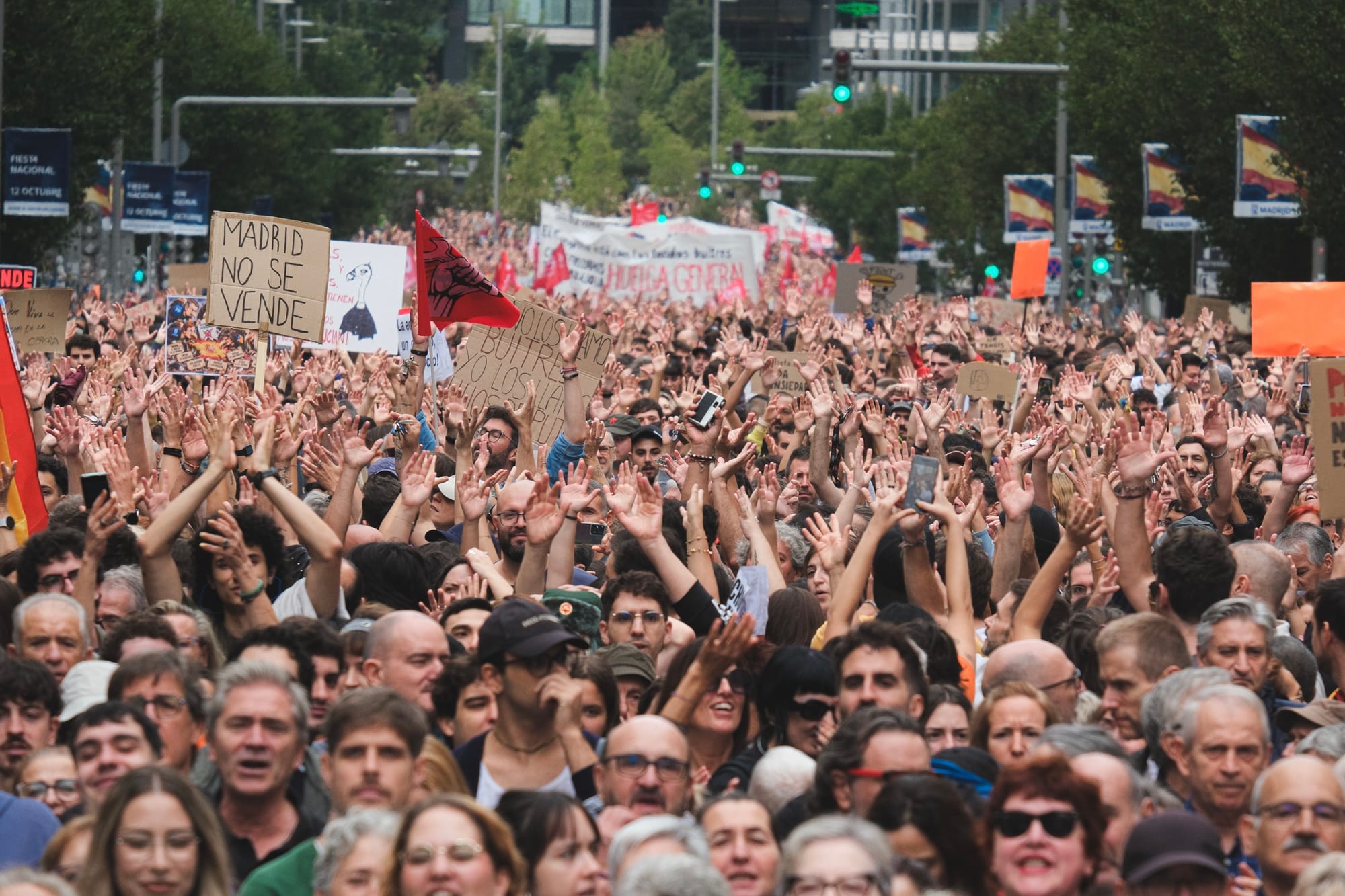
Manifestación contra la crisis de la vivienda en Madrid, España, el 3 de octubre de 2026 | Enrique Romanos Tardio/NurPhoto vía Getty Images
En los días siguientes al desalojo de Abascal, años de trabajo organizativo pasaron de repente a primer plano. El Sindicato de Inquilinas supo canalizar la indignación generalizada por el trato que había recibido Maricarmen en una oleada imparable de protestas populares, cuyo epicentro fue la Puerta del Sol de Madrid, la emblemática plaza central de la ciudad.
El 26 de septiembre comenzaron a aparecer tiendas de campaña en la plaza y, como ocurrió en 2011 con el movimiento 15M, en cuestión de días se armó una pequeña ciudad de acampada que acogía a más de 1.000 personas y que mostraba un nivel de organización ejemplar.
Otras protestas y acampadas más pequeñas aparecieron en otras ciudades de toda España, a menudo lideradas por jóvenes, que se encuentran entre los más afectados por la imposibilidad de pagar una vivienda.
Pero el movimiento va mucho más allá, porque toca a personas de todas las edades y circunstancias.
Enseguida se sucedieron victorias que parecían impensables solo unos días antes. El 29 de septiembre, a Maricarmen Abascal – que había sido hospitalizada por estrés grave y agotamiento – le comunicaron que podía volver a su vivienda, mediante un nuevo contrato asequible de ocho años, en virtud del cual su alquiler no superará el 30% de sus ingresos. El hecho de que lo consiguiera pocos días después de haber sido desahuciada dice mucho del nivel de presión que ha logrado ejercer el movimiento.
Ese mismo día se produjo una importante victoria política, cuando el Consejo de Ministros aprobó dos decretos de emergencia en materia de vivienda. Estos incluían protecciones contra determinados desahucios hasta 2030, límites a los aumentos de alquiler, restricciones a la compra especulativa de viviendas por parte de los denominados ‘fondos buitre’ (como se conoce a las grandes empresas que especulan con bienes inmobiliarios), una medida extraordinaria que otorga a determinados inquilinos el derecho a prorrogar los contratos de alquiler vencidos hasta un máximo de dos años, y derechos de renovación de contratos más sólidos para los inquilinos.
Estas medidas son bienvenidas y necesarias, pero no son suficientes. España necesita urgentemente contratos de alquiler indefinidos, como ya existen en otros países europeos, para que el derecho de ningún inquilino a una vivienda dependa de la voluntad de un propietario o de un fondo.
Pero el 2 de octubre, el Congreso rechazó ambos decretos. Estas derrotas pusieron de manifiesto que el gobierno de izquierdas que encabeza Sánchez no cuenta con la mayoría parlamentaria necesaria para aprobar reformas importantes. El presidente respondió convocando elecciones anticipadas que sitúan la crisis de la vivienda en el centro de la política nacional.
La energía ciudadana que hizo posible este momento debe canalizarse ahora hacia consolidar el poder popular que ha forzado al Congreso a posicionarse.
Han sido unas semanas históricas y vertiginosas en España; debemos mantener este impulso aquí y en todos los lugares donde el derecho a una vida digna esté subordinado al capital especulativo.
*Javier Rubio es abogado del Centro de Asesoramiento y Estudios Sociales (CAES), especializado en el derecho a la vivienda desde una perspectiva de derechos humanos. Ha liderado la defensa de litigios estratégicos en materia de vivienda ante el Tribunal Europeo de Derechos Humanos y el Comité de Derechos Económicos, Sociales y Culturales de las Naciones Unidas.*
### How one eviction pushed Spain to a snap election
URL: https://www.opendemocracy.net/spain-one-eviction-snap-election-maricarmen-abascal-pedro-sanchez/
Last updated: 2026-10-05T15:35:06.000Z
An 87-year-old woman has become a national symbol in Spain – sparking a crisis at the heart of the country’s politics that has today forced a snap election.
On 23 September, Maricarmen Abascal was forcibly carried on a stretcher from the apartment in Madrid where she has lived for 70 years, having been evicted by the real estate company that owns her building. As hundreds of people gathered to try to stop her eviction, riot police reacted with force, and images of their brutality were broadcast around the world.
The 12 days since have seen more protests and political action than in recent years, with legislators under mounting pressure from Spain’s housing movement, which is well organised through the Tenants’ Union (Sindicato de Inquilinas). This unrest has culminated in prime minister Pedro Sánchez calling an early election for 29 November after Parliament rejected his government’s emergency measures to tackle housing unaffordability.
For Abascal, whose tenancy dates back to 1956 and who had always paid the rent on time, the problems began after the building she lives in was bought by Urbagestión in 2018\. The property management company initially raised her rent from around €500 to €2,650 a month; this was later reduced to €1,650, but was still far beyond what she received from her pension.
While Spain’s 1978 constitution recognises the right to decent and adequate housing, the law offers far less protection than it did 50 years ago. A political system has been established that makes it difficult to protect elderly and otherwise vulnerable people from destitution and property violence and leaves Gen Z facing a particularly bleak future as housing becomes a luxury commodity.
Anger has been building for years, as house prices move further away from wages, rent consumes an ever larger share of people’s incomes, and locals are pushed out of neighbourhoods where their families have lived for generations. With these problems particularly acute in Madrid, one of Europe’s major property investment markets, Abascal’s eviction became a focal point for this anger, and highlighted the need for radical changes.
Yet while some of us were trying to stop Abascal’s eviction, officials from Madrid's regional government were meeting with investors at ‘The District’, one of the major international fairs for property capital. It is fair to say that a battle for the right to housing is being fought in Spain, with echoes that resonate around the world.
In the days after Abascal’s eviction, years of organising suddenly came to the fore. The Tenants' Union was able to channel the widespread anger at her treatment into an unstoppable wave of popular protests – the epicentre of which was Madrid’s Puerta del Sol, the city’s emblematic central square.
Tents began to appear in the square on 26 September and, just as happened in 2011 with the 15M movement, it became a small camp city within days – home to more than a thousand people displaying an exemplary level of organisation. Other smaller protests and encampments spread to other cities across Spain, often led by young people, who are among the hardest hit by unaffordable housing. But the movement goes much further, reaching people of all ages and circumstances who are affected.

Protesters march through Madrid on 3 October calling for the right to housing and an end to evictions. **Enrique Romanos Tardio/NurPhoto via Getty Images*
Victories that seemed unthinkable only days earlier quickly followed. On 29 September, Abascal – who had been hospitalised with severe stress and exhaustion – was told she would be allowed to return to her home, having been offered a new, affordable eight-year contract, under which her rent will not exceed 30% of her income. That she secured this days after being evicted says a great deal about the level of pressure the movement has achieved.
A significant political victory came the same day, when the Council of Ministers approved two emergency housing decrees. These contained protections against certain evictions until 2030, limits on rent increases, restrictions on speculative housing purchases by so-called ‘vulture funds’, an extraordinary measure giving certain tenants the right to extend expiring rental contracts for up to two years, and stronger renewal rights for tenants.
These measures are welcome and necessary, but they are not enough. Spain urgently needs indefinite rental contracts, as already exist in other European countries, so that no tenant's right to a home depends on the will of a landlord or a fund.
Yet on 2 October, Congress rejected both decrees. The defeats highlighted that Sánchez’s leftist government does not have the congressional majority needed to pass major reforms, and the prime minister has responded by calling a snap election that puts the housing crisis at the centre of national politics.
The citizen energy that made this moment possible must now be channelled into electing representatives willing to enact desperately needed political action. These have been historic and vertiginous weeks in Spain; we must maintain this momentum, here and in every place where the right to live a dignified life has been subordinated to unchecked capital.
### Who really owns Burnham's Labour?
URL: https://www.opendemocracy.net/weekly-email-031026/
Last updated: 2026-10-05T07:00:16.000Z
This week saw the Labour Party descend on Liverpool for its annual conference – the party’s third since taking office. Accompanying them, thanks to the donations of generous openDemocracy readers, were my colleagues, Ethan Shone and Sian Norris.
The conference was, by all accounts, a far more jubilant affair than last year’s event; buoyed by Andy Burnham’s bloodless coup earlier this summer and the poll boost that comes from having a leader who appears even vaguely human.
As Ethan writes, even many of those on Labour’s long-ostracised left felt they had renewed reason to be cheerful. “Keir Starmer saw any criticism from the trade unions and the left as a hostile attack,” one trade unionist told Ethan after Burnham’s speech, “whereas Burnham sees us more as critical friends.”
Not everybody agrees, of course. Burnham’s refusal to embrace nationalisation is one source of contention, as is his plan to scrap the pensions triple lock. Writing for us, economist James Meadway explains why the latter is a bad idea – and one unlikely to generate the money it promises. “For all the relative protection from austerity, the British state pension remains among the lowest in Europe relative to average earnings,” he notes.
The next election is only three years away, and ****we are determined to** ****prevent the rise of the far right.** To do that, we want to recruit 500 new monthly donors by the end of 2026\.
****Will you be part of the movement to fight the far right, with a monthly donation today?**
[Become a regular supporter ](#/portal/signup)
Still, for now, Burnham has been broadly able to appease both sides of the party. But, as Ethan writes in this week’s lead story, tensions still simmer under the surface – and were this week exposed by the conference’s geography. Inside, a security-gated maze of £6,600 corporate passes, complimentary bars, and slick lobbyists. Outside, protesters were dragged away by police for holding paper signs. Whose interests will win out when capital comes calling?
After a busy few days in Liverpool, Sian and Ethan caught up with openDemocracy’s editor-in-chief, Aman Sethi, for a special Labour Party Conference episode of our podcast, *In Solidarity*. Both brought back reports of their differing experiences of the event, from panels on how to defeat the far-right to the prevalence of robot-lobbyists (that's lobbyists for robots, not robots that lobby, fortunately).
Also in this edition, Sian reports on a warning that Putin “won’t stop at Ukraine”; longtime openDemocracy columnist Paul Rogers takes a deeper look at the confusing incident at RAF Fairford; and Guilherme Klein discusses what’s at stake in this weekend’s election in Brazil.
As ever, thank you for supporting our journalism; we truly couldn’t have done this week without your donations. If you aren’t yet a regular donor, do consider becoming one. Have a great weekend!
**Indra Warnes - Deputy Editor**
---
[Suits vs. picket lines: Corporations, class politics and Burnham’s Labour conferenceA few days at Labour conference lays bare the vast disparity in how different groups – big business and workers in particular – pursue their political interestsopenDemocracyEthan Shone](https://www.opendemocracy.net/suits-vs-picket-lines-corporations-class-politics-and-burnhams-labour-conference-2/)
[Labour’s left gives its verdict on BurnhamThe PM has the party’s long-maligned progressives divided. Is this a new era, or a familiar fight?openDemocracyEthan Shone](https://www.opendemocracy.net/labour-left-reacts-burnham-speech-party-conference-corbyn-unions-pension-nationalisation/)
[Scrapping pensions triple lock won’t fund social careBurnham’s plan to fund a care system by scrapping the triple lock is a bold political vision built on shaky economicsopenDemocracyJames Meadway](https://www.opendemocracy.net/burnham-social-care-gamble-pension-triple-lock-bold-political-vision-shaky-economics/)
[Soft Tories are key to keeping Farage out of Number 10Mobilising an anti-Reform voter coalition takes work, information, and community building, says Hope Not HateopenDemocracySian Norris](https://www.opendemocracy.net/how-to-stop-reform-winning-next-election-farage-tactical-voting-andy-burnham-labour-hope-soft-tories/)
[Putin’s next target? Russia won’t stop at Ukraine, Labour conference warnedRussia won’t stop at Ukraine, Labour conference warnedopenDemocracySian Norris](https://www.opendemocracy.net/putin-ukraine-russia-tommy-robinson-hybrid-war-labour-andy-burnham/)
[Palantir and the art of Tax AvoidanceDespite reporting 55% profit margins and over $1.6 billion in net income, Palantir maintains an effective global tax rate of just 1.4% and pays zero federal income tax in the United States.openDemocracyAman Sethi](https://www.opendemocracy.net/can-burnham-unbreak-britain-rebuilding-the-social-contract-after-decades-of-decay/)
[Lula, Bolsonaro, and Trump: The election for Brazil’s futureFlávio Bolsonaro’s Washington-aligned programme amounts to a subordinate economy confined to the US sphere of influenceopenDemocracyGuilherme Klein](https://www.opendemocracy.net/brazil-election-lula-flavio-bolsonaro-trump-tariffs-shape-race-future-democracy/)
[RAF Fairford incident highlights UK’s role in Iran warUnless Trump agrees a peace deal, a rural Cotswolds air base could link Burnham’s government to war crimesopenDemocracyPaul Rogers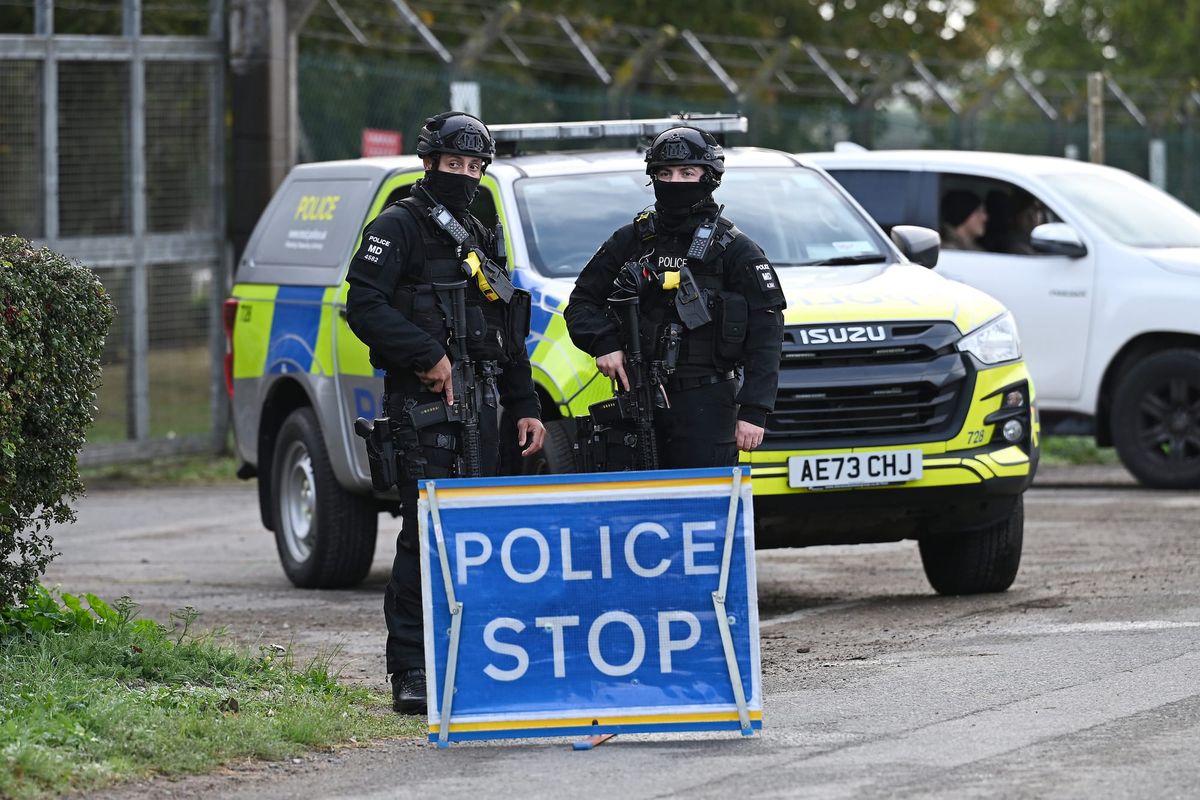](https://www.opendemocracy.net/raf-fairford-incident-highlights-uk-role-us-trump-failed-war-in-iran/)
---
## Weekly Poll
How does your opinion compare to the rest of our readership? Take our new look weekly poll and find out. Have thoughts about the topic? [Send us an email](mailto:supporters@opendemocracy.net?subject=Re%3A%20Weekly%20Poll)
### Would you support changes to the pension lock scheme?
| [Vote and see results →](https://www.opendemocracy.net/weekly-email-031026/?jump=poll) |
| -------------------------------------------------------------------------------------- |
---
## Last week's poll results
### **"The UK should relinquish its claim to the Falklands"**
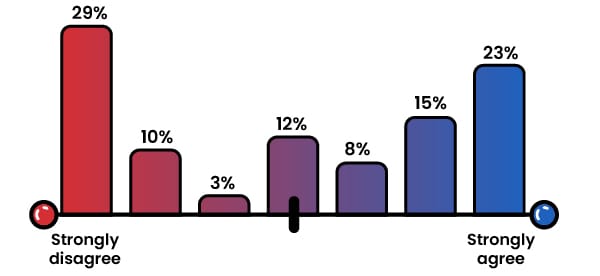
---
## Reader Comments
openDemocracy receives so many carefully considered messages about our work that it seems a shame to keep them to ourselves.
These comments are edited for clarity, accuracy and length, and are not a reflection of openDemocracy's editorial position.
> I respectfully disagree with the article's framing. In my opinion, anyone who deliberately commits criminal acts, destroys property and uses unlawful direct action to advance a political cause is employing terrorist tactics. These actions are not victimless. They are designed to create fear, intimidation and uncertainty among those targeted, including employees, contractors and others connected to the organisation.
>
> When people are made to worry that political activists may attack their workplace, damage property or target them because of their association with a particular organisation, that goes beyond protest and becomes coercion.
>
> While supporters may argue that the motives were noble, I do not believe that a cause justifies tactics intended to intimidate others or force political change through fear. For that reason, I regard those involved as terrorists rather than peaceful protesters.
**Aston411 |** [I was sentenced as a terrorist. Now my barrister is on trial for defending me](https://www.opendemocracy.net/palestine-action-filton-24-charlotte-head-rajiv-menon-kc-contempt-of-court-judge-johnson/)
---
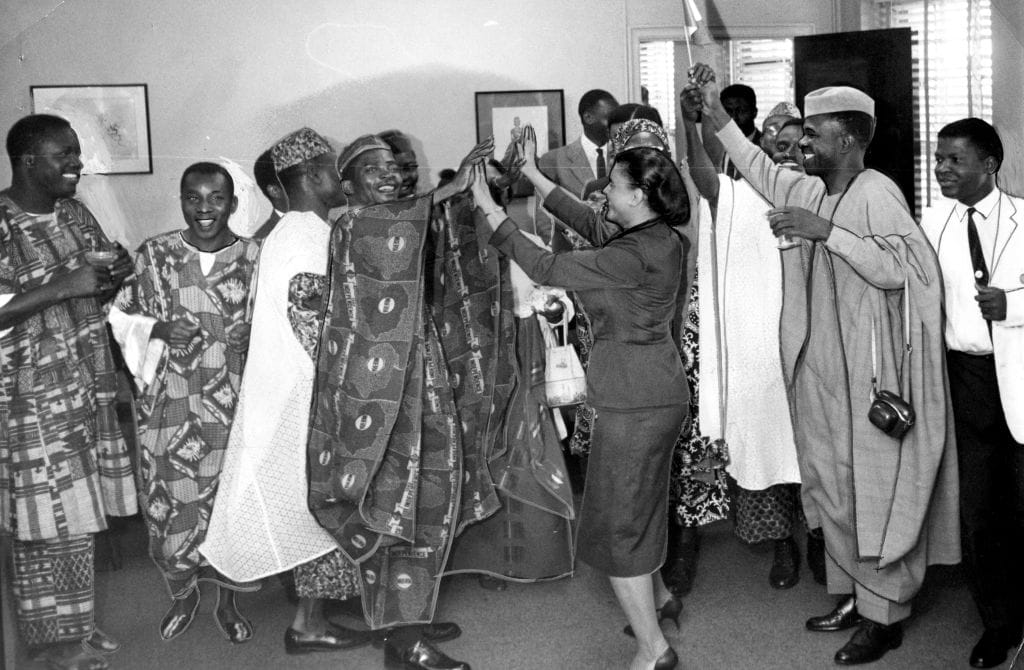
Officials at the Nigerian embassy celebrate their country's independence | Afro American Newspapers/Gado/Getty Images)
## This week in history
**Nigerian independence • 1 October 1960**
Nigeria became independent from Britain on 1 October 1960\. With over 180 million people today, Nigeria is Africa's most populous nation. Its independence story was shaped by the colonial-era divide-and-rule between ethnic groups, followed by military coups and the Biafran war. Encapsulating both the possibilities and the painful contradictions of African decolonisation.
[Democracy in Nigeria: the road less travelledThe presidential election in Nigeria on 21 April 2007 is a crucial one for democracy on the continent. A fair and successful election in the continent’s most populous nation - and the world’s fifth largest federation (after India, the United States, Brazil and Russia) - would be a shining exampleopenDemocracyGodwin Nnanna](https://www.opendemocracy.net/en/nigeria-democracy-4482jsp/)
---
### Trump y Brasil: ‘Interferencia crítica’
URL: https://www.opendemocracy.net/trump-y-brasil-interferencia-critica/
Last updated: 2026-10-02T18:29:43.000Z
### En la edición de esta semana:
- Paso a paso, el guion de Washington para Brasil y sus similitudes con Venezuela
- El peso del bolsillo en las decisiones electorales de Brasil
- Un incidente en una base aérea británica pone al descubierto la complicidad de Londres con Trump y su guerra contra Irán
En octubre del año pasado, mientras Estados Unidos bombardeaba embarcaciones de presuntos narcotraficantes en el Pacífico, el senador brasileño Flávio Bolsonaro decía en X: “¡Qué envidia! Escuché que hay barcos como este aquí en Río de Janeiro, en la bahía de Guanabara, inundando Brasil de drogas. ¿No les gustaría pasar unos meses aquí ayudándonos a combatir estas organizaciones terroristas?”.
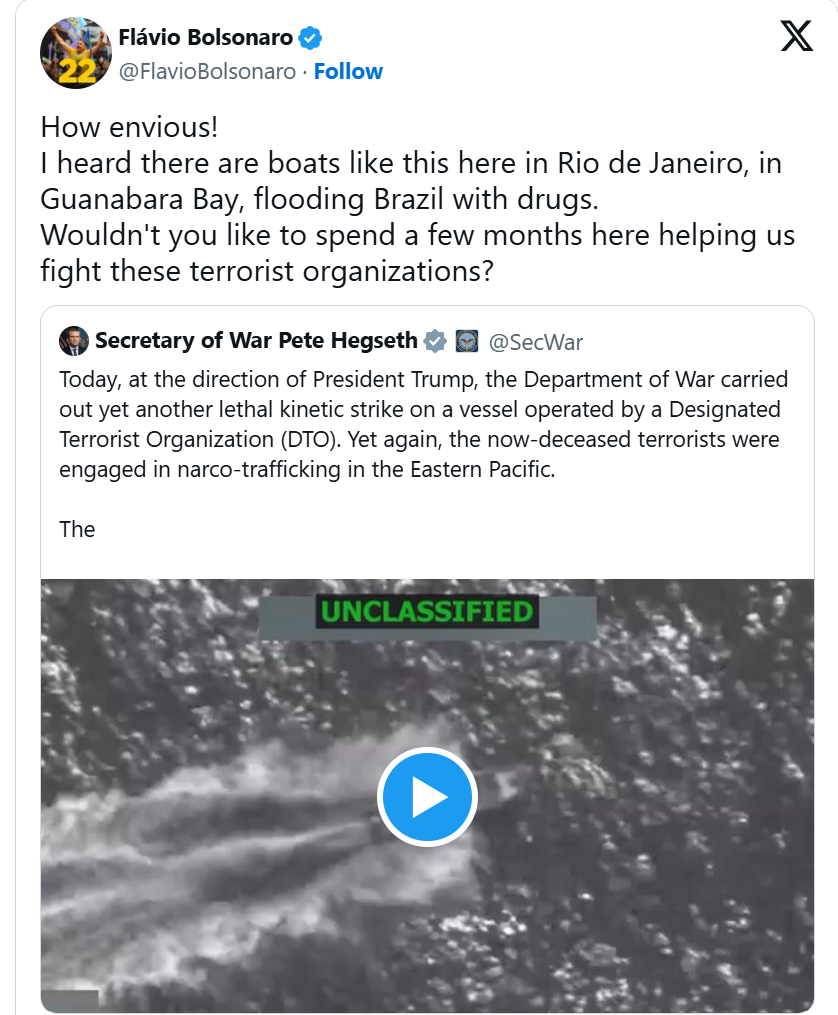
El comentario en X, en inglés, reposteaba un mensaje del secretario de Guerra de Trump, Pete Hegseth, con imágenes de un explosivo haciendo volar una lancha en el mar. El hijo del expresidente Jair Bolsonaro invitaba a las fuerzas estadounidenses a bombardear también los mares brasileños.
En marzo de 1964, EEUU organizó la [Operación Brother Sam](https://history.state.gov/historicaldocuments/frus1964-68v31/d198?ref=opendemocracy.net), un despliegue de la fuerza aérea y de la armada para intervenir en Brasil si el golpe militar que se fraguaba contra el gobierno de João Goulart fracasaba o enfrentaba algún tipo de resistencia civil. No fue necesario, el golpe se ejecutó el 1 de abril, y la dictadura duró hasta 1985.
Entonces, como ahora, había brasileños ansiosos de que Washington interviniera en su país, incluso ejecutando acciones ilegales y reñidas con la democracia.
A lo largo de más de un siglo, la diplomacia de las cañoneras de EEUU y las operaciones encubiertas de la CIA registran incidentes similares y mucho más graves. Pero hace ya varias décadas, empezó a parecer que Washington dejaba atrás la intromisión generalizada en América Latina – o que se había olvidado de nosotros, porque estaba haciendo lo mismo en otros lugares del mundo.
Si hay algo inédito en la interferencia de Donald Trump en Brasil es cómo ruegan por ella, en público y en privado, sus aliados brasileños, encabezados por la familia Bolsonaro.
No creo que haya muchos casos de dirigentes políticos reclamando públicamente a un gobierno extranjero que ataque la economía, la independencia judicial y la integridad de las elecciones de su propio país.
Es lo que está pasando en Brasil, que el domingo va a elecciones generales, con dos candidatos punteros: **Flávio Bolsonaro** y el actual presidente **Luiz Inácio Lula da Silva**.
La periodista **María Martha Bruno** escribe para democraciaAbierta una cronología detallada de esos ataques lanzados desde la Casa Blanca. Esa cadena de hechos desvela un guion que se parece mucho al trazado para Venezuela.
[Paso a paso, la interferencia de EEUU en BrasilLa cronología de interferencias de Trump en Brasil sigue un guion que puede conducir a un escenario similar a VenezuelaopenDemocracyMaria Martha Bruno](https://www.opendemocracy.net/es/brasil-eeuu-lula-bolsonaro-trump-delcy-venezuela-democracia-interferencia/)
Pero Brasil no es Venezuela, y su sociedad y su economía tienen dinámicas propias que serán decisivas en el resultado electoral. Un análisis del economista e investigador **Guilherme Klein** pone el foco en los bolsillos; si bien el país ha recuperado en parte los avances de la primera década del siglo, los hogares no han vuelto al nivel de vida que alcanzaron en los dos primeros gobiernos de Lula, y eso hace crecer la insatisfacción con la actual administración.
[Elecciones en Brasil bajo la sombra de TrumpOPINIÓN: El programa de Flávio Bolsonaro, que es el de Washington, equivale a una economía subordinada y confinada en la esfera de influencia de EEUUopenDemocracyGuilherme Klein](https://www.opendemocracy.net/es/brasil-lula-bolsonaro-golpe-trump-democracia-desarrollo-subordinacion/)
La policía británica está investigando un aparente intento de ataque terrorista a la base militar Fairford de la Real Fuerza Aérea. Ese lugar, en una zona rural de Inglaterra, guarda una clave sobre la guerra de Trump contra Irán, explica nuestro analista de política internacional, **Paul Rogers**.
[¿El Reino Unido es cómplice de crímenes de guerra en Irán?A menos que Trump acepte un acuerdo de paz, una base aérea rural en Inglaterra podría vincular al gobierno británico con crímenes de guerra cometidos en IránopenDemocracyPaul Rogers](https://www.opendemocracy.net/es/reino-unido-fairford-raf-bombarderos-iran-guerra-crimenes-trump-burnham/)
Gracias por suscribirte, seguirnos y leernos. Que tengas un gran fin de semana.
**Diana Cariboni, Editora de América Latina**
[Suscribite a nuestra newsletter](https://www.opendemocracy.net/en/newsletters/opendemocracy-espanol-democraciaabierta-newsletter-email-espanol/)
[¡Queremos conocer tu opinión y tus ideas! Escribinos](mailto:info.demoabierta@opendemocracy.net)
*democraciaAbierta es un medio de noticias independiente y sin fines de lucro, que se especializa en un periodismo de investigación de alta calidad que cuestiona al poder, inspira cambios y fomenta la visibilidad y el liderazgo de grupos subrepresentados en los medios. Con sede en Londres, tenemos equipos de trabajo en tres continentes.*
### Can Burnham 'Unbreak' Britain? Rebuilding the Social Contract After Decades of Decay
URL: https://www.opendemocracy.net/podcasts/can-burnham-unbreak-britain-rebuilding-the-social-contract-after-decades-of-decay/
Last updated: 2026-10-02T20:40:07.000Z
[Listen now](https://pod.link/1790866829?view=apps&sort=popularity&ref=opendemocracy.net)
In this episode of *In Solidarity*, Aman is joined by fellow *openDemocracy* investigative journalists Sian Norris and Ethan Shone to break down the recent Labour conference and how it fits into the rapidly changing political landscape in the UK.
From repealing Thatcher-era bans on public water ownership to tackling the decades-long crisis in social care, does Burnham’s vision offer genuine structural reform or merely "empty calories" wrapped in charismatic delivery?
**Credits:**
Presented by Aman Sethi
Produced by Harry Beney
### Suits vs. picket lines: Corporations, class politics and Burnham’s Labour conference
URL: https://www.opendemocracy.net/suits-vs-picket-lines-corporations-class-politics-and-burnhams-labour-conference-2/
Last updated: 2026-10-02T16:11:28.000Z
Ed Miliband is on stage, and everyone is having a good time.
We’re at a glitzy reception hosted by the New Statesman on the opening night of the Labour Party Conference. The invitation – like all the ‘best’ events at conference, it is invite-only – promised “speeches from senior figures of the Labour Party” and “the opportunity to network with fellow influential guests”. It lives up to both: top journalists mix with party staffers, ministers, MPs and government officials in the busy hall, with a healthy dose of corporate lobbyists and executives thrown into the mix. After all, someone has to cover the cost of the free bar, available and much-used from 6:30pm to 10:30pm.
Introduced to much applause, Miliband speaks with his characteristic wonkish charisma and self-effacing awkward charm, the logos of the event’s sponsors – lobbying firm 5654 & Company, Airbnb, Nationwide and US software firm ServiceNow – visible over his right shoulder. To further applause, he says the Labour Party succeeds because of being Labour, not despite it.
The foreign secretary would bring that line out again during his main conference speech the following day, when he also directly addressed activists and campaigners who’ve criticised the party’s stance on Palestine. “We hear you, you were right,” he said, to yet more applause. Twenty-four hours earlier, police had carted elderly and Disabled people away from the conference, arresting them for holding paper signs signalling their support for Palestine Action, the campaign group the Labour Party proscribed last year.
Credit: Ian Forsyth/Getty Images)
That scene was still playing out as I arrived at Liverpool’s Albert Dock, where protests and demonstrations lined the path towards the conference’s secure zone – the point through which only verified attendees can pass. There was talk that the arrests might be stepped up imminently, that officers would seek to disperse the crowd entirely, but I couldn’t hang around: Labour-linked lobbying firm Anacta Strategies was hosting a discussion (sponsored by VodafoneThree) with AI minister Kanishka Narayan at the firm’s dedicated ‘hub’ inside the secure zone.
Over the course of a few days, in this gauntlet of often-inconvenient demands, I watched arch-Remainer Steve Bray croon along to *You’ll Never Walk Alone* beneath a Ferris wheel. I saw BT workers gather in the same spot as part of a protest organised by the Communication Workers Union against a plan to cut 600 jobs in Liverpool. I stopped to speak to a Unison rep supporting a protest by international care workers. I took a flyer from a group of environmental campaigners who want to #StopRosebank, and caught up with friends who’d been at a picket line for an RMT strike over outsourced working on Avanti West Coast. I watched a line of police officers moving in and around a crowd of pro-Palestine demonstrators, still significant in number, despite the thinning out of their ranks through gradual arrests.
These demonstrations exposed the geography of power in place across the vast site of the conference proper and its fringe events. Outside, protesters vie for the attention of passersby, hoping some are MPs or staffers or even just party members who can do something, anything, about their chosen cause. They hope to influence their thinking, maybe just by thrusting a glossy A5 flyer into their hand, or provoking them with a striking image, or just by being unavoidably present. It is telling that so many of them come from the very traditions and organisations that Labour is designed to represent, yet find this is their best viable avenue to pursue change.
Inside, it is a different story. Many charities, trade unions and progressive campaign groups have stands of varying sizes in the exhibition hall, but the receptions and the parties and the roundtable discussions and the networking lunches – certainly the ones that ‘matter’ – are generally coordinated, sponsored and run by corporate interests.
Andy Burnham has described his project as a break from Keir Starmer’s, and more importantly from the policy consensus that has shaped Britain in recent decades. As I’ve written this week, [there are plenty on the Labour left who are enthused by his leadership](https://www.opendemocracy.net/labour-left-reacts-burnham-speech-party-conference-corbyn-unions-pension-nationalisation/); there’s a widespread sense that Burnham has a greater tolerance for the different parts of the Labour tradition, and, at the very least, the left can hardly play less of a role than under Starmer. Many unions, activists and left-wing think tanks and grassroots organisations feel they will be treated more like ‘critical friends’ on issues of disagreement, and believe there are plenty of policies they can help shape.
But any meaningful change, for the party and the country, will require going further than naming the ideas that have shaped the neoliberal status quo – “Deindustrialisation. Deregulation. Privatisation. Austerity. Brexit” – as Burnham did to great cheers in his conference speech on Tuesday. It will require the new prime minister to set out concrete plans to address these issues, and, ultimately, it will mean making a choice between the interest groups that have benefited and continue to benefit from these trends, and those who stand opposed to them.
It has been said in many different ways that politics is fundamentally about balancing competing interests. But some interests run directly counter to others, so when it comes down to it, politics is ultimately about picking a side – and those able to spend big to advance their cause tend to win out over the masses. I was reminded of this as I hurried past a display set up by We Own It, a group campaigning for nationalisation of utilities, outside the secure zone. The group was asking people to put a coloured ball into one of two boxes: the first if they supported public ownership of water companies, and the other if they preferred private ownership. The former option had significantly more balls, but I couldn’t help but worry that this mandate, if it came down to it, would amount to little up against the suits inside the conference pushing the opposing line (or indeed, the influence of senior No 10 advisers, Varun Chandra and James Purnell, who have previous lobbying links to Thames Water and its shareholders).
## Rooms where politics happens
Navigating the vast Liverpool Experience Campus complex can feel like moving through a reimagined, postmodern Escher painting.
Glossy pullout signs announce sponsorships ranging from KFC, the iconic fried chicken purveyor, to KBR, a multinational consulting firm with a significant defence arm. Long corridors, staircases and escalators transfer a never-ending parade of suits up and down and criss-cross. Whatever the direction, the destination is always the same: A Room Where Politics Happens.
Outside many of these rooms, a screen or sign bears a vague sentiment or question, alongside a note to say who or what paid to have it debated here, in proximity to and ideally involving people with power. ‘Future Challenges in Defence’ brought to you by BAE Systems. ‘Investing in the Future: Harnessing Technology for Cities & Autonomous Transport’, sponsored by Freenow by Lyft in partnership with Labour Tech.
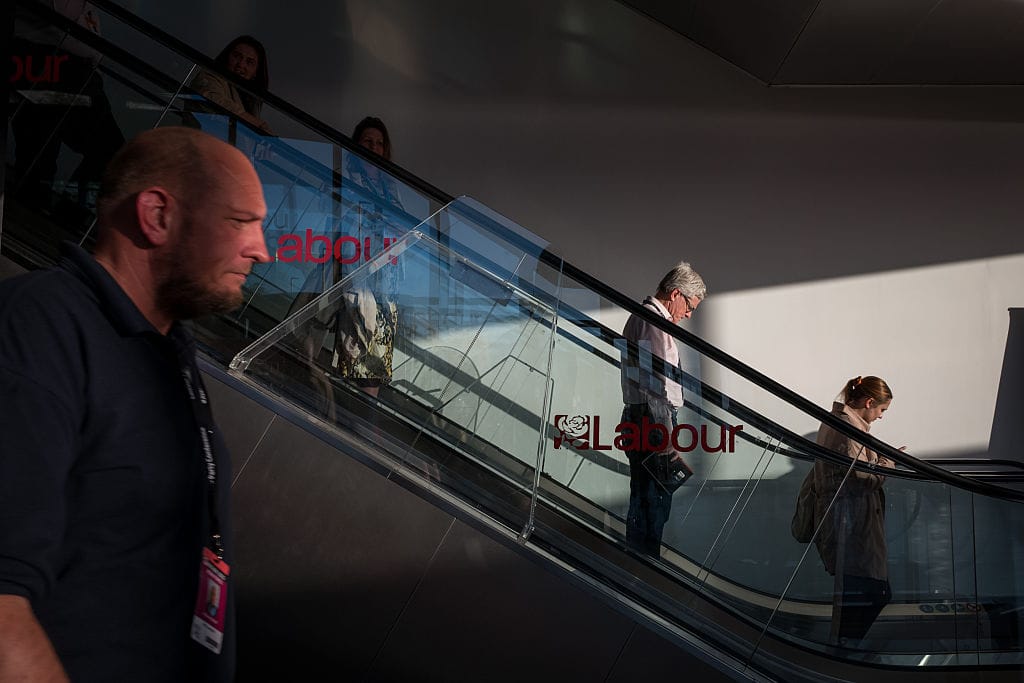
(Photo by Ian Forsyth/Getty Images)
Inside, the events generally follow the same format. An approving audience watches on as one or more people with some degree of direct political power – a minister, an elected mayor, a backbench MP, a councillor; their seniority generally correlating to the organiser’s political influence and/or the sponsor’s economic power – discuss a topic with one or more people paid to have a particular view on it, usually by the organiser or sponsor (though that of course doesn’t mean they don’t earnestly believe what they’re saying). A political journalist, or some other theoretically impartial moderator, often chairs the chats.
As it happened, I needn’t have rushed away from the protests outside the conference on Sunday; I was barred from Anacta’s two-storey ‘pop-up’ space, in which the top level functioned as a private business lounge and the bottom hosted events. Peering through the floor-to-ceiling glass panels of the bottom floor from outside – the closest I could get – I could see a group of sharp-suited corporate types listening intently to the minister, as drinks and canapes were dispatched by roving staffers.
This, it turned out, was far from the only corporate event I was barred from. Another private event space organised by another Labour-linked lobbying firm, Arden Strategies, refused me access. The Tony Blair Institute never responded to my email requesting an invite to its reception (sponsored by OpenAI). Turned away at the door of another corporate-sponsored event, a slightly embarrassed junior staffer suggested that perhaps my requests for an invite had gone to their spam folder.
I didn’t even bother trying a similar space sponsored by the elite advisory firm Teneo. Even investigative journalists can only stomach so much rejection.
A sea of AI-inflected LinkedIn posts confirm that other lobbying firms – including, but doubtless not limited to, Connect, WA, PLMR, InHouse and Hanbury – had a visible presence across the conference. Many will have arranged private dinners and receptions with ministers away from the conference proper. These are the other kinds of Rooms Where Politics Happens; the ones we get to know even less about.
## Exclusive access, closed doors
You’ve missed your chance now, but had you been more organised, you could have attended the Labour Party’s Business Leader’s Summit, a one-day event organised by a dedicated unit within party HQ, Labour Business Relations, which took place in a private, cordoned-off area within the conference on Monday.
Even time travel wouldn’t guarantee you access now, though; there were requirements for entry. As openDemocracy discovered, you *shouldn’t* be a journalist – none were overly welcome, but especially those with a particular interest in corporate power and influence. Ideally, you *should* be a C-suite level executive. Non-negotiably, you *must* cough up £6,600 (including VAT) for the ticket, on top of paying for travel and accommodation and ‘entertainment’ costs.
Had you met these requirements and been allowed in, what would you have found? Sponsored by Bloomberg, Intuit, HSBC and the campaign for Heathrow expansion, and hosted by newly ennobled former Scottish Labour leader Anas Sarwar, the summit provided an opportunity, according to the sales spiel on the conference website, for executives to “network, hear from and talk to a range of elected representatives including senior politicians”. True to their word, approximately half the cabinet was present at some point during the day, including the prime minister, chancellor, business secretary, first secretary of state and City minister.
“The format of the day,” the spiel continued, “is designed to maximise engagement, and you will have the opportunity to tailor your day to ensure you are involved in the policy areas which matter most to you and your organisation.” What this means, in a practical sense, is exclusive access to ministers with the power to shape policy directly, through a series of networking events, roundtables, panels and receptions all taking place in an exclusive private area, away from the prying eyes of the press and the vast majority of Labour Party members and trade union delegates.
A tech lobbyist I recognised from last year’s Reform UK conference came over to say hello at a reception on Tuesday evening; he’d been to the summit the day before and was helpfully candid about its purpose. “It is worth going to these things because you get to meet the people who make the decisions,” he said, “and you can make the case to them directly**.”**
That is, of course, as long as you meet the requirements for entry.
## The illusion of balance
This year’s Labour conference laid bare the contradictions that have always existed within the party, but which snowballed under Starmer amid a lack of ideological mooring. Labour under Starmerism was, at best, highly susceptible to whichever interest groups were best equipped to influence it – pitting unions against wealthy donors and corporate lobbying – and at worst happily infiltrated and corrupted by these latter elements. However you view it, the outcome was the same: a party that embraced the City and corporate power while actively pushing out its left.
All major parties manage some degree of contradiction, but the Labour Party is the one that is by design supposed to reliably resolve these tensions in favour of the working class, in favour of workers. This was not the case under Starmer; the party adopted a Mandelsonian “Do what works” posture toward big business. But the unspoken conclusion of that New Labour mantra was always ‘...to keep us in power’.

Credit: Chris Ratcliffe/Bloomberg via Getty ImagesCoro
As soft-left supremo Neal Lawson [wrote in his recent obituary of Starmerism](https://neallawson2u.substack.com/p/starmerism-an-autopsy?r=fde5g&utm%5Fmedium=ios), the right’s view has always been “that Labour only wins when it persuades the City, the media and a few swing voters in a few swing seats that it is safe to back the party” – that is, to make Labour palatable to capital. And just as the men in sharp suits who pick up half the bar tabs at conferences don’t do it for the good of their health, capital doesn’t find palatable any project that will seriously challenge its power.
Under Starmer and New Labour before him, the party got very, very good at accommodating the corporate elite – or “intensely relaxed about people getting filthy rich”, to put it another way. Burnham’s first conference as Labour leader will not be remembered as a corporate love-in – but only because this mode of politics has been so normalised that we no longer see it for the perversion it is. The sharp suits are still picking up the tabs, though – which suggests they believe Burnham can be convinced to accommodate, rather than confront their interests.
If Burnham wants to solve the problems he has identified, his policy ambitions will have to go far beyond what the City, or the right-wing press, is comfortable with. For now, the new prime minister and those around him are basking in the good vibes brought about by his bloodless takeover and his successful conference speech. Even the ‘marginalised left’ are happy. Few are looking for these inconsistencies, but they are there all the same, and they are stark; on Monday morning members and MPs rallied against Trump’s foreign wars, the same wars that [a recent donor to the party’s housing secretary profits from](https://www.opendemocracy.net/angela-rayner-takes-cash-from-war-profiteering-advisory-firm-courting-labour/).
In some cases, the inconsistencies are even closer to the surface. Speaking from the stage of the conference hall, Jonathan Reynolds, who was Starmer’s business secretary and has been reappointed to lead a supercharged version of the same department under Burnham, told Labour members and delegates: “Only Labour is proudly pro-worker and proudly pro-business”.
Reynolds, who had been introduced to the stage by a member of the Community Union and a steelworker, went on to imply his support for nationalisation. “The day this Labour government stood up for steel… and took control of British Steel, was one of the proudest days of my life,” he said, to significant applause.
It must have been a different Jonathan Reynolds, then, who when asked about the long-term plans for British Steel on Sky News not a fortnight earlier, said: “I would like the steel industry to be in private hands, that is my preference.”
Which begs the questions: which line does the business secretary give at private, corporate dinners? And which is true?
### Paso a paso, la interferencia de EEUU en Brasil
URL: https://www.opendemocracy.net/es/brasil-eeuu-lula-bolsonaro-trump-delcy-venezuela-democracia-interferencia/
Last updated: 2026-10-01T21:14:49.000Z
La intromisión de Estados Unidos y la defensa de la soberanía son los principales temas de las elecciones generales que se celebrarán en Brasil este domingo 4 de octubre.
La opinión puede parecer aventurada, pero se fundamenta en una secuencia de hechos en los que tuvo protagonismo el senador opositor Flávio Bolsonaro, quien puede convertirse en el próximo presidente de Brasil.
Los embates estadounidenses empezaron en 2025, con el segundo gobierno de Donald Trump, y combinaron tres frentes: la diplomacia, la economía y la política. Ahora alcanzan su punto máximo, mientras avanza la disputa entre el hijo mayor del expresidente derechista Jair Bolsonaro y el presidente izquierdista Luiz Inácio Lula da Silva, [casi empatados en las encuestas](https://cnnespanol.cnn.com/2026/09/30/latinoamerica/brasil-elecciones-presidenciales-encuestas-orix?ref=opendemocracy.net) para la primera vuelta prevista para el próximo domingo.
La guerra arancelaria, que Trump impuso como medida de negociación en todo el mundo, llegó a Brasil en 2025\. Pero la campaña a favor de las sanciones también [fue impulsada por un brasileño](https://www.opendemocracy.net/es/brasil-jair-bolsonaro-paulo-figueiredo-eduardo-bolsonaro-trump-justicia-democracia): el hermano de Flávio, el exdiputado Eduardo Bolsonaro, que vive en Texas desde marzo del año pasado, y por su fiel escudero, Paulo Figueiredo, nieto del último dictador de Brasil.
[‘El cerebro’ de la campaña para que Washington interfiera en la justicia y la democracia de BrasilUn influencer procesado por la fiscalía brasileña trabaja con el diputado derechista Eduardo Bolsonaro para que Washington imponga sanciones a la corte suprema de BrasilopenDemocracyAlice Maciel](https://www.opendemocracy.net/es/brasil-jair-bolsonaro-paulo-figueiredo-eduardo-bolsonaro-trump-justicia-democracia)
Agência Pública [viene reportando](https://apublica.org/2024/04/como-eduardo-bolsonaro-e-comitiva-articulam-com-parlamentares-dos-eua-punicoes-ao-brasil/?ref=opendemocracy.net) desde 2024 el movimiento de la dupla por los pasillos y salas del Departamento de Estado y del Congreso, en busca de sanciones contra Brasil por lo que consideran una “dictadura” que persigue al expresidente Bolsonaro y a sus aliados.
Las sanciones de Washington llegaron en julio de 2025, con aranceles de hasta 50% y una carta en la que Trump reclamaba el fin de la “caza a brujas” contra Jair Bolsonaro. Las amenazas no prosperaron, y en septiembre el expresidente [fue condenado a 27 años de prisión](https://agenciabrasil.ebc.com.br/justica/noticia/2025-09/stf-condena-bolsonaro-27-anos-e-tres-meses-de-prisao?ref=opendemocracy.net) por intentar un golpe de Estado en 2023 (luego de perder las elecciones), que reprodujo casi como un espejo [la toma trumpista del Congreso de EEUU](https://www.opendemocracy.net/es/bueno-malo-feo-insurreccion-capitolio-eeuu/), el 6 de enero de 2021\.
El año pasado terminó positivamente para Lula. Su gobierno logró que Estados Unidos levantara los aranceles luego de [negociaciones que involucraron a empresarios locales](https://www1.folha.uol.com.br/mercado/2026/09/joesley-batista-influenciou-trump-em-medidas-para-conter-preco-da-carne-nos-eua-diz-jornal.shtml?ref=opendemocracy.net), ya que los canales oficiales tradicionales [estaban bloqueados](https://g1.globo.com/politica/blog/andreia-sadi/post/2025/08/12/reuniao-haddad-bessent-cancelada-horas-apos-entrevista-eduardo-bolsonaro.ghtml?ref=opendemocracy.net) por las maniobras de Eduardo Bolsonaro.
En febrero de este año, la marea seguía favorable al presidente brasileño. La Corte Suprema de Estados Unidos [dictaminó](https://time.com/7380033/supreme-court-tarriffs-ruling-trump/?ref=opendemocracy.net) que los aranceles impuestos por Trump a varios países del mundo eran ilegales. Sin embargo, de inmediato Trump [dio la vuelta a la prohibición](https://www.telemundo.com/noticias/noticias-telemundo/economia/trump-eleva-el-nuevo-arancel-global-10-al-15-rcna260048?ref=opendemocracy.net), imponiendo nuevos aranceles bajo un marco legal diferente.
Mayo fue un mes clave en este tablero, y la marea se volvió contra Lula. Los hermanos Flávio y Eduardo, junto con Figueiredo, [lograron reunirse con Trump](https://g1.globo.com/mundo/noticia/2026/06/02/trump-faz-post-com-foto-ao-lado-de-flavio-bolsonaro.ghtml?ref=opendemocracy.net) en la Casa Blanca y conseguir una foto para la posteridad.
Dos días después, Washington materializó un reclamo clave de los Bolsonaro y de la extrema derecha brasileña: [declaró organizaciones terroristas](https://www.state.gov/releases/office-of-the-spokesperson/2026/05/terrorist-designation-of-comando-vermelho-and-primeiro-comando-da-capital?ref=opendemocracy.net) a los dos principales grupos criminales de Brasil, el Comando Vermelho (CV) y el Primeiro Comando da Capital (PCC). Unas semanas más tarde, volvieron los aranceles contra Brasil, [esta vez de hasta 37,5%](https://www.reuters.com/world/americas/brazil-says-165-exports-face-combined-us-duties-375-2026-07-24/?ref=opendemocracy.net). El secretario de Estado, Marco Rubio, atribuyó el castigo al [“ego” de Lula](https://fortune.com/2026/07/16/brazil-tariff-25-percent-coffee-exempt/?ref=opendemocracy.net).
La diplomacia brasileña rechazó las condiciones impuestas por Washington para levantar los aranceles, según [un documento obtenido](https://www.estadao.com.br/politica/governo-trump-exigiu-que-brasil-liberasse-participacao-de-dissidentes-politicos-na-eleicao-de-2026/?ref=opendemocracy.net) por el diario Estadão. Estas incluían el acceso previo del gobierno de Trump a cualquier negociación de Brasil sobre sus propios minerales críticos y la participación en las elecciones de “políticos disidentes” – en referencia a Jair Bolsonaro, preso e impedido de actividad política –, un término usado muchas veces por EEUU para referirse a políticos opositores al chavismo en Venezuela.
En julio de 2026, solo tres meses antes de las elecciones en Brasil, el Departamento de Estado de Rubio intentó despachar a Brasília a dos enviados diplomáticos. Según la cancillería brasileña, ambos utilizarían su visita para [cuestionar la integridad del sistema electoral brasileño](https://www.dw.com/pt-br/brasil-barra-enviados-dos-eua-por-temor-de-investida-contra-urnas/a-78115365?ref=opendemocracy.net). Brasil les negó la visa a ambos.
Vale la pena también recordar que Flávio Bolsonaro [repitió](https://www1.folha.uol.com.br/poder/2026/07/flavio-bolsonaro-repete-tese-falsa-sobre-urnas-desde-2014-alternando-ataques-e-recuos.shtml?ref=opendemocracy.net) las acusaciones de fraude que [hizo](https://g1.globo.com/politica/noticia/2022/07/18/bolsonaro-reune-embaixadores-para-repetir-sem-provas-suspeitas-ja-esclarecidas-sobre-urnas.ghtml?ref=opendemocracy.net) su padre en 2022 y que también son recurrentes en la narrativa trumpista (recientemente adoptadas por el expresidente de Colombia, Gustavo Petro).
La justicia electoral de Brasil [desmintió varias veces](https://www.tse.jus.br/comunicacao/noticias/2026/Agosto/viralizou-e-falso-que-5-1-milhoes-de-votos-foram-retirados-de-candidato-a-presidencia?ref=opendemocracy.net) esas falsas acusaciones de fraude. Sin embargo, un triunfo de Lula podría reflotar esta narrativa, y la reacción de EEUU ante una derrota del candidato bolsonarista seria clave para el futuro del país.
## ‘Nivel crítico de interferencia’
“Una vez más, estamos presenciando una interferencia externa en los procesos electorales”, [dijo Lula](https://www.pbs.org/newshour/world/brazils-lula-warns-against-foreign-interference-in-elections-urges-leaders-to-respond-to-global-conflicts?ref=opendemocracy.net) en su discurso de apertura de la Asamblea General de las Naciones Unidas, a fines de septiembre. “Brasil no es el patio trasero de nadie”, agregó.
A menos de un mes de cumplir 81 años, Lula disputa su cuarto mandato y su séptima elección presidencial. Bajo críticas sobre su campaña y la crónica ausencia de sucesores que asola a los partidos de izquierda de América Latina, el mandatario puso la soberanía y la resistencia a la injerencia de EEUU como su bandera: “No permitiremos que los enemigos de la democracia, ya sean nacionales o extranjeros, socaven la voluntad popular. La democracia brasileña pertenece a los brasileños. Brasil seguirá siendo un país soberano”, dijo en la ONU.
Su valoración de los hechos se hace eco de la [de analistas políticos](https://www.theguardian.com/world/2026/sep/01/us-trump-rubio-meddling-brazil-election?ref=opendemocracy.net) e incluso de un [informe](https://www.ambito.com/mundo/inteligencia-brasil-alerto-un-riesgo-critico-interferencia-eeuu-las-elecciones-n6324523?ref=opendemocracy.net) de la Agencia Brasileña de Inteligencia (Abin) obtenido por el diario Folha de S. Paulo.
Según la Abin, la interferencia de EEUU en Brasil llegó a un “nivel crítico”, e identificó el punto de inflexión en aquel mayo de 2026, cuando Estados Unidos designó al PCC y al CV como organizaciones terroristas y una amenaza para su seguridad nacional.
Presentar a grupos criminales brasileños como terroristas contribuyó a intensificar la narrativa de la extrema derecha sobre la alteridad y la diferencia – a menudo encarnadas en inmigrantes o ciudadanos no blancos y no heterosexuales – como amenazas. Además, el supuesto alcance transnacional del PCC y del CV podría crear un precedente jurídico para el uso extraterritorial de la fuerza por parte de Estados Unidos, justificado como necesario para proteger al país de peligros externos.
## ¿Brasil se convertirá en Venezuela?
El temor que durante años ha resonado entre sectores de la derecha y la extrema derecha de Brasil podría, paradójicamente, acercarse a la realidad con la ayuda del principal antagonista de Venezuela en la región, Estados Unidos.
La designación del PCC y del CV como terroristas sigue un guion similar al de organizaciones criminales venezolanas, el Tren de Aragua y el Cartel de los Soles. Ambos fueron instrumentalizados para presentar a Venezuela como una amenaza para Estados Unidos, y su designación como organizaciones terroristas precedió a la operación militar que resultó en el secuestro del entonces presidente venezolano Nicolás Maduro, a principios de 2026.
Para construir esa narrativa, el gobierno de Trump comenzó a delinear un posible *playbook* desde el primer día. La secuencia es similar a la que suponen los agentes de inteligencia brasileños.
El día que asumió su segundo mandato, en enero de 2025, Trump [firmó una orden ejecutiva](https://www.whitehouse.gov/presidential-actions/2025/01/designating-cartels-and-other-organizations-as-foreign-terrorist-organizations-and-specially-designated-global-terrorists/?ref=opendemocracy.net) que creó un proceso para designar a “carteles y otras organizaciones” como Organizaciones Terroristas Extranjeras (FTO) y Terroristas Globales Especialmente Designados (SDGT), presentándolos como amenazas para la seguridad nacional de Estados Unidos. Un mes después, el Tren de Aragua fue [incluido en estas listas](https://www.state.gov/designation-of-international-cartels?ref=opendemocracy.net).
En marzo de 2025, Estados Unidos deportó a más de 200 venezolanos a una prisión de máxima seguridad en El Salvador. El presidente salvadoreño, Nayib Bukele, afirmó que la mayoría de ellos eran miembros del Tren de Aragua. Entre julio y noviembre, Estados Unidos también designó al Cartel de los Soles como [SDGT](https://home.treasury.gov/news/press-releases/sb0207?ref=opendemocracy.net) y[ FTO](https://www.state.gov/releases/office-of-the-spokesperson/2025/11/terrorist-designations-of-cartel-de-los-soles?ref=opendemocracy.net).
En 2025, Flávio Bolsonaro había elogiado, [en un posteo en X en inglés](https://x.com/FlavioBolsonaro/status/1981332224533291494?s=20&ref=opendemocracy.net), los ataques estadounidenses en el mar Caribe contra embarcaciones que, según Washington, transportaban drogas: “¡Qué envidia! Escuché que hay barcos como este aquí en Río de Janeiro, en la bahía de Guanabara, inundando Brasil de drogas. ¿No les gustaría pasar unos meses aquí ayudándonos a combatir estas organizaciones terroristas?”.
El 3 de enero de 2026, el mundo despertó con la noticia de que [fuerzas estadounidenses habían entrado en Caracas y habían capturado a Maduro](https://www.opendemocracy.net/es/trump-maduro-golpe-venezuela-estados-unidos-america-latina-doctrina-monroe/). El documento de la acusación fiscal contra él, [publicado el mismo día por un tribunal estadounidense](https://www.justice.gov/opa/page/file/1261806/dl?inline=&ref=opendemocracy.net), decía: “El Cartel de los Soles, bajo el liderazgo de MADURO MOROS y otros, priorizó el uso de la cocaína como arma contra Estados Unidos”.
Ninguno de los dos grupos criminales brasileños tiene registros de violencia motivada por “xenofobia, raza, color, etnia y religión”; por lo tanto, no entran en la definición de organizaciones terroristas [establecida por la legislación brasileña](https://www.planalto.gov.br/ccivil%5F03/%5Fato2015-2018/2016/lei/l13260.htm?ref=opendemocracy.net). Lo que los motiva es el lucro, y utilizan medios ilegales, como la violencia y el tráfico de drogas y de armas, para alcanzar sus objetivos.
Pocos días después de la captura de Maduro, su vicepresidenta, Delcy Rodríguez, se convirtió en presidenta encargada de Venezuela, con la anuencia de Trump, y empezó a gobernar bajo las órdenes de Washington.
Además del guion venezolano, es importante no olvidar los casos de Argentina y Honduras. El año pasado, Trump [vinculó](https://www.bbc.com/news/articles/cg7n82gd7pvo?ref=opendemocracy.net) un salvavidas financiero de 20.000 millones de dólares de EEUU para Argentina, a la victoria electoral del partido de su aliado, el presidente Javier Milei. En Honduras, el presidente estadounidense [respaldó explícitamente](https://edition.cnn.com/2025/12/05/americas/honduras-nasralla-trump-interference-latam-intl?ref=opendemocracy.net) al candidato conservador Nasry Asfura en las presidenciales de 2025 y amenazó con recortar la asistencia financiera estadounidense si Asfura no ganaba la contienda.
En este contexto de influencia de EEUU, las elecciones de Brasil han quedado dominadas por dos temas en disputa. El próximo domingo, 158 millones de votantes acudirán a las urnas en lo que se perfila como un referéndum entre la soberanía brasileña y la lucha contra el crimen bajo los modos y la tutela de Trump.
[Elecciones en Brasil bajo la sombra de TrumpOPINIÓN: El programa de Flávio Bolsonaro, que es el de Washington, equivale a una economía subordinada y confinada en la esfera de influencia de EEUUopenDemocracyGuilherme Klein](https://www.opendemocracy.net/es/brasil-lula-bolsonaro-golpe-trump-democracia-desarrollo-subordinacion/)
*Maria Martha Bruno es una periodista multimedia y coordinadora de Colaboraciones Internacionales de Agência Pública, un medio brasileño de investigación. Ha trabajado como productora para NBC News, Al Jazeera, la BBC y la CNN, y fue corresponsal de la plataforma brasileña UOL en Buenos Aires. María Martha tiene un máster por la Universidad de Texas A&M, de Estados Unidos, donde también fue profesora.*
### Incidente en una base aérea británica expone la complicidad de Londres en la guerra de Trump contra Irán
URL: https://www.opendemocracy.net/es/reino-unido-fairford-raf-bombarderos-iran-guerra-crimenes-trump-burnham/
Last updated: 2026-10-01T20:10:48.000Z
Un incidente en la base Fairford de la Real Fuerza Aérea, en Gloucestershire, suroeste de Inglaterra, que Estados Unidos ha utilizado como punto de partida para ataques contra Irán, encendió las alarmas tras ser reportado como un posible atentado terrorista vinculado a Irán.
Aunque las investigaciones sobre lo ocurrido el fin de semana pasado continúan, el episodio – con cinco hombres arrestados el domingo en las cercanías de Fairford, y un sexto en Londres este jueves – dejó al descubierto un dato crucial para la geopolítica global: el papel estratégico que desempeña esta instalación militar británica en las operaciones de Estados Unidos, situación que promete convertirse en un serio dolor de cabeza diplomático para el gobierno del Reino Unido.
Para entender la dimensión del problema, conviene hacer historia. Hace casi 70 años, en enero de 1957, la Fuerza Aérea de Estados Unidos realizó una demostración inédita de poderío aéreo global: tres bombarderos pesados B-52 aterrizaron en la Base Aérea Castle, en California, tras completar un vuelo sin escalas alrededor del mundo gracias a múltiples reabastecimientos de combustible en el aire.
Si bien el Pentágono sigue considerando a los bombarderos pesados como una pieza clave para proyectar su poder global, hoy ya no realiza operaciones transcontinentales. En su lugar, se apoya en tres bases aéreas en el extranjero. Una de ellas es la de Fairford, donde está estacionada la unidad de apoyo al combate 501, que puede operar con cualquier bombardero de la flota del Pentágono, el más importante de los cuales es el B-1B.
Esta base en el corazón rural de Gloucestershire, ha adquirido una relevancia singular. La amenaza de Donald Trump de "aniquilar" a Irán si no acepta su propuesta de un alto al fuego depende, en gran medida, de que los bombarderos estadounidenses puedan despegar desde Fairford. ¿Por qué? Como suele suceder, la clave está en los detalles, pero la razón principal es simple: la guerra se está desarrollando de forma muy desfavorable para el presidente de Estados Unidos.
Cuando el poder militar combinado de Estados Unidos e Israel atacó a Irán a finales de febrero, se esperaba que ganaran el conflicto en cuestión de días, o como mucho en un par de semanas.
El plan de [Israel consistía](https://rethinkingsecurity.org.uk/2026/08/27/operation-epic-hubris-another-failed-us-war/?ref=opendemocracy.net) en asesinar a la cúpula dirigente de Teherán, alentar una rebelión popular, reemplazar al régimen por un gobierno secular afín, poner fin a sus ambiciones nucleares y destruir el Cuerpo de la Guardia Revolucionaria Islámica (IRGC). Los objetivos bélicos de Trump nunca estuvieron del todo claros, pero coincidían en gran medida con los de Benjamin Netanyahu. Irán, por su parte, simplemente buscaba garantizar la supervivencia del Estado en su forma actual.
En la práctica, si bien el ayatolá Jamenei y otros líderes religiosos y civiles fueron asesinados durante la primera semana, la Guardia Revolucionaria se había preparado meticulosamente para ese tipo de ataque y rápidamente reemplazó a los fallecidos. El equilibrio de poder en Teherán se endureció; no hubo rebelión y cualquier atisbo de oposición interna al régimen fue reprimido con rigor y, a menudo, con violencia.
De igual modo, a pesar del enorme despliegue de fuerza, la ofensiva estadounidense-israelí no logró destruir las capacidades de la Guardia Revolucionaria, e Irán ha mantenido su capacidad para atacar instalaciones estadounidenses en la región, causando daños considerables. Informes oficiales de organismos de control del Congreso sugieren que los costos para Estados Unidos han sido muy elevados, con [decenas de aviones y drones destruidos](https://apnews.com/article/iran-war-damage-pentagon-inspector-general-87cbe4e2ac208a849cd1554c4bb44bbf?ref=opendemocracy.net) en tierra en sus propias bases aéreas en la región.
Los ataques iraníes también han dañado y destruido cientos de edificios e instalaciones militares en bases estadounidenses en Bahréin, Irak, Jordania, Kuwait, Omán, Catar, Arabia Saudita y los Emiratos Árabes Unidos. Un centro logístico clave en Bahréin sufrió tantos daños por los repetidos ataques iraníes desde febrero, que sigue clausurado. Unos 9.000 ciudadanos estadounidenses han sido evacuados de la región, y Estados Unidos se ha visto obligado a utilizar tantos sistemas de defensa antimisiles que el Pentágono está agotando sus reservas, cuyo reabastecimiento podría tardar hasta cinco años.
En resumen, la guerra de Trump contra Irán va mal, y el Pentágono rechaza tajantemente la idea de una guerra terrestre. Esto deja al presidente estadounidense con dos opciones: llegar a un acuerdo de paz con Teherán y arriesgarse a ser visto como un perdedor, o intensificar el conflicto con una nueva e intensiva campaña de bombardeos aéreos.
Su ego hace que la segunda opción sea la más probable, y ahí es donde entra en juego el Reino Unido. Cualquier ataque aéreo estadounidense dependerá del uso de bombarderos pesados B-1B Lancer, capaces de transportar al menos 22 toneladas de bombas guiadas y misiles de crucero o balísticos (como 24 bombas de unos 910 kilos) en sus bodegas internas, lo que dificulta su detección en radar.
La Fuerza Aérea de Estados Unidos cuenta con 44 bombarderos B-1B, de los cuales 21 están disponibles operativamente para ataques en todo el mundo. La capacidad de Irán para golpear las bases estadounidenses en la región hace poco aconsejable estacionar los aviones allí. Aunque podrían despegar desde Estados Unidos, la base de Gloucestershire está 6.400 kilómetros más cerca; lo que reduce drásticamente la necesidad de reabastecimiento en vuelo.
Por este motivo, [15 de los 21 bombarderos B-1B "disponibles para misión" fueron trasladados a Fairford](https://www.airandspaceforces.com/b-52-jdams-iran-us-bombers-growing-role-air-war/?ref=opendemocracy.net) al inicio del ataque de Trump contra Irán. La afirmación del Ministerio de Defensa británico de que solo pueden utilizarse en modo "defensivo" resulta poco creíble, dado que el propio Trump fue el principal agresor. Si bien ya existen interrogantes sobre si los aviones se utilizaron contra civiles en los primeros días del conflicto, sin duda se emplearían a una escala mucho mayor y más destructiva si Trump decide cumplir su amenaza de bombardear Irán hasta devolverlo a la Edad de Piedra.
En circunstancias extremas, el Reino Unido podría retirar todo su apoyo a una campaña de bombardeos que utilice los B-1B (así como otros aviones estadounidenses que operan desde Fairford y otras bases en el Reino Unido). Sin embargo, hasta donde se sabe, este tipo de acción no se ha contemplado y, sin duda, provocaría una reacción enfurecida e impredecible del presidente estadounidense.
Una vía más constructiva para avanzar requeriría que el primer ministro británico Andy Burnham y otros líderes mundiales presionen discretamente a Washington para que acepte un acuerdo de paz, dejando clara su firme oposición a un retorno a la guerra a gran escala. Transcurridos más de tres meses de una tensa tregua en la que ambas partes mantienen acciones militares de baja intensidad, existen [negociaciones en marcha](https://apnews.com/article/iran-trump-negotiations-war-strait-nuclear-871504dbd98d9b08b226b9805d8f4606?ref=opendemocracy.net), pero hay pocos indicios de una solución definitiva.
Si no se logra convencer a Trump de que acepte un acuerdo de paz, el Reino Unido se verá profundamente involucrado a medida que el conflicto se intensifique y la base aérea de Fairford se convierta en un foco de atención mundial.
El gobierno de Burnham corre el riesgo de verse implicado en crímenes de guerra en un conflicto liderado por Estados Unidos e Israel que ya ha dejado miles de iraníes muertos y heridos.
### RAF Fairford incident highlights UK role in Trump’s failed war in Iran
URL: https://www.opendemocracy.net/raf-fairford-incident-highlights-uk-role-us-trump-failed-war-in-iran/
Last updated: 2026-10-01T14:57:12.000Z
Many questions remain over last weekend’s incident at RAF Fairford, which was initially widely reported as a thwarted terror attack with a possible connection to Iran. Whether that was the case remains to be seen, but one thing is certain: the incident has shone a spotlight on the base’s role in US military operations – to the potential embarrassment of the British government.
To put it in historical context, almost 70 years ago in January 1957, the US Air Force put on a remarkable demonstration of global airpower. Three B-52 heavy bombers landed at Castle Air Force Base in California after having flown nonstop around the world, supported by multiple aerial-to-air refuellings.
While the Pentagon still regards heavy bombers as key to its global power projection, it no longer attempts ultra-long-range operations, instead relying on three overseas air bases across the world. One of these is RAF Fairford, where US forces in the 501st Combat Support Wing are stationed. These troops can handle any of the Pentagon’s fleet of heavy bombers, the most important being the B-1B.
Now this base in the heart of rural Gloucestershire is becoming singularly important, with growing global significance. Donald Trump’s threat to “annihilate” Iran unless it accepts his version of a ceasefire would depend substantially on the US Air Force bombers operating from Fairford. Why? As so often, the devil is in the detail, but the main reason is that the war is going very badly for the US president.
When the combined military power of the United States and Israel attacked Iran at the end of February, it was expected that they would win the conflict within days, or at most a couple of weeks.
[Israel planned to](https://rethinkingsecurity.org.uk/2026/08/27/operation-epic-hubris-another-failed-us-war/?ref=opendemocracy.net) assassinate the Tehran leadership, support an expected popular uprising, see the regime replaced with an acceptable secular leadership, terminate nuclear ambitions and destroy the power of the Iranian Revolutionary Guard Corps (IRGC). Trump’s war aims were far from clear but would have largely fitted in with those of Binyamin Netanyahu. Iran, meanwhile, simply wanted the state to survive in its current form.
In the event, while Ayatollah Khamenei and some key religious and civil leaders were indeed assassinated within the first week, the IRGC had planned in detail for that kind of assault and quickly replaced those killed. The balance of power in Tehran took on a harder-line stance; there was no uprising, and any domestic opposition to the regime has been rigorously and often violently suppressed.
Similarly, despite the substantial use of force, the US/Israeli assault has failed to destroy IRGC capabilities, while Iran has maintained its ability to target US facilities in the region, often causing substantial damage. Official reports from congressional watchdogs suggest the costs to the US have been very high, with [scores of planes and drones destroyed](https://apnews.com/article/iran-war-damage-pentagon-inspector-general-87cbe4e2ac208a849cd1554c4bb44bbf?ref=opendemocracy.net) on the ground at US air bases in the region.
Iranian attacks have also damaged and destroyed hundreds of buildings and military structures in US bases in Bahrain, Iraq, Jordan, Kuwait, Oman, Qatar, Saudi Arabia and the UAE, with a key logistics hub in Bahrain so badly affected in repeated strikes since February that it remains out of action even now. Nine thousand US citizens have been evacuated from the region, and the US has been forced to use so many anti-missile defences that the Pentagon is running short of stocks that could take up to five years to replenish.
In short, Trump’s war against Iran is going badly, and the Pentagon is deeply reluctant to countenance any kind of ground war. That leaves the US president with two choices: agree a peace deal with Tehran and risk being seen as a loser, or escalate the conflict to a renewed intensive aerial bombing campaign.
His ego makes the latter option more likely, which is where the UK becomes involved. Any US air strikes will rely on the use of B-1B Lancer heavy bombers, which can each be armed with at least 22 tonnes of guided bombs and cruise or ballistic missiles – such as 24 2,000lb bombs – which they carry in internal bomb bays, making them harder to track on radar.
In total, the US Air Force has 44 B-1B bombers, with a maximum of 21 available worldwide for bombing attacks at any one time. Iran’s ability to attack US bases in the region means it is best not to station the planes there, and while it would be possible to fly them from the US, Gloucestershire is around 4,000 miles closer – B-1Bs launched from there will require far less air-to-air refuelling.
It’s for this reason that [15 of the 21 ‘mission-available’ B-1B bombers were relocated to Fairford](https://www.airandspaceforces.com/b-52-jdams-iran-us-bombers-growing-role-air-war/?ref=opendemocracy.net) as Trump’s attack on Iran began, with the UK Ministry of Defence’s claim that they can be used only in a “defensive” mode fanciful given that Trump was the main aggressor in the first place. There may already be questions to answer over whether the planes were used against civilians in the early days of the conflict, yet they would undoubtedly be used on a much larger and more destructive scale if Trump decides to act on his threat to bomb Iran “back to the Stone Age”.
In extreme circumstances, the UK could withdraw all support for such a bombing campaign that utilised the B-1Bs (and some other US planes operating from Fairford and other RAF bases in the UK). But this kind of action has not, as far as is known, been contemplated before, and would no doubt leave the US president livid and unpredictable.
A better initial way forward could involve the British prime minister and other global leaders putting behind-the-scenes pressure on Washington to accept a peace deal by making clear their strong opposition to a return to full-scale war. An uneasy pause in the conflict has now lasted over three months, with both sides continuing low-level military actions. [Some negotiations are ongoing](https://apnews.com/article/iran-trump-negotiations-war-strait-nuclear-871504dbd98d9b08b226b9805d8f4606?ref=opendemocracy.net), but there is little sign of a permanent end to the war.
If Trump cannot be persuaded to agree a peace deal, the UK will be heavily involved as the war continues and intensifies, with RAF Fairford becoming a key focus of attention globally. Andy Burnham’s government risks potential involvement in war crimes in a US/Israel-led conflict that has already killed and injured thousands of Iranians.
### Putin’s next target? Russia won’t stop at Ukraine, Labour conference warned
URL: https://www.opendemocracy.net/putin-ukraine-russia-tommy-robinson-hybrid-war-labour-andy-burnham/
Last updated: 2026-10-01T13:56:56.000Z
Russia’s threat to Europe and the UK was a key talking point at the Labour Party Conference in Liverpool this week, with Johanna Baxter MP warning that Vladimir Putin’s aggression “will not stop” at Ukraine.
Speaking at a fringe event organised by the Centre for International Security and Defence Studies, Baxter said the Kremlin continues with “attempts to undermine our democracies” through sabotage, online disinformation and incursions into bordering countries.
The MP for Paisley and Renfrewshire South also raised the plight of Oleshky, a city in eastern Ukraine occupied by Russian forces since 2022\. Russia has refused requests for a ceasefire to enable the evacuation of the 2,000 remaining civilians, who are forced to [eat weeds](https://www.bbc.co.uk/news/articles/c60qxywdx4vvo?ref=opendemocracy.net) due to lack of food. The result is a population, said Baxter, “being starved to death. If anyone tries to leave, they are bombed. If Ukraine tries to deliver aid, it gets bombed.”
Issuing a bleak warning for Europe, Baxter added: Russia “will not stop at Oleshky, or at Ukraine”.
The fringe discussion took place as Ukraine’s capital city Kyiv came under heavy bombardment, with an air raid alert lasting for most of the day. Russian drones and missiles this week attacked a historic university building, a medical centre and essential infrastructure, as well as a school.
Increased attacks on the capital mean “there is now no place to have safety” in the city, said Oleksandr Korniyenko, first deputy speaker of Ukraine’s parliament, who joined Baxter on the panel. Over the previous month “there has been no day where in Kyiv there was more time without air raid alerts than with them”.
For much of the full-scale invasion, Kyiv had robust air defence that meant attacks on the capital were less frequent than on other cities such as Kharkiv and Kramatorsk.
That has changed since Donald Trump cut off most of the US’s military aid to Ukraine, including access to the patriot missiles required to shoot down ballistic weapons. The reduced air defence capacity, said Korniyenko, “is why the attacks are successful”.
[One in 10 rescued Ukrainian children sexually abusedRussia is abusing and raping children in the occupied territories, warns centre dedicated to rescuing familiesopenDemocracySian Norris](https://www.opendemocracy.net/en/ukraine-russia-child-abductions-abuse-kyiv/)
But, said Labour MP Alex Sobel, “Ukraine can win this war.” To support Ukraine’s victory, he said, “we need to use all our foreign policy tools to isolate Russia”.
The event took place a month after prime minister Andy Burnham [visited](https://www.gov.uk/government/news/britain-is-100-behind-you-prime-minister-andy-burnham-visits-kyiv-on-ukrainian-independence-day-for-first-international-trip?ref=opendemocracy.net) Ukraine and announced the release of classified information on UK components for the long-range missile, SCALP, to establish local assembly lines in Ukraine. Panellists thanked the UK for its ongoing support, with Korniyenko referencing the [100-year partnership promised between the two countries](https://www.gov.uk/government/publications/uk-ukraine-100-year-partnership-declaration/uk-ukraine-100-year-partnership-declaration?ref=opendemocracy.net).
### **Kinetic war abroad, hybrid war at home**
Referring to Russia’s ‘hybrid warfare’ against the West, the Centre for Geopolitics’ Victoria Vdovychenko told event attendees that “targeting cognitively is the priority of Russia, to stop support for Ukraine and to sow doubt about what is happening in Ukraine”.
Cognitive warfare is defined as using information and technology to shape how people think, judge, and behave. It uses disinformation and sabotage to weaken democracies and fracture societies, making them more vulnerable to extremism and aggression.
Labour MP and former defence minister Al Carns told attendees at a Think Labour fringe event that “we have allowed other nations to meddle with our hearts and minds through social media disinformation”, referring to Russia’s use of cognitive warfare.
The purpose is to provoke enough division in the British public that it is weak in the face of attacks, or, as Carns’ fellow panellist, the writer and journalist Paul Mason put it, for Britain “to lose the will to fight.”
Pro-Russian disinformation already targets British democracy, often with the help of Putin’s “[useful idiots](https://www.theguardian.com/politics/2026/jul/12/tommy-robinson-musk-russia-trip-defend-uk-democracy-ed-davey?ref=opendemocracy.net)” on the British far right.
Earlier this year, far-right influencer [Tommy Robinson travelled to Moscow](https://www.theguardian.com/politics/2026/jul/12/tommy-robinson-musk-russia-trip-defend-uk-democracy-ed-davey?ref=opendemocracy.net) on a trip funded by the father of billionaire X owner Elon Musk, where he praised Russian society while inflaming far-right riots taking place in Belfast. Andrew Tate, currently [under arrest](https://www.herts.police.uk/news/hertfordshire/news/2026/july-2026/andrew-and-tristan-tate-arrested-in-connection-with-uk-police-investigation/?ref=opendemocracy.net) for a series of sexual offences and who uses his online platforms to inflame division and misogyny, was [also in Moscow](https://www.theguardian.com/politics/2026/jul/12/tommy-robinson-musk-russia-trip-defend-uk-democracy-ed-davey?ref=opendemocracy.net).
Robinson has used his social media to attack any notion that Russia is a threat to the UK, and shared [anti-immigration](https://x.com/TRobinsonNewEra/status/2021873288234815517?s=20&ref=opendemocracy.net), [anti-gender](https://x.com/TRobinsonNewEra/status/2021900245962272897?s=20&ref=opendemocracy.net) disinformation promoted by Kremlin envoy [Kirill Dmitriev](https://x.com/kadmitriev/status/2001223754769219870?s=20&ref=opendemocracy.net). He urges British people not to stand up to Russian aggression, saying “[our enemies sit in Westminster, not Russia](https://x.com/TRobinsonNewEra/status/2042888027282739433?s=20&ref=opendemocracy.net).” Much of the far right praises Russia as an ‘anti-woke’ country hostile to immigration, women’s rights, and LGBTQ+ rights.
Panellists therefore welcomed Burnham’s recent announcement to create a [National Centre for Information Defence](https://committees.parliament.uk/committee/135/science-and-technology-committee/news/217970/chair-welcomes-pm-announcement-of-national-centre-for-information-defence/?ref=opendemocracy.net), designed to tackle the threat posed by cognitive warfare from Russia and other domestic and international adversaries. The centre’s creation will bring the UK in line with other democracies, including in the Nordic and Baltic countries.
Burnham’s announcement, made at the United Nations General Assembly, was instantly [attacked by Reform UK’s Nigel Farage](https://www.theguardian.com/politics/live/2026/sep/23/andy-burnham-labour-anti-disinformation-uk-politics-latest-news-updates?ref=opendemocracy.net), who accused the centre of resembling the Ministry of Truth in George Orwell’s dystopian novel *1984*, which depicts a totalitarian society.
### Lula, Bolsonaro, and Trump: The high-stakes election for Brazil’s future
URL: https://www.opendemocracy.net/brazil-election-lula-flavio-bolsonaro-trump-tariffs-shape-race-future-democracy/
Last updated: 2026-10-01T12:44:33.000Z
On 4 October, Brazilians will go to the ballots in the tenth presidential election since the country’s return to democracy in 1985\. But the vote is much more than that – and the outcome could affect democracy beyond Brazil’s borders.
To take power, a candidate must win more than 50% of the valid votes. Only two candidates have a real chance of reaching this threshold: incumbent centre-left president Luiz Inácio Lula da Silva, who is seeking a fourth term, and right-wing senator Flávio Bolsonaro, the eldest son of former president Jair Bolsonaro, who is in prison for plotting a coup after his 2022 defeat. If no candidate wins enough votes, a runoff between the top two will be held on 25 October.
It is hard to overstate what is at stake. For Brazil, the result will decide the fate of the [social and economic gains that began during Lula’s first two terms in office in the 2000s](https://www.opendemocracy.net/en/brazil-democracy-vs-poverty/), the country’s place in a world economy in flux, and whether its democratic space narrows again. For Latin America, it will reveal whether we are in a new era of overwhelming US influence. Globally, it could mark another step towards the erosion of middle powers’ sovereignty.
Brazil has long seen itself as “the country of the future”, a phrase it owes to Stefan Zweig, an Austrian writer who fled Nazism in the 1930s and was struck by Brazil’s vast economic potential and the apparently peaceful coexistence of its peoples. This election will decide what that future looks like.
When Lula took office in January 2023, Brazil was emerging from a decade of economic and political turmoil. The deep recession of 2015-16, the impeachment of president Dilma Rousseff, Lula’s trial and imprisonment (widely viewed as politically motivated), and the authoritarianism of the Bolsonaro government between 2019 and 2023 had all taken their toll. [Real GDP per capita had fallen](https://www.opendemocracy.net/en/why-brazils-permanent-austerity-policy-harming-its-economic-future/), and annual inflation had peaked at more than 12% in April 2022; by the end of that year, unemployment was 7.9%, almost a third of Brazilians lived below the World Bank poverty line, and 5.9% were in extreme poverty. More than 2.5% of the population was undernourished – enough to put the country back on the UN Food and Agriculture Organisation’s Hunger Map, which it had left in 2014.
The turnaround since then has been significant. Annual inflation has dropped to 4.2%, while GDP has grown by close to 3% a year since 2023\. Unemployment is now 5.3%, while rates of poverty and extreme poverty fell to record lows of 23.1% and 3.5% in 2024, the most recent year for which data is available. The country also left the UN Hunger Map once again last year.
As well as rebuilding what was constructed in the 2000s and dismantled post-2014 (when the economic crisis broke), Lula’s third term has produced new income tax reforms, raising the threshold for tax repayment to remove millions of lower– and middle-income workers from the tax rolls entirely, and introducing a minimum tax on the very rich. These are rare steps in a country where [the top 1% receives about 26% of national income](https://wid.world/country/brazil/?ref=opendemocracy.net), more than double the share in France (11.8%) and higher than in other very unequal countries such as South Africa (21.9%).
Yet polls point to a very tight race. This is partly political; polarisation has hardened, and at least a third of voters identify deeply with Jair Bolsonaro. But [it is also economic](https://www.project-syndicate.org/commentary/brazilian-economy-strong-with-negative-public-sentiments-by-laura-carvalho-and-guilherme-klein-2026-06?ref=opendemocracy.net): improvements in living conditions have fallen short of what voters expect – a Brazilian version of the *vibecession* that has harmed incumbents elsewhere, though one with real roots.
Households remember prices, not inflation rates, and food remains expensive. The economic recovery of recent years also started from a very low base: in 2024, the income of the poorest half of the population was about 80% of its 2014 level.
Older voters compare the present not with the Bolsonaro years, but with the fast social mobility of the 2000s, when millions bought their first car or took their first flight. And younger Brazilians who reached university through policies of Lula’s first governments have entered a labour market short of skilled jobs: by 2023, 38% of workers were overqualified for their job, up from 26% in 2012.
The other factor that sets this election apart is Washington. A plot by Bolsonaro and his allies to keep him in power after [losing the 2022 election](https://www.opendemocracy.net/en/brazil-election-bolsonaro-far-right-movement-latin-america/) included a draft decree to annul the result and a plan by supportive military officers to assassinate Lula, his vice-president and a Supreme Court justice. The refusal of the army and air force commanders to join the coup was decisive, as was the US position, with Joe Biden’s administration recognising Lula’s victory within hours and making clear that any attempt to overturn the result would leave Brazil isolated.
But Donald Trump has since entered the [White House](https://www.opendemocracy.net/en/brazil-jair-bolsonaro-us-far-right-donald-trump-steve-bannon-eduardo/) and made clear his support for Bolsonaro, blaming the [“witch hunt”](https://www.opendemocracy.net/en/trump-investigate-brazil-trade-lobby-group-big-tech-ccia-report/) for a [50% tariff he imposed on Brazilian goods](https://www.opendemocracy.net/en/eduardo-bolsonaro-lobbying-us-sanctions-brazil-justice-supreme-court-marco-rubio-figueiredo-moraes-magnitsky-act-coup/) as the Supreme Court trial began. The US Treasury has also sanctioned Alexandre de Moraes, the justice in charge of the case, and most of the court justices lost their US visas – measures that Eduardo Bolsonaro, Flávio’s brother, [moved to Washington to lobby for](https://www.opendemocracy.net/en/eduardo-bolsonaro-lobbying-us-sanctions-brazil-justice-supreme-court-marco-rubio-figueiredo-moraes-magnitsky-act-coup/).
[Brazil election: The US far-Right is acting to get Bolsonaro re-electedBolsonaro is unlikely to give up power without a fight. Key Trump supporters are preparing to do battle for himopenDemocracyKen Silverstein](https://www.opendemocracy.net/en/brazil-jair-bolsonaro-us-far-right-donald-trump-steve-bannon-eduardo/)
[Inside Bolsonarists’ campaign to impose US sanctions on Brazilian judgesFormer president’s son and his allies are lobbying US government to punish judges investigating 2022 coup attemptopenDemocracyAlice Maciel](https://www.opendemocracy.net/en/eduardo-bolsonaro-lobbying-us-sanctions-brazil-justice-supreme-court-marco-rubio-figueiredo-moraes-magnitsky-act-coup/)
The US’s political pressure came with an economic agenda. A US draft sent to Brazilian negotiators in October 2025 and recently made public [listed 21 conditions for tariff relief](https://www.estadao.com.br/politica/governo-trump-impos-21-exigencias-brasil-negociar-tarifaco/?srsltid=AU7gw4VUWWtJQ7GX%5FgVrHIdT3i8XeA6eHMWBG1C56E%5FD4Orfzgh7v4Ny&ref=opendemocracy.net). Two stand out: a guarantee that “political dissidents” – that is, Jair Bolsonaro and his allies – would be allowed to participate in the election, and privileged access for US firms to Brazilian critical minerals.
A new 25% tariff, imposed on specific sectors in July in addition to the blanket 50% tariff, reveals other US interests – particularly in Pix, the Brazilian Central Bank's instant payment system. The US objects to the very features that made Pix work, in effect treating a free public system as unfair competition for private US card networks.
While Lula’s administration has firmly rejected these demands, Flávio Bolsonaro has made the US agenda his own. Brazil holds about 23% of the world’s known rare-earth reserves, second only to China. A memo titled [Prosperity Partnership](https://amadomundo.com/documento-eua-terras-raras-governo-flavio-bolsonaro/?ref=opendemocracy.net), bearing Flávio's campaign logo and drafted by an ally, proposes fast-track environmental licensing, pricing set within a [US-led critical minerals ‘club’](https://www.eenews.net/articles/us-launches-critical-minerals-club/?ref=opendemocracy.net) and priority supply to US and NATO defence chains. At a conservative conference in Texas in March, Flávio openly [asked the audience to pressure Brazilian institutions](https://brazil.substack.com/p/inviting-foreign-interference) ahead of October's election. In May, at the White House, he discussed tariffs and rare earth minerals with Trump and pledged to join the US-led ‘Shield of the Americas’ if elected.
Two days later, [at Flávio’s request](https://www.france24.com/en/americas/20260527-bolsonaro-asks-trump-designate-brazil-crime-groups-terrorists?ref=opendemocracy.net) and despite the Brazilian government’s objections, the US designated Brazil’s two largest criminal organisations as terrorist groups. The designation adds little to the domestic fight against the groups, but provides a legal basis for unilateral US action. In Venezuela, similar designations preceded strikes on alleged drug boats and, eventually, the capture of former president Nicolás Maduro.
None of this is isolated, and Trump has not hidden the logic behind it. Presenting his Venezuelan oil deal, which gives the US access to [around a fifth of Venezuela’s proven reserves](https://www.opendemocracy.net/trumps-venezuela-why-seek-regime-change-if-you-can-get-regime-compliance/), at the UN this month, he put it plainly: “To the victor belong the spoils.” Elsewhere, in [Argentina](https://www.bbc.com/news/live/c0mxnp3kr90t?ref=opendemocracy.net) and [Honduras](https://www.bbc.com/news/articles/clyp36dwnezo?ref=opendemocracy.net), Trump made clear ahead of elections that the US’s financial support would depend on his allies’ victories.
### **What next?**
The “country of the future” label always assumed that Brazil would one day grow rich and leave its immense inequality behind.
Yet Brazilian philosopher Paulo Arantes noted the irony of this in an essay penned in the early 2000s: equality never came; the rich world instead began to converge on Brazil, widening the gap between rich and poor, eroding the welfare state and leading to more precarious work and living conditions – what European and North American writers had, since the 1990s, been calling Brazilianisation.
Brazil's choice now, therefore, matters beyond its borders.
If Lula remains in power, he will face a challenging next stage of Brazil’s economic development. Tax progressivity must go further, and spending on health, education and urban transport, which directly lowers the cost of living, has to rise. Ambitious, well-designed industrial policy must work with public investment to upgrade the country’s productive structure. None of this will be easy, politically or technically. But only Lula’s coalition seems interested in attempting it.
A Flávio victory, meanwhile, will lead to an economy subordinated to US interests and averse to other partnerships, such as with China, which specialises in exporting raw materials and has little room for the industrial policy needed to employ a more educated workforce. The outcomes could resemble those seen under his father’s government, or could be worse, since Brazil would also give up instruments of economic sovereignty as it enters Washington's sphere of influence.
For Latin America and other middle powers beyond the region that face similar pressures, Brazil may once again be the country of the future – offering a preview of their own fate: development and sovereignty, or stagnation and subordination.
*Guilherme Klein is a professor of economics at the Federal University of Rio de Janeiro (UFRJ) and research associate at the Research Center on Macroeconomics of Inequalities, University of São Paulo (Made/FEA-USP)*
### A national care service needs a wealth tax – not a regressive pension reform
URL: https://www.opendemocracy.net/burnham-social-care-gamble-pension-triple-lock-bold-political-vision-shaky-economics/
Last updated: 2026-10-07T16:34:24.000Z
**Listen to this article** [Sign up for a free account to do so](#/portal/signup)
Listen to this article. (6 min 36 sec)
15s 15s
Audio generated with a low-energy computer, no data-centre used.
Andy Burnham’s first Labour Party Conference speech as prime minister was pitched at a high emotional level and showed much of what makes him an effective politician: he comes across as warm, empathetic and sincere in a way that few recent PMs have managed.
By leaning into social care, one of the hardest problems to tackle in British politics, Burnham has also shown a willingness to break with the safety-first approach that Keir Starmer gravitated towards. He has, for now, redefined a significant part of the terms of British political debate. But behind the vision, difficult questions must be asked.
Staking his and his government’s reputation on the creation of a National Care Service is a genuinely high-stakes gamble by Burnham. On paper, it’s a hugely appealing idea: universal social care, free at the point of need like the NHS, will – in the prime minister’s telling – end the need for people to sell homes or run down savings to pay for care, and lead to better pay and conditions for care workers, whom Burnham addressed directly. But making all this work is fraught, which is why governments have failed so consistently to rework our social care system.
On the [count of Baroness Casey](https://www.ajbell.co.uk/news/articles/no-plans-death-tax-fund-social-care-reforms-uk-government?ref=opendemocracy.net), who was commissioned by Starmer to lead a review of social care, there have been 22 attempts at reforming the sector since 1997, all to no avail. In recent memory, Theresa May’s 2017 pledge of reform was very effectively branded a “dementia tax” by Jeremy Corbyn’s Labour and played its part in the loss of the Tories’ majority at a snap election they were expected to win decisively. Looking back further, Burnham’s own plan as health secretary under Gordon Brown to socialise the costs of late life care was attacked by the Tories as a “death tax” shortly before Labour crashed out of office in 2010\. The political risks here are real.
Social care is also expensive. The [Health Foundation charity and think tank estimates](https://www.expressandstar.com/uk-news/pm-must-legislate-for-national-care-service-if-hes-serious-about-social-care-8823653?ref=opendemocracy.net) that the creation of an NHS-style care system would cost around £18.5bn a year more by 2035, although it would also have knock-on savings for the NHS. A shortage of care contributes to medically fit patients being kept in hospital for longer than necessary, with [the King's Fund counting](https://www.lbc.co.uk/article/nhs-hospitals-health-latest-5HjdcZx%5F2/?ref=opendemocracy.net) around 13,000 delayed discharges a day in England, occupying almost one in ten hospital beds at a cost of £2.7bn a year.
It is to meet those costs that Burnham made his other big announcement.
The pensions triple lock, introduced in 2011 by the Conservative coalition government, guarantees that the state pension rises each year by whichever is highest: average earnings growth, inflation, or 2.5%. As a result, state pensions have grown reasonably quickly over the past 15 years, particularly relative to earnings and while most other public services have suffered real-terms cuts in funding.
Absurdly, this gets presented as a problem: one of greedy old folk taking money away from the hardworking young. But those young people will one day be old themselves. Securing provision today makes it more likely they will have the same benefits in the future. No matter how old you are, everyone has an incentive to get the pension system working.
And for all the relative protection from austerity, the British state pension remains among the [lowest in Europe relative to average earnings](https://forcespensionsociety.org/wp-content/uploads/2021/04/HCRL-Pensions-international-comparisons.pdf?ref=opendemocracy.net). Our pensions system is a mess; a relatively weak basic state provision backed up with a chaotic mixture of public and private schemes. This complexity tends to reproduce (and reinforce) inequalities in the wider system, with better-off pensioners enjoying relatively tax-privileged treatment for their pension incomes, [even as one in seven pensioners remain stuck in poverty](https://www.jrf.org.uk/uk-poverty-statistics/overall-poverty-rates-for-children-working-age-adults-and-pensioners?ref=opendemocracy.net).
Burnham has proposed removing the automatic link of pension payments to average earnings growth, and replacing it with a guide that the pension will, over time, stay at [around a third of average earnings](https://www.gov.uk/government/news/prime-minister-andy-burnham-sets-out-plans-for-a-new-national-care-service?ref=opendemocracy.net) – a level it is expected to reach by 2030/31\. This relatively simple tweak – so subtle that, as Burnham explained his plan on stage, it almost sounded like no change at all – produces notional savings that build to around £15bn a year by the end of the 2030s, and £50bn a year by 2050\.
I say “notional” deliberately: these savings appear only to the extent that future inflation stays below earnings growth or 2.5%, as the official forecasts assume. But as we economists never tire of pointing out, future inflation is likely to be higher than in the past, and those forecasts are likely to be wrong. The change may save much less, depending on how both inflation and earnings behave over the next few years.
Even if the savings do appear, there are two problems. The first is that this is a cut in expected pensions to pay for social care. That is likely to be somewhat regressive: the winners are those who no longer have to sell a house to pay for care, but those losing out on the pension will include people who do not own their home or never need care.
The second is that it will not be enough. [The Institute for Fiscal Studies](https://ifs.org.uk/articles/new-triple-lock-much-improved-not-perfect-and-not-enough-fund-universal-social-care?ref=opendemocracy.net) expects savings to be small in the early years and says the reform should not be expected to fund universal care in the next parliament, while the Office for Budget Responsibility’s analysis of a similar change found no significant savings before 2034\. The government’s calculation of the savings appears to be drawn from the very top end of plausible estimates. Something more will be needed; perhaps a return to the original Burnham death tax, or changes to those pensions tax reliefs.
What Burnham has given us is at least a framework for major change, and his willingness to pitch structural reform rather than policy tweaks is commendable. But it is a long way from a workable plan, as the prime minister admits. Amid other budget pressures and sharp rises in the prices of fuel, energy and food expected shortly, how much of Burnham’s vision can be implemented remains an open question.
Chancellor John Healey’s own party conference speech, delivered the day before Burnham’s, gave little reason to think that the government would consider introducing wealth taxes at the Budget on 28 October. Yet without significant and far-reaching reforms centred on the fairer taxation of wealth, Burnham’s soaring rhetoric will soon be brought back to earth with a thump.
### ‘The real deal’ or more of the same? How Burnham split the Labour left
URL: https://www.opendemocracy.net/labour-left-reacts-burnham-speech-party-conference-corbyn-unions-pension-nationalisation/
Last updated: 2026-09-30T13:20:11.000Z
“Deindustrialisation. Deregulation. Privatisation. Austerity. Brexit… A country run for vested interests. Not in the public interest. With power held in too few hands.”
It was at about this point, not long into Andy Burnham’s speech at the Labour Party Conference on Tuesday, that the trade unionist sat beside me threw up his hands; he’d seen enough.
“Fuck it, call the election now,” he said, “he’s the real deal.”
Moving through the conference and mingling with the various groups and tendencies after the prime minister’s address, it was difficult to find anyone who wasn’t impressed by Burnham; he is a natural communicator who can ‘tell a story’ about Britain based on a coherent analysis of where it has gone wrong over the last few decades, while setting out a theory on how to address those issues. Unlike his predecessor, he is interested in ideas. And that is where, to the more optimistic among the progressives in Labour, the left can meaningfully contribute.
Having fought for the left in the bruising factional wars of Corbyn and Starmer’s tenures, the trade unionist tells me he is now optimistic not just about Burnham’s abilities as a politician, but about a shift in the leadership’s stance toward the wider labour movement.
“Starmer saw any criticism from the trade unions and the left as a hostile attack,” he said, “whereas Burnham, I think, sees us more as critical friends; he wants to maintain that relationship, even when we disagree.”
By design, Starmer and the people around him drove many progressives out of Labour during his tenure. The Socialist Campaign Group – the party’s ‘leftmost’ grouping of MPs – was completely marginalised as Peter Mandelson’s long-held ambition to lock the parliamentary left away in a “sealed tomb” was realised.
Now, there is a renewed optimism among the Labour left. The faction may not have any role in the administration – even the soft left are largely absent from government payrolls, while several key figures from Starmer’s cabinet remain – but there is a sense that after several difficult years, it might once again have a part to play.
Indeed, a Labour councillor on the left of the party tells me he feels vindicated for “hanging in there” during the Starmer years. “The speech was a huge rhetorical break, and just objectively the most left-wing a prime minister has sounded since the 1970s.”
He continued: “Of course, the ghosts of Starmerism continue to haunt this Cabinet and the real test is delivery and action. But frankly I want him to succeed. I want us to smash Reform and deliver material improvement to working-class people’s lives. And not capitulate on genocide while we’re at it.”
Good vibes aside, this is still the Labour Party, and it wouldn’t be the Labour Party if there wasn’t a fight brewing.
Burnham's plan to replace the triple lock with a ‘double lock’ from 2030 and use the savings to fund a National Care Service looks set to be a major point of contention that many on the left are determined to oppose. Jeremy Corbyn’s shadow chancellor, John McDonnell, has already come out against the move, as have Jon Trickett and several other MPs, as well as Unite general secretary Sharon Graham – an outspoken and effective critic of Starmer who wields significant influence across the movement.
There will be battles to come, too, over Burnham’s much-touted plans to bring utilities, and the water industry in particular, under ‘public control’. It’s a phrasing the PM has stuck to rigidly, while signalling that public ownership, while not entirely off the table, would be considered only as a last resort. “Where private companies serve the public interest, we will support them,” he told his conference audience, “but the consequences will be clear for those who do not, including taking back control or public ownership.”
This was a blow to the left, who view eschewing nationalisation in favour of stronger regulation as a sticking plaster rather than a meaningful break from the neoliberal consensus that Burnham has identified as the major problem holding Britain back.
It’s policies like this that mean not everyone is convinced by Burnham, despite the universal acknowledgement that he is an improvement on Starmer in basically every conceivable way.
The mood at the Socialist Campaign Group’s post-speech rally was uncharacteristically jubilant, with some seeing Burnham’s speech and the direction set out by this government, not just on the economy but on Gaza, too, as a victory for their tendency. I put this idea to a party staffer and veteran organiser, who responded by scoffing, shaking her head and then taking a very long sip of her drink.
As the conference winds down and delegates prepare to leave Liverpool, I asked another Labour staffer where he thinks the party’s left wing finds itself. “Same place as before,” he responded. “Firmly on the sidelines.”
Better than a sealed tomb, but perhaps not by much.
### ¿Lula o Bolsonaro? Brasil vota bajo la amenaza de Trump
URL: https://www.opendemocracy.net/es/brasil-lula-bolsonaro-golpe-trump-democracia-desarrollo-subordinacion/
Last updated: 2026-09-29T19:39:04.000Z
El próximo domingo 4 de octubre, la ciudadanía brasileña votará en la décima elección presidencial directa desde el retorno de la democracia. Pero será mucho más que eso.
Solo dos candidatos tienen posibilidades reales. El presidente Luiz Inácio Lula da Silva aspira a un cuarto mandato. Su rival, el senador Flávio Bolsonaro, es el hijo mayor y heredero designado del expresidente Jair Bolsonaro, que cumple una condena de 27 años por conspirar para dar un golpe de Estado tras su derrota en 2022.
Si ningun candidato obtiene más de 50% de los votos válidos, los dos primeros irán a una segunda vuelta el 25 de octubre.
Es difícil exagerar lo que está en juego. Para Brasil, el resultado decidirá el destino de los[ logros sociales y económicos que comenzaron en la década de 2000](https://www.opendemocracy.net/en/brazil-democracy-vs-poverty/) – durante los dos primeros mandatos de Lula y de su Partido de los Trabajadores, de centroizquierda –, el lugar de Brasil en una economía mundial en constante cambio y si el espacio democrático vuelve a reducirse
Para América Latina, mostrará si se afianza una nueva era de influencia abrumadora de Estados Unidos; a nivel mundial, podría suponer un paso más hacia conformación de un mundo dividido en esferas de influencia y la erosión de la soberanía de las potencias medianas.
Brasil se ha considerado durante mucho tiempo "el país del futuro", una expresión que debe a Stefan Zweig, escritor austriaco que huyó del nazismo a Brasil y quedó impresionado por su enorme potencial económico y la aparente convivencia pacífica de sus pueblos. Estas elecciones decidirán qué futuro será ese.
Cuando Lula asumió el cargo en enero de 2023, Brasil salía de una década de agitación económica y política: la profunda recesión de 2015-2016, [la destitución de la presidenta Dilma Rousseff](https://www.opendemocracy.net/es/derrocar-dilma-roussef/), el encarcelamiento de Lula, y el gobierno de Bolsonaro. [El PIB real per cápita cayó durante ese periodo](https://www.opendemocracy.net/en/why-brazils-permanent-austerity-policy-harming-its-economic-future/), y el crecimiento de la economía en el mandato de Bolsonaro fue de 1,4% anual. El desempleo se situaba en 7,9% a finales de 2022, mientras 31,6% de los brasileños vivían por debajo del umbral de pobreza del Banco Mundial y 5,9% se encontraban en situación de pobreza extrema. El país había vuelto a aparecer en el Mapa del Hambre de la FAO, del que había salido en 2014, y la inflación anual había alcanzado un máximo de 12,1% en abril de 2022.
El cambio de rumbo fue significativo. El PIB ha crecido cerca de 3% anual desde 2023, el desempleo se sitúa ahora en 5,3%, la pobreza descendió a 23,1% en 2024 y la pobreza extrema a 3,5%, ambas cifras las más bajas de la historia. En 2025, Brasil volvió a salir del Mapa del Hambre. La inflación anual se ha reducido a 4,2%.
El tercer mandato de Lula reconstruyó en gran medida lo que se construyó en la década de 2000 y se desmanteló entre 2014, cuando comenzó la crisis económica, y 2022\. También aportó algo nuevo: una reforma del impuesto a la renta que elevó el umbral de exención para los hogares de renta media e introdujo un impuesto mínimo para los más ricos. Se trata de una medida poco habitual en un país donde[ el 1% más rico recibe alrededor de 26% de la renta nacional](https://wid.world/country/brazil/?ref=opendemocracy.net), más del doble de la proporción de Francia (11,8%) y superior a la de otros países con gran desigualdad, como Sudáfrica (21,9%).
Sin embargo, las encuestas apuntan a una contienda muy reñida. Parte de la explicación es política: la polarización se ha agudizado y al menos un tercio de los votantes se identifican profundamente con Jair Bolsonaro.
Pero, como argumentamos Laura Carvalho y yo en[ un reciente artículo de opinión](https://www.project-syndicate.org/commentary/brazilian-economy-strong-with-negative-public-sentiments-by-laura-carvalho-and-guilherme-klein-2026-06?ref=opendemocracy.net), parte de este escenario es también económico: las condiciones de vida han mejorado, pero siguen sin estar a la altura de lo que esperan los votantes – una versión brasileña de la ‘*vibecesión*’ que ha perjudicado a gobernantes en otros países, aunque con raíces reales.
Las familias recuerdan los precios, no las tasas de inflación, y los alimentos siguen siendo caros. La recuperación también partió de una base muy baja: en 2024, los ingresos de la mitad más pobre de la población seguían estando en 80% del nivel que tenían en 2014.
Los votantes de más edad comparan el presente no con los años de Bolsonaro, sino con la rápida movilidad social de la década de 2000, cuando millones de personas compraron su primer coche o tomaron su primer vuelo. Y los brasileños más jóvenes, que accedieron a la universidad gracias a las políticas de los primeros gobiernos de Lula, se han encontrado con un mercado laboral con escasez de puestos de trabajo calificados: la proporción de trabajadores con un nivel de estudios superior al que exige su puesto de trabajo aumentó de 26% en 2012 a 38% en 2023.
El otro factor que distingue estas elecciones es Washington. Tras[ perder en 2022](https://www.opendemocracy.net/en/brazil-election-bolsonaro-far-right-movement-latin-america/), Bolsonaro y sus aliados tramaron un golpe para mantenerlo en el poder. Los planes, ahora constatados judicialmente, incluían un proyecto de decreto para anular el resultado electoral y un complot de oficiales cercanos a Bolsonaro para asesinar a Lula, a su vicepresidente y a un magistrado del Tribunal Supremo.
La negativa de los comandantes del ejército y de la fuerza aérea a sumarse fue decisiva. También lo fue la postura de EEUU: el gobierno de Joe Biden reconoció la victoria de Lula en cuestión de horas y dejó claro que cualquier intento de anular el resultado dejaría a Brasil aislado.
Pero [Washington cambió de bando](https://www.opendemocracy.net/es/brasil-jair-bolsonaro-eeuu-ultraderecha-donald-trump-steve-bannon-eduardo/). Cuando el Tribunal Supremo sometió a Bolsonaro a juicio, [Donald Trump impuso un arancel de 50% a los productos brasileños](https://www.opendemocracy.net/es/brasil-trump-gigantes-tecnologicas-google-meta-x-aranceles-investigacion-comercio-ccia/). El motivo no era económico, ya que EEUU tiene superávit comercial con Brasil; en una carta, [Trump calificó el juicio de "caza de brujas"](https://www.opendemocracy.net/es/brasil-trump-gigantes-tecnologicas-google-meta-x-aranceles-investigacion-comercio-ccia/) y exigió que se le pusiera fin. El Tesoro sancionó a Alexandre de Moraes, el magistrado encargado del caso, y la mayoría de los magistrados del tribunal perdieron sus visados estadounidenses. Eduardo Bolsonaro, hermano de Flávio, [se había trasladado a Washington para presionar a favor de estas medidas](https://www.opendemocracy.net/es/brasil-jair-bolsonaro-paulo-figueiredo-eduardo-bolsonaro-trump-justicia-democracia/).
[‘El cerebro’ de la campaña para que Washington interfiera en la justicia y la democracia de BrasilUn influencer procesado por la fiscalía brasileña trabaja con el diputado derechista Eduardo Bolsonaro para que Washington imponga sanciones a la corte suprema de BrasilopenDemocracyAlice Maciel](https://www.opendemocracy.net/es/brasil-jair-bolsonaro-paulo-figueiredo-eduardo-bolsonaro-trump-justicia-democracia/)
[Lobby de gigantes tecnológicas impulsa investigación contra prácticas comerciales de BrasilUn lobby financiado por Google, Meta y Amazon elaboró un informe para guiar el caso de EEUU contra las reglas comerciales de BrasilopenDemocracyNatalia Viana](https://www.opendemocracy.net/es/brasil-trump-gigantes-tecnologicas-google-meta-x-aranceles-investigacion-comercio-ccia/)
La presión política vino acompañada de una agenda económica. Un borrador estadounidense enviado a los negociadores brasileños en octubre de 2025, y publicado hace poco, [enumeraba 21 condiciones para la exención arancelaria](https://www.estadao.com.br/politica/governo-trump-impos-21-exigencias-brasil-negociar-tarifaco/?srsltid=AU7gw4VUWWtJQ7GX%5FgVrHIdT3i8XeA6eHMWBG1C56E%5FD4Orfzgh7v4Ny&ref=opendemocracy.net). Dos se destacan: la garantía de que las elecciones no restringirían la participación de "disidentes políticos" – es decir, Jair Bolsonaro – y el acceso privilegiado de las empresas estadounidenses a los minerales críticos brasileños.
La determinación que subyace al nuevo arancel de 25%, impuesto en julio, revela otros intereses estadounidenses, sobre todo en Pix, el sistema de pagos instantáneos del Banco Central de Brasil. Se opone precisamente a las características que hicieron que Pix funcionara, tratando, en la práctica, un sistema público gratuito como competencia desleal para las redes privadas de tarjetas estadounidenses.
Flávio Bolsonaro hizo suya esta agenda. Brasil posee alrededor de 23% de las reservas mundiales conocidas de tierras raras, solo superado por China. Un memorándum titulado[ Prosperity Partnership](https://amadomundo.com/documento-eua-terras-raras-governo-flavio-bolsonaro/?ref=opendemocracy.net), que lleva el logotipo de la campaña de Bolsonaro y fue redactado por un aliado, propone la tramitación acelerada de las licencias ambientales, la fijación de precios dentro de un "club" de países con minerales críticos liderado por EEUU y el suministro prioritario a las cadenas de defensa de EEUU y la OTAN.
En una conferencia conservadora celebrada en Texas en marzo, Flávio Bolsonaro[ pidió abiertamente a su audiencia estadounidense que presionara a las instituciones brasileñas](https://brazil.substack.com/p/inviting-foreign-interference) de cara a las elecciones de octubre. En mayo, en la Casa Blanca, debatió con Trump sobre aranceles y tierras raras y se comprometió a unirse al [Escudo de las Américas](https://www.opendemocracy.net/es/heritage-trump-ultraderecha-latinoamerica-milei-kast-delaespriella-democracia-autoritarismo/), liderado por EEUU, si resultaba elegido.
Dos días después, a petición de Bolsonaro y a pesar de las objeciones del gobierno brasileño, Estados Unidos designó como grupos terroristas a las dos mayores organizaciones criminales de Brasil. La designación aporta poco a la lucha contra ellas, pero proporciona una base jurídica para la acción unilateral de EEUU.
En Venezuela, designaciones similares precedieron a ataques contra presuntas embarcaciones de narcotraficantes y, finalmente, a la captura de Nicolás Maduro.
Nada de esto es un caso aislado, y Trump no ha ocultado la lógica que hay detrás. Al presentar su acuerdo petrolero con Venezuela en la ONU, lo dejó claro: "Al vencedor le corresponde el botín". El [acuerdo otorga a EEUU acceso a aproximadamente una quinta parte de las reservas probadas de Venezuela](https://www.opendemocracy.net/es/venezuela-eeuu-petroleo-delcy-rodriguez-donald-trump-betancourt-maduro/). En otros lugares, las recompensas se ofrecen antes de las elecciones, como en[ Argentina](https://www.bbc.com/news/live/c0mxnp3kr90t?ref=opendemocracy.net) y[ Honduras](https://www.bbc.com/news/articles/clyp36dwnezo?ref=opendemocracy.net), donde Trump vinculó el apoyo financiero a las victorias de sus aliados.
[El gran robo del petróleo venezolanoUna parte del petróleo venezolano se entregará a Washington a precio de costo en virtud de un contrato que nadie quiere publicaropenDemocracyAman Sethi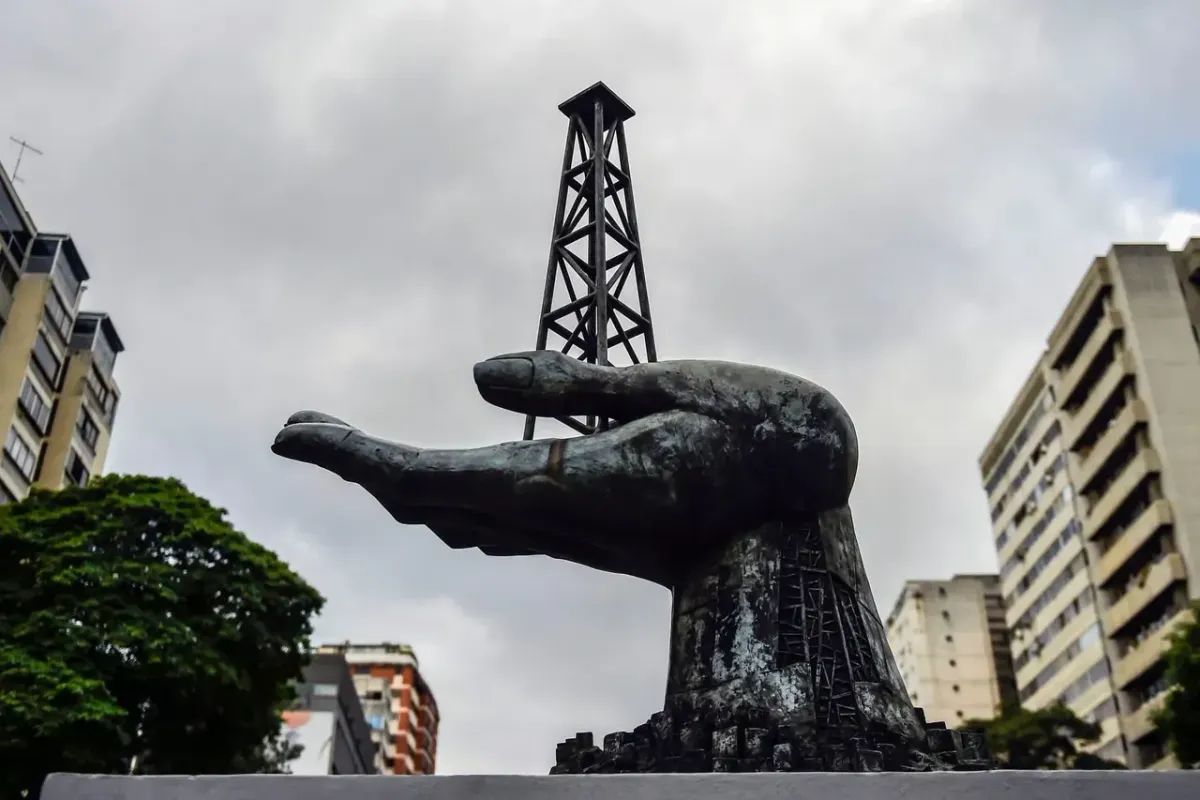](https://www.opendemocracy.net/es/venezuela-eeuu-petroleo-delcy-rodriguez-donald-trump-betancourt-maduro/)
Es decir, el apoyo de EEUU a los resultados electorales que ayudaron a proteger la democracia brasileña en 2022 ha desaparecido. Peor aún, Trump demuestra que no le importa cómo sus aliados llegan al poder.
La próxima etapa del desarrollo económico en Brasil va a ser un reto. Se necesita complementar el consumo privado con bienes públicos, tiempo libre y seguridad económica. Es necesario profundizar la progresividad fiscal, y elevar el gasto en salud, educación y transporte urbano, lo que reduce en forma directa el costo de la vida.
Una política industrial ambiciosa y bien diseñada debe ir de la mano de la inversión pública para modernizar la estructura productiva del país. Nada de esto es fácil, ni política ni técnicamente. Pero solo la coalición de Lula parece siquiera interesada en intentarlo.
La alternativa es simple. El programa de Flávio Bolsonaro y el paquete que Washington ha intentado imponer equivalen a una economía subordinada a los intereses estadounidenses y reacia a cualquier otra asociación (principalmente a las inversiones chinas), especializada en la exportación de materias primas y con escaso margen para la política industrial necesaria para dar empleo a una mano de obra más calificada. Sus resultados podrían asemejarse a los del gobierno de su padre, o podrían ser peores, ya que Brasil también renunciaría a instrumentos de soberanía económica, desde el Pix hasta el control sobre sus minerales.
La etiqueta de "país del futuro" siempre dio por sentado que Brasil algún día se haría rico y dejaría atrás su inmensa desigualdad. En un ensayo de principios de la década de 2000, el filósofo brasileño Paulo Arantes señaló la ironía: la convergencia nunca llegó; en cambio, el mundo rico comenzó a converger hacia Brasil, con una brecha cada vez mayor entre ricos y pobres, un Estado del bienestar en desintegración y unas condiciones laborales y de vida más precarias – lo que los autores europeos y norteamericanos venían denominando, desde la década de 1990, "brasilianización".
Por tanto, la elección de Brasil tiene importancia más allá de sus fronteras. Para los brasileños, la elección se plantea entre dos caminos. Uno se basa en los logros de las últimas dos décadas y hacia un nuevo ciclo de desarrollo que combine crecimiento, reducción de la desigualdad y democracia.
El otro conduce de nuevo al crecimiento lento, a la dependencia de las materias primas y a un lugar en la esfera de influencia de Washington, bajo el mandato de un candidato que ha pedido a una potencia extranjera que interfiera en las instituciones de su propio país.
Para la región y para otras potencias medias que se enfrentan a las mismas presiones, Brasil puede volver a ser el país del futuro, pero no como promesa, sino como advertencia de lo que les espera: desarrollo y soberanía, o estancamiento y subordinación.
*Guilherme Klein es profesor de economía en la Universidad Federal de Río de Janeiro (UFRJ) e investigador asociado en el Centro de Investigación en Macroeconomía de las Desigualdades de la Universidad de São Paulo (Made/FEA-USP).*
### Tactical votes and soft Tories: How to keep Reform out of Number 10
URL: https://www.opendemocracy.net/how-to-stop-reform-winning-next-election-farage-tactical-voting-andy-burnham-labour-hope-soft-tories/
Last updated: 2026-09-30T13:21:29.000Z
“Soft Tories are some of the most anti-Reform voters” and will be key to defeating Nigel Farage at the next general election, according to Hope Not Hate’s CEO, Nick Lowles.
Speaking on a panel at the Labour Party Conference, Lowles said the anti-racist NGO’s new [report](https://hopenothate.org.uk/wp-content/uploads/2026/08/Blocking-the-Path-Final-250826.pdf?ref=opendemocracy.net) has found centre-right Conservatives are put off by Reform’s chaos and sleaze and are “willing to vote tactically in by-elections” to keep Farage out of Number 10\.
But Lowles warned that Labour cannot rely solely on anti-Reform sentiment to return it to power at the next general election, instead urging the party to campaign on “Labour values” and “have answers for working-class communities”.
Those values were at the heart of prime minister Andy Burnham’s first conference speech as Labour Party leader, where he promised to “draw a line on a decade of division, to put the country on a new path: a Britain with belief again, people with hope again. A Britain for everyone, no matter who we are or where we are born.”
While he did not address the rise of the far right directly, a visibly emotional Burnham spoke of his late dad’s Britain as a “country that stood up to fascism”.
Labour has framed “Hope Again” as the defining message of its conference, abandoning its previous doom messaging and pitching to a pragmatic and progressive vote. The shift comes as Reform suffers a dip in its popularity after a [summer of scandal](https://www.opendemocracy.net/can-reform-survive-its-summer-of-scandal/) around donations and party financing.
Hope Not Hate’s report found that 43% of the British public would be unhappy with a Reform government winning in 2029, more than the 36% who said they would be happy with such an outcome.
But Lowles cautioned against complacency, warning that 83 councils are at risk of being taken over by Reform in next year’s local elections, which will be held in all local authorities in Northern Ireland, Scotland and Wales, and some in England. Hope Not Hate has also identified [199 parliamentary seats](https://hopenothate.org.uk/blocking-the-path/?ref=opendemocracy.net) where a split opposition would pave the way for a far-right victory.
## **How to defeat Reform**
There are five distinct groups within the broader anti-Reform coalition, according to Hope Not Hate’s report. The largest of these are “comfortable moderates” (30%) and “pragmatic progressives” (30%), followed by the “disaffected right” (20%), the “hopeful left” (14%) and “agitated activists” (6%).
While these voters are open to voting tactically to keep the party out of power, the report said, high-quality information is needed for any such effort to be successful. This is undermined by “[dubious](https://hopenothate.org.uk/wp-content/uploads/2026/08/Blocking-the-Path-Final-250826.pdf?ref=opendemocracy.net)” tactical voting information from political parties, which are less willing than the public to lend votes to a rival party in order to stop a Reform MP from entering Westminster.
Reform has led the polls for much of the past two years, with its electoral success becoming seen as inevitable. But Labour has recently regained a narrow lead – highlighting that Farage’s party has weak spots that can be weaponised, said panellist Steve Akehurst, the director of the Persuasion think tank.
One such electoral weakness is Reform’s link to Donald Trump, whom voters in the UK view as “brash” and “nasty” – characteristics they increasingly associate with Farage. The party also shares many of the problems facing the Trump administration, including being seen as chaotic – a particularly salient problem for those on the centre-right.
In a similar vein, anger at Reform’s vested interests, and how the party promotes its donors’ interests, is fuelling anti-Reform voters across the board. This includes the party’s embrace of crypto while receiving mega donations from crypto billionaires Christopher Harborne and Ben Delo.
The proximity between Reform and crypto interests even got a mention in chancellor John Healey’s conference speech, as he joked that Farage’s economic vision for the UK is “Liz Truss with a bitcoin account”.
Again, as was the case for the Trump campaign, Akehurst identified Reform’s problems with misogyny as affecting their vote, with women switching from the party to Labour at July’s Makerfield by-election – eventually won by Burnham – after it was reported that its candidate had made sexist comments. Reform-voting men did not shift their allegiance, Akehurst noted.
While calling out Reform’s negativity is one vote-winner, said Labour MP for Gateshead Central Mark Ferguson, so is offering voters a message of hope. “I’m a big fan of show, not say,” he said, urging Labour to go out and demonstrate the chance they are making for communities. He used the example of breakfast clubs in his constituency as an example of how the government is making a tangible difference to working-class families.
That message of hope will be necessary, Ferguson told the panel’s audience, to counter “£72m worth of direct mail campaigns to voters from Nigel Farage” – referencing the £36m donations from Harborne and Delo. Reform could be made to give most of the money back if the government’s planned restrictions on political donations come into force and are retrospectively applied.
This is where local campaigning from anti-racist, democratic and progressive organisations can make a real difference. The fight to keep Reform out of power in 2029, Lowles said, comes from “knowing the localities, knowing the issues, and starts now”.
### When it comes to Palestine, it is governments vs. citizens
URL: https://www.opendemocracy.net/weekly-email-260926/
Last updated: 2026-09-26T06:00:45.000Z
## **In this week’s issue**
For many years, defenders of Israel’s policies in Palestine have pointed to the many Arab regimes that have turned a blind eye to the plight of Palestinians.
Yet as we near the second anniversary of the Hamas terror attacks and the genocide that has followed and – in many ways – endures, it is important to remind ourselves that ordinary people around the world, especially in the Arab world, continue to defy their repressive governments to stand in solidarity with a people under siege.
This week, we bring you an account from Tunisia where activists who organised the Sumud Flotilla last year are now on hunger strike in prison. In 2025, “the Tunisian state was, in some sense, a party to the flotilla’s departure,” an activist told openDemocracy’s Nandini Naira Archer.
The next election is only three years away, and ****we are determined to** ****prevent the rise of the far right.** To do that, we want to recruit 500 new monthly donors by the end of 2026\. We're a third of the way there – but still have a long way to go
****Will you be part of the movement to fight the far right, with a monthly donation today?**
[Become a regular supporter ](#/portal/signup)
A year later, the regime is out arresting those who speak in favour of a free Palestine. What changed? Read the piece to find out.
Also in this week’s edition, a radical proposal to fix Berlin’s housing crisis, how Argentina’s far-right has discovered the emotive power of Las Malvinas (or the Falklands), Paul Rogers on Trump at the United Nations General Assembly, and our special podcast on Palantir and the art of tax evasion.
We’re bringing you a more international perspective this week as we dig in for a deep dive into Labour Conference next week. A massive, massive thank you to our readers who contributed to helping us get our reporters to Liverpool. If you love our journalism, consider becoming a regular contributor.
Have a great weekend
**Aman**
---
[Around the world, people fight for Palestine as authorities crack downIn Tunisia, imprisoned Palestinian rights activists are on the brink of death.openDemocracyNandini Naira Archer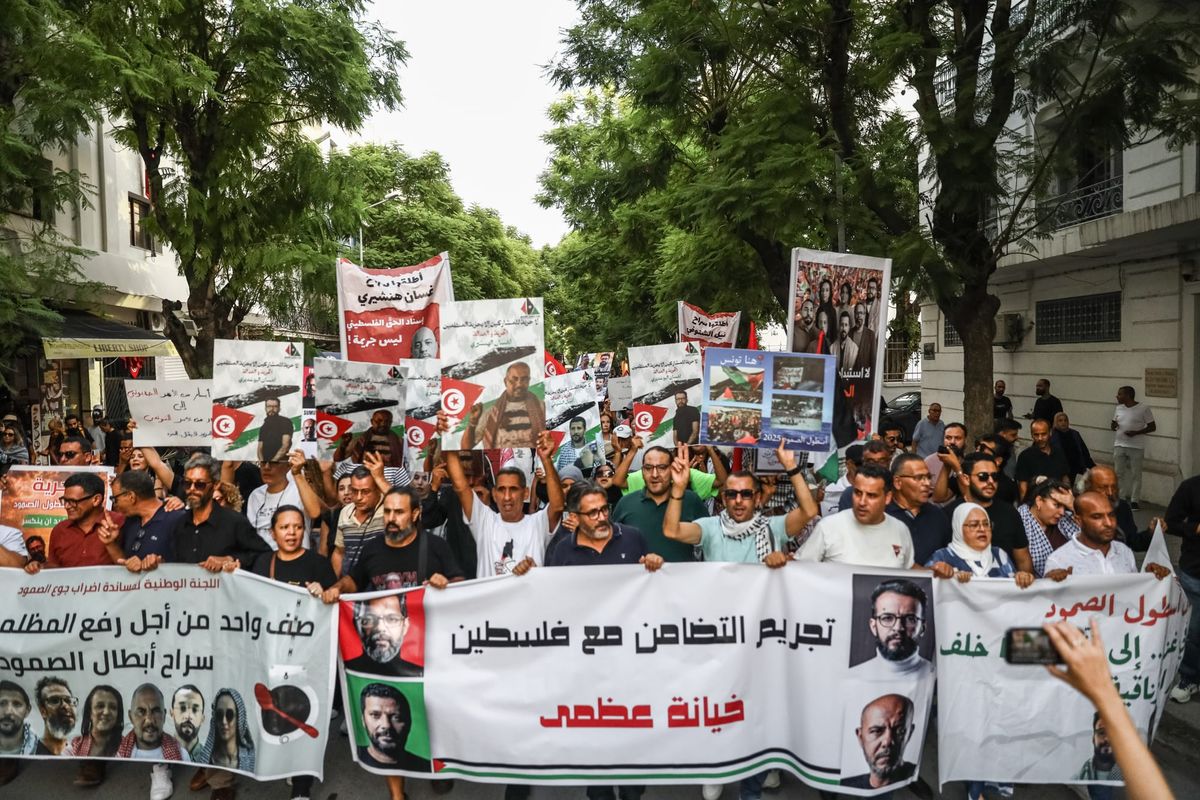](https://www.opendemocracy.net/around-the-world-people-fight-for-palestine-as-authorities-crack-down/)
[How the Argentine far right weaponised the Falklands disputeMilei is using dispute to impose authoritarian measures, while his vice-president seeks to launder military’s reputationopenDemocracyFlorence Evans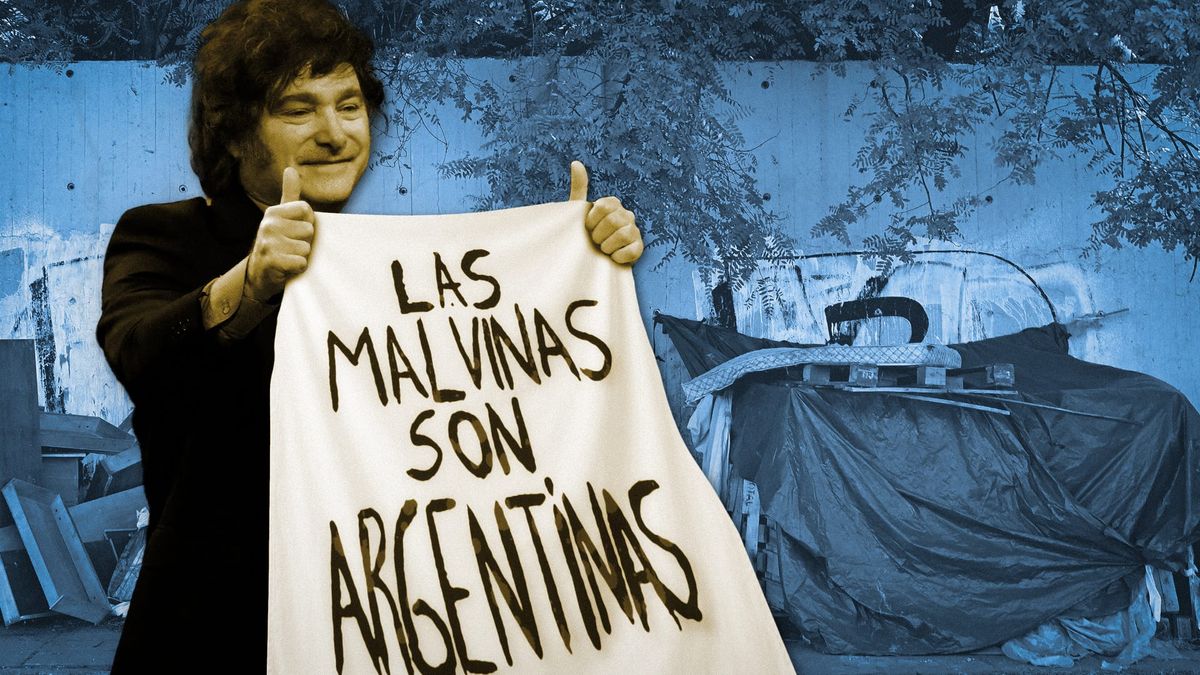](https://www.opendemocracy.net/falklands-malvinas-argentina-milei-far-right-weaponised-authoritian-measures-launder-military-reputation/)
[Iran threats and snipers in Washington: Trump’s dangerous unravellingDepleted missiles abroad and armed fortresses at home reveal a president running out of options as midterms loomopenDemocracyPaul Rogers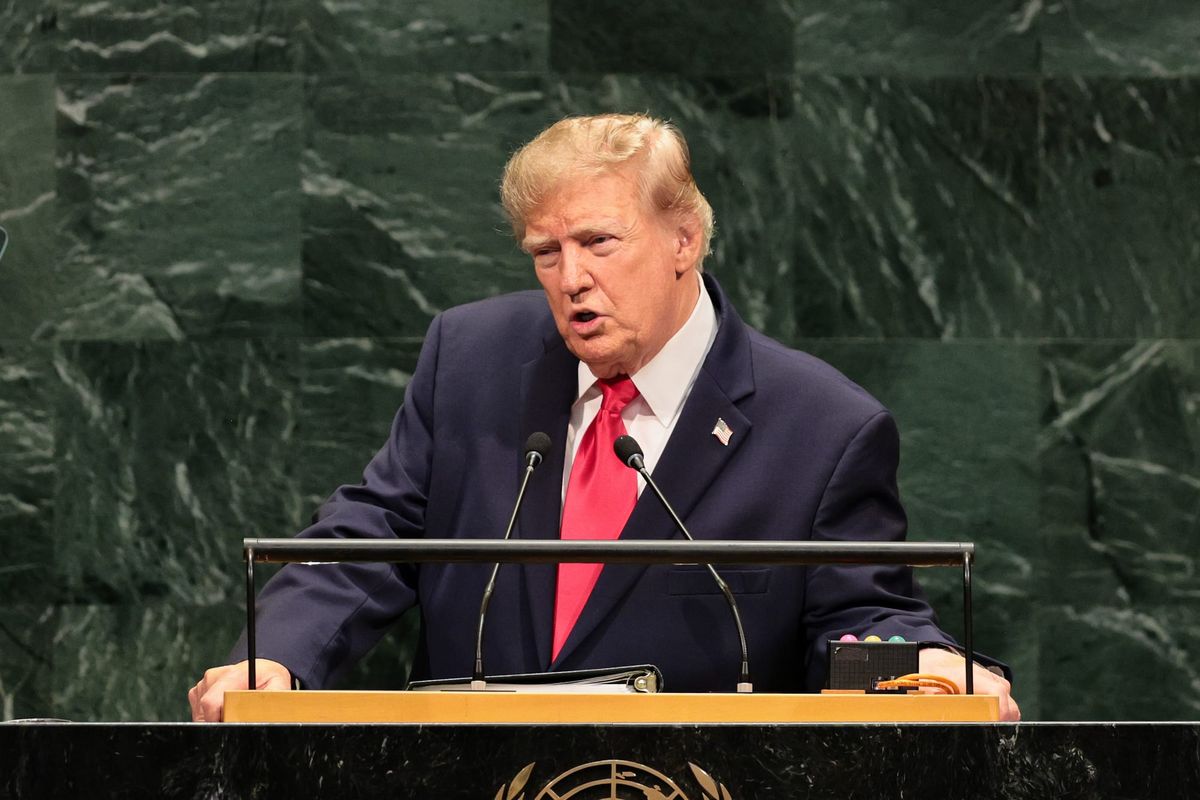](https://www.opendemocracy.net/iran-threats-and-snipers-in-washington-trumps-dangerous-unravelling/)
[A radical proposal to solve the housing crisis: ExpropriationIn Berlin, a campaign to expropriate housing from corporate landlords is winning widespread support.openDemocracyAmir Ishikawa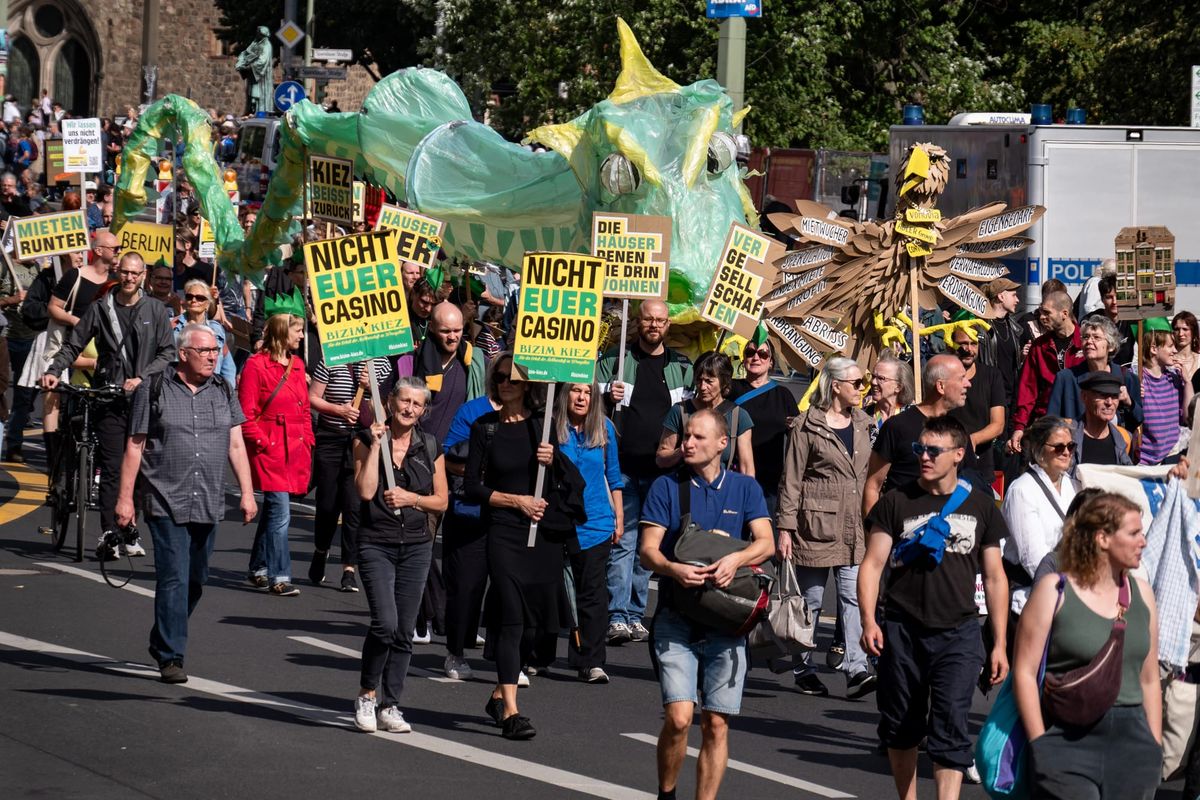](https://www.opendemocracy.net/what-if-tenants-not-landlords-controlled-berlins-housing/)
[Palantir and the art of Tax AvoidanceDespite reporting 55% profit margins and over $1.6 billion in net income, Palantir maintains an effective global tax rate of just 1.4% and pays zero federal income tax in the United States.openDemocracyAman Sethi](https://www.opendemocracy.net/exposing-palantir-defence-contracts-stock-based-compensation-and-tax-avoidance/)
---
## Weekly Poll
How does your opinion compare to the rest of our readership? Take our new look weekly poll and find out. Have thoughts about the topic? [Send us an email](mailto:supporters@opendemocracy.net?subject=Re%3A%20Weekly%20Poll)
### "The UK should relinquish its claim to the Falklands"
| [Vote and see results →](https://www.opendemocracy.net/weekly-email-260926/?jump=poll) |
| -------------------------------------------------------------------------------------- |
---
## Last week's poll results
### Will Reform’s £72m ‘gift’ dent the party’s image?
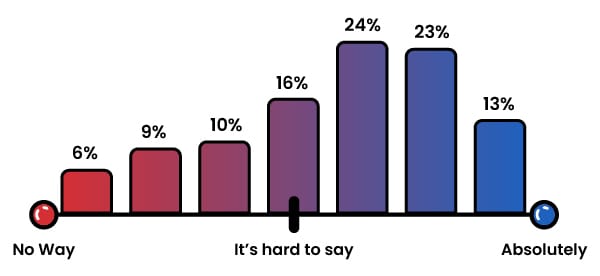
---
[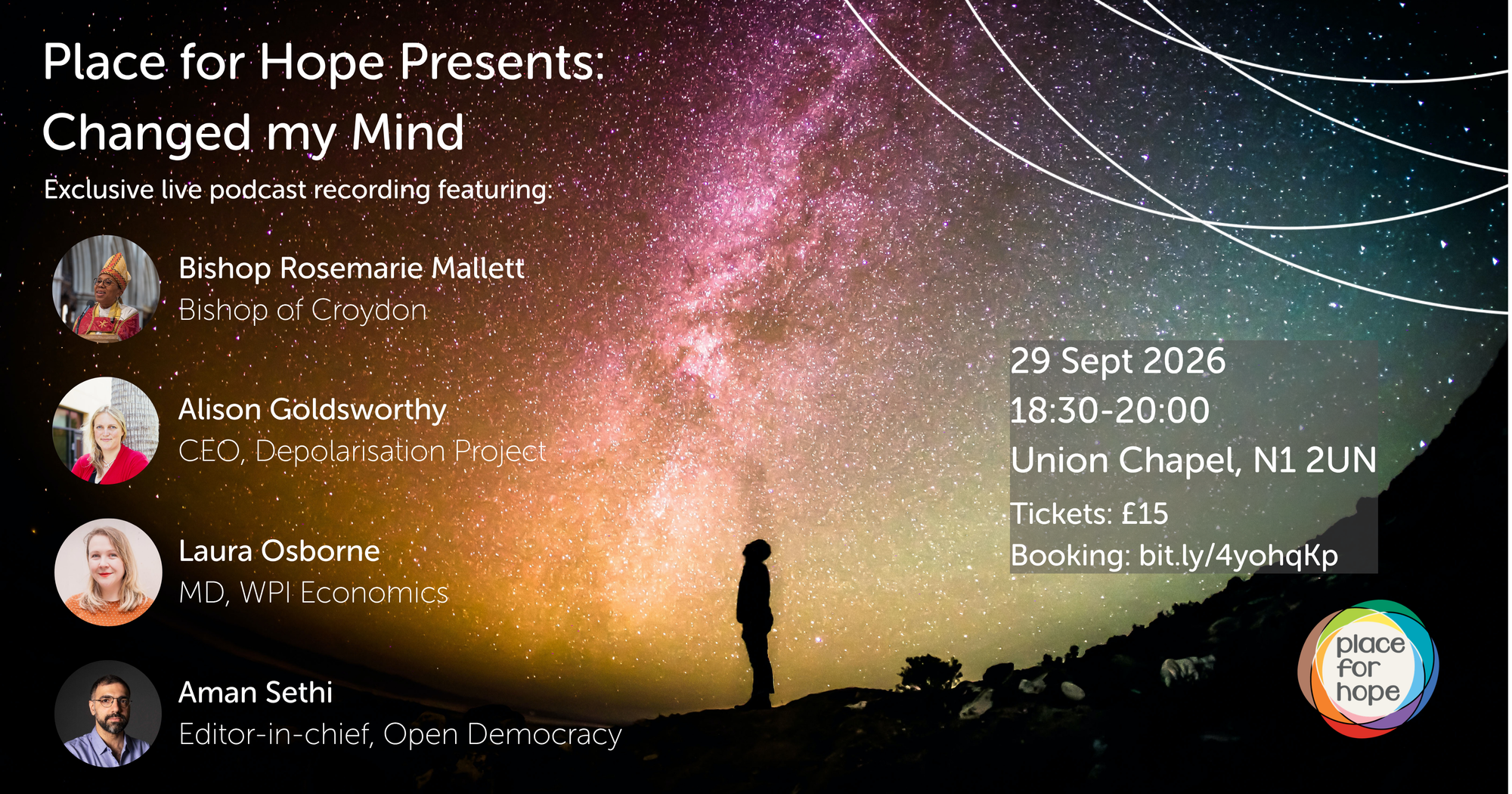](https://www.tickettailor.com/events/placeforhope/2391338?ref=opendemocracy.net)
Join us for an exclusive **live recording** of *Changed My Mind*, the podcast that explores the thinking behind serious shifts of opinion. This panel discussion will feature Rosemarie Mallet, the bishop of Croydon, Aman Sethi, the editor-in-chief of openDemocracy, Alison Goldsworthy, the CEO of The Depolarisation Project, and Laura Osborne, the managing director of WPI Economics. You can get a flavour of *Changed My Mind* by listening to the [podcast](https://www.opendemocracy.net/cmmpod) or via this [article](https://www.opendemocracy.net/leor-zmigrod-political-violence-self-defence/).
[Join us live](https://www.tickettailor.com/events/placeforhope/2391338?ref=opendemocracy.net)
---
## Reader Comments
openDemocracy receives so many carefully considered messages about our work that it seems a shame to keep them to ourselves.
These comments are edited for clarity, accuracy and length, and are not a reflection of openDemocracy's editorial position.
> Writing in today’s Guardian (19/9/26), talking about the suffering of the Palestinian people in the West Bank, you express reservations about Ed Miliband’s recent sanctions on Israel and the action taken by the rapper Macklemore and go on to say “for those desperate to see change, the best hope is the ejection from office of what has been a vile, cruel, bigoted and lethally dangerous government.”
>
> Of course we in the UK have no influence over Israeli elections. Your unspoken message seems to be that there is nothing much we can do. That is not true. If yourself, along with others at the Guardian, Matt Brittin (BBC Director General), Jonathan Harmsworth (Lord Rothermere, owner of the Daily Mail) and other powerful media voices were to report the truth of what is going on and condemn it there would be a sea change in British public opinion which would lead to political action which would have major impact on Israel and the wider world.
>
> To give one example, the depravity and cruelty of Israel’s Sde Temain Prison Camp is almost unbelievable (I will not give details). It should have dominated the news, with banner headlines and dramatic photographs on the front pages and been ‘top story’ on BBC main news. Sde Temain should be a byword for cruelty. Instead it was barely reported and most people have never heard of it. That silence needs to end.
**Brendan O'Brien |** An open letter to Jonathan Freedland of the Guardian - via email
---

Officials at the Nigerian embassy celebrate their country's independence | Afro American Newspapers/Gado/Getty Images)
## This week in history
**Nigerian independence • 1 October 1960**
Nigeria became independent from Britain on 1 October 1960\. With over 180 million people today, Nigeria is Africa's most populous nation. Its independence story was shaped by the colonial-era divide-and-rule between ethnic groups, followed by military coups and the Biafran war. Encapsulating both the possibilities and the painful contradictions of African decolonisation.
[Democracy in Nigeria: the road less travelledThe presidential election in Nigeria on 21 April 2007 is a crucial one for democracy on the continent. A fair and successful election in the continent’s most populous nation - and the world’s fifth largest federation (after India, the United States, Brazil and Russia) - would be a shining exampleopenDemocracyGodwin Nnanna](https://www.opendemocracy.net/en/nigeria-democracy-4482jsp/)
---
### El Proyecto 2025 de Trump refuerza a la ultraderecha en América Latina
URL: https://www.opendemocracy.net/el-proyecto-2025-de-trump-refuerza-a-la-ultraderecha-en-america-latina/
Last updated: 2026-09-25T17:57:41.000Z
### En la edición de esta semana:
- La agenda antidemocrática de Trump y su Proyecto 2025 encuentra suelo fértil en América Latina
- Trump, Irán y las *midterms*: Miedo y furia en la Casa Blanca
- Túnez encarcela a activistas por Palestina. Ellos resisten en huelga de hambre
Sumergirse en documentos contables y declaraciones de impuestos puede ser aburrido, o fascinante cuando la ruta del dinero nos permite confirmar sospechas o descubrir conexiones inesperadas.
Eso estamos haciendo en democraciaAbierta con las organizaciones del nacionalismo cristiano estadounidense que más activamente promueven en todo el mundo un **autoritarismo de base cristiana** que quieren hacer pasar por **defensa de la libertad religiosa** y de la **vida**.
En los próximos meses vamos a actualizar [**nuestra investigación histórica**](https://www.opendemocracy.net/en/trump-us-christian-spending-global-revealed/) sobre esas rutas del dinero y las [operaciones autoritarias](https://www.opendemocracy.net/es/conspiraciones-covid-19-millones-dinero-opaco-america-latina/) que conectan. Esta semana va un adelanto.
Si oyeron hablar alguna vez de la **Heritage Foundation**, fundada en Estados Unidos en los años 70, quizás sepan que es un centro de pensamiento liberal o libertario, centrado en reducir el tamaño del estado y promover el libre mercado a toda costa.
Eso es lo que parecía hasta hace unos años, cuando su costado conservador comenzó a ganar fuerza hasta convertirla en una organización que promueve un **modelo teocrático de gobierno**, reñido con la democracia.
No está sola. En 2023 publicó, con apoyo de un centenar de organizaciones, el **Proyecto 2025**, que se propone, en esencia, vaciar el sistema democrático. Y no solo en Estados Unidos, sino en todo el mundo.
Trump ya aplicó la mitad de las medidas del Proyecto 2025, y cientos de miles de personas han muerto alrededor del mundo en consecuencia.
Sus impulsores están felices con América Latina, donde esta agenda encuentra suelo fértil. Mi artículo explora **el dinero, las conexiones y las políticas** del Proyecto 2025 en nuestra región.
[Cómo Trump y sus aliados exportan el Proyecto 2025 a América LatinaEl autoritarismo del Proyecto 2025 gana fuerza en América Latina, impulsado por aliados de Trump y redes de ultraderecha tejidas desde hace añosopenDemocracyDiana Cariboni](https://www.opendemocracy.net/es/heritage-trump-ultraderecha-latinoamerica-milei-kast-delaespriella-democracia-autoritarismo/)
Mientras tanto, en la Casa Blanca, cunden el pánico y la furia ante la proximidad de las elecciones de mitad de mandato en las que el Partido Republicano corre el riesgo de perder la mayoría en el Congreso.
Las razones, explica nuestro experto en política internacional **Paul Rogers**, son las movidas malogradas de Trump.
El presidente ha logrado gastarse entre **la mitad y dos tercios de las municiones antimisiles** en una guerra contra Irán que no va a ninguna parte, mientras quiere construir en Washington un arco del triunfo lleno de drones y francotiradores para defenderse del “enemigo interior”. Lo dicho, miedo y furia.
[El desgaste en Irán y la tensión interna acorralan a TrumpEl desastre militar en Irán y una capital blindada revelan a un presidente que se queda sin margen a medida que se acercan las elecciones de mitad de mandatoopenDemocracyPaul Rogers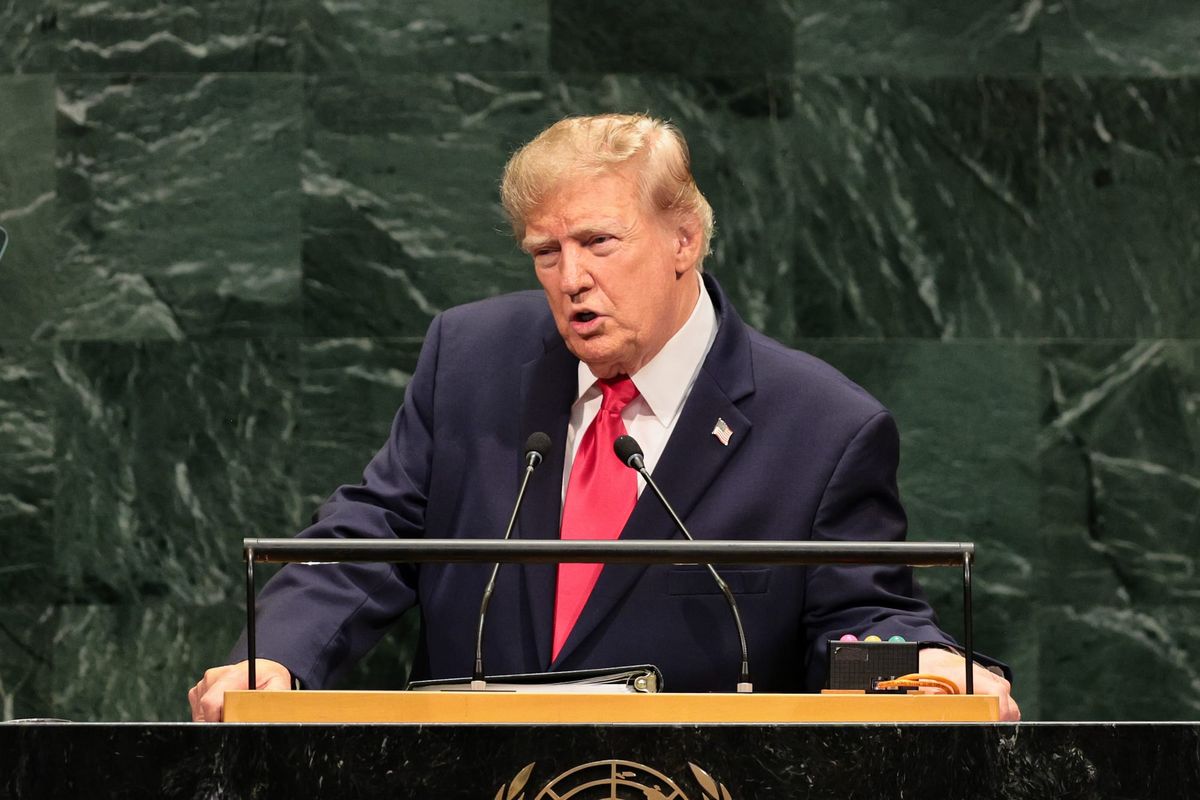](https://www.opendemocracy.net/es/trump-iran-tension-washington-elecciones-medio-mandato/)
Aunque la información nos inunda, es fácil comprobar que no sabemos casi nada de lo que pasa en nuestro mundo. Por ejemplo, de las muchas formas que adopta la solidaridad con **Palestina**, y de las respuestas represivas con que los gobiernos responden a ella.
De eso trata una crónica urgente de nuestra editora de Movimientos, **Nandini Naira Archer**, sobre un grupo de activistas por Palestina en prisión preventiva en Túnez y en **huelga de hambre**.
Nandini me contó que lo que la atrajo de esta historia no fue solo la fuerza del movimiento, sino el silencio que lo rodea. Uno de estos activistas se debate entre la vida y la muerte. Ella se hizo esta pregunta, que yo también me hago: “¿Hasta dónde están dispuestos a llegar los Estados cuando la solidaridad se organiza, cobra fuerza en las calles y se vuelve políticamente difícil de ignorar?”.
[La solidaridad con Palestina resiste pese al asedio estatalLa vida de varios activistas encarcelados pende de un hilo en TúnezopenDemocracyNandini Naira Archer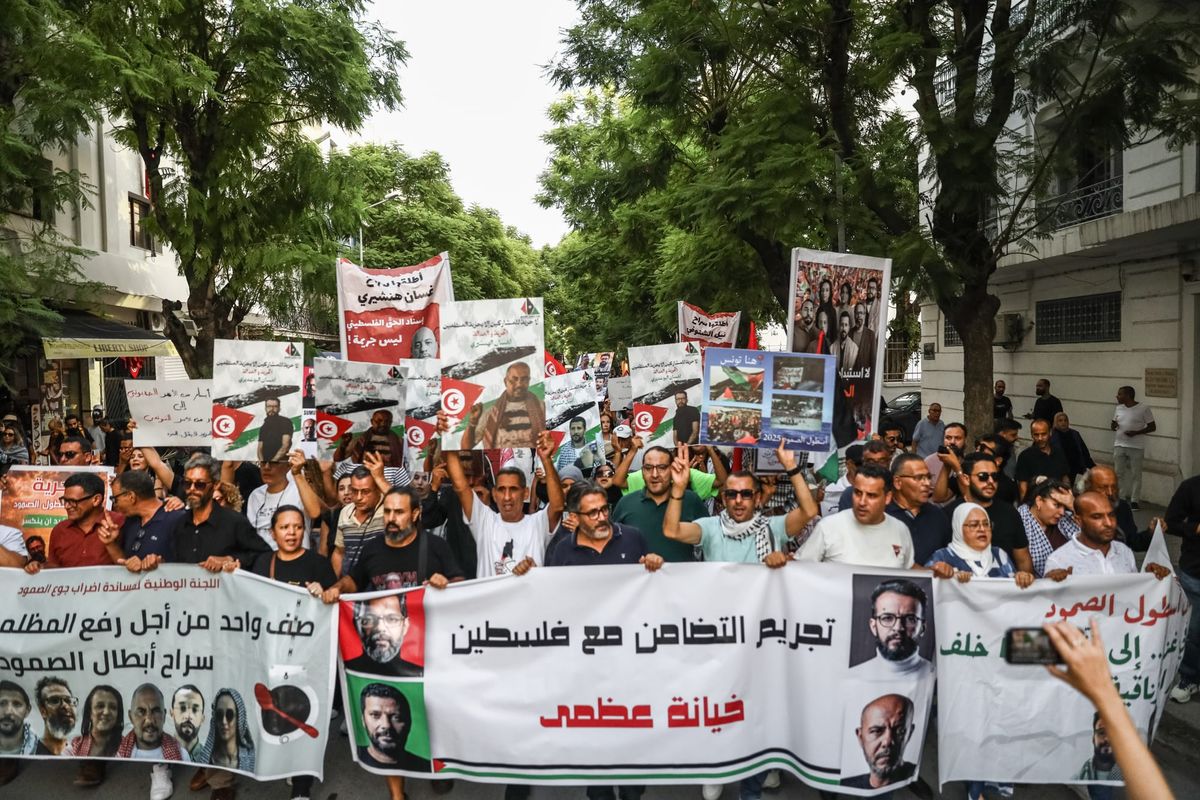](https://www.opendemocracy.net/es/palestina-tunez-solidaridad-carcel-huelga-de-hambre-flotilla-israel-gaza/)
Gracias por suscribirte, seguirnos y leernos. Que tengas un gran fin de semana.
**Diana Cariboni, Editora de América Latina**
[Suscribite a nuestra newsletter](https://www.opendemocracy.net/en/newsletters/opendemocracy-espanol-democraciaabierta-newsletter-email-espanol/)
[¡Queremos conocer tu opinión y tus ideas! Escribinos](mailto:info.demoabierta@opendemocracy.net)
*democraciaAbierta es un medio de noticias independiente y sin fines de lucro, que se especializa en un periodismo de investigación de alta calidad que cuestiona al poder, inspira cambios y fomenta la visibilidad y el liderazgo de grupos subrepresentados en los medios. Con sede en Londres, tenemos equipos de trabajo en tres continentes.*
### Activistas por Palestina resisten en huelga de hambre en una cárcel de Túnez
URL: https://www.opendemocracy.net/es/palestina-tunez-solidaridad-carcel-huelga-de-hambre-flotilla-israel-gaza/
Last updated: 2026-09-25T15:28:03.000Z
Wael Naouar inició su huelga de hambre el 16 de agosto. Luego de más de cinco semanas sin ingerir alimentos, este activista por los derechos del pueblo palestino está semiconsciente y al borde de la muerte en una cárcel de Túnez. Ha perdido más de 20 kilos, le cuesta respirar, sufre desmayos constantes y padece alucinaciones.
Naouar no está solo: Nabil Channoufi, Ghassan Henchiri y Ghassan Boughdiri – otros tres activistas encarcelados con él – también se han sumado a la huelga de hambre.
¿Qué delito cometieron para estar presos?
Haber participado en la organización de la Flotilla Sumud Global 2025, una gran movilización internacional que reunió en Túnez a cientos de activistas de todo el mundo. Su objetivo era zarpar hacia Gaza para desafiar el bloqueo ilegal de Israel sobre la convulsa región y llevar alimentos y medicinas a una población asediada.
La flotilla – compuesta por más de 40 embarcaciones – nunca llegó a Gaza, pero logró redirigir la atención internacional hacia el genocidio perpetrado por el Estado israelí contra el pueblo palestino, calificado así por la ONU.
La historia del arresto de Naouar, su posterior huelga de hambre y el respaldo que él y sus compañeros han recibido de un amplio sector de la sociedad civil tunecina – incluidas la Liga Tunecina para la Defensa de los Derechos Humanos, la Unión General Tunecina del Trabajo y el Colegio Nacional de Abogados de Túnez – revela que el movimiento de base global que exige justicia y libertad para el pueblo palestino no muestra señales de ceder, incluso cuando muchos gobiernos optan por el silencio o se pliegan a las presiones de Estados Unidos e Israel para reprimir a sus propios ciudadanos.
En distintas partes del globo, [incluido el Reino Unido](https://www.opendemocracy.net/es/reino-unido-24-de-filton-terrorismo-palestine-action-abogado-desacato-genocidio-gaza/), quienes instan a sus gobiernos a actuar enfrentan torturas, arrestos, juicios y largas condenas de cárcel.
[Me condenaron por terrorismo. Ahora mi abogado va a juicio por defendermeMi abogado enfrenta una pena de cárcel por su alegato final ante el jurado, mientras el Estado intenta silenciar la solidaridad con PalestinaopenDemocracyCharlotte Head](https://www.opendemocracy.net/es/reino-unido-24-de-filton-terrorismo-palestine-action-abogado-desacato-genocidio-gaza/)
A principios de este mes, Bassem Trifi, presidente de la Liga Tunecina para la Defensa de los Derechos Humanos, visitó a Naouar en prisión para entregarle una petición firmada por su organización, la Unión General Tunecina del Trabajo y el Colegio Nacional de Abogados de Túnez, en la que le rogaban que pusiera fin a la huelga de hambre y preservara su vida.
“Su estado de salud se ha deteriorado drásticamente y su situación es alarmante”, declaró Trifi en su momento, añadiendo que Naouar agradeció el apoyo de las organizaciones y activistas, pero manifestó que continuaría la huelga hasta que “se levante la injusticia impuesta sobre él y sus compañeros”.
### **Cuando la solidaridad es un delito**
En Túnez, los preparativos para la Flotilla Sumud 2025 distaron mucho de ser clandestinos. Activistas locales se pusieron en contacto con las autoridades tunecinas para solicitar permisos de alquiler de barcos y compra de medicamentos, leche en polvo y otros suministros humanitarios destinados a Gaza, según explicó a openDemocracy Ghassan Bouazzi, integrante del Comité Nacional para la Defensa de los Activistas de la Flotilla Sumud y de la Causa Palestina.
Las autoridades no aprobaron ni rechazaron la solicitud, señaló Bouazzi, por lo que los organizadores continuaron con el plan.
En septiembre de 2025, cientos de activistas llegaron a Túnez para preparar la flotilla. Los organizadores conversaron con periodistas, realizaron actos públicos y se coordinaron con la policía y el personal de seguridad en las inmediaciones del puerto de Sidi Bou Said, donde se cargaron las embarcaciones.
“La recolección de donaciones, la organización de la flotilla y, antes de eso, la articulación de un convoy terrestre de ayuda... todo se desarrolló de manera pública y a la vista de las autoridades tunecinas”, dijo Bouazzi. La sede de la organización se encontraba a apenas 500 metros del Ministerio del Interior.
[Convoy humanitario a Gaza varado en el desierto de LibiaCientos de personas de un convoy humanitario para Gaza están varadas cerca de Sirte, obligadas a racionar el agua, pero sin renunciar a su misiónopenDemocracyNandini Naira Archer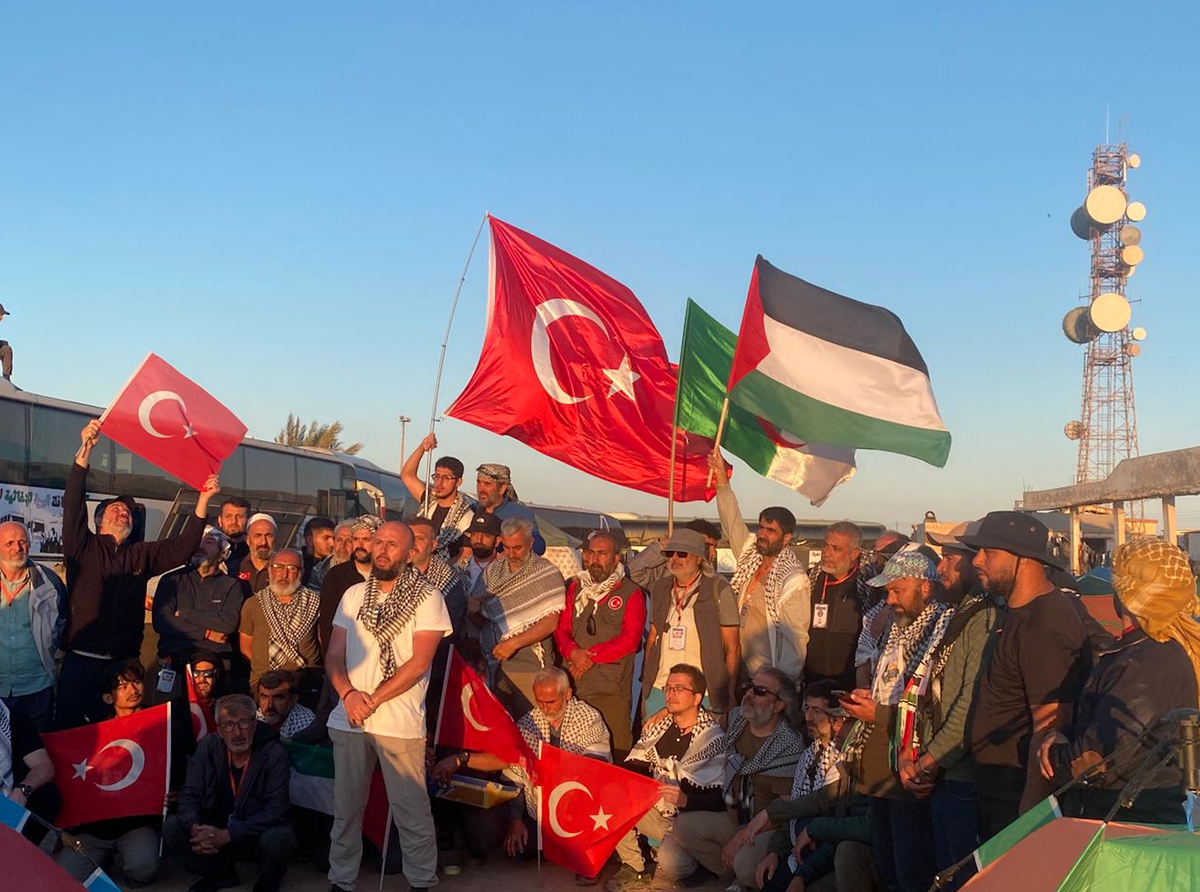](https://www.opendemocracy.net/es/un-convoy-humanitario-hacia-gaza-atrapado-en-el-desierto-se-niega-a-dar-la-vuelta/)
El Estado hizo más que simplemente estar al tanto de la movilización. “El Estado tunecino fue, en cierto modo, parte de la partida de la flotilla y estuvo plenamente al tanto de todo el proceso mediante el cual se organizó”, dijo Bouazzi.
Los barcos de la flotilla empezaron a zarpar hacia Gaza desde Italia y España a finales de agosto de 2025; poco después, se les sumaron las embarcaciones de Grecia y Túnez. La noche del 24 de septiembre, varios barcos fueron atacados por drones y la represión israelí se desplegó con toda su fuerza.
En Túnez, la actitud de las autoridades también comenzó a cambiar.
En enero de 2026, Naouar y otros organizadores empezaron a debatir públicamente la preparación de una segunda flotilla. El mes siguiente presentaron una solicitud formal ante las autoridades, indicó Bouazzi. Esta vez, la autorización fue denegada.
Semanas después, comenzaron las detenciones.
Las autoridades alegaron que los organizadores de Sumud 2025 habían incurrido en fraude, falsificación de documentos y lavado de dinero. Desde entonces, las autoridades han examinado minuciosamente las cuentas bancarias, bienes y transacciones financieras de los detenidos y de algunos de sus familiares, de acuerdo con Bouazzi. El activista señaló que, hasta donde tiene conocimiento, las investigaciones no han demostrado ningún enriquecimiento injustificado ni vínculos con redes de blanqueo de capitales.
Siete organizadores fueron detenidos en marzo. Tres han sido liberados desde entonces, pero Naouar, Channoufi, Henchiri y Boughdiri continúan recluidos en la prisión de Mornaguia.
Apenas 48 horas después de las detenciones, sus simpatizantes crearon el Comité Nacional para la Defensa de los Activistas de la Flotilla Sumud y de la Causa Palestina. Desde entonces, han organizado reiteradas protestas para exigir su liberación.
La semana pasada, los manifestantes marcharon por el centro de Túnez, desde la sede del Sindicato Nacional de Periodistas Tunecinos hasta la avenida Habib Bourguiba, portando imágenes de los cuatro detenidos y exigiendo el cierre del caso.
Fue entonces cuando algunos de los manifestantes también fueron arrestados.
A partir de la noche siguiente, la policía empezó a detener a personas que habían participado en la marcha, a algunas en sus propios hogares y a otras en la vía pública. Abogados defensores afirmaron que al menos 11 personas fueron detenidas, mientras que los activistas elevan la cifra a 13 o más.
Un juez prorrogó la detención preventiva de varios de ellos por 48 horas para interrogarlos sobre las consignas coreadas durante la marcha. Hasta el momento de la publicación de este artículo, las autoridades tunecinas no habían confirmado públicamente las detenciones.
openDemocracy intentó contactar a las autoridades tunecinas para obtener sus comentarios, pero no recibió respuesta.
Para activistas como Bouazzi, el trasfondo de esta deriva autoritaria es claro: “Las autoridades tunecinas ven una amenaza a su poder en cualquier movimiento independiente con importante respaldo popular y capacidad de movilización, incluso cuando su única causa es enteramente apoyar al pueblo palestino”.
Naouar cuenta con un historial de militancia política que va más allá de la solidaridad con Palestina. Fue encarcelado cuando era estudiante, durante el régimen del difunto dictador Zine El Abidine Ben Ali; más tarde asumió como secretario general de la Unión General de Estudiantes de Túnez y, poco antes de su detención este año, criticó públicamente al presidente Kais Saied.
Varias organizaciones de derechos humanos han expresado su preocupación por la creciente presión sobre la sociedad civil tunecina, que incluye el uso de investigaciones financieras, la prolongación de la prisión preventiva y el procesamiento penal de activistas y trabajadores de ONG. El gobierno de Saied rechaza las acusaciones de que el poder judicial es utilizado contra opositores políticos, y sostiene que las actuaciones judiciales son independientes.
Esta tensión resulta particularmente notoria en Túnez, donde históricamente la causa palestina ha contado con un amplio respaldo popular y el propio Saied ha hecho de ella su bandera discursiva.
Para Bouazzi, la brecha entre el discurso oficial y la persecución real a la militancia de base es cada vez mayor. Señala, además, que las presiones geopolíticas externas podrían haber pesado en este giro, aunque no existen pruebas directas de injerencia extranjera.
Para el movimiento que se moviliza fuera de las cárceles, la exigencia inmediata sigue siendo clara: los cuatro activistas deben ser puestos en libertad.
“Lo que pedimos a nuestros amigos y a quienes apoyan al pueblo palestino en todo el mundo es que visibilicen esta injusticia”, concluyó Bouazzi. “La atención internacional puede generar incomodidad y presión sobre las autoridades tunecinas, y ayudar a conseguir la liberación de nuestros compañeros detenidos”.
### La sombra de Irán y francotiradores en Washington: el peligroso desmoronamiento de Trump
URL: https://www.opendemocracy.net/es/trump-iran-tension-washington-elecciones-medio-mandato/
Last updated: 2026-09-25T14:44:39.000Z
Si bien Donald Trump lleva tiempo tachando cualquier mala noticia sobre su guerra contra Irán de falsedad de los medios progresistas, la realidad tropieza con un problema persistente: los pesos y contrapesos inherentes al sistema estadounidense no son tan fáciles de ignrorar.
La Oficina de Presupuesto del Congreso (CBO, por sus siglas en inglés), por ejemplo, no rinde cuentas a la Casa Blanca, sino directamente al Congreso. Y cuando se trata de asuntos militares, la prensa suele dar amplia difusión a sus informes más importantes.
Un ejemplo es la [cobertura detallada](https://www.militarytimes.com/news/your-military/2026/09/15/iran-war-has-cost-38-billion-depleted-two-thirds-of-us-missile-interceptors-cbo-says/?ref=opendemocracy.net) que el medio Military Times hizo del informe de la CBO sobre el costo de las operaciones de combate en Irán hasta mediados de este mes (38.000 millones de dólares), así como el preocupante uso masivo de municiones especializadas – en particular interceptores de misiles balísticos –, que pueden ser mucho más caros que los propios misiles que deben destruir. Como era de esperar (salvo para quienes trabajan en la Casa Blanca), la publicación también incluyó un enlace directo al[ informe](https://www.cbo.gov/system/files/2026-09/62756-Iran.pdf?ref=opendemocracy.net).
Según resumió Military Times: “La CBO estima que el conflicto ha gastado, desde junio de 2025, entre la mitad y dos tercios del inventario estadounidense de ciertos interceptores de defensa antimisiles dejando a las fuerzas armadas con menos armas disponibles para un futuro conflicto. Reconstruir esos arsenales podría llevar al menos cinco años, incluso si aumentan los ritmos de producción”.
Esto implica que cualquier declaración de Trump o de su secretario de Guerra, Pete Hegseth, sobre un posible nuevo bombardeo contra Irán resulta poco creíble, ya que Irán simplemente ampliaría sus ataques contra instalaciones militares y de comunicaciones estadounidenses en toda la región. Esto agotaría aún más las limitadas reservas de misiles defensivos del Pentágono, dejando a Estados Unidos y a sus aliados en Oriente Medio en situación de riesgo.
Esto es una señal más de que Trump está en un aprieto con Irán y no tiene una salida fácil, a menos que esté dispuesto a aceptar un acuerdo con Teherán que equivalga a reconocer el fracaso. Aunque Irán podría ofrecerle un acuerdo de este tipo, es poco probable que Trump lo acepte, como quedó reflejado en su discurso ante la Asamblea General de la ONU esta semana.
En la cumbre afirmó que la opción para Irán era llegar a un acuerdo inmediatamente después de las elecciones de medio término o arriesgarse a "la aniquilación rápida de la República Islámica, sin darles jamás la oportunidad de matar ni destruir personas y países de nuevo".
Aunque incluso para Trump la amenaza resultó desmedida – acepten mi trato o los destruiré –, sería un error considerarla como su simple retórica habitual. Hay mucho más en juego. Para empezar, elegir la [sesión anual de la Asamblea General](https://gadebate.un.org/en/81/united-states-america?ref=opendemocracy.net), repleta de jefes de Estado, para lanzar semejante ultimátum sugiere que Trump ve a la ONU como parte del problema, un obstáculo que limita el reconocimiento mundial de su propia grandeza.
El afán de protagonismo también explica su determinación de construir un enorme arco triunfal en Washington. Esa propuesta, que supuestamente iba a celebrar los 250 años de independencia de Estados Unidos, está experimentando ahora un sutil cambio de diseño y propósito.
Hasta esta semana, el proyecto estaba bajo la tutela del Servicio de Parques Nacionales y se perfilaba como un monumento similar al Arco del Triunfo de París: ostentoso, sin duda, y probablemente concebido como el legado del mejor presidente de la historia, pero de carácter puramente ornamental. Ahora, sin embargo, los planos se están rediseñando para darle un uso militar, según informó, nuevamente, el [Military Times](https://www.militarytimes.com/news/pentagon-congress/2026/09/20/triumphal-arch-in-washington-to-serve-as-military-complex-trump-says/?ref=opendemocracy.net).
En sus redes sociales, Trump aseguró haber "acordado convertir el arco en un complejo militar y arco triunfal de primer nivel para albergar, desplegar y operar rápidamente un gran número de drones, además de francotiradores, tanto en la azotea como en la plaza, con amplias reservas de munición".
A menos que Trump crea que Estados Unidos corre el riesgo de una invasión masiva repentina por parte de Irán, Corea del Norte o incluso Cuba (o quizás de los tres juntos), la idea cobra un sentido inquietante si teme un conflicto interno de gran escala en Washington, dado que el arco custodiará uno de los principales accesos a la ciudad.
A primera vista, podría parecer una exageración, pero la idea de "una amenaza interna" ha sido una constante en la visión del mundo de Trump. Esto explica el afán por blindar la frontera con México, el uso masivo de agentes armados del Servicio de Inmigración y Control de Aduanas (ICE) y el despliegue frecuente de tropas de la Guardia Nacional en grandes ciudades, incluyendo Washington, a menudo en oposición a los gobernadores estatales.
Todo esto cobra relevancia por el desgaste de Trump en las encuestas y el riesgo real de perder el Congreso en las próximas elecciones de mitad de mandato, que se celebrarán en noviembre, e incluso posiblemente el Senado. Si esto preocupa a Trump, también es una gran inquietud para sus numerosos y poderosos partidarios, ya que el año 2028 se vislumbra cada vez más problemático en su calendario político.
En este contexto, se abren dos caminos. Uno es que Estados Unidos y el resto del mundo logren sobrevivir los próximos dos años sin una catástrofe mayor, que se celebren unas elecciones presidenciales razonablemente justas en 2028, que Trump deje el cargo y que se elija a un presidente más moderado. De ser así, se iniciaría la transición hacia un orden político pos-Trump, mientras Estados Unidos recupera parte de su sensatez y prestigio internacional. En un par de años, el mundo consideraría a Trump como el peor y más peligroso inquilino de la Casa Blanca de la historia.
Puede que esta sea la esperanza de millones de personas en Estados Unidos y otros países, pero no se hagan ilusiones. A pesar de su imprevisibilidad, Trump es una excelente noticia para un núcleo de seguidores adinerados y bien arraigados, decididos a consolidar sus intereses en los años venideros. Al normalizar muchas posturas extremas, Trump allana el terreno para sus sectores afines, del mismo modo que Hegseth trabaja para purgar cualquier atisbo de ideología progresista de la cúpula militar del Pentágono.
Lejos de ser el final del juego, si las elecciones de mitad de mandato resultan desfavorables para los republicanos, simplemente se redoblarán los esfuerzos para asegurar que los ricos y poderosos prevalezcan una vez más en 2028.
### A radical proposal to solve the housing crisis: Expropriation
URL: https://www.opendemocracy.net/what-if-tenants-not-landlords-controlled-berlins-housing/
Last updated: 2026-09-25T13:54:46.000Z
It’s quite literally everywhere: the words “housing” and “crisis”.
Across Europe’s major cities housing costs have risen beyond the reach of many working people. The people who give neighbourhoods their character are being pushed out of their homes, their communities and, in the worst cases, their cities altogether.
Berlin has undergone that transformation at remarkable speed. Until relatively recently, it was seen as a city where working-class people and artists could still afford to live. Now, rents have soared and increasing amounts of housing are concentrated in the hands of real estate giants such as Vonovia, Deutsche Wohnen and Heimstaden.
That is the backdrop against which our grassroots campaign, Deutsche Wohnen & Co. Enteignen (DWE), began organising across Berlin. Our demand is simple: housing owned by corporate landlords with more than 3,000 properties should be expropriated, socialised and brought under the control of the people who live in it. We believe that gets to the heart of Berlin’s housing crisis.
In September 2021, Berliners were given the chance to vote on that idea. A citizen-led referendum asked whether the state government should expropriate corporate landlords owning more than 3,000 properties in the city. Some 59.1% voted in favour.
For Berlin’s political establishment, that result was difficult to absorb. Rather than implement the referendum, successive governments have delayed action, while the campaign has accused politicians of using a series of diversionary tactics to avoid acting on the vote.
By 2023, DWE had decided to change strategy. The campaign announced that it would begin the legal process of bringing forward a second, legally binding referendum – one that could not simply be ignored.
One of the more striking manoeuvres came from the CDU-SPD government itself. It appointed an independent commission to assess whether socialisation was legally and economically viable. The commission ultimately concluded that socialisation under Article 15 of Germany’s constitution was legally possible.
For housing activists and tenant organisers, the logic is straightforward: decommodifying housing removes homes from the private market and places them within what DWE calls the *Gemeinwirtschaft* – an economy organised around the common good. In practical terms, that means lower rents and money being reinvested in buildings rather than extracted as profit.
But affordability is only half the argument. Housing is not simply an asset class or a line on a balance sheet; it is where people live their lives. That is why DWE talks not only about expropriation, but about socialisation. For us, socialisation means putting housing under democratic administration through structures such as tenants’ councils. In other words, it means giving people meaningful control over one of the most important parts of their lives: their homes.
What might that look like in practice? Tenants could vote to install infrastructure to support elderly residents or people with limited mobility. They might decide collectively to switch a building to renewable heating. In a city where many people live in blocks housing dozens or even hundreds of residents, decisions about how buildings are run affect everyone.
That would be a radical departure from the current model, in which landlords and shareholders retain the decisive say over buildings they do not live in. Tenants, meanwhile, can be left dealing with the often illegal actions of their landlords, including poor maintenance, excessive rents and decisions over their homes in which they have little or no voice. Germany has relatively strong legal protections for tenants, but landlords can still breach those rules in the knowledge that many tenants will not pursue legal action against them.
Further, across much of Berlin, businesses are attached to the ground floors of many residential buildings and typically have the same landlord as the residents living above.
However,[ commercial tenants have far fewer rental protections](https://www.berliner-mieterverein.de/magazin/online/mm1022/gewerbe-gentrifizierung-mietenverdoppelung-veraendert-nachhaltig-die-kiezwirtschaft-102212a.htm?ref=opendemocracy.net) and can therefore be pushed out more easily, further accelerating the process of gentrification in our neighbourhoods. Socialisation of these spaces would also mean that the same democratic structure administering the residential housing above would effectively become their new “landlord”.
These spaces – bars, cafes, community centres and so on – are where we socialise and build our lives together. They play an integral part in the city and provide the backdrop against which our lives play out. Socialisation in this context means protecting the social character of our boroughs and communities because, at the end of the day, who really wants to live in a district where all our spaces are replaced with boutique stores selling €1,000 plain black T-shirts?
Of course, this type of reasoning is lost on status quo politicians who oppose socialisation because that would mean the wrong type of people benefiting economically from it. Their played-to-death objection – “how can we afford it financially?” – conveniently overlooks not only the findings of the independent expert commission, but also the fact that the campaign has clearly outlined how[ 100-year bonds](https://dwenteignen.de/en/unser-gesetz?ref=opendemocracy.net) would be provided to expropriated landlords as a form of compensation.
The political party of Germany’s current chancellor, Friedrich Merz – himself a former BlackRock supervisory board chairman – is currently scrambling to try to ban the possibility of the expropriation and socialisation of housing, specifically in the wake of the recent Berlin state elections, where Die Linke won the most votes after making implementation of the democratic mandate from the 2021 referendum a central campaign promise.
It appears that those who gained the most through the last 40 to 50 years of neoliberal policies are starting to get scared at the prospect of people bringing their destructive political project to an end.
At the time of writing, it is still unclear how the current political situation and the election results will play out. The intricacies of the German political system fall outside the purview of this article. However, the prevailing story being told at the moment is that the results further reinforce an unavoidable political reality: housing and affordability are key issues that left-wing parties need to campaign on to win elections.
This is absolutely true, and should Die Linke form a progressive coalition, its mandate to implement the democratic wishes of Berliners through the large-scale socialisation of the city’s housing stock could not be any clearer. It needs to fulfil its campaign promise that any governing coalition must be formed on the condition that socialisation is carried out.
But again, the dust from the recent elections is still settling and what happens next remains up in the air.
What should be clear to all those engaged in the same struggle is that any vision for housing needs to be not just comprehensive and democratic, but also – in one word – social.
### La ultraderecha latinoamericana se sube al Proyecto 2025 de Trump
URL: https://www.opendemocracy.net/es/heritage-trump-ultraderecha-latinoamerica-milei-kast-delaespriella-democracia-autoritarismo/
Last updated: 2026-09-25T13:32:19.000Z
La expansión de la extrema derecha en América Latina está dando impulso al Proyecto 2025, el plan antidemocrático para el segundo mandato de Donald Trump que busca desmantelar el estado de bienestar, eliminar derechos y libertades y debilitar la democracia.
El Proyecto 2025 fue redactado por la Heritage Foundation y antiguos y actuales funcionarios de Trump, con apoyo de más de 100 organizaciones del nacionalismo cristiano de Estados Unidos.
Su agenda: aplicar [mano dura contra la inmigración](https://democracyforward.org/wp-content/uploads/2024/10/FINAL-PRESS%5F-Project-2025-Fact-Sheet-on-Immigration.pdf?ref=opendemocracy.net), con detenciones y deportaciones masivas y la [eliminación progresiva del derecho al asilo](https://democracyforward.org/wp-content/uploads/2024/10/FINAL-PRESS%5F-Project-2025-Fact-Sheet-on-Immigration.pdf?ref=opendemocracy.net); [reducir impuestos para los más ricos](https://www.americanprogress.org/article/project-2025s-tax-plan-would-raise-taxes-on-the-middle-class-and-cut-taxes-for-the-wealthy/?ref=opendemocracy.net), y las [protecciones ambientales](https://earthjustice.org/article/what-project-2025-would-do-to-the-environment-and-how-we-will-respond?ref=opendemocracy.net) y [de salud](https://www.apha.org/topics-and-issues/public-health-under-threat/project-2025?ref=opendemocracy.net); [desmantelar la educación pública](https://globalextremism.org/post/project-2025-climbs-the-education-mountain/?ref=opendemocracy.net); limitar [los derechos sindicales](https://betterinaunion.org/project-2025?ref=opendemocracy.net); [retirar beneficios a familias monoparentales](https://itep.org/effort-to-make-single-parenthood-more-expensive-project-2025/?ref=opendemocracy.net); prohibir por completo el aborto (aplicando incluso una [ley antiobscenidad de 1873](https://www.americanprogress.org/article/project-2025s-distortion-of-a-reconstruction-era-law-could-enact-a-national-abortion-ban/?ref=opendemocracy.net)) y [restringir el acceso de anticonceptivos](https://nwlc.org/all-the-ways-project-2025-wants-to-undermine-birth-control-access/?ref=opendemocracy.net).
A pesar de que Trump se distanció públicamente del Proyecto 2025 y de su libro de 900 páginas [*Mandate for Leadership*](https://static.heritage.org/project2025/2025%5FMandateForLeadership%5FFULL.pdf?ref=opendemocracy.net) antes de las elecciones de 2024, [su administración aprobó](https://www.bbc.com/news/articles/c5yvvjw8pdvo?ref=opendemocracy.net) cerca de la mitad de estas políticas en el primer año de gobierno. El Global Project Against Hate and Extremism (GPAHE) advirtió: “En esta visión del mundo, el pluralismo, la equidad de género y los derechos LGBTQ+ no se consideran principios democráticos, sino amenazas a una sociedad ordenada por Dios”.
Pero el Proyecto 2025 no solo se emplea para recortar derechos en Estados Unidos. Sus políticas son implementadas por los gobiernos de [Javier Milei](https://www.opendemocracy.net/es/trump-eeuu-proyecto2025-milei-argentina-derechos-heritage-foundation/) (Argentina), [José Antonio Kast](https://nuso.org/articulo/jose-antonio-kast-batalla-cultural-chile/?ref=opendemocracy.net) (Chile), [Abelardo de la Espriella](https://elpais.com/america-colombia/2026-09-13/abelardo-de-la-espriella-enfoca-su-gobierno-en-la-mano-dura-al-estilo-bukele-mientras-aplaza-los-recortes-de-tipo-milei.html?ref=opendemocracy.net) (Colombia), [Laura Fernández](https://elpais.com/america/2026-08-01/el-gobierno-de-fernandez-escala-la-tension-en-costa-rica-y-acusa-de-golpe-de-estado-al-poder-judicial.html?ref=opendemocracy.net) (Costa Rica), [Nayib Bukele](https://www.opendemocracy.net/bukele-el-salvador-maras-democracia-derechos-humanos-exilio-persecucion-estado-de-excepcion/) (El Salvador), [Nasry Asfura](https://criterio.hn/asfura-alista-estado-de-excepcion-en-municipios-priorizados-mientras-defensores-alertan-por-restricciones-a-derechos/?ref=opendemocracy.net) (Honduras) y[ Keiko Fujimori](https://www.dw.com/es/fujimori-anuncia-ingreso-de-per%C3%BA-al-escudo-de-las-am%C3%A9ricas/a-79222127?ref=opendemocracy.net) (Perú), y sus ideas e influencia se reflejan en discursos, narrativas y campañas impulsadas en medios y redes sociales en buena parte de América Latina.
## Unificar el movimiento: ‘Dios por encima de todo’
La ofensiva ultraconservadora empezó mucho antes de que se escribiera *Mandate for Leadership*, impulsada por organizaciones y redes que aportan dinero, entrenamiento y formación de políticos, abogados y activistas conservadores, entre otras tácticas.
Así lo planteó el presidente de Heritage, Kevin Roberts, a comienzos de este mes en el [cuarto encuentro regional del Foro Madrid](https://encuentroregional.foromadrid.org/faq/?ref=opendemocracy.net) de la Fundación Disenso – que preside el líder del partido ultra español Vox, Santiago Abascal –, una de las plataformas involucradas en la desdemocratización global de la que Heritage es actor protagónico.
“Heritage Foundation se enorgullece de haber contribuido a unificar este movimiento”, dijo Roberts durante la reunión en la capital chilena, en la que Kast y Milei fueron oradores principales.
“Solo piensen brevemente en esta lista: Milei, Bukele, Vox, \[el partido portugués de extrema derecha\] Chega, Honduras, Perú, Colombia, y ahora el presidente Kast en Chile”, dijo. Ninguna de estas “victorias”, observó, se habría conseguido sin el aporte de actores como Foro Madrid, Vox y la propia Heritage.
Roberts, [recientemente acusado de antisemitismo en su país](https://www.nytimes.com/2025/11/06/us/politics/heritage-foundation-antisemitism-task-force.html?ref=opendemocracy.net), dijo en Chile que lo que define a Occidente es “nuestra mentalidad, según la cual es Dios, no el hombre ni el gobierno, quien crea nuestra libertad”.
El mensaje da una clave de la ideología evangélica en la que se enmarca el Proyecto 2025: el ‘Mandato de las Siete Montañas’, que plantea que los cristianos deben dominar siete esferas de la vida humana: familia, religión, educación, medios, artes y entretenimiento, economía y gobierno.
Este mandato supone, en algún punto, ir contra la democracia, un hecho que sus defensores apenas se molestan en ocultar. “Las elecciones son apenas el comienzo del proceso político. Lo que de verdad importa es qué hacemos los conservadores con el poder político cuando lo tenemos”, dijo Roberts a la audiencia del Foro Madrid.
Otras figuras clave de la extrema derecha regional también han utilizado la religión para avanzar en sus objetivos.
Poco antes de la reunión en Chile, Milei había dicho a una audiencia de [adolescentes en un colegio secundario](https://www.casarosada.gob.ar/informacion/discursos/51353-palabras-del-presidente-javier-milei-ante-alumnos-de-4-y-5-ano-de-la-escuela-secundaria-del-colegio-ort?ref=opendemocracy.net): “El programa de Dios trae abundancia y armonía. El programa marxista es un programa satánico que, en lugar de traer el paraíso, te trae el infierno”.
Unas semanas antes, el presidente colombiano Abelardo de la Espriella – cuyo gobierno fue elogiado por Roberts como “impresionantemente audaz” – asumió el cargo en una [ceremonia religiosa](https://elpais.com/america-colombia/2026-08-27/una-tutela-ordena-a-de-la-espriella-disculparse-por-vulnerar-la-neutralidad-religiosa-en-su-posesion.html?ref=opendemocracy.net) en la que dijo que “hay que poner a Dios en el centro de cada decisión”.
Desde entonces, de la Espriella [se ha exhibido](https://www.nytimes.com/es/2026/09/04/espanol/america-latina/espriella-posa-cadaveres-colombia.html?ref=opendemocracy.net) entre cadáveres de presuntos terroristas abatidos en operativos de seguridad, y termina sus actos [gritando “Viva Cristo Rey”](https://www.swissinfo.ch/spa/%22viva-cristo-rey%22%2C-el-lema-de-de-la-espriella-que-abre-el-debate-sobre-pol%C3%ADtica-y-religi%C3%B3n/92001357?ref=opendemocracy.net). También el expresidente brasileño Jair Bolsonaro, que ahora cumple condena por intentar un golpe de Estado tras perder las elecciones en 2022, solía terminar sus discursos con la frase “Dios por encima de todo”.
Así como Bolsonaro fue bautizado por un pastor evangélico en el río Jordán en 2016 antes de su campaña presidencial, De la Espriella se declaraba ateo antes de lanzarse a la política, y de Milei no se sabe qué religión profesa, si el catolicismo en el que fue educado, o el judaísmo al que dice querer convertirse. El chileno Kast, que [habilitó una capilla](https://www.elciudadano.com/politica/mas-religion-dentro-de-la-moneda-gobierno-de-kast-habilita-capilla-evangelica-permanente/08/11/?ref=opendemocracy.net) para rezos evangélicos dentro del Palacio de la Moneda, siempre fue un católico ultraconservador.
Sin embargo, para la mayoría de los líderes ultraconservadores, las apelaciones a Dios y a la superioridad moral del cristianismo son una justificación útil de medidas tan diversas como la defensa del capitalismo, el rechazo a la justicia social o el combate al narcotráfico.
## Remodelar el poder blando
Roberts no se detuvo solo en Chile. Durante su visita a América Latina también pasó por Colombia y Perú. En Colombia se reunió con el vicepresidente para [ofrecer entrenamiento a funcionarios públicos](https://x.com/jrestrp/status/2094933322191216794?s=20&ref=opendemocracy.net), y en Perú [subrayó la importancia estratégica de América Latina para materializar el *America First*](https://www.instagram.com/reel/DdHwwXshXt1/?utm%5Fsource=ig%5Fweb%5Fcopy%5Flink&stkn=NTc4MTIwNjQ2YQ==).
La visita a Perú se produjo justo cuando el secretario de Estado, Marco Rubio, se reunía en Lima con la presidenta Fujimori y esta anunciaba su adhesión al ‘[Escudo de las Américas](https://www.connectas.org/analisis/el-comando-sur-la-nueva-frontera-del-poder-de-washington-en-america-latina/?ref=opendemocracy.net)’, una alianza informal de Washington y gobiernos afines para expandir la acción militar de Washington en la región, con el fin de combatir el “narcoterrorismo”.
Esto no es una coincidencia. El Proyecto 2025 propone “[hacer de la guerra irregular una piedra angular de la estrategia de seguridad](https://static.heritage.org/project2025/2025%5FMandateForLeadership%5FFULL.pdf?ref=opendemocracy.net)”. Esto incluye “guerra irregular cibernética, informativa, económica y antiterrorista”, *lawfare* y presión diplomática y la denuncia pública (*name and shame*) de personas y organizaciones consideradas enemigas.
En esa línea, Heritage organizó en marzo en un hotel de Trump el [Miami Security Forum](https://www.miamisecurityforum.org/msf26/schedule?ref=opendemocracy.net) con funcionarios, políticos, expertos militares y de seguridad de Estados Unidos y América Latina. El encuentro se repetirá el año próximo.
El Proyecto 2025 dedica también mucho espacio a una reforma radical de la diplomacia del poder blando, centrada en democracia, derechos humanos y ayuda humanitaria. La obsesión de Heritage fue [desmantelar](https://www.opendemocracy.net/es/trump-congela-fondos-ayuda-internacional-exterior-america-latina-africa-ucrania-usaid/) la “corrupta” agencia internacional de desarrollo de EEUU (USAID), que aparece 156 veces en el manual del Proyecto 2025 – solo detrás de “aborto”, que se repite 199 veces.
Este es un objetivo logrado. Trump eliminó el 80% de la asistencia internacional que canalizaba en buena medida la USAID y que llegó a sumar, en 2023, unos 68.000 millones de dólares. Se estima que [unas 700.000 personas murieron](https://www.npr.org/2026/07/17/g-s1-133651/usaid-elon-musk-rubio-deaths?ref=opendemocracy.net), entre ellas más de medio millón de niñas y niños, debido al corte abrupto de programas de salud que financiaba USAID, sobre todo en África subsahariana. Para 2030, las víctimas de este ajuste [podrían llegar a 14 millones](https://www.thelancet.com/journals/lancet/article/PIIS0140-6736%2825%2901186-9/fulltext?ref=opendemocracy.net), incluyendo 4,5 millones de menores de cinco años.
[Trump congela ayuda exterior y genera temor en las ONGTrabajadores humanitarios de América Latina y el Caribe, África y Europa advierten sobre los impactos del ataque de Trump a USAIDopenDemocracySian Norris](https://www.opendemocracy.net/es/trump-congela-fondos-ayuda-internacional-exterior-america-latina-africa-ucrania-usaid/)
Tal como recomienda el Proyecto 2025, la administración de Trump dejó en claro que se [priorizará a las organizaciones religiosas](https://static.heritage.org/project2025/2025%5FMandateForLeadership%5FFULL.pdf?ref=opendemocracy.net) como destinatarias o intermediarias de la poca asistencia internacional que sobreviva. En agosto, el Departamento de Estado anunció unos [2.000 millones de dólares](https://www.state.gov/releases/office-of-the-spokesperson/2026/08/united-states-announces-historic-2-billion-in-health-and-humanitarian-assistance-to-faith-based-organizations/?ref=opendemocracy.net) en asistencia de salud para una serie de grupos religiosos, encabezados por World Vision y Compassion International, entre otras.
## Dinero opaco
Del centenar de patrocinadores del Proyecto 2025, solo 15 revelan sus gastos internacionales en sus informes financieros. Entre 2019 y 2024, estos 15 grupos destinaron al menos 77 millones de dólares a influir en la política y la sociedad de cinco continentes, según sus declaraciones de impuestos, revisadas y analizadas por democraciaAbierta.
De ese monto, 2,1 millones fueron a América Latina y 2,7 millones a Canadá y México – Norteamérica, según la división geográfica del servicio de impuestos internos de Estados Unidos (IRS).
Estas organizaciones, registradas ante el IRS como sin fines de lucro, pueden recibir donaciones exentas de impuestos, pero no están obligadas a divulgar quiénes son sus donantes ni sus beneficiarios en el exterior. Ni siquiera deben mencionar los países; el IRS solo les exige indicar las regiones.
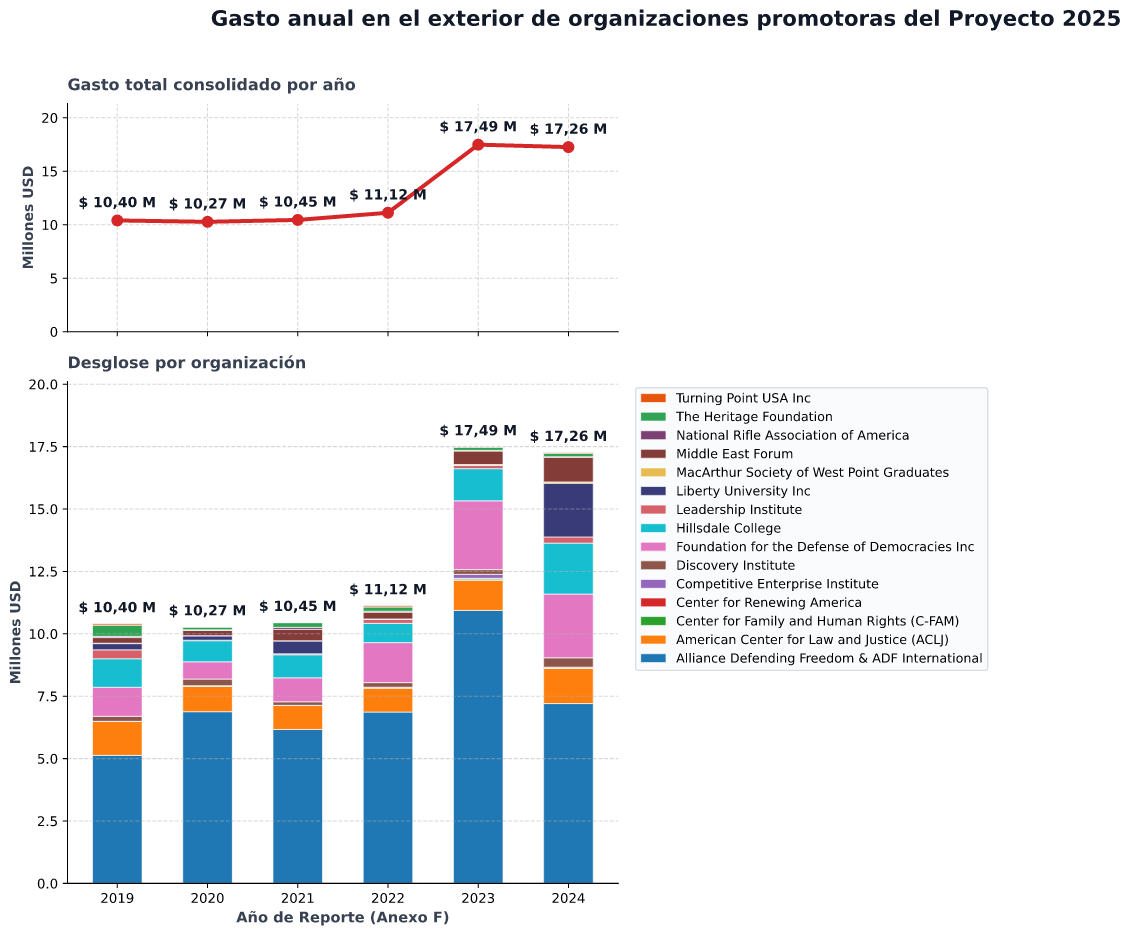
Alliance Defending Freedom (ADF), organización de juristas que [concibió la estrategia para derogar el derecho al aborto en EEUU](https://www.opendemocracy.net/es/grupos-contra-aborto-eeuu-millones-dolares-exterior/), es la principal gastadora internacional entre los promotores del Proyecto 2025 que declaran donaciones en el extranjero.
Casi el 60% de los 77 millones salió de los bolsillos de ADF: 43 millones de dólares, la mayor parte para Europa. En América Latina, México y Canadá, ADF gastó algo más de 930.000 dólares en el mismo período.
Su brazo externo, ADF International, tiene sedes en Viena, Bruselas, Ginebra, Londres, Washington y Nueva York, y está acreditada como organización no gubernamental en la ONU, la OEA, la Unión Europea y el Parlamento Europeo. En los últimos años, incrementó su gasto internacional en litigios y campañas, en un intento de exportar su programa político. ADF está etiquetada como [grupo de odio anti-LGBTIQ](https://www-splcenter-org.translate.goog/resources/extremist-files/alliance-defending-freedom/?%5Fx%5Ftr%5Fsl=en&%5Fx%5Ftr%5Ftl=es&%5Fx%5Ftr%5Fhl=es&%5Fx%5Ftr%5Fpto=tc&ref=opendemocracy.net) – algo que la organización niega – por el Southern Poverty Law Center de EEUU, dedicado a defender los derechos civiles.
[Grupos en guerra contra el aborto en EEUU gastan millones de dólares en el exteriorLas organizaciones detrás del caso que puede hacer caer el derecho al aborto en la Corte Suprema de EEUU apuntan también a Europa y América LatinaopenDemocracyLou Ferreira](https://www.opendemocracy.net/es/grupos-contra-aborto-eeuu-millones-dolares-exterior/)
En segundo lugar, figura la Foundation for Defence of Democracies (FDD), un centro de pensamiento [proisraelí](https://www.fdd.org/analysis/op-eds/2024/11/24/iccs-accusations-against-israel-are-unfounded-and-the-data-prove-it/?ref=opendemocracy.net), que niega el [genocidio en Gaza](https://www.fdd.org/analysis/2024/11/22/corrupt-to-its-core-world-reacts-to-icc-warrants-against-netanyahu-and-gallant/?ref=opendemocracy.net) y es contrario a Irán, China, Rusia y Turquía. En los seis años, gastó 9,7 millones de dólares, de los que 8,8 millones fueron a Medio Oriente y el Norte de África.
Un portavoz de la FDD respondió por correo electrónico: “La Foundation for Defense of Democracies no formó ni ha formado nunca parte del Proyecto 2025\. La FDD se incluyó en el comunicado por error, y se corrigió rápidamente en cuanto tuvimos conocimiento de ello”. No obstante, la organización figura como miembro de la junta asesora del Proyecto 2025 en el libro[ *Mandate for Leadership*](https://static.heritage.org/project2025/2025%5FMandateForLeadership%5FFULL.pdf?ref=opendemocracy.net), publicado en abril de 2023, y aparece como tal en sucesivos comunicados de prensa de Heritage de[ mayo de 2023](https://www.heritage.org/press/project-2025-continues-grow-60-partners-preparing-next-presidential-administration?ref=opendemocracy.net),[ octubre de 2023](https://www.heritage.org/press/project-2025-reaches-75-coalition-partners-continues-grow-preparation-next-conservative?ref=opendemocracy.net) y[ febrero de 2024](https://www.heritage.org/press/project-2025-reaches-100-coalition-partners-continues-grow-preparation-next-president?ref=opendemocracy.net).
El portavoz no respondió a nuestras preguntas, pero añadió: “La FDD es un instituto de investigación no partidista centrado en la seguridad nacional y la política exterior”.
El American Center for Law and Justice (ACLJ) – que dirige un exabogado de Trump, Jay Sekulow – repartió 6,9 millones de dólares. En 2020, openDemocracy [reveló](https://www.opendemocracy.net/en/revealed-trump-lawyer-funds-putin-linked-religious-lobbyists-russia/) que donaba dinero a un grupo evangélico ruso ligado a Putin. La organización,[ que se dedica a litigar casos contra el aborto y por la libertad religiosa](https://www.opendemocracy.net/en/trump-sekulow-war-womens-lgbt-rights-europe/), tiene oficinas en Israel, Francia, Pakistán y Zimbabue.
Una investigación transfronteriza publicada por openDemocracy hace seis años, expuso que ADF, ACLJ y otros 26 grupos de la derecha cristiana estadounidense [habían gastado, entre 2007 y 2018, al menos 280 millones de dólares](https://www.opendemocracy.net/en/5050/trump-us-christian-spending-global-revealed/) en todo el mundo. Varios de esos grupos también apoyaron el Proyecto 2025\.
Entre los principales gastadores internacionales del Proyecto 2025 hay dos universidades ultraconservadoras, Hillsdale College (7 millones) y Liberty University (3 millones), que destinan la mayor parte de estos fondos a becas estudiantiles, viajes para cumplir “misiones” o estudios en el exterior.
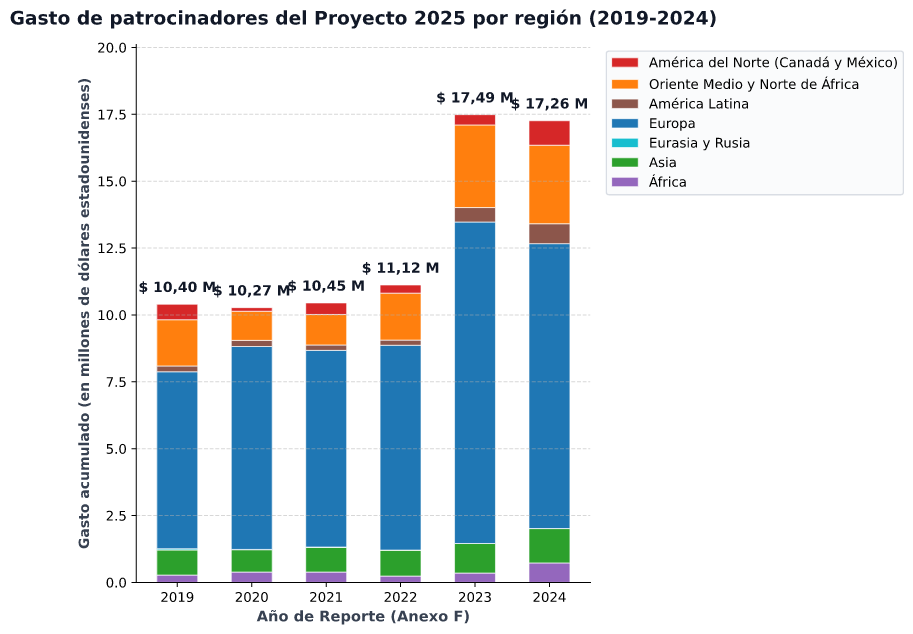
La influencia global de Heritage y su Proyecto 2025 no se refleja en su gasto internacional. En los seis años analizados, la organizacióin declaró 1,2 millones de dólares, de los que 900.000 fueron a parar a Europa. Ese gasto es pequeño si se compara con los ingresos de más de 600 millones de dólares que declaró en el mismo período la organización.
Heritage destinó unos 23.000 dólares a América Latina, y otros 33.000 en América del Norte (México y Canadá) en rubros como “servicios de programas”, “investigación, medios y relaciones con el gobierno”, y “educación”.
Heritage dona asimismo a otras organizaciones estadounidenses involucradas en el combate a la igualdad de derechos, algunas de ellas también donantes internacionales, como ADF, que recibió de Heritage 200.000 dólares entre 2020 y 2022.
Heritage, ADF y ACLJ no contestaron nuestros pedidos de entrevistas.
## ‘Consenso’ antiabortista
Un eje de la política exterior del Proyecto 2025 es construir coaliciones internacionales de gobiernos conservadores y dispuestos a abrazar una visión única de salud, familia y matrimonio.
Según el reporte del GPAHE, la “[pieza fundamental](https://globalextremism.org/reports/project-2025-goes-global/?ref=opendemocracy.net)” de este eje es la [Declaración del Consenso de Ginebra](https://www.opendemocracy.net/es/no-santa-alianza-cruzada-mundial-contra-justicia-reproductiva/) (DCG), documento antiabortista y no vinculante que se firmó en 2020, dos semanas antes de que Trump perdiera su primer intento de reelección.
La DCG niega la existencia de un derecho internacional al aborto y defiende un modelo de familia único, basado en el matrimonio de una pareja heterosexual.
“Es una iniciativa clave del Proyecto 2025, ya que es contraria a los derechos LGBTIQ y a los derechos de las mujeres. Esa es la visión que esta gente quiere para el mundo, no la Declaración Universal de los Derechos Humanos”, dijo a democraciaAbierta Heidi Beirich, experta en extremismo y cofundadora del GPAHE.
La DCG tiene [43 países firmantes](https://www.theiwh.org/the-gcd/?ref=opendemocracy.net). Argentina y República Dominicana se sumaron en las últimas semanas.
“República Dominicana cumple los requisitos, dado su terrible historial en materia de acceso al aborto, pero por supuesto Argentina no los cumple, puesto que legalizó el aborto en 2020”, dijo a democraciaAbierta Gillian Kane, que viene investigando hace tiempo el Proyecto 2025 y la DCG.
Washington deja clara así su intención de reforzar su hegemonía hemisférica a través del Escudo de las Américas, la llamada ‘Doctrina Donroe’ – una reinterpretación trumpista de la Doctrina Monroe del siglo XIX, que sentó las bases de la política exterior de Estados Unidos – y la DCG, “que busca ampliar normas ultraderechistas y antiabortistas”, observó Kane, directora de política e investigación global de Ipas, una red internacional que trabaja en defensa de los derechos sexuales y reproductivos.
“Todo esto conforma un tiempo peligroso para los derechos humanos en la región”, concluyó.
Para el activista argentino por los derechos LGBTIQ+ Fernando D’Elio, la adhesión de su país a la DCG es “muy significativa” en la región, ya que modificó las alianzas y correlaciones de fuerza en los organismos internacionales, en los que Argentina tuvo durante años un rol progresista.
Pero es necesario distinguir política exterior e interna, según D’Elio, co-director ejecutivo de la organización Akãhatã, que hace incidencia en organismos internacionales de derechos humanos.
En Argentina, el aborto legal, el matrimonio igualitario y la ley de identidad de género “no fueron meros cambios legislativos”, dijo, sino “resultado y motor de transformaciones culturales que modificaron la manera en que una parte importante de la sociedad piensa la igualdad, las familias, la sexualidad, el género y la autonomía personal”.
El gobierno de Milei no ha intentado derogar estos avances, aunque sí quiso modificar la ley de identidad de género para prohibir la atención de salud a adolescentes trans, mediante un decreto que fue suspendido por la justicia.
Sobre el aborto legal, D’Elio no cree que haya cambios legales a corto plazo. Si eso se intentara, sostuvo, “encontraría una resistencia social y política muy fuerte”. La estrategia es, en cambio, [asfixiar financieramente los servicios](https://www.opendemocracy.net/es/argentina-aborto-presupuesto-misiones-ola-verde-derechos-ley-milei-redes-feministas/) de aborto.
En 2024, cuando Trump todavía no había empezado su segundo gobierno, democraciaAbierta documentó cómo Milei desplegaba ya algunas de las políticas más notorias del [Proyecto 2025](https://static.heritage.org/project2025/2025%5FMandateForLeadership%5FFULL.pdf?ref=opendemocracy.net), y cómo intentaba conectar con Heritage desde 2023, a [través de un agente extranjero registrado](https://efile.fara.gov/docs/6898-Exhibit-AB-20230929-9.pdf?ref=opendemocracy.net) ante el Departamento de Justicia de EEUU.
[Proyecto 2025: El plan para Trump que se ve en ArgentinaSi usted quiere saber qué hay en el Proyecto 2025 concebido para Trump, mire a Argentina, laboratorio de la extrema derecha globalopenDemocracyDiana Cariboni](https://www.opendemocracy.net/es/trump-eeuu-proyecto2025-milei-argentina-derechos-heritage-foundation/)
Otro país presionado para ingresar a la Declaración del Consenso de Ginebra es Perú, donde los actores ultraconservadores se hicieron visibles en 2016, con la campaña ‘Con mis hijos no te metas’ contra la perspectiva de género en la educación.
“Organizaciones religiosas conservadoras, partidos políticos y congresistas fueron construyendo una infraestructura estable de movilización, litigio, producción de contenidos y presión legislativa”, dijo a democraciaAbierta el activista George Hale, cofundador de Promsex, organización que defiende los derechos sexuales y reproductivos en Perú.
Ya no se trata solo de negar el derecho al aborto o los derechos LGBTIQ. Este movimiento “ha pasado a formar parte de una ofensiva más amplia contra la democracia, la independencia de las instituciones y la sociedad civil”, agregó Hale.
[Perú](https://www.opendemocracy.net/es/peru-periodismo-derechos-humanos-justicia-masacres-ong-boluarte-libertad-expresion/), Paraguay y [El Salvador](https://www.opendemocracy.net/es/el-salvador-bukele-represion-regimen-de-excepcion-derechos-humanos-persecucion-exilio-cristosal-ruth-lopez/) tienen leyes para ahogar financieramente y censurar a organizaciones de la sociedad civil y a medios periodísticos independientes. El objetivo es “debilitar a las organizaciones que litigan, investigan, producen evidencia y vigilan al poder”, dijo.
## Alianzas democráticas
Para Hale y D’Elio, es urgente la construcción de alianzas democráticas amplias, que permitan trascender la simple respuesta ante cada derecho atacado por separado.
Esos ataques no son apenas “retrocesos en temas de género”, dijo D’Elio. “Tienen vínculos muy claros con el debilitamiento del espacio cívico, el autoritarismo, los ataques al multilateralismo, la precarización económica y la erosión de las instituciones democráticas. Si los tratamos como una guerra cultural aislada, estamos aceptando el marco que propone la extrema derecha”.
Hale propuso vincular igualdad y democracia, monitorear la política exterior y seguir investigando las redes de la ultraderecha. “Debemos identificar quién financia, quién elabora las propuestas, quién forma a los parlamentarios, qué organizaciones actúan como intermediarias y cómo circulan los modelos legislativos entre países”, dijo.
“Estamos frente a una infraestructura transnacional”, concluyó Hale. “Necesitamos construir una infraestructura democrática equivalente”.
### Around the world, people fight for Palestine as authorities crack down
URL: https://www.opendemocracy.net/around-the-world-people-fight-for-palestine-as-authorities-crack-down/
Last updated: 2026-09-25T13:16:22.000Z
Wael Naouar has been refusing food since 16 August this year. More than five weeks into his hunger strike, supporters say the Palestinian rights activist imprisoned in Tunis, in a semi-conscious state and on the brink of death: Naour, who is Tunisian, has lost more than 20kg, is struggling to breathe, is fainting repeatedly and suffering from hallucinations.
Naouar is not alone, Nabil Channoufi, Ghassan Henchiri and Ghassan Boughdiri — three other activists imprisoned alongside Naouar — have also joined his hunger strike.
Their alleged crime?
Helping organise the 2025 Global Sumud Flotilla, a Palestine solidarity mobilisation in which hundreds of activists from around the world gathered in Tunisia, before setting sail for Gaza in an attempt to break Israel’s illegal siege blockade of the embattled region to provide vital supplies of food and medicine to an embattled population.
The flotilla — which comprised over 40 ships — never made it to Gaza, but succeeded in refocusing the world’s attention on the UN-designated genocide perpetrated on the Palestinian people by the Israeli state.
The story of Naouar’s arrest, his subsequent hunger strike, and the support he and his comrades have received from a wide cross-section of Tunisian society including the Tunisian League for the Defence of Human Rights, the Tunisian General Labour Union and the Tunisian National Bar Association, reveals how the global grassroots movement to demand justice and freedom for Palestinians shows no sign of abating even as many national governments in across the world either chosen silence, or have bowed to pressure from the United States and Israel to crackdown on their own citizens.
Around the world, including here in the UK, citizens urging their governments to take action face torture, arrest, prosecution and lengthy prison sentences.
Earlier this month, Bassem Trifi, president of the Tunisian League for the Defence of Human Rights, visited Naouar in prison with an appeal signed by the Tunisian League for the Defence of Human Rights, the Tunisian General Labour Union and the Tunisian National Bar Association, urging him to stop the hunger strike and preserve his life.
“His health has deteriorated dramatically and his condition is extremely alarming,” Trifi said at the time, adding that Naouar thanked the organisations and activists supporting him but said his hunger strike would continue until “the injustice imposed upon him and his comrades is lifted.”
## When Solidarity is a Crime
In Tunisia, the preparations for the 2025 Sumud Flotilla were far from clandestine. Local activists reached out to the relevant Tunisian authorities to seek permission to charter ships and purchase medicines, baby formula and other humanitarian supplies for Gaza, Ghassan Bouazzi, a member of the National Committee for the Defense of the Sumud Flotilla Activists and the Palestinian Cause, told openDemocracy.
The authorities neither approved nor rejected the application, Bouazzi said, and so the organisers proceeded.
In September 2025, hundreds of activists descended on Tunisia to prepare the flotilla, organisers spoke to journalists, held public gatherings and coordinated with police and security officials around Sidi Bou Said port, where the boats assembled.
“The collection of donations, the organisation of the flotilla and, before that, the organisation of a land-based aid convoy… all took place openly and in full view of the Tunisian authorities,” Bouazzi said, adding that the organising headquarters was barely 500 metres from the interior ministry.
The state did more than simply know about the mobilisation, he continued, “The Tunisian state was, in some sense, a party to the flotilla’s departure, and was fully aware of the entire process through which it was organised.”
Ships from the global flotilla began departing for Gaza from Italy and Spain in late August 2025, and were joined by vessels from Greece and Tunisia in early September that year. On the night of September 24, several vessels were attacked by drones and the Israeli crackdown swung into full force.
Back in Tunisia, the mood of the authorities had begun to shift as well.
In January 2026, Naouar and other organisers in Tunis began publicly discussing preparations for a second flotilla. The following month, organisers submitted an application to the authorities, Bouazzi said. This time, permission was denied.
Weeks later, the arrests began.
The authorities claimed those organising Sumud 2025 had committed fraud, falsification of documents and money laundering. Investigators have since scrutinised the detainees’ bank accounts, assets and financial transactions, as well as those of some relatives, according to Bouazzi. He said that, to his knowledge, the investigation had established no unexplained enrichment or links to money-laundering networks thus far.
Seven organisers were initially detained in March. Three have since been released. Naouar, Channoufi, Henchiri and Boughdiri remain in Mornaguia prison.
Within 48 hours of their arrests, supporters established the National Committee for the Defense of the Sumud Flotilla Activists and the Palestinian Cause. Since then, campaigners have organised repeated protests calling for their release.
Last week, protesters marched through central Tunis from the headquarters of the Tunisian National Journalists’ Union to Avenue Habib Bourguiba, carrying pictures of the four detainees and calling for an end to the case.
Then some of the protesters were arrested too.
From the following night, police detained people who had participated in the demonstration, some from their homes and others from the street. Lawyers said at least 11 had been arrested, while activists put the number at 13 or more.
A judge subsequently authorised an additional 48 hours of detention for some of those arrested, whose lawyers said they had been questioned about slogans chanted during the protest. Tunisian authorities had not publicly confirmed the arrests at the time of writing.
openDemocracy contacted the Tunisian authorities for comment but had received no response by the time of publication.
---
Activists such as Bouazzai, have been trying to understand what is driving this recent crackdown.
“The Tunisian authorities regard any independent movement with significant popular support and mobilisation as a threat to their power,” he said, “even when that movement is devoted to supporting the Palestinian people.”
Naouar has a history of political organising beyond Palestine solidarity. He was imprisoned as a student under former dictator Zine El Abidine Ben Ali, later became secretary-general of the General Union of Tunisian Students and, shortly before his arrest this year, publicly criticised President Kais Saied.
Human rights organisations have also raised wider concerns about pressure on Tunisia’s civil society, including the use of financial investigations, lengthy pre-trial detention and prosecutions of activists and NGO workers. Saied’s government has rejected accusations that the judiciary is being used against political opponents and says judicial proceedings are independent.
That tension is particularly striking in Tunisia, where Palestine has historically commanded broad public support and Saied himself has repeatedly expressed support for the Palestinian cause.
Bouazzi argues there is a growing gap between that rhetoric and the state’s treatment of independent organising around Palestine.
He also believes external pressure and the wider geopolitical situation in the region may have played a role in the government’s changing approach, although he did not provide evidence of specific foreign intervention.
For the movement campaigning outside the prison, the immediate demand remains straightforward: the four organisers should be released.
“What we ask of our friends and of supporters of the Palestinian people around the world is to shed light on this injustice,” Bouazzi said. “International attention could create embarrassment and pressure on the Tunisian authorities and help secure the release of our detained comrades.”
### Iran threats and snipers in Washington: Trump’s dangerous unravelling
URL: https://www.opendemocracy.net/iran-threats-and-snipers-in-washington-trumps-dangerous-unravelling/
Last updated: 2026-09-26T13:37:57.000Z
While Donald Trump has long dismissed any bad news about his war on Iran as lies dreamed up by a woke media, this faces a persistent problem: the checks and balances built into the US system cannot be so easily dismissed.
The Congressional Budget Office (CBO), for example, reports not to the White House but directly to Congress. To make matters even less palatable, when it comes to military issues, media outlets are apt to report major CBO reports at length.
A recent example was the [Military Times’ detailed coverage](https://www.militarytimes.com/news/your-military/2026/09/15/iran-war-has-cost-38-billion-depleted-two-thirds-of-us-missile-interceptors-cbo-says/?ref=opendemocracy.net)of the [CBO’s report](https://www.cbo.gov/system/files/2026-09/62756-Iran.pdf?ref=opendemocracy.net) on the cost of US combat operations in Iran up to mid-September – $38bn – and the vexed issue of the US’s huge usage of specialist munitions, especially ballistic missile interceptors, which can be far more expensive than the missiles they are designed to destroy. Helpfully – unless you’re in the White House – the publication also directly linked readers [to the CBO report itself](https://www.cbo.gov/system/files/2026-09/62756-Iran.pdf?ref=opendemocracy.net).
As the Military Times summarised: “CBO estimates the conflict has consumed between one-half and two-thirds of the US inventory of certain missile-defence interceptors since June 2025, leaving the military with fewer weapons available for a future conflict. Rebuilding those stocks could take at least five years, even if production rates increase, the agency found.”
One implication is thatany talk by Trump or his secretary of war, Pete Hegseth, of a potential further bombing assault on Iran is hardly plausible, as Iran would simply expand its targeting of US military and communications facilities across the region. This would further deplete the Pentagon’s limited stocks of defensive missiles, leaving US and allied states across the Middle East at risk.
It is yet another indication that Trump is in a mess over Iran and has no easy way out unless he is prepared to accept a deal with Tehran that [amounts to acknowledging failure](https://rethinkingsecurity.org.uk/2026/08/27/operation-epic-hubris-another-failed-us-war/?ref=opendemocracy.net). Such a deal [may now be on offer from Iran](https://www.theguardian.com/world/2026/sep/23/iranian-leader-hits-back-at-bully-trump-signals-willingness-to-talk?ref=opendemocracy.net), but Trump is unlikely to accept it, with the extent of his anger and frustration clearly visible in his [address to the UN General Assembly](https://gadebate.un.org/en/81/united-states-america?ref=opendemocracy.net) this week.
There, he said the choice for Iran was to make a deal right after the midterm elections or for him to “annihilate the Islamic Republic and do it quickly, never giving them a chance to kill and destroy people and countries again”.
Even for Trump, it was a remarkable threat – accept my deal or I will destroy you – but it is easy to put it down as typical of the rhetoric he espouses. Yet there is much more to it than that. For a start, choosing the General Assembly’s autumn meeting, which has a high attendance of heads of state, as the audience for this statement suggests Trump sees the UN as part of the problem, a hindrance that limits global recognition of his own greatness.
Recognition of such greatness is also an important factor in his determination to build a massive triumphal arch in Washington. That proposal, which was supposedly to celebrate 250 years of US independence, is now undergoing a subtle change of design and purpose.
Until this week, the plan came [under the aegis of the US National Park Service](https://parkplanning.nps.gov/projectHome.cfm?projectId=136973&ref=opendemocracy.net), and was comparable to existing arches around the world, such as the Arc de Triomphe in Paris. Grandiose, certainly, and no doubt intended to be seen as one of the great achievements of the greatest president ever, but intended only for show. Now, though the plans are currently being redrawn to serve a military purpose, as reported once again by the [Military Times](https://www.militarytimes.com/news/pentagon-congress/2026/09/20/triumphal-arch-in-washington-to-serve-as-military-complex-trump-says/?ref=opendemocracy.net).
Writing on social media, Trump said he has “agreed to turn the arch into a top-grade Military Complex/Triumphal Arch, to house, store, and have the rapid ability to use large numbers of drones, plus Snipers, on both the roof and plaza areas, and additionally have and hold large quantities of sniper ammunition in storage”.
Unless Trump believes the United States is at risk of a sudden mass invasion from Iran, North Korea or even Cuba (or perhaps all three together), the only way his plan makes a weird kind of sense is if he thinks Washington faces a severe internal security challenge amounting to a civil war, given the arch will cover one of the main routes into the city.
At first sight, that seems over the top, but ‘the threat from within’ has been a persistent feature of the Trump worldview. It explains the emphasis on closing the border with Mexico, the extensive use of armed ICE agents and the frequent deployment of National Guard troops in large cities, including Washington, often in opposition to the state governors.
Where this is all relevant is that Trump is in trouble in the polls and may lose Congress in the forthcoming midterms, and possibly even the Senate. If that is worrying Trump, it is also a huge concern for his many seriously wealthy and powerful supporters – after all, 2028 is already looming uncomfortably large in their political calendar.
In this context, it is fair to say there are two possibilities for what comes next. One is that the US and the wider worldsurvive the next two years without catastrophe, a tolerably fair presidential election takes place in 2028, Trump leaves office, and a more moderate president is elected. The process of creating a post-Trump polity then proceeds at pace as the US recovers something of its good sense and international standing. Within a couple of years, the world sees Trump as being by far the worst and most dangerous occupant of the White House in history.
This may be the hope of many millions of people in the US and beyond, but don’t count on it. For all his unpredictability, Trump is very good news for an entrenched and monied core of supporters who are determined to thrive in the years ahead. By normalising many extreme positions, Trump is playing a very useful preparatory role, just as Hegseth is engaged in the key task of ridding the Pentagon’s senior military of the merest hint of wokery.
Far from the end of the game, if the midterm elections go badly for the Republicans, efforts will simply be redoubled to ensure that the rich and powerful prevail once more in 2028.
### Las Malvinas vs. the Falklands: Argentina's far right has weaponised the battle over memory
URL: https://www.opendemocracy.net/falklands-malvinas-argentina-milei-far-right-weaponised-authoritian-measures-launder-military-reputation/
Last updated: 2026-09-24T14:46:23.000Z
When Argentina defeated England at the World Cup semi-final on 15 July, a hotel bedsheet painted with ‘Las Malvinas son argentinas’ (the Falklands are Argentine) in large black letters became an overnight national symbol – and a political weapon for Javier Milei’s far-right government.
Around the world, images of the victorious players brandishing the makeshift banner on the pitch sparked a furore over the place of politics in sport. Three weeks later, [FIFA fined Argentina’s football team](https://chequeado.com/el-explicador/mundial-2026-la-fifa-sanciono-a-la-afa-por-la-bandera-de-malvinas-y-los-incidentes-en-la-final-una-por-una-las-multas-y-suspensiones/?ref=opendemocracy.net) $10,000 for violating its ban on political and provocative displays.
But back home in Buenos Aires, the display was the cause of celebration. The Argentine Football Association [unanimously voted](https://www.infobae.com/deportes/2026/08/06/el-destino-que-tendra-la-bandera-de-malvinas-que-mostraron-los-jugadores-de-argentina-tras-el-triunfo-ante-inglaterra-en-el-mundial/?ref=opendemocracy.net) to make 15 July an annual ‘Day of the National Football Teams’ and[ confirmed plans](https://www.infobae.com/deportes/2026/08/06/el-destino-que-tendra-la-bandera-de-malvinas-que-mostraron-los-jugadores-de-argentina-tras-el-triunfo-ante-inglaterra-en-el-mundial/?ref=opendemocracy.net) to hand the banner to Malvinas War veterans.
Argentina has historically claimed sovereignty over the Malvinas archipelago, known to the English as the Falklands Islands, which is situated in its continental waters and has been occupied by the United Kingdom since 1833\. In 1965, the United Nations [recognised the claim](https://www.cancilleria.gob.ar/es/politica-exterior/cuestion-malvinas/malvinas-en-naciones-unidas?ref=opendemocracy.net) as a sovereign dispute and a colonisation issue. [Every year](https://buenosairesherald.com/world/un-urges-argentina-and-uk-to-resume-malvinas-sovereignty-talks?ref=opendemocracy.net) since then, the UN Special Committee on Decolonisation has called both countries to negotiate a peaceful resolution.
But the islands are also closely tied to memory of the 1982 conflict, when the Argentine military dictatorship launched a sweeping operation to invade and recover the islands. It ended in defeat for Argentina 74 days later, after the deaths of 649 Argentine soldiers, many of whom were conscripts, 255 British soldiers and three civilians.
In a 2013 referendum of the 1,500 islanders, which had a turnout of 92%, more than 99% voted to remain a British overseas territory, but it didn’t change the international status of the islands. In Argentina, [polling](https://www.c5n.com/politica/mas-un-66-considera-que-javier-milei-le-importa-poco-o-nada-la-causa-malvinas-n244318?ref=opendemocracy.net) consistently shows that more than 90% of the public believe the islands legitimately belong to Argentina – yet 60% say they would oppose military action over the territory. Instead, they overwhelmingly favour peaceful diplomacy or shared sovereignty models.
This Argentine anguish over sovereignty is in large part connected to the dictatorial regime’s treatment of its own soldiers during the war. Veterans [have recorded](https://www.fiscales.gob.ar/lesa-humanidad/por-primera-vez-procesaron-a-militares-acusados-de-estaquear-a-conscriptos-en-la-guerra-de-malvinas/?ref=opendemocracy.net) systematic abuse and torture by their officers, with a veterans’ centre in the city of La Plata [spending almost two decades](https://canalabierto.com.ar/2026/04/02/malvinas-44-anos-de-denuncias-por-torturas-y-una-causa-trabada-en-la-corte/?ref=opendemocracy.net) fighting for perpetrators to be tried for crimes against humanity.
Yet some in Milei’s administration have long sought to use the Malvinas conflict to rehabilitate the military dictatorship’s image – and quickly seized upon the opportunity posed by the banner.
One such person is vice-president Victoria Villarruel, [whose father fought in the 1982 war](https://www.pagina12.com.ar/590312-quien-era-el-padre-de-victoria-villarruel-un-militar-que-se-/?ref=opendemocracy.net) and was part of the military repression of political opponents; Villarruel herself has is a [staunch defender of the dictatorship](http://enosairesherald.com/politics/victoria-villarruel-the-other-daughter?ref=opendemocracy.net). Sharing a photo of the Argentine footballers with the banner on X, [she wrote](https://x.com/VickyVillarruel/status/2077519309652316181?s=20&ref=opendemocracy.net): “The Malvinas are Argentine. They banned bringing them to the pitch and forgot that we carry them in our blood and our hearts.”
Speaking on public radio the day after the match, Milei brushed off the incident. The president, who has been in a bitter feud with Villarruel since soon after his election win in December 2023, excused the players as simply being “carried away by emotion”. He warned that “we must not fall for trite, populist, nationalist and stale slogans” and branded those linking the football win to the demand for sovereignty [as “miserable”](https://www.politicargentina.com/notas/202607/75182-tras-el-triunfo-ante-inglaterra-milei-califico-de-miserable-la-vinculacion-con-el-reclamo-por-malvinas.html?ref=opendemocracy.net).
A constitutional claim that has been historically pursued through decades of diplomacy was diminished to a mere feeling to be sung about at football matches; a past reduced to sentiment that asks nothing of the state. This approach was typical of Milei, who has long used the rallying cry ‘Dato no relato’ (data not narrative) to dismiss emotional memory politics as an unnecessary distraction from [stark, decontextualised economic metrics](https://www.opendemocracy.net/argentina-poverty-falling-milei-cuts-data-missing-community-kitchens-children/). The past, the president has made clear, is merely noise.
Then, barely two months on from his radio appearance, Milei abruptly reversed course.
[The silent hunger: What Argentina’s falling poverty missesMilei’s cuts have reduced the number of people living in poverty, but the data doesn’t tell the whole storyopenDemocracyFlorence Evans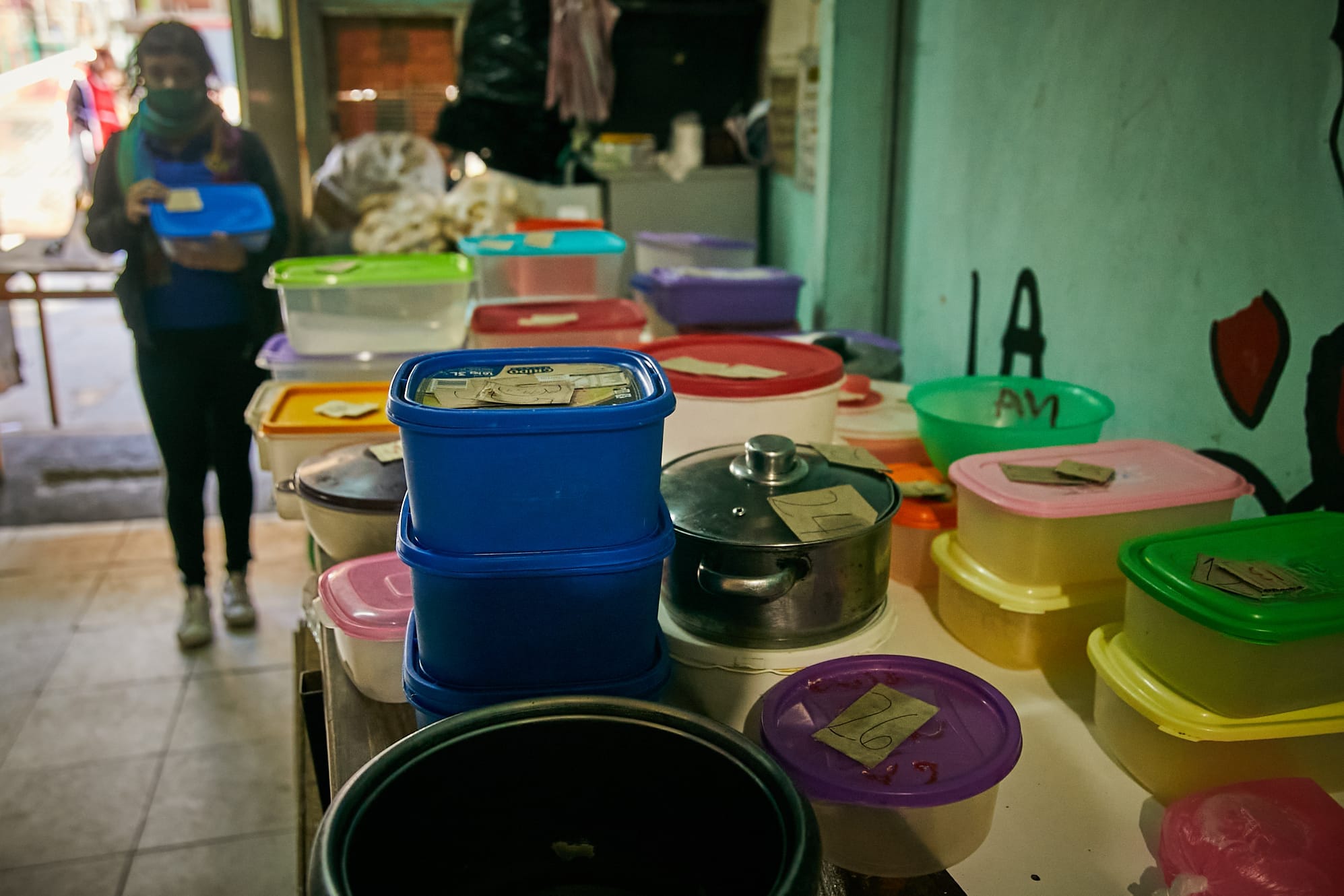](https://www.opendemocracy.net/argentina-poverty-falling-milei-cuts-data-missing-community-kitchens-children/)
In a [televised address](https://www.casarosada.gob.ar/informacion/discursos/51360-cadena-nacional-del-presidente-javier-milei-sobre-la-causa-malvinas?ref=opendemocracy.net) on 4 September, the president threatened to take aggressive sanctions against a British and Israeli firm developing the [Sea Lion oil project](https://www.navitaspet.com/project/sea-lion/?ref=opendemocracy.net) 220 kilometres north of the islands, Rockhopper Exploration and Navitas Petroleum. A [2011 law](https://servicios.infoleg.gob.ar/infolegInternet/anexos/180000-184999/181076/texact.htm?ref=opendemocracy.net) made it illegal to search for oil in waters in Argentina’s continental shelf, establishing sanctions for companies doing so and criminal charges for their executives and other individuals involved.
Milei also announced new funding for a naval base in Tierra del Fuego, an archipelago at South America’s southernmost tip, shared by Chile and Argentina, warning: “Any further advance on the Malvinas Islands will be considered a violation of our national security.”
[Seven official statements](https://www.argentina.gob.ar/noticias/comunicado-oficial-numero-164?ref=opendemocracy.net) from the president have since followed, announcing new security measures, complaints and sanctions. Last Thursday, Milei sent Congress a [draft bill](https://www.lanacion.com.ar/politica/el-gobierno-envio-el-proyecto-de-ley-de-defensa-de-la-soberania-de-las-islas-malvinas-a-la-camara-de-nid17092026/?ref=opendemocracy.net) that would replace the 2011 law with a stricter one, “whilst also increasing the criminal penalties for those who conduct business unlawfully within our territory, as well as their shareholders and suppliers”. The updated legislation would also extend the existing ban to all forms of exploitation of natural resources in the area surrounding the islands.
The [133-article bill](https://www.lanacion.com.ar/politica/el-gobierno-envio-el-proyecto-de-ley-de-defensa-de-la-soberania-de-las-islas-malvinas-a-la-camara-de-nid17092026/?ref=opendemocracy.net) contains provisions bearing a striking resemblance to tools of political and economic persecution. It establishes a “national security system” with far-reaching powers, including the international handling of intelligence information, and a “public register of persons and entities linked to acts of terrorism and their financing”. Inclusion on that list would require nothing more than “the existence of reasonable grounds to suspect that the person or entity is linked to the aforementioned offences” – a definition open to all sorts of high-handed actions.
Why this sudden and unexpected change of heart from the Argentine president, when the underlying international dispute is unchanged? Milei last week [claimed](https://efe.com/mundo/2026-09-17/milei-islas-malvinas-trump-reino-unido/?ref=opendemocracy.net) his shift was triggered by his US counterpart, Donald Trump, who said at the end of August that Washington’s neutral position on the dispute [was “one of many” under review](https://www.bbc.com/news/articles/cm2q1qgg542o?ref=opendemocracy.net).
But it seems more likely that Milei has realised the opportunity that lies in using past memory for present gains. The president’s [disapproval rating is at 58%](https://www.infobae.com/politica/2026/09/11/la-desaprobacion-de-milei-alcanza-el-58-y-crece-el-malestar-por-empleo-y-corrupcion/?ref=opendemocracy.net), almost 20 points higher than his approval rating, and voters have a predominantly negative assessment of the economy, employment and the government’s performance. This, and the weaponisation of the Malvinas dispute by his vice-president, has led a shared national claim to the islands to snowball into an internal quarrel.
For Villarruel, the Malvinas have been a tool for historical revisionism since before she joined Milei’s presidential ticket. [She has built her career defending military officers](https://www.laizquierdadiario.com/Las-visitas-de-Victoria-Villarruel-a-Jorge-Rafael-Videla-uno-de-sus-heroes?ref=opendemocracy.net) accused of crimes against humanity and has sought to transform how Argentine society remembers the state terrorism of the late 20th century.
Villarruel is far from alone. In July 2024, six deputies from her and Milei’s party [visited](https://chequeado.com/el-explicador/que-se-sabe-sobre-la-visita-de-los-diputados-libertarios-a-represores-detenidos-en-ezeiza/?ref=opendemocracy.net) several military members who are in prison for crimes against humanity, including notorious former navy officer Alfredo Astiz, who was convicted of atrocities committed at the ESMA detention centre. In a WhatsApp message, the legislator who organised the visit described the detainees as “ex-combatants against Marxist subversion”.
Meanwhile, the Milei administration’s broader assault on the efforts to bring justice has been systemic. In April 2024, the defence minister [dissolved the team charged with searching documentary evidence](https://www.pagina12.com.ar/725130-luis-petri-desmantelo-el-area-de-defensa-que-investiga-los-c/?ref=opendemocracy.net) for prosecutors, describing the group as dedicated to “[persecution and McCarthyism](https://www.pagina12.com.ar/752385-la-justicia-le-ordena-a-luis-petri-preservar-los-archivos-de/?ref=opendemocracy.net)”. The following year, a [decree](https://argentina.fes.de/fileadmin/user%5Fupload/Publicaciones%5F%5FDocumentos/Bajo%5Fasedio%5FLas%5Fpoliticas%5Fde%5Fmemoria%5F%5Fverdad%5Fy%5Fjusticia%5Fcomp.pdf?ref=opendemocracy.net) stripped the National Memory Archive of its power to access Armed Forces files, the Navy ordered a[ purge of its own general archive](https://argentina.fes.de/fileadmin/user%5Fupload/Publicaciones%5F%5FDocumentos/Bajo%5Fasedio%5FLas%5Fpoliticas%5Fde%5Fmemoria%5F%5Fverdad%5Fy%5Fjusticia%5Fcomp.pdf?ref=opendemocracy.net) that was halted only after a [last-minute court injunction](https://www.pagina12.com.ar/802421-otro-juez-impide-que-la-armada-destruya-sus-archivos/?ref=opendemocracy.net), and 51 of the 60 people who received a first verdict in cases of crimes against humanity were acquitted – the [highest number of acquittals in 20 years](https://www.tiempoar.com.ar/ta%5Farticle/el-2025-fue-el-ano-con-mayor-cantidad-de-absoluciones-desde-la-reanudacion-de-los-juicios-de-lesa-humanidad/?ref=opendemocracy.net), according to the Office of the Prosecutor for Crimes against Humanity.
The strategy is insidious: no laws have been formally repealed, but the institutions upholding them have been rendered ineffective.
The punitive legislation that Milei wants to pass is part of a much longer-standing manoeuvre. “Since the end of the war, the Armed Forces and like-minded civilians have ensured that ‘the Malvinas’ serve as a shield against the criticism levelled at the military by an ever-widening range of social sectors,” [noted](https://www.cels.org.ar/web/wp-content/uploads/2016/06/IA2012-Debate-2-Lobos-con-piel-de-ovejas-malvineras.pdf?ref=opendemocracy.net) the human rights organisation Centre for Legal and Social Studies in a report.
In every Malvinas Day speech, Milei [calls for](https://www.infobae.com/politica/2024/04/02/milei-y-villarruel-homenajean-a-los-caidos-en-malvinas-a-42-anos-de-la-guerra/?ref=opendemocracy.net) “a new era of reconciliation with the Armed Forces”, an implicit reference to the trials for human rights violations committed during the dictatorship that waged the 1982 war.
The disagreement between Villarruel and Milei reveals two distinct ways to weaponise memory. Villarruel uses the Malvinas to launder the reputation of the military; Milei, abandoning his ‘data not narrative’ stance, has discovered that he can use the Malvinas to rally nationalist fervour and impose authoritarian measures when the economic data fails to inspire.
Meanwhile, the Malvinas veterans themselves have asked for something more careful than either approach. Days before the semi-final against England, the Federación de Veteranos de Guerra ‘2 de Abril’, an NGO representing veterans who fought in the 1982 war, [issued a statement](https://www.infobae.com/deportes/2026/07/13/el-deporte-no-es-una-guerra-no-es-una-revancha-es-solo-un-partido-el-sentido-mensaje-de-los-veteranos-de-malvinas-antes-de-la-semi-argentina-inglaterra/?ref=opendemocracy.net) making clear its position that sport is not war, that sovereignty is won in international forums, and that the cry of ¡Malvinas Argentinas! should be heard in the stands as a living exercise of memory rather than as hatred.
### Exposing Palantir: Defence Contracts, Stock-Based Compensation, and Tax Avoidance
URL: https://www.opendemocracy.net/podcasts/exposing-palantir-defence-contracts-stock-based-compensation-and-tax-avoidance/
Last updated: 2026-09-22T11:40:31.000Z
[Listen now](https://pod.link/1790866829?view=apps&sort=popularity&ref=opendemocracy.net)
Governments hand out billions in lucrative contracts to tech corporations to build surveillance systems, track migrants, and process public health data. Yet those same companies use every legal loophole available to avoid paying tax on their profits.
In this episode of *In Solidarity*, openDemocracy editor Aman Sethi and tech reporter Jade-Ruyu Yan sit down with Jason Ward, principal analyst at the Centre for International Corporate Tax Accountability and Research (CICTAR), to analyze Palantir’s global tax practices.
Palantir supplies technology to US immigration enforcement, the Israeli military, and the UK’s NHS. Despite reporting 55% profit margins and over $1.6 billion in net income, Palantir maintains an effective global tax rate of just 1.4% and pays zero federal income tax in the United States.
### **Chapter Timestamps**
**00:00:00** \- Introduction & What is Palantir?
**00:03:25** \- Palantir in the UK: NHS Contracts & Low Tax Bills
**00:04:37** \- Why Investigate Palantir's Tax Practices?
**00:05:37** \- Peter Thiel, JD Vance, and Silicon Valley Ideology
**00:07:02** \- The 1.4% Effective Tax Rate: How Palantir Dodges Taxes
**00:10:47** \- Explaining the Stock-Based Compensation Loophole
**00:15:15** \- Corporate Taxes, Democracy, and Inequality
**00:18:48** \- Who Works for Palantir? Inside Employee Motivations
**00:20:21** \- The France Exception: Why Worker Power Matters for Tax
**00:23:14** \- Australia’s Tax Transparency Revolution
**00:26:32** \- Debunking Corporate Excuses & Pushing for Reform
**Credits:**
Presented by Aman Sethi
Produced by Harry Beney
### Reform’s £72m ‘gift’, data centres, and the German far right
URL: https://www.opendemocracy.net/weekly-email-190926/
Last updated: 2026-09-19T06:00:46.000Z
## **In this week’s issue**
- Race to build Brazil’s mammoth AI data centres is driving construction workers to the point of exhaustion and severe injury.
- Law meant to protect emergency workers is criminalising domestic abuse victims who call police for help, data reveals.
- Nigel Farage’s brand has one key weakness, research into political messaging suggests.
- Resisting the far right requires addressing real social grievances, German activists warn.
- UK’s fractured left must form an alliance to counter the billionaire-funded threat of Farage’s Reform.
- Feminists preparing to protest at Berlin’s ‘March for Life’ warn Germany’s anti-abortion movement is becoming more influential.
Could Reform’s £72m gift, delivered in matching £36m tranches by two crypto-billionaires, actually hurt Nigel Farage by finally convincing his supporters that their working-class hero is actually just a crypto-bro puppet?
You would have to be a hopeless optimist to think so, but as polling expert Morgan Jones writes for us this week, “Reform’s image among target voters, we have found, is damaged by messages foregrounding any appearance of self-enrichment or financial malfeasance”.
To be clear, the £72m is a rubicon crossed; it is hard to see British politics recovering from this US-style cash injection unless the government gets serious about reforming political funding. The money, as longtime contributor Paul Rogers notes, is part of a plan to shake up the UK’s right-wing ecosystem, which includes the “new Reform-linked think tank, the Centre for a Better Britain, which appeared on the scene last year and aims to raise £25m to support Reform’s work over the next three years”.
Switching gears, our cover story this week explores a previously unreported aspect of the AI-led data centre boom: Who is actually building these massive computing warehouses that consume as much electricity as most cities, and under what conditions? We’ve translated and edited an investigation by Agencia Pública, a newsroom in Brazil, that examines how the AI boom is pushing workers to the brink. As I read the story, I was reminded of the reportage of the workers building the football stadia for the 2022 World Cup in Qatar under punishing conditions.
The next election is only three years away, and ****we are determined to** ****prevent the rise of the far right.** To do that, we want to recruit 500 new monthly donors by the end of 2026\. We're a third of the way there – but still have a long way to go
****Will you be part of the movement to fight the far right, with a monthly donation today?**
[Become a regular supporter ](#/portal/signup)
Also in this edition: Nandini Naira Archer speaks to the activists fighting the far-right in Germany, Sian Norris on how hundreds of abuse victims have been arrested when calling for help, and much more.
A huge thank you to all our readers who chipped in to help us attend and report from the Labour conference later this month. Reform may have its crypto billionaires, but we rely on readers like you to support our reporting each month. If you aren’t a regular donor, consider becoming one today – we appreciate any amount you can spare.
Have a great weekend
**Aman**
Ps: We’re trying something new with the poll this week. Please don’t hate it.
---
[AI’s data centre construction boom is crushing workersAs data centre companies rake in business, workers say they are being pushed to the limit.openDemocracyNaira Hofmeister](https://www.opendemocracy.net/ais-data-centre-construction-boom-is-crushing-workers/)
[Hundreds of abuse victims arrested when calling for help, new data findsopenDemocracy’s reporting praised at parliamentary event on abuse victims arrested for assaulting emergency workersopenDemocracySian Norris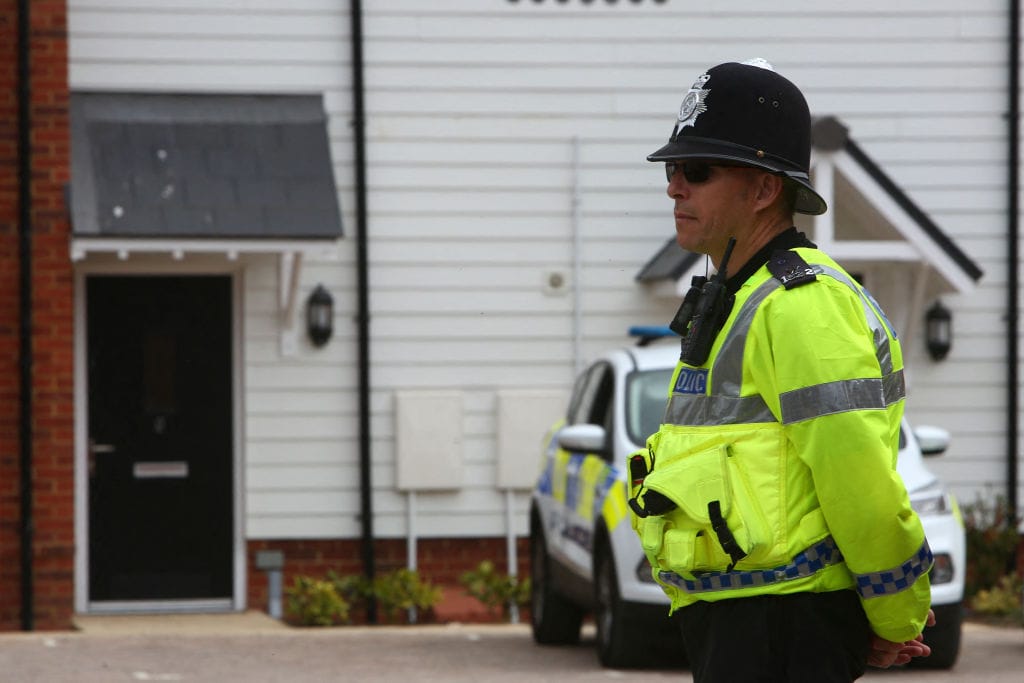](https://www.opendemocracy.net/domestic-abuse-victims-jail-theresa-may-conservatives/)
[Why crypto and financial scandals are finally denting Reform UKOur research shows Nigel Farage’s anti-elitist brand is vulnerable to stories linking billionaire cash to party policyopenDemocracyMorgan Jones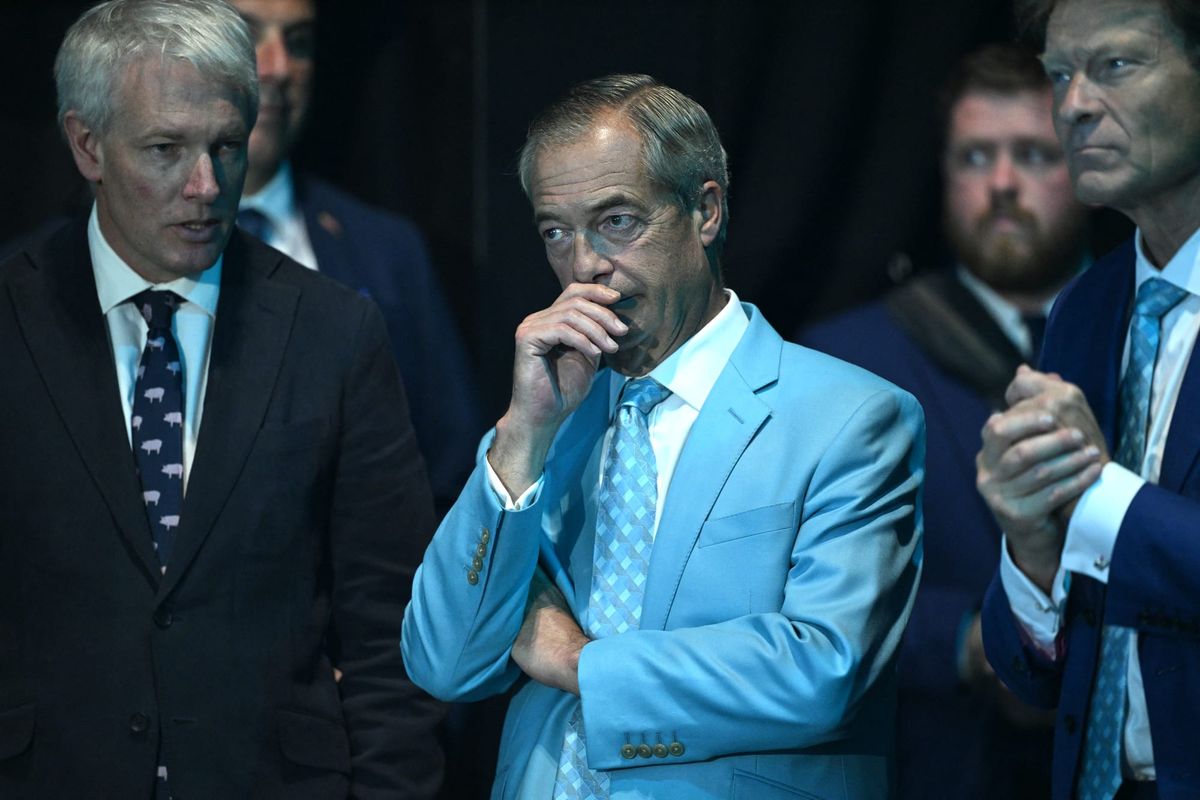](https://www.opendemocracy.net/reform-uk-nigel-farage-crypto-financial-scandals-polls-rating-fall-why-persuasion-uk/)
[‘Silence is not neutrality’: Organising against the far right in Saxony-AnhaltAfter the AfD’s win, activists say resisting the far right means defending the institutions where its politics take holdopenDemocracyNandini Naira Archer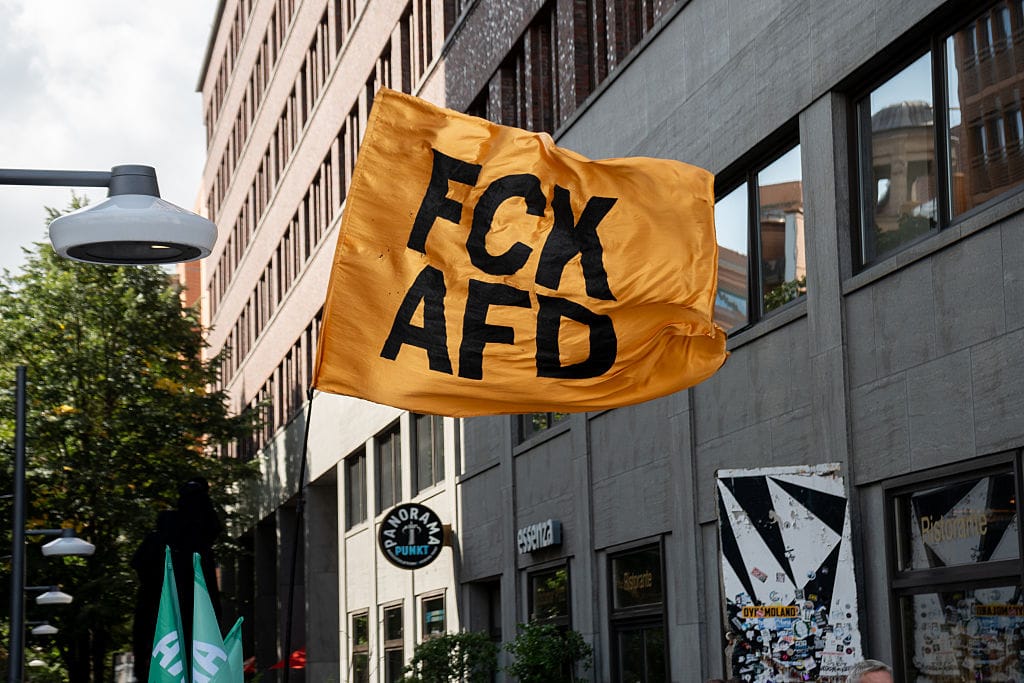](https://www.opendemocracy.net/silence-is-not-neutrality-organising-against-the-far-right-in-saxony-anhalt/)
[A progressive alliance is now critical to counter a Farage governmentWith billionaire donors bankrolling Reform, the fractured left must form a coalition ahead of the next electionopenDemocracyPaul Rogers](https://www.opendemocracy.net/progressive-left-alliance-critical-to-counter-farage-government-reform-2029/)
[The feminists taking on Germany’s anti-abortion movementBerlin’s March for Life may be getting smaller, but activists warn it is more politically powerfulopenDemocracyNandini Naira Archer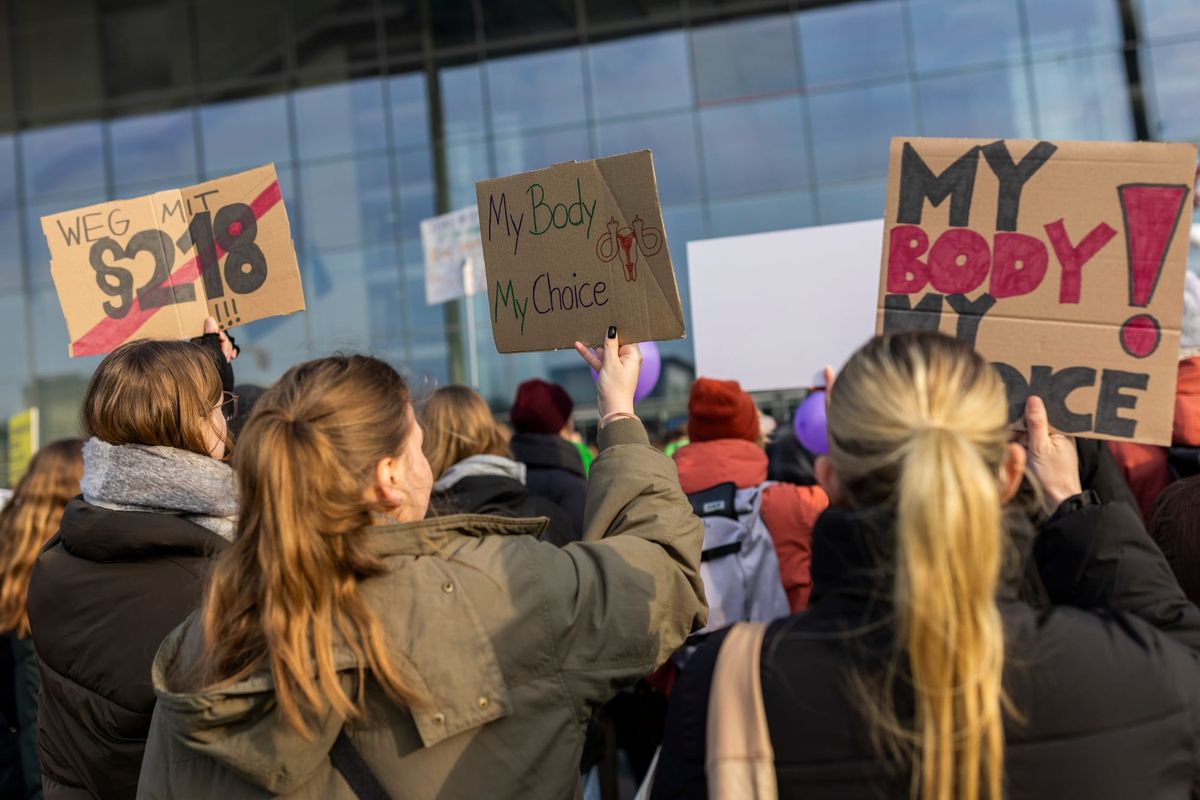](https://www.opendemocracy.net/the-feminists-taking-on-germanys-anti-abortion-movement/)
---
## Weekly Poll
How does your opinion compare to the rest of our readership? Take our new look weekly poll and find out!
### Will Reform’s £72m ‘gift’ dent the party’s image?
| [Vote and see results →](https://www.opendemocracy.net/weekly-email-190926/?jump=poll) |
| -------------------------------------------------------------------------------------- |
---
[](https://www.tickettailor.com/events/placeforhope/2391338?ref=opendemocracy.net)
Join us for an exclusive **live recording** of *Changed My Mind*, the podcast that explores the thinking behind serious shifts of opinion. This panel discussion will feature Rosemarie Mallet, the bishop of Croydon, Aman Sethi, the editor-in-chief of openDemocracy, Alison Goldsworthy, the CEO of The Depolarisation Project, and Laura Osborne, the managing director of WPI Economics. You can get a flavour of *Changed My Mind* by listening to the [podcast](https://www.opendemocracy.net/cmmpod) or via this [article](https://www.opendemocracy.net/leor-zmigrod-political-violence-self-defence/).
[Join us live](https://www.tickettailor.com/events/placeforhope/2391338?ref=opendemocracy.net)
---
## Reader Comments
openDemocracy receives so many carefully considered messages about our work that it seems a shame to keep them to ourselves.
These comments are edited for clarity, accuracy and length, and are not a reflection of openDemocracy's editorial position.
> Lots of great work has already been done in this space by Audrey Tang - AI is potentially very enabling of participatory democracy - to a radical extent. we can also use it to effectively depolarise discussion and help us arrive quickly in alignment and consensus. There can be some very helpful speeding up and radical widening of democratic processes, that could transform our democracies today, and pretty much overnight (for example - see what happened in Taiwan).
**kerubo1 | Re:** [**Frontier Politics: AI and the Crisis of the Democratic Form**](https://www.opendemocracy.net/frontier-politics-ai-and-the-crisis-of-the-democratic-form/)
---
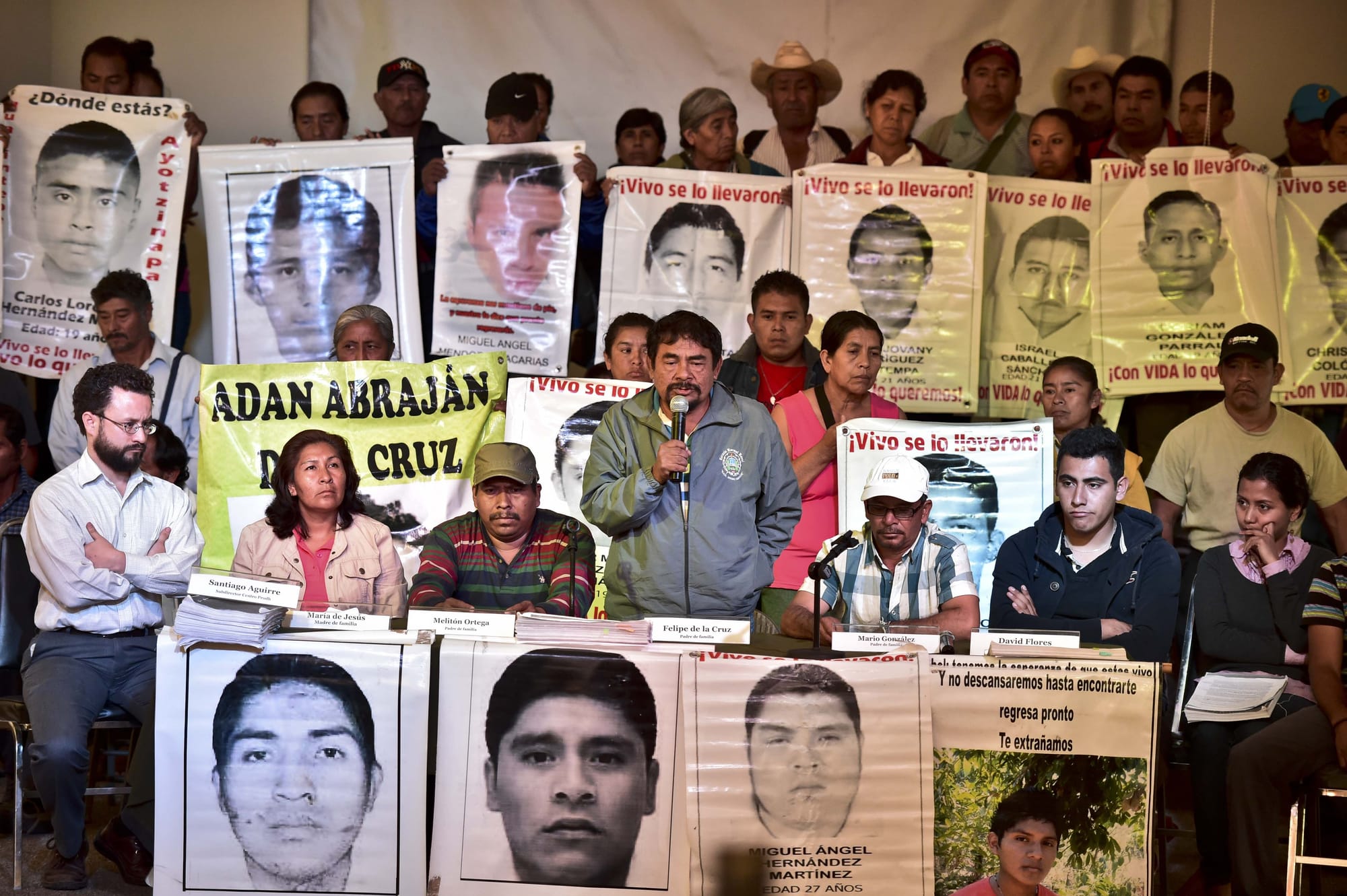
YURI CORTEZ/AFP via Getty Images
## This week in history
**The Ayotzinapa disappearances • 26 September 2014**
On the night of 26 September 2014, 43 student teachers from the Ayotzinapa rural college in Mexico were abducted by police and handed to a drug cartel. They have never been found. The case exposed the collusion between local government, police and organised crime. "Ayotzinapa was the State," became the defining slogan of the ensuing protests.
[Ayotzinapa: an unheard cry for justiceIn the end, Ayotzinapa “was the State”, inasmuch as it was, and continues to be, the result of impunity and systematic abusive practices within the various levels of government in Mexico. Español. Português.openDemocracyGema Kloppe Santamaría](https://www.opendemocracy.net/en/ayotzinapa-unheard-cry-for-justice/)
---
## What we're reading
[**A Spy Alone**](https://uk.bookshop.org/a/8711/9781804364789?ref=opendemocracy.net)**, Charles Beaumont**
I only started reading spy novels a few years ago. I blame Mick Herron. Or maybe it’s the fault of the kind of journalism I do? But recently I can’t get enough of stories about corruption, dark money, dodgy deals – and determined if flawed heroes who will stop at nothing to expose the inner workings of power. Which is why I loved A Spy Alone. Simon is a former spy trying to make a living in the private sector when he is hired to investigate a dodgy Russian oligarch. The investigation draws him back to his student days in Oxford, and the libertarian circle around a charismatic and terrifying don. Has Simon discovered a new Russian spy ring in the heart of the British elite? Beaumont has written a fantastically gripping novel that deftly portrays how Russian influence poisoned our politics, filled with memorable characters including Simon’s effervescent colleague Sarah du Cane. Even better, there’s a follow up called A Spy At War, and, sources tell me, a third book to come! Perfect reading for an autumnal weekend.
*Sian Norris, senior investigations reporter*
---
### Milei prueba con Malvinas el populismo nacionalista. ¿Qué puede salir mal?
URL: https://www.opendemocracy.net/milei-prueba-con-malvinas-el-populismo-nacionalista-que-puede-salir-mal/
Last updated: 2026-09-18T18:41:25.000Z
### En la edición de esta semana:
- Milei explota el reclamo sobre Malvinas para salvar su agenda política
- Feministas de Berlín enfrentan el avance antiabortista en Europa
- Política de frontera: La IA y la crisis de la forma democrática
- **Bonus track:** Con Maduro preso en NY y el líder del Tren de Aragua muerto, ¿quién controla el negocio del oro ilegal en Venezuela?
En 1982, la dictadura argentina, ya muy impopular y asediada por las primeras protestas en varios años, decidió explotar una causa nacional, la soberanía de las **Islas Malvinas**, y lanzó una guerra irresponsable contra el **Reino Unido** que solo sirvió para elevar el número de muertes que dejaría el régimen.
El gobierno libertario de **Javier Milei**, asediado a su vez por sus propias debilidades, se lanzó en los últimos días a una explotación similar – no bélica, por ahora –, y que huele mucho al populismo nacionalista de su mentor, **Donald Trump**. Un brillante artículo de **Florence Evans** examina qué hay detrás de los juegos de la extrema derecha argentina con la memoria.
[Milei explota el reclamo por Malvinas para salvar su agenda políticaEl reclamo de soberanía sobre las Islas Malvinas pasa de causa nacional a herramienta política de MileiopenDemocracyDiana Cariboni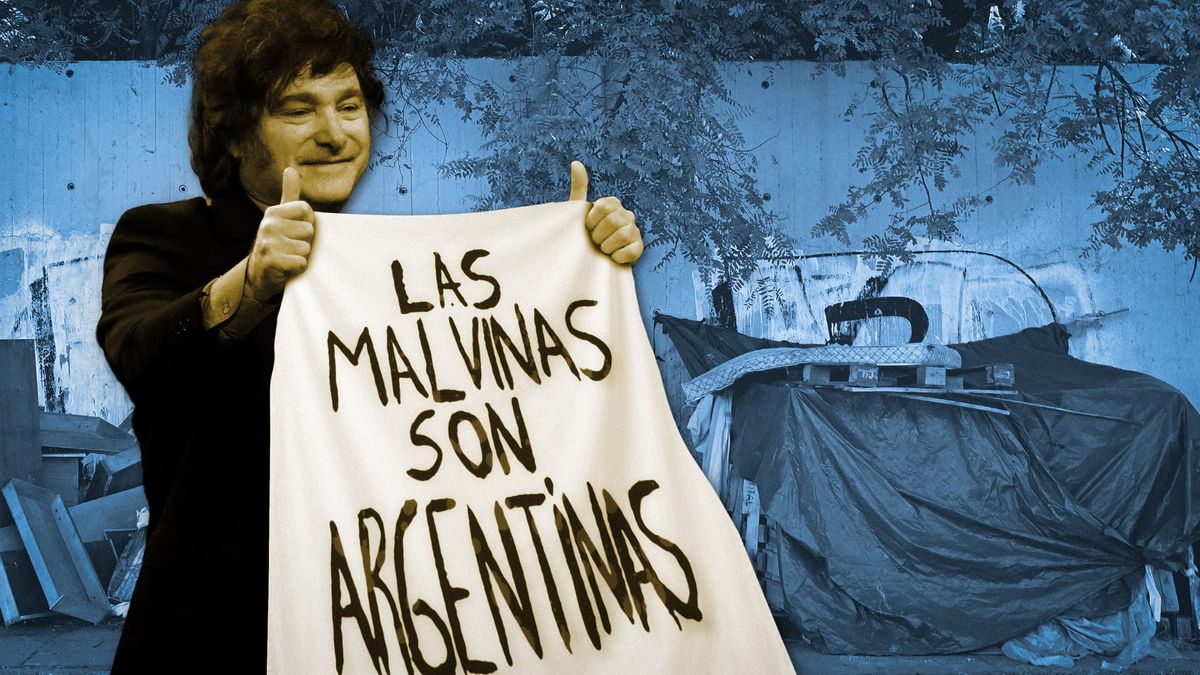](https://www.opendemocracy.net/es/argentina-milei-malvinas-reino-unido-soberania-ultraderecha-villarruel-memoria/)
El movimiento contra la autonomía reproductiva de inspiración estadounidense está muy organizado. Una de sus tácticas más exportadas se basa en la **desinformación** y la **presión emocional** sobre las personas que buscan un aborto.
Una de las organizaciones que inventaron estos métodos intenta este fin de semana aterrizar en grande en Alemania. Nuestra editora de Movimientos, **Nandini Naira Archer**, relató en una crónica cómo resisten las feministas alemanas y nos contó, también, por qué escribió este artículo: “Hace seis años trabajé en una [investigación encubierta de openDemocracy](https://www.opendemocracy.net/en/trump-linked-religious-extremists-global-disinformation-pregnant-women/) en 18 países, sobre centros de desinformación sobre el aborto vinculados a la organización estadounidense [**Heartbeat International**](https://www.opendemocracy.net/en/how-opendemocracy-tracking-anti-abortion-misinformation-around-world/). Por eso, cuando me enteré de que el movimiento asociado a Heartbeat estaba reapareciendo en Alemania, me puse en guardia.
“Lo que me llamó la atención fue cómo cambió el escenario: ahora las marchas antiabortistas atraen a menos gente, pero el movimiento está **mejor conectado**, cuenta con más recursos y se entrelaza cada vez más con la **extrema derecha** y las **políticas anti-LGBTQ+**. Las feministas de la alianza What the Fuck?! me explicaron cómo adaptan su estrategia a esta realidad”.
[Activismo antiaborto en Alemania: la resistencia feminista en BerlínLa Marcha por la Vida de Berlín convoca a menos gente, pero las activistas feministas advierten que su poder político va en aumentoopenDemocracyNandini Naira Archer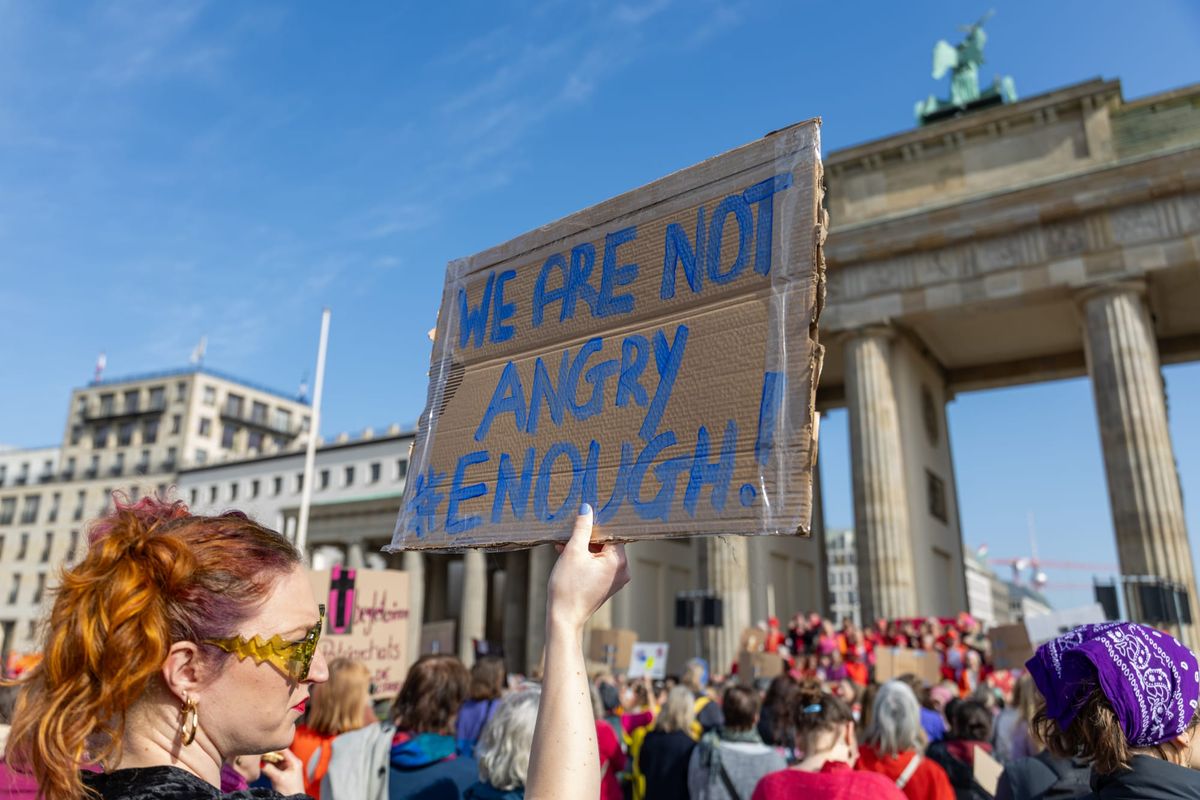](https://www.opendemocracy.net/es/alemania-feministas-heartbeat-international-desinformacion-aborto/)
A propósito, uno de nuestros reportajes encubiertos sobre estos sitios de desinformación recogió casos de Argentina, México, Costa Rica y Ecuador. Su actualidad estremece.
[Exclusivo: Centros antiaborto vinculados a EEUU ‘mienten’ y ‘asustan a las mujeres’ en América LatinaLegisladoras de México, Ecuador y Argentina reclaman acciones ante la desinformación “totalmente escandalosa” revelada por openDemocracy. English.openDemocracyIsabella Cota](https://www.opendemocracy.net/es/exclusivo-centros-antiaborto-vinculados-eeuu-mienten-asustan-mujeres-america-latina/)
Mientras proliferan los temores sobre potenciales desastres de una economía dominada por la IA en nuestras vidas y nuestras libertades, se reflexiona poco sobre cómo la democracia tiene que reinventarse para tomar el control. De eso habla este mini-ensayo de [**Georg Diez**](https://www.opendemocracy.net/author/georg-diez/)**.**
[La tecnología y la falta de ambición de quienes ejercen el poderSi queremos salvar la democracia, las instituciones del mañana deben moldearse de acuerdo a las posibilidades del mañanaopenDemocracyGeorg Diez](https://www.opendemocracy.net/es/ia-laboratorio-de-frontera-democracia-openai-amodei-anthropic-politica/)
**Bonus track:** Te invito a que leas una investigación de la **Alianza Rebelde Investiga** y **Convoca** sobre quién controla el negocio del **oro ilegal en Venezuela**, ahora que el país es un protectorado de Trump. La lees [aquí](https://convoca.pe/investigacion/cambio-de-gobierno-en-el-arco-minero-de-venezuela-quien-manda-y-quien-cobra-en-las?ref=opendemocracy.net).
Gracias por suscribirte, seguirnos y leernos. Que tengas un gran fin de semana.
**Diana Cariboni, Editora de América Latina**
[Suscribite a nuestra newsletter](https://www.opendemocracy.net/en/newsletters/opendemocracy-espanol-democraciaabierta-newsletter-email-espanol/)
[¡Queremos conocer tu opinión y tus ideas! Escribinos](mailto:info.demoabierta@opendemocracy.net)
*democraciaAbierta es un medio de noticias independiente y sin fines de lucro, que se especializa en un periodismo de investigación de alta calidad que cuestiona al poder, inspira cambios y fomenta la visibilidad y el liderazgo de grupos subrepresentados en los medios. Con sede en Londres, tenemos equipos de trabajo en tres continentes.*
### Política de frontera: La IA y la crisis de la forma democrática
URL: https://www.opendemocracy.net/es/ia-laboratorio-de-frontera-democracia-openai-amodei-anthropic-politica/
Last updated: 2026-09-18T17:22:50.000Z
*Este artículo se publicó originalmente en el* [*substack*](https://survival21.substack.com/p/frontier-politics) *de Georg Diez, Supervivencia en el siglo XXI*
## I.
El laboratorio de frontera es el marco institucional a través del cual hoy se moldea el futuro. Son los tecnólogos quienes dan forma a este futuro, y lo hacen en nombre y en interés de empresas privadas como OpenAI o Anthropic, que se sustentan en inversiones de tal magnitud que su colapso resultaría en una catástrofe económica y, por ende, social.
Lo que está faltando es la contraparte democrática de este modelo. Si bien el mundo que emerge del laboratorio de frontera es radicalmente digital, el sistema que utilizamos para definir la sociedad y la política es radicalmente analógico. El siglo XXI se encuentra con el siglo XIX. Es evidente quién sale perdiendo.
La conclusión, si queremos salvar la democracia reinventándola, es la siguiente: las instituciones del mañana deben moldearse de acuerdo con las posibilidades del mañana. Esto se aplica tanto a la administración pública como a las escuelas, universidades, instituciones políticas, parlamentos, partidos políticos y el espacio público. Hasta ahora, hemos visto que los tecnólogos crean hechos consumados, mientras los demócratas observan.
En lo que respecta al futuro de la democracia, es crucial situar la innovación institucional en el centro de nuestra reflexión: ¿Qué tipo de instituciones son apropiadas para la era de la IA, en la que los fundamentos de la política y la sociedad están experimentando una transformación radical? ¿Y qué podemos aprender de quienes ya están dando forma a las instituciones del futuro, aunque sin un impulso democrático?
Siempre es útil escuchar a alguien como Sam Altman, director ejecutivo de OpenAI, o a Dario Amodei, de Anthropic, cuando hablan sobre las implicaciones y consecuencias de su trabajo, especialmente para la práctica democrática, el futuro del trabajo o la cohesión social. A diferencia del intelectualmente ambicioso Amodei, el muy despistado Altman hace que resulte perturbador cometer el error de esperar que estos personajes proporcionen las respuestas a las preguntas democráticas del mañana.
Lo que han aportado hasta ahora es infraestructura, no teoría política; la tarea consiste en democratizar esta infraestructura y crear nuevas infraestructuras que, a su vez, transformen la democracia.
En un presente que ha perdido todo equilibrio, es frecuente pedir soluciones, en primer lugar, a quienes son responsables de los problemas. No son los tecnólogos quienes deben desarrollar la democracia del mañana – carecen de la ambición y la formación necesarias para ello, y no les interesa ni les corresponde –, sino que las ideas deben surgir de la política y la sociedad civil, que, sin embargo, a menudo carecen de la comprensión tecnológica de los retos y las oportunidades que presentan, por ejemplo, los grandes modelos lingüísticos.
Esta contradicción fundamental debe resolverse. Solo se encontrarán respuestas genuinas a la crisis democrática si quienes no son tecnólogos reconocen su propia falta de conocimiento y se esfuerzan por comprender las realidades tecnológicas de nuestro tiempo, no en busca de soluciones tecnocráticas, sino de soluciones que estén a la altura de la tecnología misma.
## II.
Es la naturaleza radical del laboratorio de frontera lo que lo hace tan singular. Están exentos de la supervisión democrática, pero actúan – en términos de poder económico y disrupción institucional – casi como estados. Sus intenciones son opacas, pero se los trata como socios, como actores racionales en un juego con reglas. Al mismo tiempo, se mantienen en un estado constante de experimentación, obedeciendo pocas reglas más allá de su propia lógica interna y del capital de riesgo.
OpenAI, Anthropic y Google están, por lo tanto, reemplazando instituciones, estructuras y formas de pensar esenciales en la práctica política. Estamos presenciando cómo sociedades de todo el mundo se transforman en espacios experimentales, sin que los parámetros de estos experimentos estén claros, sin que los objetivos y supuestos se comuniquen de manera comprensible, y sin ningún medio efectivo de participación pública o supervisión política.
El funcionamiento del laboratorio de frontera es, en muchos aspectos, un misterio, y los exempleados de OpenAI o Anthropic están obligados por contrato a guardar silencio. Sin embargo, existen informes, como el de [Calvin French-Owen](https://calv.info/openai-reflections?ref=opendemocracy.net), de los que se pueden deducir algunos principios aplicables a OpenAI; creo que estos también ofrecen perspectivas sobre la forma que podría adoptar la práctica política democrática en el futuro.
En primer lugar, según French-Owen, OpenAI es “increíblemente participativa, sobre todo en investigación”: “Cuando llegué, pregunté por la hoja de ruta para el próximo trimestre. La respuesta fue: ‘No hay ninguna’ (aunque ahora sí existe)”. Las buenas ideas pueden surgir de cualquier parte, y a menudo no está claro de antemano cuáles resultarán más fructíferas. En lugar de un “plan maestro” a gran escala, el progreso es iterativo y solo se hace evidente cuando los nuevos hallazgos de la investigación dan sus frutos.
En segundo lugar, gracias a su cultura participativa, OpenAI es altamente meritocrática. “Antes, los líderes de la empresa eran ascendidos principalmente por su capacidad para desarrollar buenas ideas e implementarlas. Muchos líderes sumamente competentes no se destacaban en aspectos como dar presentaciones a todo el personal o en las maniobras políticas. Esto tiene menos peso en OpenAI que en otras empresas. Las mejores ideas suelen prevalecer”.
Owen-French describe “una marcada inclinación a la acción (simplemente puedes hacer las cosas)” como el tercer aspecto clave de la cultura de OpenAI: no es raro que equipos similares pero independientes propongan ideas diferentes. Lo fundamental es que los proyectos sean abordados por un pequeño grupo de personas sin necesidad de pedir permiso. “En cuanto estos proyectos demuestran ser prometedores, se forman rápidamente equipos a su alrededor”.
Un cuarto elemento del particular enfoque del laboratorio de frontera está en los investigadores, quienes actúan como sus propios “mini-ejecutivos”. “Existe una fuerte tendencia a trabajar en el propio proyecto y esperar a ver cómo se desarrolla. Esto conlleva una consecuencia lógica: la mayoría de las investigaciones surgen cuando a un investigador se le asigna específicamente un problema en particular. Si algo se considera aburrido o ‘resuelto’, es poco probable que alguien trabaje en ello”.
Para Owen-French, un quinto factor del éxito de OpenAI es la capacidad de cambiar de rumbo rápidamente: “Es mucho mejor hacer lo *correcto* en cuanto se recibe nueva información que aferrarse a un plan solo porque se tenía uno. Es sorprendente que una empresa tan grande como OpenAI mantenga esta actitud; Google, obviamente, no. La empresa toma decisiones con rapidez y, cuando elige una dirección, se compromete plenamente con ella”.
Jerarquías horizontales y ascendentes, rendimiento por encima de la gestión, autonomía y confianza, acción y experimentación, y la capacidad de revolucionarlo todo: un buen resumen de los principios del laboratorio de frontera lo ofrece la [publicación del blog](https://www.interconnects.ai/p/how-to-manage-ai-training-organizations?ref=opendemocracy.net) de Nathan Lambert, que se resume así: "se lanza el producto según el organigrama": el producto es, en última instancia, consecuencia de decisiones que están integradas en la estructura organizativa de la empresa y la reflejan.
La idea unificadora que subyace es que se trata de pequeñas unidades que operan aquí en el marco de un plan más amplio, y la presión – la presión por justificarlo – no recae sobre lo nuevo para demostrar lo que puede hacer, sino sobre lo antiguo para demostrar por qué deberíamos conservarlo.
Así pues, si uno quiere desarrollar una nueva práctica democrática, no se trata de romper el viejo sistema a cualquier precio; se trata de reconocer las posibilidades – y también las necesidades – que surgen en la práctica del laboratorio de frontera y cómo se pueden aprovechar democráticamente.
Porque, por supuesto, los propios laboratorios en su forma actual no son los pilares de un futuro democrático. En su excelente libro *El imperio de la IA*, Karen Hao describe el funcionamiento interno de OpenAI con una claridad crítica: en los inicios de la empresa, escribe, aproximadamente una cuarta parte de los empleados eran mujeres o personas no binarias; los ejecutivos eran casi todos hombres blancos.
Y la filosofía de las empresas de IA – tal como se articula, por ejemplo, en los [textos](https://darioamodei.com/essay/the-adolescence-of-technology?ref=opendemocracy.net) de Dario Amodei, director ejecutivo de Anthropic, y en el [manifiesto](https://situational-awareness.ai/?ref=opendemocracy.net) ampliamente leído de Leopold Aschenbrenner, quien formó parte del equipo "Superalignment" de OpenAI hasta 2024 – es bastante clara: es un pequeño grupo de personas el que tiene derecho a dirigir el desarrollo de la IA.
La lógica y la estrategia son, por lo tanto, leninistas: “Probablemente solo haya unas pocas docenas de personas que realmente ‘necesitan saber’ los detalles clave de la implementación de un avance algorítmico determinado en un laboratorio determinado”, escribe Aschenbrenner. “Puedes seleccionar, aislar y monitorear intensivamente a estas personas, además de mejorar radicalmente la seguridad de la información”.
O como lo expresó Lenin en 1920 en "¿Qué hacer?": "La organización de los revolucionarios, por otro lado, debe incluir ante todo a personas cuya profesión sea la actividad revolucionaria". Y añadió: "Esta organización no tiene por qué ser muy extensa y debe ser lo más conspirativa posible".
## III.
La democracia funciona de manera diferente. Pero quizás, en ciertos momentos, deba funcionar así, al menos en parte. Porque, al fin y al cabo, la pregunta es: ¿qué se entiende por democracia: forma o contenido? Ambos se complementan de maneras únicas y no siempre idénticas.
Actualmente, la forma de la democracia está en crisis, una crisis de contenido. No es fácil determinar qué surge primero: las contradicciones sistémicas de un estilo de gobierno que no se corresponde con las posibilidades, las exigencias ni la experiencia de nuestro tiempo, o la resistencia sistémica que se desata con toda vehemencia de manera fascista.
Pero ese no es el punto: la cuestión radica en ver el problema – y, por ende, también la solución – en la estructura misma del sistema, entendido no como una ideología, sino como una infraestructura. Entonces, ¿cómo se procesa la información hoy en día, social y, sobre todo, políticamente? ¿Cómo se toman, comunican e implementan las decisiones?
Lo que nos espera es una reforma integral del sistema, en la que se pueden conservar algunas partes. Esto requiere valentía y determinación, y probablemente estructuras similares a las de laboratorio de frontera; las contradicciones democráticas inherentes a esta forma de política de vanguardia deben ser analizadas y resueltas. La práctica misma debe someterse a prueba.
Esto no significaría dirigir un partido político como si fuera una empresa o una *startup*; significaría generar la energía necesaria para encontrar respuestas y soluciones experimentales, nuevas y mejores a los problemas actuales.
Todo esto tiene implicaciones muy prácticas. Los laboratorios de frontera están atrayendo capital y talento que escasean en otros ámbitos. Ya no es un tópico que en la política organizada, en muchos niveles – desde la base hasta la cima –, falta talento, se malgastan las ambiciones y se frena el desarrollo de personas prometedoras. Existen tantos incentivos perversos que la política, en su forma actual, jamás logrará captar a las mentes más brillantes.
Estas mentalidades, a su vez, no siguen la misma lógica que los partidos políticos, que se remontan a una época en la que los currículos lineales y las carreras predecibles eran la norma; por lo tanto, el objetivo no puede ser reemplazar una o dos generaciones de políticos profesionales por una nueva generación de políticos profesionales.
La lógica de las nuevas posibilidades tecnológicas haría obsoleta la profesión del político de carrera. La política como profesión, como la denominó Max Weber, es producto de la primera revolución industrial del siglo XIX; en las condiciones de la próxima revolución industrial, este ámbito, al igual que prácticamente todas las demás áreas de la sociedad y las instituciones, también cambiará.
Estos cambios generan temor y fuerzas centrífugas. Las fuerzas de resistencia del antiguo sistema son fuertes, especialmente porque afectan a las personas que han encontrado su rol, propósito y seguridad dentro de ese sistema.
Todo esto puede llevarnos a alejarnos de la tecnología misma, la infraestructura que sustenta nuestra sociedad, economía y, por consiguiente, política. O bien, podemos acercarnos a estas tecnologías e intentar comprenderlas y moldearlas, buscando percibir y aprovechar su lógica inherente y novedosa para crear instituciones que se adapten a las condiciones de la época para la que fueron concebidas.
Precisamente Bill Gates [lo ha resumido a la perfección](https://www.gatesnotes.com/a-turbulent-ai-era-and-critical-choices-to-make?ref=opendemocracy.net): Necesitamos un plan para abordar la IA. También se podría decir: Necesitamos política. Necesitamos una política que opere al nivel que impone la tecnología. Necesitamos una nueva política.
Lo que hemos visto hasta ahora, de diversas formas, es la falta de ambición organizada por parte de quienes ostentan el poder político. Sin embargo, las convulsiones de nuestro tiempo son reales y no pueden abordarse con la mediocridad habitual.
### The feminists taking on Germany’s anti-abortion movement
URL: https://www.opendemocracy.net/the-feminists-taking-on-germanys-anti-abortion-movement/
Last updated: 2026-09-18T17:05:47.000Z
When anti-abortion actors march through Berlin, the feminists of the What the Fuck?! alliance do not simply stand on the sidelines.
“We’re trying to disrupt the march,” the group told openDemocracy of the annual March for Life, which this year takes place on 19 September. Protesters will line the route, walk alongside marchers and attempt to block their path with deliberately playful and creative demonstrations.
“It’s just no fun \[for the anti-abortion actors\] to be constantly shouted at by feminists who stick together and have fun while doing it,” What the Fuck?! said. “It doesn’t destroy their power or their networks, but we can at least ruin this one day for them.”
The March for Life is organised by a coalition of 16 groups, while What the Fuck?! is an alliance of antifascist and feminist groups and individual activists across Berlin that has organised against the march and its organisers for more than a decade.
While the activists say the number of people taking part in the march has “more than halved”, they warn that the movement behind has built stronger networks, diversified their tactics and increased their political influence. “These people do not just come together on this one day, but are connected beyond it as well,” they said.
What the Fuck?! says many of the actors involved in organising the March for Life also campaign against LGBTQ+ rights, and are increasingly connected to broader anti-gender and far-right politics – as well as being internationally networked.
This year, Heartbeat International, a major US anti-abortion organisation, is holding a European summit for directors of pregnancy support centres at the same time as the Berlin march. One of the conference’s speakers, Cornelia Kaminski, is the chair of Aktion Lebensrecht für Alle (Action Right to Life for All), which helps to organise the March for Life and has worked with Heartbeat International for years, What the Fuck?! said.
openDemocracy has investigated the global anti-abortion network before. In 2020, we spent nine months looking into Heartbeat International and US Christian-right organisations, sending undercover reporters posing as women with unwanted pregnancies into affiliated “crisis pregnancy centres” in 18 countries.
We found centres that appeared to offer neutral pregnancy support gave women false or misleading health information and used emotional pressure to discourage them from having abortions. The investigation also traced the money and infrastructure helping US anti-abortion organisations expand internationally.
What the Fuck?! says some of the tactics developed by the US anti-abortion movement are now being seen in Germany: lobbying lawmakers, mobilising supporters to target decision-makers, using court cases strategically and operating counselling services that activists say obscure their ideological agenda.
“They speak of human rights while at the same time seeking to restrict people’s rights,” the alliance said.
Germany’s far right has also increasingly embraced anti-gender and anti-abortion politics. The alliance points particularly to the AfD, which earlier this month won the parliamentary election in the east German state of Saxony-Anhalt, and has opposed abortion rights.
Alongside demonstrations and civil disobedience, What the Fuck?! researches the organisations involved, maps their relationships and holds public events about the connections between anti-feminist and far-right politics.
The work has carried risks. In 2019, more than 50 activists were arrested after taking part in a blockade against the march, according to the group. Many were subsequently charged and convicted. What the Fuck?! says the crackdown contributed to a decline in protest numbers.
“You have to stay on top of it,” it says. That means continuing to investigate new developments while explaining how abortion politics connects to a wider anti-feminist backlash.
But they argue there is still a place for direct action. Stopping one march does not dismantle an international political network, but confronting anti-abortion activists publicly can deny them an uncontested presence on the streets.
For the alliance, research and disruption are complementary rather than competing tactics: one exposes how power is being built, while the other makes that organising harder to carry out unchallenged.
Asked what activists elsewhere could learn from their experience, What the Fuck?! turned the question around. “The question should rather be: what can we learn?” they said, pointing to feminist movements in Latin America, Ireland’s successful campaign to overturn its constitutional abortion ban and cross-border solidarity between German and Polish abortion-rights activists.
Those networks matter especially as political conditions become less hospitable to abortion and LGBTQ+ rights, they argue. Activists need structures that can survive electoral shifts and continue providing practical support when governments turn against them.
“We must now try to build and strengthen structures of solidarity that protect people who are threatened,” they said.
### Las feministas que enfrentan al movimiento antiabortista en Alemania
URL: https://www.opendemocracy.net/es/alemania-feministas-heartbeat-international-desinformacion-aborto/
Last updated: 2026-09-29T10:25:14.000Z
Cuando los activistas que se oponen al derecho al aborto marchan por Berlín, las feministas de la alianza What the Fuck?! no se quedan de brazos cruzados. “Intentamos interrumpir la marcha”, dijeron a openDemocracy. Se despliegan a lo largo de la avenida, caminan junto a los manifestantes e intentan bloquear su paso. A menudo, sus protestas tienen un tono lúdico y creativo.
“Para ellos no tiene ninguna gracia que feministas organizadas y con buena energía les estén gritando todo el tiempo”, comentaron. “No destruye su poder ni sus redes, pero al menos podemos arruinarles el día”.
Durante más de una década, What the Fuck?! – una alianza de grupos antifascistas, feministas y activistas independientes de Berlín – se ha movilizado contra la Marcha por la Vida que se celebra cada año en Alemania y contra las organizaciones que la promueven. Este año, está programada para el sábado 19 de septiembre.
La capacidad de convocatoria de la marcha viene en picada, pero las activistas advierten que el movimiento que la respalda no se ha debilitado. “La cantidad de participantes cayó a menos de la mitad”, explicaron. Pero, al mismo tiempo, las organizaciones antiaborto consolidaron redes más sólidas, diversificaron sus tácticas y aumentaron su influencia política.
“Esta gente no solo se junta ese día, sino que sigue conectada todo el año”, señalaron las feministas.
Según la alianza, la Marcha por la Vida está organizada por una coalición de 16 grupos, además de otras entidades que se suman a la convocatoria. Las activistas afirman que muchas de estas organizaciones no solo militan contra el derecho al aborto, sino también contra los derechos LGBTQ+, y están cada vez más vinculadas a agendas conservadoras de género y a la extrema derecha.
Su proyección, además, es internacional.
Este año, Heartbeat International, una de las principales organizaciones de desinformación sobre aborto de Estados Unidos, celebra una cumbre europea para directores de los centros que este grupo promueve – y que eufemísticamente llama ‘centros de apoyo para embarazos en crisis’ – en las mismas fechas que la marcha de Berlín. Cornelia Kaminski, una de las organizadoras de la Marcha por la Vida, expondrá en la conferencia, mientras que su organización, Acción por el Derecho a la Vida para Todos (ALfA, por sus siglas en alemán), lleva años colaborando con Heartbeat, según What the Fuck?!.
Se trata de una red que [openDemocracy ya ha investigado](https://www.opendemocracy.net/en/trump-linked-religious-extremists-global-disinformation-pregnant-women/). En 2020, [dedicamos nueve meses a investigar a Heartbeat International ](https://www.opendemocracy.net/en/how-opendemocracy-tracking-anti-abortion-misinformation-around-world/)y a otras organizaciones de la derecha cristiana estadounidense, enviando[ reporteras encubiertas](https://www.opendemocracy.net/es/ecuador-costa-rica-prometen-investigar-centros-embarazos-crisis-vinculados-eeuu/) que se hicieron pasar por mujeres con embarazos no deseados a ‘centros para embarazos en crisis’ vinculados a la red en 18 países.
[Exclusivo: Centros antiaborto vinculados a EEUU ‘mienten’ y ‘asustan a las mujeres’ en América LatinaLegisladoras de México, Ecuador y Argentina reclaman acciones ante la desinformación “totalmente escandalosa” revelada por openDemocracy. English.openDemocracyIsabella Cota](https://www.opendemocracy.net/es/exclusivo-centros-antiaborto-vinculados-eeuu-mienten-asustan-mujeres-america-latina/)
Nuestras periodistas hallaron centros que aparentaban ofrecer orientación neutral sobre el embarazo, pero que brindaban información médica falsa o engañosa y ejercían presión emocional para disuadir a las mujeres de abortar. La investigación también rastreó el flujo de dinero y la infraestructura que facilitan la expansión internacional de estas organizaciones estadounidenses.
What the Fuck?! sostiene que algunas tácticas que hoy se aplican en Alemania replican las desarrolladas por el movimiento antiabortista estadounidense: ejercer presión sobre legisladores, movilizar a sus bases para presionar a las autoridades, utilizar los tribunales de forma estratégica y operar servicios de consejería que, según las activistas, ocultan su verdadera agenda ideológica.
“Hablan de derechos humanos mientras intentan recortar los derechos de las personas”, afirmó la alianza.
La extrema derecha alemana también ha adoptado con fuerza el discurso contra la diversidad de género y el aborto. La alianza señala en particular al partido Alternativa para Alemania (AfD), alegando que la postura antiaborto encaja en una agenda centrada en el nacionalismo, el fomento de la natalidad y la teoría conspirativa de tinte racista del ‘gran reemplazo’.
Además de convocar manifestaciones y actos de desobediencia civil, What the Fuck?! investiga a los grupos involucrados, mapea sus alianzas y organiza eventos públicos sobre los nexos entre el antifeminismo y la extrema derecha.
Esta labor ha traído repercusiones. En 2019, más de 50 activistas fueron detenidas tras participar en un bloqueo contra la Marcha por la Vida, según el grupo. Muchas de ellas fueron procesadas y condenadas.
“Hay que mantenerse alerta”, afirmaron. Eso implica seguir investigando las nuevas dinámicas mientras se visibiliza cómo la ofensiva contra el aborto responde a un fenómeno más amplio de reacción antifeminista.
Aun así, sostienen, la acción directa sigue siendo necesaria. Frenar una marcha no desmantela una red política internacional, pero confrontar públicamente a los colectivos antiabortistas evita que ocupen las calles sin resistencia.
Para la alianza, la investigación y la protesta directa son tácticas complementarias: una expone cómo se construye el poder y la otra dificulta que esa agenda se despliegue sin cuestionamientos.
Al preguntarle qué enseñanza podrían extraer activistas de otros países de su experiencia, What the Fuck?! invirtió el planteamiento. “La pregunta debería ser: ¿qué podemos aprender nosotras?”, señalaron, destacando los avances de los movimientos feministas en América Latina, la exitosa campaña de Irlanda para despenalizar el aborto en su Constitución y la solidaridad transfronteriza entre activistas por el derecho al aborto de Alemania y Polonia.
Esas redes resultan fundamentales en un contexto político cada vez más adverso para los derechos reproductivos y LGBTQ+. Las activistas enfatizan la necesidad de construir estructuras sólidas que resistan los cambios de gobierno y continúen brindando apoyo práctico cuando el Estado les dé la espalda.
“Ahora debemos abocarnos a construir y reforzar redes de solidaridad que protejan a las personas en situación de vulnerabilidad”, concluyeron.
### AI’s data centre construction boom is crushing workers
URL: https://www.opendemocracy.net/ais-data-centre-construction-boom-is-crushing-workers/
Last updated: 2026-09-18T16:13:30.000Z
*This is a translated and edited version of the i*[*nvestigation*](https://apublica.org/2026/08/corrida-por-data-centers-gera-denuncias-de-violacoes-trabalhistas-em-sao-paulo/?ref=opendemocracy.net) *originally published by Agência Pública*
The nine glistening towers of the Scala data centre complex, which serve the data needs of some of the world’s biggest tech corporations including Amazon and Oracle, stretch out for over half a kilometre along the the Mário Covas motorway in Barueri, a municipality in Brazil’s Sao Paulo metropolitan area.
Scala has a reputation for building these mega-computing structures at breakneck speed, using proprietary construction techniques and accounts for a quarter of the installed data centre capacity in Brazil. It has plans for further expansion, including a single new facility in the southern state of Rio Grande do Sul, which could add six times more capacity than all the data centres currently installed in the country.
Brazil is the leading market for data centres in Latin America, with the federal government hoping to attract nearly two trillion reais, or nearly £300bn, in private investment in the next decade, largely off the back of a draft bill to grant generous incentives.
Yet the mad rush to roll out internet infrastructure for the AI age is driving the workers building these data sheds to the point of exhaustion, breakdown and injury, according to an investigation by Agência Pública, an investigative newsroom based in Brazil. These finds are of relevance to policy makers around the world, including here in the UK, where a recent study by infrastructure firm Manpower Horizons has estimated a crushing shortage of plumbers, electrical fitters and construction workers to build out [Britain’s own data centre boom](https://www.horizonplatforms.co.uk/blog/who-will-build-britains-ai-boom?ref=opendemocracy.net).
Workers say the pressure on them is exacerbated by Scala’s proprietary “Fast Deploy” technology, which the company claims halves the amount of time needed to install a data centre. The workers, many of whom worked as subcontractors, have their own description of the fast deploy experience.
"There were times when I thought about giving up," says Francisco Rodrigues, who was working 70-hour weeks. *| Tuane Fernandes*
“Hell,” is how 39-year-old Francisco Rodrigues heard his colleagues describe their experience of working on Scala’s data centres in Barueri.
“They said they wanted to get out of that hell. I managed to stick it out, but there were times when I thought about giving up,” said Rodrigues, a former assembler, adding that he had to work 70-hour weeks for a month, well above the legal mandate of 54 hours a week including overtime.
In a statement, Scala said it prioritises “the safety, health and wellbeing of people in all its operations”.
Scala Data Centers building *| Tuane Fernandes*
## **Praying they sack me**
To understand the working conditions at data centre construction sites, Agência Pública reviewed 11 cases before Brazil’s labour courts, interviewed workers and trade unionists, and submitted freedom of information requests to officials at the labour prosecutors’ office.
Almost all claims relate to unpaid overtime, missing dues for hazardous work, and unhealthy working conditions. The complaints also mention the assignment of duties outside the scope of the contract, a lack of personal protective equipment, absence of proper training on site, and some even seek compensation for emotional distress caused by harassment suffered.
Of the 11 cases, one worker managed to reach a settlement, two workers are appealing a ruling after their cases were dismissed, and three cases have been dismissed outright. The remaining five cases are still making their way through the court process.
Separately, the labour prosecutor’s office confirmed three ongoing investigations into working conditions at Scala data centres in Barueri, including gruelling workdays; overtime beyond permissible limits, often without legally mandated breaks; negligence in the use of personal protective equipment; and a workplace accident that left an employee with burns.
Scala Data Centers already represents a quarter of the installed capacity in Brazil and has a rapid expansion plan *| Felipe Iruatã*
“At first, I’d wake up happy to go to work, but after a while I’d be praying to God that I wouldn’t have to go to the data center anymore, that they’d sack me,” said a 44-year-old assembler who asked not to be named for fear of reprisals.
“I was at my wits’ end; it was really taking its toll on me,” he added, explaining that he eventually left the job after a year after suffering from chronic gastritis.
Data center work is dangerous work: both in construction of these structures and in their maintenance. Each unit is essentially a giant, temperature-controlled shed, packed with high-voltage electrical wiring and equipment that often consumes as much power as a small city, making it vitally important that workers receive the right training and equipment.
Worker testimonies indicate this was not the case at Scala’s sites.
Some said the voltage in some parts of the site was so high, they could feel their feet tremble as they stepped on insulated cables.
Anderson Soares was working for a subcontractor when he called to fix a fault with the temperature regulating thermal cladding panels before the datacentre was handed over to Scala.
“We had already finished several rooms and it was in the last one that it happened,” Soares recalled.
“In that room, we had to crawl along the false ceiling; we couldn’t stand up. I moved and touched \[the machine\], and then I felt the electricity pulling at my arm,” he added, recalling the tingling feeling in his body and the “sparkles” in his vision following the shock.
Soares and his colleagues said the accident could have been avoided if Multiway, the subcontractor working for Scala, had followed proper procedures.
“We should have waited for the safety technician to give us permission to go up, but that day the foreman told Soares, ‘Go on, it’ll only take a moment, and you’ll sort it out’,” said a former assembler who asked to remain anonymous.
No report of an accident at work was submitted to the Ministry of Labour, as is mandatory for companies. “He didn’t report it for fear of being sacked,” said Rodrigues, a claim confirmed by Soares. The workers said that the work was conducted without the requisite paperwork, but they were subsequently coerced into signing the work authorisation form backdated to the day of the accident, thereby falsifying the document.
Multiway, the company responsible for the service, claimed its “works are supervised by occupational safety professionals, and activities are preceded by the relevant risk assessments”.
## Pattern of neglect
Soares’ accident, workers say, was part of a pattern of inadequate training and safety protocols.
“I was cutting iron six metres up, in a confined space, with the machine between my legs. But I only had gloves and goggles to protect myself,” said Rafael Suriano, 34, a former subcontracted assembler at Scala’s data centres in Barueri.
This booklet informs subcontracted workers that mobile phones are prohibited inside data centers *| Felipe Iruatã*
According to his lawyers, Suriano was neither provided with protective equipment nor “training on measures to ensure the worker’s physical and psychological safety during such duties”, and was often tasked with working on unstable platforms several metres above the ground.
While Suriano’s case was eventually dismissed by a labour court, workers said safety equipment and harnesses, particularly so-called lifelines (a system of cables that anchors workers working on elevated structures) were often incorrectly
attached.
Anderson Soares shows a photo of his workplace; he received an electric shock while climbing onto the false ceiling *| Felipe Iruatã*
One assembler, who did not wish to give his name, said lifelines were often attached to false ceilings, or heavy, movable machinery that was unstable on the sloping surfaces of the construction site.
On one occasion, he said, three fellow workers were on a platform when it collided with another machine, causing it to sway violently. “By the grace of God, it didn’t tip over, because if it had, it would have killed all three lads.”
Multiway responded that “it neither instructs nor authorises the carrying out of activities without the protective equipment required for the identified risks”.
## **Theory vs. Practice**
In the cases examined for this report, the companies refuted the workers’ claims, arguing that they distributed protective equipment correctly and provided adequate training. In five cases, the courts ruled in favour of the companies.
Workers say the evidence presented by the contractors in court does not reflect what actually happened in the workplace.
“Everything they say is a lie; it’s exactly the opposite of what they claim,” said one of the workers. “You go in there, they give you a piece of paper to sign saying you’ve done training, but there was no training at all.”
In some cases, training was delivered only after the workers had already started carrying out the tasks covered in the training.
Rodrigues, the assembler, said he spent quite some time using dangerous machines like jackhammers and sanders (a rotary tool used for metal work) without any training. When he finally got his training he realised the mistakes he had been making such as pulling the tool’s spinning metal disc towards his chest, rather than pointing away from him. Fortunately he wasn’t injured.
Renato Gonçalves, aged 37, was not so lucky. Gonçalves partially lost his hearing while using a jackhammer because, he said, he hadn’t been taught how to wear his protective equipment correctly. Gonçalves had been hired by Multiway to work on the Scala site, but said his safety drills did not include a single hour of hands-on, practical training. He was subsequently deployed at another site where the accident occurred.
According to his lawyers, the company that hired him “did not file a work-related accident report nor offer him any support” and fired him following the submission of medical certificates. The case is currently suspended in the logjam of the legal system. The hearing loss, according to Gonçalves, is partial and reversible, and he is on a waiting list to undergo corrective surgery.
Rafael Suriano claims he did not receive protective equipment for work, but his lawsuit was dismissed by the court *| Tuane Fernandes*
Multiway stated that it “provides training on the safe use of machinery and equipment, including in accordance with NR-12 \[a labour standard rule on the use of rotating machinery\] where applicable, in addition to the training courses and guidance provided for by other Occupational Health and Safety regulations relevant to the activity”.
## ‘British punctuality’
The workers also claim that the companies fudged the number of hours they worked, despite shifts that sometimes began at seven in the morning and ended at 4am the next day.
“We didn’t clock in; everything was done ‘by eye’. It was all via WhatsApp. And there were many hours of overtime that we weren’t paid for,” said Soares. “There were times when I’d leave there at 2am and be back by 9am to start the next shift.”
Multiway claims that it “has top-of-the-range software” to keep attendance records. Yet, complaints about excessive overtime were a recurring theme amongst the workers interviewed and in the court files, with one claim asserting that a worker worked an average of 78 hours of overtime per month, as well as a monthly average of 13 hours of overtime on public holidays, for which he was not correctly paid.
Even in cases where workers lost in court, judges recognised something unusual in the evidence presented by the companies. “The attendance records compiled by the defendant show symmetrical entries with signs of British punctuality,” noted a judge’s ruling in one of the cases, referring to an unusual level of uniformity in the attendance record.
Attendance records always show the same entry and exit times *| Felipe Iruatã*
Gilberto Almazan, the president of the [Osasco and Region Metalworkers’ Union](https://sindmetal.org.br/?ref=opendemocracy.net), said workers were being pressed to work long hours over extended periods of time with poor support facilities such as toilets and canteens.
“There is a lot of pressure to deliver results. Workers are being pressured to stay on until later. But it’s one thing to do that for a day, two days, a week and quite another for the company not to have enough staff and to force everyone to work a 10-hour shift every day,” said Almazan.
“I thought working in a data center would open doors for me,” former assembler Renato Gonçalves, who has been left partially deaf, said. “But the opposite happened, and today my physical condition prevents me from getting certain jobs. It saddens me greatly.”
## Companies are doing great
Even as workers suffer, the companies building these datacentres are thriving.
Scala was founded in 2020 by DigitalBridge, a US fund management firm set up by [a friend](https://www.reuters.com/world/us/trump-fundraiser-barrack-sought-uae-investment-while-lobbying-country-2022-05-17/?ref=opendemocracy.net) of President Donald Trump and recently acquired by Japan’s [SoftBank](https://www.estadao.com.br/einvestidor/cenarios-e-mercado/softbank-digitalbridge-compra-us4-bi-data-centers-telecom?ref=opendemocracy.net).
Other [investors in the company](https://scaladatacenters.com/sustentabilidade/governanca-corporativa/investidores/?ref=opendemocracy.net) include the International Finance Corporation (IFC), a subsidiary of the World Bank; the investment fund Coatue – with offices in the United States, Hong Kong and London; the Canadian pension fund IMCO; and the Olayan Group, a multinational “with a global investment portfolio valued at several billions”.
In Brazil, the state-owned National Development Bank (BNDES) granted Scala a loan of 300 million reais (£44m), while Banco do Brasil approved funding of $21.6m to boost the manufacture of prefabricated modules for data centres. Bradesco, Itaú, Santander and UBS banks have participated in the company’s bond issues and debt securities.
Agencia Pública sought comments from all the financial institutions, but only the IFC, the BNDES, UBS and Santander responded, emphasising their policies on protecting workers’ health and safety. Their statements can be found at the end of this article.
In Brazil, data centres are promoted as innovative projects with the potential to create jobs on a massive scale. In Eldorado do Sul, the company[ promises](https://scaladatacenters.com/com-investimento-inicial-de-r-3-bilhoes-governo-do-rs-e-scala-data-centers-assinam-acordo-para-o-maior-projeto-de-infraestrutura-digital-do-estado/?ref=opendemocracy.net) to create 3,000 direct and indirect jobs during the construction phase.
“This is an opportunity to turn Rio Grande do Sul into Brazil's new Silicon Valley,” [said](https://reporterbrasil.org.br/2025/04/cidade-data-centers-rs-energia/?ref=opendemocracy.net) Ernani Polo, Rio Grande do Sul’s secretary for economic development.
But a [report](https://apublica.org/wp-content/uploads/2026/08/SubData-%5F-Relatorio-Final-Corrida-por-Data-Centers-gera-denuncias-de-violacoes-trabalhistas-em-Sao-Paulo.pdf?ref=opendemocracy.net) by Rio Grande do Sul Legislative Assembly’s subcommittee on data centres warned that “the establishment \[of the data centre\] may generate a significant number of jobs, but this tends to be temporary; therefore, it should not be seen as a component of an employment public policy”.
Worker Rodrigues said: “The data centres claim they create lots of jobs, but only until construction is finished. Once construction is complete, I reckon 90% of the jobs are cut.”
### A progressive alliance is now critical to counter a Farage government
URL: https://www.opendemocracy.net/progressive-left-alliance-critical-to-counter-farage-government-reform-2029/
Last updated: 2026-09-18T15:34:38.000Z
Two weeks ago, I wrote about the [urgent need for a progressive way forward for UK politics](https://www.opendemocracy.net/reforms-cracks-polls-labour-andy-burnham-progressive-path-forward/). With Nigel Farage’s Reform Party in a relatively strong position – even after a summer of scandals – and progressives split between several political groups, I suggested there was a need for those on the left to work with like-minded people, even if not yet in the form of one united party.
Plenty has changed in those two weeks, and that need has only become more urgent.
First is the issue of Reform’s receipt of £72m from two crypto-billionaires. That specific injection of cash may in due course be blocked or limited by Parliament in some way, but this misses the point. The donations are [straight out of the Trump playbook](https://www.opendemocracy.net/reforms-conference-is-clearest-sign-yet-of-trumpism-in-the-uk/), and serve as a sharp reminder that there is formidable wealth available to support far-right politics in the United Kingdom, just as in the United States.
Even if Reform has problems accessing these two huge donations, it can be assured of being very well-resourced in many other ways in the years up to the next general election. To a lesser extent, this also applies to Rupert Lowe’s far-right Restore Britain party.
True, the donations also confirm, even more than a couple of weeks ago, just how far Reform is from its claim to be the champion of the underdog fighting powerful woke elites. It is, after all, quintessentially an elite party. It could perhaps get away with projecting a false picture of itself if a general election were imminent, but will find it increasingly difficult to successfully mislead people for several more years to come.
That is a problem made even worse as more detail emerges about its intentions, not least through the output from the new Reform-linked think tank, the Centre for a Better Britain, which appeared on the scene last year and aims to raise £25m to support Reform’s work over the next three years.
The think tank has already [published a series of policy papers](https://www.cfabb.uk/papers-and-reports?ref=opendemocracy.net), one of which was [picked up by the Daily Express](https://cfabb.substack.com/p/cfabb-in-the-news) and headlined, “Fears ‘woke ideology’ costs OAPs £50K”. This gives a flavour of its likely line of attack, but more interesting will be the 200-page report it is due to publish next week, which will offer insight into the likely economic and financial policies for Reform’s election platform.
According to [Bloomberg UK](https://www.bloomberg.com/news/articles/2026-09-16/uk-should-slash-tax-on-rich-blueprint-for-farage-s-reform-says?ref=opendemocracy.net), this report will call for substantial tax cuts for the seriously wealthy, including abolishing inheritance tax, which raised £8.5bn for the government last year, and phasing out capital gains tax, which brought in £24.2bn in 2024-25\. Such changes – clearly intended to help the already rich – would make it hard for Reform to argue it is supporting the underdog.
A spokesperson for the Centre for a Better Britain told [The Guardian](https://www.theguardian.com/politics/2026/sep/16/reform-thinktank-tax-cuts-rich-centre-for-a-better-britain?ref=opendemocracy.net) that Bloomberg appeared to have been briefed on an “early draft of the report” and said there would be “no unfunded tax cuts” proposed in its published version next week.
It is in this context that my previous call for “an informal yet coherent coalition of progressive elements in the Labour and Green parties and independent MPs, working to set the terms of the political debate” becomes yet more urgent.
Labour currently has around 30 MPs of a loosely radical left persuasion, and [recent polling](https://www.theguardian.com/politics/2026/sep/16/green-party-four-points-behind-labour-urban-constituencies?ref=opendemocracy.net) by a Labour-linked think tank suggests that the Greens could win up to 40 seats at the next election. Add to that a handful of left-wing independents and possibly some radically minded Liberal Democrats, and there could be 60 or more left-leaning MPs in Westminster.
As to what they might stand for, here it is essential to factor in the 2017 snap election campaign and its shock outcome. Theresa May called that election when the Tories already had a working majority, but were confident that they would wipe the floor with Labour in a landslide win, given their lead in the polls.
Instead, Labour and its ‘For the Many not the Few’ manifestocaught the mood of the country unexpectedly, aided by the requirement for the BBC and some other media outlets to provide some equivalence of coverage of the main parties. The result was that the supposedly unelectable Corbyn agenda produced one of the biggest swings during a general election campaign in history and deprived the Tories of their overall majority.
While most of what was in that Labour manifesto stands the test of time, some areas – climate breakdown, AI and runaway military budgets, in particular – now need far more focus from progressives, as does the control of so much of the media by powerful vested interests.
That will be helped by events like the forthcoming annual conference of the Peace and Justice Project, a left-wing organisation founded by Jeremy Corbyn. The event has a busy two-day programme of expert panels and discussions on issues such as the arms industry, austerity, Palantir and related AI issues, media independence, housing, Gaza and political education.
Given the current political uncertainties, it is highly likely that a much more multiparty system is evolving in the UK, not least with the increased chance of a hung parliament after the next election. An informal parliamentary coalition has substantial value here, even allowing for the usual party organisation of whips and the like.
After all, while Andy Burnham’s Labour Party falls far short of what is needed, its response on some issues such as Gaza and climate breakdown has been better than the Starmer era, even if it still has a long way to go. Such a shift would not have come about without intense campaigning by myriad groups on both issues.
Even before an election, an informal coalition of like-minded MPs can build on that to substantial effect, helping to prepare the way for a Parliament more able to respond to the current troubled times.
### Malvinas y la batalla de la extrema derecha argentina por la memoria
URL: https://www.opendemocracy.net/es/argentina-milei-malvinas-reino-unido-soberania-ultraderecha-villarruel-memoria/
Last updated: 2026-09-18T21:27:31.000Z
Una sábana de hotel con la frase ‘Las Malvinas son argentinas’ pintada en negro y lanzada al campo de fútbol luego de la victoria ante Inglaterra en la semifinal del Mundial de la FIFA, se activó como instrumento de dos operaciones de la extrema derecha que gobierna Argentina.
La sábana adquirió rápidamente el estatus de reliquia nacional, y las imágenes de los jugadores sosteniendo la pancarta improvisada desataron de inmediato una polémica mundial sobre el lugar que debe ocupar la política en el deporte.
La aparición de la pancarta en el campo del estadio de Atlanta desencadenó [que la FIFA sancionara a Argentina](https://chequeado.com/el-explicador/mundial-2026-la-fifa-sanciono-a-la-afa-por-la-bandera-de-malvinas-y-los-incidentes-en-la-final-una-por-una-las-multas-y-suspensiones/?ref=opendemocracy.net) por infringir su estricta prohibición de lemas políticos, mientras la Asociación del Fútbol Argentino anunció con orgullo que el 15 de julio se convertiría en un día de conmemoración, y se planeaba una ceremonia para entregar “el trapo” a los veteranos argentinos de la guerra de 1982 por las islas.
Argentina ha reivindicado históricamente la soberanía sobre el archipiélago, situado en sus aguas continentales y ocupado por el Reino Unido desde 1833\. En 1965, las Naciones Unidas [reconocieron esta reivindicación como una disputa de soberanía y una cuestión de colonización](https://www.cancilleria.gob.ar/es/politica-exterior/cuestion-malvinas/malvinas-en-naciones-unidas?ref=opendemocracy.net). Desde entonces,[ cada año](https://buenosairesherald.com/world/un-urges-argentina-and-uk-to-resume-malvinas-sovereignty-talks?ref=opendemocracy.net) el Comité Especial de Descolonización de la ONU insta a ambos países a negociar una solución pacífica.
Pero las islas (Falkland Islands para el Reino Unido) también están estrechamente vinculadas a la memoria del conflicto de 1982, cuando la dictadura militar que entonces gobernaba Argentina lanzó una operación a gran escala para recuperarlas, que concluyó, 74 días después, con una derrota a manos del Reino Unido y más de 900 muertos, entre ellos 649 soldados argentinos, muchos de los cuales eran reclutas.
El trato que el régimen dictatorial dispensó a sus propios soldados está estrechamente ligado a la angustia por la soberanía: los veteranos [han documentado](https://www.fiscales.gob.ar/lesa-humanidad/por-primera-vez-procesaron-a-militares-acusados-de-estaquear-a-conscriptos-en-la-guerra-de-malvinas/?ref=opendemocracy.net) abusos y torturas sistemáticas por parte de sus oficiales. Un centro de veteranos de la ciudad de La Plata [lleva casi dos décadas](https://canalabierto.com.ar/2026/04/02/malvinas-44-anos-de-denuncias-por-torturas-y-una-causa-trabada-en-la-corte/?ref=opendemocracy.net) intentando que esos actos sean juzgados como crímenes de lesa humanidad.
La vicepresidenta argentina, Victoria Villarruel, una[ acérrima defensora de la dictadura militar](http://enosairesherald.com/politics/victoria-villarruel-the-other-daughter?ref=opendemocracy.net), aprovechó la oportunidad que le brindaba la pancarta y publicó una foto de los futbolistas argentinos con ella en X [con este texto](https://x.com/VickyVillarruel/status/2077519309652316181?s=20&ref=opendemocracy.net): “¡Las Malvinas son Argentinas! \[sic\] Prohibieron llevarlas a la cancha y se olvidaron que \[sic\] las llevamos en la sangre y el corazón”.
Sin embargo, en una entrevista por radio al día siguiente del partido, el presidente Javier Milei restó importancia al incidente, justificó a los jugadores diciendo que simplemente se habían “dejado llevar por la emoción”, pero advirtió que “no hay que caer en eslóganes berretas, populistas, nacionalistas, rancios”. Llegó incluso [a tildar de “miserables”](https://www.politicargentina.com/notas/202607/75182-tras-el-triunfo-ante-inglaterra-milei-califico-de-miserable-la-vinculacion-con-el-reclamo-por-malvinas.html?ref=opendemocracy.net) a quienes intentaron vincular el triunfo con el reclamo de soberanía – lo cual incluía a su vicepresidenta, con quien mantiene un agrio enfrentamiento.
Una reivindicación constitucional que se ha perseguido a través de litigios y décadas de diplomacia quedó reducida a un cántico en los partidos de fútbol; un pasado reducido a un sentimiento que no exige nada al Estado.
‘Dato no relato’ es una clave de la gestión de Milei, porque representa la agresiva negación de la política de la memoria que ejerce su administración libertaria, [a favor de indicadores económicos descontextualizados](https://www.opendemocracy.net/es/argentina-baja-pobreza-milei-recortes-datos-ollas-comunitarias-comedores-infancia/). Tal como ilustró su declaración por radio, el pasado es una distracción.
[Milei redujo la pobreza en Argentina, pero el logro maquilla la realidadLa baja de la inflación en Argentina redujo el porcentaje de personas que viven en la pobreza, pero las cifras no cuentan la historia completaopenDemocracyFlorence Evans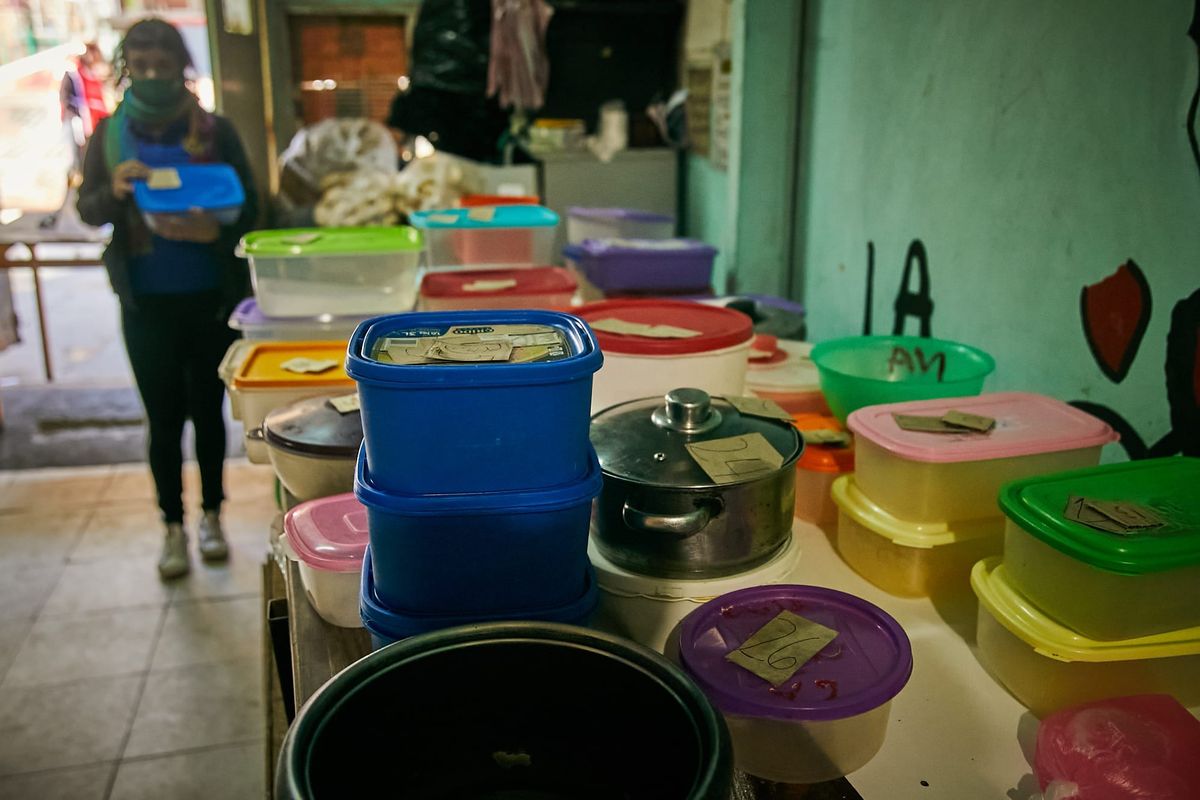](https://www.opendemocracy.net/es/argentina-baja-pobreza-milei-recortes-datos-ollas-comunitarias-comedores-infancia/)
Apenas dos meses después, Milei dio un volantazo. El 4 de septiembre, en un [discurso televisado](https://www.casarosada.gob.ar/informacion/discursos/51360-cadena-nacional-del-presidente-javier-milei-sobre-la-causa-malvinas?ref=opendemocracy.net), anunció duras sanciones contra la empresa británica Rockhopper Exploration y la israelí Navitas Petroleum, ambas operadoras del[ proyecto petrolero Sea Lion](https://www.navitaspet.com/project/sea-lion/?ref=opendemocracy.net) en la cuenca norte de las Malvinas, en virtud de una[ ley de 2011](https://servicios.infoleg.gob.ar/infolegInternet/anexos/180000-184999/181076/texact.htm?ref=opendemocracy.net) que tipifica como ilegal cualquier operación petrolera en esas aguas y establece sanciones para las empresas que participen en dichas actividades, así como cargos penales para ejecutivos y otras personas implicadas.
Además, Milei anunció nuevos fondos para una base naval en Tierra del Fuego y advirtió: “Cualquier avance adicional sobre las Islas Malvinas será considerado como una violación a nuestra seguridad nacional”. En los días que siguieron, emitió una ráfaga de[ comunicados oficiales](https://www.argentina.gob.ar/noticias/comunicado-oficial-numero-164?ref=opendemocracy.net), anunciando nuevas acciones, denuncias y castigos.
El jueves, el presidente remitió al Congreso un[ proyecto de ley](https://www.lanacion.com.ar/politica/el-gobierno-envio-el-proyecto-de-ley-de-defensa-de-la-soberania-de-las-islas-malvinas-a-la-camara-de-nid17092026/?ref=opendemocracy.net) con el fin de sustituir la ley vigente por otra más dura, “además de agravar las sanciones penales contra quienes ilegítimamente hacen negocios en nuestro territorio, sus accionistas y proveedores”. El proyecto de[ ley de 133 artículos](https://www.lanacion.com.ar/politica/el-gobierno-envio-el-proyecto-de-ley-de-defensa-de-la-soberania-de-las-islas-malvinas-a-la-camara-de-nid17092026/?ref=opendemocracy.net) extiende las prohibiciones a todo tipo de explotación de recursos naturales.
Pero, además, tiene propuestas que se parecen mucho a herramientas de persecución política y económica.
Establece un “sistema de seguridad nacional” con amplios poderes, entre los que se incluyen el manejo internacional de información de inteligencia, y un “registro público de personas y entidades vinculadas a actos de terrorismo y a su financiamiento”. Para la inscripción en esa lista bastaría con “la existencia de motivos razonables para sospechar que la persona o entidad se encuentra vinculada con los delitos mencionados”. Como mínimo, una definición abierta a todo tipo de arbitrariedades.
¿A qué se debe este cambio de rumbo repentino? Nada relativo a la disputa por Malvinas cambió entre el programa de radio y el discurso televisado.
Milei [afirmó esta semana](https://efe.com/mundo/2026-09-17/milei-islas-malvinas-trump-reino-unido/?ref=opendemocracy.net) que su nueva postura se “disparó” luego de que el presidente EEUU, Donald Trump, declaró a finales de agosto que la posición neutral de Washington respecto a las Malvinas [era “una de las muchas” que se estaban revisando](https://www.bbc.com/news/articles/cm2q1qgg542o?ref=opendemocracy.net).
Pero lo que realmente cambió es la utilidad política que Milei le da al pasado reciente de Argentina. Al parecer, el presidente se dio cuenta de las oportunidades que ofrece utilizar la memoria para obtener beneficios políticos en el presente.
Las cifras no le están saliendo bien al presidente. [Su índice de desaprobación se sitúa en el 58%](https://www.infobae.com/politica/2026/09/11/la-desaprobacion-de-milei-alcanza-el-58-y-crece-el-malestar-por-empleo-y-corrupcion/?ref=opendemocracy.net), superando al de aprobación en casi 20 puntos y con una valoración mayoritariamente negativa de la economía, el empleo y la gestión del gobierno, [hundido en escándalos de corrupción](https://www.dw.com/es/el-gobierno-de-milei-bajo-la-lupa-en-argentina/a-73814351?ref=opendemocracy.net).
Entre la instrumentalización de las Malvinas por parte de la vicepresidenta y la repentina postura nacionalista del presidente, una reivindicación nacional compartida se fracturó en una disputa interna sobre cómo se puede explotar la memoria.
Para Villarruel – [cuyo padre luchó en la guerra de 1982 y también participó en la represión militar de los opositores políticos](https://www.pagina12.com.ar/590312-quien-era-el-padre-de-victoria-villarruel-un-militar-que-se-/?ref=opendemocracy.net) –, las Malvinas han sido una herramienta para el revisionismo histórico mucho antes de que se uniera a la candidatura presidencial de Milei. De hecho, [Villarruel forjó su carrera defendiendo a oficiales militares](https://www.laizquierdadiario.com/Las-visitas-de-Victoria-Villarruel-a-Jorge-Rafael-Videla-uno-de-sus-heroes?ref=opendemocracy.net) acusados de crímenes contra la humanidad.
En julio de 2024, diputados del partido de Milei y Villarruel [visitaron](https://chequeado.com/el-explicador/que-se-sabe-sobre-la-visita-de-los-diputados-libertarios-a-represores-detenidos-en-ezeiza/?ref=opendemocracy.net) a varios militares encarcelados, entre ellos el exoficial de la Armada Alfredo Astiz, uno de los más notorios condenados por las atrocidades cometidas en el centro de detención de la ESMA, a quienes los legisladores describieron como “excombatientes contra la subversión marxista”.
El de Villarruel es un proyecto deliberado para transformar la forma en que la sociedad argentina recuerda el terrorismo de Estado de finales del siglo XX.
Mientras, el ataque del gobierno de Milei a los esfuerzos por hacer justicia ha sido sistemático.
El[ equipo del Ministerio de Defensa encargado de buscar pruebas documentales](https://www.pagina12.com.ar/725130-luis-petri-desmantelo-el-area-de-defensa-que-investiga-los-c/?ref=opendemocracy.net) para los fiscales que investigan esos crímenes fue disuelto en abril de 2024, y el ministro describió a los funcionarios despedidos como un grupo dedicado a la “[persecución y el macartismo](https://www.pagina12.com.ar/752385-la-justicia-le-ordena-a-luis-petri-preservar-los-archivos-de/?ref=opendemocracy.net)”.
Un[ decreto de 2025](https://argentina.fes.de/fileadmin/user%5Fupload/Publicaciones%5F%5FDocumentos/Bajo%5Fasedio%5FLas%5Fpoliticas%5Fde%5Fmemoria%5F%5Fverdad%5Fy%5Fjusticia%5Fcomp.pdf?ref=opendemocracy.net) privó al Archivo Nacional de la Memoria de su facultad para acceder a los expedientes de las Fuerzas Armadas y, a principios de 2025, la Armada ordenó una[ depuración de su propio archivo general](https://argentina.fes.de/fileadmin/user%5Fupload/Publicaciones%5F%5FDocumentos/Bajo%5Fasedio%5FLas%5Fpoliticas%5Fde%5Fmemoria%5F%5Fverdad%5Fy%5Fjusticia%5Fcomp.pdf?ref=opendemocracy.net), una orden que solo se detuvo gracias a un[ dictamen judicial de última hora](https://www.pagina12.com.ar/802421-otro-juez-impide-que-la-armada-destruya-sus-archivos/?ref=opendemocracy.net).
La estrategia es insidiosa: no se ha derogado formalmente ninguna ley, pero las instituciones que las defienden se han vuelto notablemente ineficaces.
En 2025, 60 personas recibieron una primera sentencia en[ procesos por crímenes contra la humanidad](https://www.fiscales.gob.ar/lesa-humanidad/crimenes-de-lesa-humanidad-1-208-personas-fueron-condenadas-y-247-resultaron-absueltas-desde-que-se-reiniciaron-los-juicios-en-2006/?ref=opendemocracy.net): nueve fueron condenadas y 51 absueltas, el[ mayor número de absoluciones en 20 años](https://www.tiempoar.com.ar/ta%5Farticle/el-2025-fue-el-ano-con-mayor-cantidad-de-absoluciones-desde-la-reanudacion-de-los-juicios-de-lesa-humanidad/?ref=opendemocracy.net), según la Fiscalía de Crímenes contra la Humanidad.
La ley punitiva sobre Malvinas que Milei quiere que el Congreso le apruebe, además, se engarza en una maniobra mucho más antigua. Como [ha señalado](https://www.cels.org.ar/web/wp-content/uploads/2016/06/IA2012-Debate-2-Lobos-con-piel-de-ovejas-malvineras.pdf?ref=opendemocracy.net) el Centro de Estudios Legales y Sociales (CELS), “desde el final de la guerra, las Fuerzas Armadas y civiles afines se han ocupado de que ‘Malvinas’ funcione como escudo ante las críticas que sectores sociales cada vez más amplios hicieron a sus militares”.
En cada discurso del Día de las Malvinas, Milei [hace un llamado](https://www.infobae.com/politica/2024/04/02/milei-y-villarruel-homenajean-a-los-caidos-en-malvinas-a-42-anos-de-la-guerra/?ref=opendemocracy.net) a “una nueva era de reconciliación con las Fuerzas Armadas”, un mensaje implícito a los juicios por violaciones de derechos humanos de aquella dictadura que libró la guerra de 1982.
El desacuerdo entre Villarruel y Milei no fue sobre la validez de la memoria, sino sobre qué partes del pasado pueden extraerse para obtener beneficios en el presente.
Villarruel utiliza las Malvinas para blanquear la reputación de los militares; Milei, abandonando su postura de ‘dato, no relato’, ha descubierto que puede utilizar las Malvinas para avivar el fervor nacionalista y recurrir al autoritarismo cuando los datos económicos no entusiasman a nadie.
Los propios veteranos de las Malvinas reclamaron un enfoque más prudente. Días antes de la semifinal contra Inglaterra, la Federación de Veteranos de Guerra ‘2 de Abril’ [sostuvo en una declaración](https://www.infobae.com/deportes/2026/07/13/el-deporte-no-es-una-guerra-no-es-una-revancha-es-solo-un-partido-el-sentido-mensaje-de-los-veteranos-de-malvinas-antes-de-la-semi-argentina-inglaterra/?ref=opendemocracy.net) que el deporte no es guerra, que la soberanía se gana en los foros internacionales y que el grito de ¡Malvinas Argentinas! debería escucharse en las gradas como un ejercicio vivo de la memoria y no como una expresión de odio.
Irónicamente, las [importantes reservas de petróleo](https://observatoriomalvinas.legisrn.gov.ar/explotacion-de-crudo-en-malvinas/?ref=opendemocracy.net) que se esconden bajo el lecho marino que rodea las Islas Malvinas constituyen una metáfora de las opacas relaciones entre lo que parece estar ocurriendo en la superficie de los debates sobre la soberanía y el verdadero peso que estos debates ocultan.
### I study political messaging. Here's what is hurting Reform
URL: https://www.opendemocracy.net/reform-uk-nigel-farage-crypto-financial-scandals-polls-rating-fall-why-persuasion-uk/
Last updated: 2026-09-18T12:58:47.000Z
For many years it’s been something of a shibboleth in the political classes that Nigel Farage isn’t like other politicians and his political projects – UKIP, the Brexit Party, and now Reform UK – are held to different standards than the ‘mainstream’ parties. Negative stories just don’t seem to stick to them in the same way, their opponents grumble.
This different kind of scrutiny is in part to do with the kind of parties Farage has previously led, which have sought to make the political weather rather than take power, critique policy rather than produce it. This approach has been successful, with the slow burn of pressure applied by UKIP a key factor behind Brexit. But now Reform wants to play a different game: explicitly seeking to become a party of government – a government with Farage at its head.
Despite these aspirations, Reform has until recently maintained its ability to brush off negative stories. Having performed well at the 2024 general election, the party was able to capitalise on a diminished Tory party and a Labour Party at war with its leader to great success at the local votes in 2025 and 2026\. Even as its former Welsh leader, Nathan Gill, was sentenced to ten years in prison for accepting bribes from Russia as a member of the European Parliament in November 2025, Reform’s polling stayed steady. At the start of that month they were at 27%; at the start of December 2025, 26%.
But a look at the polls suggests the party’s shine appears to have begun to dull over the long hot summer. Farage’s unfavourability rating is as high as it has been this parliament and, per YouGov’s tracker, Reform’s rating in the polls has fallen by 5% from a high of 28% in early May.
This slump follows a [series of stories in the media about the party’s finances](https://www.opendemocracy.net/can-reform-survive-its-summer-of-scandal/). First was scrutiny over a £5m gift to Farage from crypto billionaire Christopher Harborne, followed by an alleged undeclared donation from convicted fraudster George Cottrell, and [reporting on the Montenegrin business interests of Cottrell and other figures linked to the party](https://www.opendemocracy.net/inside-reform-and-george-cottrells-world-in-montenegro/). Then there was an undercover sting that saw Reform advisers James Orr and Dan Jukes resign amid accusations of soliciting and concealing donations from abroad, and, most recently, two £32m donations promised to the party by Harborne and Ben Delo, another crypto billionaire.
In all instances, Reform, Farage and the individuals involved have denied any wrongdoing. Yet the party’s fall in the polls is clear – and aligns with our own findings on Reform. At Persuasion UK, a research and polling organisation, we aim to understand the public opinion that informs headline polling numbers, including through extensive message-testing to determine what does and doesn’t build support for the UK’s major political parties. Reform’s image among target voters, we have found, is damaged by messages foregrounding any appearance of self-enrichment or financial malfeasance.
Our testing found reports highlighting Farage’s involvement with Bitcoin, his crypto venture with former Conservative chancellor Kwasi Kwarteng, and donations from ultra-wealthy crypto barons – especially where the stories also noted the volatile, get-rich-quick nature of the cryptocurrency industry – sank Reform by three or four points among swing voters, who are essential to win over if you wish to turn from a pressure group into a party of government. The party’s core voter base was largely unaffected.
As we have found in testing on all parties, the most effective messaging is that where the dots are joined up; inert statements about actions are rarely effective, but become more so when properly contextualised. In Reform’s case, this means drawing a direct line between the donations it has received to the party’s policies – such as a pledge to make Britain a crypto-hub. For impact, it’s important to indicate that a message does not just float alongside the party but influences its behaviour and preferences.
While enrichment and crypto are not the only issues that can generate a negative impression of Reform for voters, there is a distinct pattern showing they cause damage. Why? We think this is because they undermine the party’s key claims of being against, not part of, the elite, and doing things differently from other politicians. (On a similar theme, stories about the party’s support for fox hunting are also damaging.)
A helpful comparison comes from Labour’s coalition of voters and potential voters, which are divided on migration. We have found messaging about the government’s ‘successes’ in reducing small boat crossings is not particularly effective in securing votes, as the part of the coalition that is concerned about migration doesn’t trust the party on the issue, and, as you might expect, the part that is not already animated by it, doesn’t become so through this messaging.
On the other hand, Reform’s coalition is broadly united on cultural issues, meaning attack lines that paint the party as too extreme on migration have mixed results; its strong stance on this issue is part of what has appealed to these voters and they are unlikely to be put off by suggestions that it is too draconian. As its target base is more likely to be divided on economic issues, attack lines about support from crypto billionaires are more damaging to the party.
That Reform is weaker when the conflicts are economic – including stories about its own finances – and stronger when they are cultural is apparent in other work we have done on ‘Reform-curious Labour voters’ – that is, those who previously voted for the government but could swing to back Farage’s party. Such voters are a fairly small section of Reform’s coalition, but important to winning the 326 seats necessary to form a majority government at the next election.
These people are significantly to the left of the median Reform voter on issues such as wealth taxes, regulation on employers and landlords, and, crucially for this discussion, whether it is good for Britain to have more millionaires and billionaires. When presented with the statement, “Britain having more millionaires and billionaires would be a bad sign for everyone else – they are probably getting rich at other people’s expense”, 30% of 2024 Reform voters agree, compared to more than 50% of the Reform-curious Labour voters.
We know why this summer’s stories have sunk Reform’s poll ratings, then. Whether continued coverage or new revelations will have an ongoingly deleterious effect, or whether – and where – we hit a point of pricing in, where these stories fail to engage further, remains to be seen.
### ‘Silence is not neutrality’: Organising against the far right in Saxony-Anhalt
URL: https://www.opendemocracy.net/silence-is-not-neutrality-organising-against-the-far-right-in-saxony-anhalt/
Last updated: 2026-09-17T10:54:15.000Z
Before the election, researcher Christin Jänicke kept returning to a piece of advice from an East German activist who lived through the far-right violence of the 1990s: “Keep going, don’t let them wear you down.”
Jänicke found herself returning to these words after the far-right Alternative für Deutschland party won this month’s election in the eastern state of Saxony-Anhalt with 43.8% of the vote. Having fallen short of a majority, the party is still seeking support from other parties or politicians to form a government.
Since the vote, there have been demonstrations, messages of solidarity and calls to keep fighting for rights. But, Jänicke said, there is also “powerlessness and fear” – not only of what may come next, but of what many people are already experiencing.
For Saxony-Anhalt’s migrant-led organisations and those they support, some of those fears are stark. “Do I still have a future here? Will my children be safe? Will I continue to be treated as an equal member of this society?” These are among the questions being heard by Landesnetzwerk Migrantenorganisationen Sachsen-Anhalt (LAMSA), a statewide network of migrant organisations.
Mina Jawad, who leads LAMSA’s work on democracy and participation, describes a mixture of “fear, anger, exhaustion and uncertainty”.
But the network is wary of depicting migrant communities only as victims. “People are organising, supporting one another and insisting on their place in this state,” she said. migrants are not outside German society looking in. We live with the same concerns about housing, healthcare, schools, wages, pensions and public services as everyone else.”
The problem, she argues, is that migrants are increasingly being blamed for problems they experience alongside everyone else. “Real social problems are left unresolved, while migrants, including second generation, are turned into scapegoats.”
## **When resistance becomes riskier**
Jänicke, a researcher at the WZB Berlin Social Science Centre whose work examines civil society responses to the far right, says the AfD’s increasing power changes the conditions under which resistance takes place.
“It becomes socially riskier for clubs, congregations and associations to draw a line against the far right,” she said.
That pressure becomes greater when far-right politicians gain power. A person may simultaneously be a neighbour, a member of the local club and an far-right official with influence over funding or other decisions.
The problem is particularly acute in eastern Germany, Jänicke argues, where activists face several pressures at once: confronting a strong far-right movement on the ground while also challenging stereotypes that dismiss the east as uniformly far right and allow the AfD to claim east German identity for itself.
LAMSA describes similar pressures. In smaller communities, Jawad said, speaking publicly against racism can carry a personal cost because people know one another and political positions are highly visible.
“But the answer cannot be retreat.”
Instead, organising often means less visible work: keeping advice services open, documenting discrimination, building local relationships and making sure people know they are not alone.
“Civil society is not an extension of government,” Jawad said. “We have an independent democratic role. If fundamental rights come under pressure, silence is not neutrality.”
## Beyond the demonstrations
Germany has seen enormous demonstrations against the far right in recent years, even as the AfD has continued to make electoral gains.
For Jänicke, that does not mean the protests have failed. “You can’t read off from the election result alone whether an action was successful,” she said.
Mass demonstrations can break a sense of paralysis, bring people into political action for the first time and create new alliances. “You no longer feel alone.”
But street protests are only one layer of resistance. “The actual normalisation mostly happens quietly, gradually, and often unnoticed,” Jänicke said – through decisions about a club membership, a donation or whether a far-right politician is invited to a community event.
That makes places such as sports clubs, congregations, volunteer organisations and local associations important political terrain. “You can actually do something yourself,” she said. “You don’t have to wait for the next election.”
LAMSA’s own organising points to a similar conclusion. During door-to-door canvassing, people spoke about poverty, loneliness, healthcare, pensions, deteriorating infrastructure and a sense that institutions no longer worked for them. “One of the most important lessons is that people need to be approached as citizens with real social concerns, not as ideological categories,” Jawad explained.
The answer, LAMSA argues, is neither to dismiss those grievances nor to accept the far right’s explanation for them. “The lesson is not to copy far-right language in order to compete with the far right. The lesson is to address the conditions that make scapegoating politically effective.”
Or, more concretely: “You cannot repair a broken road, secure a pension or staff a rural clinic by blaming migrants.”
## ‘Practical, not symbolic’
Both Jawad and Jänicke point to the importance of infrastructure: organisations, funding and networks capable of sustaining resistance long after a demonstration has ended.
For small or rural groups, Jänicke said, even basic resources can make a difference. A volunteer-run organisation may not have legal advice or a permanent meeting place. Sometimes solidarity from elsewhere means financial help; sometimes it means people from a larger city bringing equipment, organising an event or simply showing up.
“The costs of this engagement are not evenly distributed,” she said. Those already marginalised by “class, background or geography” often carry the greatest burden.
LAMSA says migrant-led organisations need “solidarity that is practical, not symbolic”: reliable long-term funding, legal protections against discrimination, access to decision-making and the ability to continue their work independently of changes in government.
That matters even more as the AfD moves closer to exercising institutional power in Saxony-Anhalt. For Jänicke, the challenge is therefore no longer simply stopping a marginal party from gaining ground. “It’s about protecting existing projects for diversity and against racism that already exist,” she said.
And the state itself, she argues, is not a neutral actor: it can protect civil society through funding and legal support or weaken it through cuts and delegitimisation.
LAMSA similarly warns against treating Saxony-Anhalt as an isolated problem. “What begins with the marginalisation of migrants does not end with migrants,” Jawad said. “When the equal worth of one group becomes negotiable, the democratic rights of everyone become less secure.”
### Hundreds of abuse victims arrested when calling for help, new data finds
URL: https://www.opendemocracy.net/domestic-abuse-victims-jail-theresa-may-conservatives/
Last updated: 2026-09-16T09:31:24.000Z
Domestic abuse victims in England and Wales are facing arrest when calling the emergency services for help, according to new data published by Women in Prison.
The charity asked more than 500 women in the criminal justice system about their experiences of domestic abuse, with nearly a third (29%) saying they were arrested when the police or emergency services were called to a domestic incident, even when they were the victim of abuse. The offence of assaulting an emergency worker, which was made a crime in 2018, was a major driver of arrests.
The report follows a groundbreaking [investigation](https://www.opendemocracy.net/en/domestic-abuse-victims-criminalised-tory-law/) published by openDemocracy last year, which revealed that at least 1,486 women accused of assaulting an emergency worker since 2020 had, at some point, been recorded as victims of domestic abuse. The figure is an underestimate, as only seven of England and Wales’ 43 police forces responded to our Freedom of Information request.
Now, Women in Prison’s new data confirms the extent to which domestic abuse victims are being criminalised when interacting with the emergency services, prompting concerns that women will be put off calling for help when suffering violence.
Mia (not her real name) was in an abusive relationship and called the police due to feeling unsafe in her home. When the officers arrived, her abuser claimed that she was acting violently towards him, leading to her being handcuffed and removed from the property.
During her arrest, Mia became distressed after hitting her head on the police car door. In response, the male officer told her that “you are not a victim”. Angry and upset that she was under arrest when calling for help, she spat at him, leading to her conviction for assaulting an emergency worker. “I literally lost my whole life because of this,” she said. “I would never call the police again for help; I’ve lost everything because of them.”
Women convicted of the violent offence struggle to access housing and work, and are at risk of losing their children. This was the case for Mia, whose children were taken into care following her conviction. Social services also cited that she could not protect her children from her perpetrator’s domestic abuse.
“When men get arrested they get taken away,” Mia said. “When women get arrested, they take the children away.”
Mia’s story is far from unusual. At an event in Parliament hosted by Women in Prison this week, the charity’s chief executive Sonya Ruparel revealed that its frontline workers are “saying this is now every woman in my caseload”.
Ruparel also praised openDemocracy’s reporting to an audience that included peers, academics, lawyers and frontline workers. “Protecting emergency workers and protecting vulnerable women are not competing aims,” she said.
[Hundreds of domestic abuse victims face jail for assaulting policeWomen who call police to help deal with abusive partners are being criminalised for assaulting emergency workersopenDemocracySian Norris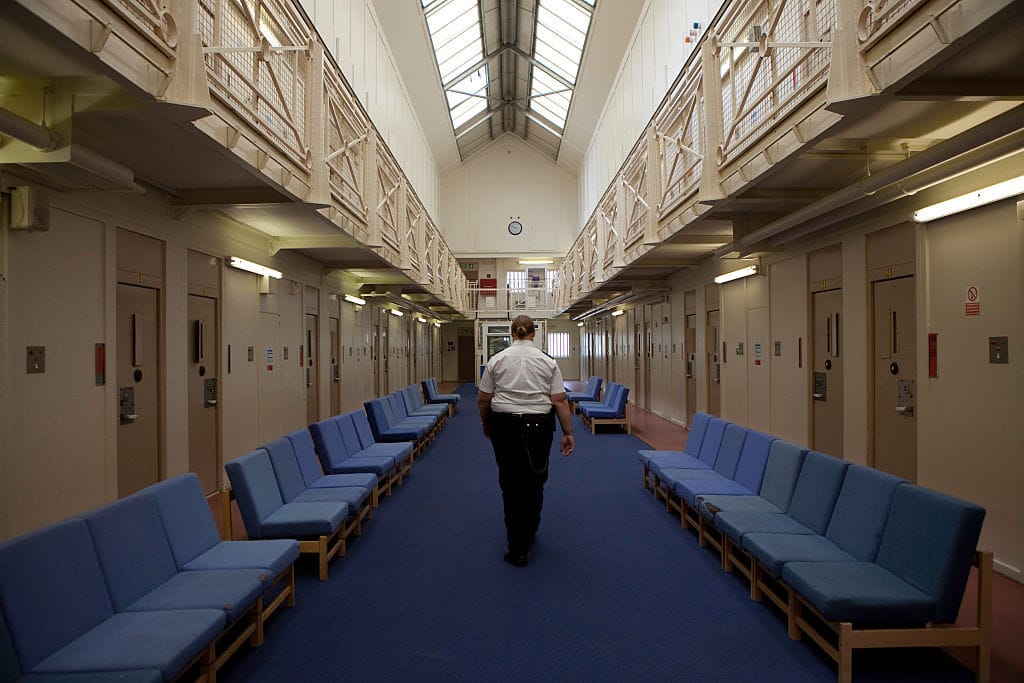](https://www.opendemocracy.net/en/domestic-abuse-victims-criminalised-tory-law/)
The event was held to bring attention to how women are being disproportionately drawn into the criminal justice system by the offence, which was introduced under Conservative prime minister Theresa May.
Women account for 29.7% of adults found guilty of assaulting an emergency worker, compared to 15% of adult offenders convicted of common assault. Assaulting an emergency worker now makes up more than half (52%) of all female prosecutions for violence against the person, and it is the second most indictable offence for women after shoplifting.
The disproportionality was noted in the equality impact assessment carried out when the Conservative government doubled the maximum sentence for the offence to two years in 2022\. However, MPs failed to interrogate why women were more likely to be arrested for this offence.
The government’s own analysis recognises that there has been no deterrent effect of introducing the offence or increasing the sentencing. In the case of abuse victims, this is because the offending is not planned, but a response to trauma or feeling in danger, and violence.
Women in Prison recommends that police introduce vulnerability screening processes to ensure women arrested for the offence are assessed by a domestic abuse specialist before any charging decisions are made.
The charity is calling on the government to act on recommendations in the recent Independent Sentencing Review and commission a study on the impact and consequences of the legislation on vulnerable and marginalised groups, such as women at risk of domestic abuse.
It is also seeking revised Crown Prosecution Service guidance to recognise when a domestic abuse victim is arrested for assaulting an emergency worker and guide prosecution decisions accordingly.
### 9/11 revisited + UK’s sovereign AI chief joins US AI company
URL: https://www.opendemocracy.net/weekly-email-120926/
Last updated: 2026-09-12T08:00:14.000Z
## **In this week’s issue**
- The face of the UK’s 'Sovereign AI' strategy becoming a lobbyist for Anthropic exposes the revolving door between Whitehall and Silicon Valley.
- 25 years on from 9/11, the paranoid, fundamentalist spirit of 2001 is being resurrected by right-wing tech billionaires armed with the internet.
- Authoritarian governments across Latin America are weaponizing the US "War on Terror" framework to militarise their states, crush dissent, and persecute political opponents.
- The far-right AfD’s historic surge in Germany threatens the political stability of the entire nation.
- Why saving democracy requires radically reinventing political practice to match the iterative, bottom-up structures of the tech companies shaping the future.
- The Trump administration has engineered a murky 100-year deal to seize a fifth of Venezuela's oil reserves, marking a return to 20th-century "regime compliance" imperialism.
- Climate scientist Dr. Ella Gilbert warns against trusting "tech bro" promises of unproven geoengineering fixes.
Is the War on Terror finally over? Did it ever end?
Twenty five years after two commercial jets slammed into the World Trade Centre in New York, we continue to live in 9/11’s long shadow: a world of constant surveillance, secret courts, cross-border renditions, water-boarding, torture, autonomous drone warfare and the normalisation of foreign military interventions. Apparently anything is acceptable as long as it is conducted with the aim of “fighting terror”.
This weekend, Americans will look back to mourn those who lost their lives in twin towers. But if 9/11 was a tragedy for America, it was a crisis that continues to extract a price in Afghanistan and much of the Middle East. What little global legitimacy the West had gained after the collapse of the USSR in 1991 was vapourised a decade later in 2001.
Today, US gunships are back in the Persian Gulf and US “precision weapons” continue to slam into schools and wedding parties,except the victims are now in Iran, rather than Iraq. The US continues to seek foreign oil, except this time they are looking south, and it is Venezuelans who must pay for the privilege of being ruled from Washington.
The next election is only three years away, and ****we are determined to** ****prevent the rise of the far right.** To do that, we want to recruit 500 new monthly donors by the end of 2026\. We're a third of the way there – but still have a long way to go
****Will you be part of the movement to fight the far right, with a monthly donation today?**
[Become a regular supporter ](#/portal/signup)
This week we bring you a snapshot of the world after 9/11\. Our founder Anthony Barnett revisits the moment the twin towers collapsed and how the moment that changed the world and informed openDemocracy’s future.
You can also read Manuel Tufró’s reflection on how “the war on terror” perpetuates itself by constantly seeking new targets – something which is on the mind of Germany’s, Patrick Kaczmarczyk, whose insightful article analyses how the tumult of the 1990s laid the grounds for the country’s modern far-right.Meanwhile, writer and philosopher Georg Diez writes about the strange new world of “Frontier Politics”, where democracy and technology seem increasingly incompatible.
To witness Diez’s thesis in action, do read Tom Darling’s incisive view on how Matt Clifford, the man tasked with developing the UK’s sovereign AI strategy, has decided his talents are better spent lobbying the UK government on behalf of the US AI giant, Anthropic.
9/11 also marks 25 years since openDemocracy came into its one as one of the first daily online independent publications. That’s 25 years of nurturing new ideas, conducting impactful investigations, and publishing inconvenient truths. If you value our contributions over the past quarter century, consider becoming a regular donor.
I don’t know what the world will look like in 2051, but I do hope we’ll still be fighting the good fight.
Have a great weekend
**Aman**
---
[Matt Clifford joining Anthropic makes a joke of the UK’s Sovereign AI StrategyBritish startups will now be competing against the UK’s best-connected AI lobbyist who was meant to be their champion against US tech dominance.openDemocracyTom Darling](https://www.opendemocracy.net/matt-clifford-joining-anthropic-makes-a-joke-of-the-uks-sovereign-ai-strategy/)
[Revisiting 9/11openDemocracy found its purpose in the need to make sense of the world after the collapse of the twin towers. Revisit our reportage from the time.openDemocracyAnthony Barnett](https://www.opendemocracy.net/revisiting-9-11/)
[The ‘anti-terrorist state’ is growing in power 25 years after 9/11The global war on terror, born from the ashes of the twin towers, perpetuates itself by constantly seeking new targetsopenDemocracyManuel Tufró](https://www.opendemocracy.net/25-years-on-from-9-11-the-anti-terrorist-state-is-gaining-ground-in-latin-america/)
[Germany’s far-right surge is not just about the EastThe AfD’s victory in Saxony-Anhalt has roots specific to eastern Germany. But the economic insecurity behind its rise is increasingly visible across the country.openDemocracyDr. Patrick Kaczmarczyk](https://www.opendemocracy.net/germanys-far-right-surge-is-not-just-about-the-east/)
[Frontier Politics: AI and the Crisis of the Democratic FormIf we want to save democracy, the institutions of tomorrow must be shaped in accordance with the possibilities of tomorrow.openDemocracyGeorg Diez](https://www.opendemocracy.net/frontier-politics-ai-and-the-crisis-of-the-democratic-form/)
[Inside the US Takeover of Venezuelan OilNine months after the US abducted Venezuelan President Nicolás Maduro, a highly unusual oil deal has surfaced.openDemocracyAman Sethi](https://www.opendemocracy.net/inside-the-us-takeover-of-venezuelan-oil/)
[Trump’s Venezuela: Why seek regime change if you can get regime compliance?The Trump administration’s forcible appropriation of a fifth of Venezuela’s oil reserves is worse than the theft of national assets in post-Soviet Russia.openDemocracyAman Sethi](https://www.opendemocracy.net/trumps-venezuela-why-seek-regime-change-if-you-can-get-regime-compliance/)
[Tech bros will tell you that geoengineering will save us, it won’tAs the latest UNEP reports we will blow past 1.5°C, we must prioritise solutions that work, rather than focusing on complex, unproven technologiesopenDemocracyElla Gilbert](https://www.opendemocracy.net/tech-bros-will-tell-you-that-geoengineering-will-save-us-it-wont/)
---
## Weekly Poll
### 25 years after 9/11, what do you think is the biggest security threat?
| [Vote and see results →](https://www.opendemocracy.net/weekly-email-120926/?jump=poll) |
| -------------------------------------------------------------------------------------- |
---
[](https://www.tickettailor.com/events/placeforhope/2391338?ref=opendemocracy.net)
Join us for an exclusive **live recording** of *Changed My Mind*, the podcast that explores the thinking behind serious shifts of opinion. This panel discussion will feature Rosemarie Mallet, the bishop of Croydon, Aman Sethi, the editor-in-chief of openDemocracy, Alison Goldsworthy, the CEO of The Depolarisation Project, and Laura Osborne, the managing director of WPI Economics. You can get a flavour of *Changed My Mind* by listening to the [podcast](https://www.opendemocracy.net/cmmpod) or via this [article](https://www.opendemocracy.net/leor-zmigrod-political-violence-self-defence/).
[Join us live](https://www.tickettailor.com/events/placeforhope/2391338?ref=opendemocracy.net)
---
## Reader Comments
openDemocracy receives so many carefully considered messages about our work that it seems a shame to keep them to ourselves.
These comments are edited for clarity, accuracy and length, and are not a reflection of openDemocracy's editorial position.
> Do Gullis and his ilk take us for fools who will fail to spot the absence of declarations of interest? Whether in paid or voluntary positions, even pre-Nolan it has been second nature for most of us, surely, to declare even a potential interest, to desist from speaking or voting and to offer to leave the room.
>
> That was the situation yesterday, is so today and will remain so for all our tomorrows.
>
> Is it perhaps a case of projecting on to all of us their own self- interested view of the world, so making it for them inconceivable that anyone else would disapprove or find it otherwise than the norm?
**Mal | Re:** [**Ex-Tory MP-turned-Reform councillor landed lobbying job after defecting**](https://www.opendemocracy.net/ex-tory-mp-turned-reform-councillor-landed-lobbying-job-after-defecting/)
---

Polish Deputy Premier Mieczyslaw Jagielski leaves the Lenin Shipyard in Gdansk after signing the final agreement between the Polish government and striking workers | LEHTIKUVA/AFP/Getty Images)
## This week in history
**The Gdańsk Agreement and Solidarity • 31 August 1980**
On 31 August 1980, the Polish government signed the Gdańsk Agreement with striking workers, recognising the right to form independent trade unions, marking the first such recognition in Soviet-bloc history. The Solidarity movement that emerged was at its peak a union of ten million people, more than a third of Poland's adult population. Its example, its methods, and its ultimate partial defeat contain lessons we can all learn from.
[The victory and defeat of SolidarnoscThe images accompanying this article come from the Wyspa Institute of Art exhibition “Dockwatchers” inside the Gdańsk shipyard. From the exhibition catalogue: “With ‘Dockwatchers’, happening alongside the official celebrations of the 25th anniversary of Solidarność, Wyspa targets beyond officially represented history. It asks about oral histories, cracks in memories, abandonedopenDemocracyNeal Ascherson](https://www.opendemocracy.net/en/solidarity%5F2806jsp/)
---
## What we're reading
### [**I brought the war with me, Lindsey Hilsum**](https://uk.bookshop.org/a/8711/9781784745349?ref=opendemocracy.net)
I don’t believe in heroes but if I had one, it would be Lindsey Hilsum, whose brave journalism from the world’s wars is always unflinching, honest, and tells the human stories in conflict. In 2024 she published this beautiful anthology that brings together poetry and her own stories from the frontlines. The poems are not necessarily about war, but the emotions they evoke are reflected in the stories she tells from Syria, Iraq, Rwanda, Palestine, Afghanistan and other places of intense heat and suffering. Rather than take a chronological approach, Hilsum organises her poems and stories thematically – looking at love, courage, fighters.
I wanted to share her book today, because this week marks the liberation of Izium, Ukraine, which was occupied for six months by Russian forces in 2022\. Hilsum opens the book at a bombed out apartment building outside Izium which she visited straight after the liberation, and where I went a year later. When I read the poem she chose, James Fenton’s [A German Requiem](https://www.poemhunter.com/poem/a-german-requiem/?ref=opendemocracy.net), it helped me express the horror and difficult emotions of how it felt to stand there: *It is not the houses. It is the space between the houses./It is not the streets that exist. It is the streets that no longer exist.* I read those opening pages, and I felt so grateful for her book.
*Sian Norris, senior investigations reporter*
---
### ¿Es Venezuela nuestro canario en la mina de carbón?
URL: https://www.opendemocracy.net/es-venezuela-nuestro-canario-en-la-mina-de-carbon/
Last updated: 2026-09-11T15:00:51.000Z
### En la edición de esta semana:
- Así se fraguó el acuerdo Trump-Delcy de apropiación del crudo venezolano
- La guerra antiterrorista que nació el 11 de septiembre de 2001 se reproduce buscando siempre nuevos blancos
- El ascenso de la ultraderecha en el este de Alemania cuenta una historia de desengaño social y económico
- **Esta semana en la historia**: 11 de septiembre de 1973 - Golpe de Estado en Chile
En nuestra última newsletter publicamos una indagación reveladora de cómo un país sometido a sanciones – Venezuela – acude al trueque cuando no puede usar el sistema financiero internacional ni tener cuentas bancarias ni disponer de activos situados fuera de sus fronteras.
Esta vez, nuestro editor en jefe, **Aman Sethi**, entrevista al autor de ese análisis, el **economista Francisco Rodríguez,** para entender el opaco acuerdo petrolero entre Washington y Caracas, un contrato del que todos hablan pero nadie quiere publicar.
Este acuerdo, que cada día que pasa se parece más a una farsa, se presenta para Donald Trump como un éxito fácil y rápido (Venezuela tiene que entregar a EEUU 40.000 barriles diarios de crudo a precio de costo).
Sin librarse de la dictadura, Venezuela pasó a ser además un protectorado dr Trump, que este querría replicar en otros lugares. Así, Venezuela puede ser el **canario en la mina de carbón**, anticipando el futuro de sus vecinos de América Latina. Pero ese futuro, advierte Rodríguez en la entrevista, está escrito en el pasado de las relaciones hemisféricas.
[El gran robo del petróleo venezolanoUna parte del petróleo venezolano se entregará a Washington a precio de costo en virtud de un contrato que nadie quiere publicaropenDemocracyAman Sethi](https://www.opendemocracy.net/es/venezuela-eeuu-petroleo-delcy-rodriguez-donald-trump-betancourt-maduro/)
Cuando cayeron las Torres Gemelas, el **11 de septiembre de 2001**, una de las primeras historias que me tocó traducir y editar era sobre los habitantes de Nueva York que no querían respirar el aire contaminado, mientras las autoridades los instaban a volver a la Zona Cero (la zona del desastre) en el Bajo Manhattan.
El reclamo se volvió crónico, lo mismo que las enfermedades y las muertes. Solo ahora la alcaldía de Nueva York reconoce, con la desclasificación de documentos, que supo desde el primer momento de los peligros para la salud que implicaba reabrir el Bajo Manhattan, pero aun así siguió adelante.
En cierto modo, las explosiones de los **ataques terroristas del 11S** siguieron matando gente casi hasta ahora. De modo análogo, la caída de las torres dio lugar al “estado antiterrorista”, una arquitectura doméstica e internacional de guerra, persecución, perfilamiento religioso y racial, torturas, muertes y doble rasero legal que dura hasta nuestros días.
El artículo de **Manuel Tufró**, director de Justicia y Seguridad del Centro de Estudios Legales y Sociales de Argentina, explica el desarrollo de ese estado antiterrorista, dentro y fuera de EEUU, y cómo América Latina se lanzó también en los últimos años a reconfigurar sus leyes e instituciones para hacer del combate al terrorismo un objetivo supremo – aunque no hubiera terrorismo.
[El Estado antiterrorista se agiganta 25 años después del 11SLa guerra antiterrorista global, que nació en las ruinas de las torres gemelas, se reproduce a sí misma buscando siempre nuevos blancosopenDemocracyManuel Tufró](https://www.opendemocracy.net/es/s11-ataques-terroristas-torres-gemelas-estado-antiterrorista-ny-marco-rubio-america-latina/)
El domingo, **Alternativa por Alemania (AfD)**, un partido que reivindica el nazismo, ganó las elecciones en una de las regiones del este. **Patrick Kaczmarczyk**, investigador de la Universidad de Mannheim y consultor de la agencia de la ONU sobre comercio y desarrollo, no se detiene en los aspectos ideológicos, sino en el declive económico, la inflación y los problemas de vivienda detrás de este vuelco que afecta a todo el país.
[Ultraderecha en Alemania: el auge de AfD ya no es solo del esteLa victoria de AfD tiene raíces propias en el este de Alemania, pero la incertidumbre económica detrás de su ascenso es cada vez más visible en todo el paísopenDemocracyDr. Patrick Kaczmarczyk](https://www.opendemocracy.net/es/alemania-elecciones-ultraderecha-afd-auge-este-deterioro-inflacion/)
## Esta semana en la historia
**Salvador Allende • 11 de septiembre de 1973**
Más de 50 años después de muerto, Salvador Allende, el primer presidente izquierdista elegido democráticamente en América Latina, sigue siendo un héroe de la democracia y de la izquierda en Chile, en la región y en el mundo. La semana pasada, otro mandatario elegido en las urnas, el argentino Javier Milei, se refirió a Allende de forma insultante y elogió el sangriento golpe militar que puso fin a su gobierno, al que el chileno resistió con su propia vida.
[Chile, 50 años del golpe militarTras derrocar al presidente Salvador Allende y tomar el poder por las armas en septiembre de 1973, la dictadura encabezada por Augusto Pinochet permaneció 17 años al frente de Chile. Este ciclo de entrevistas a personas autorizadas de alto nivel busca evaluar y comprender lo que ha pasado en ChileopenDemocracyAndrés Bernal Sánchez](https://www.opendemocracy.net/chile-50-anos-golpe-militar/)
Gracias por leernos y que tengas un gran fin de semana.
**Diana Cariboni, Editora de América Latina**
[Suscribite a nuestra newsletter](https://www.opendemocracy.net/en/newsletters/opendemocracy-espanol-democraciaabierta-newsletter-email-espanol/)
[¡Queremos conocer tu opinión y tus ideas! Escribinos](mailto:info.demoabierta@opendemocracy.net)
*democraciaAbierta es un medio de noticias independiente y sin fines de lucro, que se especializa en un periodismo de investigación de alta calidad que cuestiona al poder, inspira cambios y fomenta la visibilidad y el liderazgo de grupos subrepresentados en los medios. Con sede en Londres, tenemos equipos de trabajo en tres continentes.*
### Trump’s Venezuela: Why seek regime change if you can get regime compliance?
URL: https://www.opendemocracy.net/trumps-venezuela-why-seek-regime-change-if-you-can-get-regime-compliance/
Last updated: 2026-09-11T09:41:33.000Z
Nine months after United States special forces abducted Venezuelan President Nicolás Maduro and his wife in an early morning raid, the US claims to have struck a highly unusual deal to take control of about a fifth of Venezuela's oil reserves, or about 65 billion barrels, over the course of a 100-year lease period.
The deal, which is structured through the US Department of Defense (which the Trump administration calls the Department of War), has no recent precedent. While the United States has often engineered military and covert regime change in countries around the world to appropriate resources, the Trump administration's actions in Venezuela recalls the sorts of 20th century US interventions that lead to a series of revolutions in Latin America and also Iran in the 1950s.
To make sense of this moment, I caught up with Francisco Rodríguez, a Venezuelan economist, a senior research fellow at the Center for Economic and Policy Research, and professor of public and international affairs at the University of Denver. Rodriguez is also the author of four books, including his latest, The Collapse of Venezuela: Scorched-Earth Politics and Economic Decline.
The following is an edited excerpt of our interview. You can listen to the whole interview on our [*In Solidarity*](https://pod.link/aHR0cHM6Ly9mZWVkcy5hY2FzdC5jb20vcHVibGljL3Nob3dzLzY2YmYzYmU4NDcxNTFhYTFkM2M4ZjBhZQ/episode/NmFhMTI3Mzk3Mjc1ZGFiZTk1ZDc0NTE2?ref=opendemocracy.net)podcast.
**Aman Sethi: I'd like us to start with just getting your reactions to this, this oil deal. Specifically, if you could just talk through what you know so far, what this means, and whether this is how oil deals are normally done in Venezuela.**
**Francisco Rodriguez:** Okay, a bit of the background. Venezuela had been under oil sanctions from the US between 2019 and this year. And the US after it carried out a military operation to capture Nicolás Maduro, it decided that it was going to try to forge, let's call it a "cooperative relationship," with the government of Delcy Rodriguez, who was Maduro's vice president.
And what the US has been trying to do is sell the idea of ‘Now we're gonna help the Venezuelan oil sector recover’. Venezuela is sitting on the world's largest oil reserves , but it produces just 1% of world oil output.
January of this year just a few days after the military operation to take out Maduro, President Trump actually calls a lot of oil industry executives to the White House, says, "I want you to invest in Venezuela." Many of these executives say, “We're not so sure.” One of them actually says this country is really uninvestable under current conditions. So he gets a lukewarm reaction.
So now we have the announcement of this plan, and this plan — it promises that Venezuela is going to get $100 billion in oil investment. And that's really important here, because that's what most experts have said is needed to get Venezuela to produce what it was producing before the sanctions back in 2016 which was around two and a half million barrels.
Now it's producing roughly one \[million barrels per day\]. It's increased a bit to 1.2 million. So you want to get that up by 1.5 million barrels. You need 100 billion to do that. That sounds fine. Actually, that sounds great. If I'm Venezuela, and I'm told, "Hey, here's the $100 billion you can put into your oil industry, and you'll get more tax revenue. We'll benefit." I say, "Where do I sign?" So that part looks good.
But then let's look at it in more detail because President Trump actually says two things almost in the same breath. He says Venezuela's gonna get $100 billion of investment in the oil sector, but this is not going to cost a dime to US taxpayers.
**Okay, wait.**
**So the US is not gonna pay for it. Venezuela is broke, so Venezuela is not gonna pay for it. Who is going to pay for it? Well you would think oil companies, large oil companies, right? Chevron, Exxon, Conoco. But they're not here. They're nowhere in the deal. No, they don't wanna be part of this.**
**So where are these 100 billion going to come out of ?**
Here's where it gets really interesting and really murky. These $100 billion are going to be put out by a Barbados-based company that was created just a few years ago. It's a company owned by a businessman with not the best reputation in the world. His name is Alejandro Betancourt. He's best known for getting billions of dollars in no-bid contracts from the Chavez administration to build electrical plants, at least one of which was never completed. And he's offering to the US a thirty-five percent stake in his company.
So the US Department of War is going to now own thirty-five percent of that company. And it's also going to have the right to purchase at cost twenty percent of the company's output. So that's the deal.
The White House yesterday put out a statement saying that Venezuelan barrels of oil are going to start flowing into US reserves as of November. And basically, President Trump had already said that they were going to replenish the US Strategic Petroleum Reserve with oil that was a gift from Venezuela.
That's the word that President Trump used.
So that means that probably as of today you will have Venezuela sending 40,000 barrels of oil to the US at cost. That's a loss of about $500 million a year for Venezuela.
What is Venezuela getting in return? A promise that somebody, someday, is going to come up with $100 billion is going to be willing to lend them to Mr. Betancourt so that he can invest in the oil sector.
This deal is all wrong. This is the most impoverished country in Latin America.
**How legal is this? Like, is this from a Venezuelan perspective, from an international contracts perspective?**
There's a set of legal objections to it. Now of course the problem is that in developing countries Venezuela ranks 146 out of 146 countries in terms of the rule of law.
Asking what is legal or not in a country that has no rule of law, this is almost like a theological question, really.
Because when we think about the law, laws are interpreted by courts, but the courts are controlled by the government. Article 150 of the Venezuelan Constitution says that the National Assembly has to approve the deal.
The National Assembly is 90% controlled by the government, so they could have taken the deal before the National Assembly. They didn't. Why didn't they do it? Because then they'd have to publish the contract, but they don't want to publish the contract. Nobody wants to publish the contract.
There's a set of other problems I could go down out of all of the different laws that have been violated. But one important one is Article 39 of the country's hydrocarbons law states that you have to assign contracts in the oil sector through public competitive bidding. There was no public competitive bidding here.
In fact, a government vice-minister recently said, "The thing is that we're under an economic emergency decree that we declared after the earthquake." Really? You're gonna use the earthquake as an excuse to give away 20% of the country's reserves?
**What does it smell like to you?**
It smells like Trump essentially said, "I wanna do something about gas prices before the midterm and I wanna claim that I'm getting some of this oil from Venezuela. So I want some of that oil from Venezuela to come in and for me to say that I'm putting it into a strategic reserve, and this is bringing down oil prices. I wanna do that before the midterms. Sign me a deal."
I think that's essentially all there is. But from the standpoint of Venezuela, Venezuela has just given away 20% of its reserves to a company owned by a very shady figure.
After the invasion of Iraq when you had the occupation there was a public bidding round for the rights to exploit Iraqi oil. This was a competitive bidding process, it was transmitted through public television, so Iraqis could actually see the bidding taking place in real time.
This process was transparent. This is the complete opposite. This firm is going to get, over the life of the concession, the equivalent of $303 billion.
That's the, that, that is what the private firm gets in profits.
That is what it's going to get. That is the equivalent of three years of Venezuelan GDP. 65 billion barrels. Venezuela has a huge level of reserves. The Russian privatization program of 1996 was for 20 billion barrels of oil.
This is more than three times the size. And in Russia, which was a steal, which was horrible, there was a free-for-all. That's what led to the rise of the Russian oligarchs. They at least had the decency to rig an auction. Here, there was no auction. They didn't even pretend.
So this is not going to end up well. If you're handing over these massive resources to connected political insiders this is not helping create a democracy. This is consolidating a crony capitalist oligarchy.
**In your book you've likened studying the Venezuelan economy to the equivalent of being a rare disease specialist. For all of us outside who honestly don't know very much about Venezuela, what is your analysis of the regime in power right now?**
**What is the point at which the people just say, "We're done with this regime," and they just get swept out?**
**We can understand the American motivations. We can understand Delcy Rodriguez is some kind of captive, but what about the entire country that sits below her? How are people taking this?**
That's a great question. And it forces one to think about how we got here. So Venezuela got here after about a quarter of a century of very deep polarization. Hugo Chávez, who came into power in 1999 was a populist and popular politician.
And, like many populist politicians, his message was, “Throw the bums out, people are tired of the old politics. You need change. You need to refound the republic.” And that convinced a lot of people. He was able to get a clear electoral mandate. He reformed the constitution.
He did what many leaders who have at least an authoritarian bent will do in those circumstances, which is say "We really need to change this, give more power to me." So he really made the Venezuelan presidency all-powerful in that constitutional reform. And that really shaped Venezuelan politics over the next quarter century because you created a winner-take-all political system in which the opposition was completely out of anything.
So you ended up in this, this politics which was very polarized between the government and the opposition. Now, Chávez did some things that a lot of Venezuelans liked at the time. He was definitely somebody who sought out ways to let very large disadvantaged majorities which had been excluded from Venezuelan social, economic, and political life have a stake.
He also did a lot of things very badly.
He got a huge oil boom. He spent a lot of that money. He ran the country into debt. He hired people like Alejandro Betancourt to build electrical plants, some of which were never built. So the country lived through this deep polarization. And then Chávez died, and then he leaves Maduro. Then the economy starts doing poorly. Then he \[Maduro\] becomes more repressive because the opposition is really going after him. And then the opposition goes to the US, and the US says "Let's get tough on this, let's impose sanctions."
They hurt the country's oil industry. It leads to a huge decline in the country's oil production. So they, they effectively create an economic catastrophe. So you end up in this trap, which is what in my book I call the trap of economically destructive political conflict.
And the whole-- the puzzle that I try to explain in my book is, how is it that you get an economy to collapse, to lose seventy-one percent of per capita income? This is the equivalent of three consecutive great depressions without a war. And my answer is that this happens because there's a moment in which this politics becomes so destructive that both sides are essentially playing scorched earth.
So you end up having this battle for the country that turns the economy into a political battlefield, and that's where it collapses.
Then all of a sudden Trump decides to send in US forces, captures Maduro, and decides that he's going to run the country with the people who are there. What we know and what he has said literally is that he's put a gun to Delcy Rodriguez's head. We also know that Delcy Rodriguez is complying with everything that Trump is asking for.
Is she doing it because she has a gun to her head, or is she doing it because this actually works in her favor and she can stay in power? Probably both.
**I have, well, several questions from this, but, but let's start with the question of sanctions. It's possible for many governments to make many bad decisions and to do bad things to the economy.**
**But there is a very specific kind of bad thing that happens once sanctions are imposed, right? When you're cut out of the US financial system, for example, that is a very, very particular form of economic punishment.**
**What is your assessment of the role that, that sanctions have actually played here? Because one thing that I'm struggling with is this narrative of "Venezuela let its oil industry completely collapse, and now we're gonna fix it, and now everything will be fine". I'm struggling with the dissonance, but maybe I don't know enough.**
That's a very interesting question. It's a very important question. It's not an easy question to answer because well, you have many factors going on, and definitely there was a lot of mismanagement.
There were poor economic policies, so you have to disentangle the effects of those poor policies from the effect of sanctions.
My estimate is that approximately half of Venezuela's economic contraction during its collapse period between 2012 and 2020 can be attributed to sanctions.
So in other words, this is a country that in the absence of sanctions would have gone through a major crisis. It would have seen, by my estimates, GDP decline by thirty-six percent, but not by seventy-one percent. And in fact, that thirty-six percent decline that would have occurred in the absence of sanctions actually puts it in line with other collapses generated by similar episodes of protracted exercise of bad policies particularly in Latin America.
And all of them have a very similar pattern. You have a commodity-dependent economy. You have a period in which deep imbalances accumulate. You start getting high levels of debt.
The country starts going into a current account deficit. You start seeing high levels of capital flight, and then you get a decline in the price of the commodity like what you got between 2014 and 2016\. And there you get this deep economic crisis.
That is what happened in Venezuela between 2012 and 2016, which were the first three years of Maduro in power. In 2017 something different starts happening. And you start seeing that markets are expecting that the Venezuelan economy will begin to recover.
Because oil prices had fallen from $100 to $30, and then they had recovered to around $50, $60\. What history teaches us is that the economy stabilizes and then begins to recover in that situation. That's not what happened in Venezuela. In Venezuela, the economy continued shrinking at an accelerating rate. And the difference was that was the year in which sanctions began to be imposed.
So yes, sanctions did deep damage to this economy. These sanctions didn't come out of the blue. These sanctions were part of a political strategy by the country's opposition that was reacting to things that Maduro was doing which were very bad and were very evil and very authoritarian, and said, "We need to up the ante here by doing what we can do. We have allies in the US, that can help us start taking Maduro's control from the country's purse strings away."
So in 2019, the Trump administration decided to recognize Juan Guaido, an opposition legislator, as Venezuela's legitimate President. This is something that the US had never done before. The US had never recognized somebody with no de facto control over the territory as the President. And what happened as a result of that was that all of the country's offshore assets, including all of the assets of PDVSA, the state-owned oil company, were transferred to the management of Guaido or his appointees. What that meant is that the country no longer had access to its funds. These funds were essentially handed over to the opposition. It made it impossible for the government even to carry out the most basic economic policy.
There's nothing in politics that is for free, right? So you acquire a commitment when you have an external power like that, that is helping you. And that means that you can't question what that external power is doing in your country because you essentially live off of them, right? And this, by the way, was literally true. The Venezuelan opposition — the Venezuelan National Assembly elected in 2015, whose term ended in 2020 — had around 80 opposition legislators who were getting paid monthly salaries out of an account in the Federal Reserve. So the US could literally cut the salaries of the opposition politicians if the opposition decided to go against it.
This is the typical Faustian bargain, right? You say, "I'm willing to do anything if you will help me regain power," for good reasons.
But the reality is that these Faustian bargains don't end well.
**I'm imagining an Indian opposition leader touring Europe and America and asking for support to become the Prime Minister of India, and they would be, you know, laughed out of the country.**
**I understand that the dynamics are different but it does strike me as an unusual theory of power. In your book, you also talk about the fact that while Venezuela is shown as an exception to kind of ordinary politics, it in many ways is almost like a weather vane that shows you where politics is going.**
**But what does this moment in Venezuela tell us if we say Venezuela is, in some ways, the country of the future? What is it telling us now, especially in light of this deal?**
I would love to be wrong but I do think that Venezuela might be initiating a model that the US is probably going to try to imitate in other countries.
President Trump actually considers Venezuela a success story, and he's been trying to produce similar outcomes in Cuba and Iran. And there have been negotiations between Trump administration officials and officials in those countries where they're proposing this type of deal. The type of deal is you stay in power, the opposition doesn't come to power but you change completely the way in which you're doing things, and you follow our orders essentially.
And I want to emphasize that this isn't a government that rules the country with US support. This is a government that is carrying out the orders of the US . This is a government that has carried out military operations with US troops and Venezuelan troops in Venezuelan territory. It recognized Israel. And three days after Marco Rubio announced that the US was launching a campaign to dismantle the International Criminal Court, Venezuela says, "We're leaving the International Criminal Court." The first Latin American country to do so.
So this has become the most dependable US ally in the region. And it's led to this thesis in Washington of, why seek regime change if you can get regime compliance? That's essentially what they're trying to do.
You were saying this looks like a somewhat of an odd concept coming from India and thinking about it in terms of the dynamics in that region.
I would say it's not that foreign in Latin America. But you have to dig a little bit into history to go there. What the US did in Venezuela was actually what the US did in a number of countries at the beginning of the \[20th\] century including Cuba, Dominican Republic, Haiti, Panama. It basically imposed protectorates in these countries.
The Cuban one is interesting because Cuba, the US kind of occupied and took control of after the Spanish-American War. And then what the US did is that it forced the Cubans as a condition for independence to accept into their constitution to grant the US a standing right of intervention.
So basically, if the US disagreed, if it took exception to any key decisions of the Cuban government, the US had the right to intervene militarily, and the US, in fact, exercised that right four times in the subsequent twenty years from the signing of that amendment, known as the Platt Amendment.
And one of the problems with that, it's no coincidence that it was precisely Cuba that saw the political movement that has been most antagonistic to the US emerge.
If you study the early 20th century in Cuba what you find is that Cuban politicians were acting very much in the way in which Venezuelan politicians are acting now
They understood that whoever was in power needed the support of the US. So they became politicians who were adept at lobbying Washington and at building political coalitions between Washington stakeholders to support them. And this means that they were not politicians that built a domestic political base, that were trying to answer the demands of their constituencies. So the protectorate regime, what it does is that it stifles institutional development in a way that basically doesn't let the institutions of a democracy emerge.
And of course, if you have an electorate that cannot express its grievances, cannot express its demands through the political system, a big part of that electorate is going to become very angry, and then you end up with something like the Cuban Revolution. I think that is a very distinct risk now.
It's a risk that we will enter into a pattern as a result of Washington's idea that it can run Latin American countries by remote control, that we're going to enter into a very similar political dynamics, which, in the end, is going to be bad for the region, but it's also going to be very bad for the US standing in the region.
### Así se fraguó el acuerdo Trump-Delcy de apropiación del crudo venezolano
URL: https://www.opendemocracy.net/es/venezuela-eeuu-petroleo-delcy-rodriguez-donald-trump-betancourt-maduro/
Last updated: 2026-09-11T13:08:27.000Z
Nueve meses después de que Estados Unidos secuestrara al presidente venezolano Nicolás Maduro, Washington afirma haber acordado con Caracas hacerse de una quinta parte de las reservas de petróleo de Venezuela.
Pero no se trata de un acuerdo comercial internacional al uso, sino estructurado a través de una empresa privada con sede en Barbados, propiedad de un empresario requerido por la justicia de varios países, en la que el Departamento de Defensa de Estados Unidos tiene una participación del 35%.
Entrevistamos a Francisco Rodríguez, profesor y economista venezolano y autor de *The Collapse of Venezuela: Scorched-Earth Politics and Economic Decline* (El colapso de Venezuela: política de tierra quemada y declive económico). Rodríguez desentraña los entresijos de este acuerdo de 100.000 millones de dólares, explicando por qué las grandes petroleras brillan por su ausencia y por qué Venezuela está enviando 40.000 barriles de petróleo a EEUU a precio de costo.
La siguiente es una síntesis de la entrevista que se puede escuchar completa (en inglés) en el [último episodio del podcast In Solidarity](https://www.opendemocracy.net/inside-the-us-takeover-of-venezuelan-oil/) de openDemocracy.
### **¿Podría explicar qué significa este acuerdo y si esta es la forma en la que se suelen cerrar los acuerdos petroleros en Venezuela?**
Primero, un poco de contexto. Venezuela estuvo sometida a sanciones petroleras de EEUU entre 2019 y este año. Las sanciones siguen formalmente en vigor, pero EEUU las ha ido flexibilizando. Luego de llevar a cabo una operación militar para capturar a Maduro, EEUU decidió intentar forjar una “relación de cooperación” con el gobierno de Delcy Rodríguez, que era la vicepresidenta de Maduro. Todo este contexto sirve para entender lo que está sucediendo con la industria petrolera del país. Cuando Estados Unidos dice “ahora pueden volver a vendernos petróleo”, en realidad, obliga a Venezuela a vender ese petróleo a través de EEUU. Así que EEUU decide quién compra el petróleo, y el dinero va a parar a cuentas gestionadas por EEUU.
Lo que Washington intenta es vender la idea de que ahora van a “ayudar a que el sector petrolero venezolano se recupere”. Es un país que tiene las mayores reservas de petróleo, pero solo extrae el 1% de la producción mundial.
En enero, unos días después de la operación militar contra Maduro, Donald Trump convocó a muchos ejecutivos de la industria petrolera a la Casa Blanca y les dijo: “Quiero que inviertan en Venezuela”. Muchos de estos ejecutivos respondieron: “Bueno, no estamos seguros. Tenemos que pensar detenidamente cuáles son las condiciones”. Uno de ellos llegó a decir: “Este país es realmente inviable para invertir en las condiciones actuales”.
Y ahora tenemos el anuncio de este plan, que promete que Venezuela va a recibir 100.000 millones de dólares en inversión petrolera. Eso es lo que la mayoría de los expertos dicen que se necesita para que Venezuela vuelva a producir lo que producía antes de las sanciones, en 2016, unos 2,5 millones de barriles. Ahora produce 1,2 millones.
Suena genial. Pero analicémoslo con más detalle. Trump en realidad dice dos cosas casi al mismo tiempo: que Venezuela va a recibir 100.000 millones de dólares de inversión en el sector petrolero, pero que esto no le va a costar ni un céntimo a los contribuyentes estadounidenses.
Así que EEUU no va a pagarlo, y Venezuela está en bancarrota, así que tampoco va a pagarlo. ¿Quién lo va a pagar? Uno pensaría que las grandes petroleras, Chevron, Exxon, Conoco. Pero ellas no aparecen por ningún lado en el acuerdo. Chevron, una empresa que ya opera en Venezuela, anunció su propio acuerdo, va a invertir 7.000 millones de dólares que, para una gran empresa como Chevron, es relevante.
Entonces, ¿de dónde van a salir esos 100.000 millones? Los va a aportar una empresa con sede en Barbados, que se creó hace solo unos años y que nunca ha operado fuera del sector petrolero venezolano \[North American Blue Energy Partners\]. ¿De dónde va a sacar esta empresa esa suma? Quién sabe. La empresa, que opera actualmente y produce unos 200.000 barriles, es propiedad de un empresario que no goza de la mejor reputación. Se llama Alejandro Betancourt, conocido por conseguir miles de millones de dólares en contratos sin licitación del gobierno de Hugo Chávez para construir centrales eléctricas, de las cuales al menos una nunca se terminó. \[Cuando se anunció el acuerdo, Estados Unidos, Suiza y España tenían abiertas investigaciones judiciales contra Betancourt\]. Y está ofreciendo a EEUU una participación de 35% en su empresa.
Así que el Departamento de Guerra de EEUU va a ser propietario del 35% de esa empresa, y también va a tener derecho a comprar, a precio de costo, el 20% de la producción de la empresa. Ese es el acuerdo.
¿Por qué está haciendo esto Estados Unidos? Una interpretación dice que no pudieron conseguir que las grandes petroleras se sumaran. La otra es que EEUU está prometiendo algo que no le cuesta nada, ni siquiera está prometiendo que vaya a aportar 100.000 millones. Está diciendo que Betancourt va a aportar 100.000 millones.
La Casa Blanca publicó un comunicado en el que decía que los barriles de petróleo venezolano van a empezar a llegar a las reservas de EEUU a partir de noviembre. Trump ya había dicho que iban a reponer la Reserva Estratégica de Petróleo de EEUU con crudo que era un “regalo” de Venezuela.
Para que el petróleo pueda estar en EEUU en noviembre, Venezuela enviará 40.000 barriles a EEUU a precio de costo. Eso supone una pérdida de unos 500 millones de dólares al año para Venezuela. ¿Qué obtiene Venezuela a cambio? La promesa de que alguien va a aportar 100.000 millones de dólares a Betancourt para que pueda invertir en el sector petrolero.
Así que este acuerdo es un completo error desde el punto de vista económico.
### **¿Y hasta qué punto es legal?**
Venezuela ocupa el puesto 143 de 143 países en cuanto al estado de derecho, según el [World Justice Project](https://worldjusticeproject.org/rule-of-law-index/country/Venezuela%2C%20RB?ref=opendemocracy.net). Así que preguntarse qué es legal o no en un país que carece de Estado de Derecho es casi como una cuestión teológica.
Las leyes las interpretan los tribunales, pero los tribunales están controlados por el gobierno. Dicho esto, hay que pensar cuál es el riesgo de que un futuro gobierno llegue al poder y diga “esto no se hizo de acuerdo con la ley. Vamos a revertirlo”.
El artículo 150 de la Constitución establece que la Asamblea Nacional tiene que aprobar el acuerdo. Por cierto, la Asamblea Nacional está controlada en un 90% por el gobierno, así que podrían haber llevado el acuerdo ante la Asamblea Nacional. No lo hicieron, porque entonces tendrían que publicar el contrato, y no quieren publicarlo.
Hay una serie de problemas más. De todas las diferentes leyes que se han infringido, es importante el artículo 39 de la Ley de Hidrocarburos, que establece que los contratos en el sector petrolero deben adjudicarse mediante licitación pública competitiva. Aquí no hubo licitación pública competitiva. Ese artículo también dice que se pueden hacer excepciones en circunstancias especiales. ¿Renunciar al 20% de la riqueza petrolera del país se puede considerar una excepción? Eso va en contra de la naturaleza básica del concepto de excepción.
### **¿A qué le huele este acuerdo, entonces?**
Huele a que Trump dijo: “Quiero hacer algo con los precios de la gasolina antes de las elecciones de mitad de mandato (en noviembre) y quiero decir que estoy obteniendo parte de este petróleo de Venezuela”.
### **En su último libro compara el estudio de la economía venezolana con ser especialista en enfermedades raras. ¿Cuál es su análisis del régimen que está en el poder?**
Esta pregunta te obliga a pensar en cómo hemos llegado hasta aquí, tras aproximadamente un cuarto de siglo de polarización muy profunda. Hugo Chávez, que llegó al poder en 1999, era un político populista y popular. Y, como muchos políticos populistas, su mensaje fue “la gente está harta de la vieja política. Se necesita un cambio. Hay que refundar la república”. Y eso convenció a mucha gente. Consiguió un claro mandato electoral. Reformó la Constitución.
Hizo lo que muchos líderes con una inclinación autoritaria hacen en esas circunstancias: “como tenemos que cambiar esto, denme más poder”. Con esa reforma constitucional, convirtió la presidencia venezolana en un poder absoluto y marcó el rumbo de la política venezolana durante el siguiente cuarto de siglo, porque creó un sistema político de ‘el ganador se lo lleva todo’, en el que la oposición quedaba completamente al margen.
Así que la oposición organizó en 2002 (Chávez llevaba solo tres años en el cargo) un golpe de Estado contra él, que fracasó. Cuando tienes ese tipo de política de el ganador se lleva todo, los políticos asumen riesgos muy elevados porque no tienen nada que perder.
He sido muy crítico con muchas cosas que hizo Chávez, pero también reconozco que hubo algunas cosas positivas. Sin duda era alguien que buscaba formas de aumentar los beneficios procedentes de las rentas del petróleo para la mayoría de los venezolanos. Y que las mayorías desfavorecidas, que habían sido excluidas de la vida social, económica y política en muchos sentidos, tuvieran voz.
También hizo muchas cosas muy mal. Vivió un enorme auge petrolero. Gastó gran parte de ese dinero. Llevó al país al endeudamiento. Contrató a gente como Alejandro Betancourt… Esto generó una profunda polarización. Y luego murió Chávez, y quedó Maduro. La economía empezó a ir mal, luego a Maduro le empezó a ir mal en las urnas, y se volvió más represivo porque la oposición le estaba pisando los talones. Y entonces, la oposición acude a EEUU, y EEUU empieza a imponer sanciones que perjudican a la industria petrolera, y esto conduce a una enorme caída de la producción, así que, en la práctica, provoca una catástrofe económica.
Así acabamos en esta trampa, que es lo que en mi libro denomino ‘la trampa del conflicto político económicamente destructivo’.
Y entonces, Trump decide enviar fuerzas especiales, captura a Maduro y decide que va a gobernar el país con la gente que está allí. ¿Cómo lo hace? Lo que sabemos, y lo que él mismo ha dicho, es que le puso una pistola en la cabeza a Delcy Rodríguez. También sabemos que Delcy Rodríguez está cumpliendo con todo lo que Trump le pide. ¿Lo hace porque tiene una pistola en la cabeza, o porque en realidad esto la beneficia y así puede mantenerse en el poder? Probablemente ambas cosas.
### **¿Qué piensa del papel que desempeñaron las sanciones?**
Es una cuestión a la que he dedicado mucha investigación. No es una pregunta fácil de responder porque hay muchos factores y, sin duda, hubo mucha mala gestión y políticas económicas deficientes, así que hay que separar los efectos de esas políticas deficientes del efecto de las sanciones.
Según mis estimaciones, aproximadamente la mitad de la contracción económica de Venezuela durante el periodo de colapso, entre 2012 y 2020, puede atribuirse a las sanciones.
En otras palabras, se trata de un país que, de no haber habido sanciones, habría atravesado una grave crisis; según mis estimaciones, habría registrado una caída del PIB del 36%, pero no del 71% como la que tuvo. Esa caída del 36% está en línea con otros colapsos generados por episodios similares de una aplicación prolongada de malas políticas, particularmente en América Latina.
Todos siguen un patrón muy similar al de Venezuela. Hay una economía dependiente de las materias primas; hay un periodo en el que se acumulan desequilibrios bastante profundos. Hay controles de precios y de cambio. Se empiezan a registrar altos niveles de deuda. El país empieza a entrar en un déficit por cuenta corriente a pesar de haber experimentado un auge significativo. Empiezas a observar altos niveles de fuga de capitales y, a continuación, se produce una caída del precio de la materia prima, como la que se produjo entre 2014 y 2016\. Ahí es cuando se produce esta profunda crisis económica.
Eso es lo que ocurrió en Venezuela entre 2012 y 2016, los tres primeros años de Maduro en el poder. En 2017 la mayoría de las previsiones económicas apuntaban hacia una recuperación. Porque los precios del petróleo habían caído de 100 a 30 dólares, y luego se habían recuperado hasta situarse en 50 o 60 dólares. En esa situación, la economía se estabiliza y luego empieza a recuperarse. Eso no es lo que ocurrió en Venezuela. la economía siguió contrayéndose a un ritmo cada vez mayor: ese año se empezaron a imponer las sanciones.
Estas sanciones no surgieron de la nada; formaban parte de una estrategia política de la oposición, que estaba reaccionando ante las cosas que Maduro estaba haciendo, que eran muy malas, muy perversas y muy autoritarias.
Se utilizaron muchos instrumentos. La primera administración de Trump decidió reconocer a Juan Guaidó, un diputado de la oposición, como presidente legítimo de Venezuela. EEUU nunca había reconocido a alguien, sin control de facto sobre el territorio, como presidente de un país.
Como consecuencia de ello, todos los activos en el extranjero del país, incluidos todos los activos de PDVSA, la empresa petrolera estatal, fueron transferidos a la gestión de Guaidó o de sus funcionarios designados. Eso significó que el país ya no tenía acceso a sus fondos, porque fueron entregados a la oposición.
Todo esto hizo que fuera imposible para el gobierno llevar a cabo incluso la política económica más básica.
Los políticos venezolanos se posicionan tanto del lado del gobierno de Maduro como de la oposición. Empiezan a acudir a sus poderosos aliados internacionales. En el caso de la oposición, se trataba de EEUU, que, de hecho, sí ayudó a la oposición. Pero en política no hay nada gratis. Así que adquieres un compromiso cuando cuentas con una potencia externa como esa que te está ayudando. Y eso significa que no puedes cuestionar lo que esa potencia está haciendo en tu país, porque, en esencia, dependes de ella.
La principal líder opositora, María Corina Machado, a quien en muchos sentidos respeto, incluso le entregó su Premio Nobel a Donald Trump. Esto es el típico pacto faustiano que nunca acaba bien.
María Corina Machado realizó una gira el año pasado que la llevó a la Casa Blanca, para intentar convencer a la administración de Trump de que Venezuela era una oportunidad de negocio tan fantástica que, si se derrocaba a Maduro, Estados Unidos se beneficiaría de enormes acuerdos petroleros. Y prometió privatizar el sector petrolero estatal, tal y como está haciendo Delcy Rodríguez.
### **En su libro también habla del hecho de que, aunque Venezuela se presenta como una excepción en la política convencional, en muchos sentidos es casi como una veleta que te indica hacia dónde va la política. ¿Qué nos dice este momento de Venezuela?**
Me encantaría estar equivocado, pero Venezuela podría estar poniendo en marcha un modelo que EEUU va a intentar imitar en otros países. A estas alturas es bastante sabido que Trump considera a Venezuela un caso de éxito. Y ha estado intentando conseguir resultados similares en Cuba e Irán. Ha habido contactos entre funcionarios de Trump y funcionarios de esos países en los que se está proponiendo este tipo de acuerdo, algo así como “te quedas en el poder, la oposición no llega al poder, pero cambias por completo tu forma de hacer las cosas y, básicamente, sigues nuestras órdenes”.
El gobierno de Delcy Rodríguez está cumpliendo las órdenes de EEUU. Ha llevado a cabo operaciones militares con tropas estadounidenses y venezolanas en territorio venezolano. Ha reconocido a Israel. Tres días después de que Marco Rubio anunciara que EEUU iba a lanzar una campaña para desmantelar la Corte Penal Internacional, Venezuela dice “nos retiramos de la Corte Penal Internacional”. Es el primer país latinoamericano en hacerlo.
Y eso ha llevado a esta tesis en Washington: ¿por qué buscar un cambio de régimen si se puede conseguir que el régimen cumpla? Y no es tan extraño en Latinoamérica. Lo que hizo EEUU en Venezuela fue lo que hizo en varios países a principios del siglo XX: en Cuba, República Dominicana, Haití y Panamá. Impuso protectorados en estos países, de diferentes formas.
Así pues, no hace falta una administración colonial; se puede tener un gobierno al que se le puede amenazar con una invasión y, de esa forma, se consigue que haga lo que uno quiera. Esto es algo que Estados Unidos hizo, sin ningún tipo de vergüenza, hace 100 años. Formaba parte de la Doctrina Monroe y de lo que se conoce como el Corolario de Roosevelt a la Doctrina Monroe. Creo que eso es lo que se está preparando.
[Venezuela: De la Doctrina Monroe a la ley de la selva de TrumpEstados Unidos tiene una larga historia de intervenciones militares en América Latina. Nunca antes fueron tan descaradasopenDemocracyDiana Cariboni](https://www.opendemocracy.net/es/trump-maduro-golpe-venezuela-estados-unidos-america-latina-doctrina-monroe/)
No es ninguna coincidencia que fuera en Cuba donde surgió el movimiento político que ha sido más antagónico hacia EEUU, como resultado de ese periodo. Si estudias los primeros años del siglo XX en Cuba, descubres que los políticos cubanos actuaban de manera muy similar a como lo hacen ahora los políticos venezolanos. Entendían que quienquiera que estuviera en el poder necesitaba el apoyo de EEUU para gobernar el país. Así que se convirtieron en políticos expertos en ejercer presión en Washington y en forjar coaliciones políticas entre las partes interesadas de Washington para que los respaldaran.
Pero no eran políticos que construyeran una base política interna, que intentaran responder a las demandas de sus electores. Así pues, el protectorado frena el desarrollo institucional de una forma que, básicamente, no deja que surjan las instituciones de una democracia.
Y si tienes un electorado que no puede expresar sus quejas, que no puede expresar sus demandas a través del sistema político, una gran parte de ese electorado se va a enfadar mucho, y entonces acabas con algo como la Revolución Cubana.
Es un riesgo de que, como consecuencia de la idea de Washington de que puede dirigir los países latinoamericanos por control remoto, vayamos a entrar en una dinámica política muy similar, lo cual, al final, va a ser malo para la región, pero también muy perjudicial para la imagen de EEUU en la región.
[Petróleo venezolano y sanciones: 11.000 millones que no aparecen en las cuentasOPINIÓN: El gobierno de Nicolás Maduro fue muy corrupto, pero entender la dimensión de su corrupción requiere no ignorar cómo sobrevivió a las sanciones de EEUUopenDemocracyFrancisco R. Rodríguez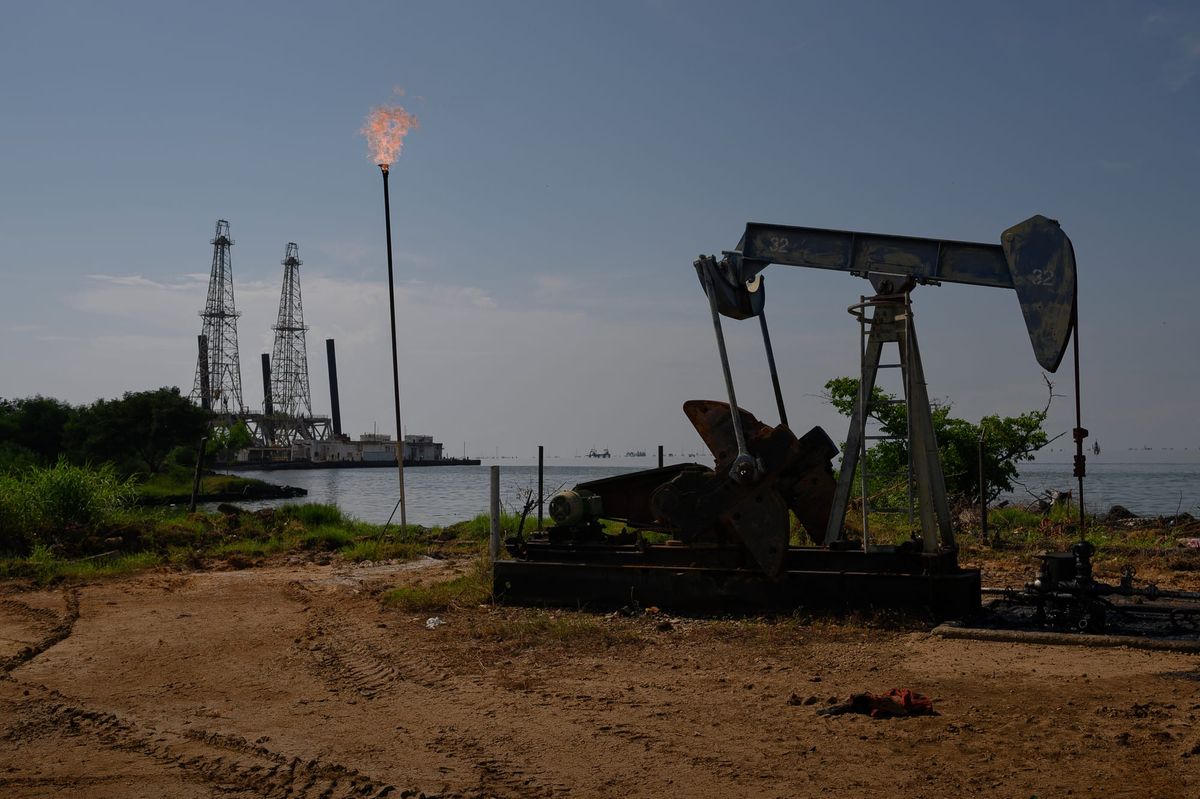](https://www.opendemocracy.net/es/venezuela-petroleo-maduro-corrupcion-sanciones-nyt-eeuu/)
### Frontier Politics: AI and the Crisis of the Democratic Form
URL: https://www.opendemocracy.net/frontier-politics-ai-and-the-crisis-of-the-democratic-form/
Last updated: 2026-09-10T15:26:21.000Z
*This story was first published on Georg Diez's* [*substack*](https://survival21.substack.com/p/frontier-politics)*: Survival in the 21 Century*
## **I.**
The Frontier Lab is the institutional framework through which the future is shaped today. It is the technologists who are shaping this future, and they do so on behalf of and in the interests of private companies such as OpenAI or Anthropic, which are sustained by investments on a scale such that the collapse of these companies would result in an economic—and thus societal—catastrophe.
What is missing is the democratic counterpart to this model. While the world emerging from the Frontier Labs is radically digital, the system we use to shape society and politics is radically analog. The 21st century meets the 19th century. It is clear who wins here.
The logical conclusion, if we want to save democracy by reinventing it, is this: the institutions of tomorrow must be shaped in accordance with the possibilities of tomorrow. This applies just as much to public administration as it does to schools, universities, political institutions, parliaments, political parties, and the political arena. So far, we have seen this: the technologists are creating facts on the ground, while the democrats are watching.
When it comes to the future of democracy, it is therefore crucial to place institutional innovation at the center of our thinking: What form of institutions is appropriate for the age of AI, in which the foundations of politics and society are undergoing fundamental change? And what can we learn from those who are already shaping the institutions of the future—albeit without democratic impetus?
It is always helpful to listen to someone like Sam Altman, CEO of OpenAI, or Dario Amodei of Anthropic when they speak about the implications and consequences of their work—especially the implications for democratic practice, the future of work, or social cohesion —unlike the intellectually ambitious Amodei, the profoundly clueless Altman makes it deeply unsettling when one makes the mistake of expecting these technologists to provide the answers to tomorrow’s democratic questions.
What they have delivered so far is infrastructure, not political theory; the task is to democratize this infrastructure and create new infrastructures that, in turn, transform democracy.
In a present that has lost all balance, it is a recurring pattern to turn to precisely those for solutions who are responsible for the problems in the first place. It is not the technologists who should develop the democracy of tomorrow—they lack the ambition or training for this, and it is neither in their interest nor their mandate—rather, the ideas should come from politics and civil society, which, however, often lack the technological understanding of the challenges and opportunities presented by, for example, large language models.
This fundamental contradiction must be resolved. Genuine answers to the democratic crisis will only be found if non-technologists acknowledge their own lack of knowledge and strive to understand the technological realities of our time—not in pursuit of technological or technocratic solutions, but for solutions that are on par with the technology itself.
## **II.**
It is the radical nature of their form that makes Frontier Labs so unique. They are free from democratic oversight, yet they act—in terms of economic power and institutional disruption—almost like states. Their intentions are opaque, yet they are treated as partners, as rational actors in a game with rules. At the same time, they remain in a constant state of experimentation, obeying few rules other than those of their own internal logic and venture capital.
OpenAI, Anthropic, and Google are thus replacing essential institutions, structures, and ways of thinking in political practice. We are witnessing societies around the world being transformed into experimental spaces, without the parameters of these experiments being clear, without the goals and assumptions being communicated in an understandable way, and without any effective means of public participation or political oversight.
The way Frontier Labs operate is, in many respects, a mystery, and former employees of OpenAI or Anthropic are contractually bound to silence. But there are reports, such as that by [Calvin French-Owen](https://calv.info/openai-reflections?ref=opendemocracy.net), from which a few principles applicable to OpenAI can be derived; I believe these also offer insights into the form that future democratic political practice might take.
First, according to French-Owen, OpenAI is “incredibly bottoms-up, especially in research”: “When I first showed up there, I asked about the roadmap for the next quarter. The answer I received was, ‘There isn’t one’ (although one does now exist).” Good ideas can come from anywhere, and it’s often not really clear in advance which ideas will prove to be the most fruitful. Instead of a large-scale ‘master plan,’ progress is iterative and only becomes apparent when new research findings bear fruit.”
Second, thanks to its bottom-up culture, OpenAI is highly meritocratic. “In the past, leaders within the company were promoted primarily based on their ability to develop good ideas and then implement them. Many leaders who were incredibly competent weren’t particularly good at things like giving presentations to the entire staff or political maneuvering. That plays a lesser role at OpenAI than it might at other companies. The best ideas usually prevail.”
Owen-French describes “a strong bias toward action (you can just do things)” as the third key aspect of OpenAI’s culture: It’s not uncommon for similar but independent teams to come up with different ideas. What’s always important is that projects are tackled by a small handful of people without them having to ask for permission. “As soon as these projects prove promising, teams quickly form around them.”
A fourth element of the Frontier approach is the researchers, who act as their own “mini-executives.” “There’s a strong tendency to work on one’s own project and wait to see how it develops. This leads to a logical consequence: Most research arises when a researcher is specifically assigned to a particular problem. If something is considered boring or ‘solved,’ it’s unlikely anyone will work on it.”
For Owen-French, a fifth factor in OpenAI’s success is the ability to change course quickly: “It’s much better to do the *right* thing as soon as you receive new information than to stick to a course just because you had a plan. It’s remarkable that a company as large as OpenAI still maintains this attitude—Google obviously does not. The company makes decisions quickly, and when it chooses a direction, it commits fully to it.”
Bottom-up, flat hierarchies, performance over management, autonomy and trust, action and experimentation, and the ability to overturn everything: A good summary of the Labs’ principles is provided by Nathan Lambert’s [blog post](https://www.interconnects.ai/p/how-to-manage-ai-training-organizations?ref=opendemocracy.net), which boils down to the statement: “you ship your org chart”—the product is ultimately a consequence of decisions that are embedded in and reflect the company’s organizational structure.
The unifying idea behind this: These are small units operating here in the spirit of a larger plan, and the pressure—the pressure to justify—lies not with the new to prove what it can do, but with the old to show why we should keep it.
So if one wants to develop a new democratic practice, it’s not about breaking the old system at any cost; it’s about recognizing the possibilities—and also the necessities—that emerge in the practice of Frontier Labs and how they can be harnessed democratically.
For, of course, the Frontier Labs themselves, in their current form, are not the building blocks of a democratic future. In her excellent book \*Empire of AI\*, Karen Hao describes the inner workings of OpenAI with critical clarity—in the company’s early days, she writes, about a quarter of the employees were women or non-binary individuals; the executives were almost all male and white.
And the ethos of AI companies—as articulated, for example, in the [texts](https://darioamodei.com/essay/the-adolescence-of-technology?ref=opendemocracy.net) by Dario Amodei, CEO of Anthropic, and in the widely read [manifesto](https://situational-awareness.ai/?ref=opendemocracy.net) by Leopold Aschenbrenner, who was part of OpenAI’s “Superalignment” team until 2024—is quite clear: It is a small group of people who have the right to steer the development of AI.
The logic and strategy are thus Leninist: “There are probably only dozens of people who truly ‘need to know’ the key implementation details for a given algorithmic breakthrough at a given lab,” writes Aschenbrenner, “you can vet, silo, and intensively monitor these people, in addition to radically upgraded infosec. ”
Or as Lenin put it in 1920 in “What Is To Be Done?”: “The organization of the revolutionaries, on the other hand, must above all and primarily include people whose profession is revolutionary activity.” And further: “This organization need not necessarily be very extensive and must be as conspiratorial as possible.”
## **III.**
Democracy works differently. But perhaps, at certain moments, it must function this way—at least in part. For the question is, after all, what is meant by democracy: form or content? The two complement each other in unique and not always identical ways.
We are currently experiencing a crisis of the form of democracy, which is linked to a crisis of content. It is not easy to say which comes first: the systemic contradictions of a style of governance that does not correspond to the possibilities, the requirements, or the experience of our time—or systemic resistance that is currently unleashing itself with full vehemence in a fascist manner.
But that is not the point at all: the issue is to see the problem—and thus also the solution—in the very structure of the system itself—understood not as an ideology, but as infrastructure. So how is information processed today—socially and, above all, politically? How are decisions made, communicated, and implemented?
What lies ahead is a complete overhaul of the system, in which individual parts can be retained. This requires courage and determination, and likely structures similar to those found in the Frontier Labs—the democratic contradictions inherent in this form of Frontier Politics must be articulated and resolved. The practice itself should be put to the test.
This would not mean running a political party like a business or a startup; it would mean generating the energy necessary to arrive at experimental, new, and better answers and solutions to current problems.
All of this has very practical implications. Frontier Labs are drawing in money and talent that are lacking elsewhere. It is no longer a cliché that in organized politics, at many levels—from the very bottom to the very top—talent is lacking, ambition is misdirected, and promising people are held back. There are so many misguided incentives here that politics, in its current form, will never win the competition for the best minds.
These minds, in turn, do not follow the same logic as political parties, which date back to a time when linear résumés and predictable careers were the norm; therefore, the goal cannot be to replace one or two generations of professional politicians with a new generation of professional politicians.
The logic of new technological possibilities would render the profession of the career politician obsolete. Politics as a profession, as Max Weber called it, is a product of the first industrial revolution of the 19th century; under the conditions of the coming industrial revolution, this field, like virtually all other areas of society and institutions, will also change.
These changes generate fear and centrifugal forces. The forces of resistance from the old system are strong, especially because they affect people who have found their role, purpose, and security within that system.
All of this can now lead to a turning away from technology itself—the infrastructure that underpins our society, economy, and, consequently, politics. Or one can turn toward these technologies and try to understand and shape them, attempting to see and harness their inherent and new logic to create institutions that are suited to the conditions of the times for which they are intended.
Of all people, Bill Gates has just [summed it up](https://www.gatesnotes.com/a-turbulent-ai-era-and-critical-choices-to-make?ref=opendemocracy.net): We need a plan for how we want to deal with AI. One could also say: We need politics. We need politics that operates at the level dictated by technology. We need new politics.
What we’ve seen so far, in various forms, is the organized lack of ambition on the part of those in power. The disruptions of our time, however, are real and cannot be addressed with the usual mediocrity.
### La ultraderecha alemana ya no es solo un problema del este
URL: https://www.opendemocracy.net/es/alemania-elecciones-ultraderecha-afd-auge-este-deterioro-inflacion/
Last updated: 2026-09-09T20:26:57.000Z
El partido de extrema derecha Alternativa para Alemania (AfD) obtuvo el domingo el 43,8% de los votos en Sajonia-Anhalt. La conservadora Unión Demócrata Cristiana, que ha gobernado ese estado la mayor parte del tiempo luego de la reunificación alemana en 1990, quedó en un distante segundo lugar con el 17,2%.
Para el mundo, que aún ve a Alemania como sinónimo de estabilidad política, industria fuerte y condiciones de vida relativamente altas, este resultado puede sorprender. O no tanto.
Sin embargo, los últimos años han dejado profundas huellas en la economía alemana. El rendimiento económico real apenas creció, la producción industrial se debilitó y los hogares sufrieron una pérdida sustancial de poder adquisitivo. De hecho, los salarios reales solo recuperaron recientemente su nivel previo a la pandemia. Para un hogar promedio de cuatro personas, las pérdidas económicas en comparación con la tendencia anterior a la crisis ascienden a 12.000 euros (casi 14.000 dólares) al año.
No sorprende que estos hechos hayan provocado cambios en el panorama político. En las elecciones federales de 2025, la AfD duplicó su porcentaje de votos en todo el país. Su apoyo sigue siendo mucho mayor en Alemania Oriental, pero el partido también obtuvo avances sustanciales en el oeste. Mientras tanto, los partidos tradicionales tienen dificultades para ofrecer una respuesta convincente al estancamiento económico, la incertidumbre industrial y el aumento del costo de vida. El gobierno federal se limitó en gran medida al discurso habitual de competitividad, reformas estructurales y austeridad, al tiempo que recortaba el gasto civil y aumentaba el gasto militar.
Este contexto nacional influyó enormemente en la campaña electoral de Sajonia-Anhalt, por lo que los resultados no pueden interpretarse simplemente como un veredicto sobre el gobierno estatal. Al mismo tiempo, Sajonia-Anhalt tiene su propia historia económica, y esa historia ayuda a explicar por qué las consecuencias políticas se han manifestado con tanta mayor intensidad en esa región.
## Las peculiaridades de Sajonia-Anhalt
Para entender Alemania Oriental, resulta imposible ignorar las profundas secuelas de la terapia de choque de mercado que se aplicó desde la reunificación. Cuando Alemania Oriental y Occidental se unificaron monetariamente en 1990, la paridad entre sus monedas provocó una drástica pérdida de competitividad para la industria del este. La industria manufacturera se desplomó en pocos años y millones de empleos desaparecieron. Muchos jóvenes calificados emigraron. La privatización de las empresas del este también transfirió la propiedad y la toma de decisiones económicas a empresas de Alemania Occidental, mientras que numerosos puestos gerenciales en empresas e instituciones públicas fueron ocupados por alemanes occidentales.
Durante una generación, la transformación económica se asoció, por lo tanto, a las experiencias traumáticas de la desaparición de empleos, la emigración y la pérdida de control sobre el futuro de la región. Las consecuencias aún se aprecian hoy en la estructura demográfica, en los salarios más bajos y en la geografía económica del este de Alemania.
Este contexto histórico es relevante porque la región se enfrenta ahora a otra transformación industrial, a la que accede desde una posición estructuralmente débil. En Sajonia-Anhalt, el salario mensual medio de un empleado a tiempo completo ronda los 3.560 euros (4.140 dólares), más de 650 euros (750 dólares) por debajo de la media nacional. El desempleo es de 8,2%, superior a la media alemana. La producción económica volvió a caer en 2025, mientras que sectores industriales importantes como el químico, el metalúrgico y el de la industria automotriz siguen bajo presión.
Los hogares también pasaron varios años de fuertes subidas de precios. La inflación ha disminuido, pero los alimentos, la vivienda y la energía siguen siendo considerablemente más caros que antes de la pandemia. Entre los votantes de AfD, la preocupación por pagar las facturas y mantener el nivel de vida es generalizada.
La inseguridad económica no es el único factor que explica el apoyo a la AfD. La migración, el nacionalismo, la oposición al apoyo a Ucrania y el resentimiento hacia las instituciones políticas establecidas también influyen. Pero estos conflictos políticos se desarrollan en un contexto económico. Cuando la gente prevé un deterioro de su nivel de vida y teme que el cambio estructural perjudique aún más a su región, el resentimiento encuentra un terreno más fértil.
## Un punto de partida mejor que 1990
Existe una diferencia importante respecto de la transformación posterior a la reunificación. Hoy en día, Sajonia-Anhalt cuenta, al menos en principio, con condiciones mucho mejores para beneficiarse del cambio estructural en lugar de simplemente absorber sus costos. El estado genera una gran parte de su electricidad a partir de fuentes renovables, y el este de Alemania ha atraído importantes inversiones en movilidad eléctrica, baterías y energías renovables. Alrededor del 60% de los automóviles fabricados en el este de Alemania ya son eléctricos.
Sin embargo, aprovechar estas ventajas depende del marco general de la política industrial alemana, y es aquí donde la economía de Sajonia-Anhalt encuentra dificultades. Con un fuerte apego emocional a las ideas liberales de mercado y la austeridad fiscal (excepto en el sector militar), la política industrial alemana resulta errática y contradictoria. Los agentes del mercado carecen de una idea clara de qué sectores generarían demanda en la economía alemana en el futuro. Existe una gran incertidumbre sobre los precios futuros de la electricidad, fundamentales para la transición ecológica. Los anuncios se revisan con frecuencia o se aplican de forma moderada – por ejemplo, en el caso de los precios máximos de la electricidad para la industria – debido a las regulaciones liberales de mercado a nivel europeo.
El sector automovilístico ilustra cómo esto afecta en concreto a los medios de subsistencia y a las empresas locales.
La planta de Volkswagen (VW) en Zwickau, por ejemplo, en la vecina Sajonia, se transformó en una de las fábricas insignia de coches eléctricos de la compañía tras años de inversión y negociaciones con la plantilla de trabajadores. Los empleados recibieron formación y se convenció a una fuerza laboral inicialmente escéptica de que la transición podía garantizar el futuro de la fábrica.
Sin embargo, ahora Volkswagen no puede garantizar la producción de vehículos allí más allá de 2030 y está considerando usos alternativos. En todo el grupo, se están recortando puestos de trabajo a medida que VW responde a una caída de la demanda, el exceso de capacidad y la creciente competencia de los fabricantes chinos. Para los trabajadores (y sus familias) que recuerdan el colapso económico de la década de 1990, estos acontecimientos inevitablemente tienen un significado diferente. Plantean la pregunta de si otra transformación volverá a dejar menos empleos, comunidades más débiles y decisiones tomadas en otros lugares.
## El problema del este es un problema alemán
Si bien la historia de la reunificación es específica de Alemania Oriental, las presiones económicas que se observan hoy en día son cada vez más comunes. Los trabajadores industriales de la región del Ruhr, Sarre o Baden-Württemberg se plantean preguntas similares sobre el futuro del empleo en los sectores automotriz, siderúrgico y químico. Los hogares de toda Alemania han experimentado una disminución en su poder adquisitivo real. Los municipios tienen dificultades para mantener las escuelas, el transporte y otros servicios básicos. La vivienda se encareció en muchas ciudades, mientras que los ferrocarriles alemanes se han convertido en un recordatorio diario del deterioro de la infraestructura pública.
La evolución electoral de la AfD refleja este cambio. Sus mejores resultados se siguen registrando en el este, pero su ascenso en el oeste de Alemania es innegable. Las diferencias regionales persisten. La tendencia subyacente es cada vez más nacional.
Parte de la explicación reside en el agotamiento del modelo económico alemán. Durante años, el crecimiento de Alemania se basó en gran medida en las exportaciones, la energía barata y la fuerte demanda de China. La industria automotriz, los fabricantes de maquinaria y las empresas químicas se beneficiaron enormemente. El éxito de este modelo redujo la presión para un cambio fundamental.
Tras la crisis financiera, el gobierno de Angela Merkel introdujo el freno constitucional a la deuda soberana. La inversión pública se mantuvo débil, mientras que las carreteras, las escuelas, los ferrocarriles y la infraestructura digital se deterioraron. Durante la Eurocopa 2024, los visitantes extranjeros presenciaron de primera mano este problema a través de retrasos en los trenes y una deficiente cobertura móvil.
La política industrial siguió un patrón similar. Alemania llegó a tener una importante industria de fabricación de paneles solares, pero gran parte desapareció en la década de 2010\. China, al contrario, desarrolló grandes capacidades de producción y cadenas de suministro de paneles solares, baterías y vehículos eléctricos.
Los fabricantes de automóviles alemanes mantuvieron una alta rentabilidad con los vehículos de motor a combustión, especialmente en China, y se adaptaron solo gradualmente. Ahora se enfrentan a competidores chinos con ventajas en baterías, escala de producción y, cada vez más, en los propios vehículos.
Alemania aún cuenta con muchos de los recursos necesarios para un nuevo modelo industrial: mano de obra calificada, ingenieros, institutos de investigación, infraestructura industrial y grandes recursos de energías renovables. Lo que falta es una estrategia suficientemente coherente para transformar esos recursos en empleo estable y una mejora del nivel de vida.
## ¿Qué hay que cambiar?
Aprovechar el potencial de la economía y brindar mayor seguridad económica requeriría medidas significativas en al menos dos frentes. A corto plazo, Alemania necesita una mayor demanda interna tras años de pérdida de poder adquisitivo y escaso crecimiento. Reducir el IVA en alimentos básicos o disminuir el costo del transporte público brindaría un alivio tangible a los hogares.
Más allá de este alivio inmediato, el gobierno debe decidir qué tipo de economía industrial quiere para Alemania dentro de 10 o 20 años. Esto requiere una inversión sostenida en redes eléctricas, transporte, educación y energías renovables, junto con una estrategia más clara para sectores como el acero, la química, las baterías y la movilidad eléctrica. Cuando la producción estratégicamente importante no pueda garantizarse solo con inversión privada, la participación o la propiedad pública debe estar disponible. Esto cobra especial relevancia en las regiones que atraviesan un cambio estructural.
Sin embargo, la primera reacción de Berlín tras las elecciones no da motivos para esperar ese cambio de rumbo. El canciller Friedrich Merz reconoció la magnitud de la derrota de la UDC en Sajonia-Anhalt, pero reafirmó el programa de reformas económicas de su gobierno, al que se oponen la mayoría de los alemanes, ya que aumentará las dificultades y los costos para la población. Su conclusión fue que estas reformas debían explicarse mejor y comunicarse de una manera que conectara más emocionalmente con los votantes.
La respuesta de Merz sugiere que Berlín saca una conclusión muy distinta del resultado. Tras años de estancamiento, incertidumbre industrial y presión sobre los ingresos familiares, buena parte de la dirigencia política sigue considerando que la estrategia económica es, en general, acertada y que el principal problema es de comunicación. Sajonia-Anhalt debería hacer que revisen esa idea.
Puede que el estado tenga una historia específica que no se puede extrapolar al oeste de Alemania, pero varias de las fuerzas que allí influyen – la inseguridad en torno a los empleos industriales, la carestía, el deterioro de los servicios públicos y la disminución de la confianza en que la política pueda definir el cambio económico – son igualmente visibles en otros lugares.
Los partidos democráticos no podrán contener a AfD solo con llamamientos a la defensa de las instituciones democráticas. También deben demostrar que estas instituciones pueden proporcionar seguridad económica, servicios públicos eficaces y un futuro industrial creíble. El caso de Sajonia-Anhalt muestra lo que puede pasar cuando la confianza en esa promesa se desgasta por demasiado tiempo.
*\*Patrick Kaczmarczyk es investigador del Centro de Excelencia para la Transformación de la Universidad de Mannheim, Alemania. Es consultor de la Conferencia de las Naciones Unidas sobre Comercio y Desarrollo (UNCTAD).*
### 25 years after 9/11, the ‘anti-terrorist state’ has captured Latin America
URL: https://www.opendemocracy.net/25-years-on-from-9-11-the-anti-terrorist-state-is-gaining-ground-in-latin-america/
Last updated: 2026-09-10T15:28:11.000Z
Twenty-five years ago, four simultaneous suicide attacks on U.S. soil [claimed 2,977 lives](https://911memorial.org/visit/memorial?ref=opendemocracy.net). Most of the victims were people who worked in the World Trade Center’s twin towers. Hundreds of firefighters and police officers who rushed to the disaster site also died.
The trauma of the attack on American soil entrenched in U.S. politics the idea that the response had to be on the scale of war. And so it was: a global and endless war ensued, one that to this day perpetuates itself by constantly seeking new targets. It involved the invasion of several countries, the normalization of torture, and the detention of hundreds of people in secret prisons scattered throughout the world. According to Brown University’s [Costs of War project](https://costsofwar.watson.brown.edu/costs/human?ref=opendemocracy.net), more than 900,000 people died as a direct result of the war on terrorism in the twenty years following the attacks of September 11, 2001\. “Indirect” deaths caused by the collapse of the infrastructure and economies of the invaded countries are estimated at around 3.8 million people.
The current situation in Latin America redefines this date as the starting point of another aspect of the process – one that is perhaps less discussed in our region: the reconfiguration of states, their laws, institutions, practices, and balances of power, all geared toward combating terrorism as the supreme objective. The anti-terrorist state was born. And once it was set in motion, it could never be dismantled. What was built under the pretext of an exceptional situation became the norm.
In the United States, it was decided that terrorism required a military response externally, but also a reconfiguration of the state internally. Activities such as emergency response and immigration control were “securitized” and placed under the purview of a new Department of Homeland Security, created in 2002\. The authority granted to intelligence agencies to collect all types of data to spy on the population itself was expanded. In terms of national and international law, the blurring of the line between criminal justice and the laws of war – coupled with an increasing emphasis on prevention and anticipation – led to a sort of parallel legal system with no right to a defense and no means of overseeing the proceedings.
A series of administrative tools based on the logic of labeling were also developed: all the state has to do is label a person or organization as a terrorist for them to face consequences without the need to present evidence or go through legal proceedings. This is how, for example, the various “lists” of designated terrorists work, from which severe sanctions are imposed on the individuals or groups included on them.
In the years following 2001, the idea that the fight against terrorism must be carried out using militarized and exceptional measures became the norm globally. This occurred because other countries, such as Russia, China, and Israel, found in this counterterrorism framework an opportunity to legitimize their actions against internal and external enemies.
A global counterterrorism architecture was also established at the UN level, based on four pillars: addressing the conditions that foster the spread of terrorism; preventing and combating terrorism; strengthening the capacities of states and the UN itself for that purpose; and, finally, ensuring respect for human rights and the rule of law in the context of the fight against terrorism. It will come as no surprise to anyone that interest in enforcing the fourth pillar was, and remains, scant or nonexistent.
Latin America remained largely on the sidelines of this trend, except in cases such as Colombia, where the approach to the internal conflict was also at times viewed as part of the global war on terrorism.
But the exceptional status of the Latin American “zone of peace” began to change in recent years. First, a number of governments in the region began to take an interest in applying the counterterrorism framework domestically. The persistence and evolution of organized crime provided the perfect excuse. Militarization, states of emergency that allow bypassing the separation of powers, and the consolidation of secrecy as a form of governance are all measures far too appealing to leaders with authoritarian tendencies.
Thus, the counterterrorism framework also began to shape several Latin American states – El Salvador, Ecuador, Honduras, Peru – with the sequence of events almost always the same. Real instances of violence establish the use of the category “terrorism” and legitimize emergency measures; once in place, these measures become entrenched and normalized, and begin to be used for the purposes of political persecution. Other countries with much lower levels of violence, such as Argentina and Chile, have spent several years attempting to label territorial conflicts involving indigenous peoples – such as the Mapuche – as terrorism. With the advent of far-right governments, they are also taking measures to reconfigure the state along the anti-terrorist lines.
This trend was exacerbated by Trump’s return to power. As part of its new global strategy, the U.S. defines Latin America as[ a zone of exclusive dominance](https://www.opendemocracy.net/en/venezuela-coup-trump-united-states-monroe-doctrine-maduro/).
The current plan is to mobilize the entire continent toward a process of militarization subordinate to the Southern Command, using the fight against “narco-terrorism” as a pretext. To this end, it is reviving and updating many of the tools from the post-2001 anti-terrorism framework. Consequently, Latin American strategies that abuse the anti-terrorism framework are being emboldened because the U.S. promotes the application of that same framework as a hemispheric policy, in addition to using it domestically. Even the broadening of the definition of terrorism to include political persecution was explicitly promoted by Secretary of State Marco Rubio at the recent “summit” that brought together representatives from more than 60 countries to hear his warnings about the “resurgence of leftist terrorism.”
[The US is inciting a global fight against ‘far-left’ protestUnder the pretext of fighting ‘terrorism’, the Trump administration warned allies to back its political persecutionopenDemocracyCentro de Estudios Legales y Sociales (CELS)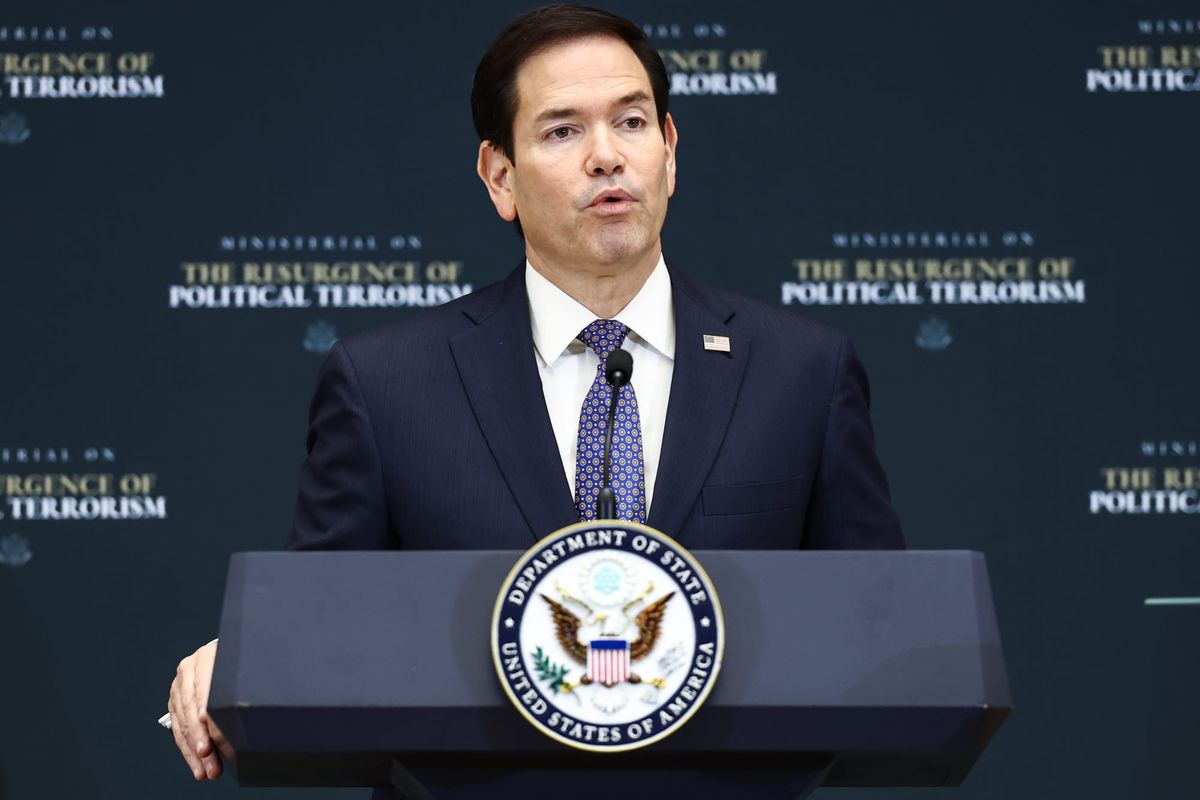](https://www.opendemocracy.net/united-states-far-left-terrorism-protest-activism-direct-action-trump-rubio-argentina/)
Twenty-five years after the launch of the anti-terrorist state, its shadow looms larger than ever in Latin America, exacerbating the risks of an escalation of lethal violence, recurring violations of national sovereignty with the consent of local elites, and political persecution disguised as counterterrorism.
The concept of terrorism establishes a link between politics and crime. Today this allows governments to criminalize dissent, especially those who attempt to resist current forms of subjugation (genocide, environmental destruction, impoverishment, right-wing political violence) through forms of direct action. As Argentinian scholar Pilar Calveiro pointed out in her book *Violencias de Estado* (State Violence), these forms of collective action ultimately refer to the “right to rebellion” – a right once recognized – which the counterterrorism framework seeks to eradicate.
Resisting the anti-terrorism framework’s ability to reshape the functioning of the state (and parts of society) in an authoritarian and violent direction is now a political priority for civil society, social movements, and democratic forces in Latin America.
[Venezuela: From Monroe’s Doctrine to Trump’s Jungle LawThe US has a long history of military intervention in Latin America, but never before has it been so brazenopenDemocracyDiana Cariboni](https://www.opendemocracy.net/en/venezuela-coup-trump-united-states-monroe-doctrine-maduro/)
[Trump’s plan to detain migrants at Guantánamo is cruel, but not newTrump’s plan to detain migrants follows a long history of the US locking up vulnerable people at the campopenDemocracyDiana Cariboni](https://www.opendemocracy.net/en/guantanamo-trump-detain-migrants-history-hiv-refugees-cuba-haiti-us/)
*Manuel Tufró is the director of the Justice and Security Program at CELS (Centro de Estudios Legales y Sociales), an Argentine human rights organisation with a broad agenda that includes defending the right to protest.*
### Inside the US Takeover of Venezuelan Oil
URL: https://www.opendemocracy.net/podcasts/inside-the-us-takeover-of-venezuelan-oil/
Last updated: 2026-09-09T12:45:51.000Z
| [ Listen on Spotify ](https://open.spotify.com/show/2T5vrJmBgCIof17pp9LMWM?ref=opendemocracy.net) | [ Listen on Apple Podcasts ](https://podcasts.apple.com/us/podcast/in-solidarity-by-opendemocracy/id1790866829?ref=opendemocracy.net) |
| ------------------------------------------------------------------------------------------------- | ------------------------------------------------------------------------------------------------------------------------------------- |
Nine months after the US abducted Venezuelan President Nicolás Maduro, a highly unusual oil deal has surfaced. The US claims to have struck an agreement to take control of about a fifth of Venezuela's oil reserves. But this isn't a standard international trade agreement; it’s structured through a Barbados-based private company owned by a controversial businessman, with the US Department of Defense taking a 35% stake.
In this episode, we sit down with Francisco Rodríguez, a Venezuelan economist and author of *The Collapse of Venezuela: Scorched-Earth Politics and Economic Decline*. Rodríguez dismantles the mechanics of this unprecedented $100 billion deal, explaining why major oil companies are nowhere to be found and why Venezuela is currently shipping 40,000 barrels of oil to the US at cost.
**Chapters:**
00:00:00 - Introduction
00:03:00 - The Barbados Company and the Missing $100 Billion
00:05:00 - Replenishing the US Strategic Reserve at Venezuela's Expense
00:07:00 - Bypassing Venezuelan Law and the National Assembly
00:09:00 - Comparisons to the 1996 Russian Privatization
00:13:00 - Hugo Chávez and the Origins of Economic Collapse
00:18:00 - The Devastating Impact of US Sanctions
00:22:00 - The Opposition’s "Faustian Bargain" with Washington
00:25:00 - "Regime Compliance" and the Future of US Intervention
**Credits:**
Presented by Aman Sethi
Produced by Harry Beney
### A 25 años del 11S, el Estado antiterrorista avanza en América Latina
URL: https://www.opendemocracy.net/es/s11-ataques-terroristas-torres-gemelas-estado-antiterrorista-ny-marco-rubio-america-latina/
Last updated: 2026-09-08T19:27:47.000Z
Hace 25 años, cuatro atentados suicidas simultáneos en territorio estadounidense se cobraron [2.977 vidas](https://911memorial.org/visit/memorial?ref=opendemocracy.net). La mayor parte de las víctimas eran personas que trabajaban en las torres gemelas de Nueva York, y centenares de bomberos y policías que acudieron a la zona del desastre.
El trauma del ataque en suelo propio instaló en la política estadounidense la idea de que la respuesta debía ser del orden de la guerra. Y así fue: siguió una guerra global e infinita, que hasta el día de hoy se reproduce a sí misma buscando siempre nuevos blancos. Implicó la invasión de varios países, la normalización de la tortura y el encierro de centenares de personas en cárceles clandestinas esparcidas por todo el mundo. Según el proyecto [Costs of War](https://costsofwar.watson.brown.edu/costs/human?ref=opendemocracy.net), de la Universidad de Brown, más de 900.000 personas murieron como consecuencia directa de la guerra contra el terrorismo en los 20 años posteriores a los ataques del 11 de septiembre de 2001\. Las muertes “indirectas” causadas por el colapso de la infraestructura y la economía de los países invadidos se estiman en torno a los 3,8 millones de personas.
La actual coyuntura latinoamericana resignifica el S11 como el punto de inicio de otro aspecto del proceso, quizás menos discutido en nuestra región: la reconfiguración de los Estados, de sus leyes, sus instituciones, sus prácticas, sus balances de poder, para orientarse a combatir el terrorismo como objetivo supremo. Nacía el Estado antiterrorista. Y una vez que se puso en funcionamiento, nunca se pudo desmontar. Lo que se construyó con la excusa de una situación excepcional se transformó en la regla.
En Estados Unidos se definió que el terrorismo requería una respuesta militar hacia afuera, pero también una reconfiguración del Estado hacia dentro. Actividades como la respuesta a las emergencias o el control de migraciones se “securitizaron” y pasaron a estar, a partir de 2002, bajo la órbita de un nuevo ministerio de seguridad nacional [(Department of Homeland Security](https://www.usa.gov/agencies/u-s-department-of-homeland-security?ref=opendemocracy.net)).
Se ampliaron las habilitaciones para que los servicios de inteligencia recopilaran datos de todo tipo para espiar a la propia población. En términos de la legalidad nacional e internacional, la indiferenciación entre justicia criminal y derecho de guerra y el énfasis cada vez mayor en la prevención y anticipación derivaron en una suerte de sistema legal paralelo sin derecho a la defensa ni posibilidades de controlar los procesos.
Se desarrollaron además una serie de herramientas administrativas basadas en la lógica del etiquetamiento: basta con que el Estado rotule como terrorista a una persona u organización para que sufra consecuencias sin necesidad de mostrar evidencias ni atravesar procesos legales. Así funcionan, por ejemplo, las distintas “listas” de las que se derivan graves sanciones para las personas o grupos incluidos.
En los años que siguieron a 2001 la idea de que la lucha contra el terrorismo debe realizarse con herramientas militarizadas y de excepción se naturalizó en todo el mundo. Esto ocurrió porque otros países, como Rusia, China o Israel, encontraron en este marco antiterrorista la posibilidad de legitimar sus acciones contra enemigos internos y externos.
También se construyó una arquitectura global antiterrorista en el ámbito de la ONU, basada en cuatro pilares: abordar las condiciones que favorecen la expansión del terrorismo, prevenir y combatir el terrorismo, fortalecer las capacidades de los Estados y de la propia ONU con ese fin, y finalmente asegurar el respeto de los derechos humanos y del estado de derecho en el contexto del combate al terrorismo. No sorprenderá a nadie que el interés por hacer cumplir el cuarto pilar fue y es escaso o nulo.
América Latina se mantuvo mayormente apartada de esta corriente, salvo por casos como el de Colombia, donde el abordaje del conflicto interno también fue en ocasiones pensado como parte de la guerra global contra el terrorismo.
Pero esa excepcionalidad de la “zona de paz” latinoamericana empezó a cambiar en los últimos años. Primero, una serie de gobiernos de la región comenzaron a interesarse por la aplicación interna del marco antiterrorista. La persistencia y mutación del crimen organizado fueron la excusa perfecta. Militarización, regímenes de excepción que permiten saltarse la división de poderes, consolidación del secreto como forma de gobierno, todas medidas demasiado atractivas para líderes con vocación autoritaria.
Así, el marco antiterrorista comenzó también a moldear a varios estados latinoamericanos: El Salvador, Ecuador, Honduras, Perú. La secuencia es casi siempre la misma; fenómenos de violencia reales instalan el uso de la categoría “terrorismo” y legitiman las herramientas de excepción y, una vez instaladas estas herramientas, se perpetúan, se naturalizan y comienzan a ser utilizadas con fines de persecución política. Incluso países con niveles de violencia mucho menores, como Argentina o Chile, toman medidas para reconfigurar los Estados en ese sentido a partir de la instalación de gobiernos de extrema derecha.
Esta tendencia se exacerbó con la llegada de Donald Trump nuevamente al poder. Como parte de su nueva estrategia global, EEUU define a América Latina como una [zona de su dominio exclusivo](https://www.opendemocracy.net/es/trump-maduro-golpe-venezuela-estados-unidos-america-latina-doctrina-monroe/).
[Venezuela: De la Doctrina Monroe a la ley de la selva de TrumpEstados Unidos tiene una larga historia de intervenciones militares en América Latina. Nunca antes fueron tan descaradasopenDemocracyDiana Cariboni](https://www.opendemocracy.net/es/trump-maduro-golpe-venezuela-estados-unidos-america-latina-doctrina-monroe/)
El plan actual es movilizar a todo el continente hacia un proceso de militarización subordinado al Comando Sur, y la excusa es el combate al “narcoterrorismo”. Para ello, Washington recupera y actualiza muchos de los instrumentos del marco antiterrorista posterior a 2001\. De este modo, las estrategias latinoamericanas que abusan del antiterrorismo se ven empoderadas porque EEUU promueve la aplicación de ese mismo marco como política hemisférica, además de usarlo también a nivel doméstico. Incluso la ampliación de la categoría de terrorismo para la persecución política fue explícitamente impulsada por el secretario de Estado, Marco Rubio, en la reciente “cumbre” que reunió a representantes de más de 60 países para escuchar sus advertencias sobre el “resurgimiento del terrorismo de izquierda”.
[EEUU propone una cruzada de persecución política a escala globalCon la excusa del terrorismo, el gobierno de EEUU promueve una persecución política de escala globalopenDemocracyCentro de Estudios Legales y Sociales (CELS)](https://www.opendemocracy.net/es/eeuu-propone-una-cruzada-de-persecucion-politica-a-escala-global/)
A 25 años de la puesta en marcha del Estado antiterrorista, su sombra se extiende hoy como nunca en América Latina, exacerbando los riesgos de una escalada de violencia letal, de violaciones sistemáticas a la soberanía nacional con la anuencia de las elites locales, y de persecuciones políticas disfrazadas de antiterrorismo.
El concepto de terrorismo provee una asociación conceptual entre política y delincuencia que permite a los gobiernos criminalizar la disidencia, sobre todo a quienes ensayan su resistencia a los sometimientos actuales (genocidios, destrucción ambiental, pauperización, violencia política de la derecha) a través de formas de acción directa que, como observó la investigadora argentina Pilar Calveiro en su libro *Violencias de Estado* (2012), remiten en última instancia al “derecho de rebelión” en algún momento reconocido, y que el marco antiterrorista pretende erradicar.
Resistir la capacidad del marco antiterrorista para reconfigurar las formas de funcionamiento del Estado (y de partes de la sociedad) en un sentido autoritario y violento es hoy una prioridad política para la sociedad civil, los movimientos sociales y las fuerzas democráticas de América Latina.
[El plan de Trump para encerrar a migrantes en Guantánamo es cruel, pero no nuevoEl plan de Trump abreva en una larga tradición estadounidense de encerrar a personas vulnerables en la base militaropenDemocracyDiana Cariboni](https://www.opendemocracy.net/es/guantanamo-trump-detencion-migrantes-historia-vih-refugiados-cuba-haiti-eeuu/)
*Manuel Tufró es director de Justicia y seguridad del Centro de Estudios Legales y Sociales (CELS), una organización de derechos humanos de Argentina, fundada durante la última dictadura militar, que promueve la protección de derechos y su ejercicio efectivo a nivel nacional e internacional.*
### Revisiting 9/11
URL: https://www.opendemocracy.net/revisiting-9-11/
Last updated: 2026-09-10T09:00:27.000Z
openDemocracy was born out of the horror of 9/11 and the defiance it created. We had launched in May 2001, convinced that a magazine on the web, published in fortnightly issues like a print magazine, could bring intelligent, well-organised, global debate to the new-fangled internet.
The first lesson we learnt immediately was that while making it free to read might have consequences for our ‘business plan’, if we kept a pay wall no one would read us at all. Let alone around the world. Less than three months later, the planes went into the twin towers. There was no television in the office and, of course, no smart phones. Some of us went to the nearby Tapas bar and watched live as the second tower came down. My eldest daughter had already rung me from her college to say, “It’s the Apocalypse”. With these words ringing in my ears I decided we would publish daily.
I called Todd Gitin, our American editor, who was then teaching at NYU. He had an apartment high up in Washington Square, where, over breakfast, he and his wife Laurel thought momentarily the first tower had caught fire, before they learnt the reality.
He wrote an immediate response, reportage on being in Manhattan, rather than analysis, which we published at 11pm London time on the day. We titled it: *Is this our fate*.
Daily publishing demands a forum and, sensing what was coming and in need of a question to attract contributions, we called it: **Is Terror the New Cold War?**
Contributions came in from around the world — and in these terrible circumstances openDemocracy took off.
In different ways most contributors confronted what everyone knew immediately would be a historic turning point, with a dreadful feeling that while justice could be done, it was all too likely that something even more terrible would ensue.
You can feel this tension in Paul Gilroy’s response, who was writing from Yale at the time as he witnessed the beginning of *The American Jihad.*
A month after the attack we ran Tom Nairn’s response, *Hooligans of the Absolute*. Its references to some of the articles we had published gives an idea of the debate we were now hosting. The ‘front page’ of ‘Issue 7’ pictured at the top shows how many we had already published by 25th September.
Nairn’s article is marked by an underlying optimism that the bizarre world-view of the terrorists was never going to prevail. In one sense his judgement has been vindicated. But in another it has been defied. He rightly identified Palestine and the need for Palestinians to have their own state as a crucial cause of the catastrophic irrationality. He could not imagine the genocide now being inflicted upon them in Gaza and the West Bank twenty-five years later. Or that the baton of al-Qaeda’s assault on liberal ‘internationalism’ could find its way to new, incredible figures seeking to lure humanity “through ‘Black Pluto’s door’ into an antique Underworld of theocratic absolutes and paranoid finality”. For Elon Musk and Peter Theil show every sign of becoming the inheritors of bin Laden’s “fundamentalist spirit-world”, only now they are armed not with hi-jacked passenger planes but the internet itself.
Todd Gitlin, Paul Gilroy and Tom Nairn’s articles follow:
---
## [**Is this our fate?**](https://www.opendemocracy.net/en/article-213jsp/)
[TODD GITLIN](https://www.opendemocracy.net/author/todd-gitlin/) \- September 11, 2001, 11:09 pm
A fog of terrorism has settled on us – America, New York, everyone I know. Affliction by the phantasmagorical. Dull fear – fear of what’s already happened, fear of the future. More than anything, perhaps, disbelief – a disbelief so bleak and wobbly you can’t even believe in it. Myself, I’ve been groping around in a fog since 9 this morning when my wife pointed out the window at the sickly yellow-brown smoke pluming eastward, one mile further downtown. A couple of minutes later, an explosion – the second one, I missed the first – and since then, we weave in and out of the unreal.
Staring into the unknown, we fall back on the aura of precedents – catastrophes felt so deeply in common they define the ground for a generation or more. Pearl Harbor, the marker in my parents’ lives and times. The Kennedy assassination, when the world went gravely strange, and we knew nothing would be the same. We were right. But of course we didn’t know the ways, not the half of them...
[Continue reading](https://www.opendemocracy.net/en/article-213jsp/)
---
## [**The American Jihad**](https://www.opendemocracy.net/en/article-210jsp/)
[PAUL GILROY](https://www.opendemocracy.net/author/paul-gilroy/) \- September 17, 2001, 11:09 pm
Most commentaries on the horrors of 11 September 2001 have been delivered from two positions.
The first is a grounded location: the place of immediate rather than media-made spectatorship. Blanketed in dust and dioxin, downtown Manhattan opened onto the romance, heroism, fortitude and collective energy of the globalised metropolis. These transcendent qualities have been celebrated as its antidote to a human tragedy that remains inexplicable, most habitable when it is localised. Locality becomes the enemy of explanation. The tragedy is the making of the city, which rediscovers, renews and strengthens itself in overcoming adversity. Rudy and Hillary, holding hands across their receding political divisions, discovered a historical precedent for this magical civic bond in the memory of London during the Luftwaffe's blitz of 1940...
[Continue reading](https://www.opendemocracy.net/en/article-210jsp/)
---
## [**Hooligans of the Absolute: Black Pluto's door after 11 September**](https://www.opendemocracy.net/en/hooligans-of-absolute-black-plutos-door-after-11-september/)
[TOM NAIRN](https://www.opendemocracy.net/author/tom-nairn/) \- October 04, 2001, 2:06 pm
As [Brendan O’Leary](https://www.opendemocracy.net/conflict-globaljustice/article%5F163.jsp) has pointed out in a recent contribution to **openDemocracy**, one of the key things about 11 September is that no-one claimed responsibility for the atrocities. They were an ontological statement, rather than propaganda of the deed for a particular nation or oppressed class. The world was meant to stand revealed by them: ‘reality’ as God’s ultimate struggle against Satan, exemplified by the martyr-hijackers. In such a cosmic phantasmagoria, a new world war is nothing. The bigger the Satan, the harder will he eventually fall. The perpetrators – attacking a society already so strongly inclined towards belief in UFOs, moral absolutes and the Christian version of ‘fundamentalism’ – must have calculated that they could hardly fail.
Yet fail they will, for perfectly mundane (and profane) reasons having little to do with the atavistic theology of either side. O’Leary is surely right to call for normality: “*Be normal*… think about being normal as a way of standing up for yourself and your values”. Keep the head, in other words. The object of the criminals was socio-cultural decapitation. They will not be allowed to get away with it...
[Continue reading](https://www.opendemocracy.net/en/hooligans-of-absolute-black-plutos-door-after-11-september/)
### Germany’s far-right surge is not just about the East
URL: https://www.opendemocracy.net/germanys-far-right-surge-is-not-just-about-the-east/
Last updated: 2026-09-08T12:55:46.000Z
The far-right Alternative für Deutschland (AfD) has just won 43.8 per cent of the vote in Saxony-Anhalt. The conservative Christian Democratic Union, which has governed the state for most of the period since reunification, came a distant second with 17.2 per cent.
For a country still associated abroad with political stability, strong industry and comparatively high living standards, such a result may seem surprising.
Yet the past few years have left deep marks on the German economy. Real economic output has barely grown, industrial production has weakened, and households have suffered a substantial loss of purchasing power. Indeed, real wages only recently recovered their pre-pandemic level. For an average household of four people, the economic losses relative to the pre-crisis trend amount to €12,000 per year.
It is hardly surprising that these developments have led to shifts in the political mood. At the 2025 federal election, the AfD doubled its national vote share. Its support remains much higher in eastern Germany, but the party also made substantial gains in the west. Meanwhile, the mainstream parties have struggled to offer a convincing response to stagnation, industrial uncertainty and the rising cost of living. The federal government has largely stuck to the familiar language of competitiveness, structural reforms and spending restraint, while cutting civilian spending as military expenditure rises.
This national context heavily shaped the election campaign in Saxony-Anhalt, so the results cannot be understood simply as a verdict on the state government. At the same time, Saxony-Anhalt has its own economic history, and that history helps explain why the political consequences have become so much more pronounced there.
**The peculiarities of Saxony-Anhalt**
When examining economic and political development in eastern Germany, it is impossible to ignore the deep scars left by the market shock therapy of the early 1990s. When East and West Germany entered monetary union in 1990, the parity between the West and East German currencies caused a dramatic overnight loss of competitiveness for eastern industry. Manufacturing collapsed within a few years and millions of jobs disappeared. Young and qualified people left in large numbers. The privatisation of eastern companies also transferred ownership and economic decision-making to western German firms, while many senior positions in business and public institutions were subsequently filled by western Germans.
For a generation, economic transformation therefore became associated with the traumatic experiences of job losses, out-migration and a loss of control over the region’s future. The consequences remain visible today in the demographic structure, in lower wages and in the economic geography of eastern Germany.
This historical background matters because the region is now facing another industrial transformation, which it enters from a structurally weak position. In Saxony-Anhalt, the median monthly wage for a full-time employee is around €3,560 (£3,059), more than €650 below the national median. Unemployment stands at 8.2 per cent, higher than the German average. Economic output fell again in 2025, while important industrial sectors such as chemicals, metals and automotive suppliers remain under pressure.
Households have also lived through several years of sharply rising prices. Inflation has fallen, but food, housing and energy remain considerably more expensive than before the pandemic. Among AfD voters, concerns about paying bills and maintaining their standard of living were widespread.
Economic insecurity is not the only factor explaining support for the AfD. Migration, nationalism, opposition to support for Ukraine and resentment against established political institutions all matter. But these political conflicts unfold against an economic background. Where people expect their living standards to deteriorate and fear that structural change will leave their region worse off, resentment finds more fertile ground.
**A better starting point than 1990**
There is one important difference from the transformation after reunification. Saxony-Anhalt today has, at least in principle, much better conditions to benefit economically from structural change rather than simply absorb its costs. The state produces a large share of its electricity from renewable sources, and eastern Germany has attracted important investments in electric mobility, batteries and renewable energy. Around 60 per cent of the cars manufactured in eastern Germany are already electric.
Leveraging these structural advantages, however, depends on the wider framework of German industrial policy – and this is where the economy in Saxony-Anhalt is getting into trouble. With a strong emotional attachment to market liberal ideas and fiscal austerity (except for the military), German industrial policy turns out erratic and contradictory. Market participants have no orientation in which sectors the German economy will generate demand in the future. There is a high uncertainty over future electricity prices, which are key to the green transformation. Announcements are frequently revised or applied modestly – for example in the case of capped electricity prices for industry – due to market liberal regulations at the European level.
How that concretely affects local livelihoods and business, is vividly illustrated by the automotive sector.
Volkswagen’s plant in Zwickau, for example, in neighbouring Saxony, was transformed into one of the company’s flagship electric-car factories after years of investment and negotiations with the workforce. Employees were retrained and an initially sceptical workforce was persuaded that the transition could secure the plant’s future.
Now Volkswagen cannot guarantee vehicle production there beyond 2030 and is considering alternative uses. Across the group, jobs are being cut as VW responds to weak demand, overcapacity and stronger competition from Chinese manufacturers. For workers (and their families) who remember the economic collapse of the 1990s, such developments inevitably resonate differently. They raise the question of whether another transformation will once again leave behind fewer jobs, weaker communities and decisions taken elsewhere.
**The eastern problem is becoming a German one**
While the history of reunification is specific to eastern Germany, the economic pressures visible there today increasingly are not. Industrial workers in the Ruhr area, Saarland or Baden-Württemberg are asking similar questions about the future of jobs in cars, steel and chemicals. Households across Germany have experienced a decline in real purchasing power. Municipalities struggle to maintain schools, transport and other basic services. Housing has become expensive in many cities, while Germany’s railways have turned into a daily reminder of deteriorating public infrastructure.
The AfD’s electoral development reflects this shift. Its strongest results are still in the east, but its rise in western Germany has been unmistakable. The regional differences remain substantial. The underlying trend is becoming more national.
Part of the explanation lies in the exhaustion of Germany’s economic model. For years, German growth rested heavily on exports, cheap energy and strong demand from China. The car industry, machinery producers and chemical companies benefited enormously. The success of this model reduced the pressure for fundamental change.
After the financial crisis, Angela Merkel’s government introduced the constitutional sovereign debt brake. Public investment remained weak while roads, schools, railways and digital infrastructure deteriorated. During the 2024 European football championship, visitors from abroad received a concentrated demonstration of the problem through delayed trains and patchy mobile coverage.
Industrial policy followed a similar pattern. Germany once had a substantial solar manufacturing industry, but much of it disappeared during the 2010s. China, by contrast, built large-scale production capacities and supply chains in solar panels, batteries and electric vehicles.
German carmakers remained highly profitable with combustion-engine vehicles, particularly in China, and adjusted only gradually. They now face Chinese competitors with advantages in batteries, production scale and increasingly the vehicles themselves.
Germany still has many of the assets needed for a new industrial model: skilled workers, engineers, research institutes, industrial infrastructure and large renewable-energy resources. What is missing is a sufficiently coherent strategy to turn those assets into secure employment and rising living standards.
**What needs to change**
Leveraging the potential of the economy and providing more economic security would require significant action on at least two fronts. In the short term, Germany needs stronger domestic demand after years of lost purchasing power and weak growth. Cutting VAT on basic food items or reducing the cost of public transport would provide visible relief to households.
Beyond such immediate relief, the government needs to decide what kind of industrial economy it wants Germany to have in ten or twenty years. That requires sustained investment in electricity grids, transport, education and renewable energy, combined with a clearer strategy for sectors such as steel, chemicals, batteries and electric mobility. Where strategically important production cannot be secured through private investment alone, public equity stakes or public ownership should be available. Above considerations apply in disproportionate urgency for regions undergoing structural change.
The first response from Berlin after the election, however, gives little reason to expect such a change in direction. Chancellor Friedrich Merz acknowledged the scale of the CDU’s defeat in Saxony-Anhalt, but reaffirmed his government’s economic reform programme, which the majority of Germans oppose, as it will increase hardship and costs on the population. His conclusion was that these reforms needed to be explained better and communicated in a way that reached voters more emotionally.
Merz’s response suggests that Berlin has drawn a very different lesson from the result. After years of stagnation, industrial uncertainty and pressure on household incomes, much of the political establishment still treats the economic strategy as broadly sound and the main problem as one of communication. Saxony-Anhalt should give pause to that assumption.
The state may have a specific history that cannot simply be projected onto western Germany, but several of the forces at play there – insecurity about industrial jobs, high living costs, deteriorating public services and declining confidence that politics can shape economic change – are equally visible elsewhere.
Democratic parties will not contain the AfD through appeals to defend democratic institutions alone. They also have to demonstrate that those institutions can provide economic security, functioning public services and a credible industrial future. Saxony-Anhalt shows what can happen when confidence in that promise erodes for too long.
*Dr Patrick Kaczmarczyk is a researcher at the Centre of Excellence for Transformation of the University of Mannheim, Germany. He is a consultant at the United Nations Conference on Trade and Development (UNCTAD).*
### Matt Clifford joining Anthropic makes a joke of the UK’s Sovereign AI Strategy
URL: https://www.opendemocracy.net/matt-clifford-joining-anthropic-makes-a-joke-of-the-uks-sovereign-ai-strategy/
Last updated: 2026-09-08T08:11:44.000Z
US Big Tech tightened its stranglehold over UK politics last week, as Matt Clifford, the face of the UK’s [‘Sovereign’ AI ](https://www.sovereignai.gov.uk/?ref=opendemocracy.net)strategy, [joined Anthropic](https://www.theregister.com/public-sector/2026/09/02/anthropic-hires-architect-of-uk-ai-policy-as-mps-warn-of-clear-conflict-of-interest/5293903?ref=opendemocracy.net) as ‘Managing Director of International Affairs’.
With Clifford, the US AI major now boasts an arsenal that includes not just[ former UK Prime Minister Rishi Sunak](https://techcrunch.com/2025/10/10/former-uk-prime-minister-rishi-sunak-to-advise-microsoft-and-anthropic/?ref=opendemocracy.net), but the man Sunak hired to shape how the UK develops and invests in British companies and startups building the models, compute, and infrastructure that will shape and power the UK’s approach to artificial intelligence.
UK startups - including ‘sovereign’ AI companies - will now be competing for procurement contracts against a lobbyist that has the mobile phone number of every single senior politician and official who matters, access he got because he was meant to be their champion in the face of the onslaught of the handful of US companies —particularly Anthropic and its competitors OpenAI and Google
In a[ statement](https://www.linkedin.com/feed/update/urn:li:activity:7500786870868664320/?ref=opendemocracy.net), Clifford said he was joining Anthropic because they “took seriously” the belief that “people everywhere want real agency over how \[AI\] is used”. These words ring hollow. In reality, those seeking to give the UK agency by growing their companies here - and thereby sharing in the value of this technological transformation - will now find it harder to do so.
Clifford is only the latest to be hoovered up in the great brain drain - of leading figures from across academia, politics, and business going to work at the frontier AI labs. The impact of this ‘soft’ yet insidious corruption of public life is only set to grow.
Big tech uses the same playbook on both sides of the Atlantic; Dean Ball, who previously advised the US administration on AI policy, recently [went in-house to do a similar job for OpenAI](https://www.axios.com/2026/06/18/dean-ball-openai?ref=opendemocracy.net). Ball, a prominent public commentator on AI matters, was then shocked to discover people attributed his online musings to his employer. But that's the bargain you have made, guys: you become rich beyond most people’s wildest dreams, but we don’t have to take you seriously as independent actors anymore.
That’s why it was a shock to read that Clifford initially intended to stay on as Chair of the Advanced Research and Innovation Agency. ARIA, which was set up by Dominic Cummings to fund high-risk, high-reward British science including AI, to hand out £800m of taxpayers' money to promising innovations. There were already concerns about the institution's closeness to Big Tech: a[ Democracy for Sale investigation](https://democracyforsale.substack.com/p/dominic-cummings-moonshot-agency-aria-big-tech-52m-google-open-ai) earlier this year found an eighth of its research funding over two years had gone to US tech firms and venture capital groups.
It was always completely untenable for the agency to be chaired by an Anthropic executive - with access to confidential information on the value and activities of the very UK companies his employer might look to buy. Acquisitions of smaller companies are increasingly a key business strategy for the firm - Anthropic bought at least four startups in 2026 alone: [Bun](https://www.anthropic.com/news/anthropic-acquires-bun-as-claude-code-reaches-usd1b-milestone?ref=opendemocracy.net), Stainless, Vercept, and, for a reported $400m, the biotech firm [Coefficient Bio](https://www.fiercebiotech.com/biotech/anthropic-acquires-stealth-ai-startup-coefficient-bio-400m-deal?ref=opendemocracy.net).
With Clifford having initially offered a narrow recusal from Anthropic-related matters, he then said in a [statement on X on Monday](https://x.com/matthewclifford/status/2096956322868601030?ref=opendemocracy.net) that he had “decided to step down to ensure my new role at Anthropic doesn’t become a distraction”. He has said he will stay on as Chair for six months on an interim basis, during which time he will have access to the business-sensitive information described here. It is noteworthy that this announcement came after a significant backlash at his apparent plan to continue in the role. In a reply to me [posted on X](https://x.com/matthewclifford/status/2096985936718332203?ref=opendemocracy.net) late on Monday, he insisted no one had asked him to resign.
To understand how a sovereign gamekeeper could so readily turn international poacher, it’s important to situate this as part of a wider failure of the British tech sector and policymaking worlds.
For many UK tech players, now typified by Clifford, their understanding of British sovereignty sees the UK cast as little more than an outpost in the US empire. The reaction from the tech sector was telling in this regard. Dom Hallas, Executive Director of the Startup Coalition, the UK's trade body for tech startups, [commented on X](https://x.com/Dom%5FHallas/status/2095027629451555296?ref=opendemocracy.net): *“Matt \[Clifford\] ensuring that Anthropic continues their run as the most British-coded major lab 😂 V\[ery\] exciting stuff!”*
Generously, some of the reaction is likely a recognition of (what they at the time believed was) Clifford’s continued status and influence as a funder through ARIA. But it’s hard to avoid the sense that all the congratulatory social media posts betray an emptiness at the heart of the appeals to sovereignty. If the call came from Silicon Valley and the number was right, many of these people would be on the first plane out of Heathrow just like Clifford.
The yank-ification of British tech also shows up in policy. Earlier this year we at [The New Contract found](https://www.thenewcontract.org/post/more-than-1-in-3-sovereign-ai-firms-us-owned-fois-reveal?ref=opendemocracy.net), through Freedom of Information requests, that more than a third of 'Sovereign AI' funding has gone to companies ultimately owned in the US. As it stands, there is nothing to prevent any of them upping sticks - or being bought by the likes of Anthropic. This is not a serious industrial strategy.
So what can be done?
Despite a new system in place [following the abolition of the Advisory Committee on Business Appointments (ACOBA](https://themodernregulator.com/uk-acoba-reform-civil-service-commission/?ref=opendemocracy.net)), the government should introduce a statutory cooling-off period for anyone moving from policymaking into the very companies they were meant to regulate and design policy around.
Public money must come with conditions, including continued UK ownership, and a guarantee that the IP and data it funds stay in Britain. If a strategic company is targeted for acquisition, the government should be willing to use Competition and Markets Authority intervention and/or ministerial powers to block this.
Andy Burnham assumed the premiership amid [reports](https://www.ft.com/content/5f2fce3c-7ae7-48e6-9d95-5ad7f49328df?syn-25a6b1a6=1&ref=opendemocracy.net) he was planning to ‘revamp’ AI policy; the abolition of the Science and Technology department was rumoured to be because he rightly saw Starmer’s administration as too close to Big Tech. Clifford’s resignation must be the catalyst for this more significant reset.
### Preparing for a world beyond 1.5°C
URL: https://www.opendemocracy.net/preparing-for-a-world-beyond-1-5degc/
Last updated: 2026-09-07T11:41:52.000Z
In 2022, analysis by the World Meteorological Organisation indicated [a 50% likelihood](https://wmo.int/news/media-centre/wmo-update-5050-chance-of-global-temperature-temporarily-reaching-15degc-threshold-next-five-years?ref=opendemocracy.net) that global average temperatures would rise 1.5°C above pre-industrial levels within the next 5 years. Four years later, the latest report by the United Nations Environment Programme demonstrates that the [1.5°C](https://www.unep.org/news-and-stories/press-release/unep-world-set-cross-15degc-global-warming-can-still-limit-adapt-and?ref=opendemocracy.net) threshold is now very likely to be exceeded, which is known as “overshoot”.
1.5°C is a legally binding threshold that came out of the landmark climate policy known as the [Paris Agreement](https://unfccc.int/process-and-meetings/the-paris-agreement?ref=opendemocracy.net), launched at the 2015 Conference of the Parties (COP) in Paris. It was spearheaded by many, and it will become the focus of litigation in the coming years. [Litigation is an important phase in many social movements](https://yalelawjournal.org/note/the-anatomy-of-social-movement-litigation?ref=opendemocracy.net) and can cause meaningful change.
The threshold of [1.5°C represented the most optimistic limit](https://www.un.org/en/climatechange/science/climate-issues/degrees-matter?ref=opendemocracy.net) countries hoped they could achieve. In recent years, we have moved into a phase of the Paris Agreement known as the[ global stocktake](https://unfccc.int/topics/global-stocktake?ref=opendemocracy.net), where countries outline how much [carbon and other greenhouse gas emissions](https://ourworldindata.org/greenhouse-gas-emissions?ref=opendemocracy.net) they produce.
At present, countries globally have reduced emissions enough to currently [limit warming to 2.6°C to 2.9°C](https://climateactiontracker.org/global/emissions-pathways/?ref=opendemocracy.net), which is clearly not enough. For every 0.1°C above 1.5°C, we push the natural world closer to [irreversible tipping points](https://www.un.org/scientific-advisory-board/en/earth-system-tipping-points-0?ref=opendemocracy.net), such as the the [Atlantic Meridional Overturning Circulation (AMOC)](https://interactive.carbonbrief.org/amoc-explainer/index.html?ref=opendemocracy.net), where large-scale melting of the Greenland ice sheet causes cold, fresh water to flow rapidly into the North Atlantic. This could cause the AMOC to shut down, resulting in significant cooling in Europe and North America and potentially altering large-scale global weather patterns. Worryingly, [we do not know enough about these tipping points](https://thebreakthrough.org/journal/climate-change-banned-words/climate-tipping-point-real?ref=opendemocracy.net).
Scientists use [climate models](https://www.rmets.org/metmatters/climate-modelling?ref=opendemocracy.net) —which we use to project future and past climates — to consider a range of scenarios. Some of the most [optimistic scenarios include technologies](https://www.sciencedirect.com/science/article/pii/S0959378016300681?ref=opendemocracy.net) that we do not have. Current climate policy is already becoming more “technology” focused. We have investment in a range of [carbon capture methods](https://www.wri.org/insights/carbon-capture-technology?ref=opendemocracy.net). We have [carbon markets to trade carbon](https://carbonmarketwatch.org/2021/09/29/will-the-worlds-largest-carbon-market-reduce-chinas-emissions/?ref=opendemocracy.net), but in some cases, trees planted for carbon capture have regularly been cut down for the timber industry, meaning they do not capture the carbon needed.
We have a focus on AI in several areas, including early warning systems, which have been shown to be [one of the most cost-effective ways](https://www.unep.org/topics/climate-action/climate-transparency/climate-information-and-early-warning-systems?ref=opendemocracy.net) to reduce the impact of extreme weather. But there is [a limit to the capability of all models](https://assets.pubpub.org/9c76pmmn/11686018723236.pdf?ref=opendemocracy.net), and there is a rising cost associated with the [water and energy use of data centres](https://www.sciencedirect.com/science/article/pii/S2666389925002788?ref=opendemocracy.net), which remains largely ungoverned.
Another area that is growing is[ geoengineering](https://www.lse.ac.uk/granthaminstitute/explainers/what-is-geoengineering-and-how-could-it-help-tackle-climate-change/?ref=opendemocracy.net). This is a topic that is used in combination with an overshoot scenario to artificially cool the planet. The most frequently considered type is solar modification; where aerosols are sprayed into the sky to reflect sunlight, thereby having a cooling effect.
A [report by the Royal Society showed that](https://royalsociety.org/news/2025/11/solar-radiation-modification/?ref=opendemocracy.net), for solar modification to be effective, 1,500 planes would need to take off in the first year, and the process would need to be harmonised across the globe. If this does not occur, monsoon cycles could be altered, pushing whole regions into potential famine. It is also unclear what the climate would default to if solar modification stopped.
1.5°C has always drawn criticism because it can [depoliticise the climate crisis](https://theglobaljusticenetwork.org/index.php/gjn/article/view/280?ref=opendemocracy.net), and this focus on technology as a silver bullet, unless used in an ethical way, can do the same. It can be used to draw our attention away from the fundamental issue that the current way of [living was never sustainable](https://www.un.org/en/actnow/facts-and-figures?ref=opendemocracy.net) and has created large inequalities in how different people live, both within and between countries, especially those in the Global South.
This is a thread that also runs through [climate justice](https://groups.friendsoftheearth.uk/resources/whats-climate-justice?ref=opendemocracy.net), where climate becomes a story about how we can improve the world to become more just and use resources equitably and sustainably. This theme will be important as we head into a potential [overshoot world](https://www.unep.org/news-and-stories/story/overshoot-explained-5-things-understand-about-world-beyond-15degc?ref=opendemocracy.net).
Another emerging argument is [degrowth](https://degrowth.info/degrowth?ref=opendemocracy.net). This builds on the work of the [planetary boundaries](https://www.stockholmresilience.org/research/planetary-boundaries.html?ref=opendemocracy.net), which are nine boundaries beyond which irreversible damage can be done to parts of the Earth’s system. Degrowth suggests that we currently use more energy than can be sustained and need to reduce the amount of energy we use. However, this does not give enough focus to climate inequities.
1.5°C was important – it and the COP process [reduced emissions to a degree](https://theconversation.com/explainer-how-indicators-have-the-power-to-shape-our-world-43065?ref=opendemocracy.net) and started important conversations. It also fuelled a [protest stage](https://www.ebsco.com/research-starters/social-sciences-and-humanities/four-stages-social-movements?ref=opendemocracy.net) of the climate movement. We could suggest that this was all it was designed to achieve: starting a conversation that led to a reduction in emissions. But it wasn’t enough.
The steps that happen next are important, and there is promise. The [Santa Marta Conference](https://www.fossilfueltreaty.org/conference?ref=opendemocracy.net) started a process in which countries felt renewed energy around climate and there has been progress on [climate and health topics](https://healthpolicy-watch.news/key-moments-for-climate-and-health-diplomacy-in-2026/?ref=opendemocracy.net). [Climate education](https://www.cam.ac.uk/news/education-key-to-tackling-climate-misinformation-say-cambridge-experts?ref=opendemocracy.net) and communication can be used as effective tools against the misinformation that will emerge as we head into an overshoot world. It is important that we continue to have a just transition and head towards climate transformation.
### Banned from Reform’s conference, we still have a scoop!
URL: https://www.opendemocracy.net/weekly-email-050926/
Last updated: 2026-09-05T05:30:53.000Z
Our plan for this week was to report from Reform’s conference in Birmingham, but our reporter Ethan Shone was banned from the event – much like Anna Isaac from The Guardian, veteran broadcaster Michael Crick, and our former editor, Peter Geoghegan.
You know who has been invited? French far-right leader Jordan Bardella, the protégé of Marine Le Pen.
Tempting as it is to write this off as the new normal in an age of political dysfunction, Reform's decision to cherry-pick media coverage is the latest sign that this is a party with little interest in democracy, except as a means to grab power. As citizens, we must avoid this normalisation by calling it what it is: censorship.
If Nigel Farage thinks banning independent, investigative journalists from his conference will somehow shield his party from scrutiny, he’s wrong.
A group of undercover journalists at Verbatim Investigations have just released extraordinary footage of what appears to be the latest evidence of Reform officials breaking the law on political donations by surreptitiously getting a US-based firm to pay for polling commissioned by party aides. The footage also seemingly shows Reform aides discussing how to circumvent laws on foreign donations. Farage has denied all wrongdoing. We’re including a link to the footage in our newsletter, and I urge you all to watch it.
That said, you can’t keep a good man down. This week Ethan has a scoop on Reform councillor Jonathan Gullis’s side hustle as a lobbyist, and an analysis of Reform’s latest big-money donors. We also have openDemocracy reporter Sian Norris’s analysis of Reform’s summer of scandal. Sian, you may recall, spent some time this summer looking into the party’s operations in Montenegro.
The next election is only three years away, and we are determined to keep exposing Reform and prevent the rise of the far right. To do that, we want to recruit 500 new monthly donors by the end of 2026\. We've welcomed 120 so far – but we still have a long way to go
****Will you be part of the movement to fight the far right, with a monthly donation today?**
[Become a regular supporter ](#/portal/signup)
Also in this issue, Paul Rogers on Reform’s cracks and Labour’s traps, openDemocracy’s movements editor Nandini Naira Archer on Africa and the far-right, and Fazilet Hadi, the head of policy at Disability Rights, on Reform’s dark plans for Disabled people.
A massive thank you to all our new regular donors. We are now a third of the way to our goal of adding 500 new regular donors by the end of the year. Help Ethan buy a top hat, fake moustache and oversized sunglasses so he can sneak into Reform’s conference next year; become a regular donor today! (No, seriously, investigative journalism is painstaking work and we cannot do it without you.)
Have a great weekend,
**Aman Sethi, editor-in-chief**
---
[Reform’s conference is clearest sign yet of Trumpism in the UKFrom banned reporters to love-ins with business, the scandal-hit event offers troubling glimpse into a Farage governmentopenDemocracyEthan Shone](https://www.opendemocracy.net/reforms-conference-is-clearest-sign-yet-of-trumpism-in-the-uk/)
[Ex-Tory MP-turned-Reform councillor landed lobbying job after defectingIn October 2024, things weren’t looking good for Jonathan Gullis. The former MP and Conservative Party deputy chair had been unable to find work as a teacher, his old profession, since losing his parliamentary seat at the general election months earlier. “I think that in some schools, with someopenDemocracyEthan Shone](https://www.opendemocracy.net/ex-tory-mp-turned-reform-councillor-landed-lobbying-job-after-defecting/)
[Who funds Reform? Farage’s party bags £15m from crypto and finance donorsReform has accepted more large donations than any other party in 2026, despite mounting funding scandals, new data showsopenDemocracyEthan Shone](https://www.opendemocracy.net/who-funds-reform-farages-party-bags-15m-from-crypto-and-finance-donors/)
[Can Reform survive its summer of scandal?In July, openDemocracy went to Montenegro to report on Reform backer “Posh George”. Here’s what happened nextopenDemocracySian Norris](https://www.opendemocracy.net/can-reform-survive-its-summer-of-scandal/)
[Reform UK has a new target in its sights: Disabled peopleWith its discriminatory plans for PIP and social housing, Farage’s party has made clear that we’re not part of its gangopenDemocracyFazilet Hadi](https://www.opendemocracy.net/reform-uk-new-target-disabled-people-personal-independence-payment-social-housing/)
[Reform’s cracks, Labour’s traps, and the progressive path forwardA summer of Reform scandals and a new leader have given Labour an edge – if it can resolve three key battlesopenDemocracyPaul Rogers](https://www.opendemocracy.net/reforms-cracks-polls-labour-andy-burnham-progressive-path-forward/)
[Does Africa have a far right? It’s complicatedFrom political homophobia to anti-Western populism, Africa’s right doesn’t fit neatly into familiar Western boxesopenDemocracyNandini Naira Archer](https://www.opendemocracy.net/does-africa-have-a-far-right-its-complicated/)
[Tech bros will tell you that geoengineering will save us, it won’tAs the latest UNEP reports we will blow past 1.5°C, we must prioritise solutions that work, rather than focusing on complex, unproven technologiesopenDemocracyElla Gilbert](https://www.opendemocracy.net/tech-bros-will-tell-you-that-geoengineering-will-save-us-it-wont/)
[My Year Undercover in Reform UKBekijk je favoriete video’s, luister naar de muziek die je leuk vindt, upload originele content en deel alles met vrienden, familie en anderen op YouTube.YouTubeVerbatim Investigations](https://www.youtube.com/watch?v=RugPik-G1Jw&ref=opendemocracy.net)
---
[](https://www.tickettailor.com/events/placeforhope/2391338?ref=opendemocracy.net)
Join us for an exclusive **live recording** of *Changed My Mind*, the podcast that explores the thinking behind serious shifts of opinion. This panel discussion will feature Rosemarie Mallet, the bishop of Croydon, Aman Sethi, the editor-in-chief of openDemocracy, Alison Goldsworthy, the CEO of The Depolarisation Project, and Laura Osborne, the managing director of WPI Economics. You can get a flavour of *Changed My Mind* by listening to the [podcast](https://www.opendemocracy.net/cmmpod) or via this [article](https://www.opendemocracy.net/leor-zmigrod-political-violence-self-defence/).
[Join us live](https://www.tickettailor.com/events/placeforhope/2391338?ref=opendemocracy.net)
---
## Weekly Poll
### Will Reform recover from its latest scandal?
| [Vote and see results →](https://www.opendemocracy.net/weekly-email-050926/?jump=poll) |
| -------------------------------------------------------------------------------------- |
---
## Reader Comments
openDemocracy receives so many carefully considered messages about our work that it seems a shame to keep them to ourselves.
These comments are edited for clarity, accuracy and length, and are not a reflection of openDemocracy's editorial position.
> I’m starting to shift my mood. I’m starting to shift my diet. I’m starting to shift my environment. And I’m starting to shift my politics. All those shifts are starting to look like possibilities and realities.
**Mgease | Re:** [**Climate Breakdown is here: Why won’t governments act?**](https://www.opendemocracy.net/climate-breakdown-is-here-why-wont-governments-act/)
---

Chilean workers in 1964
## This week in history
**Salvador Allende • 11 September 1973**
More than 50 years after his death, Salvador Allende, the first democratically chosen Marxist leader in Latin America, remains a hero of the left, of the poor and of the underprivileged. A tenacious leader, he secured Chile’s top political post on his fourth attempt following his election in September 1970\. Despite his Marxist credentials, Allende was quintessentially a Chilean nationalist who committed his life’s work to the betterment of his fellow countrymen and countrywomen, and to freedom from economic dependence or servitude to any outside power.
[Remembering Salvador AllendeOn September 11, 1973, the democratically elected President of Chile, Salvador Allende, died during a US-backed coup d’état. 40 years on, Allende is of critical importance to those of the left, the poor and the underprivileged.openDemocracySenan Fox](https://www.opendemocracy.net/en/remembering-salvador-allende/)
---
## What we're reading
### [**Reds - A Global History of Communism**](https://uk.bookshop.org/p/books/reds-a-global-history-of-communism-paul-mason/8d4837aaf5aac175?ean=9781035905904&bkshp-astro=t&ref=opendemocracy.net)**, Paul Mason**
It takes a seriously good writer to turn a 500-page history of global communism into a gripping page–turner, one that reads like dispatches from the streets of Paris and St Petersburg, that challenges your preconceptions, and demands you fight for a better future. Mason is that writer. He combines academic rigour with journalistic flair, so the reader viscerally experiences the battles on the barricades, the fierce intellectual fights at the International conferences, the sacrifice and victory in the Jarama trenches, and the cruel violence of Leninism and Stalinism.
Reds shows why people believed in communism and socialism, why people revolted and fought for a more equal society. But Mason refuses to shy away from where it all went wrong and how. He urges us not to forget how communism became authoritarianism, drawing on primary sources that witnessed the horrors of the Holodomor, the purges, and the Great Leap Forward. The chapter on World War Two is a fascinating and fresh view on a history you think you know. What’s more, he demands we learn the lessons of what went wrong, so that we can defeat the authoritarians of today.
*Sian Norris, senior investigations reporter*
---
### ¿Alguien se robó la mitad del petróleo venezolano?
URL: https://www.opendemocracy.net/alguien-se-robo-la-mitad-del-petroleo-venezolano/
Last updated: 2026-09-04T19:52:57.000Z
Newsletter semanal correspondiente al 4 de setiembre de 2026
_This post is for subscribers only._
### ¿Una extrema derecha en África? No como la conocemos
URL: https://www.opendemocracy.net/es/africa-derecha-lgbtiq-feminismo-conservadurismo-occidente-sudafrica-xenofobia/
Last updated: 2026-09-04T19:26:35.000Z
Desde la homofobia política hasta el populismo antioccidental, la derecha africana no encaja fácilmente en los moldes occidentales tradicionales
_This post is for subscribers only._
### Reform’s conference is clearest sign yet of Trumpism in the UK
URL: https://www.opendemocracy.net/reforms-conference-is-clearest-sign-yet-of-trumpism-in-the-uk/
Last updated: 2026-09-04T16:17:05.000Z
From banned reporters to love-ins with business, the scandal-hit event offers troubling glimpse into a Farage government
_This post is for subscribers only._
### Ex-Tory MP-turned-Reform councillor landed lobbying job after defecting
URL: https://www.opendemocracy.net/ex-tory-mp-turned-reform-councillor-landed-lobbying-job-after-defecting/
Last updated: 2026-09-07T12:57:11.000Z
_This post is for subscribers only._
### Who funds Reform? Farage’s party bags £15m from crypto and finance donors
URL: https://www.opendemocracy.net/who-funds-reform-farages-party-bags-15m-from-crypto-and-finance-donors/
Last updated: 2026-09-04T16:38:18.000Z
Reform has accepted more large donations than any other party in 2026, despite mounting funding scandals, new data shows
_This post is for subscribers only._
### Tech bros will tell you that geoengineering will save us, it won’t
URL: https://www.opendemocracy.net/tech-bros-will-tell-you-that-geoengineering-will-save-us-it-wont/
Last updated: 2026-09-04T15:46:39.000Z
As the latest UNEP reports we will blow past 1.5°C, we must prioritise solutions that work, rather than focusing on complex, unproven technologies
_This post is for subscribers only._
### ¿Se robaron los secuaces de Maduro la mitad de los ingresos petroleros de Venezuela?
URL: https://www.opendemocracy.net/es/venezuela-petroleo-maduro-corrupcion-sanciones-nyt-eeuu/
Last updated: 2026-09-04T14:19:00.000Z
OPINIÓN: El gobierno de Nicolás Maduro fue muy corrupto, pero entender la dimensión de su corrupción requiere no ignorar cómo sobrevivió a las sanciones de EEUU
_This post is for subscribers only._
### Reform’s cracks, Labour’s traps, and the progressive path forward
URL: https://www.opendemocracy.net/reforms-cracks-polls-labour-andy-burnham-progressive-path-forward/
Last updated: 2026-09-04T13:47:24.000Z
A summer of Reform scandals and a new leader have given Labour an edge – if it can resolve three key battles
_This post is for subscribers only._
### Does Africa have a far right? It’s complicated
URL: https://www.opendemocracy.net/does-africa-have-a-far-right-its-complicated/
Last updated: 2026-09-04T10:22:05.000Z
From political homophobia to anti-Western populism, Africa’s right doesn’t fit neatly into familiar Western boxes
_This post is for subscribers only._
### Reform UK has a new target in its sights: Disabled people
URL: https://www.opendemocracy.net/reform-uk-new-target-disabled-people-personal-independence-payment-social-housing/
Last updated: 2026-09-04T11:20:17.000Z
With its discriminatory plans for PIP and social housing, Farage’s party has made clear that we’re not part of its gang
_This post is for subscribers only._
### Acuerdo de Meta en EEUU puede redefinir la seguridad infantil en todo el mundo
URL: https://www.opendemocracy.net/es/meta-seguridad-proteccion-infantil-regulacion-plataformas-acuerdo-eeuu/
Last updated: 2026-09-03T20:27:43.000Z
El proceso contra Meta en EEUU, que terminó en acuerdo extrajudicial, puede ser un modelo para regular a las plataformas digitales y limitar los daños que causan a la salud y la seguridad de la infancia
_This post is for subscribers only._
### A leadership election without voters: The demise of Scottish Labour
URL: https://www.opendemocracy.net/scottish-labour-leadership-election-anas-sarwar-joe-fagan-michael-marra/
Last updated: 2026-09-02T11:18:17.000Z
As Anas Sarwar joins Burnham’s government, continuity candidates offer little hope for regaining lost working-class voters
_This post is for subscribers only._
### Bank Weekend Holiday Special
URL: https://www.opendemocracy.net/weekly-email-290826/
Last updated: 2026-08-29T07:00:15.000Z
openDemocracy Weekly Newsletter 22 August 2026
_This post is for subscribers only._
### De los rusos a Cerimedo, la desinformación reina en Bolivia
URL: https://www.opendemocracy.net/de-los-rusos-a-cerimedo-la-desinformacion-reina-en-bolivia/
Last updated: 2026-08-28T19:22:39.000Z
Newsletter semanal correspondiente al 28 de agosto de 2026
_This post is for subscribers only._
### What does Meta’s US settlement on child safety mean for Europe?
URL: https://www.opendemocracy.net/what-does-metas-us-settlement-on-child-safety-mean-for-europe/
Last updated: 2026-08-27T14:49:21.000Z
US litigation forcing Meta to overhaul teen safety settings creates powerful new template for European tech enforcement
_This post is for subscribers only._
### Can Reform survive its summer of scandal?
URL: https://www.opendemocracy.net/can-reform-survive-its-summer-of-scandal/
Last updated: 2026-08-27T10:57:05.000Z
In July, openDemocracy went to Montenegro to report on Reform backer “Posh George”. Here’s what happened next
_This post is for subscribers only._
### Trump Jr.’s UK Drones, Burnham-Rayner’s Donors
URL: https://www.opendemocracy.net/weekly-email-220826/
Last updated: 2026-08-22T10:03:05.000Z
openDemocracy Weekly Newsletter 22 August 2026
_This post is for subscribers only._
### Anduril: Trump-linked US defence firm eyes UK military contracts
URL: https://www.opendemocracy.net/anduril-trump-linked-us-defence-firm-eyes-uk-military-contracts/
Last updated: 2026-08-24T10:55:16.000Z
Drone maker Anduril is backed by Peter Thiel, counts Donald Trump Jr. as an investor, and is one of four firms selected for the MoD’s new “wingman” project
_This post is for subscribers only._
### ¿Salir de la nube?
URL: https://www.opendemocracy.net/salir-de-la-nube/
Last updated: 2026-08-21T15:35:01.000Z
Newsletter semanal correspondiente al 21 de agosto de 2026
_This post is for subscribers only._
### Angela Rayner takes cash from war-profiteering advisory firm
URL: https://www.opendemocracy.net/angela-rayner-takes-cash-from-war-profiteering-advisory-firm-courting-labour/
Last updated: 2026-08-21T13:55:10.000Z
Signum Global Advisories helps its clients land deals in war-ravaged regions like Ukraine, Syria, and the UK’s Labour party.
_This post is for subscribers only._
### Climate Breakdown is here: Why won’t governments act?
URL: https://www.opendemocracy.net/climate-breakdown-is-here-why-wont-governments-act/
Last updated: 2026-08-21T13:12:04.000Z
Adapting to an over-heated planet means very little unless it is accompanied by addressing the root causes of climate breakdown.
_This post is for subscribers only._
### La puerta giratoria de la IA británica: funcionarios, big tech y una consultora opaca
URL: https://www.opendemocracy.net/es/la-puerta-giratoria-de-la-ia-britanica-funcionarios-big-tech-y-una-consultora-opaca/
Last updated: 2026-08-21T08:01:04.000Z
Exclusivo: Reuniones no declaradas entre altos funcionarios de IA y gigantes como Microsoft en el Reino Unido
_This post is for subscribers only._
### Centros de datos para la IA: jornadas de 70 horas y riesgos laborales en Brasil
URL: https://www.opendemocracy.net/es/brasil-data-centers-scala-trabajo-jornadas-ia-explotacion-laboral-amazon-oracle/
Last updated: 2026-08-28T19:51:02.000Z
Los trabajadores denuncian jornadas extenuantes, accidentes y problemas de salud. Las empresas dicen que cumplen con la ley. El gobierno las alienta con beneficios y exenciones fiscales
_This post is for subscribers only._
### When the climate crisis reaches the supermarket shelf
URL: https://www.opendemocracy.net/climate-crisis-food-supermarket-cost-poverty-heatwave-drought-andy-burnham/
Last updated: 2026-08-20T11:18:24.000Z
Rising heat and failing harvests reveal a fragile food system. It is time to treat food security as a democratic issue
_This post is for subscribers only._
### Labour’s biggest donors backed Burnham for PM, disclosures reveal
URL: https://www.opendemocracy.net/labours-biggest-donors-backed-burnham-for-pm-disclosures-reveal/
Last updated: 2026-09-15T16:58:45.000Z
Scandal-ridden think tank Labour Together and its donors swung behind Burnham after Makerfield by-election
_This post is for subscribers only._
### 'Hay un montón de innovación que no debería suceder'
URL: https://www.opendemocracy.net/es/nube-ia-monopolios-intelectuales-cecilia-rikap-google-amazon-microsoft-dependencia-digital/
Last updated: 2026-08-19T08:00:22.000Z
Economista Cecilia Rikap: ‘Los monopolios intelectuales no nos dominan solo porque controlan algoritmos y datos; controlan también las narrativas que debilitan la capacidad de imaginar alternativas’
_This post is for subscribers only._
### How we twist political violence to self-defence
URL: https://www.opendemocracy.net/leor-zmigrod-political-violence-self-defence/
Last updated: 2026-08-17T15:52:07.000Z
Political violence – that is, violence committed to challenge, attain or retain political power – is on the rise in democracies.
_This post is for subscribers only._
### Two Exclusives! Farage’s Crypto Connection + Burnham’s AI Adviser
URL: https://www.opendemocracy.net/weekly-email-150826/
Last updated: 2026-08-15T06:56:07.000Z
openDemocracy Weekly Newsletter 15 August 2026
_This post is for subscribers only._
### Nigel Farage denies link to crypto conspiracist John Mappin
URL: https://www.opendemocracy.net/nigel-farage-denies-link-to-crypto-conspiracist-john-mappin/
Last updated: 2026-10-12T13:43:50.000Z
New investigation into Scientologist and QAnon enthusiast John Mappin raises fresh questions about Farage's allies
_This post is for subscribers only._
### Palantir se ahorra millones de libras en impuestos gracias a Tony Blair
URL: https://www.opendemocracy.net/palantir-se-ahorra-millones-de-libras-en-impuestos-gracias-a-tony-blair/
Last updated: 2026-08-14T19:01:28.000Z
Newsletter semanal correspondiente al 14 de agosto de 2026
_This post is for subscribers only._
### De Gaza a Trump, bienvenidos a la era de la ‘Gran Seguridad’
URL: https://www.opendemocracy.net/es/gaza-trump-era-gran-seguridad-control-vigilancia-taponamiento-politico/
Last updated: 2026-08-14T18:12:43.000Z
A medida que líderes mundiales reemplazan la resolución de conflictos con el uso de la fuerza, la vigilancia y el control de daños, un nuevo libro analiza el ascenso del ‘taponamiento’
_This post is for subscribers only._
### England is burning: We must fix our fragile food system
URL: https://www.opendemocracy.net/england-is-burning-we-must-fix-our-fragile-food-system/
Last updated: 2026-08-14T16:02:20.000Z
Without rapid action, we will struggle to put food on shelves as the climate becomes ever more inhospitable
_This post is for subscribers only._
### From Gaza to Trump, the age of ‘Big Security’ is here
URL: https://www.opendemocracy.net/israel-gaza-trump-age-of-security-rise-global-obsession-ruben-andersson-book/
Last updated: 2026-08-14T15:54:32.000Z
New book examines rise of ‘liddism’, as global leaders seek to contain threats through force, surveillance and control
_This post is for subscribers only._
### Tony Blair creó la maniobra fiscal de la que se beneficia Palantir en el Reino Unido
URL: https://www.opendemocracy.net/es/palantir-vacio-fiscal-impuesto-corporativo-reino-unido-era-blair/
Last updated: 2026-08-14T15:42:36.000Z
El CEO de Palantir en Reino Unido dice que la compañía se vale de 'un incentivo fiscal estándar' para reducir al mínimo lo que paga de impuesto corporativo. El Reino Unido es uno de los pocos países que lo permiten
_This post is for subscribers only._
### Burnham’s AI head secretly briefed tech giants at No 10 adviser’s investment firm
URL: https://www.opendemocracy.net/burnhams-ai-head-secretly-briefed-tech-giants-at-no-10-advisers-investment-firm/
Last updated: 2026-08-14T14:22:38.000Z
Revealed: Chair of new AI taskforce Ollie Ilott failed to declare Hakluyt meeting while at Science and Tech Department
_This post is for subscribers only._
### The Blair connection to Palantir’s tax dodge
URL: https://www.opendemocracy.net/weekly-email-080826/
Last updated: 2026-08-10T08:59:36.000Z
openDemocracy Weekly Newsletter 08 August 2026
_This post is for subscribers only._
### Lecciones desde la India (o cómo las cucarachas pueden vencer al miedo)
URL: https://www.opendemocracy.net/lecciones-desde-la-india-o-como-las-cucarachas-pueden-vencer-al-miedo/
Last updated: 2026-08-07T17:24:15.000Z
Newsletter semanal correspondiente al 7 de agosto de 2026
_This post is for subscribers only._
### Me condenaron por terrorismo. Ahora mi abogado va a juicio por defenderme
URL: https://www.opendemocracy.net/es/reino-unido-24-de-filton-terrorismo-palestine-action-abogado-desacato-genocidio-gaza/
Last updated: 2026-08-10T12:39:15.000Z
Mi abogado enfrenta una pena de cárcel por su alegato final ante el jurado, mientras el Estado intenta silenciar la solidaridad con Palestina
_This post is for subscribers only._
### The big Blair-era loophole behind Palantir’s tiny tax bill
URL: https://www.opendemocracy.net/the-big-blair-era-loophole-behind-palantirs-tiny-tax-bill/
Last updated: 2026-08-08T13:43:45.000Z
Palantir’s UK CEO Louis Mosley says the company uses “a standard tax incentive” to minimise corporate tax. But the UK is one of the few countries that allows for this.
_This post is for subscribers only._
### Lessons from Ceuta: State failures and local solidarities
URL: https://www.opendemocracy.net/lessons-from-ceuta-state-failures-and-local-solidarities/
Last updated: 2026-08-07T11:26:23.000Z
Cities and communities cannot wait for Europe to resolve its endless arguments about migration, deterrence and responsibility sharing.
_This post is for subscribers only._
### What the rise in Islamophobia tells us about modern Britain
URL: https://www.opendemocracy.net/what-the-rise-in-islamophobia-tells-us-about-modern-britain/
Last updated: 2026-08-07T10:48:55.000Z
From mosque attacks to manufactured controversies, Muslims in the UK bear a tiring burden of constant scrutiny
_This post is for subscribers only._
### Netanyahu en campaña electoral puede agravar el aislamiento de Israel
URL: https://www.opendemocracy.net/es/netanyahu-en-campana-electoral-puede-agravar-el-aislamiento-de-israel/
Last updated: 2026-08-06T19:30:35.000Z
Un próximo gobierno podría pagar el precio de que el primer ministro insista en la línea dura en materia de seguridad para ganar votos
_This post is for subscribers only._
### In Argentina, a village atop a lithium fortune still waits for basic services
URL: https://www.opendemocracy.net/argentina-lithium-mining-miliei-green-energy-rio-tinto-catamarca-natural-gas-water/
Last updated: 2026-08-06T17:51:34.000Z
For two decades, Antofagasta de la Sierra's residents have been promised the lithium boom will bring gas to their homes
_This post is for subscribers only._
### Netanyahu’s election campaign may worsen Israel’s international isolation
URL: https://www.opendemocracy.net/israel-election-binyamin-netanyahu-international-reputation-economic-sanctions/
Last updated: 2026-08-06T15:27:58.000Z
Future governments may pay the price of the prime minister’s decision to double down on hardline security to win votes
_This post is for subscribers only._
### Leor Zmigrod on why rigid thinking makes us vulnerable to extremism
URL: https://www.opendemocracy.net/podcasts/leor-zmigrod-on-why-rigid-thinking-makes-us-vulnerable-to-extremism/
Last updated: 2026-08-10T15:25:06.000Z
Leor Zmigrod discusses her research into the link between cognitive style and political extremism.
_This post is for subscribers only._
### India: Las cucarachas, Modi y la muerte del miedo
URL: https://www.opendemocracy.net/es/india-modi-cucarachas-protestas-jovenes/
Last updated: 2026-08-05T15:52:02.000Z
Las manifestaciones juveniles de la India bajo el lema de las ‘cucarachas’ neutralizaron las principales herramientas de control del régimen: el miedo, la alienación y la división
_This post is for subscribers only._
### The 12-week abortion myth blocking reproductive care across Latin America
URL: https://www.opendemocracy.net/abortion-mexico-latin-america-12-week-time-limit-myth-science-law-autonomy/
Last updated: 2026-08-05T15:07:01.000Z
There is no scientific reason for time limits on abortion – so why are they used to deny vulnerable people healthcare?
_This post is for subscribers only._
### Modi blinks and Britain cracks down
URL: https://www.opendemocracy.net/weekly-email-01082026/
Last updated: 2026-08-01T08:00:13.000Z
openDemocracy Weekly Newsletter 1 August 2026
_This post is for subscribers only._
### Chatbots confunden activismo antiabortista con evidencia médica
URL: https://www.opendemocracy.net/chatbots-confunden-activismo-antiabortista-con-evidencia-medica/
Last updated: 2026-07-31T19:06:48.000Z
Newsletter semanal correspondiente al 31 de julio de 2026
_This post is for subscribers only._
### Chatbots incitan a las mujeres a consultar fuentes de desinformación sobre el aborto
URL: https://www.opendemocracy.net/es/chatbots-incitan-a-las-mujeres-a-consultar-fuentes-de-desinformacion-sobre-el-aborto/
Last updated: 2026-07-31T17:51:07.000Z
Exclusiva: Un puñado de empresas tecnológicas estadounidenses están influyendo en decisiones médicas íntimas, con escasa transparencia en sus respuestas
_This post is for subscribers only._
### Burnham’s Labour rises as Reform fumbles, but foreign policy challenges loom
URL: https://www.opendemocracy.net/burnham-labour-polls-rises-reform-foreign-policy-challenges-loom-united-states-israel-climate-nato/
Last updated: 2026-07-31T14:48:22.000Z
New PM is off to a good start, but the real test will be in how he deals with the US, Israel and the climate crisis
_This post is for subscribers only._
### AI as ‘bullshit innovation’: How corporations monopolise our imaginations
URL: https://www.opendemocracy.net/clouds-ai-amazon-google-microsoft-bullshit-innovation-the-rulers-intellectual-monopolies-cecilia-rikap/
Last updated: 2026-07-31T14:39:11.000Z
Products like self-driving cars or humanoid robots are not meant to be sold or widely adopted by the public, but rather to position the corporation as a driving force of frontier technological change
_This post is for subscribers only._
### Cockroaches, Modi and the death of fear
URL: https://www.opendemocracy.net/india-modi-cockroach-neet-protests/
Last updated: 2026-09-29T10:31:17.000Z
India’s youthful cockroach protests have defanged the ruling regime’s primary tools of governance: fear, alienation and division
_This post is for subscribers only._
### El mito de las 12 semanas sigue restringiendo el derecho al aborto en México
URL: https://www.opendemocracy.net/es/mexico-america-latina-aborto-justicia-reproductiva-plazos-ciencia-derecho-autonomia/
Last updated: 2026-08-06T13:32:58.000Z
México: Los plazos para efectuar abortos no tienen base científica, pero siguen excluyendo a las más vulnerables
_This post is for subscribers only._
### Life, death and despair: Searching for loved ones after Venezuela earthquakes
URL: https://www.opendemocracy.net/venezuela-earthquake-victims-missing-regime-abandonment-trump/
Last updated: 2026-07-30T13:21:15.000Z
As international rescue teams head home and global media moves on, families still dig through rubble for missing relatives
_This post is for subscribers only._
### How the US is inciting a global fight against ‘far-left’ protesters
URL: https://www.opendemocracy.net/united-states-far-left-terrorism-protest-activism-direct-action-trump-rubio-argentina/
Last updated: 2026-07-29T15:33:39.000Z
Under the pretext of fighting ‘terrorism’, the Trump administration warned allies to back its political persecution
_This post is for subscribers only._
### El fin de la ayuda de EEUU y el régimen Talibán están matando la salud materna en Afganistán
URL: https://www.opendemocracy.net/es/afganistan-mortalidad-materna-usaid-crisis-salud/
Last updated: 2026-07-28T19:56:46.000Z
Entre el corte de la ayuda estadounidense y las prohibiciones del Talibán, los centros de salud cierran, las parteras desaparecen y las embarazadas y recién nacidos mueren
_This post is for subscribers only._
### UK doctors watchdog shared sexual abuse victim’s confidential file
URL: https://www.opendemocracy.net/uk-doctors-watchdog-shared-sexual-abuse-victims-confidential-file/
Last updated: 2026-07-28T12:58:37.000Z
General Medical Council data breach saw victim’s intimate details sent to another patient who accused doctor of sexual assault
_This post is for subscribers only._
### What happened when young Bangladeshis stopped being afraid?
URL: https://www.opendemocracy.net/what-happened-when-young-bangladeshis-stopped-being-afraid/
Last updated: 2026-10-08T08:39:20.000Z
A student activist on how staying home came to feel like complicity – and why the deeper victory was breaking the silence
_This post is for subscribers only._
### I was sentenced as a terrorist. Now my barrister is on trial for defending me
URL: https://www.opendemocracy.net/palestine-action-filton-24-charlotte-head-rajiv-menon-kc-contempt-of-court-judge-johnson/
Last updated: 2026-07-29T08:25:25.000Z
My lawyer faces jail over a speech to jurors – a first in English history – as state seeks to silence Palestine solidarity
_This post is for subscribers only._
### AI, Abortions and India’s Cockroach Party
URL: https://www.opendemocracy.net/weekly-email-25072026/
Last updated: 2026-07-29T11:32:23.000Z
openDemocracy Weekly Newsletter 25 July 2026
_This post is for subscribers only._
### La IA quiere aprender a usar tus manos
URL: https://www.opendemocracy.net/la-ia-quiere-aprender-a-usar-tus-manos/
Last updated: 2026-07-24T15:00:46.000Z
Newsletter semanal correspondiente al 24 de julio de 2026
_This post is for subscribers only._
### Venezuela: Sobrevivir entre las ruinas, los cadáveres y el abandono
URL: https://www.opendemocracy.net/es/venezuela-terremoto-victimas-desaparecidos-regimen-abandono-trump/
Last updated: 2026-07-24T13:12:30.000Z
Cada vez más solas, las familias afectadas por el terremoto en Venezuela siguen buscando los cuerpos de sus seres queridos
_This post is for subscribers only._
### “Hope Is a Muscle”: Neha Bora on her 23 day hunger strike at India’s ‘Cockroach Protests’
URL: https://www.opendemocracy.net/hope-is-a-muscle-neha-bora-on-her-23-day-hunger-strike-at-indias-cockroach-protests/
Last updated: 2026-07-27T12:18:11.000Z
The Cockroach protests suggest Prime Minister Narendra Modi’s regime has lost its grip on the public imagination.
_This post is for subscribers only._
### Meet Burnham’s new cabinet, much like the old one
URL: https://www.opendemocracy.net/meet-burnhams-new-cabinet-much-like-the-old-one/
Last updated: 2026-07-24T11:00:55.000Z
Can a line-up of familiar faces deliver the change that the UK needs?
_This post is for subscribers only._
### Leading AI chatbots are nudging pregnant women to anti-abortion sources
URL: https://www.opendemocracy.net/ai-chatbots-anti-abortion-investigation-chatgpt-gemini-claude-grok-openai-anthropic-google-x-musk-united-states-pregnancy/
Last updated: 2026-07-29T09:04:54.000Z
Exclusive: A handful of US tech firms are shaping intimate medical decisions – with little transparency about answers
_This post is for subscribers only._
### Trabajadores textiles de India se niegan a entrenar a la IA con sus manos
URL: https://www.opendemocracy.net/es/trabajadores-textiles-de-india-se-niegan-a-entrenar-a-la-ia-con-sus-manos/
Last updated: 2026-07-23T20:04:20.000Z
En fábricas de Nueva Delhi, trabajadores de la vestimenta se resisten a entrenar a sus reemplazantes robóticos en las actividades más profundamente humanas
_This post is for subscribers only._
### The Gaza deadlock: Why peace remains out of reach
URL: https://www.opendemocracy.net/gaza-peace-unlikely-israel-donald-trump-elections-iran-war-netanyahu/
Last updated: 2026-07-23T16:54:46.000Z
_This post is for subscribers only._
### Inside the deadly collapse of maternity care in Afghanistan
URL: https://www.opendemocracy.net/afghanistan-maternity-care-collapse-taliban-usaid-cuts-trump-women-dying-birth-babies/
Last updated: 2026-07-24T08:34:32.000Z
Amid USAID cuts and Taliban restrictions, we find clinics closing, midwives disappearing, and women dying
_This post is for subscribers only._
### Morocco’s World Cup dream fuels a new generation of protest
URL: https://www.opendemocracy.net/moroccos-world-cup-dream-fuels-a-new-generation-of-protest/
Last updated: 2026-07-22T14:33:24.000Z
Forty years after the Bread Revolution, inflation and state crackdowns are again leading young activists into the streets
_This post is for subscribers only._
### Why I Lost Faith in the BBC: Nihal Arthanayake on Diversity and Leadership
URL: https://www.opendemocracy.net/podcasts/why-i-lost-faith-in-the-bbc-nihal-arthanayake-on-diversity-and-leadership/
Last updated: 2026-08-10T15:39:25.000Z
_This post is for subscribers only._
### Are you training your AI replacement?
URL: https://www.opendemocracy.net/weekly-email-180726/
Last updated: 2026-07-18T08:00:41.000Z
openDemocracy Weekly Newsletter 18 July 2026
_This post is for subscribers only._
### EEUU propone una cruzada de persecución política a escala global
URL: https://www.opendemocracy.net/es/eeuu-propone-una-cruzada-de-persecucion-politica-a-escala-global/
Last updated: 2026-07-22T15:50:22.000Z
Con la excusa del terrorismo, el gobierno de EEUU promueve una persecución política de escala global
_This post is for subscribers only._
### The UK can’t just firefight its way through a fractured world
URL: https://www.opendemocracy.net/andy-burnham-new-government-uk-global-leadership-donald-trump-g20/
Last updated: 2026-07-17T13:56:48.000Z
Andy Burnham’s government has a chance to move from crisis management to global leadership. It must be bold
_This post is for subscribers only._
### The government knows the real climate threat. Why is it hiding it?
URL: https://www.opendemocracy.net/uk-climate-crisis-government-hiding-report-food-security-andy-burnham/
Last updated: 2026-07-17T13:21:22.000Z
For months, ministers have refused to publish a report on how climate crisis will affect the UK. Burnham must release it
_This post is for subscribers only._
### Esto es fútbol, el más político de los deportes
URL: https://www.opendemocracy.net/esto-es-futbol-el-mas-politico-de-los-deportes/
Last updated: 2026-07-17T13:00:05.000Z
Newsletter semanal correspondiente al 17 de julio de 2026
_This post is for subscribers only._
### AI needs human hands. Indian workers fought back
URL: https://www.opendemocracy.net/india-factory-workers-train-ai-head-camera-resistance-robot-replacements/
Last updated: 2026-07-22T14:00:22.000Z
**Listen to this article** [Sign up for a free account to do so](#/portal/signup)
Listen to this article. (14 min 44 sec)
15s 15s
Audio generated with a low-energy computer, no data-centre used.
HR staff claimed the tiny cameras affixed to each tailor’s head would mean prospective clients saw the quality of their products and placed more orders, resulting in pay rises for everyone at the garment factory on the outskirts of India’s capital.
But the workers suspected the real reason was AI.
So Ankush Yadav, a young tailor, and his friends pried open the cameras, pulled out the memory cards and plugged them into their phones.
_This post is for subscribers only._
### El costo oculto del boom del litio en Argentina: agua en riesgo y promesas incumplidas
URL: https://www.opendemocracy.net/es/argentina-litio-mineria-rio-tinto-catamarca-gas-natural-agua-rigi/
Last updated: 2026-08-06T15:09:16.000Z
_This post is for subscribers only._
### Dr Julia Minson on how to disagree better, receptiveness and changing her mind on Transitions for minors
URL: https://www.opendemocracy.net/podcasts/dr-julia-minson-on-how-to-disagree-better-receptiveness-and-changing-her-mind-on-transitions-for-minors/
Last updated: 2026-08-10T15:39:32.000Z
_This post is for subscribers only._
### Cómo hicieron los activistas belgas para forzar un embargo de armas a Israel
URL: https://www.opendemocracy.net/es/belgica-israel-flandes-amberes-armas-embargo-sociedad-civil-gaza-genocidio/
Last updated: 2026-07-16T19:08:11.000Z
La sociedad civil utilizó la investigación, la presión pública y los tribunales para frenar los envíos de armas desde el puerto de Amberes a Israel
_This post is for subscribers only._
### You cannot demand integration while building an asylum system on insecurity
URL: https://www.opendemocracy.net/labour-andy-burnham-immigration-asylum-bill-insecurity-integration-shabana-mahmood/
Last updated: 2026-07-15T15:23:02.000Z
Burnham’s vote for immigration reforms was worrying – his government must not push ahead with inherited asylum plans
_This post is for subscribers only._
### More than 100 elderly women killed by men since 2020
URL: https://www.opendemocracy.net/100-elderly-women-killed-by-men-since-2020-uk/
Last updated: 2026-07-15T10:27:42.000Z
An investigation by openDemocracy reveals the extent of femicide where the victims are aged over-66
_This post is for subscribers only._
### How Belgian campaigners forced a de facto arms embargo on Israel
URL: https://www.opendemocracy.net/how-belgian-campaigners-forced-a-de-facto-arms-embargo-on-israel/
Last updated: 2026-07-13T11:44:42.000Z
A peace activist on how civil society used research, public pressure and the courts to stop military shipments through Antwerp
_This post is for subscribers only._
### Inside Farage’s Montenegro back-office
URL: https://www.opendemocracy.net/weekly-email-110726/
Last updated: 2026-07-11T07:18:57.000Z
openDemocracy Weekly Newsletter 11 July 2026
_This post is for subscribers only._
### Montenegro, el refugio financiero de la extrema derecha británica
URL: https://www.opendemocracy.net/montenegro-el-refugio-financiero-de-la-extrema-derecha-britanica/
Last updated: 2026-07-10T21:35:04.000Z
Newsletter semanal correspondiente al 10 de julio de 2026
_This post is for subscribers only._
### Sociedades opacas, cripto y apuestas: así opera la extrema derecha británica desde los Balcanes
URL: https://www.opendemocracy.net/es/reino-unido-farage-extrema-derecha-criptomonedas-lavado-estafas-montenegro/
Last updated: 2026-07-10T18:58:16.000Z
¿Por qué algunos británicos vinculados al partido extremista Reform operan desde una oficina destartalada en una ciudad de 11.000 habitantes en los Balcanes?
_This post is for subscribers only._
### Fujimorismo returns to Peru’s presidential palace
URL: https://www.opendemocracy.net/peru-keiko-fujimori-elections-authoritarianism-latin-america/
Last updated: 2026-07-09T14:04:55.000Z
Keiko Fujimori’s presidency will put Peru’s fragile democracy to the test
_This post is for subscribers only._
### Inside Reform and George Cottrell’s world in Montenegro
URL: https://www.opendemocracy.net/inside-reform-and-george-cottrells-world-in-montenegro/
Last updated: 2026-07-13T11:21:05.000Z
The rusting iron gates and dirty tiled staircase of a nondescript storefront on a quiet, dusty, residential street downtown Tivat, Montenegro, where women hang their laundry out the windows as men drink cold lager and smoke strong cigarettes, offer no clues that its tenants are some of Reform UK’s biggest personalities and backers.
Billionaire crypto investor Christopher Harborne, who has donated[ £15m to Reform](https://search.electoralcommission.org.uk/?currentPage=1&rows=10&query=Christopher%20Harborne&sort=AcceptedDate&order=desc&tab=1&et=pp&et=ppm&et=tp&et=perpar&et=rd&isIrishSourceYes=true&isIrishSourceNo=true&prePoll=false&postPoll=true®ister=gb®ister=ni®ister=none&optCols=RegisterName&optCols=CampaigningName&optCols=AccountingUnitsAsCentralParty&optCols=IsSponsorship&optCols=IsIrishSource&optCols=RegulatedDoneeType&optCols=CompanyRegistrationNumber&optCols=Postcode&optCols=NatureOfDonation&optCols=PurposeOfVisit&optCols=DonationAction&optCols=ReportedDate&optCols=IsReportedPrePoll&optCols=ReportingPeriodName&optCols=IsBequest&optCols=IsAggregation&ref=opendemocracy.net) and a £5m “private” gift to party leader Nigel Farage, has his [Longevity Biotech Systems](https://www.companywall.me/firma/longevity-biotech-systems-doo/MM1Wp7JD?ref=opendemocracy.net) firm registered at this address. So do firms belonging to former Brexit Party comms lead [Gawain Towler](https://www.companywall.me/firma/gawain-howard-wilkinson-towler/MM1VhRzY?ref=opendemocracy.net), former Brexit Party treasurer [Mehrtash A’zami](https://www.companywall.me/firma/maxim-enterprise-doo/MM1Uxu7C?ref=opendemocracy.net) and Brexit’s digital whizz [Samee Bhatti](https://www.companywall.me/firma/zebra-solutions-doo/MM1B9AbY?ref=opendemocracy.net).
The office address that houses their businesses, is [registered to Nino Pantovic](https://www.companywall.me/firma/mne-law-doo/MMxqHBC0?ref=opendemocracy.net), the son of a one-time defence [lawyer for Posh George, or George Cottrell, ](https://en.vijesti.me/news-b/black-chronicle/660369/pantovic-UP-officials-illegally-tried-to-conduct-a-search%2C-possession-of-crypto-machines-is-not-illegal?ref=opendemocracy.net)a convicted criminal and close associate of Farage’s, who moved to the Balkan country after serving an eight-month prison sentence in the US for wire fraud.
But why are some of Britain’s most controversial Reform-linked figures all operating out of a grubby office in a town of 11,000 people, one awash with [Russian](https://www.occrp.org/en/project/the-troika-laundromat/how-russian-blood-money-flowed-into-montenegro?ref=opendemocracy.net) – and increasingly US and UK – money? When I knock, the confused-looking woman who answers the door offers few answers.
“We are just an accounting firm,” she says. “They do not live here, they are abroad.”
The office block where multiple Reform personalities have registered businesses
On Tuesday, increasing scrutiny of Farage’s finances, including revelations published in the [Sunday Times](https://www.thetimes.com/uk/politics/article/revealed-nigel-farage-secretly-funded-by-convicted-criminal-j0brtrlnk?ref=opendemocracy.net) that he received undeclared material benefits from Cottrell, prompted the Reform UK leader to angrily resign from his post as MP for Clacton.
“Let me be absolutely clear – I have done nothing wrong,” said Farage, as he announced he would run again for the seat he was vacating. “I have not broken the law in any way at all.”
Yet, months spent combing through company listings, speaking to sources in Montenegro’s gambling industry, crypto industry, business and politics, and a recent visit to Tivat, reveal how, far from the scrutiny of the British public and authorities, some of Reform’s most enthusiastic backers, particularly Cottrell, are spinning themselves a safe haven of shell companies, business interests, crypto, casinos, and property.
_This post is for subscribers only._
### Cómo el movimiento LGBTQI+ de Botsuana logró derogar leyes coloniales
URL: https://www.opendemocracy.net/es/como-el-movimiento-lgbtqi-de-botsuana-logro-derogar-leyes-coloniales/
Last updated: 2026-07-15T13:25:47.000Z
Se necesitaron años de presión ciudadana para que Botsuana eliminara leyes coloniales contra la comunidad LGBTQI+
_This post is for subscribers only._
### How students got universities to divest from the border industry
URL: https://www.opendemocracy.net/how-students-got-universities-to-divest-from-the-border-industry/
Last updated: 2026-07-08T15:57:50.000Z
People & Planet turned universities’ financial links to detention, deportation and surveillance companies into a target students could organise against
_This post is for subscribers only._
### Scotland has already tried ‘Manchesterism’. It won’t solve Britain’s economic crisis alone
URL: https://www.opendemocracy.net/scotland-has-already-tried-manchesterism-it-wont-solve-britains-economic-crisis-alone/
Last updated: 2026-07-08T15:53:39.000Z
Andy Burnham’s economic vision has much in common with Scotland’s. Its experience shows why that may not be enough.
_This post is for subscribers only._
### UK universities are bankrolling the border industry
URL: https://www.opendemocracy.net/uk-universities-are-bankrolling-the-border-industry/
Last updated: 2026-07-08T15:53:08.000Z
British universities must do more to combat the growing abuse of migrants
_This post is for subscribers only._
### Abusers have embraced new technology. UK policy hasn’t
URL: https://www.opendemocracy.net/abusers-have-embraced-new-technology-uk-policy-hasnt/
Last updated: 2026-07-10T13:53:14.000Z
The government must tackle tech-facilitated abuse to achieve its pledge of halving violence against women and girls
_This post is for subscribers only._
### Por qué Israel teme más un acercamiento que un conflicto EEUU-Irán
URL: https://www.opendemocracy.net/es/israel-iran-eeuu-netanyahu-guerra-inseguridad-palestina/
Last updated: 2026-07-07T08:00:43.000Z
Las mismas políticas concebidas para garantizar la supervivencia de Israel pueden estar ahora socavando su futuro
_This post is for subscribers only._
### How Botswana’s LGBTQI+ movement got colonial anti-gay laws off the books
URL: https://www.opendemocracy.net/how-botswanas-lgbtqi-movement-got-colonial-anti-gay-laws-off-the-books/
Last updated: 2026-07-06T10:54:45.000Z
‘Court rulings matter, but it’s sustained civic action that turns them into real protection’
_This post is for subscribers only._
### New PM, Old Lobbyist
URL: https://www.opendemocracy.net/weekly-email-030726/
Last updated: 2026-07-04T07:00:41.000Z
openDemocracy Weekly Newsletter 27 June 2026
_This post is for subscribers only._
### Palantir te enseña: Cómo no pagar (casi) impuestos
URL: https://www.opendemocracy.net/palantir-te-ensena-como-no-pagar-casi-impuestos/
Last updated: 2026-07-03T19:25:23.000Z
Newsletter semanal correspondiente al 3 de julio de 2026
_This post is for subscribers only._
### Exclusivo: Enorme desgravación fiscal para Palantir en Reino Unido
URL: https://www.opendemocracy.net/es/palantir-reino-unido-impuestos-desgravacion-ganancias/
Last updated: 2026-07-03T18:04:59.000Z
En 2024, Palantir pagó en Reino Unido apenas 8% del impuesto de sociedades, muy por debajo del 25% que le correspondía por obtener ganancias de 25,3 millones de libras esterlinas
_This post is for subscribers only._
### Burnham aide’s lobby firm met government 38 times – but who did it work for?
URL: https://www.opendemocracy.net/burnham-aides-lobby-firm-met-government-38-times-but-who-did-it-work-for/
Last updated: 2026-07-03T15:21:47.000Z
UK’s weak lobbying laws leave public in the dark about Flint Global’s vast access to government under James Purnell
_This post is for subscribers only._
### Why Israel fears a US-Iran rapprochement far more than conflict
URL: https://www.opendemocracy.net/israel-fears-united-states-iran-peace-more-than-conflict-netanyahu/
Last updated: 2026-07-03T14:07:18.000Z
The same policies that sought to guarantee Israel’s survival may now be undermining its future
_This post is for subscribers only._
### Cómo entender el optimismo pragmático de China frente a la IA
URL: https://www.opendemocracy.net/es/china-ia-optimismo-pragmatismo-miedo/
Last updated: 2026-07-03T08:00:08.000Z
Mientras EEUU imagina la IA como distopía, China la adopta moldeada por su memoria de la pobreza, la humillación nacional y la certeza de que el progreso es imparable
_This post is for subscribers only._
### Perú: Los fantasmas del fujimorismo vuelven al Palacio de Gobierno
URL: https://www.opendemocracy.net/es/peru-keiko-fujimori-elecciones-autoritarismo-america-latina/
Last updated: 2026-07-02T18:27:48.000Z
La presidencia de Keiko Fujimori pondrá a prueba la frágil democracia de Perú
_This post is for subscribers only._
### Remembering David Potter: Industrialist, physicist, philanthropist
URL: https://www.opendemocracy.net/obituary-david-potter-psion-industrialist-physicist-philanthropist/
Last updated: 2026-07-02T15:15:37.000Z
How the Psion founder and tech titan combined scientific brilliance with fearless philanthropy to champion public good
_This post is for subscribers only._
### Indigenous women in Argentina win landmark victory against sexual violence
URL: https://www.opendemocracy.net/argentina-indigenous-women-law-against-chineo-hate-crime-sexual-violence/
Last updated: 2026-09-28T12:23:03.000Z
As Milei dismantles national protections, one state has recognised ‘chineo’, systemic racialised abuse, as a hate crime
_This post is for subscribers only._
### ‘I was kidnapped by the Israeli navy en route to Gaza’
URL: https://www.opendemocracy.net/i-was-kidnapped-by-the-israeli-navy-en-route-to-gaza/
Last updated: 2026-07-03T06:18:02.000Z
Humanitarian activist on joining the Global Sumud Flotilla, being detained, and why the attempt to stop them backfired
_This post is for subscribers only._
### Flamencos contra los Trump: la rebelión ambiental que sacude Albania
URL: https://www.opendemocracy.net/es/revolucion-flamencos-resorts-trump-kushner-albania/
Last updated: 2026-06-29T16:01:34.000Z
El proyecto de lujo de la hija y el yerno de Trump que encendió una crisis política en Albania
_This post is for subscribers only._
### Exclusive: Palantir’s massive tax break!
URL: https://www.opendemocracy.net/weekly-email-270626/
Last updated: 2026-06-27T09:03:33.000Z
openDemocracy Weekly Newsletter 27 June 2026
_This post is for subscribers only._
### TikTok, Teleperformance y la muerte de una moderadora de contenido
URL: https://www.opendemocracy.net/tik-tok-teleperformance-y-la-muerte-de-una-moderadora-de-contenido/
Last updated: 2026-06-26T20:06:25.000Z
Newsletter correspondiente al 26 de junio de 2026
_This post is for subscribers only._
### Vida y muerte de una moderadora de contenido de TikTok
URL: https://www.opendemocracy.net/es/tiktok-teleperformance-explotacion-laboral-moderacion-contenidos-kenia-nigeria-muerte-trabajadores-migraciones-trata-laboral/
Last updated: 2026-06-26T17:39:46.000Z
Promesas falsas, explotación laboral y abuso: la historia de una moderadora de TikTok que murió lejos de casa
_This post is for subscribers only._
### Is money laundering the issue that could reshape British politics?
URL: https://www.opendemocracy.net/andy-burnham-must-focus-money-laundering-general-election-2029-reform-uk-labour/
Last updated: 2026-06-26T14:24:29.000Z
Andy Burnham would be wise to turn attention to how the economy is being cheated of billions of pounds a year
_This post is for subscribers only._
### Flamingos, Jared Kushner, and Albania’s fight against Trump’s Resorts
URL: https://www.opendemocracy.net/flamingos-jared-kushner-and-albanias-fight-against-trumps-resorts/
Last updated: 2026-06-26T14:16:39.000Z
Campaign against luxury developments in protected wetlands has become national revolt over land, corruption and power
_This post is for subscribers only._
### You will die at 30
URL: https://www.opendemocracy.net/podcasts/queer-elders-you-will-die-at-30/
Last updated: 2026-08-10T15:43:13.000Z
This is the first episode of our new narrative non-fiction podcast, How to Find Queer Elders that follows the life-affirming journey of Awo Dufie, a 23 year-old trans woman from Ghana, in her quest to find queer elders at a time when LGBTQI lives across Africa are violently rendered invisible.
_This post is for subscribers only._
### Understanding China’s pragmatic AI optimism
URL: https://www.opendemocracy.net/chinas-ai-optimism-is-rooted-in-the-fear-of-falling-behind/
Last updated: 2026-06-26T14:28:26.000Z
While the US imagines AI through dystopia and lost human agency, China’s embrace of the technology is shaped by memories of poverty, national humiliation and the conviction that technological progress cannot be resisted
_This post is for subscribers only._
### Exclusive: How Palantir harvested millions in UK tax breaks
URL: https://www.opendemocracy.net/exclusive-how-palantir-harvested-millions-in-uk-tax-breaks/
Last updated: 2026-07-09T14:34:45.000Z
Palantir is benefiting from millions of pounds of tax deductions that allow it to pay very little corporate tax in the United Kingdom despite soaring profits, an investigation by openDemocracy reveals.
The controversial tech firm has [won at least](https://www.thenerve.news/p/palantir-technologies-uk-government-contracts-size-nuclear-deterrent-atomic-peter-thiel-louis-mosley?ref=opendemocracy.net) £670m in UK public contracts in recent years, which have helped to make the country its second-largest market by revenue after the United States, where it is headquartered. Yet despite accounting for 10% of the company’s global revenue last year, its tax payments in the UK amounted to less than 5% of its total global cash tax spend, according to US filings.
The filings suggest Palantir’s UK subsidiary paid less than $1.08m (£820,000) in cash tax in the UK in 2025 – less than it [paid](https://investors.palantir.com/files/2025%20FY%20PLTR%2010-K.pdf?ref=opendemocracy.net) in Korea, Japan, France and Germany – after accumulating tax deductions due to stock prices. Palantir’s stock has surged since the company went public in 2020, peaking in 2025 before paring back gains this year.
In 2024, Palantir’s UK subsidiary reported pre-tax profits of £25.3m, but assessed its local corporate tax requirement as only around £2m, according to the latest accounts filed with Companies House. This puts its annual corporate tax rate at roughly 8% – far lower than the 25% usually paid by businesses with profits over £250,000 in the UK.
In 2023, the company’s tax rate was lower still, at 4.7% on pre-tax profits of approximately £19.1m, and in 2022 it was 4.2% on pre-tax profits of around £19.9m. Its UK accounts are not yet available for 2025 onwards. Taken together, that’s just £3.7m of tax on £63.4m in cumulative pre-tax profits over three years.
_This post is for subscribers only._
### The UK asylum system is a form of neo-colonialism
URL: https://www.opendemocracy.net/the-uk-asylum-system-is-a-form-of-neo-colonialism/
Last updated: 2026-06-26T06:43:53.000Z
Our hostile immigration system forces traumatised queer migrants to perform rigid, Westernised scripts for safety
_This post is for subscribers only._
### África: Así se cocina una carta continental contra las personas LGBTQ+
URL: https://www.opendemocracy.net/es/ghana-carta-africana-valores-familiares-derechos-lgbtq-aborto-soberania-africa/
Last updated: 2026-06-25T18:55:26.000Z
Legisladores reunidos en Ghana planifican una carta africana de 'valores familiares' que niega los derechos reproductivos y la igualdad para las personas LGBTQ+
_This post is for subscribers only._
### What will new far-right president mean for Colombia’s fragile peace?
URL: https://www.opendemocracy.net/colombia-elections-de-la-espriella-cepeda-petro-far-right-trump-populism/
Last updated: 2026-06-25T15:53:24.000Z
As lawyer Abelardo De la Espriella wins election, Colombia is split over his vow of militarisation and increased security
_This post is for subscribers only._
### Dr Emma Yhnell on the challenge of changing science, changing our minds
URL: https://www.opendemocracy.net/podcasts/dr-emma-yhnell-on-the-challenge-of-changing-science-changing-our-minds/
Last updated: 2026-06-25T10:09:32.000Z
[Listen on Apple Podcasts](https://podcasts.apple.com/gb/podcast/changed-my-mind/id1441157722?ref=opendemocracy.net) [Listen on Spotify](https://open.spotify.com/show/58KNTFlSOFhEMQZ03jRrDf?si=031996902e2d4822&ref=opendemocracy.net) [Listen on Pocket Casts](https://pocketcasts.com/podcast/changed-my-mind/84182ff0-6484-013d-7b54-0ef99577e22d?ref=opendemocracy.net)
In an era where scientific expertise is heavily scrutinized and algorithms trap us in ideological bubbles, how do we create the conditions for people to truly open their minds?
In this episode of Changed My Mind, we’re joined by Dr. Emma Yhnell, Reader and Associate Dean of Equity, Diversity and Inclusion based at Cardiff University. Drawing on her experiences running clinical trials and teaching in large university lecture halls, Dr. Yhnell explores the emotional complexities of genetic testing and the vulnerability required to challenge the consensus.
Plus, she opens up about her own profound shifts in perspective: why she completely re-evaluated why people at risk of terminal illnesses choose to avoid genetic testing, and the ethical dilemmas of encouraging young women into male-dominated science fields.
_This post is for subscribers only._
### How tech workers can spot deceptive recruitment in Kenya
URL: https://www.opendemocracy.net/how-tech-workers-can-spot-deceptive-recruitment-in-kenya/
Last updated: 2026-06-25T08:14:38.000Z
Migrant workers recruited to Kenya’s tech jobs face hidden risks. Here are warning signs and where to seek help
_This post is for subscribers only._
### The life and death of Ladi Olubunmi, 41, Tiktok moderator
URL: https://www.opendemocracy.net/tiktok-content-moderator-death-kenya-teleperformance-ladi-olubunmi-nigeria/
Last updated: 2026-06-26T15:42:41.000Z
Olubunmi thought she had a life-changing new role. Experts say what we found may amount to labour trafficking
_This post is for subscribers only._
### ‘Kenya's Gen Z beat the tax bill. Now we’re coming for the ballot box’
URL: https://www.opendemocracy.net/kenyas-gen-z-beat-the-tax-bill-now-were-coming-for-the-ballot-box/
Last updated: 2026-06-25T09:00:55.000Z
Two years after Kenya’s Gen Z uprising forced President William Ruto to withdraw the Finance Bill, organiser Ahmednoor Haji explains how protesters won – and why state violence is driving young people towards the 2027 ballot box.
_This post is for subscribers only._
### Un exabogado de narcos lleva a Colombia hacia la derecha
URL: https://www.opendemocracy.net/es/colombia-elecciones-de-la-espriella-cepeda-petro-extrema-derecha-trump-populismo/
Last updated: 2026-06-25T09:01:06.000Z
La victoria del candidato ultra Abelardo De la Espriella divide a Colombia entre quienes priorizan sus promesas de seguridad y quienes temen el autoritarismo
_This post is for subscribers only._
### Inside the African conference pushing for a continent-wide anti-LGBT charter
URL: https://www.opendemocracy.net/inside-african-family-values-conference-anti-lgbt-charter-sexual-reproductive-rights-ghana/
Last updated: 2026-06-25T09:01:12.000Z
Legislators met in Ghana to advance a ‘family values’ charter that targets reproductive and LGBTQ rights
_This post is for subscribers only._
### ‘Blair tribute act’: Zack Polanski on Burnham’s plan to hire top lobbyist
URL: https://www.opendemocracy.net/blair-tribute-act-zack-polanski-on-burnhams-plan-to-hire-top-lobbyist/
Last updated: 2026-06-25T09:01:17.000Z
New PM’s likely chief of staff, James Purnell, runs lobbying firm whose clients include tech giants and water companies
_This post is for subscribers only._
### A cruel new law is scapegoating refugees for UK’s harmful border policies
URL: https://www.opendemocracy.net/a-cruel-new-law-is-scapegoating-refugees-for-uks-harmful-border-policies/
Last updated: 2026-06-25T09:01:22.000Z
In court, I saw two refugees jailed for ‘endangering life at sea’ – a new offence that punishes those it claims to protect
_This post is for subscribers only._
### Andy Burnham and Doomsday Cults
URL: https://www.opendemocracy.net/weekly-email-200626/
Last updated: 2026-06-22T14:54:16.000Z
openDemocracy Weekly Newsletter 20 June 2026
_This post is for subscribers only._
### Investigamos a la secta del fin del mundo que recorre los pasillos de poder
URL: https://www.opendemocracy.net/investigamos-a-la-secta-del-fin-del-mundo-que-recorre-los-pasillos-de-poder/
Last updated: 2026-06-25T09:01:36.000Z
Newsletter semanal correspondiente al 19 de junio de 2026
_This post is for subscribers only._
### Podemos prohibir las redes sociales, pero igual tenemos que reconstruir lo social
URL: https://www.opendemocracy.net/es/podemos-prohibir-las-redes-sociales-pero-igual-tenemos-que-reconstruir-lo-social/
Last updated: 2026-06-25T09:01:42.000Z
Si las autoridades del Reino Unido se toman en serio reducir las horas de pantalla, deben reconstruir los espacios y servicios juveniles que han desmantelado
_This post is for subscribers only._
### If he becomes PM, Andy Burnham must be honest about UK defence budget
URL: https://www.opendemocracy.net/if-he-becomes-pm-andy-burnham-must-be-honest-about-uk-defence-budget/
Last updated: 2026-07-07T09:08:55.000Z
A rational approach to security requires confronting two key factors. So far, no PM has been willing to do so
_This post is for subscribers only._
### ‘Direct action is not terrorism’: Filton 25 on the sentencing of Palestine Action defendants
URL: https://www.opendemocracy.net/terrorism-palestine-action-filton-25-protest-activists/
Last updated: 2026-06-25T09:01:51.000Z
Committee representing activists sentenced for ‘terrorism’ tells openDemocracy ruling marks a dangerous escalation
_This post is for subscribers only._
### We can ban social media, but we still need to rebuild society
URL: https://www.opendemocracy.net/starmer-social-media-ban-still-need-to-rebuild-society-youth-clubs-children-teenagers/
Last updated: 2026-06-25T09:01:54.000Z
If ministers are serious about reducing screen time, they must rebuild the youth spaces and services they’ve shuttered
_This post is for subscribers only._
### Burnham promises change. Manchester suggests continuity
URL: https://www.opendemocracy.net/burnham-promises-change-manchester-suggests-continuity/
Last updated: 2026-06-25T09:01:58.000Z
Makerfield result means we will likely have a new PM by September, and Britain will find out what Burnhamism really means
_This post is for subscribers only._
### ‘We need better’: Our readers’ thoughts on social media ban for under-16s
URL: https://www.opendemocracy.net/readers-thoughts-social-media-ban-for-under-16s/
Last updated: 2026-06-19T10:01:21.000Z
openDemocracy receives so many carefully considered messages about our work that it seems a shame to keep them to ourselves. Each week, we share some of the most thought-provoking comments from our readers.
Send us your thoughts for next week’s round-up by replying directly to any of our emails or commenting on our articles or [Instagram posts](https://www.instagram.com/open%5Fdemocracy/?hl=en&ref=opendemocracy.net).
These comments are edited for clarity, accuracy and length, and are not a reflection of openDemocracy's editorial position.
_This post is for subscribers only._
### Inside the doomsday ‘cult’ spreading climate disinformation to global leaders
URL: https://www.opendemocracy.net/climate-change-allatra-cult-doomsday-russia-maga-trump-ukraine-disinformation/
Last updated: 2026-06-23T16:12:54.000Z
Earlier this year, a conference was held in the European Parliament to discuss the dangers of nanoplastics. Such an event would not be unusual, were it not for its co-host: a “religious cult” that predicts humanity will go extinct by 2036.
Founded in Ukraine in 2014 and now headquartered in the US, AllatRa presents itself as “a volunteer-driven initiative” studying the climate crisis and natural disasters. Yet its publications advance a radically different explanation for climate change than the scientific consensus. According to reports published by the group, the principal threat comes not from greenhouse gas emissions, but plastic pollution – combined with an “external cosmic” phenomenon that it says takes place every 12,000 years.
In materials that were [removed from its website](https://www.documentcloud.org/documents/28258021-allatra-about-section/?ref=opendemocracy.net) soon after openDemocracy approached for comment, AllatRa warned that “humanity’s very existence could be at serious risk” due to a possible escalation of natural disasters within the next ten years. One [now-deleted report](https://www.documentcloud.org/documents/28239765-allatra-climate-report/?ref=opendemocracy.net) claimed that nanoplastics in the world’s oceans are preventing the Earth’s core from cooling, causing seismic activity that will rupture the Mariana Trench in the Pacific Ocean – Earth’s deepest point – and lead to a massive explosion that will destroy the Earth’s “atmosphere, oceans, and magnetic field”.
_This post is for subscribers only._
### Así es la ‘secta’ apocalíptica que difunde desinformación climática entre líderes mundiales
URL: https://www.opendemocracy.net/es/cambio-climatico-allatra-secta-apocalipsis-rusia-maga-trump-ucrania-desinformacion/
Last updated: 2026-06-23T16:13:01.000Z
A principios de este año se celebró en el Parlamento Europeo una conferencia sobre los peligros de los nanoplásticos. Una actividad que no sería nada inusual, excepto por su coorganizadora: una “secta religiosa” que predice que la humanidad se extinguirá en 2036.
Fundada en Ucrania en 2014 y con sede actual en EEUU, AllatRa se presenta como "una iniciativa impulsada por voluntarios" dedicada al estudio de la crisis climática y los desastres naturales. Sin embargo, sus publicaciones proponen una explicación del cambio climático radicalmente diferente al consenso científico. Según los informes publicados por el grupo, la principal amenaza no proviene de las emisiones de gases de efecto invernadero, sino de la contaminación por plásticos, combinada con un fenómeno "cósmico externo" que, según afirma, tiene lugar cada 12.000 años.
En materiales que fueron[ retirados de su página web](https://www.documentcloud.org/documents/28258021-allatra-about-section/?ref=opendemocracy.net) después de que openDemocracy se puso en contacto con la organización para formularle preguntas, AllatRa advertía de que "la existencia misma de la humanidad podría correr un grave riesgo" debido a una posible escalada de desastres naturales en los próximos 10 años.
_This post is for subscribers only._
### Saumitra Jha on why he changed his mind about climate change, and unexpected tricks that work to reduce polarization
URL: https://www.opendemocracy.net/podcasts/saumitra-jha-on-why-he-changed-his-mind-about-climate-change-and-unexpected-tricks-that-work-to-reduce-polarization/
Last updated: 2026-06-18T14:02:24.000Z
[Listen on Apple Podcasts](https://podcasts.apple.com/gb/podcast/changed-my-mind/id1441157722?ref=opendemocracy.net) [Listen on Spotify](https://open.spotify.com/show/58KNTFlSOFhEMQZ03jRrDf?si=031996902e2d4822&ref=opendemocracy.net) [Listen on Pocket Casts](https://pocketcasts.com/podcast/changed-my-mind/84182ff0-6484-013d-7b54-0ef99577e22d?ref=opendemocracy.net)
In a political climate dominated by echo chambers, media polarisation, and democratic backsliding, how do we actually get people to change their minds?
In this episode of *Changed My Mind*, we’re joined by [**Saumitra Jha**](https://www.gsb.stanford.edu/faculty-research/faculty/saumitra-jha?ref=opendemocracy.net), professor of political economy at the Stanford Graduate School of Business. Citing financial experiments in Israel, Palestine, and post-referendum Britain, Professor Jha shares both historical insights and behavioural evidence on how to bridge deep societal divides.
Plus, he opens up about his own profound shift in perspective: why he completely changed his mind on the relationship between global poverty and climate action.
_This post is for subscribers only._
### Secret ‘terror’ trials in the UK
URL: https://www.opendemocracy.net/weekly-email-130626/
Last updated: 2026-10-05T16:30:51.000Z
## In this week's issue
- How pro-Palestine activists became first protesters in Britain to be sentenced as terrorists without being convicted of terror offences
- As billionaires incited far-right violence in Belfast, ordinary people mobilised to protect our neighbours
- Is Keir Starmer rushing into plans to ban social media for under-16s?
- Trump has threatened a military intervention in Cuba, but there is no guarantee it would deliver a democratic transition
- Netanyahu is facing his biggest loss: A collapse in US support
- If Andy Burnham becomes PM, he must invest in care to grow the UK’s economy
- Despite privacy concerns, getting rid of Palantir now may not solve the problems its Federated Data Platform has created
- From the Archive: Swedish teen’s murder exploited by the far right
Last chance to help us improve this newsletterWe recently redesigned our weekly newsletter to make it easier for you to catch up on our best independent journalism. But the only metric that actually matters is what you think. Help us shape the future of this newsletter by sharing your thoughts. It only takes three minutes. The survey closes on Monday.
[Take the 3-minute survey ](https://od-weekly.paperform.co/?ref=opendemocracy.net)
Imagine a trial where **the jury doesn’t know what the defendants are being tried for**, the **defendants aren’t allowed to explain their actions**, and the **police arrest citizens peacefully holding signs** saying “Jurors deserve to hear the whole truth”. Could this happen in the UK?
Yes, if you are one of four Palestine Action activists who yesterday became the **first protesters in Britain to be sentenced as terrorists** without being convicted of terror offences, as Nandini Naira Archer reports in this week’s issue of The Weekly. **The activists will now be officially recorded as terrorists for the rest of their lives.** Read Nandini’s piece to find out more about what the ruling means and the **terrifying precedent it sets for protest rights.**
_This post is for subscribers only._
### Palantir, nuestro futuro Gran Hermano
URL: https://www.opendemocracy.net/palantir-nuestro-futuro-gran-hermano/
Last updated: 2026-10-05T16:27:09.000Z
En la edición de esta semana:
- Palantir: El riesgo de una vigilancia masiva con datos de salud
- Mientras los multimillonarios incitaban a la violencia de extrema derecha en Belfast, la gente de a pie se movilizó para proteger a sus vecinos
- **Esta semana en la historia: Del ‘Fifagate’ al Mundial de Trump**
¡Hola! Puede suceder que nos toque vivir situaciones que parecen malas pesadillas cinematográficas. De hecho, ya nos está sucediendo.
**Palantir**, el **gigante de la vigilancia** y el **análisis de *big data***, ha puesto sus ojos en América Latina. Y ninguno de los gobiernos implicados cree necesario que la clarividencia de la piedra de Sauron valga también para las ciudadanías a las que, se supone, esos gobiernos deben servir.
_This post is for subscribers only._
### El caos de la ultraderecha no definirá a Irlanda del Norte - la solidaridad lo hará
URL: https://www.opendemocracy.net/es/irlanda-del-norte-belfast-disturbios-violencia-racismo-xenofobia-solidaridad-ayuda-algoritmos-odio/
Last updated: 2026-10-05T16:26:16.000Z
Llevo los últimos 10 años viviendo en Cloughfern, en las afueras de la capital de Irlanda del Norte, Belfast. En 10 minutos a pie, llegas a Monkstown Wood, una reserva natural repleta de pájaros, ardillas y una comunidad muy unida de gente que pasea a sus perros. A 20 minutos en otra dirección se encuentra Hazelbank Park, a orillas del Belfast Lough, una entrada del mar en la desembocadura del río Lagan, donde la vista abarca las emblemáticas grúas amarillas de Harland and Wolff y se extiende hacia el norte hasta el faro de Whitehead.
Pero las imágenes retransmitidas desde el final de mi calle el martes por la noche, de alborotadores enmascarados, cócteles molotov y secuestros de coches, provocan repulsión.
Agitadores de extrema derecha como Tommy Robinson y el líder del partido Reform, Nigel Farage, respondieron a un ataque con arma blanca, perpetrado por un hombre que se cree era un solicitante de asilo, con silbatos para perros que incluían llamados a organizar disturbios, echando leña a un fuego que lleva semanas ardiendo.
_This post is for subscribers only._
### Datos médicos, migración y control: Las alarmas por el avance de Palantir
URL: https://www.opendemocracy.net/es/palantir-peter-thiel-registros-medicos-inglaterra-nhs-vigilancia-masiva-inmigrantes-persecucion-america-latina-milei/
Last updated: 2026-10-05T16:25:30.000Z
La contratista militar estadounidense Palantir creó y administra la Plataforma Federada de Datos del Sistema Nacional de Salud de Inglaterra (NHS). Esto otorgaría a un futuro gobierno británico la capacidad de usar los datos de los pacientes para desatar una vigilancia masiva sin precedentes, advirtieron expertos y técnicos a openDemocracy.
Palantir ya opera en Ecuador y Brasil y busca expandirse en Argentina, Chile y Paraguay. La empresa que desarrolló herramientas para que el Servicio de Inmigración y Control de Aduanas de Estados Unidos (ICE) identifique y deporte a migrantes, tiene su tecnología insertada en el NHS de Inglaterra, disponible para vigilar a extranjeros si el gobierno se lo pide.
Palantir Technologies, que se dedica al análisis masivo de datos, nació en 2003 con financiación de la CIA.
_This post is for subscribers only._
### Netanyahu faces a new threat: The collapse of Western support
URL: https://www.opendemocracy.net/netanyahu-new-threat-collapse-support-united-states-israel-iran-gaza/
Last updated: 2026-10-05T16:24:43.000Z
In a further fracturing of the very shaky ceasefire between Iran and the United States, the Iranian Revolutionary Guard Corps (IRGC) this week shot down a US Army Apache attack helicopter near the Strait of Hormuz.
At any other time, the US would have seen this as an unacceptable act of war requiring a very strong reaction. But where Donald Trump’s unpredictable social media output would usually have breathed hellfire and damnation, this time it talked a proportionate response.
It seemed a welcome sign that Trump’s advisers, and maybe even the president himself, are having to accept that this war will not be won by bombs, missiles and drones, and will have to end in compromise.
_This post is for subscribers only._
### Andy Burnham’s promises of ‘growth’ rely on real investment in social care
URL: https://www.opendemocracy.net/andy-burnhams-promises-of-growth-rely-on-real-investment-in-social-care/
Last updated: 2026-10-05T15:59:14.000Z
Andy Burnham used what was widely understood as his Labour leadership launch speech to argue that the UK needs a different economic model to end “40 years of neoliberalism”.
The Manchester mayor, who is likely to mount a leadership challenge against Keir Starmer if he wins a parliamentary seat in next week’s Makerfield by-election, spoke of “good growth” and identified what he called a “gaping omission” in a recent intervention on Labour's future from Tony Blair: stagnant living standards, deepening inequality and the everyday struggles facing millions of households.
Burnham was right. And he’s right to put greater investment in infrastructure at the heart of his agenda to address the ills he diagnosed. But ambition alone won’t be enough. Whoever becomes the next prime minister will quickly face a test: whether to accept the Treasury orthodoxy that helped create those problems, or challenge it.
_This post is for subscribers only._
### Keir Starmer’s social media ban for under-16s could backfire, experts warn
URL: https://www.opendemocracy.net/keir-starmers-social-media-ban-for-under-16s-could-backfire-experts-warn/
Last updated: 2026-10-05T15:59:15.000Z
The UK government has been accused of rushing out plans for a social media ban for under-16s without considering the knock-on effects it would have on surveillance, privacy and young people’s wellbeing.
Ministers are expected to announce a full social media ban for children in the coming weeks, after technology secretary Liz Kendall [said the plans were backed](https://www.theguardian.com/uk-news/2026/jun/09/crackdown-on-tech-platforms-will-go-ahead-despite-us-intervention-says-no-10?ref=opendemocracy.net) by 90% of respondents to a consultation on improving children’s relationships with phones.
The consultation closed last month after receiving over 116,000 responses from tech giants, members of the public, and advocacy groups. Keir Starmer has said his government will act quickly on its findings, which have not yet been made public in full.
_This post is for subscribers only._
### Far-right chaos won’t define Northern Ireland – solidarity will
URL: https://www.opendemocracy.net/far-right-violence-northern-ireland-belfast-tommy-robinson-solidary-community/
Last updated: 2026-10-05T15:59:18.000Z
For the past ten years, I’ve made my home in Cloughfern on the outskirts of the Northern Irish capital. Ten minutes’ walk one way, and you’re in Monkstown Wood, a nature reserve replete with birds, squirrels and a close community of dog walkers. Twenty minutes another way and you’re at Hazelbank Park on the shores of Belfast Lough, where the view takes in the iconic yellow Harland and Wolff cranes, and sweeps all the way north to the lighthouse at Whitehead.
But the scenes broadcast from the end of my street on Tuesday night, of masked rioters, petrol bombs and car hijackings, provoke revulsion. Far-right agitators such as Tommy Robinson and Reform leader Nigel Farage responded to a knife attack by a man believed to be an asylum seeker with dog-whistles, including calls to riot – pouring fuel on a fire that's been smouldering for weeks now.
People in Northern Ireland have muscle memory of violence, murder and riots in our not-very-distant past. We also have muscle memory on how to organise and help each other through.
_This post is for subscribers only._
### After the aid cuts: Eight lessons from a leaner past
URL: https://www.opendemocracy.net/usaid-cuts-eight-lessons-from-the-past-democracy-rights-governance/
Last updated: 2026-10-05T15:59:21.000Z
Over the past year, organisations working in the democracy, rights and governance (DRG) space have faced layoffs, wind-downs, project handovers, mergers, cancelled benefits, enforced volunteerism, and more amid brutal aid cuts.
While some government funding for development [work](https://www.devex.com/news/how-much-will-donors-spend-on-aid-in-the-coming-years-110778?ref=opendemocracy.net) remains, betting on long-term sustainability through donor grants alone looks increasingly short-sighted. It is easy to forget how recent the current model is.
The professionalisation of DRG work largely took shape in the early 1990s, following the fall of the Berlin Wall and democratic transitions in Eastern Europe and the Balkans. The logframe-driven, top-down world of governance programming did not exist in the same way before this time; the field was smaller, more informal and more precarious, and there was less funding available.
_This post is for subscribers only._
### Inside the Palestine Action trial that could redefine protest as terrorism
URL: https://www.opendemocracy.net/inside-the-palestine-action-trial-that-could-redefine-protest-as-terrorism/
Last updated: 2026-10-05T15:59:24.000Z
**Editor’s note: This piece was published in the days before the four Palestine Action activists were sentenced. In the end, the judge presiding over the case ruled that there was a terrorism connection to their offences, despite having withheld this information from the jurors. The activists were handed sentences ranging from four years and eight months to seven years and eight months.*
**A statement from The Filton 25 Defence Committee said: “The four protesters sentenced today destroyed over 40 Israeli weapons, including killer drones, which are used in almost every massacre of Palestinians in Gaza. By taking direct action, they saved lives. That is not terrorism, it is a duty. Today’s ruling will be appealed to correct this serious miscarriage of justice.”*
Four Palestine Action activists may this week become the first protesters sentenced as terrorists in Britain – a decision that their supporters told openDemocracy would be an unprecedented escalation in the UK’s crackdown on Palestine solidarity movements.
Lottie Head, 29, Samuel Corner, 23, Ellie Kamio, 30, and Fatema Rajwani, 21, were last month found guilty of criminal damage after breaking into a site belonging to the UK branch of Israeli arms firm Elbit Systems in August 2024 and damaging equipment, including drones and computer systems. Corner was also convicted of grievous bodily harm over an injury a police officer sustained during the incident.
In England and Wales, you do not need to be convicted of a terrorism offence to be sentenced as a terrorist. A court can find that an ordinary criminal offence meets the definition of terrorism under the Terrorism Act 2000 – a broad definition that includes serious damage to property carried out for a political or ideological cause, where one purpose is to influence a government.
_This post is for subscribers only._
### Cuba’s revolution is dying. What comes next is unclear
URL: https://www.opendemocracy.net/cuba-usa-trump-threat-embargo-blackouts-cuban-revolution-raul-castro-war-marco-rubio/
Last updated: 2026-10-05T15:59:27.000Z
Uncertainty is the prevailing mood in Cuba. Donald Trump has been clear about intervening in the country. Will the US president repeat his ‘successful’ intervention in Venezuela, or has he envisioned a different model for Cuba? There are many questions and one certainty: the revolutionary government is in decline.
The US Department of Justice last month [indicted](https://www.justice.gov/opa/pr/united-states-unseals-superseding-indictment-charging-raul-castro-and-five-castro-regime-co?ref=opendemocracy.net) 95-year-old former president Raúl Castro, the historic leader of the Cuban Revolution, over the 1996 shootdown of two light aircraft belonging to Brothers to the Rescue, a group formed by Cuban dissidents in Miami that carried out several incursions into Cuban airspace during the 1990s. Four people died in the shootdown, three of them US citizens.
Castro’s murder indictment suggests that Washington is attempting to replicate the strategy it applied against Venezuelan President Nicolás Maduro, who is currently detained in New York. Maduro was [kidnapped](https://www.opendemocracy.net/es/trump-maduro-golpe-venezuela-estados-unidos-america-latina-doctrina-monroe/) by US military forces in January this year, in an operation that left between 70 and 100 people dead, after the US Justice Department issued an indictment against him in 2020, during Trump’s first term.
_This post is for subscribers only._
### Palantir + your NHS data = mass surveillance
URL: https://www.opendemocracy.net/weekly-email-060626/
Last updated: 2026-10-05T15:59:31.000Z
## In this week's issue
- Experts warn NHS’s contract with Palantir creates lasting risk of mass surveillance in health service
- Far-right weaponisation of Henry Nowak’s death highlights need for solidarity among targeted communities
- Gaza-bound aid convoy forced to abandon mission after 11 volunteers were detained in Libya
- Paul Rogers: Despite fragile ceasefires, there is no clear route to peace in the Middle East
- How leftist senator Iván Cepeda made it into Colombia’s presidential runoff against the odds
- Ghana’s draconian anti-LGBTQ bill passes – but even its key backers are calling for the law’s recall
- **Plus: This week in history and what we’re reading**
Help us improve this newsletterWe recently redesigned our weekly newsletter to make it easier for you to catch up on our best independent journalism. But the only metric that actually matters is what you think. Help us shape the future of this newsletter by sharing your thoughts. It only takes three minutes.
[Take the 3-minute survey ](https://od-weekly.paperform.co/?ref=opendemocracy.net)
I can’t quite believe that three years into Palantir’s £330m contract with the NHS, a cross-party committee of MPs *still* has to ask the government to come clean about precisely what sensitive personal information of British citizens is held by the controversial US military contractor, and on what statutory basis. One would argue this would be something to sort out before the contract gets underway?
This week, MPs urged the government to exercise a “break clause” in the contract in 2027, using the remaining time to shop around for British alternatives.
_This post is for subscribers only._
### Una ley pionera pone nombre a una violencia histórica en Argentina
URL: https://www.opendemocracy.net/una-ley-pionera-pone-nombre-a-una-violencia-historica-en-argentina/
Last updated: 2026-10-05T15:59:37.000Z
### En la edición de esta semana:
- Mujeres indígenas del norte de Argentina ganan una batalla contra la violencia sexual y racial
- Colombia: Suba del salario y más derechos laborales explican que la izquierda aún esté en la carrera presidencial
- Cuba, entre Trump y el fin de la Revolución
- EEUU impone a Uganda un acuerdo que pone en riesgo la atención del VIH/sida y de emergencias posaborto
La palabra **chineo** tiene un origen incierto. Está asociado al nombre que los colonizadores y los criollos les daban a las mujeres y niñas indígenas en las pampas y selvas sudamericanas: *chinas*. Por extensión se llamó también así a las campesinas.
Las *chinas* eran parte de un **paisaje a dominar y explotar**. Y eso se hizo por mucho tiempo. La violencia sexual (y racial) enfocada en jovencitas y niñas indígenas pasó a nombrarse como ‘salir a *chinear*’ o *chineo*. Un lenguaje que deshumaniza.
_This post is for subscribers only._
### 'Vamos a morir': El costo del acuerdo de salud que Trump impuso a Uganda
URL: https://www.opendemocracy.net/es/uganda-eeuu-acuerdo-sanitario-fondos-atencion-servicio-posaborto-vih-sida/
Last updated: 2026-10-05T15:59:42.000Z
Una madrugada de febrero, Suzan Akello, de 23 años, murió en el porche de una casa en la ciudad de Mbale, en el este de Uganda. Sus amigos dijeron que había ingerido hierbas medicinales para interrumpir un embarazo y luego necesitó atención de emergencia en una clínica, pero no pudo pagarla.
Los servicios de atención posaborto son legales en Uganda – garantizados tras años de activismo y colaboración entre el gobierno y las ONG –, parte de ellos en el marco de programas financiados por Estados Unidos.
Pero trabajadoras de la salud, activistas y pacientes dijeron a The New Humanitarian que en los últimos meses la atención médica posaborto y de VIH/sida se está desmantelando debido a un nuevo acuerdo sanitario de 2.300 millones de dólares entre Uganda y Estados Unidos, que integra los programas financiados por donantes en el sistema de salud pública ugandés al tiempo que reduce la dependencia de las ONG.
_This post is for subscribers only._
### Two ceasefires, no peace: the Middle East’s dangerous pause
URL: https://www.opendemocracy.net/two-ceasefires-no-peace-the-middle-easts-dangerous-pause/
Last updated: 2026-10-05T15:59:47.000Z
There are supposedly two ceasefires in force in the Middle East. One is between Israel and Hezbollah in Lebanon; the other, between the United States and Iran. Both are fragile. Neither is bringing peace much closer.
The difficulty is that these conflicts are not separate. Hezbollah is an Iranian ally; Israel’s war in Lebanon is tied to its wider regional confrontation with Tehran; and Donald Trump’s effort to end the US-Iran war is constrained by Benjamin Netanyahu’s political needs at home. What looks, at first glance, like two ceasefires is better understood as one unstable regional pause in fighting.
Finding a way forward is difficult. But the dynamics of the two conflicts can be analysed – and that may at least help explain why the present moment remains so dangerous.
_This post is for subscribers only._
### Argentina: Una ley para erradicar la violencia racial y sexual contra niñas indígenas
URL: https://www.opendemocracy.net/es/argentina-indigenas-mujeres-ninas-chineo-violencia-sexual-ley-octorina-patriarcado/
Last updated: 2026-10-05T15:59:54.000Z
Por primera vez, una ley en Argentina reconoce que el abuso sexual sistemático contra niñas y mujeres indígenas, naturalizado bajo el nombre de ‘chineo’, es un crimen de odio que debe prevenirse mediante sensibilización y educación.
El ‘chineo’ es una [práctica sistemática](https://lac.unwomen.org/es/stories/noticia/2022/09/el-chineo-una-forma-de-violencia-sexual-racista-y-colonial?ref=opendemocracy.net) de abuso sexual y agresión a niñas, niños y mujeres indígenas por parte de hombres criollos, es decir, de ascendencia no indígena, frecuentemente con mayor poder económico, social o político. En lengua wichí se los llama *hätäy*, “demonios blancos”.
No por casualidad a la [ley 8534](https://boletinoficialsalta.gob.ar/instrumento.php?cXdlcnR5dGFibGE9THw4NTM0JmRhdGE9MjIxODNxd2VydHk=&ref=opendemocracy.net), aprobada por el Congreso de la norteña provincia de Salta el 16 de abril, se la conoce como ‘ley Octorina’, en memoria de la lideresa wichí Octorina Zamora que defendió los derechos humanos de los pueblos originarios. Es resultado de una larga lucha de las mujeres indígenas.
_This post is for subscribers only._
### Palantir is turning the NHS into a tool for mass surveillance
URL: https://www.opendemocracy.net/palantir-is-turning-the-nhs-into-a-tool-for-mass-surveillance/
Last updated: 2026-10-05T16:00:01.000Z
NHS England’s Federated Data Platform, run primarily by controversial US military contractor Palantir, would give a future UK government the ability to use patients’ healthcare data to unleash unprecedented mass surveillance, experts and technologists have warned openDemocracy.
“We have already seen in the US how Palantir’s reach into so many different areas of government has allowed it to build a system that provides detailed profiles of people to enable ICE raids,” said Duncan McCann of the Good Law Project, referring to how President Donald Trump’s mass deportation programme has used Palantir’s tools. “The exact same thing is being enabled by the integration of Palantir into the UK public sector.”
This risk is only exacerbated by the fact that nearly three years after Palantir was awarded the £330m contract to run the FDP, it remains unclear what patient data it gathers, on what basis and to what end. Despite this, [69% of regional NHS Trusts](https://committees.parliament.uk/publications/53352/documents/298462/default/?ref=opendemocracy.net) have already adopted the platform, which provides the health service with a new operating system intended to link up otherwise unconnected databases and disparate software across different NHS services and regions.
_This post is for subscribers only._
### Ghana’s anti-LGBTQ bill passes amid chaos as law’s backers call for recall
URL: https://www.opendemocracy.net/ghanas-anti-lgbtq-bill-passes-amid-chaos-as-laws-backers-call-for-recall/
Last updated: 2026-10-05T16:00:10.000Z
Ghana’s parliament has again passed one of Africa’s most draconian anti-LGBTQ bills – but the chaotic circumstances of its passage have left even some of its supporters calling for it to be recalled.
The Human Sexual Rights and Family Values Bill, which would make identifying as lesbian, gay, bisexual, transgender or queer punishable by up to three years in prison and proposes a “duty to report” prohibited acts to police, was passed on 29 May 2026, having bypassed the standard waiting period of one sitting day before a final reading.
The speaker of Parliament, Alban Bagbin, who was absent on the day, later said he was surprised by its passage, despite having long championed the legislation and encouraged its swift consideration.
_This post is for subscribers only._
### Government must defend free speech consistently or risk deepening division
URL: https://www.opendemocracy.net/government-must-defend-free-speech-consistently-or-risk-deepening-division/
Last updated: 2026-10-05T16:00:20.000Z
**Editor’s note: The following piece was commissioned in the wake of last month’s local election results, before the conviction of the young man who killed student Henry Nowak. The subsequent protests over Nowak’s death, sparked by accusations of “two-tier policing”, have made more urgent the issues of government responsibility and free speech that are explored in this article by Liberty.*
As the Labour Party sought to gather its resolve after bruising local election results in May, prime minister Keir Starmer wrote of a need to take a “unifying rather than dividing” approach. Now, his government must move quickly to keep that promise – particularly in the wake of recent events.
We have seen deep fault lines emerge across a range of issues. How people express their views – whether on social media, at protests or in everyday interactions – and how these views are heard or censored has become the new battleground of the culture wars.
Free speech is in the news every day, from the recent travel bans to the chants at protests.
_This post is for subscribers only._
### Cuba ante el ocaso de la Revolución y la amenaza de Trump
URL: https://www.opendemocracy.net/es/cuba-eeuu-trump-amenaza-bloqueo-apagones-revolucion-cubana-raul-castro-guerra-marco-rubio/
Last updated: 2026-10-05T16:00:38.000Z
En Cuba hay incertidumbre. El presidente de Estados Unidos, Donald Trump, ha sido contundente. ¿Repetirá la “exitosa” intervención en Venezuela o ha pensado para Cuba un modelo diferente? Hay muchas preguntas y una certeza: el gobierno revolucionario está en declive.
La acusación del Departamento de Justicia de Estados Unidos contra Raúl Castro, histórico exmandatario de la Revolución Cubana, hoy de 95 años, daría pautas de que Washington intenta replicar con él la estrategia aplicada con el presidente venezolano Nicolás Maduro, aunque esta vez con menor transgresión del derecho internacional: Castro, a diferencia de Maduro, no goza de inmunidad de jefe de Estado.
Maduro fue [secuestrado](https://www.opendemocracy.net/es/trump-maduro-golpe-venezuela-estados-unidos-america-latina-doctrina-monroe/) el 3 de enero por fuerzas militares estadounidenses, en un operativo que dejó entre 70 y 100 personas muertas, y se encuentra detenido en Nueva York. Castro es diputado de la Asamblea del Poder Popular y general del ejército con rango honorífico. NInguno de esos cargos le otorgan inmunidad.
_This post is for subscribers only._
### Gaza-bound land convoy forced to abandon mission after arrests in Libya
URL: https://www.opendemocracy.net/gaza-bound-land-convoy-forced-to-abandon-mission-arrests-in-libya/
Last updated: 2026-10-05T16:01:04.000Z
A land convoy attempting to deliver aid to Gaza has been forced to abandon its mission after days of escalating obstruction, violence and arrests in eastern Libya.
The news comes two weeks after openDemocracy [reported](https://www.opendemocracy.net/the-gaza-convoy-trapped-in-libyas-desert-refusing-to-turn-back/) on how the convoy had become trapped by the refusal of Libyan militias to allow their passage through a checkpoint near Sirte, as they attempted to continue east towards Egypt.
Days after our article was published, ten members of a negotiating delegation approached a nearby checkpoint to discuss safe passage for the humanitarian mission. They were forced into unmarked white vans, taken to an unknown location and cut off from communication, according to Global Sumud. A further volunteer, 24-year-old Tunisian technical team member Mehdi Bouzguenda, had already been detained five days earlier while attempting to return home near the Tunisian-Libyan border.
_This post is for subscribers only._
### There is no such thing as a safe minority
URL: https://www.opendemocracy.net/henry-nowak-death-no-such-thing-safe-minority-sikh-nigel-farage/
Last updated: 2026-10-05T16:01:52.000Z
There is a pattern to how certain crimes become political weapons in the UK. It begins with a real horror. It ends, reliably, somewhere that has very little to do with the dead.
Henry Nowak was 18, a first-year student in Southampton, walking home from a night out when Vikrum Digwa stabbed him five times. The footage of what came next — Nowak handcuffed on the pavement, bleeding, telling police officers he had been stabbed, telling them he couldn't breathe, his pleas being dismissed — is harrowing.
Digwa, a British-born Sikh, had told officers he was the victim of a racist attack by Nowak. The court found his account fabricated and sentenced him to life in prison, with a minimum term of 21 years. His brother, mother and father have all been charged or convicted of related offences.
_This post is for subscribers only._
### “We are going to die”: The frontline costs of Uganda’s new US health agreement
URL: https://www.opendemocracy.net/we-are-going-to-die-the-frontline-costs-of-ugandas-new-us-health-agreement/
Last updated: 2026-10-05T16:02:43.000Z
*Soita Khatondi Wepukhulu* is an award-winning investigative journalist reporting on global health, governance, and human rights in Africa. *This article was originally published by the New Humanitarian* [*here*](https://www.thenewhumanitarian.org/news-feature/2026/05/06/frontline-costs-uganda-new-us-health-agreement?ref=opendemocracy.net)
On an early morning in February, 23-year-old Suzan Akello was found lying dead on a veranda outside a house she had visited in Namataala, Mbale town, in eastern Uganda. Friends said she could not afford a clinic and had taken herbal medicine to terminate a pregnancy. By the time Akello needed urgent care, it was too late.
Post-abortion care services (PAC) are legal in Uganda, secured through years of advocacy and government-NGO collaboration, some under US-supported programmes. But health workers, activists, and patients told The New Humanitarian that in recent months, post-abortion care and critical HIV/AIDS services are increasingly caught in the fallout of a new $2.3 billion health agreement between Uganda and the United States, one that is integrating donor-funded programmes into Uganda’s public health system while reducing reliance on NGOs.
_This post is for subscribers only._
### The return of class politics: What Colombia’s election reveals about the left
URL: https://www.opendemocracy.net/colombia-election-ivan-cepeda-abelardo-de-la-espriella-gustav-petro-minimum-wage-labour-reform/
Last updated: 2026-10-05T16:03:35.000Z
Colombia’s next president will either be leftist senator Iván Cepeda or far-right lawyer Abelardo de la Espriella, whose former clients include [drug traffickers](https://voragine.co/historias/investigacion/la-tierra-de-un-narcoparamilitar-que-paso-a-manos-de-abelardo-de-la-espriella/?ref=opendemocracy.net). The two will go head to head in the presidential runoff on 21 June, after no candidate won the 50% voteshare needed to automatically win the presidency at the first-round vote on Sunday. De la Espriella [came first](https://resultados.registraduria.gov.co/resultados/0/00?ref=opendemocracy.net) with 43.7% of the vote, closely followed by Cepeda with 40.9%.
De la Espriella’s rapid rise has been the major surprise of this year’s race to the presidency. The 47-year-old is a new figure in Latin America’s far right, who combines Salvadoran president Nayib Bukele’s brand of popular authoritarianism with Javier Milei’s radical economic liberalism in Argentina.
Less discussed, but equally significant, has been the political recovery of incumbent president Gustavo Petro, who leads Colombia’s first left-wing government in recent history.
_This post is for subscribers only._
### Inside the campaign that stopped The Gambia reversing its FGM ban
URL: https://www.opendemocracy.net/inside-the-campaign-that-stopped-the-gambia-reversing-its-fgm-ban/
Last updated: 2026-10-05T16:04:39.000Z
In July 2024, The Gambia came closer than any country in the world to reversing a ban on female genital mutilation. A practice that had been criminalised for nearly a decade was on the verge of becoming legal again.
Then feminist organisers stopped it.
After months of sustained organising, community mobilisation and public campaigning, the National Assembly voted 34 to 19 to reject a bill that would have repealed the country’s 2015 ban on FGM. It was a major victory, not only for Gambian women and girls, but for feminist movements across the continent.
_This post is for subscribers only._
### Colombia: Mejoras salariales y laborales sostienen a la izquierda
URL: https://www.opendemocracy.net/es/colombia-elecciones-petro-izquierda-salario-derechos-laborales-ivan-cepeda-abelardo/
Last updated: 2026-10-05T16:05:33.000Z
El domingo, los colombianos acudieron a las urnas y enviaron al[ abogado de narcotraficantes](https://voragine.co/historias/investigacion/la-tierra-de-un-narcoparamilitar-que-paso-a-manos-de-abelardo-de-la-espriella/?ref=opendemocracy.net) Abelardo de la Espriella y al senador de izquierda Iván Cepeda a la segunda vuelta presidencial, que tendrá lugar el 21 de junio. De la Espriella [ganó](https://resultados.registraduria.gov.co/resultados/0/00?ref=opendemocracy.net), con 43,7% de los votos, seguido por Cepeda, con el 40,9%. Pero ninguno alcanzó el 50% necesario para ser elegido en primera ronda.
El rápido ascenso de De la Espriella es la gran sorpresa de la carrera: una nueva figura de la extrema derecha latinoamericana, que combina el autoritarismo populista del presidente salvadoreño Nayib Bukele con el liberalismo económico radical del argentino Javier Milei.
Menos comentada, pero igualmente significativa, fue la recuperación política experimentada en el último año por el actual presidente Gustavo Petro, que encabeza el primer gobierno de izquierda de Colombia. Hace poco más de un año, se lo consideraba en gran medida débil y, según algunos observadores, incapaz de respaldar a un sucesor competitivo. La fuerza de la candidatura de Cepeda refleja un giro político cuyo motor central obedece a un único factor: la radicalización de la agenda económica de Colombia, el[ tercer país más desigual del mundo](https://afsee.atlanticfellows.lse.ac.uk/en-gb/blogs/how-the-architecture-of-power-underpins-inequality-in-colombia?ref=opendemocracy.net).
_This post is for subscribers only._
### One in four of us is Disabled. It’s time the UK government heard us
URL: https://www.opendemocracy.net/uk-goverment-fail-disabled-people-kier-starmer-inequalities/
Last updated: 2026-10-05T16:06:40.000Z
Last month’s elections in England, Scotland and Wales confirmed that many voters are unconvinced by the Labour government’s record and uninspired by its promises. Disabled voters, who have suffered a decade of austerity and been ravaged by the pandemic and the cost-of-living crisis, have been dismayed by Kier Starmer’s failure to tackle the enormous inequalities we face.
His government’s actions have fallen far short of what we hoped for in terms of delivering a fairer society for Disabled people. Its framing has diminished our lives and contribution, and characterised us as a drain on income and services.
We continue to disproportionately live in poverty, regardless of whether we are in work or in receipt of social security, as energy and food bills and rental costs soar. Health care, social care, educational support and employment support fail to meet our needs or create a level playing field. We encounter barriers to our inclusion at every turn, including housing, transport, street and built environments and digital information.
_This post is for subscribers only._
### The precariat, the far right and the world’s coolest dictator
URL: https://www.opendemocracy.net/weekly-email-300526/
Last updated: 2026-10-05T16:23:57.000Z
The self-described “world’s coolest dictator”, El Salvador’s Nayib Bukele, has an approval rating of 94%, supports life sentences for 12-year-olds, and has imprisoned over 3,000 children since introducing a national ‘state of emergency’ to combat criminal gangs four years ago.
“How reliable is this polling?” I asked openDemocracy’s Americas editor, Diana Cariboni, as she was translating and editing this week’s cover story. Pretty reliable, it seems: The young, Trump-supporting, crypto-pushing Bukele is immensely popular across Latin America, consistently polling higher than any other global leader, including among voters on the left.
What is the progressive commentariat misdiagnosing about the popularity of authoritarians? Prof. Guy Standing, who coined the term the ‘precariat’ to refer to the new working class, has thoughts. “The precariat has been a class-in-the-making, not yet a class-for-itself,” Standing writes in a perceptive essay for this newsletter. “What this means, put crudely, is that those in it are more united about a politics of grievance, centred on chronic insecurity, than about a preferred politics of hope.”
_This post is for subscribers only._
### Chatbots, redes y solidaridad para el aborto seguro
URL: https://www.opendemocracy.net/chatbots-redes-y-solidaridad-para-el-aborto-seguro/
Last updated: 2026-10-05T16:23:10.000Z
### En la edición de esta semana:
- Dos pasos adelante y dos para atrás: Nuevo libro revela cómo la disputa por el aborto en Brasil es una danza inmóvil
- Chatbots y herramientas digitales refuerzan las redes de apoyo al aborto en América Latina
- Las feministas de Gambia le ganaron a la mutilación genital femenina y tienen una lección para enseñarnos
Hola. Esta semana celebramos el 28 de mayo, **Día Internacional de Acción por la Salud de las Mujeres**, una fecha impulsada en 1987 por la histórica Red de Salud de las Mujeres Latinoamericanas y del Caribe.
Hay algo muy potente en la capacidad del activismo de esta región para marcar el camino al resto del mundo. También fueron las latinoamericanas las que inventaron el **Día Internacional por el Aborto Seguro**, el 28 de septiembre de 1990\.
Y [fueron latinoamericanas](https://www.opendemocracy.net/es/meet-the-latin-american-women-who-launched-the-global-day-for-safe-abortion-es/) – **brasileñas, más precisamente** – las primeras en probar un fármaco, desarrollado para problemas digestivos, que resultó efectivo y seguro para interrumpir embarazos. El **misoprostol**, hoy considerado medicamento esencial por la OMS, fue un regalo de autonomía y salud para millones de mujeres y niñas enfrentadas a la clandestinidad, la negación de atención, el riesgo de muerte y el estigma.
_This post is for subscribers only._
### Chatbots, información y redes para el aborto seguro en América Latina
URL: https://www.opendemocracy.net/es/aborto-america-latina-chatbots-justicia-reproductiva-mujeres-salud-derechos/
Last updated: 2026-10-05T16:22:08.000Z
A medida que las políticas contra la igualdad de derechos ganan terreno en América Latina a través del desfinanciamiento, la criminalización y el retroceso normativo, las feministas responden con más información, más herramientas digitales y más acompañamiento.
“Nosotras hablamos de derechos sexuales y reproductivos, pero los derechos están concatenados con otros que los hacen posibles”, dijo Mara Zaragoza, subdirectora de Fortalecimiento de Ipas América Latina y el Caribe (Ipas LAC), una organización internacional que defiende la libertad reproductiva.
“Para nosotras, el poder informar es una manera de incidir favorablemente en los derechos reproductivos”, agregó Zaragoza en entrevista con democraciaAbierta.
_This post is for subscribers only._
### The precariat election: Ignoring class and insecurity imperils Labour
URL: https://www.opendemocracy.net/the-precariat-election-ignoring-class-and-insecurity-imperils-labour/
Last updated: 2026-10-05T16:21:20.000Z
The precariat has just spoken, and the commentariat did not notice. Rather, the political establishment views today’s mass ‘working class’ – defined by its insecure work, unstable incomes, and an increasingly fragile relationship with the state itself – as a ‘dangerous’ class; not because it is inherently extremist, but because it does not support traditional political norms. Failing to understand this class’s character is at the heart of the failure of all centre-left political parties to mobilise support from it.
Very briefly, consider the three dimensions that make the precariat a class. First, but not most importantly, those in the precariat have to endure unstable labour, including unpaid labour and work-for-labour off workplaces and outside of designated labour time. They also lack an occupational or organisational narrative to give to their lives, and are the first working class in history that, as a norm, has a level of schooling above what is really required for the type of job they can obtain.
Second, they have to rely almost solely on money wages, which are low, stagnant, volatile and uncertain. They typically lack non-wage benefits and entitlements, quite unlike the old proletariat. They are also systematically exploited by debt. Least appreciated, their living standards have been eroded by the loss of all forms of commons, including free libraries, free parks, allotments, free or subsidised legal institutions, and free or subsidised education.
_This post is for subscribers only._
### The $3.6trn illusion: Trump’s ‘Golden Dome’ missile shield won’t make US safer
URL: https://www.opendemocracy.net/trump-golden-dome-nuclear-missile-shield-wont-make-us-safer-china-reagan-sdi/
Last updated: 2026-10-05T16:20:17.000Z
One of Donald Trump’s less-examined projects since taking office last year is a vast new missile defence system to protect the United States from a strategic nuclear attack. For older anti-nuclear campaigners, it brought back memories of Ronald Reagan’s Strategic Defence Initiative (SDI) programme of the 1980s, famously dubbed ‘Star Wars’ almost from the day it was announced.
With his penchant for anything gold, Trump’s new version of SDI is the ‘Golden Dome for America’, which he intended to be operational before he leaves office in January 2029\. That timetable has since slipped significantly, and like the SDI, its predicted cost of $175bn is expected to also go through the roof. More importantly still, it won’t even work.
The Golden Dome would involve a multitiered system with ground-based and space-based components that can identify, intercept and then destroy incoming missiles. Congress has so far approved an initial $24bn budget for the project, although an analysis by the non-partisan US Congressional Budget Office has since [put the total cost at $1.2trn](https://apnews.com/article/trump-golden-dome-price-tag-cbo-4f18f4ae8f1ba232abc097277ad0367a?ref=opendemocracy.net) over 20 years.
_This post is for subscribers only._
### Gambia: Lecciones de las feministas que frenaron el regreso de la mutilación genital femenina
URL: https://www.opendemocracy.net/es/gambia-mutilacion-genital-femenina-mujeres-ninas-feministas-luchas-movimientos/
Last updated: 2026-10-05T16:19:20.000Z
Gambia, un país de menos de tres millones de habitantes en África Occidental, prohibió la mutilación genital femenina (MGF) en 2015\. Pero en julio de 2024, estuvo a punto de legalizarla nuevamente. Y hubiera pasado, de no ser por el activismo feminista.
Tras meses de organización sostenida, movilización comunitaria y una campaña pública, las feministas lograron que la Asamblea Nacional (parlamento) rechazara, por 34 votos en contra y 19 a favor, un proyecto de ley que hubiera derogado la prohibición vigente desde 2015.
Fue una victoria importante, no solo para las mujeres y niñas gambianas, sino para los movimientos feministas de todo el continente.
_This post is for subscribers only._
### What our readers are saying about Gaza, abortion and political accountability
URL: https://www.opendemocracy.net/what-our-readers-are-saying-about-gaza-abortion-and-political-accountability/
Last updated: 2026-10-05T16:18:33.000Z
openDemocracy receives so many carefully considered messages about our work that it seems a shame to keep them to ourselves. Each week, we share some of the most thought-provoking comments from our readers.
Send us your thoughts for next week’s round-up by replying directly to any of our emails or commenting on our articles or [Instagram posts](https://www.instagram.com/open%5Fdemocracy/?hl=en&ref=opendemocracy.net).
These comments are edited for clarity, accuracy and length, and are not a reflection of openDemocracy's editorial position.
_This post is for subscribers only._
### Dear Labour, stop letting Nigel Farage set the agenda on immigration
URL: https://www.opendemocracy.net/labour-immigration-copy-reform-uk-agenda-nigel-farage-kier-starmer-andy-burnham-shabana-mahmood/
Last updated: 2026-10-05T16:17:45.000Z
Labour’s landslide victory in July 2024 was not won with an agenda of aggressive immigration restrictions and divisive rhetoric, but with a promise to improve working and living conditions for all. That’s what resonated with voters.
Yet less than two years into power, Keir Starmer’s government has allowed its ambitious policy programme to be hijacked, buried under Reform UK’s immigration-obsessed rhetoric. Nigel Farage sits in the interviewer’s chair, dictating the parameters of British political debate, while the Labour leadership scrambles to respond with a copycat version of his exclusionary vision.
Right-wing politicians and influencers build moral panics around immigration because their careers thrive off division. The number of migrant people coming to the UK is far smaller, and their contribution to our society far greater, than they would have us believe.
_This post is for subscribers only._
### El Salvador: The ‘world’s coolest dictator’ is pushing life sentences on 12 year olds
URL: https://www.opendemocracy.net/el-salvador-prison-babies-pregnant-women-children-arrested-gang-bukele/
Last updated: 2026-10-05T16:16:51.000Z
Rosalina González’s granddaughter is nine months old. Every day of her short life has been spent in Izalco penitentiary in Sonsonate, the maximum-security prison in western El Salvador notorious for its [documented history](https://dplf.org/wp-content/uploads/2026/03/GIPES-El-Salvador-en-la-encrucijada-crimenes-de-lesa-humanidad-bajo-la-politica-de-seguridad-publica-Informe-2026.pdf?ref=opendemocracy.net) of torture and abuse.
The child was born in the prison after her already pregnant mother was detained on 19 February 2025, alongside her father and uncle, González’s sons. That night, González remembers being awoken at her home in Chilamates, in rural north-west El Salvador, by police who accused her family of unlawful association with gang members and took them away.
The charge is often used to imprison people under the [state of emergency](https://www.opendemocracy.net/en/el-salvador-nayib-bukele-journalists-human-rights-defenders-persecution-exile/) introduced in March 2022 by Salvadoran president Nayib Bukele, who once described himself as the “world’s coolest dictator”.
_This post is for subscribers only._
### Coreografía de una decisión: La disputa por el aborto en Brasil
URL: https://www.opendemocracy.net/es/brasil-aborto-bolsonaro-derecho-decision-salud-sexual-violacion/
Last updated: 2026-10-05T16:16:04.000Z
*Coreografia da escolha: A disputa pelo aborto no Brasil (que podría traducirse como Coreografía de una decisión: La disputa por el aborto en Brasil) es una valiosa indagación periodística en la historia política y social que sigue limitando la autonomía reproductiva en el país más poblado de América Latina. democraciaAbierta publica un fragmento de la introducción del libro editado por Fósforo Editora, que ya se puede* [*adquirir en venta anticipada*](https://www.fosforoeditora.com.br/produto/coreografia-da-escolha-a-disputa-pelo-aborto-no-brasil-70525?ref=opendemocracy.net) *en portugués. Se trata de una traducción libre y ligeramente editada para la mejor comprensión del público en español.*
Este libro surgió en junio de 2022, en el segundo piso de un pequeño edificio antiguo frente al Aterro do Flamengo, en Río de Janeiro, en la oficina de Jacqueline Pitanguy. La conversación con la histórica feminista y expresidenta del Consejo Nacional de los Derechos de la Mujer (CNDM) no versaba sobre el aborto. La entrevista para el podcast Sufrágio, del diario Folha de S.Paulo, abordaba la participación de las brasileñas en la política, desde la conquista del voto hasta las elecciones presidenciales que se avecinaban – la socióloga había desempeñado un papel central en esa trayectoria al liderar el cabildeo feminista en la Asamblea Constituyente de 1987\.
Las paredes estaban cubiertas de carteles de campañas promovidas por el CNDM que ella dirigió. Uno de ellos, colgado sobre la puerta del balcón, mostraba la imagen de una mujer desnuda, con los pechos al descubierto, tumbada boca arriba y con una de las manos sobre el vientre. En letras mayúsculas, se leía: "Tener o no tener hijos. Una decisión". El cartel formaba parte de la campaña “Salud de la mujer: un derecho por conquistar", difundida por el CNDM y el Ministerio de Justicia en 1989, año de la primera elección presidencial directa, luego de décadas de dictadura.
_This post is for subscribers only._
### What new health secretary James Murray must do for the NHS
URL: https://www.opendemocracy.net/what-new-health-secretary-james-murray-must-do-for-the-nhs/
Last updated: 2026-10-05T16:15:17.000Z
The UK is onto its eighth health secretary in the past five years. So far, all have promised reforms while asking an overstretched NHS to do more with less: fewer staff, tighter budgets, fragmented services, and growing demand.
The question now is not simply who is James Murray, who has taken over from Wes Streeting as the latest in post, but what kind of politics should shape the future of healthcare in England?
One thing is certain: Murray cannot continue the same cycle of crisis management, outsourcing, and superficial reform of his predecessors.
_This post is for subscribers only._
### Don’t be shocked by Makerfield candidate’s sexism. This is Reform
URL: https://www.opendemocracy.net/dont-be-shocked-by-makerfield-candidates-sexism-this-is-reform/
Last updated: 2026-10-05T16:14:29.000Z
“Abortion is the cowardly act of murdering a defenceless baby,” reads one post on the now-deleted X account of Robert Kenyon, Reform UK’s candidate for the Makerfield by-election.
“Don’t dole out the ‘what if someone is raped by their brother’ arguement \[sic\],” the post, dated June 2022, continues. “Life begins at conception. \[...\] They don’t want babies? Use contreception! \[sic\]”
_This post is for subscribers only._
### Farage aims at Abortion, “No Records” of Mandelson lobbying Govt
URL: https://www.opendemocracy.net/farage-aims-at-abortion-no-records-of-mandelson-lobbying-govt/
Last updated: 2026-06-23T15:20:52.000Z
## In this week's issue
- Far-right groups and Reform UK politicians are adopting US-style tactics to turn reproductive rights into a dangerous new culture war
- The UK government failed to keep records of multiple meetings between top officials and lobbyists from Peter Mandelson's former firm
- Trapped in the Libyan desert by armed militias, hundreds of volunteers in a Gaza-bound aid convoy are rationing water and refusing to abandon their mission
- The UK's advertising watchdog has ruled that anti-rape start-up Enough misled the public
- How a Kremlin-linked disinformation campaign exposed a dangerous vulnerability in cash-strapped newsrooms willing to publish unverified fake news
- Paul Rogers: The foundation of Vladimir Putin's war machine is finally beginning to crack
- How the British establishment made Nigel Farage's far-right politics respectable
- **Plus: This week in history and what we’re reading**
I was at the “Unite the Kingdom” rally organised by far-right provocateur Tommy Robinson, aka Stephen Yaxley-Lennon, last Saturday. How was your weekend?
There were men costumed as the Knights Templar; there was a fleet of the wheelchair-bound elderly. There were young mothers pushing prams, kids whizzing along pavements on pushbikes, dads popping open tupperware boxes and unpacking sandwiches. “It is quite a family atmosphere. Nothing to feel afraid of,” said the woman selling ‘Keir Starmer’s a W⚓’ T-shirts. “T-shirt? It’s only 10 quid.”
The crowd reminded me of an irate comment from an openDemocracy reader: “What is wrong with you people? At every opportunity you label ordinary people and people who want what is right for this country as far right. I think you need to take a good look at yourselves before you judge the rest of the country.”
_This post is for subscribers only._
### Cuando el abusador es la IA y un convoy a Gaza varado en el desierto
URL: https://www.opendemocracy.net/cuando-el-abusador-es-la-ia-y-un-convoy-a-gaza-varado-en-el-desierto/
Last updated: 2026-06-23T15:20:55.000Z
### En la edición de esta semana:
- Inteligencia artificial: Ya no se necesitan agresores humanos para el abuso infantil
- Un convoy humanitario para Gaza está varado en el desierto de Libia
- Investigación: La ultraderecha británica abre un frente contra el aborto legal
- 80 años después, sin justicia para mineros asesinados en Nigeria
- **Extra:** El impacto de nuestro periodismo
Hola. En un artículo repleto de datos, nuestra corresponsal en América del Sur, **Angelina de los Santos**, explica cómo la **inteligencia artificial no necesita al ser humano** para perpetrar abuso sexual contra la infancia.
Mientras escribo esto, mientras lo leas, una caravana con cientos de voluntarios intenta **cruzar el desierto de Libia para llegar a Gaza** con suministros humanitarios y alimentos. Menos conocido que los barcos de la Flotilla Global Sumud, este convoy forma parte del mismo esfuerzo. Una crónica urgente de **Nandini Naira Archer**, con testimonios desde el lugar, da cuenta del peligro y de la esperanza de esta misión.
Una brillante investigación de **Sian Norris** revela cómo la extrema derecha del Reino Unido está haciendo del **aborto legal** – que apoyan 90% de los británicos – un nuevo asunto de guerra cultural.
_This post is for subscribers only._
### Un convoy humanitario hacia Gaza atrapado en el desierto se niega a dar la vuelta
URL: https://www.opendemocracy.net/es/un-convoy-humanitario-hacia-gaza-atrapado-en-el-desierto-se-niega-a-dar-la-vuelta/
Last updated: 2026-06-23T15:21:06.000Z
"Llevamos aquí cuatro días", dice la escritora y académica sudafricana Jessica Breakey en una nota de voz enviada desde el desierto libio, donde ella y cientos de voluntarios quedaron varados en su intento de entregar ayuda humanitaria a Gaza. De fondo se escuchan personas conversando, organizándose y cantando canciones por Palestina.
"No hay baños. Pero esta es una noticia realmente importante sobre algo que está pasando en el extremo norte de África. Y de la que nadie está hablando”.
Breakey forma parte de una caravana de varios centenares de personas que intentan llegar a Gaza por tierra para entregar ambulancias, suministros médicos, sustituto de la leche materna, alimentos y materiales de construcción.
_This post is for subscribers only._
### Algoritmos de IA: las nuevas fronteras del abuso sexual infantil
URL: https://www.opendemocracy.net/es/ia-abuso-sexual-infantil-grok-violencia-algoritmo-misoginia/
Last updated: 2026-06-23T15:21:13.000Z
Chatbots que ofrecen personajes o juegos de rol con [categorías](https://www.aol.com/articles/ai-chatbots-creating-kinds-abuse-174320510.html?ref=opendemocracy.net) como “violación”, “violencia doméstica”, “loli” o “incesto”, que [simulan](https://www.yahoo.com/news/meta-openai-spawned-wave-ai-140000660.html?guccounter=1&ref=opendemocracy.net) burdeles con niñas menores de 15 años, o que envían mensajes sexuales no solicitados y ejercen conductas coercitivas o de captación.
Acompañantes de inteligencia artificial (IA) que [ofrecen](https://www.transparencycoalition.ai/s/HEAT%5FREPORT%5FCharacterAI%5FDO%5F28%5F09%5F25.pdf?ref=opendemocracy.net) drogas, alientan a los menores a ocultar a los padres sus interacciones – a veces con amenazas de violencia –, y se [presentan](https://www.transparencycoalition.ai/news/devastating-report-finds-ai-chatbots-grooming-kids-offering-drugs-lying-to-parents?ref=opendemocracy.net) como personas reales, generando dinámicas de apego emocional con niños, niñas y adolescentes, y [manipulándolos](https://www.thomsonreuters.com/en-us/posts/human-rights-crimes/digital-playgrounds-child-safety/?ref=opendemocracy.net).
No es una distopía, es el presente.
_This post is for subscribers only._
### Russia tried to discredit Milei in Argentina, but ended up damaging its media instead
URL: https://www.opendemocracy.net/russia-tried-to-discredit-milei-in-argentina-but-ended-up-damaging-its-media-instead/
Last updated: 2026-06-23T15:21:18.000Z
In early April, openDemocracy[ revealed](https://www.opendemocracy.net/es/argentina-rusia-propaganda-medios-periodismo-milei-ucrania-putin-trump-prigozhin/) how a network linked to the Kremlin placed hundreds of articles in Argentina’s media to discredit far-right president Javier Milei’s government due to its alignment with the United States and support for Ukraine.
Later that same day, Argentina’s State Intelligence Secretariat, which had not answered our questions throughout our investigation, issued a statement claiming it had already reported the network behind the disinformation attacks to[ the country’s courts and the public prosecutor’s office](https://x.com/SIDE%5FArgentina/status/2039893446681337966/photo/1?ref=opendemocracy.net) in October 2025\.
There is [no trace](https://www.eldiarioar.com/politica/side-toma-impulso-visita-peter-thiel-nuevo-protagonismo-comisario-politico-santiago-caputo%5F1%5F13171486.html?ref=opendemocracy.net) of any such report ever having been made.
_This post is for subscribers only._
### Is Russia’s war economy starting to crack?
URL: https://www.opendemocracy.net/is-russias-war-economy-starting-to-crack/
Last updated: 2026-06-23T15:21:26.000Z
The war in Ukraine is increasingly becoming a war about Russia itself.
After more than three years of attritional fighting, the central question is no longer simply whether Moscow can continue gaining territory in eastern Ukraine, but whether Putin can continue sustaining the economic, political and social pressures created by a war that was supposed to last days, not years.
Last week’s mass [Ukrainian drone assault across Russia](https://apnews.com/article/russia-ukraine-war-moscow-attack-drone-a3be2f260ff6d436409281246e2bb0e4?utm%5Fsource=firefox-newtab-en-gb), including Moscow, offered a glimpse of that pressure becoming harder to contain. More than a thousand drones were launched across 14 Russian regions, the annexed Crimean Peninsula and the Black Sea in one of the largest attacks of the war.
_This post is for subscribers only._
### The Gaza convoy trapped in Libya’s desert refusing to turn back
URL: https://www.opendemocracy.net/the-gaza-convoy-trapped-in-libyas-desert-refusing-to-turn-back/
Last updated: 2026-06-23T15:21:34.000Z
“We have been here for four days,” says South African writer and academic Jessica Breakey in a voice note sent from the Libyan desert where she and hundreds of volunteers are stuck as they attempt to deliver aid to Gaza. In the background is the sound of people chatting, organising, and singing songs for Palestine.
“There are no toilets. But this is a really interesting, significant story about something that’s happening at the top of Africa. And that no one is really talking about.”
Breakey is part of the hundreds-strong caravan attempting to reach Gaza by road to deliver ambulances, medical supplies, baby formula, food and reconstruction materials. She sends voice notes whenever the signal holds, taking advantage of the brief moments when communications are not jammed. Those fragments, sent from one of the most dangerous regions in the world, tell a story of courage, solidarity and determined resistance.
_This post is for subscribers only._
### Derecho al aborto, el nuevo frente de la extrema derecha británica
URL: https://www.opendemocracy.net/es/reino-unido-aborto-derecho-extrema-derecha-farage-reform-autonomia/
Last updated: 2026-06-23T15:21:41.000Z
Partidos políticos e *influencers* de extrema derecha de Gran Bretaña, entre ellos[ Reform UK](https://hopenothate.org.uk/2024/09/24/reform-uk-are-far-right-heres-why/?ref=opendemocracy.net), se están inspirando en Estados Unidos para hacer del derecho al aborto un nuevo frente de sus guerras culturales, revelan datos analizados por openDemocracy y The Fuller Project.
Mientras Reform UK festeja [grandes avances en las elecciones locales](https://theconversation.com/elections-2026-experts-react-to-the-reform-surge-and-labour-losses-282502?ref=opendemocracy.net) de inicios de mayo, nuestro análisis de casi 80 cuentas de X del partido de Nigel Farage, sus simpatizantes y otros seguidores de la extrema derecha revela que, entre abril de 2024 y abril de 2026, las menciones al aborto aumentaron un 40% en comparación con los dos años anteriores.
Esto ocurre mientras [una ley](https://www.emjreviews.com/reproductive-health/news/women-can-no-longer-be-prosecuted-for-abortion-in-england-and-wales/?ref=opendemocracy.net) que entró en vigor a finales de abril prohíbe abrir procesos penales a personas que aborten en Inglaterra y Gales, y a pesar del elevado apoyo público al derecho al aborto en todo el Reino Unido.
_This post is for subscribers only._
### openDemocracy readers on the chaos in Westminster
URL: https://www.opendemocracy.net/opendemocracy-readers-on-the-chaos-in-westminster/
Last updated: 2026-06-23T15:21:56.000Z
openDemocracy receives so many carefully considered messages about our work that it seems a shame to keep them to ourselves. Each week, we share some of the most thought-provoking comments from our readers.
Send us your thoughts for next week’s round-up by replying directly to any of our emails or commenting on our articles or [Instagram posts](https://www.instagram.com/open%5Fdemocracy/?hl=en&ref=opendemocracy.net).
These comments are edited for clarity, accuracy and length, and aren’t necessarily a reflection of openDemocracy's editorial position.
_This post is for subscribers only._
### ‘No records’ from meetings between top officials and Mandelson’s lobbying firm
URL: https://www.opendemocracy.net/no-records-from-meetings-between-top-officials-and-mandelsons-lobbying-firm/
Last updated: 2026-06-23T15:22:08.000Z
The government has no official records of meetings that top civil servants held with senior figures and clients from Peter Mandelson’s lobbying firm last year, including an undeclared meeting with oil giants and private equity firms, openDemocracy can reveal.
Global Counsel went into administration earlier this year after details of Mandelson’s close relationship with Jeffrey Epstein were revealed in the Epstein Files, including emails showing how he sought the billionaire paedophile’s advice on establishing the firm.
But before its collapse, Global Counsel’s business was booming as it and its founder established close ties to Keir Starmer’s Labour Party.
_This post is for subscribers only._
### Abortion is becoming a new front in Reform UK’s culture war
URL: https://www.opendemocracy.net/aabortion-reform-uk-politics-birth-decriminalization-farage/
Last updated: 2026-06-23T15:22:15.000Z
Data analysed by The Fuller Project and openDemocracy reveal that British far-right political parties and influencers – including [Reform UK](https://hopenothate.org.uk/2024/09/24/reform-uk-are-far-right-heres-why/?ref=opendemocracy.net) – are taking inspiration from the United States and seeking to turn abortion into a new front in the culture wars.
At a time when Nigel Farage’s party has made [sweeping gains in the local elections](https://theconversation.com/elections-2026-experts-react-to-the-reform-surge-and-labour-losses-282502?ref=opendemocracy.net), our analysis of almost 80 Reform, Reform-supporting, and far-right X accounts found that between April 2024 and April 2026, mentions of abortion increased by 40% compared to the previous two years. This is despite [a new law](https://www.emjreviews.com/reproductive-health/news/women-can-no-longer-be-prosecuted-for-abortion-in-england-and-wales/?ref=opendemocracy.net) coming into force at the end of April 2026 which prevents women in England and Wales from facing a criminal investigation for having an abortion, and despite high public support for abortion across the UK.
Between April 2024 and April 2026, nearly half of the selected accounts increased their abortion activity, with overall impressions of posts mentioning abortion almost quadrupling compared with the previous two years. These posts were shared around 153,000 times and received more than 800,000 likes.
_This post is for subscribers only._
### Anti-rape start-up misled public over self-swab kit claims, watchdog says
URL: https://www.opendemocracy.net/advertising-regulator-anti-rape-campaign-misleading-ban/
Last updated: 2026-06-23T15:22:28.000Z
The UK’s advertising watchdog has [ruled](https://www.asa.org.uk/rulings/this-is-enough-ltd-a25-1319054-this-is-enough-ltd.html?ref=opendemocracy.net) anti-rape start-up [Enough](https://www.opendemocracy.net/en/enough-bristol-diy-rape-kits-bristol-university-start-up-katie-white-tom-allchurch/) [misled](https://www.opendemocracy.net/en/enough-anti-rape-self-test-dna-kit-fails-rape-victims-misleads-public-start-up-mps/) the public by claiming its self-swab DNA kits can be admissible as evidence in court.
[Enough](https://myenough.com/?ref=opendemocracy.net), which dubs itself the “breathalyser of rape” launched in Bristol in September 2024, offering students at the city’s two universities free self-swab rape kits to “deter” sexual assault on campus and [encouraging concerned parents](https://myenough.com/dads?ref=opendemocracy.net) to purchase the kits for £20\.
The company says it is a “third option” for victims who do not want to report to the police or attend a sexual assault referral centre. Its founders have always said the kits “can be” admissible in court if the survivor can prove the DNA sample was correctly collected and free from contamination.
_This post is for subscribers only._
### Reino Unido ignora orden de indemnizar a familias de 21 mineros asesinados en Nigeria
URL: https://www.opendemocracy.net/es/nigeria-reino-unido-asesinados-mineros-huelga-regimen-colonial-keir-starmer-justicia/
Last updated: 2026-06-23T15:22:34.000Z
A finales de 1949, mineros del carbón de Enugu, la ciudad del sudeste nigeriano que por entonces era la capital administrativa de la Región Oriental Británica, iniciaron una protesta de ‘trabajo a reglamento’. Reclamaban por malas condiciones laborales, escasos beneficios sociales y atraso en el pago de salarios.
No era la primera vez que protestaban. Cuatro años antes, los mineros habían participado en una huelga general nacional contra el elevado costo de vida junto con los trabajadores de otros sectores. En aquel entonces, las autoridades coloniales habían bloqueado el acceso de los mineros a las minas, por temor a que tomaran el control de la lucrativa producción de carbón.
Esta vez, en 1949, los mineros ocuparon su lugar de trabajo y montaron piquetes. Insistían en que las autoridades coloniales los escucharan. No iban armados.
_This post is for subscribers only._
### A new PM won't save us from the far-right
URL: https://www.opendemocracy.net/weekly-email-160526/
Last updated: 2026-10-05T16:13:41.000Z
## In this week's issue
- A new PM won’t save the UK from a far-right government, but building a grassroots societal coalition might
- Paul Rogers: Could Corbyn’s grassroots-led movement have the last laugh over Starmer?
- Why NHS data workers are demanding the healthcare system drop Palantir’s Federated Data Platform
- How the British establishment made Nigel Farage's far-right politics respectable
- Modern slavery victims urge UK government to guarantee their rights to support
- UK’s proposed Brit Card won’t curb immigration, but will subject ordinary citizens to mass surveillance and terrifying bureaucratic disenfranchisement
- UK government misses court-ordered deadline to compensate the families of 21 Nigerian coal miners murdered by British colonial police
- **Plus: This week in history and what we’re reading**
Of the hundreds of readers who responded to our poll last week, only **24% said they would vote Labour if Keir Starmer stepped down.** But that is the bet that Labour must take, and hopefully its polling is far more representative than ours.
It is worth remembering that last week’s elections weren’t just about **Labour losing thousands of seats,** they were also about **Reform UK winning thousands of seats.** Just how has Nigel Farage’s latest political vehicle gone so mainstream so fast? I asked that question of **Daniel Trilling**, openDemocracy’s former commissioning editor and author of the new book, *If We Tolerate This: How the British Establishment Made the Far Right Respectable.* Read the interview, or listen to it as a podcast while you do the weekend laundry.
Retail politics takes up so much of our attention that we often mistake the symptoms (who will succeed Starmer?) for the malaise (what ails our politics?). This is something that I’ve tried to think through in my piece this week, where I argue that **the next three years are an opportunity for us, as a society**, to assert our democratic will.
_This post is for subscribers only._
### How has Reform UK gone so mainstream so fast?
URL: https://www.opendemocracy.net/daniel-trilling-nigel-farage-how-has-reform-uk-gone-so-mainstream-so-fast/
Last updated: 2026-10-05T16:12:53.000Z
Last week’s local elections were about the Labour Party’s loss of faith in its leader, prime minister Keir Starmer, but they were also about the right-wing insurgent Reform UK winning a shade over 1,400 seats across the country.
Reform feels like the de facto opposition party for much of the United Kingdom outside of the confines of Westminster, which is an incredible feat of smoke, mirrors and mind-capture when you consider the party still has only 8 MPs compared to the 116 seats held by the Conservatives.
To understand just how Reform UK, and its leader Nigel Farage, have effectively driven the political conversation in the UK for the past two years, I caught up with Daniel Trilling, a journalist who has covered the far-right for years and author of the new book, *If We Tolerate This: How the British Establishment Made the Far Right Respectable.*
_This post is for subscribers only._
### Cadena perpetua para niños, trabajadores de datos contra Palantir y OnlyFans se mete con la crisis climática
URL: https://www.opendemocracy.net/cadena-perpetua-para-ninos-trabajadores-de-datos-contra-palantir-y-onlyfans-se-mete-con-la-crisis-climatica/
Last updated: 2026-06-25T08:53:18.000Z
### En la edición de esta semana:
- Bebés en prisión: El costo infantil del régimen de excepción en El Salvador
- Los profesionales de datos del Sistema Nacional de Salud de Inglaterra en pie de guerra contra Palantir
- OnlyFans: Una campaña apela al humor y a la parodia del porno para hablar del clima
- La escritora y bloguera africana Nana Darkoa Sekyiamah reflexiona sobre la memoria, el peligro y la lucha social
- ¿Está acabado el bipartidismo de laboristas y conservadores en el Reino Unido?
Hola. La edición de hoy viene con todo, en contenido y en un diseño nuevo y más ágil, así que te invito a *scrollear* y a seguir leyendo.
Nadie debería nacer en una cárcel, y menos criarse en ella. En nuestro [artículo de portada](https://www.opendemocracy.net/es/el-salvador-infancia-prision-perpetua-derechos-humanos-bukele/), **Euan Wallace** y **Martina Mariano** nos cuentan de una beba de nueve meses que vio la luz en una prisión de máxima seguridad de El Salvador, donde sigue recluida junto a su madre. Sin visitas, sin cargos.
Quizás oíste en estos días hablar de Palantir, la compañía de la vigilancia, la persecución de inmigrantes y los ataques a civiles, porque su fundador Peter Thiel hizo un viaje de intenciones opacas a Argentina.
_This post is for subscribers only._
### Niñez encarcelada por el régimen de excepción de El Salvador
URL: https://www.opendemocracy.net/es/el-salvador-infancia-prision-perpetua-derechos-humanos-bukele/
Last updated: 2026-10-05T15:55:39.000Z
La noche del 19 de febrero de 2025, la policía despertó a Rosalina González, de 59 años y madre de tres hijos, en su casa de Chilamates, una zona rural del noroeste de El Salvador. Ella vio cómo se llevaban a sus dos hijos adultos y a su nuera embarazada. "Apenas ella tenía como dos meses de embarazo", dice.
Los tres fueron acusados de estar vinculados a las pandillas. "Mis hijos eran de trabajo", dice González, quien hasta el día de hoy defiende con firmeza su inocencia. "Mis hijos son honrados, así se lo digo, no porque sean mis hijos. Acá podría dejar hasta un billete en esta mesa y ellos no lo tocaban".
La nieta de González nació unos meses después en la penitenciaría de Izalco, una prisión de máxima seguridad en Sonsonate, en el oeste de El Salvador, con un[ historial documentado](https://dplf.org/wp-content/uploads/2026/03/GIPES-El-Salvador-en-la-encrucijada-crimenes-de-lesa-humanidad-bajo-la-politica-de-seguridad-publica-Informe-2026.pdf?ref=opendemocracy.net) de torturas y abusos. La bebé, que ahora tiene nueve meses, sigue recluida allí con su madre, su padre y su tío.
_This post is for subscribers only._
### Beyond Westminster’s chaos, a new grassroots left is taking shape
URL: https://www.opendemocracy.net/keir-starmer-labour-leadership-challenge-jeremy-corbyn-your-party-grassroots-community-organising/
Last updated: 2026-06-29T12:56:42.000Z
A week after the Scottish and Welsh national elections and the English local council votes, the political state of the UK, as seen from Westminster, is one of near chaos, and a leadership challenge against Keir Starmer is now well-nigh certain.
In England, at least, it’s clear the party-political system has moved markedly to the right. While this is largely due to Reform’s success in recent years, it is also down to Labour vacating the left with the consequent lack, at least for now, of a socialist alternative.
Within the Labour Party, serious critiques of our current neoliberal economic model, and the era of runaway wealth it has created, are mostly lacking, bar a few notable exceptions from some of the 30 or so left-wing Labour MPs who have survived the expulsions and candidate selections of the past few years. Clive Lewis, for example, wrote [a striking analysis](https://x.com/labourlewis/status/2053538238384787606?s=66&ref=opendemocracy.net) of some of the problems facing the UK on X this week.
_This post is for subscribers only._
### In 1949, Britain killed 21 miners in Nigeria. Their families are still seeking justice
URL: https://www.opendemocracy.net/in-1949-britain-killed-21-miners-in-nigeria-their-families-are-still-seeking-justice/
Last updated: 2026-06-29T12:57:07.000Z
In late 1949, a group of coal miners in Enugu, the Nigerian city that was then the administrative capital of the British Eastern Region, launched a ‘go-slow’ protest, significantly reducing their productivity. Their grievances: poor working conditions, a poor welfare package, and unpaid salaries.
It was not their first rodeo. The miners had taken part in a country-wide general strike over the cost of living four years earlier, protesting in solidarity with workers from other industries. Back then, the colonial authorities had responded by locking the miners out of the mines, fearing they would seize control of the highly lucrative coal production.
This time, in 1949, the miners occupied and picketed their workplace. They were insistent that the colonial authorities listen. They were unarmed.
_This post is for subscribers only._
### In Sudan war, the best emergency response is driven by local community
URL: https://www.opendemocracy.net/in-sudan-war-the-best-emergency-response-is-driven-by-local-community/
Last updated: 2026-06-29T12:57:53.000Z
In April 2023, Nala’s life was turned upside down when the war broke out in Sudan, leaving the 45-year-old struggling to get enough food for her three children. By winter 2025, the conflict had escalated, and the family’s situation was worsening. Nala had been hit by shrapnel, causing injuries that left her unable to seek help for her youngest son, who was quickly losing weight.
The kindergartner was facing the most life-threatening form of hunger – severe acute malnutrition – a condition that now impacts more than 700,000 children under the age of five in Sudan, where the war entered its third year last month.
Nala eventually managed to get her son enrolled on one of the 114 UN World Food Programme-funded therapeutic feeding programs for children facing acute malnutrition. With this and medical follow-ups, he reached a healthy weight. For now, Nala’s family is no longer facing the most acute stages of famine.
_This post is for subscribers only._
### How the UK Establishment Normalised Reform
URL: https://www.opendemocracy.net/how-the-uk-establishment-normalised-reform/
Last updated: 2026-08-10T15:48:14.000Z
| [ Listen on Spotify ](https://open.spotify.com/show/2T5vrJmBgCIof17pp9LMWM?ref=opendemocracy.net) | [ Listen on Apple Podcasts ](https://podcasts.apple.com/us/podcast/in-solidarity-by-opendemocracy/id1790866829?ref=opendemocracy.net) |
| ------------------------------------------------------------------------------------------------- | ------------------------------------------------------------------------------------------------------------------------------------- |
Is Reform fascist, far-right or merely right wing? And do we really need to get into this?
Our guest on this episode, thinks we should: Daniel Trilling is a journalist, a long-time openDemocracy contributor, and the author of a new Book: [If We Tolerate This: How the British Establishment Made the Far Right Respectable.](https://uk.bookshop.org/a/8711/9781037411571?ref=opendemocracy.net)
Daniel has spent decades covering the wild west of right-wing politics in England— from the fascists to the conservatives.
_This post is for subscribers only._
### Parodiar el porno para hablar de la crisis climática en OnlyFans
URL: https://www.opendemocracy.net/es/cambio-climatico-onlyfans-entretenimiento-activismo-porno-jessica-riches/
Last updated: 2026-06-29T12:58:23.000Z
Una mujer en ropa interior se pinta los labios frente al espejo, aparentemente ajena a que la están mirando. Cuando vislumbra a alguien merodeando atrás de una puerta, suspira con picardía. "Pasa, no seas tímido. ¿Qué te parece un poco de charla picante?", le dice provocativa. "¿Y de qué nivel de picante estamos hablando, exactamente? Porque puedo ser tan asquerosamente sucia como para usar palabras prohibidas por el Gobierno de EEUU”.
Corte a la siguiente escena: la mujer está de rodillas, amordazada. "Cambio climático", murmura. "Descarbonización. ¡Energía limpia!".
Quizás ya adivinaste que no es la típica película porno, y que Jessica Riches no es la típica modelo de OnlyFans. Estas son algunas de las palabras que la administración de Donald Trump ha eliminado de los sitios web del gobierno estadounidense, explica Riches a continuación. Otras, dice otra vez amordazada, son "sostenible", "verde" y "emisiones".
_This post is for subscribers only._
### Inglaterra: Informáticos del Sistema Nacional de Salud contra Palantir
URL: https://www.opendemocracy.net/es/palantir-peter-thiel-sistema-nacional-salud-inglaterra-trabajadores-datos-vigilancia-derechos-humanos-privacidad/
Last updated: 2026-06-23T15:22:49.000Z
Como trabajadores de datos del Sistema Nacional de Salud (NHS, en inglés), vemos de cerca las fallas de la Plataforma de Datos Federada. Por eso hemos lanzado una carta abierta para luchar contra ella
La Plataforma Federada de Datos (FDP, en inglés) del NHS de Inglaterra, creada y gestionada por Palantir Technologies, supone un riesgo para la confianza de los pacientes, el bienestar del personal, la calidad de los datos, la soberanía nacional y la integridad a largo plazo de la infraestructura de datos del Sistema Nacional de Salud.
Nosotros lo sabemos bien porque somos quienes trabajamos en ella.
_This post is for subscribers only._
### We’re NHS analysts organising together against Palantir. Here’s why
URL: https://www.opendemocracy.net/nhs-england-palantir-federated-data-platform-open-letter-analysts-together/
Last updated: 2026-06-23T15:23:00.000Z
NHS England’s Federated Data Platform, built and run by Palantir Technologies, poses risks to patient trust, staff wellbeing, data quality, national sovereignty and the long-term integrity of NHS data infrastructure.
We should know, we’re the people working on it.
That’s why NHS Analysts Together has [launched an open letter](https://airtable.com/app2EkMuWiTwY5u3g/pagipjlFRxcXonQM7/form?ref=opendemocracy.net) on the FDP and Palantir Technologies, open to all data and digital workers in NHS organisations to sign with their name or anonymously. We believe we must collectively express our serious professional, ethical and practical concerns over the software – before it is too late.
_This post is for subscribers only._
### Qué pueden aprender los movimientos sociales de su propia historia
URL: https://www.opendemocracy.net/es/nana-darkoa-sekyiamah-africa-activismo-luchas-sociales-historia-aprendizaje/
Last updated: 2026-06-23T15:23:12.000Z
En medio de una ola mundial de reacción violenta contra los derechos y la autonomía corporal, los movimientos sociales están abocados a una adaptación urgente, casi siempre sin margen para pensar sobre lo que realmente funciona.
Gran parte de los medios que cubren las luchas sociales siguen reduciendo el activismo a historias individuales o “victorias” bien definidas, incluso cuando las propias activistas rechazan esos marcos interpretativos.
Esta entrevista forma parte de un esfuerzo de openDemocracy por intentar algo diferente: tratar a los movimientos no solo como objetos de reporteo, sino como fuentes de conocimiento, y sacar a la luz el pensamiento práctico de las luchadoras sociales para gestionar los riesgos, construir poder y entender diferentes contextos en tiempo real.
_This post is for subscribers only._
### This moment is bigger than Starmer vs. Streeting vs. Burnham
URL: https://www.opendemocracy.net/this-moment-is-bigger-than-starmer-vs-streeting-vs-burnham/
Last updated: 2026-06-23T15:23:18.000Z
British society has three years to fend off a far-right election victory. It is important to be clear about what such a victory could entail: a gutting of social welfare, a rollback of abortion and LGBTQ rights, a militarisation of the police, masked paramilitaries bundling citizens into unmarked vans and spiriting them away to incarceration centres beyond the reach of the law, and security forces firing at, and occasionally killing, those who have the temerity to protest.
Each of these actions, it is important to acknowledge, will be conducted with the tacit, and sometimes explicit, approval of a significant section of the electorate. That is, at least until some of them, as individuals, find themselves caught in the unnervingly violent enactment of policies that sounded quite anodyne on paper: reducing crime, cutting wasteful spending, empowering the police, controlling immigration, restoring national pride, making Great Britain great again.
These are not paranoid fantasies. They are the actions of governments run by the democratically elected Republican Party in the United States and India’s Bharatiya Janata Party, which was once democratically elected and has since disembowelled most institutions of democracy. Will Reform be any different in power? It is not worth taking the risk to find out.
_This post is for subscribers only._
### Guarantee our right to support, modern slavery victims urge MPs
URL: https://www.opendemocracy.net/modern-slavery-labour-conservative-epstein-mandelson/
Last updated: 2026-06-23T15:23:25.000Z
As an embattled Labour government faces growing pressure to deliver on its promises in the wake of last week’s elections, victims and survivors of modern slavery are urging MPs to act on a long-standing injustice: the barriers that prevent trafficking survivors from rebuilding their lives.
MPs are being asked to sign a [pledge](https://afterexploitation.com/sign-the-pledge-hear-survivors-support-survivors-mps-organisations-businesses-campaigners/?ref=opendemocracy.net) to introduce law changes to protect survivors’ rights to mental health, legal, housing and other forms of support, as part of a campaign backed by anti-slavery and migrant rights organisations, including After Exploitation, Anti-Slavery International, and International Justice Mission.
The campaign comes in the same week the Home Office made it harder for survivors to access support by updating government guidance in a manner that could penalise those who do not disclose their exploitation quickly enough.
_This post is for subscribers only._
### OnlyFans meets the climate crisis: can shock tactics cut through?
URL: https://www.opendemocracy.net/onlyfans-meets-the-climate-crisis-can-shock-tactics-cut-through/
Last updated: 2026-06-23T15:23:31.000Z
A woman applies lipstick in the mirror in her underwear, seemingly unaware she’s being watched. Catching a glimpse of somebody loitering outside the door, she sighs, smirking. “Come on in, don’t be shy. How do we feel about a little dirty talk?” she teases in a sultry voice. “And how dirty are we talking, exactly? Because I can be so frickin’ filthy, I’ll even say words that are banned by the US government.”
Cut to the next scene, the woman is on her knees, gagged. “Climate change,” she murmurs. “Decarbonisation. Clean energy!”
You may have guessed this isn’t your typical porn film, and Jessica Riches isn’t your typical OnlyFans model. These are (a few of) the words that Donald Trump’s administration has removed from US government websites, Riches goes on to explain. Others, she says, gag back on, include “sustainable”, “green” and “emissions”.
_This post is for subscribers only._
### Reino Unido: Elecciones locales marcan el inicio de una crisis para el Estado
URL: https://www.opendemocracy.net/es/reino-unido-elecciones-locales-marcan-el-inicio-de-una-crisis-para-el-estado/
Last updated: 2026-06-23T15:23:39.000Z
Aún no lo sabemos todo sobre las elecciones locales parciales del 7 de mayo en el Reino Unido. Pero está claro que Escocia y Gales eligieron gobiernos independentistas, liderados respectivamente por el Partido Nacionalista Escocés (SNP) y Plaid Cymru, mientras que en Inglaterra, Reform fue el gran ganador. En todo el Reino Unido, los Verdes lograron resultados sorprendentes, incluyendo al menos dos alcaldías de distrito en Londres, sus primeros escaños en el Parlamento galés y sus primeras circunscripciones en Escocia.
Los conservadores y los laboristas, los dos principales partidos del Estado británico en los últimos 100 años, se enfrentan ahora a crisis existenciales. Ambos han perdido cientos de concejales – y, con ellos, arraigo local y activistas en las comunidades – en toda Inglaterra, así como parlamentarios en Escocia y Gales. La mayor parte de estas derrotas fue frente a políticos de partidos ajenos al bipartidismo tradicional.
Los conservadores, alguna vez un partido con profundas raíces en todo el Reino Unido, han sido reemplazados como la principal fuerza de la derecha por Reform.
_This post is for subscribers only._
### ¿Sobreviviremos a la desinformación?
URL: https://www.opendemocracy.net/sobreviviremos-a-la-desinformacion-2/
Last updated: 2026-10-05T15:55:40.000Z
Hace algunas semanas, publiqué una investigación que me llevó meses. La historia de una campaña de propaganda rusa para inocular contenidos en medios argentinos.
El escándalo que siguió da algunas pistas sobre el estado del periodismo y de los medios de comunicación.
Resulta elocuente que el primer impacto fuera la tergiversación de lo que publicamos.
_This post is for subscribers only._
### Reform rises, Starmer setback, plus a terrifying use of ChatGPT
URL: https://www.opendemocracy.net/weekly-email-090526/
Last updated: 2026-10-05T16:12:05.000Z
## In this week's issue
- Land grabs linked to East African Crude Oil Pipeline result in violent evictions
- How digital tools and AI are reshaping sexual violence against children
- Paul Rogers: Netanyahu’s regional conflicts risk spiralling beyond control
- Adam Ramsay: Election results mark the end of Westminster’s political system
- As the war against Iran puts oil at the centre of global concerns, a new intergovernmental coalition is seeking to accelerate the energy transition outside the COP system
Our publishing schedule means the results of the elections in England, Scotland and Wales are still trickling in as I type, but it is clear that Keir Starmer’s government remains deeply unpopular. The prime minister has insisted that he is not going away, but that hasn’t stopped MPs from his own party calling for his resignation. We’ll have more detailed analyses for you in the coming days, but personally, I’ve been thinking a lot about the difference between vision and plans, between leadership and management.
It is hard to escape the feeling that Labour has an abundance of managers with plans and an absence of visionary leadership. Pundits are reading the successes of Reform and the Greens as a sign of the death of the two-party system but, having lived through the political churn of Indian politics, I would only say that party systems and loyalties are far more robust than political observers assume. Maybe Starmer should step down, but whoever comes next had better have a compelling vision for an increasingly sceptical electorate.
For openDemocracy alumnus Adam Ramsay, though, the results – including the pro-independence wins in Scotland and Wales – reveal not just a headache for Starmer, but a constitutional omnicrisis for the UK. He’s written for us this week about why he believes Westminster’s political system is finished.
_This post is for subscribers only._
### Argentina: Desinformación rusa expuso la fragilidad estructural de los medios
URL: https://www.opendemocracy.net/es/argentina-rusia-desinformacion-medios-vulnerabilidad-wagner-propaganda-influencia-politica-periodismo-milei/
Last updated: 2026-06-23T15:24:08.000Z
A inicios de abril, openDemocracy [reveló](https://www.opendemocracy.net/es/argentina-rusia-propaganda-medios-periodismo-milei-ucrania-putin-trump-prigozhin/) que una red de influencia política vinculada al Kremlin había actuado en Argentina durante 2024 colocando cientos de artículos en medios de comunicación con el fin de desacreditar al gobierno del ultraderechista Javier Milei.
Lo que siguió se parece mucho a las ficciones que los rusos filtraron en 26 digitales argentinos entre junio y octubre de 2024.
En el ecosistema mediático se impuso una versión reducida y tergiversada de los hechos, que el gobierno aprovechó para [atacar](https://noticias.perfil.com/noticias/politica/el-meme-anti-periodistas-que-compartio-milei-en-sus-redes.phtml?ref=opendemocracy.net) una vez más a los periodistas, [amenazarlos con acciones penales](https://www.swissinfo.ch/spa/milei-sobre-campa%C3%B1a-rusa-en-medios-locales%3A-%22vamos-a-ir-hasta-las-%C3%BAltimas-consecuencias%22/91207846?ref=opendemocracy.net) y [retirar acreditaciones](https://latamjournalismreview.org/es/news/gobierno-de-argentina-retira-acreditaciones-a-medios-acusados-de-campana-de-desinformacion/?ref=opendemocracy.net) ante la Casa Rosada, pero no para investigar con seriedad los hechos. Algunos medios la usaron para despedir a periodistas.
_This post is for subscribers only._
### This election signals a crisis for the British state
URL: https://www.opendemocracy.net/election-crisis-westminster-reform-greens-labour-conservative-scotland-wales-two-party-system-finished/
Last updated: 2026-06-23T15:24:17.000Z
We don’t know everything yet. But it’s clear that Scotland and Wales have both elected pro-independence governments, led by the Scottish National Party and Plaid Cymru, respectively, while in England, Reform looks to be the biggest winner of the local elections. Across the UK, the Greens have won astonishing results, including at least two borough mayoralities in London, their first Welsh Senedd seats and their first constituencies in Scotland.
The Conservatives and Labour, the two main parties of the British state for the past 100 years, now face existential questions. Both have lost hundreds of councillors – and, with them, roots and activists in communities – across England, as well as parliamentarians in Scotland and Wales; losing, for the most part, to politicians from parties outside the traditional duopoly.
The Tories, once a party with deep roots across the UK, have been replaced as the main force on the right by Reform. Labour not only failed to win a major Welsh election for the first time in a century, but was reduced to its knees, with first minister Eluned Morgan one of 35 party colleagues to lose her seat as Plaid Cymru and Reform surged, leaving Labour with just nine Senedd members. In English cities, where Labour could once expect to win almost every seat, the party has faced serious challenges from the Greens; in the formerly industrial towns, it has more often been challenged by Reform.
_This post is for subscribers only._
### A sexual predator used online games and ChatGPT to groom young boys
URL: https://www.opendemocracy.net/online-games-chatgpt-sexual-abuse-children-uruguay-luis-carvajal-free-fire/
Last updated: 2026-06-23T15:24:25.000Z
***Warning: this article contains descriptions of child sexual abuse***
When the police finally arrested Luis Carvajal, investigators not only found the usual digital tool kit of online predators seeking teenage victims – video games, social media accounts and WhatsApp – but a worrying new addition: ChatGPT.
A 35-year-old Uruguayan supermarket security guard living out of a cramped bedroom in his parents’ house in Canelones, Carvajal contacted hundreds of boys from across Latin America on *Free Fire*, a free mobile game in which up to 50 players compete to be the last player standing, between mid-2024 and March 2025\.
_This post is for subscribers only._
### Trump’s Iran U-turn won’t solve Israel’s insecurity trap
URL: https://www.opendemocracy.net/trump-iran-israel-security-trap-netanyahu-ceasefire-lebanon-hezbollah-gaza-palestine/
Last updated: 2026-06-23T15:24:33.000Z
Donald Trump’s latest about-turn on the war in Iran is welcome news, if it lasts. In classic Trumpian style, his military posture has flipped from warning Iranians that a “whole civilisation will die” to presenting himself as the man of peace.
It’s possible that this latest instance, the pausing of military action over the Strait of Hormuz, stems from a realisation among some of his advisers that this is a war the US cannot win. More likely, though, it is due to Trump’s visit to China next week.
As November’s midterms near, the US president will want to use his time in Beijing to dominate global headlines as a bringer of peace, not war. Yet the ceasefire is already on shaky ground, with Iran and the US both blaming each other for a [recent clash in the shipping channel](https://www.bbc.co.uk/news/articles/c626zyywxjno?ref=opendemocracy.net).
_This post is for subscribers only._
### A new international coalition aims to speed up the phase-out of oil
URL: https://www.opendemocracy.net/colombia-oil-fossil-fuels-netherlands-energy-transition-strait-of-hormuz-petro-climate-change/
Last updated: 2026-09-30T09:01:17.000Z
SANTA MARTA, COLOMBIA — As the US and Israeli war against Iran puts oil at the centre of global concerns, a new intergovernmental coalition is seeking to accelerate the energy transition outside the UN’s climate change convention (COP) system, which has been trying – and failing – to phase out fossil fuels for three decades.
The coalition’s 57 members, who account for almost half of global GDP, met last week in the Colombian coastal city of Santa Marta for the [First Conference on the Just Transition Away from Fossil Fuels](https://transitionawayconference.com/?ref=opendemocracy.net), co-hosted by the governments of Colombia and the Netherlands.
Colombian President Gustavo Petro said the initiative was established after COP30 ended in November with no concrete resolution on phasing out the use of fossil fuels, which account for 75% of global greenhouse emissions. Since then, it has only been made more urgent by the oil crisis created by the Iran war.
_This post is for subscribers only._
### Videojuegos y plataformas, un portal hacia el abuso infantil
URL: https://www.opendemocracy.net/videojuegos-y-plataformas-un-portal-hacia-el-abuso-infantil/
Last updated: 2026-06-23T15:25:09.000Z
Los videojuegos son una parte central de la infancia. Antes, el juego se limitaba a quienes estaban en la misma habitación, ahora niños y niñas interactúan con jugadores desconocidos a través de auriculares o *chats* en vivo.
A medida que el juego pasó de actividad aislada a espacio de socialización global, aparecieron nuevas oportunidades para el abuso. Así, los videojuegos en línea son, cada vez más, el portal hacia delitos de abuso o explotación sexual infantil.
[Seguir leyendo](https://www.opendemocracy.net/es/uruguay-videojuegos-chatgpt-explotacion-sexual-infantil-openai-meta-tiktok/)
Si el videojuego es el portal, las plataformas de redes sociales o mensajería pasan a ser el escenario o el vehículo de estos delitos.
_This post is for subscribers only._
### Potholes, power and broken promises
URL: https://www.opendemocracy.net/weekly-email-010526/
Last updated: 2026-10-05T16:11:14.000Z
## In this week's issue
- Investigation: The inside story of Reform UK’s first year in power across England
- Why voters should be wary of Nigel Farage’s promises
- After a tragic death, Nigeria’s queer community is taking action to protect itself
- Paul Rogers: Don’t be surprised if US/Israeli war in Iran drags on for months
- An NHS children’s doctor reveals devastating impact of UK’s sky-high private rents
- Danny Sriskandarajah: As AI disrupts jobs, the future of work needs rethinking, not just reducing
- Betty Kabari examines hypocrisy of ‘pro-life’ Kenyans as court overturns right to abortion
- Book review: *No Second Chances: The Inside Story of the Campaign for a Second EU Referendum* by Morgan Jones
If you live in the UK, I’ll bet you’ve encountered a pothole or two in recent months. They’re annoying wherever you are, but perhaps even more so if you live in one of the ten English councils that Reform has controlled for the past year.
Fixing broken roads was a key promise from Nigel Farage’s party ahead of last year’s local elections. Twelve months on, our senior reporter Sian Norris has investigated how Reform’s first year in office has played out. Spoiler alert: commutes in the likes of West Northants are no less bumpy than this time last year – and things are worsening for residents in other ways, too.
And with voters in Scotland, Wales and much of England preparing to go to the polls next week, Harry Shukman of HOPE not hate is also reflecting on Reform’s year in power – and the scandals that have plagued it.
_This post is for subscribers only._
### UK’s sky-high rents are endangering children. Why won’t government act?
URL: https://www.opendemocracy.net/rent-housing-crisis-endanger-children-nhs-public-health-emergency/
Last updated: 2026-06-23T15:25:24.000Z
There are patients who stay with you for life. Moments of indelible tragedy when healthcare reaches its limits. Giving chest compressions to Adam\*, a boy rushed in from home who had stopped breathing, is one of those junctures.
Just two days prior, during an admission for wheeze, Adam’s worried parents had reported that the damp in their private-rented home was contributing to his symptoms. Now, here he was, despite the best efforts of staff, lying motionless on the trolley in front of me, his body in a state of physiological chaos, his life support systems in irretrievable failure.
Adam’s untimely death wasn’t just caused by illness – it was the result of conditions that made illness inevitable; the daily violence shaping the lives of millions of children and young people entangled in an unforgiving private rented sector across the UK.
_This post is for subscribers only._
### As the stalemate in Iran drags on, the danger of a wider conflict rises
URL: https://www.opendemocracy.net/iran-war-stalemate-united-states-israel-donald-trump-wider-conflict-escalate/
Last updated: 2026-06-23T15:25:31.000Z
The joint Israeli/American assault on Iran is now in a stalemate, according to reports from CNN, the Wall Street Journal and other outlets.
US sources say the Iranian leadership is in disarray and won’t respond to its demands, while Tehran appears to be shifting to a harder position. The new supreme leader, Mojtaba Khamenei, who was wounded in an Israeli assassination attempt eight weeks ago, this week [issued a strongly worded statement](https://www.theguardian.com/world/2026/apr/30/iran-supreme-leader-issues-defiant-statement-on-strait-of-hormuz?ref=opendemocracy.net) that Iran will maintain its control over the Strait of Hormuz shipping channel.
Meanwhile, the position of the US leadership is almost impossible to decipher. In between presenting himself as a celestial doctor, Rambo, or even Jesus Christ, Donald Trump threatens hell on earth for Iran one week, then a naval blockade the next.
_This post is for subscribers only._
### As the weekend turns 100, we need to rethink work itself
URL: https://www.opendemocracy.net/as-the-weekend-turns-100-we-need-to-rethink-work-itself/
Last updated: 2026-06-23T15:25:39.000Z
This year marks 100 years of one of the most consequential and widely-felt victories of the labour movement; the weekend. In May 1926 many British workers started to shift to a five‑day week, and later that year Henry Ford entrenched the weekend across his factories in the United States.
As my colleague George Bangham [has shown,](https://www.resolutionfoundation.org/publications/the-times-they-arent-a-changin/?ref=opendemocracy.net)average working hours in the UK have steadily fallen from around 60 hours a week in the late 19th century, to roughly 45 hours a century ago, to about 32 hours today. No wonder [growing numbers of UK workers](https://www.facilitatemagazine.com/content/news/2024/05/13/four-day-week-popular-across-political-spectrum?ref=opendemocracy.net) today are interested in four day weeks and shorter working hours.
But the weekend’s centenary is also a reminder that the 20th‑century economic logic around work is now breaking down. We saw technological change create as many jobs as it destroyed; more people, especially women, moved into paid employment; strong unions protected workers’ interests; rising incomes delivered widespread security and prosperity for workers; and more people with more disposable income created more demand in the economy, creating more jobs and so on.
_This post is for subscribers only._
### Voters should be wary of promises made by Nigel Farage’s Reform UK
URL: https://www.opendemocracy.net/reform-uk-nigel-farage-voters-wary-broken-promises-racism/
Last updated: 2026-06-23T15:26:00.000Z
“We get elected, we do what we say,” vowed Gawain Towler, a Reform UK board member, after the party won more than 677 new councillors at last year’s local elections. Other Reform leaders were similarly bullish about their capabilities. “We’re pretty high-agency people,” said Zia Yusuf, then the party’s chair.
So a year on, what’s happened?
Council tax is increasing in every local authority under Reform’s control, contrary to the party’s election leaflets that [unambiguously](https://electionleaflets.org/leaflets/21291/?ref=opendemocracy.net) [promised](https://electionleaflets.org/leaflets/21481/?ref=opendemocracy.net) freezes or cuts. In Worcestershire, it is rising by 9%, an amount so large that it required government approval.
_This post is for subscribers only._
### Broken promises, rising taxes: Inside Reform UK’s first year in power
URL: https://www.opendemocracy.net/reform-farage-potholes-elections-council-tax-first-year-power/
Last updated: 2026-06-23T15:26:08.000Z
Broken promises, broken roads, and broken council leadership teams – that’s the outcome of Reform UK’s first year in power, an investigation by openDemocracy reveals.
Twelve months ago, Nigel Farage’s latest party took control of 10 English councils, meaning they now hold a [total of 985](https://opencouncildata.co.uk/councillors.php?p=459&y=0&ref=opendemocracy.net) seats across Britain. Now, as Reform seeks to increase its foothold at elections in other English local authorities and pick up seats in the Scottish and Welsh Parliaments next week, we have examined its track record in office, finding that it failed to deliver on its pledges across the board.
Reform is still a young party, founded in 2022\. To win so many seats after just three years – and on a promise to do things ‘differently’ – demands scrutiny, particularly when early polls suggest they could win government at the next general election.
_This post is for subscribers only._
### 'A scar on our world': openDemocracy readers on the US-Iran war and more
URL: https://www.opendemocracy.net/a-scar-on-our-world-opendemocracy-readers-on-the-us-iran-war-and-more/
Last updated: 2026-06-23T15:26:15.000Z
openDemocracy receives so many carefully considered messages about our work that it seems a shame to keep them to ourselves. Each week, we share some of the most thought-provoking comments from our readers.
Send us your thoughts for next week’s round-up by replying directly to any of our emails or commenting on our articles or [Instagram posts](https://www.instagram.com/open%5Fdemocracy/?hl=en&ref=opendemocracy.net).
These comments are edited for clarity, accuracy and length, and aren’t necessarily a reflection of openDemocracy's editorial position.
_This post is for subscribers only._
### Una nueva coalición internacional busca acelerar el abandono del petróleo
URL: https://www.opendemocracy.net/es/una-nueva-coalicion-internacional-busca-acelerar-el-abandono-del-petroleo/
Last updated: 2026-06-23T15:26:23.000Z
SANTA MARTA, COLOMBIA - Mientras la guerra de EEUU e Israel contra Irán volvió a poner el petróleo en el centro de las preocupaciones, se lanzó en Colombia una coalición de 57 países (que suman casi el 50% del PBI mundial) para acelerar la transición energética por fuera del sistema de la ONU.
La [Primera Conferencia para la Transición más allá de los Combustibles Fósiles](https://transitionawayconference.com/?ref=opendemocracy.net) se celebró en la ciudad de Santa Marta, sobre el mar Caribe colombiano, entre el 24 y el 29 de este mes, organizada por los gobiernos de Colombia y Países Bajos. Entre [los participantes](https://transitionawayconference.com/participants?ref=opendemocracy.net) están Brasil, México, Nigeria, Reino Unido, Francia y la Unión Europea como bloque, además de pequeños estados insulares del Caribe y el Pacífico Sur.
El objetivo no es establecer nuevas metas de reducción de gases de efecto invernadero, sino “impulsar y acelerar la implementación de las metas ya acordadas” mediante “la reducción de la dependencia económica de los combustibles fósiles, la transformación de la oferta y la demanda y el avance de la cooperación internacional”, según el [comunicado final del encuentro](https://static1.squarespace.com/static/68dc91a7e566d74a91e8e22d/t/69f2979327f294060a2cb53d/1777506195819/TAFF+Conference%5FCo-host+Takeaways%5FDEF.pdf?ref=opendemocracy.net).
_This post is for subscribers only._
### Politicians and churches mobilise against abortion, but ignore mass death
URL: https://www.opendemocracy.net/politicians-and-churches-mobilise-against-abortion-but-ignore-mass-death/
Last updated: 2026-06-23T15:26:30.000Z
The right to life in Kenya is often treated as if it begins at conception and ends at birth. As in much of the world, self-described ‘pro-lifers’ claim to defend life at all costs – yet too often stop short of defending the lives already being lived, and those cut short too early.
Last month, Kenyan authorities [exhumed at least 33 bodies](https://khrc.or.ke/press-release/kericho-mass-grave-raises-fears-of-unaccounted-deaths-official-failures/?ref=opendemocracy.net) – along with four legs and two hands – from a mass grave in Kericho, in the west of the country; eight were adults and 25 newborns, foetuses and infants. The discovery of this mass, illegal grave is reminiscent of 2024, when an [unknown number of bodies](https://www.bbc.com/news/articles/c51y21lz606o?ref=opendemocracy.net) were dumped in a quarry in Kware. Seven were women, while the rest were reportedly too badly mutilated to be able to determine gender.
Before that, in 2023, authorities exhumed [429 bodies](https://www.knchr.org/Articles/ArtMID/2432/ArticleID/1191/KNCHR%E2%80%99s-MONITORING-FINDINGS-OF-THE-SHAKAHOLA-TRADEGY-%E2%80%9CMASHAKA-YA-SHAKAHOLA%E2%80%9D?ref=opendemocracy.net) in Shakahola, and at least [19 bodies](https://icj-kenya.org/news/there-is-a-need-to-accelerate-investigations-on-the-bodies-found-in-river-yala/?ref=opendemocracy.net) were found near River Yala between 2020 and 2022\. We also remember Denzel Omondi, a student who went missing in the citizen-led protests in June 2024, whose body was found a week later, and the more than 250 Kenyans, mostly men and boys, killed by police, the army and government-sponsored militia during and after the protests of 2024 and 2025\.
_This post is for subscribers only._
### Queer Nigerian men are outing their attackers online – and themselves
URL: https://www.opendemocracy.net/nigeria-kito-lgbtq-queer-men-attacked-hilary-ikechukwe-emereole-entrapped-social-media-outing/
Last updated: 2026-06-23T15:26:41.000Z
Almost a year ago, in August 2025, Hilary Ikechukwu Emereole, a 23-year-old queer man, boarded a bus in the Nigerian city of Owerri and travelled one hundred kilometres south to Port Harcourt, where he had arranged to meet a friend at a hotel.
Emereole later told close friends that this meeting was a trap.
The two men went up to a room together. After a few minutes, Emereole’s supposed friend said he was going to get them some drinks. He returned with several other people. They turned up the television volume and began assaulting Emereole, eventually knocking him unconscious and stealing his personal items. His ‘friend’ contacted his family to demand a ransom. If he was not paid in ten minutes, he told them, Emereole would be killed.
_This post is for subscribers only._
### ‘We were left with nothing’: The brutal reality of Uganda’s oil rush
URL: https://www.opendemocracy.net/east-african-crude-oil-pipeline-uganda-brutality-evictions-hoima-land-grabs/
Last updated: 2026-06-23T15:26:55.000Z
In an unfinished church in Biso, a town in western Uganda, in January last year, dozens of villagers gathered on rough wooden benches, anxiously awaiting updates from their lawyer. Women huddled together in a corner on the right, a few cattle-keeping men sat apart with their herding sticks, and children crammed outside the door.
Everyone shared the same grievance. Two years earlier, on 10 February 2023, hundreds of people in Kapaapi and Runga, two neighbouring villages, had awoken to the sound of gunshots, the screams of their neighbours and the smell of their thatched roofs burning.
The villagers believed the attacks had been orchestrated by a network of private developers and political and military elites, who had conspired to violently seize ancestral land from over 500 families in Hoima District. Their motivation? A cut of the oil rush brought by the impending East African Crude Oil Pipeline (EACOP), Uganda’s first new oil pipeline since commercially viable oil deposits were confirmed in the region in 2006.
_This post is for subscribers only._
### El espejismo de la pobreza en Argentina
URL: https://www.opendemocracy.net/es/el-espejismo-de-la-pobreza-en-argentina-2/
Last updated: 2026-06-17T20:41:43.000Z
En 1992, Argentina tenía una proporción de pobres de 30%. El país llevaba menos de una década de recuperación de la democracia y en esos nueve años ya había pasado una crisis de hiperinflación.
Hubo momentos en que la pobreza se redujo a 28, 27, 26%. También pasó al 60% con el desplome económico y social de 2001-2002\. Pero la mayor parte de los 43 años transcurridos en democracia, el índice estuvo arriba de 30%, con frecuentes subidas a 40% y más.
Se trata de una tragedia estructural, que es inherente a cómo existe y funciona la Argentina.
En 2024, primer año del gobierno de Javier Milei, se llegó a 52,9%. Ahora sabemos que en el segundo semestre del año pasado, hubo una caída marcada, hasta 28,2%, en buena medida atribuida al freno de la inflación.
Pero cualquiera que viva en Argentina sabe que esta cifra oculta más de lo que revela.
En general, los gobiernos de turno muestran poco entusiasmo en mejorar las herramientas para conocer y medir las dimensiones de las carencias y vulnerabilidades que afectan a una parte muy importante de la población.
En 2007, se decidió una intervención política del órgano estadístico INDEC, que duró hasta 2015\. En esos años se manipularon las cifras de inflación, y eso, lógicamente, alteró las mediciones de pobreza.
La cosa se puso tan fea que el INDEC dejó de publicar el índice de pobreza en 2013\. Solo en 2016 volvió a haber mediciones profesionales e independientes.
Pero esto no garantiza que lo que se mide refleje de la manera más transparente la realidad.
En Argentina, Chile y Uruguay hace ya tiempo se veía la necesidad de actualizar la estructura y composición de las canastas de bienes y servicios, cuyos costos determinan los índices de pobreza y de indigencia por ingresos y que reflejaban realidades de consumo de hace 20 o 30 años.
Uruguay lo hizo en 2025\. Y eso implicó reconocer que, bajo el nuevo método, la pobreza ya no medía 8,3%, sino 17,3%, más del doble.
Chile aplicó una actualización similar, y amaneció este año con un índice de 17,3%, menor que la última medición con el método viejo, que en 2022 había arrojado una pobreza de 22,5%.
Argentina está lejos de un sinceramiento parecido, y de cualquier intento de mejora metodológica.
Al contrario, el [artículo de **Florence Evans**](https://www.opendemocracy.net/es/argentina-baja-pobreza-milei-recortes-datos-ollas-comunitarias-comedores-infancia/) que publicamos en esta edición expone cómo las políticas de Milei han asfixiado o destruido dispositivos que ayudaban a hacer visible la pobreza y otras formas de sufrimiento social, “convirtiendo el hambre, la violencia y la precariedad en hechos concretos, cuantificables y políticamente organizados”.
[Milei redujo la pobreza en Argentina, pero el logro maquilla la realidadLa baja de la inflación en Argentina redujo el porcentaje de personas que viven en la pobreza, pero las cifras no cuentan la historia completaopenDemocracyFlorence Evans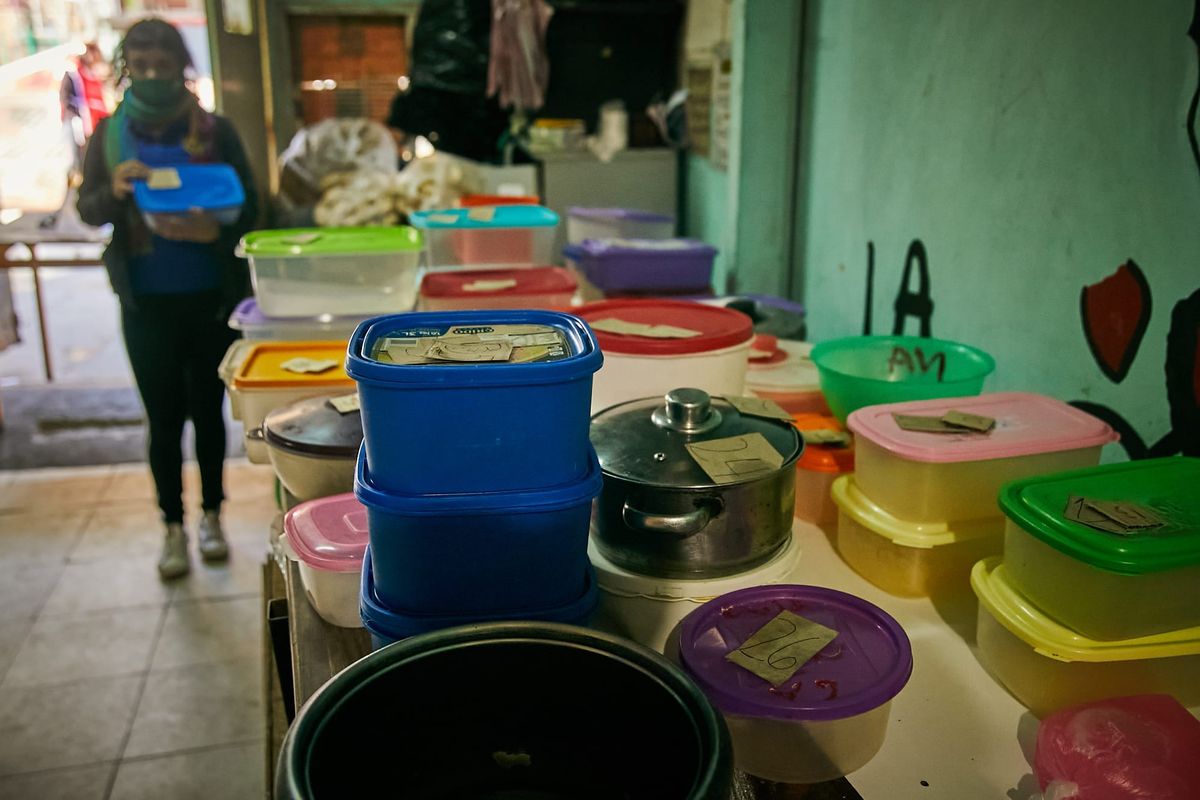](https://www.opendemocracy.net/es/argentina-baja-pobreza-milei-recortes-datos-ollas-comunitarias-comedores-infancia/)
---
Si notaste algo diferente, es cierto y estamos felices: estrenamos sitio web, un nuevo diseño concebido para facilitar la lectura y un logo renovado. Ojalá te guste tanto como a nosotras. Hasta la semana que viene.
Diana Cariboni
Editora de América Latina
[Suscribite a nuestra newsletter](https://www.opendemocracy.net/en/newsletters/opendemocracy-espanol-democraciaabierta-newsletter-email-espanol/)
[¡Queremos conocer tu opinión y tus ideas! Escribinos ](mailto:info.demoabierta@opendemocracy.net)
### Videojuegos e IA, nuevas herramientas para la explotación sexual infantil
URL: https://www.opendemocracy.net/es/uruguay-videojuegos-chatgpt-explotacion-sexual-infantil-openai-meta-tiktok/
Last updated: 2026-06-23T15:27:11.000Z
*Este es el tercer artículo de una investigación sobre tácticas, redes y perfiles de perpetradores de trata y explotación sexual en la región más poblada de Uruguay, los departamentos de Montevideo y Canelones.*
***Advertencia: este artículo contiene descripciones de abuso sexual infantil***
En el mundo de los videojuegos en línea, donde los jugadores compiten o colaboran por un objetivo, un ‘diamante’ puede comprar un traje nuevo, un arma más poderosa o un personaje exclusivo. Para niños, niñas o adolescentes, es un bien codiciado. Para un depredador sexual, es la moneda de cambio perfecta.
_This post is for subscribers only._
### Starmer’s smoke and mirrors, Iran's resilience, and our new look!
URL: https://www.opendemocracy.net/weekly-email-010426/
Last updated: 2026-06-17T20:42:01.000Z
**In this week's issue**
- Revealed: Shadowy corporate consultancy rakes in record profits after Keir Starmer hires its former boss, who is still entitled to six-figure dividend
- Paul Rogers: Far from Trump’s ‘easy win’, a radicalised and resilient Iran has fought the US-Israeli alliance to a stalemate
- Data suggests Milei’s government has significantly reduced poverty in Argentina. But look deeper, and the stats reveal something more sinister
- Human trafficking has no borders, so why is UK government creating a two-tier system for foreign national victims?
- Bernadett Sebály tracked Hungary’s resistance for years. Here’s what he thinks others can learn from Orbán’s defeat
- Sex, power and backlash in Africa: An extract from Nana Darkoa Sekyiamah’s new book *Seeking Sexual Freedom*
- Plus, Nana Darkoa Sekyiamah tells openDemocracy what movements can learn from their own histories
- Podcast: Arthur Snell exposes the terrifying new geography of global conflict and how humanity can adapt to survive it
---
If you, like me, often wonder how Keir Starmer’s government scores own-goals with such frequency, read Ethan Shone’s story on the secretive intelligence firm Hakluyt & Co. in this week’s newsletter.
If Peter Mandelson is the Prince of Darkness of British Politics, Hakluyt is the Kingdom of Smoke and Mirrors. Since Labour’s win, the firm, set up by retired British spooks, has seen its top people leave for key positions in government: Olly Robbins was at Hakluyt before his catastrophic turn as Starmer’s Foreign Office chief, and its former managing partner, Varun Chandra, is still the PM’s senior-most business adviser. Over the same period, the firm’s business (as Ethan’s reporting reveals) has been booming.
Longtime openDemocracy contributor Paul Rogers continues to write incisively about the unravelling of American power in the Persian Gulf. Will Iran go down as the latest of a series of unwinnable wars for the United States? This latest column suggests that might just be the case.
In our podcast, Sian Norris interviews Arthur Snell to discuss his new book *Elemental: The new geography of climate change and how we survive it*.
openDemocracy’s movements’ editor, Nandini Archer, has been interviewing political activists, academics and movement leaders from around the world to understand what it takes to defend democracy. This week, she spoke with Bernadett Sebály, a political scientist at the Central European University, to unpack lessons from Péter Magyar’s surprising victory in the elections in Hungary. (Are you an activist or a progressive organiser? Write to us if there are specific perspectives or subjects you are interested in, and we’ll try to find the right person in a subsequent column.)
There is a lot more packed into this week’s edition, but I want a take a moment to share some exciting news: After several months of work behind the scenes, we have just unveiled our new website (the address remains the same) with a spruced up new layout to make it easier easier for you to access all our exciting journalism and our incredible archive of stories dating back to the early 2000s.
I’ll share more news as we continue to add features, but for now, a big thank you to each of you for your steadfast support. The new website also makes it much easier for you to become a recurring contributor to support our journalism. (Just saying!)
**Aman Sethi, Editor-In-Chief**
---
[Labour-linked consultancy saw record UK growth after boss left to work in No 10Plus, the firm’s former boss Varun Chandra is entitled to six-figure payout, despite working for StarmeropenDemocracyEthan Shone](https://www.opendemocracy.net/www-opendemocracy-net-hakluyt-varun-chandra-keir-starmer-record-uk-business-number-10-labour/)
Mainstream media often acts as a megaphone for politicians driving us toward endless war. We don't. openDemocracy answers only to our readers — which is why we can publish fearless, anti-imperialist analysis like this.If you rely on us to cut through the political spin, please chip in £5 today to keep our journalism independent.
[Iran war: Ceasefire exposes limits of US-Israeli pressureBy extending the pause in fighting, Donald Trump admits that Iran is in a strong bargaining position – so what next?openDemocracyPaul Rogers](https://www.opendemocracy.net/iran-war-ceasefire-exposes-limits-us-israel-pressure-trump-hesgeth-netanyahu/)
[The silent hunger: What Argentina’s falling poverty missesMilei’s cuts have reduced the number of people living in poverty, but the data doesn’t tell the whole storyopenDemocracyFlorence Evans](https://www.opendemocracy.net/argentina-poverty-falling-milei-cuts-data-missing-community-kitchens-children/)
[Human trafficking has no borders, neither should protectionUK government must not create two-tier system for trafficking victims to access support based on country of originopenDemocracyKamena Dorling](https://www.opendemocracy.net/human-trafficking-has-no-borders-neither-should-protection/)
[Hungary’s election: a breakthrough – but not a simple winWe spoke to Bernadett Sebály, who has tracked Hungary’s resistance for years, on the vote – and what others can learnopenDemocracyNandini Naira Archer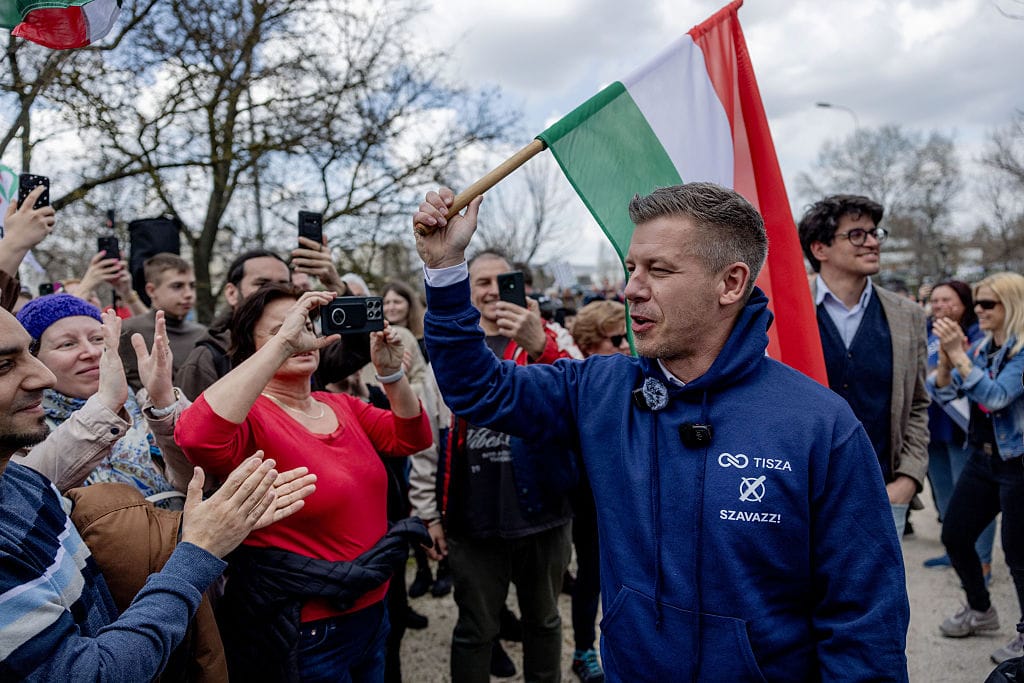](https://www.opendemocracy.net/hungarys-election-a-breakthrough-but-not-a-simple-win/)
[Sierra Leone to Ghana: How the backlash is reshaping sexAn extract from Nana Darkoa Sekyiamah’s new book Seeking Sexual FreedomopenDemocracyNana Darkoa Sekyiamah](https://www.opendemocracy.net/en/backlash-sex-power-africa-book-extract/)
[What movements can learn from their own historiesNana Darkoa Sekyiamah on memory, risk and organising beyond backlashopenDemocracyNana Darkoa Sekyiamah](https://www.opendemocracy.net/en/nana-darkoa-sekyiamah-movements-history-learning/)
[The Climate Wars: How Superpowers Are Carving Up the Earth | With Arthur SnellWhat do melting Arctic ice, a war for farmland in Ukraine, and the panic of Gulf petro-states have in common? Arthur Snell exposes the terrifying new geography of global conflict and how humanity can adapt to survive it.openDemocracyIn Solidarity Podcast](https://www.opendemocracy.net/podcasts/the-climate-wars-how-superpowers-are-carving-up-the-earth-with-arthur-snell/)
---
## Weekly Poll
### Will the United States and Iran reach a deal?
---
## This week in history
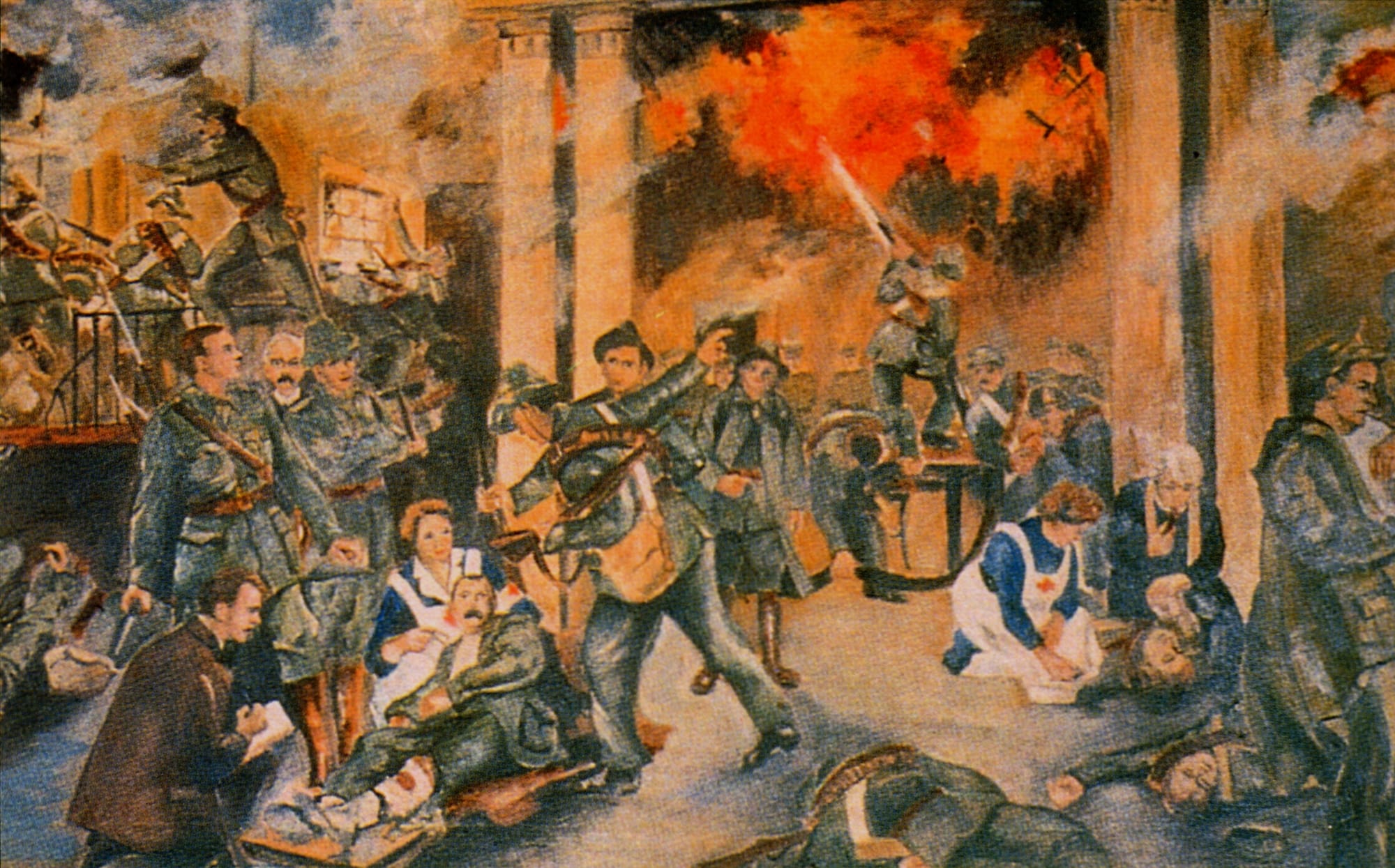
**Birth of the Irish Republic* by Walter Paget
### The Easter Rising, Dublin
On Easter Monday, 24 April 1916, around 1,200 Irish Volunteers and Irish Citizen Army members seized key buildings in Dublin and proclaimed the Irish Republic. The Rising was quickly suppressed, but the execution of its leaders by British authorities transformed public opinion in Ireland — and made independence a mass cause. It remains one of the most studied anti-colonial rebellions in European history.
[The Easter Rising and the Soviet Union: an untold chapter in Ireland’s great rebellionIn a previously undocumented corner of history, research in old Soviet archives shows the extent of the USSR’s interest in Ireland’s Easter Rising.openDemocracyBrendan McGeever](https://www.opendemocracy.net/en/easter-rising-and-soviet-union-untold-chapter-in-ireland-s-great-rebellion/)
---
## What we're reading
### [Indignity, Lea Ypi](https://uk.bookshop.org/a/8711/9780241661925?ref=opendemocracy.net)
Ypi’s reimagination of her grandmother’s life is both moving and fascinating. It opens with Ypi arriving at Albania’s state archives, after a photo of her grandmother on honeymoon goes viral online. She has so many questions, not least about the struggle for memory and truth and reconciliation in a country that endured dictatorship. What follows is a fascinating retelling of her grandmother’s life, bringing in the final days of the Ottoman empire, revolutions, wars, the rise of communism, repression and authoritarianism – as well as shifting borders, and a meditation on the meaning of (in)dignity. One of those brilliant books that help you to understand a vast complex political history, but through a very personal and moving family narrative. [Ypi’s previous memoir, Free](https://uk.bookshop.org/a/8711/9780141995106?ref=opendemocracy.net), is also a must!
*Sian Norris, senior investigations reporter*
---
### El espejismo de la pobreza en Argentina
URL: https://www.opendemocracy.net/el-espejismo-de-la-pobreza-en-argentina/
Last updated: 2026-06-23T15:27:21.000Z
En 1992, Argentina tenía una proporción de pobres de 30%. El país llevaba menos de una década de recuperación de la democracia y en esos nueve años ya había pasado una crisis de hiperinflación.
Hubo momentos en que la pobreza se redujo a 28, 27, 26%. También pasó al 60% con el desplome económico y social de 2001-2002\. Pero la mayor parte de los 43 años transcurridos en democracia, el índice estuvo arriba de 30%, con frecuentes subidas a 40% y más.
[Seguir leyendo](https://www.opendemocracy.net/es/argentina-baja-pobreza-milei-recortes-datos-ollas-comunitarias-comedores-infancia/)
Se trata de una tragedia estructural, que es inherente a cómo existe y funciona la Argentina.
_This post is for subscribers only._
### Trump’s ceasefire extension exposes limits of US-Israeli pressure on Iran
URL: https://www.opendemocracy.net/iran-war-ceasefire-exposes-limits-us-israel-pressure-trump-hesgeth-netanyahu/
Last updated: 2026-06-23T15:27:26.000Z
The US-Israeli war on Iran has reached an unexpected pause. An easing of tensions between Washington and Tehran now extends to Donald Trump changing his mind yet again and extending the informal ceasefire deadline. His motive is allegedly to allow the Iranian government more time to agree to a proposal that meets US requirements, but it is also an admission that Iran is in a strong bargaining position.
There are complications, though. One is that while the Iranian Revolutionary Guard Corps (IRGC) maintain control of the Strait of Hormuz, US armed forces are blockading Iranian ports to stop commercial shipping. The aim is to put such pressure on Iran’s weakened economy that the leadership in Tehran will quickly accept US terms. That’s unlikely.
While a few days ago, Iranian sources were suggesting that they might loosen their control of the Strait of Hormuz, any progress in that direction has now been halted until the US maritime blockade is lifted. Only then might Iran participate in negotiations on a settlement.
_This post is for subscribers only._
### El hambre silenciosa: lo que oculta la baja de la pobreza en Argentina
URL: https://www.opendemocracy.net/es/argentina-baja-pobreza-milei-recortes-datos-ollas-comunitarias-comedores-infancia/
Last updated: 2026-06-23T16:13:17.000Z
A fines de marzo, el gobierno de Argentina celebró la mejora en el índice de pobreza: según el INDEC, el organismo oficial de estadísticas, el [28,2% de la población](https://www.infobae.com/economia/2026/03/31/la-pobreza-registro-una-nueva-baja-fue-de-282-en-el-segundo-semestre-de-2025-y-afecto-a-135-millones-de-personas/?ref=opendemocracy.net) era pobre en el segundo semestre de 2025, una baja marcada respecto del 52,9% de 2024.
El presidente Javier Milei recurrió a las redes sociales para festejar lo que consideró un éxito. “LA POBREZA SIGUE BAJANDO. Dato, no relato”, [escribió en X](https://x.com/JMilei/status/2039060260644638830?ref=opendemocracy.net), y agregó: “MAGA! \[Make Argentina Great Again\]”.
En la Argentina de Milei, la idea de “dato, no relato” desempeña un papel central en la forma en que el gobierno reconfigura la narrativa sobre la reducción de la pobreza. El “relato” se presenta como manipulación, mientras que los “datos” se presentan como neutrales. Lo que se mide, importa; lo que no se mide, no existe.
_This post is for subscribers only._
### The Climate Wars: How Superpowers Are Carving Up the Earth | With Arthur Snell
URL: https://www.opendemocracy.net/podcasts/the-climate-wars-how-superpowers-are-carving-up-the-earth-with-arthur-snell/
Last updated: 2026-08-10T15:48:53.000Z
[](https://open.spotify.com/show/2T5vrJmBgCIof17pp9LMWM?ref=opendemocracy.net) [](https://podcasts.apple.com/us/podcast/in-solidarity-by-opendemocracy/id1790866829?ref=opendemocracy.net)
The climate crisis is changing the way nations think about food, energy, resources, war and peace. Melting ice caps are opening up new trade routes fought over by the world's great powers, conflicts are waged over food and mineral resources, shifting climates are fuelling migration – and Donald Trump says it's all just a scam.
Join Arthur Snell as he discusses his new book *Elemental: the new geography of climate change and how we survive it*. Spanning conflict in the Sahel, Russia's war in Ukraine, the US coveting Greenland, NEOM in Saudi Arabia, and China's energy push, Snell explores how the climate crisis is now in every part of our politics. But while there is much to concern us here, there's hope too. The world faces various futures, and it can adapt and respond to the realities of a changing climate.
Buy Elemental: The New Geography of Climate Change and How We Survive it
_This post is for subscribers only._
### Bukele, un ‘milagro’ que no funciona en democracia
URL: https://www.opendemocracy.net/bukele-el-salvador-maras-democracia-derechos-humanos-exilio-persecucion-estado-de-excepcion/
Last updated: 2026-06-23T16:13:31.000Z
El Salvador, un país de territorio pequeño y algo más de seis millones de habitantes, acaba de cumplir cuatro años bajo el régimen de excepción.
No es una dictadura, al menos no en las formas porque se sigue votando. Pero se parece mucho: las garantías constitucionales están suspendidas y la policía o el ejército pueden detener a cualquiera sin orden judicial.
La justificación para vivir sin libertades fundamentales parece ser que El Salvador nunca las tuvo. Vivió una guerra civil sangrienta entre el ejército y guerrillas campesinas – 75.000 muertos entre 1980 y 1992, más de 6.200 por año –, un proceso de paz que prometió mucho y dejó poco, y terremotos y huracanes que hicieron todo mucho peor.
_This post is for subscribers only._
### The silent hunger: What Argentina’s falling poverty misses
URL: https://www.opendemocracy.net/argentina-poverty-falling-milei-cuts-data-missing-community-kitchens-children/
Last updated: 2026-06-23T16:13:42.000Z
At the end of March, Argentina’s government celebrated a dramatic fall in the poverty rate: 28.2% of the population is now living under the poverty line, down from a [peak of 52.9%](https://www.batimes.com.ar/news/argentina/poverty-climbs-to-529-in-argentina-affecting-almost-25-million-people.phtml?ref=opendemocracy.net) in 2024, according to INDEC, the official statistics agency.
President Javier Milei [took to social media](https://x.com/JMilei/status/2039060260644638830?ref=opendemocracy.net) to cheer the purported success. “Poverty keeps falling. Fact, not narrative,” he wrote on X in Spanish, adding: “MAGA \[Make Argentina Great Again\]!”
In Milei's Argentina, the idea of ‘fact, not narrative’ does significant work in reshaping how the government frames poverty alleviation. ‘Narrative’ is cast as manipulation, while ‘facts’ are presented as neutral. What gets measured matters, and what doesn’t get measured does not exist.
_This post is for subscribers only._
### Human trafficking has no borders, neither should protection
URL: https://www.opendemocracy.net/human-trafficking-has-no-borders-neither-should-protection/
Last updated: 2026-06-23T16:13:53.000Z
By the time Ella arrived in the UK, she had been trafficked and sexually abused multiple times in multiple countries. She suffered from post-traumatic stress disorder, suicidal ideation, and had significant difficulties knowing who she could trust.
A decade ago, Ella was forcibly conscripted into military service in Eritrea as a young woman, escaping only when a relative helped her flee to Sudan while she was receiving medical treatment. There, an agent arranged work for her as a housekeeper, caring for children. But she was never allowed out alone and was not paid. She was later moved to another house where other young women “like her” were being held. The agent and his men repeatedly sexually assaulted her.
After several months, Ella escaped with the help of a man she had befriended and travelled to Libya. At the Libyan border, she was detained by police and imprisoned for seven months, where the guards physically and sexually assaulted her. After escaping prison, she was forced to work unpaid as a housekeeper for two months to cover the costs of onward travel. She later travelled to Italy and then to the UK.
_This post is for subscribers only._
### Hungary’s election: a breakthrough – but not a simple win
URL: https://www.opendemocracy.net/hungarys-election-a-breakthrough-but-not-a-simple-win/
Last updated: 2026-06-23T16:14:10.000Z
For more than a decade, Hungary has been held up as a case study in democratic backsliding under Viktor Orbán – a system often described as an ‘informational autocracy’, where elections remain but the media and public sphere are tightly controlled.
Now, after a historic electoral defeat for Orbán’s Fidesz earlier this month, the mood is shifting. But whether this moment marks a clean break, a fragile opening, or something more complicated is still an open question – especially for those who have spent years organising under pressure.
At openDemocracy, we are also trying something slightly different. Rather than covering movements only through moments of visibility or ‘wins’, this series is an attempt to document what organisers are actually doing, learning and grappling with in real time – the strategies, tensions and trade-offs that rarely make it into traditional reporting, but are often the most useful for others organising elsewhere.
_This post is for subscribers only._
### Labour-linked consultancy saw record UK growth after boss left to work in No 10
URL: https://www.opendemocracy.net/www-opendemocracy-net-hakluyt-varun-chandra-keir-starmer-record-uk-business-number-10-labour/
Last updated: 2026-06-23T16:14:23.000Z
A secretive corporate intelligence firm with close ties to the government saw its UK revenues surge by 30% in the first financial year after its managing partner left to become Keir Starmer’s most senior business adviser, openDemocracy can reveal.
Varun Chandra left Hakluyt & Company, a Mayfair-based firm that provides strategic advice to some of the world’s largest corporations on navigating governments and geopolitical risk, to join Starmer’s government in July 2024.
In January the following year, Hakluyt lost another senior staff member to the government: embattled former civil servant Olly Robbins quit as the firm’s lead on Europe, the Middle East and Africa to join the Foreign, Commonwealth and Development Office.
_This post is for subscribers only._
### Sex, power and backlash in Africa
URL: https://www.opendemocracy.net/en/backlash-sex-power-africa-book-extract/
Last updated: 2026-06-23T16:14:50.000Z
In researching my book *Seeking Sexual Freedom*, I was struck by the contrast between the expansive ways our ancestors understood gender, sexuality and intimacy, and the growing restrictions being shaped today by religious fundamentalism, patriarchy and political power.
I think of these restrictions – often described as a “backlash” – as an interruption.
Across the continent, we have centuries of knowledge that speak to fluidity in our gods and goddesses, and to a multiplicity of family structures and ways of being. The current moment – marked by rising homophobia and the rollback of progressive rights across Africa and beyond – sits uneasily against that longer history.
_This post is for subscribers only._
### What movements can learn from their own histories
URL: https://www.opendemocracy.net/en/nana-darkoa-sekyiamah-movements-history-learning/
Last updated: 2026-06-23T16:15:01.000Z
At a moment of intensifying backlash against rights and bodily autonomy globally, movements are being forced to adapt fast – often with little space to reflect on what is actually working.
Much of the media that covers activism still flattens that work into individual stories or neat 'wins', even as organisers themselves push back on those framings.
This Q&A is part of openDemocracy’s effort to do something different: to treat movements not just as subjects of coverage, but as sources of knowledge – and to surface the practical thinking behind how organisers are navigating risk, building power and learning across contexts in real time.
_This post is for subscribers only._
### Big Tech platforms under fire in inquiry into Southport mass stabbing
URL: https://www.opendemocracy.net/en/southport-murders-amazon-x-big-tech-criticised-age-verification-content-moderation/
Last updated: 2026-06-23T16:15:12.000Z
In July 2024, a 17-year-old stabbed 13 people, killing three girls, in a dance studio in Southport, in the north-west of England. Fueled by misinformation about the incident in the aftermath, rioters clashed with police and attacked a local mosque. Anti-immigration protests and riots spread across the UK in the days that followed.
On Monday, the UK government released the first phase of its [inquiry](https://southport-prod.s3.eu-west-2.amazonaws.com/2026/04/31.236%5FHO%5FSouthport-Inquiry%5FVolume1%5FWEB.pdf?ref=opendemocracy.net) [report](https://southport-prod.s3.eu-west-2.amazonaws.com/2026/04/31.236%5FHO%5FSouthport-Inquiry%5FVolume2%5FWEB.pdf?ref=opendemocracy.net) examining the event. While the report says that the “perpetrator’s responsibility is absolute” – he pled guilty and was sentenced to life imprisonment – it considers a range of other factors and failings that surrounded the event and its aftermath. That includes the role of the internet and tech platforms, including, in particular, X and Amazon.
**Social media and online content**
_This post is for subscribers only._
### Brazil: How the CIA funded Catholic marches that paved the way for the 1964 coup
URL: https://www.opendemocracy.net/en/cia-fund-brazil-family-march-dictatorship/
Last updated: 2026-06-23T16:15:22.000Z
- *This piece was originally published by* [*Agencia Publica*](https://apublica.org/2026/03/cia-como-agencia-americana-impulsionou-marcha-da-familia-com-deus-pela-liberdade/?ref=opendemocracy.net)*, and has been translated and edited by openDemocracy*
As night fell on Rio de Janeiro on 13 March 1964, Brazilian President João Goulart, known as Jango, addressed a crowd gathered at Brazil’s Central Station to announce measures that would change the course of the country’s history.
_This post is for subscribers only._
### The US is facing its Suez moment – the outcome could change the world order
URL: https://www.opendemocracy.net/en/iran-war-united-states-israel-suez-crisis-donald-trump-change-world-order/
Last updated: 2026-06-23T16:15:33.000Z
It is now clear that the war against Iran is going badly for Donald Trump. Binyamin Netanyahu and the Israeli Defence Forces (IDF) may be determined to carry on, but Trump is the war leader in deep trouble.
So radical is this unexpected outcome that the United States may even be facing its Suez moment, like the one that saw France and the UK lose status in 1956, hastening decolonisation in the 1960s. If so, the effects of the Iran conflict could last for decades, well beyond the immediate conflict, and have impacts that change the current world order – with unpredictable consequences.
Consider the past month and a half. Iran’s theocratic leadership had been crippled by assassinations within days of the start of the assault, but leaders were quickly replaced, and the much-anticipated popular uprising simply did not happen.
_This post is for subscribers only._
### Leaving to survive, staying to resist: Persecution and exile in El Salvador
URL: https://www.opendemocracy.net/en/el-salvador-nayib-bukele-journalists-human-rights-defenders-persecution-exile/
Last updated: 2026-06-23T16:15:43.000Z
“The best-case scenario is that the state captures me,” says Ángel Flores, the regional coordinator of the Indigenous Movement for the Articulation of the Struggles of the Ancestral Peoples (MILPA), one of the most vocal organisations against state mega-projects in El Salvador.
It would not be the first time MILPA’s members had been detained under El Salvador’s [state of emergency](https://www.asamblea.gob.sv/sites/default/files/documents/decretos/0BF13F41-E419-46E1-B6A8-4F5E35F4E12A.pdf?ref=opendemocracy.net), which has suspended constitutional rights and allowed police to arrest people without a judicial warrant. President Nayib Bukele’s government initially introduced the measure in 2022 after a spike in gang-related homicides. At the time, it was supposed to last 30 days, but last month entered its fourth year, having been extended dozens of times.
In this article, some of the hundreds of journalists and defenders of human and land rights have told us how their lives have changed since the state of emergency was introduced. Some remain in El Salvador, defiant in their resistance despite fearing for their and their families’ lives amid state-led persecution. Others have been forced to flee the country, fearing detention, being disappeared, or even death.
_This post is for subscribers only._
### Revealed: Morocco forcibly displaced Black migrants ahead of AFCON tournament
URL: https://www.opendemocracy.net/en/revealed-morocco-forcibly-displaced-black-migrants-ahead-of-afcon-tournament/
Last updated: 2026-06-23T16:15:55.000Z
Who won the 2025 African Cup of Nations depends on who you ask. On the pitch, Senegal. On paper, Morocco – the football tournament’s host. But beyond the disputed result, AFCON has revealed a story of how a host country managed its image – and who it pushed out of sight to do so.
Late last year, Morocco forcibly displaced hundreds of Black migrants as it prepared to welcome more than 600,000 tourists for AFCON. While such operations are not uncommon in the country, the Moroccan Human Rights Association (AMDH) told openDemocracy that there was a significant spike ahead of the tournament.
Displacements often “intensify” when the world’s eyes are on Morocco for international sports tournaments, diplomatic summits, or big cultural festivals, according to AMDH president Souad Brahma.
_This post is for subscribers only._
### La derrota de Orbán en Hungría es un golpe al movimiento mundial antigénero
URL: https://www.opendemocracy.net/es/orban-hungria-movimiento-antigenero-elecciones-2026-mujeres-lgbtiq/
Last updated: 2026-06-23T16:16:05.000Z
Es 2017 en la capital de Hungría, Budapest, y el Congreso Mundial de las Familias ha desembarcado en la ciudad.
Organizado por el activista estadounidense antiaborto y anti-LGBTIQ+ Brian Brown, el encuentro anual de nacionalistas cristianos, figuras políticas, centros de pensamiento y académicos se anota un hito: recibir al primer ministro húngaro Viktor Orbán como orador principal.
En su [discurso](https://2015-2019.kormany.hu/en/the-prime-minister/the-prime-minister-s-speeches/prime-minister-viktor-orban-s-opening-speech-at-the-2nd-budapest-world-congress-of-families?ref=opendemocracy.net), Orbán dice que el futuro de Europa está “bajo ataque”, y que el continente está “perdiendo en la competencia poblacional entre grandes civilizaciones”. Y agrega que la Unión Europea (UE) quiere resolver los problemas derivados del envejecimiento de la población y las bajas tasas de natalidad mediante la inmigración.
_This post is for subscribers only._
### Irse para sobrevivir, quedarse para resistir en El Salvador de Bukele
URL: https://www.opendemocracy.net/es/el-salvador-bukele-represion-regimen-de-excepcion-derechos-humanos-persecucion-exilio-cristosal-ruth-lopez/
Last updated: 2026-06-23T16:16:18.000Z
“El mejor de los escenarios es que me capture el Estado”, dice Ángel Flores, coordinador regional del Movimiento Indígena para la Articulación de las Luchas de los Pueblos Ancestrales de El Salvador (MILPA), organización muy activa en la lucha contra el despojo del territorio por la construcción de megaproyectos del Estado.
Desde 2021, cuando el gobierno de Nayib Bukele anunció la construcción del Aeropuerto del Pacífico en La Unión, en el oriente del país, Flores se convirtió en una presencia incómoda. El megaproyecto prometía desarrollo, pero las comunidades afectadas se preguntaban por sus casas, sus cultivos, el agua y la compensación del Estado.
Más de 200 familias fueron desalojadas en las comunidades de El Condadillo y Flor de Mangle, zonas estratégicas para el proyecto. El 9 de junio de 2023, la policía [detuvo](https://www.business-humanrights.org/es/%C3%BAltimas-noticias/el-salvador-detienen-a-oscar-ren%C3%A9-mart%C3%ADnez-l%C3%ADder-ind%C3%ADgena-de-la-comunidad-lenca/?ref=opendemocracy.net) a uno de los fundadores de MILPA, Óscar René Martínez Iglesias, un pescador acusado de pertenecer a pandillas y procesado bajo el [régimen de excepción](https://www.asamblea.gob.sv/sites/default/files/documents/decretos/0BF13F41-E419-46E1-B6A8-4F5E35F4E12A.pdf?ref=opendemocracy.net) impuesto el 27 de marzo de 2022.
_This post is for subscribers only._
### Defeating authoritarians: Notes from the Hungarian playbook
URL: https://www.opendemocracy.net/en/hungary-election-orban-defeat-peter-magyar-win-lessons-progressives/
Last updated: 2026-06-23T16:16:31.000Z
As the dust settles on last week’s Hungarian election, which saw Viktor Orbán and his Fidesz party wiped out in a landslide win by centre-right candidate Péter Magyar, some onlookers are left puzzled.
What changed? Hungarians, including many Fidesz voters, have long known of the Orbán regime’s corruption and anti-democratic measures, which were backed by both Donald Trump in the US and Vladimir Putin in Russia. Was Magyar just in the right place at the right time, or is there something deeper at play? And what can progressive forces around the world learn from him?
We know that it was not primarily – or not only – propaganda that kept millions wedded to Fidesz for so long. This is clear from a recent [interview](https://www.youtube.com/live/P3pDGNCCyzU?ref=opendemocracy.net) given to an independent media outlet (Partizán) in which a Fidesz politician explains that she had been scandalised by the enrichment of Orbán’s close circle and the cases of abuse within child protection services that had come to light – she just did not believe these were intrinsic to the workings of Fidesz. So if Fidesz politicians and voters alike were often aware of these issues, what kept them supporting the party for so long?
_This post is for subscribers only._
### Orbán’s election defeat is a blow to the global anti-gender movement
URL: https://www.opendemocracy.net/en/orban-hungary-abortion-lgbtq-great-replacement/
Last updated: 2026-06-23T16:16:42.000Z
It’s 2017 in Hungary’s capital city of Budapest, and the World Congress of Families has landed in town.
Organised by US anti-abortion, anti-LGBTQ personality Brian Brown, the annual gathering of Christian nationalist campaigners, political figures, think tanks and academics pulled off its biggest coup yet: welcoming Hungarian prime minister Viktor Orbán to the stage as a keynote speaker.
Orbán used his [speech](https://2015-2019.kormany.hu/en/the-prime-minister/the-prime-minister-s-speeches/prime-minister-viktor-orban-s-opening-speech-at-the-2nd-budapest-world-congress-of-families?ref=opendemocracy.net) to describe Europe’s future as “under attack”, with the region “losing out in the population competition between great civilisations”. He claimed that the EU wanted to solve the problems posed by an ageing population and low birth rates with immigration.
_This post is for subscribers only._
### Redes comunitarias sostienen la salud mental en la capital de Argentina
URL: https://www.opendemocracy.net/es/argentina-salud-mental-redes-comunitarias-ley-crisis-suicidios-trabajo-gobierno-milei/
Last updated: 2026-06-23T16:16:51.000Z
Juan Almeda\* se despierta cada mañana en una villa del suroeste de Buenos Aires antes de que la ciudad termine de desperezarse. Son las seis, y le espera un largo trayecto – un ómnibus, dos subtes – para llegar a su trabajo, un lugar que lo ayudó a aliviar la carga de un diagnóstico que suele ser sinónimo de exclusión.
Hasta hace dos años, cuando cruzó la puerta del bodegón La Pascana en busca de empleo, la vida de Almeda, de 35 años y padre de un niño de nueve, era inestable. Trabajaba esporádicamente como demoledor en obras de construcción, pero no contaba con el acompañamiento que necesitaba como usuario de los servicios de salud mental para sostener una rutina, garantizar un ingreso y poner comida en la mesa.
Hoy, poco antes de que el reloj marque las nueve, Almeda se ata el delantal blanco en la espalda, se ajusta la bandana bordó en la cabeza y se pone a preparar nueve kilos de masa para pizza, empanadas y pan. Empezó lavando los platos. Ahora estudia para ser maestro pizzero. Quiere coordinar el equipo de trabajo del bodegón.
_This post is for subscribers only._
### Netanyahu is behind Iran war, not Trump – and that makes peace unlikely
URL: https://www.opendemocracy.net/en/iran-war-israel-trump-netanyahu-peace-unlikely/
Last updated: 2026-06-23T16:17:08.000Z
Within hours of Donald Trump accepting a two-week ceasefire in Iran, walking back on his dire threat that “a whole civilisation will die”, Binyamin Netanyahu did his best to wreck any prospect of peace.
Israel launched an intense bombardment of Beirut and other Lebanese towns and cities, with 100 attacks in the first ten minutes. More than 300 people were killed and more than a thousand wounded, according to Lebanon’s Health Ministry.
The Israeli Defence Forces (IDF) also carried out a series of strikes across Gaza, including a [precisely targeted armed drone attack](https://apnews.com/video/al-jazeera-journalist-killed-by-israeli-drone-strike-in-gaza-c9d8888762f149d2823da66d2c605d0b?ref=opendemocracy.net) on the car of Al Jazeera journalist Mohammed Wishah, the 262nd journalist to be killed by Israel since October 2023.
_This post is for subscribers only._
### UK plans to tackle AI harms would bypass democratic process, experts warn
URL: https://www.opendemocracy.net/en/uk-online-safety-act-ai-harms-government-labour-grok-elon-musk/
Last updated: 2026-06-23T16:17:23.000Z
The UK is seeking to grant ministers wide-ranging new powers to rewrite significant portions of the Online Safety Act through amendments tucked into two unrelated bills, a move that experts warn could bypass normal parliamentary scrutiny.
The proposed changes would allow ministers to amend the act by adding as much as a third to the regulatory regime using so-called [Henry VIII clauses](https://www.parliament.uk/site-information/glossary/henry-viii-clauses/?ref=opendemocracy.net), limiting Parliament to a simple yes-or-no vote on an unforeseeable number of new rules, rather than full debate or amendment.
The change would allow the central government to limit detailed parliamentary scrutiny and amend the act more quickly. “It’s basically \[introducing\] a third of the Online Safety Act,” and gives ministers power to add as many unforeseen new rules as they want, said Essex University law professor Lorna Woods, legal adviser to the Online Safety Act Network.
_This post is for subscribers only._
### What counts as a win when victory is out of reach?
URL: https://www.opendemocracy.net/en/what-counts-win-india-peace-social-movements-harsh-mander/
Last updated: 2026-06-23T16:17:35.000Z
At a time when activists and campaigners are being asked to prove impact in ever more measurable ways, we wanted to ask a different question: what actually counts as a ‘win’? And what does it take to keep going when everything feels stacked against you?
As part of a new series on rights movements and what makes change possible, we spoke to Harsh Mander, a long-time human rights activist in India whose work spans areas from the right to food and shelter to his Caravan of Love campaign against hate violence and lynching.
Mander famously resigned from his position as a senior civil servant in the wake of the 2002 Gujarat riots, choosing instead to dedicate his life to justice work on behalf of marginalised communities. Since then, he has led landmark Supreme Court interventions on the right to food, homelessness and social protection. For many, he remains a deeply respected moral voice.
_This post is for subscribers only._
### El auge de la IA explota a los creadores africanos
URL: https://www.opendemocracy.net/es/africa-inteligencia-artificial-creadores-derechos-de-autor-meta-openai-demandas-compensaciones/
Last updated: 2026-06-23T16:17:45.000Z
Las empresas de inteligencia artificial enfrentan un tsunami de demandas por el uso no autorizado de materiales protegidos por derechos de autor para entrenar sus modelos.
Autores, artistas y editoriales en [Estados Unidos](https://llmlitigation.com/pdf/03223/tremblay-openai-complaint.pdf?ref=opendemocracy.net), [Francia](https://www.euronews.com/culture/2025/03/13/french-publishers-and-authors-sue-meta-over-copyright-works-used-in-ai-training?ref=opendemocracy.net), [Australia](https://www.theguardian.com/commentisfree/2025/sep/10/tech-companies-are-stealing-our-books-music-and-films-for-ai-its-brazen-theft-and-must-be-stopped?ref=opendemocracy.net), [Canadá](https://www.publishersweekly.com/pw/by-topic/international/international-book-news/article/98333-canadian-author-sues-four-ai-companies-for-copyright-infringement.html?ref=opendemocracy.net) e [India](https://www.timesnownews.com/technology-science/chatgpt-in-trouble-indian-publishers-sue-openai-over-unauthorised-use-of-books-article-117590379?ref=opendemocracy.net) fueron por el camino de las acciones legales, en un ajuste de cuentas global en torno a los derechos de propiedad intelectual en la era de la IA.
The New York Times [demandó](https://www.nytimes.com/2025/12/05/technology/new-york-times-perplexity-ai-lawsuit.html?smid=tw-nytimes&utm%5Fsocial%5Fhandle%5Fid=807095&utm%5Fsocial%5Fpost%5Fid=615331692&smtyp=cur&ref=opendemocracy.net) a Perplexity AI, la empresa emergente de inteligencia artificial que desarrolló un motor de búsqueda de vanguardia, y a OpenAI por entrenar sus modelos con contenido del NYT sin autorización.
_This post is for subscribers only._
### Labour to scrap time limit on investigating sexual misconduct by doctors
URL: https://www.opendemocracy.net/en/doctors-sexual-abuse-nhs-gmc-five-year-justice-labour-general-medical-council/
Last updated: 2026-06-23T16:17:54.000Z
Rose\* was in her forties when she was diagnosed with breast cancer in the late 1990s. A period that was already anxiety-ridden and scary was made even worse when, she alleges, her consultant flirted with and sexually abused her.
“On the one hand, he was saving lives,” Rose told me when we first spoke in 2022\. “On the other hand, he was ruining lives.”
Rose and I met when my then-colleague [Sascha Lavin and I](https://hansard.parliament.uk/Commons/2023-05-16/debates/9B5527F7-19CE-41A7-B168-F14E7A4CCFE1/AbuseAndSexualAssaultsInTheNHSInvestigations?highlight=%22sian%20norris%22&ref=opendemocracy.net#contribution-1361EB91-628A-4A59-83E4-3CBEC0C7E337) were investigating sexual abuse in healthcare. We found that [patients had sexually harassed and assaulted thousands of healthcare staff](https://bylinetimes.com/2022/03/08/iwd-thousands-of-nhs-staff-harassed-by-patients/?ref=opendemocracy.net), that more than [4,100 complaints of sexual abuse made to the police took place in NHS settings](https://bylinetimes.com/2022/11/28/nhs-must-urgently-investigate-byline-times-disturbing-figures-on-rape-and-sex-assault-in-hospitals-says-shadow-health-secretary/?ref=opendemocracy.net), and that the NHS had spent millions on [compensation](https://www.thetimes.com/uk/healthcare/article/nhs-pays-millions-to-victims-of-hospital-sex-pests-kx6qsbmcd?gaa%5Fat=eafs&gaa%5Fn=AWEtsqfBv2Q-j5NMiR17qjoyqe4asUUjiDhrvnO51iAhp4k-vDwfDKQZeKB7ZkaqwNY%3D&gaa%5Fts=69ca634c&gaa%5Fsig=SVICI1T%5F%5F0cOBVOtbJOL0sGxDgO9i2BXka-6V%5FWG%5FHH1vFaBNOP20gMp5Aixh13NRAfkjoDt442mVjIEcVZTaA%3D%3D&ref=opendemocracy.net) for victims and survivors of sexual harassment, assault and even rape.
_This post is for subscribers only._
### ‘Labour-specialist’ lobbying firm with close ties to No10 revs up business
URL: https://www.opendemocracy.net/en/url-anacta-strategies-labour-keir-starmer-company-accounts-lobbying-airbnb-visa-sky-pearson/
Last updated: 2026-06-23T16:18:04.000Z
Business is booming at Anacta Strategies, a lobbying firm that advised Labour in the 2024 election and has shown significant growth in its first full year of operations, newly filed company accounts reveal.
Anacta — which has close ties to Keir Starmer and describes itself as "the leading Labour-specialist advisory firm” — counts among its clients Pearson Engineering, an Israeli-owned defence firm which won a government contract [worth £10m](https://www.find-tender.service.gov.uk/Notice/053946-2025?origin=SearchResults&p=1&ref=opendemocracy.net), its largest ever, with the Ministry of Defence last year.
It has also lobbied the government on behalf of Airbnb, Visa and Sky, according to the statutory lobbying register, but does not publish a full list of its clients and is not signed up to the industry’s voluntary code of conduct.
_This post is for subscribers only._
### Fake authors, fake stories: Inside the Russian campaign to influence Argentina's election
URL: https://www.opendemocracy.net/en/russia-argentina-influence-operations-media-javier-milei-investigation-kremlin-putin/
Last updated: 2026-06-23T16:18:12.000Z
Russian agents linked to the Kremlin spent much of 2024 working on secretive operations to infiltrate Argentina’s media to discredit the country’s new far-right libertarian president, Javier Milei, according to leaked documents seen by openDemocracy.
In the run-up to his election victory in December 2023, Milei began seeking favour with Joe Biden’s administration in the US. While the pair were unlikely to see eye to eye on Milei’s domestic politics – he famously appeared on stage brandishing the [chainsaw](https://elpais.com/argentina/2025-02-02/la-motosierra-de-milei-que-inspira-a-musk.html?ref=opendemocracy.net) he was going to use to “[destroy the state from within](https://www.infobae.com/politica/2024/06/06/javier-milei-soy-el-topo-que-destruye-el-estado-desde-adentro/?ref=opendemocracy.net)” – Milei adopted US-friendly geopolitical positions, including support for Ukraine, even inviting Ukraine’s President Volodymyr Zelensky to his inauguration and hosting him in the presidential palace.
This support appears to have ruffled feathers in Moscow. A propaganda network backed by Russian foreign intelligence and internally known as ‘the Company’ began working to undermine Milei’s government and further divide Argentina’s [already polarised society](https://ruj.uj.edu.pl/server/api/core/bitstreams/fc32941d-058a-4a5d-b8d1-6b414ffe0954/content?ref=opendemocracy.net), according to a tranche of Russian-language documents obtained by The Continent, an African news outlet, and shared with a consortium of investigative newsrooms including openDemocracy, Dossier Center, iStories, All Eyes on Wagner, and Forbidden Stories.
_This post is for subscribers only._
### Why feminists must not give up on the UN Commission on the Status of Women
URL: https://www.opendemocracy.net/en/un-commission-status-women-far-right-feminists/
Last updated: 2026-09-30T09:09:18.000Z
When the United Nations’ 70th annual [Commission on the Status of Women](https://www.unwomen.org/en/how-we-work/commission-on-the-status-of-women/csw70-2026?ref=opendemocracy.net), the key global body dedicated to promoting gender equality, rights and the empowerment of women, met earlier this month, many of its usual audiences were absent.
This was for a few reasons. First, many feminist activists and organisations feel increasingly disenchanted with the UN. It is disheartening to watch this multilateral institution seemingly unable to preserve peace and stop the genocide and wars ongoing in Palestine, Sudan, Yemen, Ukraine and Iran, to name a few.
The location of the meeting – New York – was also a problem for many. The United States was already inaccessible to many due to its stringent visa restrictions, and it has become even more so with concerns around ICE detainment or illegal deportations, as well as flight disruptions as a result of the US-Israel war on Iran. Many activists rightly question the value of critical meetings being held in a country where the people most impacted by the issues being discussed are unable to bring their concerns to the policymakers and government representatives making life-changing decisions.
_This post is for subscribers only._
### Trump’s war rhetoric drifts as US escalates toward ground war
URL: https://www.opendemocracy.net/en/trumps-war-rhetoric-drifts-as-us-escalates-toward-ground-war/
Last updated: 2026-06-23T16:18:28.000Z
The United States is preparing for a ground war with Iran. Donald Trump, meanwhile, says the conflict is nearly over.
“We’re going to bring them back to the stone ages, where they belong,” Trump [said](https://time.com/article/2026/04/02/trump-speech-white-house-iran-war-update-end/?ref=opendemocracy.net) in his Easter message – even as the war he is overseeing expands across the region.
The gap between rhetoric and reality is widening – and there is little evidence that anyone around him is willing to correct it.
_This post is for subscribers only._
### Leña al fuego: La campaña rusa para influir en los medios de comunicación de Argentina
URL: https://www.opendemocracy.net/es/argentina-rusia-propaganda-medios-periodismo-milei-ucrania-putin-trump-prigozhin/
Last updated: 2026-06-23T16:18:37.000Z
Cuando el libertario Javier Milei llevaba pocos meses presidiendo Argentina, agentes rusos pusieron en marcha operaciones de desinformación e influencia política para desacreditar a su gobierno, según documentos filtrados a los que tuvo acceso openDemocracy.
Milei, figura emergente en el ecosistema de la extrema derecha mundial, asumió el cargo en diciembre de 2023 y se alineó enseguida con los intereses estadounidenses, al principio apoyando a Ucrania en la guerra contra Rusia. También fijó su sello: la “[motosierra](https://elpais.com/argentina/2025-02-02/la-motosierra-de-milei-que-inspira-a-musk.html?ref=opendemocracy.net)”, en referencia a las medidas para “[destruir el Estado desde adentro](https://www.infobae.com/politica/2024/06/06/javier-milei-soy-el-topo-que-destruye-el-estado-desde-adentro/?ref=opendemocracy.net)”, y un discurso caracterizado por [insultos](https://www.austral.edu.ar/en/The-insults-in-Javier-Milei%27s-speeches%3A-more-than-a-thousand-offenses-against-politicians--journalists--and-economists-in-14-months-of-management/?ref=opendemocracy.net) a quien se le opusiera.
A medida que Argentina, una[ sociedad ya polarizada](https://ruj.uj.edu.pl/server/api/core/bitstreams/fc32941d-058a-4a5d-b8d1-6b414ffe0954/content?ref=opendemocracy.net), se tensaba aún más, una red respaldada por los servicios de inteligencia exterior de Rusia y conocida internamente como la “Compañía”, trató de explotar ese clima y echar leña al fuego.
_This post is for subscribers only._
### Brasil: Así financió la CIA la Marcha de la Familia con Dios por la Libertad
URL: https://www.opendemocracy.net/es/brasil-eeuu-cia-dictadura-joao-goulart-golpe-de-estado-marcha-familia-dios-libertad-vaticano/
Last updated: 2026-06-23T16:18:46.000Z
La noche del 13 de marzo de 1964 caía sobre Río de Janeiro cuando el presidente João Goulart (conocido como Jango), anunció medidas que cambiarían el rumbo de la historia nacional frente a una multitud reunida en la Estación Central de Brasil.
Su discurso, centrado en la restricción de los envíos al exterior de las ganancias de empresas extranjeras y en la promesa de una reforma agraria, no solo resonó en las calles, sino también en los despachos de Brasilia, en las sedes de las corporaciones multinacionales y en los pasillos de Washington.

João Goulart y su esposa Maria Thereza Fontella en el histórico mitin de la Central de Brasil, Río de Janeiro, 13 de marzo de 1964 | Divulgación EBC
Días antes, en Belo Horizonte, un grupo de mujeres que empuñaban rosarios como escudos frente a lo que consideraban una amenaza comunista, le impidieron hablar al diputado federal laborista Leonel Brizola, cuñado del presidente.
_This post is for subscribers only._
### Getting serious with Zack Polanski’s Green Party
URL: https://www.opendemocracy.net/en/green-party-zack-polanski-polls-elections-senedd-reform-uk-nigel-farage-jeremy-corbyn/
Last updated: 2026-06-23T16:18:56.000Z
As the bass dropped in Trafalgar Square last Saturday, the mood tipped from protest to party. A day that had begun as one of the largest anti-racism rallies London has seen in years – with organisers estimating a turnout of half a million – ended in dance music and defiant optimism.
“Trafalgar Square, who’s ready to make hope normal again?” shouted Green Party leader Zack Polanski over the booming music. This was the House Against Hate rave; on the stage, Polanski was flanked on one side by Hannah Spencer, the new Green MP for Gorton and Denton, and on the other, by a man clad in leather and hotpants, displaying an impressive range of hip motion.
“Who’s here for love, unity, solidarity?” Polanski shouted again to more cheers, before handing the microphone to Spencer, who led the crowd in a familiar chant of “Oggy, Oggy, Oggy, Oi, Oi, Oi”, to which she added a new battle cry: “Let’s defeat the millionaires!”
_This post is for subscribers only._
### How African creators are currently being exploited in the AI boom
URL: https://www.opendemocracy.net/en/how-african-creators-are-currently-being-exploited-in-the-ai-boom/
Last updated: 2026-06-23T16:19:05.000Z
AI companies are under a tsunami of lawsuits for the unauthorised use of copyrighted materials to train their AI models. Authors, artists and publishers in the [United States of America](https://llmlitigation.com/pdf/03223/tremblay-openai-complaint.pdf?ref=opendemocracy.net), [France](https://www.euronews.com/culture/2025/03/13/french-publishers-and-authors-sue-meta-over-copyright-works-used-in-ai-training?ref=opendemocracy.net), [Australia](https://www.theguardian.com/commentisfree/2025/sep/10/tech-companies-are-stealing-our-books-music-and-films-for-ai-its-brazen-theft-and-must-be-stopped?ref=opendemocracy.net), [Canada](https://www.publishersweekly.com/pw/by-topic/international/international-book-news/article/98333-canadian-author-sues-four-ai-companies-for-copyright-infringement.html?ref=opendemocracy.net), and [India](https://www.timesnownews.com/technology-science/chatgpt-in-trouble-indian-publishers-sue-openai-over-unauthorised-use-of-books-article-117590379?ref=opendemocracy.net) have taken legal actions, marking a global reckoning over intellectual property rights in the age of AI. The New York Times has [sued](https://www.nytimes.com/2025/12/05/technology/new-york-times-perplexity-ai-lawsuit.html?smid=tw-nytimes&utm%5Fsocial%5Fhandle%5Fid=807095&utm%5Fsocial%5Fpost%5Fid=615331692&smtyp=cur&ref=opendemocracy.net) Peperlexity, the artificial intelligence start-up that has built a cutting-edge internet search engine, and OpenAI for training their models on NYT content without authorisation.
The largest legal action to date resulted in a [$1.5bn settlement](https://www.theguardian.com/technology/2025/sep/05/anthropic-settlement-ai-book-lawsuit?ref=opendemocracy.net), after a coalition of authors sued Anthropic for using nearly [200,000 copyrighted books](https://www.theatlantic.com/technology/archive/2023/09/books3-database-generative-ai-training-copyright-infringement/675363/?ref=opendemocracy.net) to train its large language models without consent or compensation. Court filings revealed that a significant portion of the training data used by Anthropic – as well as Meta and Bloomberg – was drawn from pirated book databases such as [Books3](https://www.theatlantic.com/technology/archive/2025/09/dataset-books3/683662/?ref=opendemocracy.net) and [LibGen](https://www.theatlantic.com/technology/archive/2025/03/search-libgen-data-set/682094/?ref=opendemocracy.net), exposing just how deeply unauthorised content has been embedded in the development of frontier AI systems.
The authors whose fiction and non-fiction books were used to train these foundational AI models without consent included globally celebrated African writers, such as South African novelist Zakes Mda; Nigerian Nobel laureate Wole Soyinka; the internationally renowned Chinua Achebe; Nigerian author Chimamanda Ngozi Adichie; Moroccan-American writer Laila Lalami; and Ghanaian literary icon Ama Ata Aidoo, among others. Some of these African writers whose publishing rights were managed by houses in the US, UK, and France are in line to be compensated as part of Anthropic’s $1.5bn settlement.
_This post is for subscribers only._
### Gurr-boss: Inside ex-Amazon exec’s appointment to UK competition watchdog
URL: https://www.opendemocracy.net/en/doug-gurr-amazon-competition-market-authority-tech-regulation-watchdog-natural-history-museum/
Last updated: 2026-06-23T16:19:15.000Z
When Doug Gurr was named chair of the UK’s Competition and Markets Authority last month – having already led the watchdog on an interim basis since January last year – one major case in his docket was a high-stakes decision on how to regulate two major cloud service providers. One of these was the web services arm of his former employer, Amazon.
“During the pre-appointment hearing, we discussed perceptions arising from my previous role at Amazon,” Gurr subsequently said in a letter sent to [the chair of the Business and Trade Committee](https://committees.parliament.uk/publications/52101/documents/289227/default/?ref=themorningintelligence.uk) in early March. As a result, Gurr continued, he would be recusing himself from the case, which also involved Amazon’s competitor Microsoft, even as he claimed that, “it is clear that no actual conflict of interest is capable of arising”.
But Gurr’s “recusal addresses narrow conflicts, not broader influence”, Tommaso Valletti, an economics professor at Imperial College Business School, told openDemocracy. “The real concern is the shaping of priorities, framing, and appetite for intervention. That kind of influence persists even when formal rules are followed.”
_This post is for subscribers only._
### For the US and Israel, the Iran war is exposing an uncomfortable new world order
URL: https://www.opendemocracy.net/en/us-israel-iran-war-new-world-order-global-dominance-economic-gulf-trump-netanyahu/
Last updated: 2026-06-23T16:19:24.000Z
After four weeks of the US-Israeli war on Iran, the conflict dynamics have become ever more complex. While none of the three main actors has achieved their aims, Iran has undoubtedly come closest, despite the gigantic clouds of hubris that have characterised Trumpian political output so far.
Ordinary Iranians have suffered appallingly – with towns and cities damaged, thousands killed and injured, food shortages and rigorous control of dissent – but there is little sign of leadership collapse. The heads of the Iranian Revolutionary Guard Corps (IRGC) will now be quietly confident in regime survival; those assassinated have been replaced, and the state remains functional.
For Donald Trump and Binyamin Netanyahu, the unexpected challenge in defeating Tehran is exposing an uncomfortable new reality: the global economic balance of power is shifting away from the North Atlantic to the Indo-Pacific.
_This post is for subscribers only._
### Landmark verdicts could unleash new legal playbook over social media harms
URL: https://www.opendemocracy.net/en/legal-verdict-social-media-harms-meta-google/
Last updated: 2026-06-23T16:19:32.000Z
- *This piece was originally published on* [*Tech Policy Press*](https://www.techpolicy.press/landmark-verdicts-could-unleash-new-legal-playbook-over-social-media-harms/?ref=opendemocracy.net)
Juries in New Mexico and California delivered twin verdicts this week finding tech giants Meta and Google liable for harms to young users on their platforms, watershed decisions that could open the door to more lawsuits alleging that the companies fuel addiction or endanger kids.
A jury in New Mexico [found that](https://apnews.com/article/meta-facebook-new-mexico-trial-28eabd8ec5f58c1d1ecddc21bb107de7?ref=opendemocracy.net) Facebook parent company Meta violated the state’s consumer protection laws by misleading users about the safety of its platforms, awarding $375 million in civil penalties to the plaintiffs in a first-of-its-kind state enforcement decision. The case [focused heavily on claims](https://www.theguardian.com/technology/2026/feb/02/meta-trial-new-mexico-social-media?ref=opendemocracy.net) that the company failed to prevent and alert users to sexual predation on its sites.
Meanwhile, a jury in California [found](https://www.nytimes.com/2026/03/25/technology/social-media-trial-verdict.html?ref=opendemocracy.net) Meta and Google-owned YouTube to be negligent in using addictive design features that led to mental distress for a young woman. The jury [awarded the plaintiff](https://www.nbcnews.com/tech/tech-news/verdict-reached-landmark-social-media-addiction-trial-rcna263421?ref=opendemocracy.net) $3 million in compensatory damages, with Meta bearing the brunt of the cost, and an additional $3 million in punitive damages.
_This post is for subscribers only._
### What the research says about the UK’s proposed immigration reforms
URL: https://www.opendemocracy.net/en/uk-immigration-reforms-shabana-mahmood-asylum-refugees-destitution-insecurity-labour-startmer/
Last updated: 2026-06-23T16:19:42.000Z
In 2020, as he campaigned for the Labour leadership, Keir Starmer set out ten pledges to party members. Among them was a promise to “defend migrants’ rights” and to create an immigration system grounded in “compassion and dignity”. Fast-forward six years, and his government is instead making sweeping changes to UK immigration law that mark a sharp escalation of the ‘Hostile Environment’ policy he once promised to dismantle.
Since entering office in September last year, home secretary Shabana Mahmood MP has advanced a series of reforms aimed at “restoring control over the immigration system”, which target some of the UK’s most vulnerable people. These include reassessing refugee status every 30 months; removing the legal duty to provide asylum support; offering payments to refused families to leave the UK; and extending settlement routes from five to ten years, or up to 20 in some cases.
As researchers from the Glasgow Refugee, Asylum and Migration Network (GRAMNet), we are deeply concerned by these proposed reforms. Drawing on extensive evidence, we argue that the Home Office’s vision will lead to permanent insecurity, deepen destitution, and lock out a generation from full civic rights in the UK.
_This post is for subscribers only._
### Las víctimas de Epstein podrían ser ignoradas en el Reino Unido de hoy
URL: https://www.opendemocracy.net/es/epstein-trata-sexual-grooming-explotacion-victimas-reino-unido/
Last updated: 2026-06-23T16:19:51.000Z
Sara\* fue víctima de trata y sufrió explotación sexual en distintas regiones de Reino Unido cuando era adolescente y joven, entre finales de la década de 2010 y los primeros años de la década siguiente. En esos años, "diferentes grupos de perpetradores estuvieron involucrados en distintos períodos", dijo a openDemocracy.
Cuando fue derivada al Mecanismo Nacional de Referencia (NRM, por sus siglas en inglés), el sistema diseñado para identificar y apoyar a víctimas y sobrevivientes de la esclavitud moderna, el Ministerio del Interior le exigió una gran cantidad de pruebas y pasar por entrevistas que se extendieron durante muchas horas.
Reunir la información solicitada fue difícil, explicó Sara. "Gran parte del abuso ocurrió en circunstancias en las que yo tenía poco control, y había poca documentación o pruebas tangibles a mi alcance". Agregó que "fue extremadamente difícil proporcionar fechas y cronologías precisas" de un abuso que se repitió durante años.
_This post is for subscribers only._
### Would Epstein victims have been denied help after changes to UK slavery system?
URL: https://www.opendemocracy.net/en/epstein-sex-trafficking-grooming-gangs-modern-slavery-home-office/
Last updated: 2026-06-23T16:20:02.000Z
Survivors of sex trafficking offences similar to those committed by Jeffrey Epstein may be refused support under the UK’s modern slavery system due to immigration law changes introduced by the previous government, experts have warned.
Sara\* was trafficked around the UK and sexually exploited in her teens and into adulthood, in the late 2010s and early 2020s. Over the years, she told openDemocracy, “different groups of perpetrators were involved at different time periods.”
When Sara was referred to the National Referral Mechanism (NRM) – the system designed to identify and support victims and survivors of modern slavery – the Home Office asked her to produce extensive evidence of her exploitation and take part in interviews totalling many hours.
_This post is for subscribers only._
### ‘My heart is in pieces’: How UK government’s migration policy shatters lives
URL: https://www.opendemocracy.net/en/labour-immigration-leave-to-remain-shabana-mahmood-heart-broken-testimonials/
Last updated: 2026-06-23T16:20:12.000Z
Migrant people in the UK have told openDemocracy of becoming depressed, receiving racial abuse, and struggling to reassure their children of their safety after home secretary Shabana Mahmood proposed wide-ranging changes to immigration rules.
Earlier this year, Mahmood announced plans to double the time it takes for migrant people to receive indefinite leave to remain (ILR) and redefined the right to settle in the UK as a privilege to be earned.
Under the previous system, the vast majority of people could apply for ILR after five years of continuous residence in the UK (with a 10-year ‘safety net’ path for those who didn’t meet the five-year path’s English language criteria or £29,000 income requirement, for example).
_This post is for subscribers only._
### The European: On the death of Jürgen Habermas
URL: https://www.opendemocracy.net/en/jurgen-habermas-death-reflections-european/
Last updated: 2026-06-23T16:20:22.000Z
Jürgen Habermas has died, just as the world – of which he was, in many ways, a theorist – increasingly resembles, in the words of Stefan Zweig, the “world of yesterday.” Yet when we look at his legacy, Habermas’s ideas and contributions remain highly relevant in many respects. In short: The world would be a different place if we had listened more closely to this humbly towering European thinker.
In my book [*Tipping Points: From the Promises of the Nineties to the Crises of the Present*](https://link.sbstck.com/redirect/92286d05-36b7-43c8-b0a9-440f1b95f4d8?j=eyJ1IjoiM2lxbzBqIn0.4HQKi0%5FOpYaDdHKURSDF9DQrinuUmQRX-vfg655b-rk&ref=opendemocracy.net), I wrote about Habermas, the European – and if we understand the failures of that era, we may not only understand why Europe is in such a dire state, but hopefully we will also see more clearly what we can and must do to achieve a European fresh start – which in this case would likely mean a genuine break with the postwar order upon which the EU was built and on which the European self-image still rests.
Habermas would not have described this new vision as post-liberal or post-Atlantic; after all, he was a child, student, and theorist of that old order. What can be transferred, in a contradictory way, into a post-liberal vision of Europe as a more democratic union are the constitutional ambitions and the radically democratic clarity. And in the face of European helplessness regarding Donald Trump, geopolitical disorientation, German leadership weakness, and AI malaise, his invectives are already sorely missed.
_This post is for subscribers only._
### Inside the battle between Chile’s salmon industry and its Indigenous peoples
URL: https://www.opendemocracy.net/en/chile-salmon-industry-capitan-aracena-mummy-patagonia-jose-kast/
Last updated: 2026-06-23T16:20:32.000Z
**Punta Arenas, Chile.** For more than a hundred years, fishermen on Capitán Aracena, an island in Chile’s southernmost territory, have told a local legend about one of the island’s caves. Anybody who sailed too close, they said, would be cursed by the mummy buried inside.
A naturally mummified body of a woman was indeed located in a cave on the island in the early 2000s, thanks to information locals provided to scientists. She had lived 100 to 150 years earlier, according to a 2008 study, and her DNA matched that of the ancestral original peoples in the Chilean Patagonia and the Kawésqar community, who still live here today.
Chilean authorities decided the woman’s body should stay in the cave due to the costs and difficulties involved in replicating the environmental conditions needed to preserve it. But the respect and fear traditionally associated with the legend is fading, says Leticia Caro, a 50-year-old leader of a nomadic Kawésqar community.
_This post is for subscribers only._
### Iran is Binyamin Netanyahu’s war. Will Donald Trump end it?
URL: https://www.opendemocracy.net/en/iran-israel-us-trump-what-next-war-end/
Last updated: 2026-06-23T16:20:41.000Z
It is now glaringly obvious that Israel and the United States seriously underestimated the Iran war.
While Donald Trump and Binyamin Netanyahu succeeded in assassinating the supreme leader, they failed to deliver regime termination; the popular revolt they hoped for didn’t materialise, and the Iranian government continues, showing little sign of defeat or willingness to negotiate.
In particular, the US and Israel underestimated Iran’s power to bring to a halt the shipping of much of the world’s oil. The Iranian Revolutionary Guard Corps (IRGC) have had decades to prepare a survivable means of closing the Strait of Hormuz, and it should be assumed that it can maintain the closure for weeks, or even months, regardless of military actions taken by the US and Israel.
_This post is for subscribers only._
### The AI Panopticon: How Big Tech and the State are Watching You | With Jim Killock
URL: https://www.opendemocracy.net/podcasts/ai-panopticon-surveillance-jim-killock-open-rights/
Last updated: 2026-08-10T15:49:47.000Z
[](https://open.spotify.com/show/2T5vrJmBgCIof17pp9LMWM?ref=opendemocracy.net) [](https://podcasts.apple.com/us/podcast/in-solidarity-by-opendemocracy/id1790866829?ref=opendemocracy.net)
**"My ultimate vision... was to achieve by means of AI and technology, what Jeremy Bentham tried to do with his panopticon." — UK Home Secretary Shabana Mahmood**
When the state openly admits it wants its eyes on you at all times, how do citizens fight back?
In this episode of *In Solidarity*, Matthew Linares sits down with Jim Killock, Executive Director of the Open Rights Group. We cut through the Silicon Valley PR to expose the terrifying reality of the modern surveillance state. From the aggressive rollout of facial recognition and predictive policing to the "revolving door" between Big Tech lobbyists and policymakers, we explore how our democratic infrastructure is being hollowed out for corporate profit.
_This post is for subscribers only._
### Restrained, handcuffed and in pain: Use of force in women’s prisons doubles
URL: https://www.opendemocracy.net/en/handcuffs-restraint-women-prison-use-of-force-double-three-years-england-wales/
Last updated: 2026-06-23T16:21:03.000Z
Women in English prisons are being increasingly handcuffed, restrained or subjected to “pain-inducing techniques” by staff, including while pregnant or during hospital examinations, openDemocracy can reveal.
Prison guards’ use of force against women more than doubled in three years, rising from 3,268 incidents in 2021/22 to 6,932 in 2024/25, according to data we obtained from His Majesty’s Prison and Probation Service (HMPPS) under Freedom of Information laws. The government says such measures should be used only as [“a last resort”](https://assets.publishing.service.gov.uk/media/68093394e4d2b76ccfb527a0/Use%5Fof%5FForce%5FEvaluation%5FReport.pdf?ref=opendemocracy.net).
Instances where a woman was physically restrained, which could include her being held face down to the floor, rose by 70% over that time period, while handcuff usage rose by 264%, from 502 occasions to 1,826.
_This post is for subscribers only._
### Las grandes tecnológicas escriben sus propias reglas desde adentro del gobierno británico
URL: https://www.opendemocracy.net/es/tony-blair-institute-larry-ellison-ia-reino-unido-puertas-giratorias/
Last updated: 2026-06-23T16:21:15.000Z
Cuatro semanas después de renunciar a la dirección del programa de IA del gobierno británico, una alta funcionaria estaba de vuelta en su antiguo departamento. Pero esta vez no cobra el sueldo del Estado: sus empleadores son dos empresas que la contrataron y la enviaron a trabajar “en comisión” en el gobierno, aprovechando una laguna legal que les permite definir desde adentro la política para regularlas.
El Tony Blair Institute (TBI), la consultora del ex primer ministro laborista Tony Blair (1997-2007) que se dedica a asesorar gobiernos en diversas áreas – especialmente tecnología –, y el Ellison Institute of Technology, del multimillonario dueño de Oracle Larry Ellison contrataron a la alta funcionaria para dirigir su proyecto de IA para el gobierno, y la cedieron en "comisión de servicios" al Departamento de Ciencia, Información y Tecnología (DSIT).
El DSIT está encargado de establecer las normas que regulan la IA en la economía en general y de su implementación en toda la administración pública.
_This post is for subscribers only._
### Oil, Inflation, Unrest: The Global Fallout of the US-Israeli War on Iran
URL: https://www.opendemocracy.net/en/iran-trump-israel-oil-iran-india/
Last updated: 2026-06-23T16:21:26.000Z
As the US-Israeli war on Iran continues to escalate, the effects of the conflict are spiralling outwards across a world already whiplashed by cross-border violence, global tariffs, and the unravelling of regional alliances.
There is much that we do not know: How will spiking energy prices affect developing economies in Asia and Africa? What are the long term impacts of the destabilisation of the Gulf, a region that has long served as a magnet for labour and capital from around the world? What does the conflict in Iran reveal about the latest chapter in the relationship between international finance capital and nation states?
To talk through these questions, I interviewed analyst and columnist Mihir Sharma. Sharma is a principal research fellow at IPPR, and has been a Bloomberg Opinion columnist on global economics and politics for over a decade.
_This post is for subscribers only._
### For Trump and Netanyahu, the Iran war is a problem of their own making
URL: https://www.opendemocracy.net/en/trump-netanyahu-iran-problem-own-making-us-israel-oil-strait-of-hormuz/
Last updated: 2026-06-23T16:21:36.000Z
“I think the war is very complete, pretty much,” was Donald Trump’s assessment of the Israeli-American war in Iran earlier this week, after nearly a fortnight of death and destruction.
“\[Iran has\] no navy, no communications, they've got no air force,” the US president continued. “Their missiles are down to a scatter. Their drones are being blown up all over the place, including their manufacturing of drones.”
Iran thinks otherwise: it struck three merchant ships near the Strait of Hormuz days later.
_This post is for subscribers only._
### Top civil servant boomeranged between government and Tony Blair Institute
URL: https://www.opendemocracy.net/en/dsit-civil-servant-revolving-door-between-government-and-tony-blair-institute/
Last updated: 2026-06-23T16:21:45.000Z
The Tony Blair Institute and the Ellison Institute of Technology sent senior staff members to work in the government department tasked with developing AI policy, openDemocracy can reveal.
UK tech firm Faculty, which has links to the TBI, also embedded a member of staff in the Department of Science, Information and Technology (DSIT).
In one case, the TBI hired a senior civil servant tasked with leading the government’s AI programme, then seconded them straight back to their old job in the department – a potential loophole in rules intended to stop former civil servants from using their connections to lobby old colleagues.
_This post is for subscribers only._
### Batalla por el mar en la Patagonia chilena: salmoneras contra comunidades indígenas
URL: https://www.opendemocracy.net/es/chile-salmon-industria-mar-indigenas-ley-lafkenche-mapuches-contaminacion-gobierno-derechos/
Last updated: 2026-06-23T16:21:54.000Z
Punta Arenas, Chile. Por más de 100 años, una cueva en la isla Capitán Aracena, en el territorio más austral de Chile, ha sido el centro de una leyenda que comparten los pescadores locales. Quien navegue cerca de la cueva y de la momia allí enterrada sufrirá una maldición.
A principios de los años 2000, gracias a información que la gente del lugar acercó a algunos científicos, se encontró el cuerpo momificado de una mujer en una cueva de la isla. Un estudio genético en 2008 estimó que había vivido entre 100 y 150 años antes. Su ADN coincidía con el de pueblos ancestrales de la Patagonia chilena y la comunidad Kawésqar, que aún hoy vive aquí.
Las autoridades chilenas decidieron que el cuerpo – que había pasado por una momificación natural – debía permanecer en la cueva, porque era costoso y difícil reproducir las condiciones ambientales necesarias para su conservación.
_This post is for subscribers only._
### 8M: Mujeres toman las calles de Chile para desafiar al nuevo gobierno de extrema derecha
URL: https://www.opendemocracy.net/es/chile-8m-dia-internacional-mujer-feminismo-extrema-derecha-aborto-manifestacion-jose-antonio-kast/
Last updated: 2026-06-23T16:22:02.000Z
La música tecno resuena desde un pequeño escenario instalado en las escaleras de la colina de Santa Lucía, en el centro de Santiago, la capital de Chile. Un grupo de mujeres bailan bajo el calor del sol de finales de verano, con ropa de color verde y violeta, los colores que caracterizan el reclamo de derechos de las mujeres y las personas queer. “Bailen con nosotras para mostrar que las mujeres estamos unidas”, grita la maestra de ceremonias de una de las performances. “Conviertan su rabia en baile”.
Según las organizadoras, unas[ 500.000 personas](https://www.latercera.com/nacional/noticia/coordinadora-8m-calcula-al-menos-500-mil-asistentes-a-marcha-en-santiago-y-llaman-a-huelga-para-este-lunes/?ref=opendemocracy.net) salieron a las calles de la capital chilena el domingo para conmemorar el Día Internacional de la Mujer, u 8M, en lo que fue la mayor manifestación del país desde la pandemia. Además, el domingo y este lunes se organizaron marchas en más de 20 ciudades de todo el país.
Hay un ambiente de alegría y celebración: grupos de baile y actuaciones artísticas se apoderan de la vía principal. Vendedores ambulantes ofrecen micheladas y cerveza en lata en las veredas. La gente grita consignas a favor del aborto acompañadas de bandas de percusión. Se ven ondear banderas palestinas y mapuches. Parece un carnaval, pero hay un temor subyacente en muchas de las mujeres aquí presentes.
_This post is for subscribers only._
### Chilean women flood streets to defy Kast’s incoming far-right government
URL: https://www.opendemocracy.net/en/jose-kast-inauguration-chile-women-8m-protest-santiago-lgbtq-abortion-far-right-pinochet/
Last updated: 2026-09-30T09:10:11.000Z
Techno reverberates from a small stage set on the steps of Santa Lucia hill in central Santiago. Women dance together under the heat of the late summer sun, wearing the signature green and purple colours of the campaign for women’s and queer people’s rights. “Dance with us to show we women are together,” the MC cries. “Turn your rage into dance.”
This was the country’s biggest International Women’s Day demonstration, or 8M, since the pandemic. Protests were organised in more than 20 cities across the country on Sunday and this Monday, and for the half a million people who took to the streets of the Chilean capital, there was a sense of joy and celebration. Dance groups and artistic performances took over the main thoroughfare. Vendors sold *micheladas* (a beer-based Mexican cocktail) and cans of beer from the pavements. People shouted pro-abortion slogans against the echoes of percussion bands. Palestinian and Mapuche (a group of Indigenous peoples from south-central Chile and southwestern Argentina) flags waved above the crowds.
It felt like a carnival, but there was an underlying fear among many of the women present.
_This post is for subscribers only._
### Mientras los misiles caen en Irán, la causa del desarme mundial se vuelve urgente
URL: https://www.opendemocracy.net/es/guerra-iran-eeuu-israel-desarme-global-urgente-naciones-unidas-donald-trump/
Last updated: 2026-06-23T16:22:20.000Z
El sábado 28 de febrero, mientras el mundo seguía el lanzamiento de misiles estadounidenses e israelíes sobre Teherán y la confirmación de la muerte del líder supremo de Irán, me preguntaba si tenía sentido seguir trabajando para las Naciones Unidas en materia de desarme.
Las operaciones Epic Fury y Roaring Lion, como Estados Unidos e Israel han bautizado sus respectivas campañas militares conjuntas en Irán, y la operación True Promise IV, la contraofensiva iraní, ya han dejado cientos de muertos en Irán – entre ellos 165 niñas y profesoras de una escuela femenina, según las autoridades iraníes – así como soldados estadounidenses y civiles israelíes, y se han extendido al Líbano, Irak y países del Golfo.
Esta es una de las muchas guerras que se multiplican en varios continentes. Estamos atravesando una era de multilateralismo frágil, con invasiones territoriales que desafían el orden internacional y una retórica belicista que normaliza los conflictos. Hablar de confianza en este momento puede parecer un ejercicio de optimismo anacrónico. La propia ONU, creada después de la Segunda Guerra Mundial para ser un foro de diálogo y paz, ve cómo su autoridad y eficacia se cuestionan a diario, ya que surge una pregunta inevitable: ¿por qué insistir en hablar de confianza y transparencia, especialmente en lo que respecta al desarme mundial?
_This post is for subscribers only._
### What is the Danish immigration model, and does it work?
URL: https://www.opendemocracy.net/en/what-is-denmark-immigration-asylum-model-does-it-work-uk-starmer-migration-refugees/
Last updated: 2026-06-23T16:22:26.000Z
“Controlling who comes here is an essential task of government,” wrote the British and Danish prime ministers, Keir Starmer and Mette Frederiksen, in a jointly authored article in The Guardian in December.
“That’s why we are both taking practical action to fix the asylum system,” they continued. “Denmark has led the way here, with tough but fair reforms which have delivered results.”
But what are these reforms, better known as the much-touted ‘Danish model’ of immigration? And can the immigration and asylum policies of a country of six million people really provide a useful case study when considering the needs of a country such as the UK, whose population is more than ten times that size?
_This post is for subscribers only._
### As missiles fall on Iran, the case for global disarmament becomes urgent
URL: https://www.opendemocracy.net/en/iran-us-war-israel-global-disarmament-urgent-united-nations-donald-trump/
Last updated: 2026-06-29T12:58:50.000Z
On Saturday 28 February, as the world was following the launch of US and Israeli missiles over Tehran and the confirmation of the death of Iran’s supreme leader, I wondered if my work for the United Nations on global disarmament still makes sense.
Operation Epic Fury and Operation Roaring Lion, as the US and Israel have named their respective joint military campaigns in Iran, and Operation True Promise IV, Iran’s counteroffensive, have already left hundreds dead in Iran – including 165 children and teachers at a girls’ school, according to Iranian authorities – killed American soldiers and Israeli civilians, and spread to Lebanon, Iraq, and countries across the Gulf.
This is just one of multiple wars multiplying across multiple continents. We are navigating an era of fragile multilateralism, with territorial invasions that challenge the international order, and a bellicose rhetoric that normalises conflict. Discussing trust at this point may seem like an exercise in anachronistic optimism. The UN itself, created after World War II to be the forum for dialogue and peace, sees its authority and efficacy questioned daily as an inevitable question arises: why insist on speaking about trust and transparency, particularly regarding global disarmament?
_This post is for subscribers only._
### In US/Israeli war on Iran, all roads point to rise in global nuclear weapons
URL: https://www.opendemocracy.net/en/us-iran-israel-war-lead-to-nuclear-weapons-donald-trump-netanyahu/
Last updated: 2026-06-29T12:59:04.000Z
One week in, there is little prospect of an early end to the Israeli war with Iran and even less of preventing a regional escalation. Given Binyamin Netanyahu’s success in bringing Donald Trump’s United States on board as Israel’s partner in a widening war, he may feel satisfied with progress so far. In reality, though, the conflict is not going according to plan for any of the three states involved.
Netanyahu’s intended outcome was straightforward regime termination in Tehran, with the assassination of the supreme leader and most of Iran’s senior war leaders. A public uprising would then have followed, ending the power of the theocrats.
Israel and the US could then have brought sufficient force to terminate Iran’s nuclear and ballistic missile program and cut back its conventional forces, starting with the abolition of the Iranian Revolutionary Guard Corps (IRGC).
_This post is for subscribers only._
### Así investigamos una filtración sobre operaciones encubiertas rusas en América del Sur
URL: https://www.opendemocracy.net/es/investigacion-filtracion-documentos-propaganda-rusa-bolivia-putin-luis-arce/
Last updated: 2026-06-29T12:59:18.000Z
Un día de octubre del año pasado, alguien subió a un google drive 76 documentos escritos en ruso y le dio acceso a una colega, editora del medio africano The Continent. Esta fuente anónima no volvió a comunicarse, ni a contestar ninguna pregunta.
Mi colega, Lydia Namubiru, convocó a un grupo de periodistas y medios con habilidades para analizar el contenido de esas 1.431 páginas que describían operaciones de influencia política y propaganda en más de 30 países, la mayoría africanos.
Se trataba de corroborar su autenticidad y descubrir si había allí una historia importante para contar. Varias investigadoras y fuentes expertas en este tipo de materiales revisaron los documentos y emitieron su opinión acerca de su verosimilitud y autenticidad.
_This post is for subscribers only._
### Los bots pueden matar la internet que conocemos
URL: https://www.opendemocracy.net/es/chatbots-ia-bots-rastreo-chatgpt-sitio-caido-cambio-internet/
Last updated: 2026-06-29T12:59:32.000Z
En las últimas semanas, el sitio web de openDemocracy quedó fuera de línea varias veces, como si estuviera bajo ataque. Una de las causas fue una colosal avalancha de *bots* automatizados provenientes de empresas de inteligencia artificial (IA).
A medida que más personas recurren a *chatbots* y otros modelos de lenguaje de gran tamaño (LLM, por sus siglas en inglés) en lugar de buscar información o visitar directamente los sitios, las empresas de IA emplean rastreadores masivos para [extraer los datos](https://arstechnica.com/ai/2025/03/devs-say-ai-crawlers-dominate-traffic-forcing-blocks-on-entire-countries/?ref=opendemocracy.net) que alimentan sus servicios.
Muchos de estos rastreadores, en realidad extractores de datos, son tan sofisticados que resulta difícil, sin imposible, detectarlos en acción. A menudo ignoran las solicitudes programáticas de los sitios web de no ser rastreados y se sabe que golpean repetidamente las partes más frágiles de un sitio web.
_This post is for subscribers only._
### Greens triumphant, Amazon exec’s worrying new gig, Russians in Bolivia
URL: https://www.opendemocracy.net/en/uk-green-reform-amazon-executive-russia-bolivia/
Last updated: 2026-06-29T12:59:45.000Z
Just when you thought Keir Starmer’s week couldn’t get worse after Peter Mandelson was arrested for allegedly being a flight risk, we have the result from Gorton and Denton.
The Greens achieved a stunning victory, but their real fight has just begun, openDemocracy reporter Ethan Shone writes in this week’s edition, predicting that the establishment will now be out for blood. Meanwhile, Danny Sriskandarajah from the New Economics Foundation argues that the 25‑point swing away from Labour shows voters want bold, people‑centred solutions rather than the privatisation, liberalisation and financialisation that lies at the heart of our broken economic system.
For a vivid illustration of what a broken system looks like, read openDemocracy tech reporter (and newest team member) Jade-Ruyu Yan on the government’s decision to appoint the Ex-Amazon UK boss to the UK’s competition watchdog. As one expert told Jade-Ruyu, “Why would \[a former Amazon executive\] want to join the Competition and Markets Authority? … Why? Just keep asking why.”
_This post is for subscribers only._
### Exclusivo: Agentes de propaganda rusa fueron al rescate del gobierno de Luis Arce en Bolivia
URL: https://www.opendemocracy.net/es/bolivia-rusia-luis-arce-evo-morales-vladimir-putin-propaganda-injerencia-wagner-prigozhin/
Last updated: 2026-08-28T17:57:31.000Z
En un día raramente cálido de julio de 2024, un equipo de siete “especialistas” rusos aterrizó en La Paz, Bolivia, con el objetivo de “estabilizar” el gobierno del presidente Luis Arce, aliado de Rusia, antes de las elecciones nacionales previstas para el año siguiente.
Había mucho en juego: 2024 fue un año difícil para el país, marcado por[ penurias económicas](https://www.npr.org/2024/07/01/nx-s1-5024699/bolivia-failed-coup-economic-turmoil-distrust-in-government?ref=opendemocracy.net), una[ grave escasez de combustible](https://noticiasfides.com/economia/anuario-escasez-de-combustible-y-dolares-se-agudizaron-en-2024-y-se-proyecta-una-mayor-crisis-en-2025?ref=opendemocracy.net), incendios forestales y más de[ 500 protestas y manifestaciones antigubernamentales](https://www.swissinfo.ch/spa/bolivia-tuvo-563-conflictos-en-2024%2C-la-mayor%C3%ADa-fue-por-escasez-de-d%C3%B3lares-y-combustible/88693644?ref=opendemocracy.net). La inflación estaba en su nivel más alto desde 2008, mientras que el Movimiento al Socialismo (MAS), uno de los pocos aliados del Kremlin que quedaban en la región, se debatía entre seguir a su líder histórico, el expresidente Evo Morales, o a Arce, su antiguo aliado y exministro de economía.
_This post is for subscribers only._
### As Bolivia’s left fractured, the Kremlin sent ex-Wagner agents
URL: https://www.opendemocracy.net/en/russia-bolivia-south-america-putin-evo-morales-wagner-prigozhin-covert-operations-propaganda-disinformation-foreign-interference/
Last updated: 2026-06-29T13:00:08.000Z
On an unusually warm day in July 2024, a team of seven Russian “specialists” landed in La Paz, Bolivia, with the aim of “stabilising” the government of President Luis Arce, an ally of Russia, ahead of a national election scheduled for the following year.
The stakes were high: 2024 had been a hard year for Bolivians, marked by [economic difficulties](https://www.npr.org/2024/07/01/nx-s1-5024699/bolivia-failed-coup-economic-turmoil-distrust-in-government?ref=opendemocracy.net), a [severe fuel shortage](https://noticiasfides.com/economia/anuario-escasez-de-combustible-y-dolares-se-agudizaron-en-2024-y-se-proyecta-una-mayor-crisis-en-2025?ref=opendemocracy.net), extensive wildfires, and more than [500 protests and anti-governmental demonstrations](https://www.swissinfo.ch/spa/bolivia-tuvo-563-conflictos-en-2024%2C-la-mayor%C3%ADa-fue-por-escasez-de-d%C3%B3lares-y-combustible/88693644?ref=opendemocracy.net). Inflation was at its highest since 2008, and Arce’s Movement for Socialism party (MAS) was riven by an internecine battle for control between the president and his ally-turned-rival and predecessor, former President Evo Morales. The MAS regime, in the meantime, was one of the few remaining Kremlin allies in the region, and resource-rich Bolivia has 21% of the world’s deposits of lithium, a vital mineral for next-generation technologies.
Three weeks before the arrival of the Russians, on 26 June that year, a small band of soldiers led by the chief of the army, general José Luis Zúñiga, had tried to take control of the presidential palace, only to surrender soon after. When arrested, Zúñiga said the uprising had been staged by President Arce himself to boost his flagging public support; a narrative seized on by media, opposition politicians, and also Morales and his supporters, but [vehemently denied](https://www.dw.com/es/luis-arce-niega-confabulaci%C3%B3n-para-dar-autogolpe-en-bolivia/a-69499919?ref=opendemocracy.net) by Arce.
_This post is for subscribers only._
### Nothing to see here: Ex-Amazon UK boss to lead competition watchdog
URL: https://www.opendemocracy.net/en/cma-chair-doug-gurr-amazon-competition-monopoly-big-tech-anti-trust/
Last updated: 2026-06-29T13:00:22.000Z
On Tuesday, former Amazon UK boss Doug Gurr arrived at the UK Parliament in a suit and tie, ready to defend himself against MPs’ concerns over his ability to lead the UK’s competition watchdog.
Over the course of nearly two hours, the Business and Trade Committee landed a series of blows. The committee’s chair, Labour MP Liam Byrne, felt Gurr’s past as a Big Tech executive could present a “conflict of interest” at the Competition and Markets Authority, which is supposed to promote competitive markets and protect consumers. He noted that in the year that Gurr had already been the CMA’s interim head, the watchdog had not blocked any mergers – a first since 2017\. Liberal Democrat MP Joshua Reynolds suggested Gurr’s former Amazon colleagues could be “jumping for joy” at his appointment.
Three days later, the government officially appointed Gurr to lead the CMA for the next five years, in a move that is “very positive” if you’re Big Tech, Fiona Scott Morton, an economics professor at the Yale School of Management, told openDemocracy – and less so “if you’re everybody else”.
_This post is for subscribers only._
### Why the Green Party just broke Labour's “filthy rich” orthodoxy
URL: https://www.opendemocracy.net/en/labour-greens-reform-gorton-denton-by-election/
Last updated: 2026-06-29T13:00:46.000Z
There will be lots of lessons drawn from the Greens' historic win in the Gorton & Denton by‑election. Here's mine.
It used to be said that voters were primarily concerned with "the economy, stupid": Grow the economy and people will elect you, fail and they will punish you. However, these days, growing numbers of voters want solutions to how our economy works.
Gorton and Denton is one of England’s most deprived constituencies, with 45% of children living below the breadline. In this context, it is no surprise the Greens' focus on tackling poverty, inequality, and cost‑of‑living pressures clearly resonated more than the mainstream offer.
_This post is for subscribers only._
### ¿Quién gana realmente en la puja de EEUU por los minerales críticos?
URL: https://www.opendemocracy.net/es/estados-unidos-minerales-criticos-boom-tecnologico-ia-africa-beneficios/
Last updated: 2026-06-29T13:01:02.000Z
La carrera global por la supremacía tecnológica depende hoy del cobalto, el litio, las tierras raras y el coltán: los minerales que hacen posible desde las baterías de vehículos eléctricos hasta los semiconductores y los sistemas de inteligencia artificial (IA).
Las tierras raras, un grupo de 17 metales esenciales para la electrónica y las tecnologías de defensa, y el coltán, el mineral utilizado para producir tantalio para teléfonos inteligentes y componentes aeroespaciales, se han convertido en los pilares del poder del siglo XXI. Quien controle su suministro, controla la infraestructura de nuestra era digital.
China entendió esto hace décadas y construyó un cuasimonopolio, dominando alrededor del 70% de la minería mundial de tierras raras y aproximadamente el 90% de la capacidad de procesamiento que convierte el mineral en material utilizable. Estados Unidos y sus aliados ahora luchan por ponerse al día. Sin embargo, un detalle que suele omitirse en la cobertura de esta competencia es que la mayor parte de esos recursos estratégicos se encuentran en suelo africano.
_This post is for subscribers only._
### Revolution begins with care: Confronting the polycrisis
URL: https://www.opendemocracy.net/en/surveillance-tech-facial-recognition-revolution-begins-with-care-confronting-polycrisis/
Last updated: 2026-06-29T13:01:18.000Z
We sit cross-legged in a circle, laughing as plates brimming with food are passed around. Chicken dressed with Aleppo peppers, charred aubergine smothered in garlic and adorned with precious pomegranate seeds, green mulukhia (a soup made from minced Jute mallow leaves – my all-time favourite) are just some of the offerings people bring to share. Golden saffron rice spills all over the carpet, but the hosts don’t mind; besides, Snoopy, the local dog, has just had her puppies and will gobble up whatever remains on the ground when we aren’t looking.
We’re not at a restaurant or a tavern but in a shipping container in a Greek refugee camp, made festive with Christmas lights left hanging from a few months ago. Spaces of suffering often turn into spaces of tremendous care. Everyone brings what they can: some baklava from a local shop, a bottle of wine poured out into tiny beakers for those who partake, a box of diapers for a new mum in need.
After years of being stuck here without knowing when limbo may end, people turn towards one another, recognising that we are stronger together. This is mutualism, creativity, and care in action, a reminder that all is not lost in this era of [polycrisis](https://www.theguardian.com/us-news/2025/mar/06/polycrisis-disasters-politics?ref=opendemocracy.net) – of one disaster after another, all of them worsened by the fact that they are linked. Many people are doing what they can to work towards a different world, an antidote to despair.
_This post is for subscribers only._
### The Greens’ real fight has begun – and the establishment will be out for blood
URL: https://www.opendemocracy.net/en/the-greens-real-fight-has-begun-and-the-establishment-will-be-out-for-blood/
Last updated: 2026-06-29T13:01:30.000Z
“First they ignore you,” warned trade union organiser Nicholas Klein over a century ago at a conference of garment workers in Baltimore, Maryland. “Then they ridicule you. And then they attack you and want to burn you. Then they build monuments to you.”
Having been largely ignored for most of the last decade, with the election of ‘eco-populist’ Zack Polanski last year the Green Party advanced to the ‘ridicule’ phase of Klein’s formulation; until recently most of the attacks against him were flippant, focusing on
an article published over a decade ago while he was working as a therapist, in which it was reported that he offered a service to enlarge women’s breasts using hypnotherapy.
_This post is for subscribers only._
### Netanyahu has lulled Israelis into a false sense of security
URL: https://www.opendemocracy.net/en/netanyahu-israel-election-false-sense-security-gaza-palestine-west-bank-trump-turkey-iran/
Last updated: 2026-06-29T13:01:42.000Z
For Binyamin Netanyahu, the future looks surprisingly bright – certainly much more than six months ago. As Israel faces a general election later this year, polling suggests [his party is gaining strength](https://www.haaretz.com/israel-news/israel-politics/2026-02-05/ty-article/.premium/poll-shows-netanyahus-coalition-gaining-strength-arab-parties-win-15-seats/0000019c-2dd8-d6dd-a3bc-7df9845c0000?ref=opendemocracy.net), and there is now an increased chance that he will be able to form a viable coalition with extreme right-wing parties. In the process, the prime minister may be able to further [delay his court appearances](https://www.reuters.com/world/middle-east/netanyahu-corruption-trial-divides-israeli-public-2024-12-09/?ref=opendemocracy.net) on [charges of bribery, fraud and breach of trust](https://www.bbc.co.uk/news/world-middle-east-47409739?ref=opendemocracy.net), all of which he denies.
At the root of Netanyahu’s much-improved prospects is his government’s ability to convince the majority of Israeli Jews that they are once again secure, after the trauma of the Hamas attacks of October 2023\. Doing so has involved the Israeli Defence Forces killing more than 70,000 Palestinians in Gaza, with another 10,000 missing under the rubble. Israel last month accepted this death toll [as “broadly accurate”](https://www.theguardian.com/world/2026/jan/30/israel-military-gaza-death-toll-broadly-accurate?ref=opendemocracy.net), having previously dismissed it as “Hamas propaganda”.
Netanyahu’s ministers have [reduced Gazans to the status of “human animals”](https://www.theguardian.com/commentisfree/2023/oct/16/the-language-being-used-to-describe-palestinians-is-genocidal?ref=opendemocracy.net) over the past two years, and [polling suggests](https://www.genocidewatch.com/single-post/poll-show-most-jewish-israelis-support-expelling-gazans?ref=opendemocracy.net) that most Israeli Jews have now come to believe that the answer to their Gaza problem is removing the entire population, and many would even accept their being killed. The IDF is continuing military operations across the enclave, where hundreds of Palestinians have died since the ‘ceasefire’ started in October last year.
_This post is for subscribers only._
### The "Danish Model" of Asylum Explained: Cruelty by Design? | With Thomas Gammeltoft-Hansen
URL: https://www.opendemocracy.net/podcasts/danish-model-asylum-immigration-explained/
Last updated: 2026-06-29T13:02:09.000Z
[](https://open.spotify.com/show/2T5vrJmBgCIof17pp9LMWM?ref=opendemocracy.net) [](https://podcasts.apple.com/us/podcast/in-solidarity-by-opendemocracy/id1790866829?ref=opendemocracy.net)
**Why are British and European politicians obsessed with Denmark's immigration strategy? We uncover the dark reality of the "Danish Model" and how it punishes asylum seekers by design.**
Politicians across Europe - including the UK government - increasingly point to the so-called "Danish Model" as the ultimate solution for controlling borders, immigration, and asylum. But beyond the political talking points, what does this model actually look like on the ground?
In this episode of *In Solidarity*, host Aman Sethi sits down with Thomas Gammeltoft-Hansen, the first-ever Danish Professor in Migration and Mobility Law. They break down the harsh reality of "indirect deterrence," how Europe's most liberal border became its strictest, and the secret history of the modern passport.
_This post is for subscribers only._
### The Secret Pipeline: How the Far-Right is Radicalising Gen Z | With Jamie Vernaelde
URL: https://www.opendemocracy.net/podcasts/far-right-radicalising-gen-z-jamie-vernaelde-ipas/
Last updated: 2026-06-29T13:01:56.000Z
[](https://open.spotify.com/show/2T5vrJmBgCIof17pp9LMWM?ref=opendemocracy.net) [](https://podcasts.apple.com/us/podcast/in-solidarity-by-opendemocracy/id1790866829?ref=opendemocracy.net)
Are anti-rights movements infiltrating high schools? We uncover the deliberate, decades-old strategy the far-right is using to target young people, weaponise their insecurities, and build a pipeline of extremist power.
In this episode of *In Solidarity*, openDemocracy’s Senior Investigations Reporter Sian Norris sits down with Jamie Vernaelde, Senior Researcher at Ipas. They dive deep into a [chilling new report](https://www.ipas.org/resource/future-proofing-the-professionalization-of-an-anti-rights-youth-generation/?ref=opendemocracy.net) detailing how far-right and anti-rights movements are actively grooming the next generation. From exploiting economic and physical insecurities to pumping massive financial investments into youth pipelines, Jamie exposes the conservative playbook for molding young minds.
More importantly, they discuss what the progressive movement is getting wrong about youth engagement and how we can fight back by giving young people the space and resources to lead.
_This post is for subscribers only._
### Who really wins from the US critical minerals drive?
URL: https://www.opendemocracy.net/en/us-critical-minerals-tech-boom-ai-africa-who-benefits/
Last updated: 2026-06-29T13:02:21.000Z
The global race for technological supremacy now runs on cobalt, lithium, rare earths, and coltan – the minerals that make possible everything from electric vehicle batteries to semiconductors and artificial intelligence (AI) systems. Rare earths, a group of 17 metals essential to electronics and defence technologies, and coltan, the ore used to produce tantalum for smartphones and aerospace components, have become the building blocks of twenty-first-century power. Whoever controls their supply controls the infrastructure of our digital age.
China understood this decades ago and built a near monopoly, commanding around 70 percent of global rare earth mining and roughly 90 percent of the processing capacity that turns raw ore into usable material. The US and its allies are now scrambling to catch up. But what rarely features in coverage of this great power competition is that the minerals at the centre of it are overwhelmingly located in African soil.
The Democratic Republic of Congo (DRC) alone holds roughly 70 percent of the world’s cobalt reserves, alongside vast deposits of coltan and copper. Zambia, Zimbabwe, Tanzania and Mozambique possess significant reserves of graphite, lithium and nickel. Africa is not peripheral to the technology economy. It is foundational to it. Yet most African producers remain confined to the lowest-value end of the supply chain, exporting raw ore while refining, manufacturing and profit accumulation take place elsewhere.
_This post is for subscribers only._
### Meet our new tech reporting fellow: Jade-Ruyu Yan
URL: https://www.opendemocracy.net/en/tech-reporting-fellow-jade-ruyu-yan-tech-policy-press/
Last updated: 2026-06-29T13:02:32.000Z
openDemocracy is delighted to announce that Jade-Ruyu Yan has been selected as our inaugural tech reporting fellow in collaboration with Tech Policy Press.
Jade-Ruyu is an investigative journalist from Hong Kong with a focus on corporate influence. She brings a strong background to this unique fellowship, which involves tracking, investigating, and analysing the rapidly evolving tech and society beat in the United Kingdom.
Over the next 12 months, Jade-Ruyu’s work will be published by both openDemocracy and Tech Policy Press to ensure it reaches a wide and influential audience.
_This post is for subscribers only._
### How FGM victims got caught in the crossfire of Trump’s war on trans kids
URL: https://www.opendemocracy.net/en/trump-us-bill-transgender-minors-fgm-victims-survivors-gender-affirming-care/
Last updated: 2026-06-29T13:02:40.000Z
In December last year, the US House of Representatives passed the “Protect Children's Innocence Act”, a bill introduced by Republican representative Marjorie Taylor-Greene. If the title of the bill sounds Orwellian, it is because it is. A close reading of [H.R.3492](https://www.congress.gov/bill/119th-congress/house-bill/3492/text?ref=opendemocracy.net), as the bill is also known, indicates the proposed legislation wilfully conflates gender-affirming healthcare for young trans people with the harmful and outlawed practice of female genital mutilation and cutting (FGM-C).
If passed, experts told openDemocracy, the legislation will increase suffering among two vulnerable groups: women and girls at risk of an extreme form of gender violence and trans young people, who are already more likely to experience suicidal thoughts and attempts than their cisgender peers.
Under the bill, medical staff providing such care can be punished with up to 10 years in prison. Parents will be charged only in cases relating to FGM-C, not gender-affirming care for trans youth.
_This post is for subscribers only._
### Víctimas de mutilación genital femenina atrapadas en la guerra de Trump contra adolescentes trans
URL: https://www.opendemocracy.net/es/trump-eeuu-proyecto-ley-menores-trans-victimas-mutilacion-genital-femenina-supervivientes-afirmacion-genero/
Last updated: 2026-06-29T13:02:53.000Z
En diciembre del año pasado, la Cámara de Representantes de Estados Unidos dio media sanción a la “Ley de Protección de la Inocencia Infantil", proyecto de la republicana Marjorie Taylor-Greene. Si el título suena orwelliano, es porque lo es.
El texto, también conocido como [H.R.3492](https://www.congress.gov/bill/119th-congress/house-bill/3492/text?ref=opendemocracy.net), equipara deliberadamente la atención de salud de afirmación de género para adolescentes trans con una tradición dañina e ilegal, la mutilación genital femenina (MGF).
Si se aprueba, dijeron a democraciaAbierta fuentes expertas, va a empeorar el sufrimiento de dos grupos vulnerables: mujeres y niñas en riesgo de una forma extrema de violencia de género, y jóvenes y adolescentes trans, quienes ya tienen más probabilidades de experimentar pensamientos e intentos suicidas que sus pares cisgénero.
_This post is for subscribers only._
### In Copenhagen, Danes and Greenlanders told us why Trump’s threats matter
URL: https://www.opendemocracy.net/en/trump-nato-greenland-denmark-europe-rare-earth-minerals-independence-us/
Last updated: 2026-06-29T13:03:03.000Z
“If the United States takes over and annexes Greenland, what legal rights will they have to try to stop Putin in Ukraine?”
That was the question posed by Jens B. Frederiksen, Greenland’s former deputy prime minister, when we met over coffee in central Copenhagen last week. “Which legal rights will they have to try to defend Taiwan, if China wants Taiwan?” he continued. “Trump \[is\] just the same person as Putin. Trump wants to own Greenland. He wants to make the US bigger.”
Three weeks before our conversation, Frederiksen had addressed 30,000 Danes and Greenlanders as they gathered in the Danish capital to oppose Donald Trump’s threat to invade Greenland some 3,550 kilometres away. The strategically important island, two-thirds of which lies within the Arctic Circle, has been a semi-autonomous part of the Kingdom of Denmark for more than 70 years, and a Danish colony for 140 years before that.
_This post is for subscribers only._
### AI bots may lead to the end of the internet as we know it
URL: https://www.opendemocracy.net/en/ai-chatbots-scraper-bots-chatgpt-website-offline-change-internet/
Last updated: 2026-06-29T13:03:14.000Z
In recent weeks, openDemocracy’s website has been repeatedly knocked offline, as if under enemy attack. The partial cause is a gargantuan barrage of automated bots from AI companies.
As people increasingly turn to chatbots and other large language models (LLMs) rather than searching or visiting sites directly, AI companies are using large-scale scrapers [to gather the data](https://arstechnica.com/ai/2025/03/devs-say-ai-crawlers-dominate-traffic-forcing-blocks-on-entire-countries/?ref=opendemocracy.net) to power their services.
Many of these scrapers are so sophisticated that it is hard, or impossible, to detect them in action. They often ignore the websites’ programmatic pleas not to be scraped, and are known to hit the more fragile parts of a website repeatedly.
_This post is for subscribers only._
### Protests, proscription and the power of the jury
URL: https://www.opendemocracy.net/en/palestine-action-protest-jury-history-non-violent-direct-action-suffragettes-colonialism-civil-rights/
Last updated: 2026-06-29T13:03:32.000Z
A judicial review overturning the Labour government’s proscription of Palestine Action was a very welcome surprise to pro-Palestinian campaigners last week.
Home secretary Shabana Mahmood has indicated that she [intends to appeal the decision](https://www.bbc.co.uk/news/live/c8x90q9nyzyt?ref=opendemocracy.net); the law remains in force for now and is creating plenty of debate. Missing from these discussions, though, is the court ruling’s broader significance, especially when considered in the context of the historic role of nonviolent direct action.
Under the law, ‘nonviolent’ means an incident involved no violence to people but may have caused disruption or damage to property. It is best explored at two levels: the frequency at which protesters are acquitted in jury trials, including recent examples relating to Gaza, and the much wider issue of whether direct action can be an important part of historic and long-lasting social change.
_This post is for subscribers only._
### Gaza's Illusionary Ceasefire: With Jamil Sawalmeh
URL: https://www.opendemocracy.net/podcasts/gaza-palestine-israel-ceasefire-genocide-jamil-sawalmeh-action-aid/
Last updated: 2026-08-10T15:43:58.000Z
[](https://open.spotify.com/show/2T5vrJmBgCIof17pp9LMWM?ref=opendemocracy.net) [](https://podcasts.apple.com/us/podcast/in-solidarity-by-opendemocracy/id1790866829?ref=opendemocracy.net)
Over 71,000 Palestinians have been killed by Israel since the war began on Oct 7 2023, in what a UN inquiry has described as a “genocide”. When a US-brokered ceasefire was declared in October last year, the world's attention moved on to the next crisis. Since then at least 463 Palestinians had been killed by Israel as of Jan 21 this year, of whom 100 were children, according to the UN Relief and Works Agency.
Anywhere where else in the world, this would be an active conflict. In Palestine, this is what a ceasefire looks like.
_This post is for subscribers only._
### Epstein, Brussels and the far right, Petro-dollars and Venezuela
URL: https://www.opendemocracy.net/en/epstein-brussels-farright-petrodollars-venezuela/
Last updated: 2026-06-29T13:03:59.000Z
Is the far right winning, and what’s the prize? We sent our reporter, Sian Norris, to the Political Network for Values’ seventh annual transatlantic summit in Brussels to find out. Little known outside the world of anti-gender activists, the PNfV has racked up political successes that other far-right groups can only dream of. In her piece, Sian pairs her reporting from the conference with a dive into the Epstein files to reveal the truly networked nature of the right.
Meanwhile, as the Trump presidency continues to lay waste to the global order, our Latin America correspondent, Angelina de los Santos, reports on how Latin America interprets what’s unfolding in Venezuela, while Paul Rogers explains that Iran has more options than Trump and Netanyahu imagine.
Finally, I know this newsletter goes on a lot about the coarsening discourse around migration (and I can imagine you, dear reader, are fatigued by this subject), but I can’t help observing that this week saw Manchester’s favourite Monaco tax resident Jim Ratcliffe claim that the UK was being “colonised by immigrants”. To be honest, on weeks like this, I’m at a loss as to what we at openDemocracy should do to support a sane conversation. Do you have any thoughts? Is our coverage missing something?
_This post is for subscribers only._
### Not just oil, the Venezuela invasion is about preserving the petrodollar
URL: https://www.opendemocracy.net/en/us-venezuela-invasion-us-dollar-trump-oil-maduro-china-iran-russia-petrodollar/
Last updated: 2026-06-29T13:04:16.000Z
“We don’t need Venezuela’s oil. We have plenty of oil in the United States,” the US secretary of state, Marco Rubio, told [an NBC interviewer](https://www.nbcnews.com/politics/trump-administration/secretary-state-marco-rubio-us-capture-maduro-war-venezuela-elections-rcna252111?ref=opendemocracy.net) the day after US troops snatched Nicolas Maduro from Caracas last month.
“What we’re not going to allow is for the oil industry in Venezuela to be controlled by adversaries of the United States,” Rubio added, going on to name the US’s list of usual suspects: China, Russia, Iran. “They’re not even in this continent; this is the Western Hemisphere. This is where we live.”
While it is indeed unlikely that Donald Trump’s invasion of Venezuela was intended solely to open up access to the country’s deep oil reserves for American companies, the oil factor speaks to broader forces that are also at play. Specifically, experts openDemocracy spoke with pointed to oil’s role in weakening the US dollar’s position as the financial instrument of choice on the international stage, which is in turn reducing the US’s global economic dominance.
_This post is for subscribers only._
### What Latin America’s press misses about Venezuela
URL: https://www.opendemocracy.net/en/venezuela-media-darien-oil-maduro-capture-spanish-language-media-latin-america/
Last updated: 2026-06-29T13:04:32.000Z
Before US helicopters landed in Caracas to kidnap Nicolás Maduro last month, Venezuela occupied an intermittent place on the international news agenda – even in Spanish-language media. Its political, economic, and humanitarian crises surfaced only at moments of high impact – elections fraud, protests, migration spikes – before fading back into the global background hum.
“This is the first time in a long while that so many voices are commenting on, opining about, and analysing what is happening here,” Venezuelan journalist Valentina Gil, who specialises in fact-checking and digital content production, told openDemocracy.
Latin America’s Spanish-language media is incredibly diverse and reflects the region’s complex history and the multitude of present interests. There are national outlets and regional outlets in each country, but also a wide array of Hispanic media based in the United States, the region’s military hegemon, ‘media in exile’ scattered through North and Central America and Europe and also the major Spanish-language online newspaper from Spain, the region’s former colonial power.
_This post is for subscribers only._
### Activistas de la extrema derecha se juntan en el Parlamento Europeo para compartir agravios
URL: https://www.opendemocracy.net/es/bruselas-cumbre-extrema-derecha-global-trump-epstein-bannon-kast/
Last updated: 2026-06-29T13:04:48.000Z
Un martes lluvioso de la semana pasada, el presidente electo de Chile, José Antonio Kast, subió a un estrado del Parlamento Europeo para prometer lealtad a la Casa Blanca de Donald Trump.
“Hemos trabajado juntos durante muchos años y generado vínculos a ambos lados del Atlántico”, dijo Kast ante una audiencia de cientos de políticos elegantemente vestidos, asesores especiales, miembros de centros de pensamiento e influyentes figuras políticas. “Queremos ver esa alianza entre Estados Unidos y Europa”.
En un mes, el ultraderechista Kast estará gobernando Chile, tras haber vendido el ya conocido cóctel de ira populista, narrativa antiinmigrante y mensajes contra la igualdad de derechos para las personas LGBTQ+ y contra la autonomía corporal de las mujeres. En Bruselas, su discurso fue celebrado y replicado. “Los amantes de la libertad en todo el mundo deben trabajar más estrechamente con Estados Unidos”, afirmó el exministro de Relaciones Exteriores de Brasil, Ernesto Araújo, cuando le dieron el micrófono. “Esta debe ser una lucha transnacional”.
_This post is for subscribers only._
### Iran has more options up its sleeve than Trump and Netanyahu assume
URL: https://www.opendemocracy.net/en/iran-israel-us-war-trump-netanyahu-nuclear/
Last updated: 2026-06-29T13:05:01.000Z
Are the US and Iran headed for all-out war? Binyamin Netanyahu is undoubtedly hoping so. With a general election looming this year, the Israeli prime minister certainly believes it is vital to convince Donald Trump that the US should force Iran to cease its nuclear programme entirely and stop developing and deploying ballistic missiles that can reach Israel.
Having confirmed he will seek re-election, achieving these aims would give Netanyahu a much greater chance of presenting himself as a victorious leader, regardless of the suffering inflicted on Palestinians in Gaza and the occupied West Bank.
To that end, Netanyahu visited Washington this week to join Trump’s Board of Peace, the newly created US mechanism to settle the war in Gaza. He was not due to travel to the US until the board’s first official full meeting next week, but his trip was unexpectedly brought forward due to the US/Iranian negotiations over the latter’s nuclear weapons programme, with the next round of talks likely to take place next week.
_This post is for subscribers only._
### Inside the summit uniting the world’s most successful far-right activists
URL: https://www.opendemocracy.net/en/far-right-trump-epstein-national-security-free-speech-pnfv/
Last updated: 2026-06-29T13:05:17.000Z
On a rainy Tuesday last week, Chile’s president-elect José Kast took to a stage in the European Parliament to pledge allegiance to Donald Trump’s White House.
“We’ve worked together for so many years and generated links on both sides of the pond,” the incoming far-right president told his audience, hundreds of sharply dressed politicians, special advisers, think tank staffers and political influencers. “We want to see that alliance between the USA and Europe.”
In one month, Kast will be in power, having sold a now-familiar cocktail of populist anger, anti-immigrant sentiment, and anti-gender messaging around abortion and LGBTQ+ rights. In Brussels, his speech was both celebrated and echoed. “Freedom lovers around the world must work more closely with the US,” said Brazil’s former minister of foreign affairs, Ernesto Araújo, when he was given the microphone. “This needs to be a transnational fight.”
_This post is for subscribers only._
### Special Issue: The World of Fluid Technology and Moving People
URL: https://www.opendemocracy.net/en/special-issue-fluid-technology/
Last updated: 2026-06-29T13:05:26.000Z
We need a new conversation and a new imagination about immigration: not just here in the UK, but in every country around the world. Economic and social precarity has made populations in host countries fearful of immigrants, even as technology has made it easier than ever to cross geographical borders.
As I’ve written before in this newsletter, even developing countries – whose citizens and economies are beneficiaries of outward immigration – are increasingly hostile to inward immigration.
So in January this year, we invited Petra Molnar, a lawyer and anthropologist specialising in migration and human rights, to engage with our newsroom as openDemocracy’s first ‘Scholar in Residence’. Over the next six months, Petra will attend newsroom meetings, write for our website, and serve as a thinking companion for our journalists as we tackle one of the biggest stories of our time.
_This post is for subscribers only._
### Nothing about us, without us: Reclaiming power in an age of border technology
URL: https://www.opendemocracy.net/en/migration-technology-monitor-manifesto-fellowship-nairobi-reclaiming-power-borders/
Last updated: 2026-06-29T13:05:35.000Z
In November 2025, something rare happened in Nairobi, Kenya. People who are usually treated at worst as data points or risk scores and at best as ‘beneficiaries’ of innovation gathered as equals to collectively reflect on how technology is reshaping migration, borders, and power.
The occasion was the first in-person gathering of the [Migration and Technology Monitor](https://www.migrationtechmonitor.com/?ref=opendemocracy.net) (MTM) Fellowship, a global initiative that supports people with lived experiences of migration and occupation to investigate, document, and challenge the technologies governing their lives.
Fellows travelled to Nairobi from across Africa, the Middle East, Southeast Asia, Europe, and the Americas. Some arrived after long, costly visa processes. Others were prevented from coming at the last minute, a reminder that borders do not pause even for those invited to discuss them.
_This post is for subscribers only._
### Life beyond the stats: The refugees reclaiming their stories
URL: https://www.opendemocracy.net/en/memory-scroll-refugees-tell-stories-social-media-bidibidi-uganda/
Last updated: 2026-06-29T13:05:44.000Z
As refugees, we are frequently counted but rarely heard. When journalists write about where I live, the Bidibidi Refugee Settlement in northern Uganda, they often first note that it is home to half a million people, including more than 280,000 South Sudanese refugees. From there, our lives continue to be reduced to statistics: the number of arrivals, of tents, of food rations, of education places.
While these metrics matter, they don’t at all mirror the human complexity that marks the life of a refugee. Each person here carries a distinct history made by war, displacement, survival, hunger, loss, resilience, humour, grief, creativity, faith, and contradiction, almost none of which makes it into spreadsheets.
The fact that we ended up here is the result of many, many inspiring stories, and all the time we are living through new ones. Refugees face many barriers to telling our narratives: limited access to technology, lack of safe platforms, language exclusion, fear of misrepresentation, fear of loss of culture and simply not being asked.
_This post is for subscribers only._
### Venezuela: Una pieza táctica para sellar las grietas en la hegemonía del dólar
URL: https://www.opendemocracy.net/es/venezuela-eeuu-china-trump-dolar-petroleo-desdolarizacion-hegemonia-intervencion-militar/
Last updated: 2026-06-29T13:05:53.000Z
Un día después de que Estados Unidos secuestrara a Nicolás Maduro en Caracas, el secretario de Estado estadounidense Marco Rubio matizó la narrativa en torno a la intervención militar en Venezuela basada en el petróleo.
“No necesitamos el petróleo de Venezuela. Tenemos mucho petróleo en Estados Unidos", dijo[ en una entrevista televisiva](https://www.nbcnews.com/politics/trump-administration/secretary-state-marco-rubio-us-capture-maduro-war-venezuela-elections-rcna252111?ref=opendemocracy.net). “Lo que no vamos a permitir es que la industria petrolera de Venezuela sea controlada por adversarios de Estados Unidos".
A continuación, Rubio enumeró una lista de los sospechosos de siempre para Estados Unidos: China, Rusia, Irán. ¿Por qué necesitan el petróleo de Venezuela?, cuestionó. "Aquí es donde vivimos".
_This post is for subscribers only._
### Healing beyond borders: Digital mental health support for refugees
URL: https://www.opendemocracy.net/en/mindease-mental-health-refugees-somaliland-digital-support/
Last updated: 2026-06-29T13:06:06.000Z
My understanding of trauma did not begin with a textbook or a diagnosis. It grew little by little over many years; from the sounds of missiles and bombs we had to sleep through every night to watching my father be carried to us, soaked in blood, a collateral damage of war.
In Somaliland, displacement was not a single event but a continuous state of being. We moved again and again, escaping danger or searching for so‑called stability across places that never felt like home. With each move, something was lost: peace, routine, normality, and a sense of belonging.
I did not immediately recognise what I was carrying. At first, it felt like constant exhaustion, fear without a clear reason, and an overwhelming sense of pressure to stay strong. Over time, I became numb, I withdrew, I felt lonely even when surrounded by people, trapped in a life shaped by uncertainty, and deeply desperate in moments I could not explain to anyone else. There were days when the weight of survival left no room to process grief, fear, or sadness.
_This post is for subscribers only._
### A broken lifeline: Fixing humanitarian aid’s missing link
URL: https://www.opendemocracy.net/en/we-must-teach-refugees-fix-phones-devices-uganda-rhino-camp/
Last updated: 2026-06-29T13:06:20.000Z
In late 2016, soon after I arrived at Uganda’s Rhino Camp Refugee Settlement, a friend of mine was charged 200,000 Ugandan shillings ($55) to regain access to a phone he’d been locked out of. It was more than he could afford, and the technician refused to explain how the repair was carried out.
That moment was a turning point for me. For refugees and migrants like myself, phones and other digital technologies are an invaluable lifeline; they’re vital for staying in touch with loved ones left behind, for learning, job opportunities, social cohesion, and healing. Yet repair and maintenance services remain largely overlooked in humanitarian aid – and replacing a broken phone isn’t a realistic option for many refugees.
Broken devices are often discarded prematurely or carried long distances to cities in the hopes of finding someone to fix them at a somewhat affordable price, worsening refugees’ digital exclusion, financial strain and data loss. As Peter Gift, a member of the Refugee Welfare Council, said: “A damaged phone means no contact with loved ones, lost memories. A faulty solar lamp means a child studies in the dark.”
_This post is for subscribers only._
### Fake visas and complex databases: Tech’s role in exploiting migrant workers
URL: https://www.opendemocracy.net/en/fake-visas-tech-role-exploiting-migrant-workers/
Last updated: 2026-06-29T13:06:36.000Z
When I first left Nepal to work as a salesman in Saudi Arabia, my contract said my new employer would provide accommodation. It didn’t state what kind of accommodation, but I didn’t give it much thought. I assumed it would be reasonable, perhaps a shared room offering basic dignity.
On arrival, I found I was expected to sleep on the floor of one room with five other people. At that moment, I realised that the problem was not only the company’s treatment of its migrant workers, but also my own lack of clarity and awareness.
My contract had been vague, and I did not know how to ask the right questions.
_This post is for subscribers only._
### Israeli border tech is not about security, it’s a tool for ethnic cleansing
URL: https://www.opendemocracy.net/en/israel-border-tech-ethnic-cleansing-palestine-west-bank-hebron-wolf-pack/
Last updated: 2026-06-29T13:06:52.000Z
I am sitting around a fire outside my home. Above me, a drone circles my house, stopping every few minutes to hover some 15 meters away. Its camera points directly at me, unsubtly filming me in my own yard.
This is not unusual. I am filmed, photographed, tracked and surveilled wherever I go.
In Hebron, the largest city in the occupied West Bank, where my family has lived for generations, the presence of the Israeli state is everywhere. For the 215,000 or so Palestinians here, there is no such thing as privacy.
_This post is for subscribers only._
### Del ‘infierno’ del Darién al barril de crudo: qué dicen los medios sobre Venezuela
URL: https://www.opendemocracy.net/es/venezuela-medios-darien-petroleo-maduro-eeuu-secuestro/
Last updated: 2026-06-29T13:07:06.000Z
Antes de que helicópteros estadounidenses aterrizaran en Caracas para secuestrar a Nicolás Maduro, Venezuela ocupaba un lugar intermitente en la agenda informativa internacional, incluso en la prensa en español. Su crisis política, económica y humanitaria emergía solo en momentos de alto impacto – elecciones fraudulentas, protestas, picos migratorios – para luego diluirse en el runrún global.
“Es la primera vez en mucho tiempo que tantas voces comentan, opinan y analizan lo que sucede acá”, dijo a democraciaAbierta la periodista venezolana Valentina Gil, especializada en verificación de datos y producción de contenidos digitales.
Según Gil, antes de la incursión estadounidense, Venezuela era narrada casi exclusivamente a través del desplazamiento de su población: las [7,9 millones de personas](https://www.acnur.org/emergencias/situacion-de-venezuela?%5Fgl=1%2A1wpn8k1%2A%5Fgcl%5Fau%2AMjAxOTE0MTM3MC4xNzcwMTMxMTg2%2A%5Frup%5Fga%2AMTczMzAxNjYxMy4xNzcwMTMxMTg3%2A%5Frup%5Fga%5FEVDQTJ4LMY%2AczE3NzAxMzExODYkbzEkZzEkdDE3NzAxMzExOTQkajUyJGwwJGgw%2A%5Fga%2AMTczMzAxNjYxMy4xNzcwMTMxMTg3%2A%5Fga%5FX2YZPJ1XWR%2AczE3NzAxMzExOTQkbzEkZzAkdDE3NzAxMzExOTQkajYwJGwwJGgw&ref=opendemocracy.net) que han salido del país en los últimos años. Las portadas hablaban del cruce a pie por el [”infierno” del Tapón del Darién](https://www.youtube.com/watch?v=LmV5dJ6kF04&ref=opendemocracy.net) (la densa selva en la frontera entre Colombia y Panamá que los migrantes sudamericanos atraviesan para llegar al norte), de los visados exigidos a última hora aun a quienes estaban solo de paso, o de las deportaciones desde Estados Unidos.
_This post is for subscribers only._
### A start-up says it can ‘end rape’. Read the fine print
URL: https://www.opendemocracy.net/en/enough-end-rape-self-swab-dna-kit-privatisation-bristol-university-small-print/
Last updated: 2026-06-29T13:07:18.000Z
Enough – the start-up company offering self-swab DNA kits for rape survivors – launched in Bristol in 2024 as the self-described “breathalyser of rape”. It claimed to offer a solution to the rape epidemic that survivors want.
The company hands out rape kits to students for free, while selling them online for £20\. It specifically targets fathers with its “dads for daughters” product, encouraging men to “channel their inner Liam Neeson” (a reference to the film *Taken*) and buy five kits for £100.
As well as the kits, Enough encourages survivors to post on its online testimonial platform and offers videos with advice on how to cope with trauma following sexual violence.
_This post is for subscribers only._
### Anti-rape start-up’s kits endanger survivors and victims, experts warn
URL: https://www.opendemocracy.net/en/enough-anti-rape-self-test-dna-kit-fails-rape-victims-misleads-public-start-up-mps/
Last updated: 2026-10-15T08:50:31.000Z
When Maria\* was sexually assaulted during her first year at the University of Bristol, she did not feel able to go to a Sexual Assault Referral Centre. She instead decided to use a self-swab DNA kit that Enough, a start-up company that believes its kits can help “end rape”, had been distributing at pubs and cafes around the city days earlier.
“I was in a mess, and I felt too weak to go to a SARC,” she told openDemocracy. “But I thought I would do the kit.”
A friend volunteered to post the swab to Enough’s laboratory partner, which would then analyse it to see if two sets of DNA were present. “Months went by, and I didn’t hear anything,” Maria said. “I didn’t know how long it was meant to take.”
_This post is for subscribers only._
### How a US/Israeli strike on Iran could ignite a wider conflict
URL: https://www.opendemocracy.net/en/us-attack-iran-israel-trump-netanyahy-paul-rogers-research-oxford-research-group/
Last updated: 2026-06-29T13:07:39.000Z
On his way back from Davos last weekend, Donald Trump warned the Iranian leadership of a naval force heading for the Middle East with an implied threat of military action. Since then, an aircraft carrier strike group led by the *USS Abraham Lincoln* has arrived in the Indian Ocean bordering the Arabian Sea and within the US Central Command’s area of operations.
Trump’s previous promise of US intervention in Iran if anti-government protesters were killed appears to have had little impact on the Tehran regime. Nearly 6,000 people have died and 41,800 detained, according to [human rights groups](https://www.france24.com/en/middle-east/20260127-iran-crackdown-protests-killed-more-than-6000-human-rights-group-says?ref=opendemocracy.net), although new evidence suggests the [death toll could be as high as 30,000](https://www.theguardian.com/global-development/2026/jan/27/iran-protests-death-toll-disappeared-bodies-mass-burials-30000-dead?ref=opendemocracy.net) amid a determined cover-up by the state.
Even so, Trump’s current naval build-up seems less concerned with the mass killing of protestors than a [US-led military operation to change the Tehran regime](https://www.theguardian.com/world/2026/jan/26/iran-prepares-possible-attack-us-navy?ref=opendemocracy.net).
_This post is for subscribers only._
### Al Fayed survivors urge Harrods not to share their data with abuser’s estate
URL: https://www.opendemocracy.net/en/harrods-fayed-abuse-compensation-failures-trafficking-personal-information-estate/
Last updated: 2026-06-29T13:07:47.000Z
When Harrods announced it would open a redress scheme to compensate survivors of abuse by the luxury London department store’s former owner, Mohamad Al Fayed, it received praise and positive press coverage for its actions.
As a network of survivors, we have been shocked and dismayed by Harrods’ approach to redress. Its scheme is not just inadequate, it forces survivors to trade safety for compensation, and risks undermining criminal justice in the UK and France, where Al Fayed’s family still own the luxury Ritz Paris hotel.
Multiple women raised allegations against Al Fayed during his lifetime. It was not until a BBC broadcast in September 2024 – a year after his death aged 94 – that the scale and systemic nature of the abuse became clear.
_This post is for subscribers only._
### Trump amenaza al mundo con un año turbulento
URL: https://www.opendemocracy.net/es/trump-acciones-militares-groenlandia-venezuela-iran/
Last updated: 2026-06-29T13:07:55.000Z
Si el mundo logra sobrevivir la próxima década en un estado tolerable de bienestar global, miraremos al segundo mandato de Trump con una mezcla de alivio e incredulidad: alivio por haber sobrevivido e incredulidad ante la conducta de Donald Trump.
¿Cómo llegamos a tener a un hombre con el dedo en el botón nuclear amenazando con invadir y ocupar parte del territorio de un Estado miembro de la OTAN? No solo eso: [Trump sostiene que su deseo](https://www.bbc.co.uk/news/articles/cy7mev35x2lo?ref=opendemocracy.net) de que Estados Unidos tenga un “control completo y total de Groenlandia” – un territorio semiautónomo danés – se disparó por el comportamiento, según él artero, del pueblo noruego al negarle lo que considera que le corresponde: el Premio Nobel de la Paz.
(Como ha señalado el primer ministro de Noruega, el gobierno no decide quién recibe el Nobel de la Paz).
_This post is for subscribers only._
### Palantir, la empresa detrás de las redadas de ICE, tiene una puerta giratoria en la defensa británica
URL: https://www.opendemocracy.net/es/defensa-reino-unido-palantir-tecnologia-vigilancia-espionaje-digital-ice-redadas-eeuu/
Last updated: 2026-06-29T13:08:08.000Z
El gigante estadounidense del espionaje digital Palantir contrató el año pasado a cuatro exfuncionarios del Ministerio de Defensa británico. La última incorporación se produjo meses antes de que la compañía obtuviera el mayor contrato de su historia con ese ministerio, revela openDemocracy en exclusiva.
Barnaby Kistruck dejó su cargo como director de estrategia industrial, prosperidad y exportaciones del Ministerio de Defensa el 31 de agosto de 2025, poniendo fin a una carrera de casi dos décadas en la administración pública, dedicada a seguridad y defensa nacional.
Nueve días después, asumió su nuevo puesto como asesor *senior* de Palantir, la empresa de sistemas militares y de vigilancia que desarrolló una herramienta de inteligencia artificial para ayudar en las redadas migratorias del ICE (Servicio de Control de Inmigración y Aduanas de EEUU). (La [*app* Elite](https://expansion.mx/tecnologia/2026/01/27/que-es-palantir-ia-usada-redadas-migrantes-ice?ref=opendemocracy.net) muestra en un mapa posibles objetivos de deportación, con un expediente sobre cada persona y su posible localización, utilizando, entre otras fuentes, las direcciones de las personas que le entrega el Departamento de Salud).
_This post is for subscribers only._
### Revealed: Women suffer most from spiralling court backlog
URL: https://www.opendemocracy.net/en/crisis-prisons-remand-overcrowding-mental-health-uk-politics-women-england-wales/
Last updated: 2026-06-29T13:08:22.000Z
A fifth of prisoners in England and Wales have not been tried or sentenced, with that figure rising to a quarter of all women in prison, openDemocracy can reveal.
Of the approximately 87,000 people imprisoned in England and Wales, more than 17,000 were held on remand while awaiting trial or sentencing as of June 2025\. This is a 44% rise in the decade since June 2015, when 11,785 were on remand, according to Ministry of Justice data analysed by openDemocracy. The overall prison population increased by 2% in that time.
In some prisons, more than half of prisoners are on remand, according to data collected by the MoJ during prison inspections. Inspectors visiting HMP Leeds and HMP Lewes last year found that 70% of prisoners in both prisons were on remand.
_This post is for subscribers only._
### Revealed: Lobbying firm selling access to ministers for £30,000
URL: https://www.opendemocracy.net/en/arden-strategies-cash-for-access-future-labour-ministers-tech-summit-liz-kendall-jim-murphy/
Last updated: 2026-06-29T13:08:35.000Z
A [Labour-linked lobbying firm](https://www.opendemocracy.net/en/dark-money-investigations/arden-strategies-labour-keir-starmer-lobbying-arms-firms-energy-northrop-grumman-drax/) is selling access to government officials, including tech secretary Liz Kendall and “top advisers to the prime minister”, for tens of thousands of pounds, openDemocracy can reveal.
Businesses looking to sponsor July’s Future of Tech Summit, which is coordinated by Arden Strategies and tech industry lobbying group Startup Coalition, can choose from a tiered range of packages, according to a brochure sent out to prospective sponsors this week.
The most expensive costs £30,000 and entitles the sponsor to make a speech at the reception, be introduced to key policymakers and attend a “private post-conference tech dinner” with senior advisers to Keir Starmer and chancellor Rachel Reeves.
_This post is for subscribers only._
### Zarah Sultana: Palantir has no place in UK public services
URL: https://www.opendemocracy.net/zarah-sultana-palantir-has-no-place-in-uk-public-services/
Last updated: 2026-06-29T13:08:43.000Z
Palantir is not a normal software company. It was founded with an explicit mission which remains at the heart of its operations today: to maintain US global domination.
We know exactly what that means. Endless wars. Drone strikes. A vast machinery of surveillance and occupation stretching from Afghanistan and Iraq to the ongoing genocide in Gaza. A world in which Washington’s military reach grows ever longer, and the UK prime minister increasingly behaves less like an ally and more like a compliant poodle, nodding along to whatever the White House demands.
On an investor call last February, Palantir’s CEO, Alex Karp, said he was “super proud” of what his company does. Perhaps he was referring to Palantir’s role in [enabling ICE to target migrant communities](https://www.americanimmigrationcouncil.org/blog/ice-immigrationos-palantir-ai-track-immigrants/?ref=opendemocracy.net) and tear families apart. Or perhaps he meant reports that its technology has [allegedly helped the Israeli military generate “kill lists”](https://www.thenation.com/article/world/nsa-palantir-israel-gaza-ai/?ref=opendemocracy.net) – a practice condemned by human-rights organisations for contributing to the mass civilian casualties we are witnessing in Gaza.
_This post is for subscribers only._
### The great Ministry of Defence-to-Palantir pipeline
URL: https://www.opendemocracy.net/en/palantir-ministry-defence-hire-four-officials-2025-record-defence-contract-240-million/
Last updated: 2026-06-29T13:09:12.000Z
Palantir hired four ex-Ministry of Defence officials last year, with its latest recruit joining months before the US spyware giant won its biggest ever contract with the department, openDemocracy can reveal.
On 31 August 2025, Barnaby Kistruck left his role as the Ministry of Defence’s director of industrial strategy, prosperity and exports – marking the end of a career in the civil service spanning almost two decades, in which he’d worked primarily on national security and defence.
Nine days later, he took up his new position as senior counsellor at Palantir, a US tech firm with close ties to the Trump administration that specialises in providing AI-powered military and surveillance systems and data analytics.
_This post is for subscribers only._
### Zarah Sultana: Palantir has no place in UK public services
URL: https://www.opendemocracy.net/en/zarah-sutlana-palantir-no-place-uk-public-services-ministry-of-defence/
Last updated: 2026-06-29T13:08:58.000Z
Palantir is not a normal software company. It was founded with an explicit mission which remains at the heart of its operations today: to maintain US global domination.
We know exactly what that means. Endless wars. Drone strikes. A vast machinery of surveillance and occupation stretching from Afghanistan and Iraq to the ongoing genocide in Gaza. A world in which Washington’s military reach grows ever longer, and the UK prime minister increasingly behaves less like an ally and more like a compliant poodle, nodding along to whatever the White House demands.
On an investor call last February, Palantir’s CEO, Alex Karp, said he was “super proud” of what his company does. Perhaps he was referring to Palantir’s role in [enabling ICE to target migrant communities](https://www.americanimmigrationcouncil.org/blog/ice-immigrationos-palantir-ai-track-immigrants/?ref=opendemocracy.net) and tear families apart. Or perhaps he meant reports that its technology has [allegedly helped the Israeli military generate “kill lists”](https://www.thenation.com/article/world/nsa-palantir-israel-gaza-ai/?ref=opendemocracy.net) – a practice condemned by human-rights organisations for contributing to the mass civilian casualties we are witnessing in Gaza.
_This post is for subscribers only._
### Trump’s recent actions point to a turbulent year for the world
URL: https://www.opendemocracy.net/en/trump-actions-troubled-year-ahead-war-greenland-middle-east/
Last updated: 2026-06-29T13:09:31.000Z
If we survive the next decade in a tolerable state of global well-being, we will look back on the second Trump administration with a mix of relief and incredulity; relief that the world survived and incredulity over Donald Trump’s behaviour.
Just how did we come to have a man with his finger on the nuclear button threatening to invade and occupy part of a NATO member state? Not only that, but [Trump claims](https://www.bbc.co.uk/news/articles/cy7mev35x2lo?ref=opendemocracy.net) his desire for the US to have “complete and total control of Greenland” – a semi-autonomous Danish territory – was fuelled by the duplicitous behaviour of the Norwegian people in refusing what was rightfully his: the Nobel Peace Prize.
(As Norway’s prime minister has pointed out, the country’s government does not decide who gets the peace prize.)
_This post is for subscribers only._
### EEUU: El asesinato de Renee Good es una pista de la violencia estatal
URL: https://www.opendemocracy.net/es/asesinato-renee-good-violencia-estatal-ice-estados-unidos-trump-minnesota/
Last updated: 2026-06-29T13:09:43.000Z
Hasta el asesinato a balazos de Renee Good, una ciudadana y madre estadounidense de 37 años, a manos de un agente del Servicio de Control de Inmigración y Aduanas (ICE) en Minneapolis a principios de este mes, muchas personas aún creían que las redadas federales migratorias representaban una amenaza únicamente para los inmigrantes indocumentados.
La muerte de Good destruyó ese mito. Su asesinato conmocionó al país y sirvió como una advertencia brutal: nadie está libre de la violencia estatal. Independientemente de la raza, el género o el estatus migratorio, cuando el Estado decide que el uso de la fuerza está justificado, las vidas de personas negras – sean ciudadanas o migrantes – pasan a ser prescindibles.
La creciente presencia del ICE ordenada por Trump ha [intensificado la colaboración](https://www.ice.gov/287g?ref=opendemocracy.net) entre agentes federales y departamentos de policía locales. Las fuerzas del orden locales ahora entregan al ICE inteligencia, herramientas de mapeo y acceso a barrios enteros, convirtiendo las ciudades en zonas de control. Hogares, lugares de trabajo, escuelas y hospitales se han transformado en espacios de captura.
_This post is for subscribers only._
### Renee Good’s killing reveals how far the state will go
URL: https://www.opendemocracy.net/en/renee-good-killing-ice-expansion-state-violence-trump/
Last updated: 2026-06-29T13:09:53.000Z
Until the fatal shooting of Renee Good, a 37-year-old US citizen and mother, by an Immigration and Customs Enforcement (ICE) agent in Minneapolis earlier this month, many people still believed that federal immigration enforcement posed a threat only to undocumented immigrants.
Good’s killing shattered that myth. Her death sent shockwaves across the country and served as a brutal warning: no one is exempt from state violence. Regardless of race, gender, or immigration status, when the state decides force is justified, Black lives – citizen or migrant – are rendered disposable.
ICE’s expanding presence under Donald Trump has [intensified collaboration](https://www.ice.gov/287g?ref=opendemocracy.net) between federal agents and local police departments. Local law enforcement now supplies ICE with intelligence, mapping tools, and access to entire neighbourhoods, effectively turning cities into enforcement zones. Homes, workplaces, schools and hospitals have become sites of capture.
_This post is for subscribers only._
### ‘Could I be in their cabinet?’: Big Business eyes up Reform
URL: https://www.opendemocracy.net/en/reform-nigel-farage-business-lobbying-be-in-cabinet-policies-deregulation-finance/
Last updated: 2026-06-29T13:10:08.000Z
Richard Tice must be sick of finger sandwiches. In the last few months, Reform UK’s deputy leader has ramped up his meetings with Big Business, openDemocracy can reveal, spending one or two mornings each week getting together with industry leaders at roundtable breakfast events facilitated by lobbying firms.
This campaign has several aims, not least to get businesses developing Reform’s future manifesto. The party believes it has the votes needed to win at the 2029 election – or, it says, even sooner – but it doesn’t yet have the policies or the people needed to govern. That’s where Tice comes in; he’s asked businesses to detail their policy ideas in written submissions of no more than three pages, openDemocracy understands.
Big Finance looks particularly set to benefit from this engagement. Like Labour and the Conservatives before it, Reform has promised a bonfire of regulations aimed at further unleashing the economic might of the financial sector.
_This post is for subscribers only._
### Venezuela sin venezolanos
URL: https://www.opendemocracy.net/es/venezuela-sin-venezolanos-maduro-trump-cobertura-mediatica/
Last updated: 2026-06-29T13:10:23.000Z
Como todos los venezolanos y venezolanas, he estado pegada al teléfono siguiendo el momento que atraviesa nuestro país y tratando de darle algún sentido a la situación surrealista de ver a mi país bombardeado por fuerzas estadounidenses y a un dictador de años removido casi en tiempo real.
Todo ha ocurrido a una velocidad que roza lo irreal. Pero tan increíbles y perturbadores como han sido los hechos en sí, lo que más me ha inquietado es la rapidez con la que dejamos de ser siquiera el sujeto de la historia.
Casi de inmediato, la cobertura mediática se desplazó hacia otro lugar: abstracciones sobre poder y soberanía, derecho internacional, petróleo, precedentes y geopolítica.
_This post is for subscribers only._
### Venezuela without Venezuelans
URL: https://www.opendemocracy.net/en/venezuela-without-venezuelans-maduro-trump-media-coverage/
Last updated: 2026-06-29T13:10:51.000Z
Like all Venezuelans, I have been glued to my phone over the last week following the moment our country is going through and trying to make any sense of the surreal situation of seeing my country bombed by US forces and a years-long dictator removed almost in real time.
Everything has happened with a speed that borders on the unreal. But as unbelievable and shocking as the events themselves are, what has unsettled me more is how quickly Venezuelans ceased to be the subject of the story at all.
Almost immediately, the media coverage migrated elsewhere toward abstractions of power and sovereignty, international law, toward oil, precedent, and geopolitics.
_This post is for subscribers only._
### Después de Maduro, se avecina una tormenta en Venezuela
URL: https://www.opendemocracy.net/es/trump-maduro-venezuela-machado-entrevista-laura-tedesco/
Last updated: 2026-06-29T13:11:28.000Z
Si en el pasado distintos presidentes de Estados Unidos apelaban a la expansión de la libertad y la defensa de la democracia para justificar el apoyo a dictadores, el bombardeo de territorios lejanos y la invasión de países, la administración actual ni siquiera ha recurrido a ese tipo de excusas.
La semana pasada, fuerzas de seguridad estadounidenses secuestraron al presidente venezolano Nicolás Maduro y a su esposa de un complejo en Caracas y los presentaron ante un tribunal de Manhattan acusados de narcotráfico.
Sin embargo, en entrevistas posteriores con varios medios estadounidenses, el presidente Donald Trump dejó claro que el motivo de esta acción militar, probablemente ilegal, era apropiarse de las vastas reservas petroleras de Venezuela.
_This post is for subscribers only._
### La apuesta bélica billonaria de Trump: ¿dará votos en las elecciones de medio mandato?
URL: https://www.opendemocracy.net/es/trump-guerra-presupuesto-militar-venezuela-caracas/
Last updated: 2026-06-23T16:30:22.000Z
El plan de Donald Trump para elevar el gasto militar de Estados Unidos a 1,5 billones de dólares indica, en el mejor de los casos, la intención de situar la fuerza militar en el centro de su presidencia y, en el peor, una administración que se prepara para una guerra total.
El miércoles 7, el presidente [presentó su propuesta](https://www.bbc.com/news/articles/cy59kxl2xwzo?ref=opendemocracy.net) de aumentar el presupuesto de defensa en casi un 60% para el ejercicio fiscal de 2027, tras tres semanas de operaciones estadounidenses letales en Nigeria, Siria, Venezuela y los litorales del Caribe y el Pacífico.
Un aumento de esta magnitud, desde los 901.000 millones de dólares de este año, sugiere que la Casa Blanca se está preparando para una guerra de gran escala, un escenario para el que Trump ha dicho que el mundo debe estar preparado.
_This post is for subscribers only._
### Taxpayers paid to send MoD official to work for elite bank Rothschild & Co
URL: https://www.opendemocracy.net/en/ministry-of-defence-official-seconded-rothschild-bank-private-finance-military/
Last updated: 2026-06-23T16:30:31.000Z
Taxpayers paid for a Ministry of Defence official to spend almost a year working for an elite investment bank that’s seeking to increase the role of private finance in military budgets, openDemocracy can reveal.
The staffer was seconded to Rothschild & Co in February last year and recalled to the MoD on 5 January 2026 – the same day we contacted the government to ask about it.
They were placed in the bank’s geopolitical advisory department to work under Mark Sedwill, who was the UK’s cabinet secretary and national security adviser until 2020, when he left office and was appointed to the House of Lords.
_This post is for subscribers only._
### Trump’s $1.5trn gamble: Will endless conflict win midterm votes?
URL: https://www.opendemocracy.net/en/trump-military-war-budget-venezuela-caracas/
Last updated: 2026-06-23T16:30:39.000Z
Donald Trump’s plan to raise US military spending to $1.5trn at best signals a plan to put military force at the centre of his presidency, and at worst, an administration planning for all-out war.
The president this week [unveiled his proposal](https://www.bbc.com/news/articles/cy59kxl2xwzo?ref=opendemocracy.net) to increase the defence budget by almost 60% by the 2027 fiscal year, after three weeks of lethal US operations in Nigeria, Syria, Venezuela and the Caribbean and Pacific littorals.
An increase of this kind, up from $901bn this year, suggests a White House making preparations for major war – a scenario that Trump has said the world must be prepared for.
_This post is for subscribers only._
### After Maduro, there is a storm brewing in Venezuela
URL: https://www.opendemocracy.net/en/trump-maduro-venezuela-machado-interview-laura-tedesco/
Last updated: 2026-06-23T16:30:49.000Z
If successive presidents of the United States once claimed to spread freedom and defend democracy to justify propping up dictators, bombing faraway lands and invading countries, the current administration has made no such excuses.
Last week, US security forces abducted Venezuelan President Nicolás Maduro and his wife from a compound in Caracas and presented both in a Manhattan courtroom on charges of drug smuggling.
Yet in subsequent interviews with several US news outlets, US President Donald Trump made clear that the reason for this unprecedented, and likely illegal, military action was to commandeer Venezuela’s vast oil reserves.
_This post is for subscribers only._
### Venezuela y el viaje de la Doctrina Monroe a la ley de la selva de Trump
URL: https://www.opendemocracy.net/es/trump-maduro-golpe-venezuela-estados-unidos-america-latina-doctrina-monroe/
Last updated: 2026-06-23T16:31:00.000Z
Con el paso de los días, cede la conmoción por el secuestro del presidente venezolano Nicolás Maduro y su esposa Cilia Flores, ordenado por Trump. Que la víctima sea un dictador contribuye a justificar el uso ilegal de la fuerza bruta.
Una intervención militar de Estados Unidos en América Latina no es novedad. Al contrario, es una práctica que responde al principio más permanente que ha ordenado las relaciones en el continente americano.
_This post is for subscribers only._
### Venezuela and the journey from Monroe’s Doctrine to Trump’s Jungle Law
URL: https://www.opendemocracy.net/en/venezuela-coup-trump-united-states-monroe-doctrine-maduro/
Last updated: 2026-06-23T16:31:09.000Z
As the days pass, shock subsides over the kidnapping of Venezuelan president Nicolás Maduro and his wife, Cilia Flores, which was ordered by Donald Trump and carried out by the US military. That the victim is a dictator has helped to justify the illegal use of brute force.
There is a long history of US military intervention in Latin America. It’s been the expression of the most enduring principle that has governed relations in the American continent.
Everything Trump did in the first year of his second presidential term was old news: tariff wars, interventions in the internal affairs of other countries, threats, extortion and the revival of the old [Monroe Doctrine](https://www.archives.gov/milestone-documents/monroe-doctrine?ref=opendemocracy.net).
_This post is for subscribers only._
### In a Hindu-Christian city, a Muslim family lights a lamp for Shabbat
URL: https://www.opendemocracy.net/en/newsletter-reasons-for-hope-2026/
Last updated: 2026-04-21T20:46:10.000Z
“Hope is not a naive ignorance of the world,” the author Rebecca Solnit wrote “Far from it. It is a feeling that moves us away from easy despair, to act courageously with hopeful action.”
Acting courageously with hopeful action is what drives us at openDemocracy. Every story we write, every abuse we uncover, every scandal we expose, is done with courage and a belief that this same courage can lead to action. To change.
**It’s why openDemocracy aims to be a media for progressive movements, for whom hope offers the energy to build a fairer, more equal world.**
In that spirit, the first edition of The Weekly in 2026 dedicated to hope. Our journalists from around the world have put together their hopes for the year. Hopes for peace, finding hope in the simple joys, and hopes for small, grassroots social movements triumphing over big enemies. Make sure you read through to the end for a heart warming story of an unlikely inter-religious, intergenerational friendship,
I want to hear from you, too. What gives you hope? What are you hoping to see in 2026? What are you hoping to see from *us* in 2026? And, in these – let’s face it – dark times, what do you do to restore your hope?
January is a time when our bank balances can feel quite strained. But if you are able to share a few pounds this new year to support our team to do even more investigative journalism with courage and hopeful action, we would really appreciate it.
## **Our hopes for 2026**
### **All My People Right Here Right Now**
2025 was a tough year. Heartbreaking global conflicts dominated my news feeds. The hypocrisy and silence surrounding these were deafening and the helplessness in being able to do anything about them was all-consuming. In the UK, the passive aggression of the St George flags lining the streets of my town, visibly and silently told me that I am not welcome here. I found myself questioning my identity as someone who is both a British citizen and an immigrant to the UK, and my place in the country I have called home and in which I have built my life for over 30 years.
Yet, some moments have given me hope. The Oasis reunion gig I went to, brought together a group of friends from decades ago and flooded Wembley stadium with pure joy and love. Spending time in parts of the country (Cambridge, Hove) where people were genuinely happy in diversity, reminded me of why I have loved living here for so long. My mixed-race son, skipping from door to door in our neighbourhood as we delivered leaflets about hope and unity, grounded me in the fight for a better future. 2026 may be another tough year, but I will continue to look for reasons like these that spread hope.
*Rudaba Osmani-Edwards, Development Director*
### **A Fresh Chance for Nigeria’s Ogoni People**
I am hopeful for the people of Ogoni, of Nigeria’s oil-rich Delta.
Between the late 1960s and early 90s, the Ogonis suffered extraordinary environmental degradation on account of the oil exploration by Shell. Livelihoods disappeared. Life expectancy shortened. People died. Through their valiant advocacy and resistance, through the Movement for the Survival of the Ogoni People they were able to ground Shell’s operations. They paid dearly for it too, their leader Ken Saro Wiwa and eight other activists were killed after what is regarded as a sham trial. Their demands for inclusion in oil production, cleaned up lands, haven't been met.
Now, 30 years later, the Nigerian government (alongside oil interests) are trying to return to Ogoni and explore oil again.
I am hopeful for the Ogoni this time around because this time they are in the driver's seat to see their dreams fulfilled. Whereas decades ago, they were a smaller people, with less resources to resist (even though they still recorded some unprecedented wins), these days they are better positioned. They have the world’s attention, they are well versed in the fight for ecological rights, they may not be as easily manipulated and divided as they were before. They are in a pole position, to force the Nigerian government to give them what they have been asking for for the last 50 years and because of which Ken Saro Wiwa died. Should they succeed it would be a rare real life triumph of David against Goliath.
*Ayodeji Rotinwa, openDemocracy’s Africa editor*
### **The Zohran Effect**
After Mamdani’s strong campaign rooted in hope helped to secure his victory in New York’s mayoral elections, I hope that his win will inject a new energy into left-wing politics in the US that will hopefully influence the next presidential election. I'm hoping that what he achieves in the first full year of his mayorship will serve as an example for what the rest of the US could one day have.
Carla Abreu, audience engagement manager
### **Hopes for a Just Peace**
Last year, I travelled to eastern Ukraine for the third time since the start of the full-scale invasion. It’s hard work: Kharkiv is so badly shelled and under almost constant attack. And yet, every time I visit, I am inspired to hope. That hope is due to the courage of the Ukrainian people. From rescue workers to soldiers and human rights activists – as well as the victims of war – the Ukrainians I meet share an ambition to build a fairer country and to resist the far right authoritarianism Russia is determined to impose on them. Unsurprisingly, my hope for 2026 is for a fair and just peace for Ukraine, one that does not compromise on the safety and security of all its population, and one that creates a more equal and resilient society. It’s a hope I know that everyone fighting for Ukraine’s future shares.
*Sian Norris, senior investigations reporter.*
### **Creative Resistance**
When I first read about Trump sending migrants to Guantánamo one week into his second term, I couldn’t help thinking about time being a circle. One week after his first inauguration I was in Guantánamo reporting for a book and asking questions about Trump’s campaign promises to fill again the Bush’s illegal military prison with suspects of terrorism and to bring back torture.
A decade before the war on terror, Guantánamo had been the place to detain Haitian and Cuban refugees and even people with HIV. Now, with Trump reigning unchecked, Guantánamo-like practices are once again on full display. Migrants are hunted across the US, brutally detained, deported to third countries without due process, locked in prisons where torture and mistreatment are routine (El Salvador), or sent back to authoritarian regimes which they had fled from in the first place (Venezuela). Elected officials praise these policies and show eagerness to replicate them in their countries (Chile). It feels like we’re heading to a time where Guantánamo will be the norm, instead of the ugly exception.
So my hope for 2026 stands with the people figuring out how to resist and fight back. This year, I met some of those people: the neighbours setting up chats to share information and warn families about impending raids, buying foods and medicines for those who stay at home out of fear of being detained, bringing shelter and legal assistance to migrant families, and waging legal battles in courts. Often, when talking to me, these people would break down in tears. But they got bolder when explaining the creative ways they’re finding to resist.
My hope is big. I hope Latin Americans will also push to keep this authoritarian wave in check, find strength in their long-acquired wisdom, mobilise in support of the persecuted and will, ultimately, defeat the Guantánamo style once and for all.
*Diana Cariboni, Latin America editor*
### **A tech-critical populist future**
The tariffs, threats, and strategic posture of the US will continue to destabilise the globe, including for supposed allies like us in Europe. While it won’t be easy, 2026 must involve vigorous remediation. Digital sovereignty is one area requiring urgent attention, in order to wean ourselves away from US firms who it’s feared [may even cut off international judges](https://www.theregister.com/2025/10/31/international%5Fcriminal%5Fcourt%5Fditches%5Foffice?ref=opendemocracy.net) at a whim.
Optimistically, that could involve steps to move beyond the poisoned landscapes of big tech – with initiatives like the [Euro Stack](https://www.euro-stack.info/?ref=opendemocracy.net) to offer Google Suite style utilities from trusted partners.
Furthermore, there’s hope we may recognise social media as a health and national security threat that needs to be dealt with directly, as the US does TikTok and Australia does all platforms for young people. We must take the opportunity to regain control of how platforms control public information diets. This is all the more critical as AI supercharges misinformation.
[Cory Doctorow suggests](https://care.org.uk/news/2025/08/tik-tok-and-instagram-accused-of-targeting-children-with-self-harm-and-suicide-content?ref=opendemocracy.net) this is also the time to repeal legislation that stops us from tinkering with devices we own – so-called anti-circumvention laws, that prohibit users fixing or enhancing their own property to suit US corporations. Allowing this could bring enormous economic benefits to those who can then innovate outside of monopoly strangleholds.
There is a growing awareness amongst the wider population that big US firms wield too much power and cause too much harm.
Anti-establishment voices could seize ground from immigrant-bashing politicians with calls like “stop AI taking our jobs and big tech taking our children”. Tech-critical populism can find a balance between protecting critical digital infrastructure, supporting local innovation, and reining in megacorps that are a risk to the social fabric.
*Matthew Linares, Technical and publishing manager*
### **Persistence is Resistance**
Covering South America in 2025 has often meant confronting what happens when the state looks away from suffering – and who is left to absorb the consequences. My reporting has focused on painful truths: the enduring legacy of gender-based violence, the social damage inflicted by political decisions, and the neglect that leaves the most vulnerable unprotected.
And yet, what has stayed with me most this year is not the scale of that neglect – inseparable from broader democratic strain – but the persistence of those who refuse to accept it. For every institution that fails, there are people who refuse to be ignored. Here, hope does not come in grand promises, but in local organising: sustained efforts to demand justice, care for others, and insist on accountability.
My hope for the year ahead is rooted in that persistence. South America reminds us that democracy is not something you inherit and keep, but something people repeatedly fight to defend. That fight is far from over, but it is very much alive.
*Angelina de los Santos, Latin America reporter*
### **We are united by our humanity**
Last week, on 24 December, a young man and his family gathered in an embroidery shop in Fort Kochi, southern India, to light the menorah for the eighth and final time that Hanukkah — just as they do every year. The man isn’t Jewish, though; there is reportedly only one Jew left in the Keralan city’s Jew Town neighbourhood.
When we met the following day, a chance encounter as I wandered aimlessly around Kochi, the man told me the story of how his Muslim father, Thaha Ibrahim, became the surrogate son of Sarah Cohen, an Indian Jewish woman who passed away in 2019, days before her 97th birthday.
Thaha met “Sarah aunty” and her husband, “Jacob uncle”, in the 1980s, when he was a teenager selling postcards to tourists on the streets outside their home. They offered him storage space, and he went on to forge a close bond with the couple, eventually helping Sarah to open an embroidery shop selling kippahs, challah covers and handkerchiefs from her living room.
Shortly before he died in 1999, Jacob asked Thaha to take care of Sarah. For 30 years, his son told me, the two were nearly inseparable, with Thaha visiting Sarah daily and eventually taking over the running of the shop when she could no longer manage.
Over the decades, they celebrated countless Muslim and Jewish festivals together. When Sarah’s health declined, Thaha moved his family to be closer to her, and when she eventually passed away, she left the shop to him. Six years later, he and his family still run it exactly as she did – with the addition of a small museum remembering Sarah’s life that they’ve built in the side room.
It can often feel like we are more divided today than ever before. Conflict rages across much of the world, not least in Gaza, where the Israeli genocide entered its third year in 2025\. To hear Sarah and Thaha’s story brought me to tears, and also gave me such hope.
In a predominantly Hindu and Christian city in the south of India, a Muslim family meets every Friday evening to light a lamp for the Shabbat. There is far more that unites us than divides us, and I am grateful to have had a reminder of that.
*Indra Warnes, editor*
Our hopes for 2026
### Argentina: La marea verde resiste el asedio al derecho al aborto
URL: https://www.opendemocracy.net/argentina-la-marea-verde-resiste-el-asedio-al-derecho-al-aborto/
Last updated: 2026-06-23T16:31:19.000Z
Vieja como la historia de las guerras humanas, la táctica de sitiar al enemigo que resiste en un territorio delimitado se basa en la idea de cortar sus interacciones con el exterior, de impedir a la vez el escape y la llegada de refuerzos y suministros, debilitándolo cada vez más en espera de la oportunidad para asestarle el golpe final o de que se rinda por hambre o sed.
Esa es, *grosso modo*, la táctica del gobierno argentino de Javier Milei ante lo que ve como un enemigo a derrotar: el derecho al aborto consagrado por una ley vigente. Cortar los suministros, dejar morir los servicios por inanición o falta de personal, construir un cerco de desinformación y habilitar que las sempiternas brigadas antiabortistas campen a sus anchas en clínicas, hospitales y juzgados.
Ni a Milei ni a los sectores ultras que lo respaldan les importan los daños que causa la maternidad forzada ni el problema de salud pública que entraña el aborto ilegal e inseguro. No es solo el aborto: también cortan los suministros de anticonceptivos, eliminan las consejerías y la educación sexual integral. En realidad, no les parece bien que todas las personas tengan derecho a decidir sobre sus cuerpos y sus vidas.
_This post is for subscribers only._
### Argentina: Derecho al aborto es papel mojado en Misiones
URL: https://www.opendemocracy.net/es/argentina-aborto-presupuesto-misiones-ola-verde-derechos-ley-milei-redes-feministas/
Last updated: 2026-06-23T16:31:27.000Z
Cecilia\*, de 27 años, fue al hospital en la provincia argentina de Misiones por una hernia intestinal. Allí supo que estaba embarazada y entendió que era resultado de un abuso sexual. El personal de salud, una psicóloga y un cura hicieron todo lo posible para negarle su derecho al aborto – pasando por encima de su voluntad, y de la ley.
Stefanía\*, de 33 años y también habitante de Misiones, estuvo a punto de no poder acceder a un aborto legal a pesar de que lo solicitó desde la quinta semana de gestación, porque el personal de salud no respetó el protocolo de atención y porque el servicio casi no existe en el hospital de su localidad.
Las dos mujeres, que viven en ciudades chicas de Misiones, consiguieron interrumpir sus embarazos gracias a las redes de solidaridad feminista, que siguen activas. Pero debieron sortear varios obstáculos y viajar muchos kilómetros para lograrlo.
_This post is for subscribers only._
### Chile bajo la sombra de la dictadura de Pinochet
URL: https://www.opendemocracy.net/es/chile-elecciones-kast-pinochet-dictadura-ultraderecha-democracia/
Last updated: 2026-06-23T16:31:36.000Z
El líder de la ultraderecha chilena José Antonio Kast se convirtió el domingo en el candidato presidencial más votado en la historia del país (58,2%, frente a 42% para la candidata de izquierda Jeannette Jara), con el matiz relevante del retorno al voto obligatorio.
Kast, que hace algunos años afirmaba que “si Pinochet estuviera vivo, votaría por mí”, comienza a planificar su llegada a La Moneda al frente de lo que ha denominado un “gobierno de emergencia”, construido sobre una narrativa de campaña de que Chile es un país “que se cae a pedazos”.
La prensa internacional destacó los vínculos ideológicos del presidente electo con la dictadura militar y su vínculo familiar con el nazismo alemán. “Hijo de un miembro del partido nazi, admirador del dictador Augusto Pinochet”, lo[ caracterizó](https://www.theguardian.com/world/2025/dec/15/jose-antonio-kast-wins-election-chile-president?ref=opendemocracy.net) The Guardian. En paralelo, consignas que reivindicaban abiertamente a Pinochet formaron parte de las celebraciones de sus adherentes en distintos puntos del país.
_This post is for subscribers only._
### Europe is paying Libya to torture migrants on its behalf
URL: https://www.opendemocracy.net/en/libya-eu-migration-torture-detainment-europe-asylum-boats-mediterranean-search-rescue-boats-humanity-1/
Last updated: 2026-04-21T20:46:10.000Z
The boat took us all by surprise that morning. It was spotted by a crew member on lookout on our top deck, and soon, what had been a pinpoint on the horizon quickly became a distinct wooden boat, tightly packed with people, all waving and shouting. No one was wearing a lifejacket.
The crew on our boat, Humanity 1, moved fast. I joined them on one of the lifeboats and watched as those being rescued clambered on board one by one – some laughing and smiling, others seemingly in a state of shock.
It felt like a toss of the dice that they’d been found by a German rescue vessel in the wide ocean of the central Mediterranean, one of the world’s deadliest sea crossings. They could just as easily have drowned or been picked up by the Libyan coastguard and sent to one of the country’s brutal detention centres.
This is a reality that one of the survivors, Omar\*, knows all too well.
This rescue, in late November, was the seventh time the 18-year-old Egyptian had attempted to cross the Mediterranean in 2025.
On four of those attempts, Omar’s boat was stopped by the Libyan coastguard, while on another, in April, it was intercepted by the Tunisian coastguard, which “sold” those on board to Libyan authorities. Each time, Omar ended up being held in various Libyan detention centres, where he faced severe beatings, starvation, sleep deprivation, overcrowding and extortion for ransoms.
On this latest attempt, Omar believes he only made it so far because his smuggler paid the Libyan coastguard to allow them passage. In his 11 months of trying and failing to leave Libya for Europe, he said he encountered a network of smugglers, police, militia and coastguard all connected through bribes and corruption – all while the European Union turned a blind eye, and even supported Libyan border agents.
Over the past decade, the EU has [paid Libyan authorities](https://www.opendemocracy.net/en/beyond-trafficking-and-slavery/even-shots-on-british-nationals-wont-stop-uks-border-expansion/) [hundreds of millions of euros](https://www.infomigrants.net/en/post/67224/the-libyan-coast-guard--explained?ref=opendemocracy.net) to block migrant people from entering Europe on small boats departing from North Africa. [An initiative led by Italy](https://www.infomigrants.net/en/post/67171/ngos-urge-eu-to-suspend-funding-for-libyan-coast-guard-after-reported-shooting-at-rescue-ship?ref=opendemocracy.net) – the target destination for most of those who make the journey – has provided further support and resources, including at least [14 patrol vessels](https://www.statewatch.org/analyses/2025/serial-shipwrecks-on-the-libyan-route-the-price-of-deterrence/?ref=opendemocracy.net).
The money comes after Italy ended its government-run search and rescue operation in the Mediterranean in 2014, after just one year, citing [high costs and a lack of EU support](https://www.thenewhumanitarian.org/opinion/2019/10/17/Migration-Mediterranean-rescue-asylum-migrant-NGOs?ref=opendemocracy.net). Since then, more than [22,775 people have died](https://missingmigrants.iom.int/region/mediterranean?ref=opendemocracy.net) or gone missing on the route.
Civil rescue boats such as Humanity 1 have expanded their patrols of the waters in efforts to prevent loss of life, but are increasingly facing [crackdowns](https://www.thenewhumanitarian.org/opinion/first-person/2025/07/14/humanity-1-decade-civilian-search-and-rescue-central-mediterranean-migration?ref=opendemocracy.net) from Libya, Italy and other European countries.
Libyan officials on board one of the Italian-donated boats [opened fire](https://www.aljazeera.com/news/2025/8/25/libyas-coast-guard-fired-upon-rescue-vessel-searching-for-boat-in-distress?ref=opendemocracy.net) on a rescue ship in international waters in August. Rights groups [urged the EU](https://www.infomigrants.net/en/post/67171/ngos-urge-eu-to-suspend-funding-for-libyan-coast-guard-after-reported-shooting-at-rescue-ship?ref=opendemocracy.net) to suspend support for the country’s coastguard after the attack, which they said was part of a broader pattern of aggression towards people in distress at sea and rescue crews.
Instead, Italy and the EU have doubled down on their support for Libya’s migration tactics. This week, after we arrived in Italy carrying Omar and the other survivors, [Humanity 1 was detained by Italian authorities](https://sos-humanity.org/en/press/humanity-1-detained-in-ortona/?ref=opendemocracy.net) for not communicating with the Libyan coastguard. The organisation operating the vessel, SOS Humanity, said it suspended communication due to the Libyan agency’s track record of rights abuses at sea.
Marc Tilley, an independent migration researcher focusing on North Africa and the central Mediterranean, told openDemocracy that the EU is [looking to expand](https://libyaobserver.ly/inbrief/haftar-meets-european-delegation-talks-irregular-migration?ref=opendemocracy.net) its support for migration management in Libya, and the [UK hopes to join them](https://www.telegraph.co.uk/news/2025/10/05/libyan-national-army-offers-to-help-uk-with-migrant-crisis/?ref=opendemocracy.net).
“The UK and the EU are now holding bilateral meetings with \[Libyan commander\] Khalifa Haftar in eastern Libya,” said Tilley. “This was the first exercise in legitimising eastern Libya \[whose government is unrecognised\] and recognising them as potential partners in their battle against migration.”
## Held for ransom five times
In the six days we were both on board Humanity 1, I often spotted Omar listening to music and laughing with the other Egyptian and Somalian teenagers, the youngest of whom was just 15.
They could’ve been teenagers in any part of the world, except they happened to be on a rescue boat in the middle of the Mediterranean Sea, having escaped a place notorious for torture, forced labour and mass killings.
When I approached Omar on the deck and asked to interview him, I told him that I would need his informed consent to publish his story. He started laughing. “We’re not used to being respected like this, we’re used to being beaten in Libya.”
In March 2023, Omar was on his lunch break at a construction site in Cairo when he heard that his 15-year-old cousin had drowned off the Tunisian coast.
Omar, then 16, had last spoken to his cousin the night before to wish him a safe trip. The two teenagers were living in poverty in the Egyptian capital, Omar said, and planned to travel together to Libya and then find a boat to cross the Mediterranean Sea to Italy in search of a better life.
In the end, though, Omar was refused boarding on the flight to Libya from Egypt. His cousin made the journey alone. “I would’ve died with him,” Omar said.
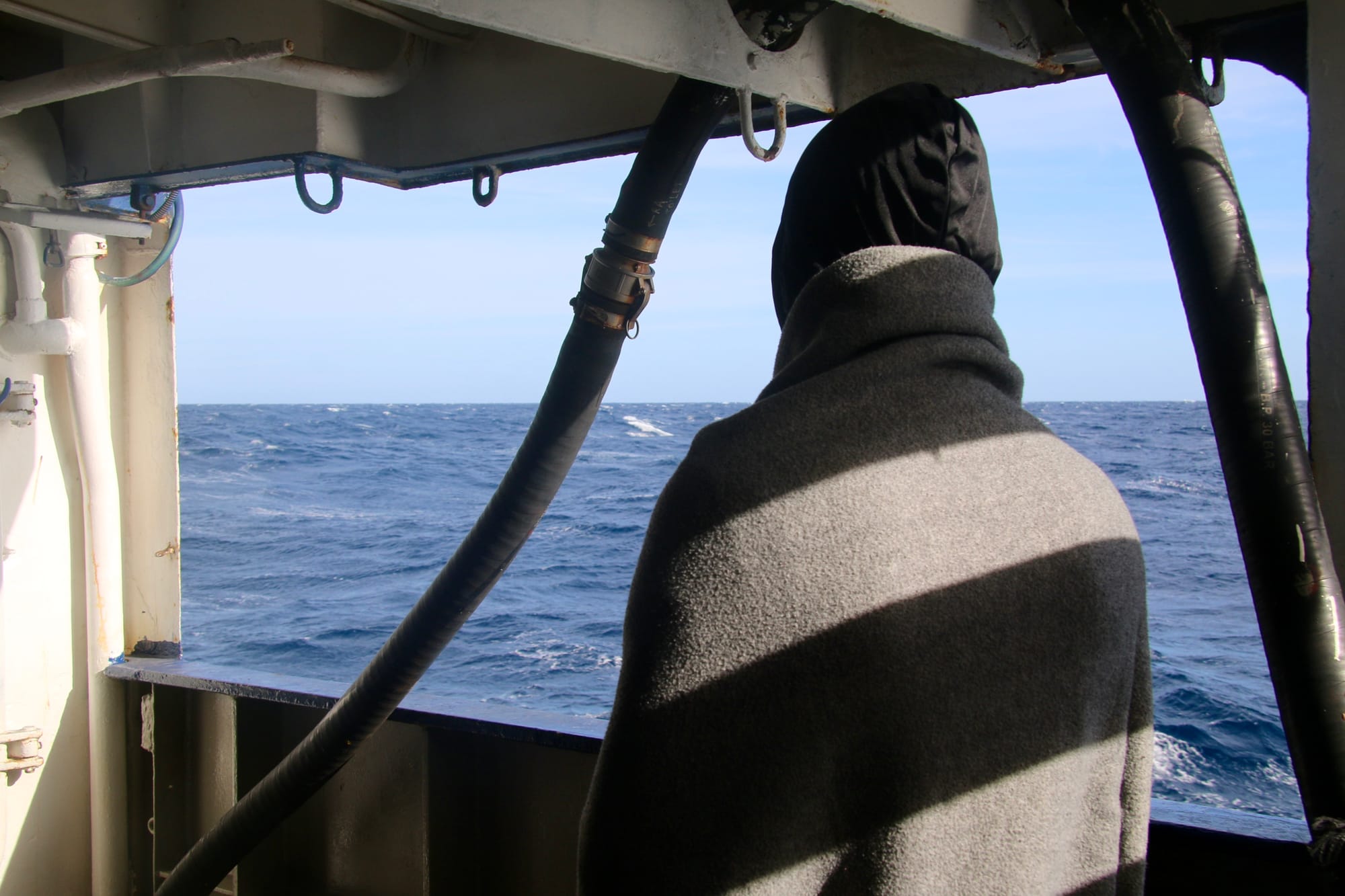
Less than two years later, Omar decided to try again. “I left Egypt to find a better life,” he said. “I wasn’t afraid by what happened to my cousin.”
He found a smuggler to help him travel overland to Libya in January of this year, where he initially planned to stay and work. He had been recruited over Facebook to work in a sweet shop for 14,000 Libyan dinars a month (£1,900), but when he arrived, he was told he would only be paid the equivalent of £275 a month.
“I was threatened when I asked for my rights. I was cheated out of my salary,” he said. “I couldn’t go home. I felt I had to continue.”
Omar said that each time he attempted the crossing and was intercepted and imprisoned, he was forced to contact family members in Libya or back home in Egypt to beg them to pay for his release, with the ransom demanded by Libyan authorities ranging from 2,000 Libyan dinars (£274) to 16,000 dinars (£2,195).
The longest Omar was held for was 37 days, in the [notorious Bir al-Ghanam](https://www.theguardian.com/global-development/2025/feb/03/migrant-journey-traffickers-militias-europe-migration-crisis-libya-syria-mediterranean?ref=opendemocracy.net) detention centre. In the end, his father flew to Libya to pay the ransom, which secured his release. On other occasions, he turned to his cousins also living in Libya to help him find the funds to get out.
“We were 200 people crammed into a cell,” he said of his time in Bir al-Ghanam. “There was no room to even sit down. There were insects everywhere, and guards would come in at all times of the day to beat us with belts or throw water on us.”
He described how people in the cell would collapse onto each other because they were so weak from exhaustion and hunger.
“It was like that every time I was in prison,” said Omar. “But Bir al-Ghanam was the worst. I saw a lot of torture happening there. Some people had been there for over a year because they couldn’t afford the ransom.”
Bir al-Ghanam is an unofficial detention centre south-west of Tripoli, which Tilley said receives “even less scrutiny” than other sites and is known for its “horrific” conditions. “There’s no access, oversight or registration of the people who go there, so they are much more likely to disappear and to be extorted,” said the researcher.
The site has also been flagged by the US State Department’s [country report on human rights practices](https://www.state.gov/reports/2024-country-reports-on-human-rights-practices/libya?ref=opendemocracy.net) for arbitrarily detaining migrant children.
A 2023 [UN fact-finding mission](https://www.ohchr.org/en/press-releases/2023/03/libya-urgent-action-needed-remedy-deteriorating-human-rights-situation-un?ref=opendemocracy.net) reported found “overwhelming evidence” that migrants are “systematically tortured” in Libya’s detention centres, where “acts of murder, enforced disappearance, torture, enslavement, sexual violence, rape and other inhumane acts are committed in connection with their arbitrary detention”.
Salahadine Juma, a co-founder of activist group Refugees in Libya, has firsthand experience of what happens to those detainees whose families can’t afford to pay. “I was held in a \[Libyan\] detention centre for a year and a half. I was forced to do hard labour because I couldn’t pay the ransom,” he said.
Juma, who co-founded Refugees in Libya before arriving in France 18 months ago, said its hotline receives between 50 and 80 messages a day from trapped refugees and migrants asking for help to escape the centres. “They \[Libyan officers\] force them to pay a ransom, and if they can’t pay, they force them to work. Or, if they are women, they are sexually abused.”
Juma said there’s not much the group can do to help them, other than putting pressure on the United Nations High Commissioner for Refugees’ representatives in Libya. “But there are many stories of refugees and migrants being neglected by UNHCR in Libya,” he added.
## Italy’s ‘deliberate obstruction’
The journey to Italy from the international waters north of the Libyan coast where we’d picked up Omar’s boat could be done in 13 hours, but it was six days before Humanity 1 finally reached the port of Ortona in central east Italy on 1 December.
During the long journey, many survivors on board asked why we had not yet reached Italy. At one point, we were so close to the shore we could see the details of buildings and wind farms – and yet we were still over 24 hours from arriving.
Since Italy’s adoption of the ‘Piantedosi decree’ in January 2023, rescue ships requesting a safe port to disembark rescued people have regularly been [forced to travel to distant ports](https://sos-humanity.org/en/press/obstruction-causes-hundreds-of-deaths/?ref=opendemocracy.net), sometimes over 600 miles away, or risk their boats being detained for non-compliance. Rescue organisations say the policy is a “[deliberate obstruction](https://sos-humanity.org/en/our-mission/change/italy-is-endangering-peoples-lives/?ref=opendemocracy.net)” designed to limit their ability to rescue people in distress at sea.
When Omar and the other survivors eventually disembarked in Ortona, they were met by the Red Cross and Italian police. This moment marked the start of a new and challenging chapter for them – the start of their asylum processes in Italy. Those from countries that the Italian Ministry of Foreign Affairs have declared to be [‘safe’](https://italy.refugee.info/articles/5388917946391?ref=opendemocracy.net) (which includes Egypt) could face a fast-tracked detention and a deportation order.
Stefania, the protection representative onboard Humanity 1 said the dangerous sea crossing is “not the only challenge” the rescued people will have to face.
“Under Italian law, some categories are protected, for example, if you’re a victim of torture or trafficking,” she said. “\[Otherwise\] they could be detained in administrative detention centres \[in Italy\]. I don’t want to exaggerate but they could look like something they lived through in Libya.”
### Bribes in one hand, EU salary in the other
For Omar, arrival in Italy also started the countdown for him to contact the Libyan smuggler awaiting payment.
“The money is due on arrival,” Omar told me before the boat docked. “As soon as I get on shore and have reception, I have to send the smuggler a message on Facebook to tell him I arrived. Then he’ll get in contact with my father to arrange payment.”
Omar owed the smuggler 360,000 Egyptian pounds (£5,650) for the crossing, which was due in full only if he arrived in Europe alive. “The smuggler told me that if the sum isn’t paid, he will kill any of my cousins or brothers in Libya,” said the teenager. “He told me he has contacts in Egypt and could hurt one of my family members there too. He knows who my relatives are, he’s observed me. The thing that matters to him is the payment.”
Omar has good reason to believe these are not empty threats. “The smuggler was always carrying his gun \[while we were waiting to cross\],” he said. “One time I picked up my phone to send a voice message on WhatsApp and he pointed his gun at me. He told me if you do that again, I will shoot you and bury you here.”
Omar described how most smugglers he interacted with during his time in Libya appeared to be connected to the Libyan internal police. “They have police cars, they’re wearing police uniforms and carrying the guns,” he said. “Those police pay money to the coastguard to get the boats through.”
This claim is difficult to verify, but likely has a measure of truth, according to Juma. “The majority of smugglers in Libya have some connection with the police or coastguard,” said the activist. “They know when the coastguard boats will be at sea, so they know which days to send boats. Some are even members of the coastguard themselves.”
Tilley told openDemocracy that Libyan internal police may not be smugglers “in the traditional sense”, but they could be seen as “facilitators” who turn a blind eye to smuggling, often in exchange for a financial incentive.
The 2023 UN fact-finding mission found “reasonable grounds” to believe that high-ranking staff in the Libyan Coast Guard, Libya’s Stability Support Apparatus and the Directorate for Combating Illegal Migration in Libya had “colluded with traffickers and smugglers.” The report stated that trafficking and smuggling generated “significant revenue” for individuals, groups and state institutions.
“The Libyan coastguard are border guards for Italy, not for Libya,” said Omar. “They get paid bribes by the smugglers, and they get their salaries from Europe.”
Mounir Satouri, a French MEP and chair of the EU’s Subcommittee on Human Rights, said the EU’s continuing support for the Libyan coastguard “only ensures that atrocities are committed in our name and with European taxpayers' money.” He described the coastguard as “an uncontrollable armed militia that violates international law and tramples on human rights.”
“To tackle both militia abuses and smuggling networks, the European Union must coordinate genuine search-and-rescue operations and open safe pathways for those seeking refuge in Europe,” said Satouri.
“On 13 October, a boat carrying 140 people was attacked, leaving a man between life and death with a bullet lodged in his skull. Just last week, the rescue vessel Louise Michel was targeted. This is unacceptable. This impunity and Europe’s silence must end.”
A spokesperson for the EU Commission told openDemocracy: “Our position has always been clear: all parties to a search and Rescue operation must fully respect international law and international maritime law.“
Asked about the EU’s continued support and financing for Libya after Libyan authorities shot at a rescue boat in August, the spokesperson said: “Regarding this reported incident, the EU Delegation in Libya raised the incident in meetings with the Libyan authorities and urged them to take all necessary measures to ensure Libya’s full compliance with national and international obligations. The Libyan authorities informed that they are investigating the reported incident.
“We are fully aware of the challenges that migration management poses for Libya and other partner countries in the region. Our engagement in Libya has always been to support a comprehensive and rights-based migration management, including the protection of migrants, refugees and asylum-seekers in full respect of international standards and rules. That’s why, the EU is for instance, together with the United Nations Office on Drugs and Crime, engaging in dialogue and providing trainings to improve operating procedures. This is key to address structural issues and produce long term changes. We are also looking into ways to support the Libyan authorities in strengthening their national monitoring and accountability procedures. Recent incidents show that this work needs to be further reinforced and there is a need to identify the best solutions to address the search and rescue incidents.”
"We provide training and capacity building to the coastguards on how to carry out their search and rescue operations in line with international standards and human rights. We also provide some equipment/infrastructure for the search and rescue operations. We indeed support their activities to improve them, but we don’t fund them. All this support never goes directly to the authorities, but is provided by implementing partners on the ground."
Italian interior ministry was approached for comment.
When I asked Omar if there was anything he would like people to know about the journey, he said his only message was for others looking to make the crossing. “Don’t travel to Europe through Libya,” he said. “Find another way.”
*\*Name changed for security reasons*
On a rescue ship in the Mediterranean, a survivor tells of their detainment in Libya, which the EU helped to support
### In Ghana’s markets, ‘brotherly bonds’ with Nigeria are being tested
URL: https://www.opendemocracy.net/en/in-ghanas-markets-brotherly-bonds-with-nigeria-are-being-tested/
Last updated: 2026-06-23T16:31:44.000Z
While diplomats and locals alike repeat the mantra “Ghanaians and Nigerians are brothers”, in Accra’s major market centres, this bond of regional brotherhood is severely strained.
The Ghanaian capital’s sprawling Abossey Okai spare parts market, where Ghanaian, Nigerian, and other foreign traders operate inches apart, is now in a state of constant tension. Nigerians – the market’s single largest group of foreign retailers – are finding their businesses systematically locked up by frustrated local trade unions.
The friction is part of a historical pattern of retaliatory policy between the two West African nations. While the 1983 ‘Ghana Must Go’ expulsion from Nigeria is famous, the precedent for mass deportation was set by Ghana more than a decade earlier. In 1969, Ghana invoked the Aliens Compliance Order to remove millions of migrants, mostly Nigerians, citing their dominance in the local economy. This was followed in 1979 by state-led ‘house-cleaning’ exercises that targeted the retail class, effectively shifting much of the trade into the informal sector.
_This post is for subscribers only._
### ‘A flash in the pan’: The end of Gabriel Boric’s government in Chile
URL: https://www.opendemocracy.net/en/chile-gabriel-boric-left-jeannette-jara-neoliberalism-elections/
Last updated: 2026-06-23T16:31:52.000Z
Chile’s presidential run-off on 14 December will mark the end of the government led by Frente Amplio, a platform of young progressive parties that disrupted a political system that for 30 years had been dominated by two coalitions: the traditional right and the centre-left.
“Frente Amplio is a historical exception: we were a flash in the pan associated with the student movement. No one planned that a few years later we would be in government, disputing a constitutional process. It was a very dizzying thing,” said Diego Ibáñez, a deputy for the party, days after the election’s first round on 16 November.
Ibáñez entered Congress in 2018, joining the parliamentary group of Gabriel Boric, who would be elected president four years later. Ibáñez was 29 years old at the time, and had a background as a student leader in Valparaíso, a port city near Santiago. Now 36, after two terms as a deputy, he will become the youngest senator in Chile’s history, having won a seat in the Senate at last month’s elections.
_This post is for subscribers only._
### Israel is acting with impunity. Is it overconfident in Trump’s support?
URL: https://www.opendemocracy.net/en/israel-act-impunity-trump-support-palestine-gaza-ceasefire-peace-plan-american-opinion/
Last updated: 2026-06-23T16:32:01.000Z
Two months into Israel and Hamas’s ‘ceasefire’, the name is already proving a misnomer. Violence continues in Gaza, where more than 360 Palestinians, including as many as 70 children, and three Israeli soldiers have been killed since 10 October.
Most of the Palestinians killed were families who were ‘collateral damage’ of Israeli aircraft and drone strikes on buildings, ruins or tents in pursuit of individual Hamas paramilitaries. Despite this, prime minister Binyamin Netanyahu has suggested Israel is ready to move to the next phase of the 20-point Gaza peace plan put forward by Donald Trump.
Reports from Washington, though, indicate that the plan itself is undergoing changes.
_This post is for subscribers only._
### UK plans add ‘new layer of cruelty’ for asylum seekers, expert warns
URL: https://www.opendemocracy.net/en/uk-government-asylum-refugee-torture-trauma-starmer-mahmood-small-boats/
Last updated: 2026-06-23T16:32:07.000Z
The government’s decision to end the automatic right to family reunion for people fleeing war, conflict and persecution creates “an additional level of cruelty” for refugees, a family therapist working with survivors of torture has told openDemocracy.
Shaheen Syedain, who works for Freedom from Torture, warned of the impact that Labour’s sweeping [changes](https://www.gov.uk/government/publications/asylum-and-returns-policy-statement/restoring-order-and-control-a-statement-on-the-governments-asylum-and-returns-policy?ref=opendemocracy.net#part-i-reducing-arrivals) to the asylum system will have.
Under the previous rules, an individual who had been granted refugee status in the UK could apply for their family members to join them, which was one of the few safe and legal routes for people to travel to the UK to seek asylum.
_This post is for subscribers only._
### ‘Fuimos un relámpago’. El legado del gobierno de Gabriel Boric en Chile
URL: https://www.opendemocracy.net/es/chile-gabriel-boric-frente-amplio-izquierda-jeannette-jara-partido-comunista-elecciones/
Last updated: 2026-06-23T16:32:17.000Z
Con la segunda vuelta presidencial del domingo en Chile se acercará el final del gobierno liderado por el Frente Amplio, una joven plataforma de pequeños partidos progresistas que irrumpió en un sistema dominado desde los 90 por dos coaliciones tradicionales, la derecha y la centroizquierda.
“El Frente Amplio es una excepción histórica: fuimos un relámpago asociado al movimiento estudiantil. Nadie planificó que unos pocos años después íbamos a ser gobierno, disputando un proceso constituyente. Fue una cosa muy vertiginosa”, dijo el diputado oficialista Diego Ibáñez a democraciaAbierta, unos días después de la primera vuelta electoral del 16 de noviembre.
Ibáñez entró al Congreso en 2018, cuando se sumó a la bancada del ahora presidente Gabriel Boric. Tenía 29 años y un pasado como dirigente estudiantil en Valparaíso, ciudad portuaria cercana a Santiago. Ahora tiene 36 y, luego de dos períodos como diputado, se mudará al Senado, donde ganó una plaza en las últimas elecciones. Será el senador más joven en la historia de Chile.
_This post is for subscribers only._
### Police take ‘no further action’ in more than half of rape reports
URL: https://www.opendemocracy.net/en/police-rape-no-further-action-england-wales-failing-victims-healthcare/
Last updated: 2026-06-23T16:32:23.000Z
*TRIGGER WARNING - DESCRIPTION OF MEDICAL SEXUAL ASSAULT*
“I have lived 53 years without being sexually assaulted, and then it happens to me in a hospital, in a place where I am supposed to be safe.” Diana\* paused. “But in the end, I feel more traumatised by the police than by the assault. Which is ridiculous. Everything they did, they did wrong.”
Diana told openDemocracy how a consultant sexually assaulted her twice by inserting a medical instrument into her vagina just before she underwent a routine procedure that did not involve any sort of vaginal examination.
_This post is for subscribers only._
### Trump, Maduro, and the risks of the unpredictable
URL: https://www.opendemocracy.net/en/trump-maduro-venezuela-military-intervention-attacks-democracy-drug-trafficking/
Last updated: 2026-06-23T16:32:33.000Z
In October, Donald Trump declared the United States was engaged in an [armed conflict](https://www.cbsnews.com/news/trump-strike-second-alleged-venezuela-drug-boat/?ref=opendemocracy.net) with Venezuelan drug cartels. Since then, at least 87 people have died in 21 US strikes on vessels in the Caribbean and eastern Pacific that, according to officials in Washington, were carrying drugs.
But so far, the Trump administration has presented no evidence that the targeted boats were transporting drugs. Legal experts argue [the attacks are illegal](https://www.nytimes.com/2025/12/04/us/politics/trump-boat-attacks-killings.html?ref=opendemocracy.net), and Congress has begun investigating the operations.
Meanwhile, Venezuela finds itself cornered by a US policy that raises several questions: what is Trump aiming for? How far is his government willing to go in Venezuela? Will there be a ground invasion, will only specific targets be struck, or is this all a game of threats?
_This post is for subscribers only._
### With UK politics in flux, Your Party may well surprise you yet
URL: https://www.opendemocracy.net/en/your-party-general-election-2029-conference-jeremy-corbyn-zarah-sultana/
Last updated: 2026-06-23T16:32:40.000Z
UK politics is in a remarkable state of flux, with Keir Starmer’s Labour government facing multiple problems.
Reform UK is surging ahead in the polls and, although the next general election is not until 2029, many pundits are already convinced we are headed for a far-right government led by Nigel Farage, possibly propped up by the Conservatives in coalition.
Given the current state of the Labour Party and the extent of its corporate capture, any opposition to this will have to come from the likes of the Green Party and the newly fledged Your Party, the latter of which had its inaugural conference in Liverpool last weekend.
_This post is for subscribers only._
### Trump, Maduro y los riesgos de lo impredecible
URL: https://www.opendemocracy.net/es/trump-maduro-venezuela-intervencion-militar-ataques-democracia-narcotrafico/
Last updated: 2026-06-23T16:32:50.000Z
En octubre, Donald Trump anunció que Estados Unidos enfrentaba un [conflicto armado](https://www.cbsnews.com/news/trump-strike-second-alleged-venezuela-drug-boat/?ref=opendemocracy.net) con carteles de droga venezolanos. Desde entonces, al menos 87 personas han muerto en 21 ataques contra barcos en el Caribe y el Pacífico oriental que, según funcionarios del gobierno estadounidense, transportaban drogas.
Hasta ahora, la administración Trump no presentó evidencias de que las embarcaciones atacadas llevaran drogas, especialistas en derecho afirman que los ataques [son ilegales](https://www.nytimes.com/2025/12/04/us/politics/trump-boat-attacks-killings.html?ref=opendemocracy.net), y el Congreso comenzó a investigar estas acciones.
Venezuela está hoy cercada por esta política de Estados Unidos que presenta varios interrogantes: ¿Cuáles son los objetivos de Trump? ¿Hasta dónde llegará el gobierno de Estados Unidos en Venezuela? ¿Habrá invasión terrestre, se atacarán solamente objetivos específicos o es un juego de amenazas verbales? Estas preguntas son pertinentes porque estamos ante el mayor despliegue militar estadounidense en el Caribe desde la [crisis de los misiles en Cuba](https://quincyinst.org/research/u-s-military-buildup-in-the-caribbean-demands-congressional-action/?ref=opendemocracy.net) de 1962.
_This post is for subscribers only._
### The quiet crisis at the heart of British democracy
URL: https://www.opendemocracy.net/en/uk-needs-proportional-representation-broken-democracy-electoral-system/
Last updated: 2026-06-23T16:32:59.000Z
If the past 18 months have shown us anything, it’s that the UK’s two-party system is no longer fit for purpose.
The old ‘red vs blue’ divide simply doesn’t describe our politics anymore, and the public’s aversion to both Labour and the Conservatives is increasingly clear. Five parties are now [polling](https://yougov.co.uk/topics/politics/explore/issue/Voting%5FIntention?ref=opendemocracy.net) above 10%. The country’s political energy is more diverse – and more fragmented – than at any point in recent memory.
The challenger party grabbing most of the airtime is right-wing populist Nigel Farage’s Reform UK, which is also polling better than any other party, consistently securing around 30% of the vote. Given it won just five seats at the July 2024 general election, the party’s rise says as much about the failings of the British parliament’s First Past the Post (FPTP) voting system as it does about its own message.
_This post is for subscribers only._
### Hope amid chaos: Inside Your Party’s inaugural conference
URL: https://www.opendemocracy.net/en/hope-amid-chaos-inside-your-partys-inaugural-conference/
Last updated: 2026-06-23T16:33:08.000Z
Zarah Sultana quoted Gramsci twice last weekend: “The old world is dying, and the new world struggles to be born: now is the time of monsters.”
The first time she cited the Italian theorist was in a clammy conference room on the second floor of a Holiday Inn in Liverpool city centre, where she’d gathered her supporters on the eve of Your Party’s founding conference. The mood was tense and sparky, partly because, hours earlier, one of her co-speakers was among those expelled from the party and barred from the conference.
The second time was on the conference mainstage on Sunday afternoon: her supporters reinstated, her major party proposals accepted, and her will asserted over Britain’s biggest new socialist party in generations.
_This post is for subscribers only._
### Job opportunity: Tech Reporting Fellowship in collaboration with Tech Policy Press
URL: https://www.opendemocracy.net/en/job-opportunity-tech-reporting-fellowship/
Last updated: 2026-06-23T16:33:18.000Z
As technology reorders everything from economies, energy grids, international geopolitics and the lived experiences of ordinary people, openDemocracy, in collaboration with Tech Policy Press, is looking for an enterprising, well-sourced candidate to track, investigate and analyse this rapidly evolving beat in the UK.
This is a unique, 12-month UK-based fellowship in which the selected candidate will be embedded within the UK bureau of openDemocracy’s international newsroom and will have access to mentorship from Tech Policy Press’s editors in Europe and the US.
Their articles will be platformed by both publications to ensure their work reaches a wide, diverse and influential audience.
_This post is for subscribers only._
### From Reeves to Milei: Is this the brightest future we can imagine?
URL: https://www.opendemocracy.net/en/newsletter-reeves-milei-budget-2025/
Last updated: 2026-04-21T20:46:04.000Z
If the UK papers are to be believed, the biggest upside of Rachel Reeves’ latest budget is that Keir Starmer is safe from a leadership challenge… until May. Tough business, this. But the public is not wrong to be disappointed by this government’s crushing orthodoxy. Is this the brightest future we can imagine?
“So much of our economic model is limited in its horizons,” Eleanor Shearer writes in this week’s openDemocracy newsletter, adding that “an honest accounting of our economy must acknowledge that it has become extractive rather than productive”. Economics is the art of euphemism, where dry phrases such as “fiscal prudence” and “trimming outlays” mask the crushing impoverishment these policies enact on ordinary people.
And so our lead story this week lays out the reality of austerity, examining the devastation that Javier Milei’s “chainsaw economics” have inflicted on Argentina. The crisis, openDemocracy’s Latin America reporter, Angelina de los Santos, found on a recent trip to Buenos Aires, is most visible in the country’s spiking rates of anxiety, mental illness and suicide, which is now its leading cause of violent death.
The situation should be a stark warning for the UK’s government. But, just as Angelina found in Argentina, Disabled people here often bear the brunt of government cuts. Writing for us this week, Mikey Erhardt from Disability Rights UK said Labour’s “plan for the budget appears to have been to let the Disabled community take the fall for the state’s poor finances”.
Meanwhile, Erin Mansell from the Women’s Budget Group looks at whether Reeves’ budget delivers for women, who “disproportionately contend with soaring living costs – juggling unpaid care, low wages and rising household bills”, and in our podcast, Danny Sriskandarajah from the New Economics Foundation discusses how the key to nurturing a genuine democracy lies in supporting people’s movements.
Thank you for supporting openDemocracy. Send us your thoughts and comments and forward this newsletter to someone you think will enjoy it.
### [In Milei’s Argentina, austerity economics manifests as a mental health crisis • Angelina de los Santos](https://www.opendemocracy.net/en/javier-milei-mental-health-crisis-argentina-austerity-economics-cuts/)
In her nine years at the Laura Bonaparte national mental health hospital in Buenos Aires City, Julieta Chevallier has seen suffering widen and deepen.
“When people finally come to see us, it’s usually because they’ve reached the end of their rope,” the social worker told openDemocracy. “What we used to see has now grown sharper, heavier: deeper hopelessness, more suicide attempts, more violence, more acute crises, and a constant anxiety about the economy – even about something as basic as securing food.
“People who had managed to stop using drugs after partially rebuilding their lives with support from social programs are falling back into old patterns.”
At the José A. Esteves neuropsychiatric hospital in Buenos Aires Province, director María Rosa Riva offers a similar warning.
“People are arriving utterly shattered,” said Riva, who has worked at the hospital since 1997 and led it since 2020...
[**Continue reading**](https://www.opendemocracy.net/en/javier-milei-mental-health-crisis-argentina-austerity-economics-cuts/)
### [This budget shows Labour government is still stuck in short-termism • Eleanor Shearer](https://www.opendemocracy.net/en/rachel-reeves-budget-short-termism-labour-government-fiscal-rules/)
Halloween may have been almost a month ago, but there was a ghost haunting Labour’s autumn budget: the spectre of the bond markets.
In her speech in the Commons, chancellor Rachel Reeves referred to Liz Truss’s disastrous mini-budget in 2022 as some kind of cautionary tale, and much of the post-budget analysis in the press focused on the market reactions, underscoring the fact that it has since become received wisdom that a government is only ever one fiscally irresponsible decision away from crisis.
This is an extension of the idea that governments are like households and must practice thrift or face ruin. Just as a mortgage provider would be loath to lend to you if your outgoings regularly outstripped your earnings, so it seems intuitive that the bond markets would baulk at governments that outspend their means.
The analogy is a fallacy, though. Reeves is not dealing with an overdue credit card bill; government debt, borrowing and spending doesn’t function like consumer debt, borrowing and spending...
[**Continue reading**](https://www.opendemocracy.net/en/rachel-reeves-budget-short-termism-labour-government-fiscal-rules/)
### [Yet another government has failed to deliver for Disabled people • Mikey Erhardt](https://www.opendemocracy.net/en/rachel-reeves-budget-fails-disabled-people-labour-party/)
We are living in an era of sickness caused by political choices, and Disabled people in particular are paying the price. Many of us are getting incredibly ill under the weight of poor working conditions, precarious housing and overstretched health services.
The fault lies with successive governments that have chosen profit over people. Yet another chancellor just failed to acknowledge this, squandering another chance to make meaningful improvements to our lived realities.
This year's budget should have been a reset, a move away from the years of decline that have left millions of us facing exhaustive barriers to get a GP appointment, worrying about being late for work because of our unreliable and underfunded public transport, and freezing in old, mouldy homes.
Instead, Labour’s Rachel Reeves used her budget speech yesterday to make misjudged jokes and jabs at political rivals, and spent as much time talking about the alleged rising cost of social security as she did her headline policy, the removal of the punitive two-child benefit cap...
[**Continue reading**](https://www.opendemocracy.net/en/rachel-reeves-budget-fails-disabled-people-labour-party/)
### [Did Rachel Reeves’ ‘cost of living budget’ deliver for women? • Erin Mansell](https://www.opendemocracy.net/en/rachel-reeves-cost-of-living-budget-deliver-women/)
Rachel Reeves promised a cost-of-living budget, and on some measures, she delivered.
The chancellor used her budget speech this week to announce an end to the two-child limit on benefits, take levies off energy bills, freeze NHS prescription charges and rail fares in England, and raise the minimum wage. All of this will make some difference, especially for women, who disproportionately contend with soaring living costs – juggling unpaid care, low wages and rising household bills.
But in other areas, the Labour government did not go far enough to reduce other hardships that are felt particularly acutely by women. Reeves failed to introduce measures that could have alleviated homelessness, addressed some of the inequalities in the tax system, and led to a redistribution of the UK’s wealth.
Lifting the two-child limit on Universal Credit is unquestionably a landmark step towards tackling child poverty. Since its introduction in 2017, the policy has locked families into hardship. Campaigners have for years argued that punishing children for the number of siblings they have makes neither moral nor economic sense, given the billions that child poverty costs every year to those children’s life chances and the impact on public services...
[**Continue reading**](https://www.opendemocracy.net/en/rachel-reeves-cost-of-living-budget-deliver-women/)
## [🎧 Populism's silver lining • In Solidarity](https://open.spotify.com/episode/5mT8vhJcsiGJqCKwbd0LsD?si=g4VkyNpvT5aI0Jd55Ra3mw&ref=opendemocracy.net)
## Good news!
Our 2023 documentary series, Disciples: The Cult of TB Joshua, received a special citation at the GIJC25’s Global Shining Light Awards. "The investigation unearthed crimes of unimaginable scale and severity for a man once regarded as a prospective saint,” which included deeply disturbing instances of sexual, financial, spiritual abuse, predominantly against women.
openDemocracy's [additional reporting](https://www.opendemocracy.net/en/tagged/tb-joshua/) led to the shutdown of Emmanuel TV, the YouTube channel of TB Joshua's church. This was after we had presented our analysis of over 50 "abusive" videos that violated the channel's hate speech policies.
The years-long investigation, in partnership with BBC Africa Eye, was made possible by the tireless efforts of our 50:50 team which publishes critical and in-depth coverage of gender, sexuality and social justice – worldwide: Lydia Namibiru, Margaret Coker, Soita Khatondi Wepukhulu, Rael Ombuor and Madeleine Jane
## **Weekly Poll: Is the UK budget what you expected?**
## Is the UK budget what you expected?
## Yes
### No
### I have thoughts to share (email us at supporters@opendemocracy.net!)
## Previous weekly poll: Should the British armed forces end under-18 recruitment?
## Should the British armed forces end under-18 recruitment?
## Yes
### No
### I have thoughts to share (email us at supporters@opendemocracy.net!)
Our weekly newsletter
### Women in low-income areas in Kenya face unsafe abortions due to USAID cuts
URL: https://www.opendemocracy.net/en/women-in-low-income-areas-in-kenya-face-unsafe-abortions-due-to-usaid-cuts/
Last updated: 2026-06-23T16:33:27.000Z
Women in low-income Kenyan neighbourhoods face unsafe abortions and increased maternal deaths due to the US government’s plan to destroy stockpiles of contraceptives, experts have told openDemocracy.
After it was previously reported that $9.7m of intrauterine devices, hormonal implants and birth control pills earmarked for countries in Africa are sitting in a warehouse in Belgium, the International Planned Parenthood Federation (IPPF) in November confirmed that [a further 20 truckloads of contraceptives](https://www.ippf.org/media-center/press-release-belgian-and-european-governments-must-act-save-usaid-supplies-and-not?fbclid=PAb21jcAOCusNleHRuA2FlbQIxMQBzcnRjBmFwcF9pZA81NjcwNjczNDMzNTI0MjcAAaeFtVNz8ZCazrupK58nLnaa4%5FGx8QO7ioYmSHEZ6J9v81IJ6mWH3UTD5i2k2A%5Faem%5Fko%5FTo29T1dBjA34nPRNBhQ&ref=opendemocracy.net) are being held in an unknown location in another Belgian village. Some products have become unusable due to poor storage.
All the contraceptives were intended for family planning and reproductive health initiatives in Kenya, the Democratic Republic of the Congo, Tanzania, Zambia, and Mali. These initiatives were previously supported by the United States Agency for International Development, which Donald Trump dismantled this year.
_This post is for subscribers only._
### Argentina angustiada: el costo ignorado de la motosierra de Milei
URL: https://www.opendemocracy.net/es/javier-milei-salud-mental-crisis-argentina-recorte-presupuesto-economia-pensiones/
Last updated: 2026-06-23T16:33:34.000Z
En los nueve años que Julieta Chevallier lleva recibiendo a quienes llegan a las puertas del hospital nacional de salud mental Laura Bonaparte, en la capital argentina, ha sido testigo de dolores cada vez más profundos que afectan a un número cada vez más grande de personas.
“Cuando la gente llega a consultar, por lo general es porque tocó fondo, porque no da más”, dijo la trabajadora social a democraciaAbierta. “Eso que vimos siempre, ahora es más profundo, más grave: más ideas de desesperanza, más intentos de suicidio, más casos de violencia, cuadros más agudos de malestar, y mucha angustia por la situación económica, por no poder resolver cuestiones cotidianas como la comida.
“Personas que habían dejado el consumo \[de drogas\] porque habían logrado organizar algunas cosas en su vida a partir de tener la asistencia de programas sociales, que recaen”.
_This post is for subscribers only._
### Farewell, from Beyond Trafficking and Slavery
URL: https://www.opendemocracy.net/en/farewell-from-beyond-trafficking-and-slavery/
Last updated: 2026-06-23T16:33:43.000Z
Beyond Trafficking and Slavery (BTS) started as many projects do – by doubling down on an idea from the pub the night before.
Our (very nerdy) founders decided that they were fed up with policymakers and activists blaming trafficking on individual ‘bad apples’ – on evil criminal syndicates who exploit people because they’re criminals and that’s just what criminals do. This, they knew, was a wholly insufficient explanation for why so many people around the world end up in highly exploitative work.
So they decided to set up a megaphone to disabuse people of this illusion. Their goal was to explain the structural causes of labour exploitation so clearly that even the most ardent fans of criminal justice couldn’t deny their existence or effect. Poverty. Immigration status. Social exclusion. Lack of labour protection. Purchasing practices. Outsourcing. Concentrated corporate power. Governance gaps. [This is where we began](https://www.opendemocracy.net/en/beyond-trafficking-and-slavery/introduction/).
_This post is for subscribers only._
### In Milei’s Argentina, austerity economics manifests as a mental health crisis
URL: https://www.opendemocracy.net/en/javier-milei-mental-health-crisis-argentina-austerity-economics-cuts/
Last updated: 2026-06-23T16:33:51.000Z
In her nine years at the Laura Bonaparte national mental health hospital in Buenos Aires City, Julieta Chevallier has seen suffering widen and deepen.
“When people finally come to see us, it’s usually because they’ve reached the end of their rope,” the social worker told openDemocracy. “What we used to see has now grown sharper, heavier: deeper hopelessness, more suicide attempts, more violence, more acute crises, and a constant anxiety about the economy – even about something as basic as securing food.
“People who had managed to stop using drugs after partially rebuilding their lives with support from social programs are falling back into old patterns.”
_This post is for subscribers only._
### Did Rachel Reeves’ ‘cost of living budget’ deliver for women?
URL: https://www.opendemocracy.net/en/rachel-reeves-cost-of-living-budget-deliver-women/
Last updated: 2026-06-23T16:33:59.000Z
Rachel Reeves promised a cost-of-living budget, and on some measures, she delivered.
The chancellor used her budget speech this week to announce an end to the two-child limit on benefits, take levies off energy bills, freeze NHS prescription charges and rail fares in England, and raise the minimum wage. All of this will make some difference, especially for women, who disproportionately contend with soaring living costs – juggling unpaid care, low wages and rising household bills.
But in other areas, the Labour government did not go far enough to reduce other hardships that are felt particularly acutely by women. Reeves failed to introduce measures that could have alleviated homelessness, addressed some of the inequalities in the tax system, and led to a redistribution of the UK’s wealth.
_This post is for subscribers only._
### This budget shows Labour government is still stuck in short-termism
URL: https://www.opendemocracy.net/en/rachel-reeves-budget-short-termism-labour-government-fiscal-rules/
Last updated: 2026-06-23T16:34:20.000Z
Halloween may have been almost a month ago, but there was a ghost haunting Labour’s autumn budget: the spectre of the bond markets.
In her speech in the Commons, chancellor Rachel Reeves referred to Liz Truss’s disastrous mini-budget in 2022 as some kind of cautionary tale, and much of the post-budget analysis in the press focused on the market reactions, underscoring the fact that it has since become received wisdom that a government is only ever one fiscally irresponsible decision away from crisis.
This is an extension of the idea that governments are like households and must practice thrift or face ruin. Just as a mortgage provider would be loath to lend to you if your outgoings regularly outstripped your earnings, so it seems intuitive that the bond markets would baulk at governments that outspend their means.
_This post is for subscribers only._
### ‘Bots’ spread disinformation campaign over sanctioned mining tycoon
URL: https://www.opendemocracy.net/en/dan-gertler-sanctions-democratic-republic-congo-bots-disinformation/
Last updated: 2026-06-23T16:34:32.000Z
An online network of bot-like accounts, media sites and X users has spread disinformation in support of a sanctioned mining tycoon and attacked civil society groups in the Democratic Republic of the Congo (DRC), a new investigation has found.
Israeli businessman Dan Gertler was [sanctioned by the US](https://home.treasury.gov/news/press-releases/sm0243?ref=opendemocracy.net) in 2017 for amassing a fortune through “hundreds of millions of dollars’ worth of opaque and corrupt mining and oil deals in the DRC”.
At the time, the US Treasury said the Central African country had “lost over $1.36bn in revenues from the underpricing of mining assets that were sold to offshore companies linked to Gertler”. The total lost revenue could reach $3.7bn if the DRC’s government fails to review its agreements with companies linked to Gertler, according to [a 2021 report](https://www.corruptiontue.org/index.php/posts/des-milliard-perdus?ref=opendemocracy.net) by Congolese civil society coalition Le Congo N’est Pas à Vendre (The Congo Is Not For Sale).
_This post is for subscribers only._
### La UE retira fondos a grupo juvenil antiaborto por investigación de openDemocracy
URL: https://www.opendemocracy.net/es/ue-erasmus-corta-financiacion-ong-anbiaborto-world-youth-alliance-educacion-desinformacion/
Last updated: 2026-06-23T16:34:45.000Z
La World Youth Alliance (WYA) recibía una subención europea para un proyecto educativo en salud reproductiva, pero el año pasado openDemocracy reveló que difundía desinformación sobre aborto y ahora está a punto de perderla.
La Unión Europea (UE) anunció que retirará su financiamiento a la WYA, a raíz de que [openDemocracy revelara](https://www.opendemocracy.net/en/anti-abortion-ngo-eu-funding-reproductive-health-programme/) que lo usó para ejecutar un programa de educación en salud sexual y reproductiva para niñas y jóvenes que promovía desinformación sobre el aborto.
Nuestra investigación, publicada en octubre del año pasado, reveló que [la UE había otorgando 1,2 millones de euros](https://www.opendemocracy.net/en/eu-funding-anti-abortion-charity/) de su programa Erasmus a la WYA destinados a proyectos de formación y educación para jóvenes, después de que la ONG hiciera afirmaciones falsas sobre el aborto – incluyendo que provoca complicaciones de salud. El programa [Erasmus](https://erasmus-plus.ec.europa.eu/es/about-erasmus/what-is-erasmus?ref=opendemocracy.net) de la UE “respalda la educación, la formación, la juventud y el deporte en Europa”.
_This post is for subscribers only._
### Global gold prices have made Ghana richer. But at what cost?
URL: https://www.opendemocracy.net/en/global-gold-prices-have-made-ghana-richer-but-at-what-cost/
Last updated: 2026-06-23T16:34:57.000Z
In Kwabeng, in Ghana’s Eastern Region, young men and women wearing mud-splattered boots go back and forth on motorbikes and tricycles from the main road to the paths that go deep into the forest. Around them are acres of fruiting cocoa trees; swathes of thick green forests that stretch up hills as far as the eye can see. But nature is not these men and women’s immediate concern. Gold is. Illegal gold mining, to be exact, known as *galamsey*.
The illegal gold pits bring wealth to Ghana, [directly employing](https://www.sciencedirect.com/science/article/pii/S0301420724006020?ref=opendemocracy.net) over one million small-scale miners and [accounting for 35%](https://www.sciencedirect.com/science/article/pii/S0301420724006020?ref=opendemocracy.net#:~:text=In%20Ghana%2C%20gold%20is%20the,%2C%20metal%2Dintensive%20energy%20technologies.) of the country’s gold production. With global gold prices having [surged](https://www.bullionvault.com/gold-price-chart.do?ref=opendemocracy.net) from around $1,800 per ounce in 2020 to over $4,000 in 2025, these illegal pits are a big boost for Ghana’s economy, and there are growing concerns that the government is sacrificing the environment to [improve economic indicators](https://www.myjoyonline.com/mahama-attributes-cedi-stability-to-reforms-in-gold-trading-sector/?ref=opendemocracy.net) and boost gold reserves.
But this wealth comes at the expense of health, in more ways than one. Some of illegal mining’s negative health impacts are well-reported, such as the contamination risk to local communities’ water, with galamasey having polluted at [least 60%](https://www.wilsoncenter.org/blog-post/theres-mining-then-theres-galamsey?ref=opendemocracy.net) of Ghana’s rivers. Yet there is one particularly harmful effect that is still little known: the killing of the medicinal plants that [70% of Ghanaians depend on](https://www.afro.who.int/photo-story/traditional-healers-broaden-health-care-ghana?ref=opendemocracy.net#:~:text=Traditional%20medicine%20plays%20a%20vital%20role%20in,an%20integral%20part%20of%20their%20health%20systems.), particularly those Ghanaians who can’t afford modern healthcare.
_This post is for subscribers only._
### Will American anti-trafficking ever recover from Trump 2.0?
URL: https://www.opendemocracy.net/en/will-american-anti-trafficking-ever-recover-from-trump-20/
Last updated: 2026-04-21T19:35:59.000Z
**Joel Quirk (BTS): You've worked on anti-trafficking in both law and policy in the US. What's happened to anti-trafficking since Trump returned to the presidency in January?**
**Luis CdeBaca:** There is still bipartisan consensus in the US that anti-trafficking is a valuable thing to do. We see it on Capitol Hill, in churches and across the left and right. That hasn’t changed. But trafficking’s position in this second Trump White House is different to the first.
During the first term, Ivanka Trump was leading trafficking work in the White House. She had some good people working for her. The Office to Monitor and Combat Trafficking in Persons (TIP) in the Department of State, the Bureau of International Labor Affairs (ILAB) in the Department of Labor, and USAID were all working on this too.
Those at the top were Republicans, but not weird conspiracy-theory Republicans. They were ‘governance Republicans’, for lack of a better term, and they kept an eye on other parts of the Republican coalition. They were able to exempt trafficking programmes from anti-immigrant policies. Funding priorities, the role of the survivor advisory group, even inclusion of LGBTQ communities in the TIP Report – all of those things continued through the transitions from Obama to Trump and then to Biden. We’re not seeing that in this second Trump administration.
Instead, we’re seeing some chickens come home to roost. Back then, people with anti-immigrant or anti-women priorities were prevented from cutting victim care, or treating trafficking as a niche impediment to ‘real’ diplomacy. But now they have an unfettered hand, and evidently long memories.
In the first round of cuts, which were done by the administration under the guise of the Orwellian-named ‘Department of Government Efficiency’, the TIP office was not targeted the way USAID and ILAB were. It was not eliminated, as USAID was. But then, another round of personnel cuts made it clear that TIP was not immune to severe layoffs. What I’m hearing from the inside indicates that this happened as much because of resentment over the office’s successes and its reputation as a killjoy within the national security establishment, as because of any policy priorities or cost-savings rationale.
It may come as a surprise to those who saw the TIP Office as an instrument of US neoliberal foreign policy, but traditional foreign policy elements had been trying to kill the office from its inception. They saw it as a killjoy and raiser of inconvenient truths. This time, they almost succeeded.
> The TIP office might still exist, but it isn’t out of the woods
I’m glad that the office has survived (though diminished), and that this autumn it put out what appears to be an accurate and well-researched TIP Report. But decades of experience have been lost. It’s not just about TIP though: without the office’s agency partners, the whole effort doesn’t work. Let me give you an example.
From a programmes perspective, the other agencies were where the real money was. Their projects were multi-million-dollar, multi-year programmes. When I worked in the TIP office, it would receive $15-25m to spread across a funding cycle. Its grants were small – around the $250,000-$750,000 mark – and it had to make a lot of trade-offs. If you did something in Belize, that meant you didn’t do something in Burundi.
ILAB and USAID were doing the long-term projects of developing structures and monitoring programmes, which freed up the TIP office to work more nimbly. It could tackle acute problems *now*, like mining camps in northeastern Peru, because it wasn’t focussed on creating the long-term, sustainable change that large development projects hope to achieve. TIP could move quickly to an emerging problem, and through a combination of diplomacy, convening, and seed funding, start an intervention that would be incorporated later on into the slower-moving but deeper institutional approach of traditional development funders. With the latter’s funding and staff cut, that model breaks down.
The TIP office might still exist, but it isn’t out of the woods. It’s been announced that it’s moving to another part of the State Department, which is not cool. Thankfully that is the Bureau of Democracy, Human Rights and Labor, rather than the Bureau of Population, Refugees and Migration. If that had happened, it would have revealed a fundamental misunderstanding on the part of this administration about the concept of ‘trafficking’. Anti-trafficking is about civil and human rights, not population management or immigration enforcement.
The new organisational chart, which has the ambassador reporting to an assistant secretary instead of being their equal, is a real down-grade. It will weaken the office’s ability to stand up to the regional bureaus and those who practice foreign policy expediency. Members of Congress on both sides of the aisle have expressed concern about the organisational changes, the loss of experienced staff, and the funding cuts. We’ll have to see where that goes.
**Joel: You make it sound like the first Trump administration was more serious when it came to trafficking. But Trump was** [**telling reporters in 2019**](https://edition.cnn.com/2019/01/27/us/human-trafficking-fact-check?ref=opendemocracy.net) **that America needs a wall because bound women were being smuggled over the** [**border with blue tape over their mouths**](https://newrepublic.com/article/154119/white-moms-burden?ref=opendemocracy.net)**, which was both memorable and fantastical. Trump 1.0 was also inviting vigilante rescue groups to White House anti-trafficking events. From the outside, it seemed demonstrably unserious.**
**Luis:** There are warring impulses in any American administration. And whether it’s 1890 or 2020, different voices in government have always raised the alarm by pushing sensationalist versions of trafficking. This was the case in the first Trump administration, but also in the Biden and Obama administrations.
It’s easy for critics of the entire anti-trafficking enterprise to point to those voices and say, “that’s what anti-trafficking is for the US government.” And to the casual observer, the work of the senior policy operating group, the anti-trafficking task force, and much day-to-day work on human trafficking probably does look like an awful lot of taped mouths.
But within this ecosystem, there are political performers, and there are the career people and experts. The latter generally want the former to stop taking up their time, so they can get back to work. To the people doing direct service provision and working on cases, the theatrical stuff is off to the side.
The critics have been saying for 20 years that it’s all just flash and fluff. But a lot of us doing the work didn’t pay any attention to the flash and fluff. It existed so that certain groups on Capitol Hill and in civil society would keep supporting us. And when we got in the room with those groups of people, rather than blackballing them for their clumsy, sexist, racist posters, we’d talk to them about best practices. We’d back up those conversations with materials written by folks who are critical of the movement. It all looked very different from the inside.
My worry now is that, with this new administration and with these new bureaucratic changes, there’s a danger of it actually becoming all flash and fluff. Trump might make that long-standing accusation finally come true. Hopefully the remaining career people can make sure the work still gets done. But everybody is going to have to band together to stand up against the ridiculousness. Or all we're going to have is celebrity, rescue-style stuff coming out of this administration.
**Joel: Let’s talk about that ‘real’ work, which for much of your career has focused upon criminal prosecutions. Critics often say that government anti-trafficking work is sold as human rights, but it’s really about criminal justice. That comes with limitations. Criminal justice isn’t good at upstream interventions, but instead focuses on the downstream mess. And prosecutions don't effect the structural changes needed to deal with why people are marginalised, exploited, and vulnerable. How much of the now familiar critique of criminal justice lands from your perspective?**
**Luis:** I was the Involuntary Servitude and Slavery Coordinator and a lead prosecutor in the late 1990s, when the US Trafficking Victims Protection Act (TVPA) and the UN Trafficking Protocol were both being written. I’ve prosecuted many, many traffickers. And there are over 25 years of recorded statements of me saying, “we cannot prosecute our way out of this.”
That’s why we set up the 3P framework for trafficking: prevention, protection, prosecution. It was revolutionary at the time to not just default to prosecution only, but to conceive of the protection and prevention goals as being equally important, and we did it despite facing opposition. I remember one focus group in 1998 that illustrates the gravitational pull of the “prosecution P”. Through the Justice Department’s Office of Violence Against Women, we brought in some victims and groups working with them to specifically explore what prevention could entail. But their interventions kept returning to how they wanted more prosecutions with better outcomes.
There was a reason for this. The front-line participants kept saying that unless a crew leader goes to jail, unless a pimp goes to jail, then nobody is going to believe that victimised people have rights in America. If your position is that people have the right to not have this happen to them, then those who have impunity have to be seen as punishable. I jokingly say we sent them home without cookies because we weren’t able to leave those two days with a clear vision for the protection P,” but the reality is that many of the people at that gathering became key voices for the modern approach. Some of them founded the Freedom Network of service providers, worked on legislation and implementation, and pioneered prevention efforts such as the Fair Food Program.
Prevention has always been tricky, and a lot of clumsy things attach themselves to it as a result. Things like changing the definition of trafficking to incorporate men who go to prostitutes, as the demand-side ‘abolitionists’ have tried to do. Or corporate social responsibility (CSR) elements that look like prevention, but can then be neutralised by tame auditors or bad multi-stakeholder initiatives. It’s a real mixed bag, I think part because people are simply thinking, “well, we’ve got to try something.”
> This is an ecosystem and we need everybody and every solution in it
In the meantime, people with power are committing crimes against people without power. The only entity that can change that power structure is the state. I, and everybody who worked for me on the criminal justice aspects of the issue, always felt that our involvement effected the ultimate power shift.
You have somebody who says, “We don't have any power against the boss because he knows people in the United States. We don't have our documents, we don't know where we are, and we don't know who we can go to.” The boss knows this, and uses it to take advantage of them for a long time. Then one day, the government comes and stands, not with the boss, which is what everybody expects, but with the workers.
To me, that was the criminal justice response we aspired to with the TVPA and the UN Trafficking Protocol. We always knew that it was going to be a really heavy lift getting others on board. How to take that to the Malaysians, or to the Singaporeans? They were still using laws that weren’t on the side of workers. And we wanted to convince them of a post-2000 concept of criminal justice that did the opposite.
**Joel: I’m not questioning your personal motivation, but I tend to get anxious whenever it feels like the state is being positioned on the side of the angels. Look at tied visa schemes for migrant workers. These schemes ensure that workers can’t access rights, can't organise, and have no remedy for wage theft or sexual exploitation. Yet states around the world are setting them up and enforcing them. There is plenty of evidence out there that the state – including the US government – routinely stands with oppressors and exploiters.**
You’re talking about civil law, but they’re all the same system. They all depend upon state violence channelled through the justice system. Because that's what the justice system is. Whether you're doing it in the context of a criminal case, a civil case or an administrative case, lurking in the background of all of it is the power of the state, right?
There are a lot of things we would like to see states stop doing, or areas in which we’d like to see states transfer some of their power over to workers. We push for those things – and that’s beyond just the trafficking world or my old offices. It includes all of us who want have these things.
But we also have to deal with some of the crisis today. When it rains, it’s suddenly an imperative to fix the hole in your roof. You can’t be sitting back and saying, “you should have fixed the hole in the roof before today.”
We need to make sure people can come forward and report a labour trafficking problem, so we can put some of these bad farm labour contractors into the system and start suing them for wages. And that continues to be a challenge.
Everything works together in a systemic way, and you try to add more stuff to make things better for different groups of people. Then you go back and recalibrate. And we have to ask ourselves, is this a moment where we can push to organise new work sites? Or would having a new ILO convention help? For example, the domestic servant convention gives us the tools to support abused domestic servants that we just don’t have with the Palermo Protocol, EU conventions or even national laws. This is an ecosystem and we need everybody and every solution in it.
> It’s messy, but that’s the reality of working on this stuff in government
Organisational charts can get in the way of things too. Sometimes we’d end up speaking to people from the wrong ministry at meetings with other governments. It seemed like the right ministry in that these were the people who cared, but they didn’t have the power to get anything done. We really needed instead to speak to somebody from the Ministry of Justice or Ministry of Interior, because the US or European diplomats and I weren’t going to get anywhere trying to empower the Ministry of Labour or the Ministry of Women and Children, whether in southeast Asia or in the Gulf.
Working with a government on this stuff is messy. I might be there on Monday to say people need their passports. The folks from the Bureau of Democracy, Human Rights and Labour (DRL) come the next day to talk about disappearances. On Wednesday, somebody else is there to talk about refuelling US Navy ships. And on Thursday, somebody else arrives to talk about soybean production. And what we and DRL were raising earlier can and does create tensions that place these important military and economic conversations at risk. It’s messy, and I see this more now I'm out. But that’s the reality of working on this stuff in government. When the people with contradictory impulses work in the same building, you have to go up against them every day.
I try to get it through to my students that you can't over or under attribute things to states, because states are so many different things simultaneously. What we can know is that, at some level, states are going to act in their self-interest. So if you're there to do human rights work, you're going to have to grab as much leverage for that every time you can.
**Joel: No one really thinks we have an international rules-based order anymore, if we ever did – especially when it comes to US policies. How can you engage in trafficking advocacy from a US vantage point, when it's clear that a callous indifference to systems and humans is now firmly established as the operational default?**
**Luis:** There’s been a big loss of trust, which is a grave danger. The notion of American expertise largely comes from the fact that the US never stopped doing these cases, going all the way back to 1865 but especially since the 1930s. In the early years of the TVPA, we had two or three generations of lawyers who'd been doing the cases, myself included. Now we've got people in the US government who basically want to get rid of the experts.
So we’re left asking ourselves, now what? Everything that you see, from fake multi-stakeholder initiatives to whitewashing auditing, shows that you can't trust businesses to self-police. And a lot of the workers’ groups exist on the sufferance of their governments – when they get too effective, they get shut down.
All of us are going to have to come together to figure out what fighting trafficking should actually look like. Even if the US or the EU aren’t looking good at the moment, without them what do we have? Because if it's going to devolve to Riyadh or Kuala Lumpur, then those states will act in ways that – at the very least – aren’t as internally contradictory as the US or EU, and that won’t help anybody.
**Joel: Let’s step back to look at the sector as a whole. It feels to me like anti-trafficking has become increasingly incoherent over time. This work now covers supply chains, child soldiers, migrant domestic workers, various forms of commercial sex, and a host of others. And much of this expansion can be traced back to funding. There's this perception that if you can reconfigure your existing portfolio and make it an anti-trafficking project, you’ll get visibility, resources and access that you wouldn't otherwise have had. If the money disappears, does it all fall apart?**
**Luis:** That assumes there's trafficking money. What countries call “trafficking money” is often actually pre-existing programmes for labour or women's rights. They tack the word trafficking on so the US will give them credit for it, or so they can put it in their reporting.
Congress started doing that a long time ago so that they wouldn't have to actually spend money on trafficking. And that’s partly because the money is not there, it’s in labour. Budgets at the DOL and ILAB didn’t increase because the word trafficking came in. ILAB’s budget was around $30m after it was set up, and it expanded under Obama. Internally, there are decisions to call it anti-trafficking money, which then needs to be spent on trafficking projects – or on good prevention work.
The reality is that the philanthropic funders have largely left over the past ten years. There were a lot of people who unfortunately heard the critiques and walked away. They decided to spend the money on climate or other projects instead of working in an area that seemed consumed by internal fights.
> It’s always assumed there’s a Mr. Big of international trafficking out there. That just isn’t true
Just to give one example of how tensions and turf come together to put grit in the gears: in the 1990s, the word trafficking basically got grafted onto efforts against forced labour – called involuntary servitude and slavery in the US – over the protests of those of us who were working on those cases at the time. Most of the cases were forced labour, because forced prostitution was handled by a different regime that focused on movement and morality instead of human rights or labour rights.
From my point of view, if acquiescing to the term “trafficking” was the price of including people in forced prostitution in the protections of Article IV or the 13th Amendment, as opposed to arresting them as immoral or migrant prostitutes, so be it. But then it felt that self-identified “forced labour people” started accusing “trafficking people” of being more carceral than they actually were, or of not understanding the traditional ILO tripartite approach, or of having all the money. And everybody in the real trafficking world of victim care and investigations, trying to make ends meet, is going, “we don't understand how that's the case.”
**Joel: You're talking about international development aid and humanitarian assistance, but there are other funding pots. There’s a huge amount of cash for anti-trafficking service delivery and psychosocial support within the US and elsewhere.**
**Luis:** There's cash circulating there, but it's dwarfed by the amount that circulates in child protection or combatting domestic violence. In 2023, the Department of Justice and Health and Human Services got roughly about $125m for victim programmes. That sounds like a lot, until you realise that’s serving 57 states and territories as well as hundreds of tribal governments.
The anti-trafficking world might look at the anti-trafficking spend in the US and say, “wow, that's a lot.” But this is only a small percentage of the tens of billions of dollars that get assigned domestically to tackling violence against women or to child protection. Without labelling it as such, trafficking victims would still be getting subsumed into the broader victimised population, and wouldn’t get services that are optimised for their experiences or the legal avenues provided by the trafficking law.
When trafficking money isn’t interrogated, it becomes easy for governments to say they're spending money on trafficking by claiming credit for everything they are doing for victims of violence or other social harms.
Governments would try to get credit for general anti-poverty or education campaigns as anti-trafficking spend. They’d claim they’d made a choice to address root causes as opposed to investigating cases; meanwhile the country was out of compliance with Palermo and neither serving survivors or dismantling slavery/trafficking operations. Their “root cause” spending was only tangentially related, such as a water project or school funding that was going to be done regardless of whether it was labelled as a trafficking response. We sometimes had to fight internally with those in the State Department’s regional bureaus, who wanted to let “their” countries off the hook in that way.
But rather than recognising that countries might be wildly overstating their spending on trafficking, there was a ‘how-dare-trafficking-be-so-well-funded’ response from some people in the movement. I heard this a lot.
**Joel: We've talked about anti-trafficking being an ecosystem, and that feels useful for analytical purposes. But a lot of people want it to be a social movement. Is it?**
**Luis:** I’ll start with how trafficking itself is organised, because there are a lot of similarities. We’ve found that the top down, hierarchical structure is a thing of the past now. Traffickers can pick up the phone and send migrants somewhere, or advertise for workers in a multitude of different ways.
Labour recruiting in organised crime has changed. It’s always been assumed there’s a Mr. Big of international trafficking out there. That just isn’t true, because everybody's more networked now.
It’s the same in counter-trafficking – we’re a network rather than a triangular structure of organisations. It's a community because of the work. And as more people are doing the work, more people are reading each other's stuff and getting to know and trust each other. The work is the driver, rather than some pinnacle of organisation.
> A lot of people believed slavery ended in 1865, but really, that was just the beginning of enforcing it
Let’s say there was some hierarchical “Global Commission on Modern Slavery and Human Trafficking” that suddenly decided everyone should now use a particular word, or a particular verb tense. Of course that doesn't work. People just use whatever word they want, and what they need to get the job done. I would love it if we could all get together in a room and hash things out and make those connections, but this is way more than just 20 people.
Thankfully, these days a movement doesn't have to be hierarchical to be a movement. What’s important are the voices and the ideas, respect, and a shared end. That’s why the creation of Beyond Trafficking and Slavery was so important. From my perspective within government, BTS posts gave voice to things that we were seeing on the ground, and provided a way to bring concerns into the policy and advocacy space.
I thought about that when you ran the interview with Humanity United titled “[Why do anti-trafficking donors fund their critics?](https://www.opendemocracy.net/en/beyond-trafficking-and-slavery/why-do-anti-trafficking-donors-fund-their-critics/)” I think that contributors to BTS underestimated just how much their insights were influencing and advancing those of us in government who were trying to move past the ideological traps of the Bush Administration’s initial implementation of the TVPA and Palermo Protocol.
**Joel: There's a lot of chasing the next big thing in anti-trafficking. There's this attitude of, ‘I don't want to wait. I want it solved now.’ It seems like it makes people chase rabbits down holes.**
**Luis:** Is it solvable, though? I never want to give up on this, and maybe it's because I was tasked with enforcing the end of slavery in the US. At that point, a lot of people believed slavery ended in 1865, but really, that was just the beginning of enforcing it.
So you end up having to do your time in the trenches and then pass it off to somebody else. And this is a place where a carceral lens can actually be helpful. I came out of working in the women's movement and on Latino civil rights. Not one of my colleagues there ever said anything like, “we are going to end violence against women” or “we are going to end racial violence.” Because they know there’s a man who was born today who will end up raping somebody 30 years from now, and there is somebody who will murder somebody else 30 years from today because of racial animus.
In the same way, there is somebody who will force somebody else to work against their will 30 years from now. And when that happens, I want somebody to do the things that we developed to be effective for that person.
Ideally, very few people will need that intervention. But it’s a complex task. We’re trying to make it so that somebody born today into a patriarchal, racist, capitalistic society is not going to manifest those ills onto somebody else 30 years from now.
I don't even think I would have said it was solvable when I was young and hungry. It's much more the case that we do a good job fighting against this tragedy, but we also know there's going to be another murder, another enslavement. And maybe we just do better for the victim, or their family, or we forge a better society which makes it less likely to happen. I don't think that's giving up. But this is endemic, because we're talking about humans and humans do bad things to each other.
**Joel: Anti-trafficking was slipping even before Trump. Where do you think we’re going, and where should we be trying to go if we have any say in the matter?**
**Luis:** There’s a pessimistic version and an optimistic version – and maybe we can end up in the middle. Funding comes and goes, and we have to fight to restore it, but anti-trafficking is not and should not be reduced to just a funding pattern. It is a manifestation of a core human right, whether articulated in Article IV, in ILO conventions, the Palermo Protocol, or domestic laws.
So we have to look at how those are being implemented, and what is happening to those concepts. In the US over the last 150 years, we’ve seen how strong protections for workers and excluded communities get ‘lawyered down’ and weakened in furtherance of the bosses’ interest and the interests of the dominant community, only to see renewed enforcement and action a few decades later.
The cycle repeats in generational intervals, and since the 1990s we’ve been lucky to have prolonged the backlash. So at this juncture, at my most pessimistic I see courts preventing people from bringing cases further down into the supply chain, and starting to chip away at the understanding that servitude can be the result of psychological, not just physical, coercion.
It goes in both directions, by the way. Not just narrowing the definitions, but expanding them to cover other social harms: the slipperiness of the legal terms and definitions is a feature that can be harnessed by smart people for outcomes that were not contemplated or intended when we were negotiating the TVPA and the Palermo Protocol. We’ve seen this with the Jeffrey Epstein lawsuits and the prosecution of Sean Combs. The “trafficking” term has bled over into general sexual assault or misconduct, when in 2000 they were really meant to apply to coerced commercial sex.
I don’t normally fight over the definitional stuff. But I think there's enough slipperiness in the US definition of sex trafficking that it has allowed for a wider application. The reality is that good lawyers will use whatever tools they have to fight for their client.
This is how Common Law comes to exist – over the centuries, people use statutes and concepts in ways that eventually clarify what those concepts are. And the intentions we had in writing and negotiating those instruments don’t necessarily match what you now see in practice. Lawyers will continue to use them in different ways if the courts say, “yes, that is an effective way to use them.” The silver lining is that the trafficking statutes can thereby help vindicate those who have suffered. But maybe that comes at the cost of definitional clarity.
I might be over-thinking it though; the jury in New York acquitted Sean Combs of sex trafficking but convicted him under the pre-2000 statute that criminalised transportation for prostitution or illegal sexual activity. So they were able to see the difference between the two concepts.
> Right now, we’re good at identifying shortcomings, but it’s unclear whether we can come to a consensus on best practices
Switching over to optimism, this is how we end up with innovative approaches we haven't thought about yet. There are ways of using technology and community building skills such that workers and survivors get a voice. And I don't mean a tokenistic attempt at inserting a ‘worker voice’. I get annoyed by that term, because a lot of that is simply an attempt to outsource auditing functions and make the workers do what the company should have been doing anyway. But rather, if we can do things that actually support people and get day-to-day workers involved in this – especially the folks in the global migrant worker community or the sex worker community – then things that we haven't thought of will emerge.
You'll notice that I didn't answer your question by predicting what governments will do. I'm an American who played a very key role in this. I do believe that having a big, wealthy country who can and will act against its own rabid self-interest is a very valuable thing. There are limits to that, but compared to a lot of other governments I’ve worked with, the US actually does a lot of stuff that leaves people asking, “what's their angle?” And it turns out they don’t actually have an angle; the folks who work on childhood education in-country actually want kids to be able to read better, for example.
US leadership on this is important, because the US is capable of working in 190 countries simultaneously in a way that almost nobody else is. But we are currently being forced to re-think our reliance on the US as the central actor that funds and organises this. That would still be a valid concern even if the Trump administration disappeared tomorrow.
Right now, we've got a good mechanism for identifying shortcomings, but it’s unclear whether we can come to a consensus on best practices. I've fallen into that trap, especially when teaching my class on slavery in the built environment. It’s really easy to say, “here are all the problems with the architecture, construction and engineering sectors, here's why multi-stakeholder initiatives (MSIs) and auditing sucks.” But then I risk creating a bunch of nihilists in my class – so I've been wrestling with that. We can't always point to the exact same three organisations that have made positive change, as much as I might be inspired by them and want to see them scale. If we’re serious about prevention, we have to continue to push to identify and scale what works.
This has been tough for us as a community/movement. It's been tough for the funders who scratch their heads and say, “we don't know what works and doesn't, because you guys can't get your act together.” And we're saying, “this is really hard.”
**Joel: Let’s say anti-trafficking is a super tanker. Can you steer the super tanker in more productive directions, or would it would be better to just jump off and start swimming in another direction?**
**Luis:** The problem is, there's still going to be a super tanker, and it's heading towards town. So, do they find your skeleton in the wreckage having tried to pull the wheel as far over as you can? Or do you jump off knowing that downtown is toast? I know you guys have written about this kind of problem in the last few months. It takes a lot to choose to stay and try to keep the super tanker from hurting people.
Even when states help people, they're like elephants in a room full of mice. They hurt people just by being there. My choice is to be in the middle of that. Being from a colonised community that then gets regenerated through immigration gives me a particular perspective. I see the opportunities that my family gained by being in New Mexico in the US, as opposed to Guadalajara in Mexico itself. My family lived with a higher level of services and less corruption as a result of my great, great-grandparents being colonised. We’ve also lived with generational trauma since then. Both of those can be true simultaneously.
So I look at that and I see how states hurt people, and specifically how the US hurts people. But I also see how it doesn't hurt people. My decision was to be part of that, to try to steer the super tanker and minimise the hurt and maximise the good it can do.
To circle back to your earlier question, if you put a gun in my head and said, “is there a trafficking movement?” I’d say I think there probably is one, but it's more of a community. And the more we try to make it a movement, we put stresses on it that it doesn't deserve. What I see is a whole bunch of really good people who are running towards the problem with whatever solution they can offer (with the exception of a few people, who can hopefully be steered away from counterproductive approaches).
All the critiques and proffered solutions tend to establish to me that this actually is a community, because we all care about the same thing. The focus is the underlying right to be free from compelled service. Once people get to the point of caring for some of the affected communities, then we can knit everyone into something that might not look like a movement, but certainly looks like a community.
**Joel: I feel like you're presuming too many people are operating in good faith.**
**Luis:** I've been in law enforcement and a diplomat for my entire career, so I do not presume anything about people or countries behaving well. But I want to live in that world.
The White House is dangerously close to making anti-trafficking what the critics always said it was: flash and fluff
### Yet another government has failed to deliver for Disabled people
URL: https://www.opendemocracy.net/en/rachel-reeves-budget-fails-disabled-people-labour-party/
Last updated: 2026-06-23T16:35:07.000Z
We are living in an era of sickness caused by political choices, and Disabled people in particular are paying the price. Many of us are getting incredibly ill under the weight of poor working conditions, precarious housing and overstretched health services.
The fault lies with successive governments that have chosen profit over people. Yet another chancellor just failed to acknowledge this, squandering another chance to make meaningful improvements to our lived realities.
This year's budget should have been a reset, a move away from the years of decline that have left millions of us facing exhaustive barriers to get a GP appointment, worrying about being late for work because of our unreliable and underfunded public transport, and freezing in old, mouldy homes.
_This post is for subscribers only._
### Ecuador referendum: No more blank cheques for President Noboa
URL: https://www.opendemocracy.net/en/ecuador-daniel-noboa-referendum-foreign-military-bases-warmongering-speech/
Last updated: 2026-06-23T16:35:18.000Z
This month, Ecuadorian citizens answered unexpectedly decisively in a four-question referendum proposed by president Daniel Noboa, defying all polls to deliver his government's first electoral defeat.
Voters were asked whether they supported building [foreign military bases](https://gk.city/2025/06/05/bases-militares-extranjeras-debate-soberania-seguridad-ecuador/?ref=opendemocracy.net) in Ecuador, [cutting state funding for political parties](https://gk.city/2025/09/18/fin-financiamiento-estatal-partidos-politicos-ecuador/?ref=opendemocracy.net), reducing the number of assembly members, and convening a[ constituent assembly](https://gk.city/2025/09/18/daniel-noboa-propuesta-asamblea-constituyente-ecuador-2025/?ref=opendemocracy.net) to draft a new constitution.
They voted [no on all four counts](https://resultadoscp2025.cne.gob.ec/?ref=opendemocracy.net).
_This post is for subscribers only._
### Israel increasing violence in Palestine despite Trump’s ‘peace’ deal
URL: https://www.opendemocracy.net/en/israel-gaza-donald-trump-peace-deal-attacks-kill-palestinians-hezbollah/
Last updated: 2026-06-23T16:35:29.000Z
After protracted negotiations, the UN Security Council voted last week to support Donald Trump’s plan for Gaza. The proposal, which was [passed 13-0](https://www.theguardian.com/world/2025/nov/18/un-security-council-votes-to-endorse-donald-trumps-gaza-plan?ref=opendemocracy.net), with Russia and China abstaining, includes the disarmament of Hamas and demilitarisation of Gaza, provision for an international stabilisation force, the rebuilding of Gaza and its control by an appointed body that includes Palestinian technocrats.
States supporting the motion viewed it as an uncomfortable compromise, agreed primarily to allow some further progress to be made. There is also a more general belief that the worst is over, with aid agencies reporting a drop in public interest. The reality on the ground tells a very different story, though.
Israel remains in firm control of Gaza and is increasing its violence in the occupied West Bank, as well as expanding its war against Hezbollah in southern Lebanon.
_This post is for subscribers only._
### Clover in South Africa: where workers’ rights met Palestine solidarity
URL: https://www.opendemocracy.net/en/clover-in-south-africa-where-workers-rights-met-palestine-solidarity/
Last updated: 2026-06-23T16:35:39.000Z
From 2021 to 2022, workers from the Clover dairy company went on strike across South Africa. The trade union GIWUSA supported rank and file activists to demand fair pay, better working conditions, and worker protections. Striking workers were also joined, somewhat unusually, by Palestine solidarity activists.
The latter joined the campaign because Clover is in part controlled by Milco, an Israeli company. Their inclusion made the fight for more decent work at Clover a unique space for solidarity across many lines. Many (though not all) of the Palestine solidarity activists were middle class, Muslim, and Indian South African. Most of the workers were Black and working class, as were many (though not all) of the trade unionists who supported them.
An important contingent of the Palestine solidarity activists were young people who identified as queer. They connected their activism in the Clover strike to broader struggles for social justice, and to their belief in queer solidarity and care.
_This post is for subscribers only._
### Ecuador: No más cheques en blanco para el presidente Noboa
URL: https://www.opendemocracy.net/es/ecuador-daniel-noboa-consulta-popular-bases-militares-extranjeras-discurso-belicista/
Last updated: 2026-06-23T16:35:50.000Z
Este mes, la ciudadanía ecuatoriana participó en un referéndum propuesto por el gobierno de Daniel Noboa. El resultado fue inesperadamente contundente, desafiando todas las encuestas: [el No fue mayoría en las cuatro preguntas](https://resultadoscp2025.cne.gob.ec/?ref=opendemocracy.net) planteadas, constituyendo la primera derrota electoral del gobierno.
Las preguntas sometidas a votación incluían temas cruciales como la instalación de [bases militares extranjeras](https://gk.city/2025/06/05/bases-militares-extranjeras-debate-soberania-seguridad-ecuador/?ref=opendemocracy.net), la [eliminación del financiamiento estatal a los partidos](https://gk.city/2025/09/18/fin-financiamiento-estatal-partidos-politicos-ecuador/?ref=opendemocracy.net), la reducción del número de asambleístas y la convocatoria a una [asamblea constituyente](https://gk.city/2025/09/18/daniel-noboa-propuesta-asamblea-constituyente-ecuador-2025/?ref=opendemocracy.net) para redactar una nueva carta magna.
El llamado a la consulta popular se dio días después de que Noboa emitiera un decreto que removió los subsidios al combustible e incrementó el precio del diésel.
_This post is for subscribers only._
### A bizarre new alliance is coming after sexual freedoms. We’re ready
URL: https://www.opendemocracy.net/en/a-bizarre-new-alliance-is-coming-after-sexual-freedoms-were-ready/
Last updated: 2026-06-23T16:36:01.000Z
Regular readers of BTS will be familiar with the[ stark divide](https://www.opendemocracy.net/en/beyond-trafficking-and-slavery/the-false-feminism-of-criminalising-sex-workers-clients/) amongst women’s rights organisations on the issue of sex work and trafficking.
Feminist organisations like the [Global Alliance against Traffic in Women](https://gaatw.org/?ref=opendemocracy.net) (GAATW) [argue](https://www.opendemocracy.net/en/beyond-trafficking-and-slavery/sex-workers-organising-for-change/) that sex workers’ agency should be respected, and that human trafficking laws should not be misused to abolish sex work or censor sex workers.
Their political opponents argue that sex work is inherently exploitative and should never be treated as legitimate work. These actors, who often identify as ‘radical feminists’, have long-utilised anti-trafficking legislation to push for restrictions on sex work. Fighting [“sex trafficking”](https://www.opendemocracy.net/en/beyond-trafficking-and-slavery/dont-call-it-sex-trafficking/) is also a popular crusade for conservative Christian groups, who view sex work as depraved moral behaviour. Since the 1990s, they too have used the legal framework of trafficking to argue for the abolition of sex work. At times, these two groups have joined forces in an “[unlikely alliance](http://www.jstor.org/stable/25682362?ref=opendemocracy.net)” to pursue these ends.
_This post is for subscribers only._
### Russia refracted
URL: https://www.opendemocracy.net/en/russia-ukraine-war-society-opinion-economic-winners-middle-class-putin/
Last updated: 2026-06-23T16:36:10.000Z
- *This piece originally appeared in* [*The Ideas Letter*](https://www.theideasletter.org/essay/russia-refracted/?ref=opendemocracy.net)*. It has been edited for length and clarity*
The Russian war in Ukraine has turned Russian society into the subject of heated political discussion and much speculation. Does ‘society’ support Vladimir Putin and his war? Does ‘society’ share the Kremlin’s imperialism? Are Russians simply conformists? Or are they resisting militarism on an everyday, rather than openly political, level? At bottom, the war raises an awful question: what kind of society would allow such a conflict to occur?
Today, there are two popular images of Russian society.
One, drawn by the Kremlin, presents a people united around the state, supporting the ‘special military operation’, demanding victory over Ukraine, and proclaiming the advent of a new era and a new world order. The other, deriving from the most radical part of the liberal class, depicts a fragmented and intimidated population mired in cowardly opportunism.
_This post is for subscribers only._
### Notes on how to survive a war
URL: https://www.opendemocracy.net/en/ukraine-russia-indentity-philosophy-war/
Last updated: 2026-06-23T16:36:19.000Z
This spring, a Russian missile slipped through Ukrainian air defences and crashed into a three-storey building, killing 13 members of an extended family, save for a young girl who was pulled free from the wreckage.
When I arrived a few weeks later, an area the size of two tennis courts was flattened into rubble, the windows of every apartment looking out into the blast zone were blown out by the explosion and now boarded with plywood, parked cars were mangled out of shape, the paint burnt off their chassis. Somehow, amidst all this wreckage, a few walls of the building were still standing, wallpaper intact, fittings still protruding from the upright surfaces.
On a small rectangle of grass, not far from the blast site, neighbours had assembled a small shrine to the dead: photographs, bouquets of red plastic flowers, two basketballs scribbled with messages of condolences, dozens of stuffed toys, and a large plastic flask of drinking water.
_This post is for subscribers only._
### Exclusivo: El abuso es la norma en el centro de entrenamiento adolescente del ejército británico
URL: https://www.opendemocracy.net/es/ejercito-britanico-ninos-soldados-abuso-violencia-salud-mental/
Last updated: 2026-06-23T16:36:27.000Z
El ejército británico es el único de Europa que sigue reclutando a adolescentes de 16 años.
Esa era la edad de Hamish\* cuando se alistó el año pasado. Como se exige a todos los reclutas de 16 y 17 años, que para la ley siguen siendo menores de edad pero reciben el título de ‘soldados junior’, Hamish se mudó a la academia Army Foundation College (AFC) en Harrogate, ciudad del norte de Inglaterra, para comenzar su entrenamiento.
“Las primeras semanas son geniales”, dijo Hamish. La mayoría de los reclutas adolescentes “lo ven como una forma estupenda de ganar dinero”, sobre todo “si no te graduaste en secundaria”.
_This post is for subscribers only._
### End Times with Renata Salecl: What Post-Socialist Societies Teach Us About Today
URL: https://www.opendemocracy.net/podcasts/end-times-renata-salecl-post-socalist-societies/
Last updated: 2026-08-10T15:40:27.000Z
[](https://open.spotify.com/show/2T5vrJmBgCIof17pp9LMWM?ref=opendemocracy.net) [](https://podcasts.apple.com/us/podcast/in-solidarity-by-opendemocracy/id1790866829?ref=opendemocracy.net)
We’ve normalised the idea that the world is ending, that society is tearing itself apart, that our countries — wherever we live — are falling apart. But what does that really look like? What does it feel like? What emerges in the aftermath?
In this episode host Aman Sethi speaks to Renata Salecl, a Slovenian philosopher, sociologist and political theorist to decode how the experiences of post-socialist countries can help us understand the crisis gripping the West.
A Passion For Ignorance - https://uk.bookshop.org/a/8711/9780691240992
The Spoils of Freedom - https://uk.bookshop.org/a/8711/9780415073585
On Anxiety - https://uk.bookshop.org/a/8711/9780415312769
The Tyranny of Choice - https://uk.bookshop.org/a/8711/9781846681868
In Solidarity is openDemocracy’s podcast about people, power, and politics. Support the show by visiting [https://www.openDemocracy.net/donate/](https://www.opendemocracy.net/donate/)
**Credits:**
Presented by Aman Sethi
Story production by Ayodeji Rotinwa
Audio engineering by James Battershill
Theme song ‘Odyssey’ performed by Edward Abela
—
**Chapters:**
00:00 Introduction
02:30 Post socialist societies
07:22 The modern respect for cunning
08:45 Lessons from pop culture
10:16 The (mis)use of fake news
13:53 On accelerationism
16:11 The dissolution of societies
18:53 Times when nothing and everything changes
20:50 Those that enjoy life the wrong way
22:24 Neoliberal collapse
---
_This post is for subscribers only._
### La gente exige un lugar en la negociación climática. Es hora de dárselo
URL: https://www.opendemocracy.net/es/cop30-cambio-climatico-gente-negociaciones-justicia-climatica/
Last updated: 2026-06-23T16:36:48.000Z
BELÉM, Brasil - Cuando tenía 18 años y tomaba el autobús para ir a la universidad desde mi barrio en Realengo, Río de Janeiro, noté la marcada ausencia de árboles y espacios verdes. Los espacios públicos comunes, parques donde los niños pudieran jugar o las familias pudieran reunirse, no existían. Era una señal de que algunas vidas, algunas comunidades, están sistemáticamente excluidas de las decisiones sobre el mundo en el que viven.
Yo, como muchos jóvenes de mi comunidad, me negué a aceptarlo. Luchamos para transformar una fábrica de municiones del ejército abandonada en el[ Parque Realengo Susana Naspolini](https://archello.com/es/project/realengo-park-susana-naspolini?ref=opendemocracy.net), un lugar donde se cruzan la cultura, la comunidad y la naturaleza. Eso me llevó al activismo climático y, finalmente, a que me nombraran campeona de la Juventud de la Presidencia de la COP30, la conferencia de las Naciones Unidas sobre cambio climático que se celebra desde el 10 de noviembre en Belém.
Mi trayectoria me ha demostrado que el cambio real se produce cuando las personas tienen el poder de actuar, cuando sus voces dan forma a las políticas que afectan sus vidas.
_This post is for subscribers only._
### ‘I’ll die as a gay man’: LGBTQ+ rights in a time of war
URL: https://www.opendemocracy.net/en/ukraine-russia-war-lgbtq-rights-azovstal-kharkiv-kyiv/
Last updated: 2026-06-23T16:37:00.000Z
“If I die, I’ll die as a gay man. And if I survive, I won’t hide it anymore.”
This was how Oleksandr Demenko came out to his mother. It was spring 2022, and the soldier, now aged 26, was fighting to defend the [Azovstal plant](https://www.bbc.co.uk/news/world-europe-61529877?ref=opendemocracy.net) in Mariupol. Russian troops were close to capturing the steel plant, and communications were about to go down. Determined not to die without telling his mother who he really was, Demenko used those final moments of contact with the outside world to call her and speak his truth.
Then, the phones were cut off. Russia seized the plant and occupied the city of Mariupol. Demenko was held captive as one of the [Azovstal Defenders](https://www.savemariupolheroes.org/?ref=opendemocracy.net) for 20 months, a gay prisoner of war of a regime that has banned the “LGBT movement”, labelling it “[extremist](https://www.theguardian.com/world/2024/feb/01/russia-hands-out-first-convictions-in-connection-with-anti-lgbt-law?ref=opendemocracy.net)”.
_This post is for subscribers only._
### One in 10 rescued Ukrainian children sexually abused, warns NGO
URL: https://www.opendemocracy.net/en/ukraine-russia-child-abductions-abuse-kyiv/
Last updated: 2026-06-23T16:37:12.000Z
In the suburbs outside Kyiv, a four-year-old boy whizzes up and down a shared garden on his bike as his father watches from a wheelchair. The man is a double amputee, having lost both legs in a Russian drone strike on their home in Kherson. The same strike killed the boy’s mother.
Nearby, a slightly older child sits outside a modular home. He has the chubby cheeks of most boys his age, and a shock of thick black hair that matches his black eyes. It's his pose that catches your attention, though; his arms wrapped tight around his legs, his chin resting on his knees as he huddles himself up to try and keep out the threats of a dangerous world.
Almost all that either child has ever known in their short lives is war: sirens, shelling, violence and fear.
_This post is for subscribers only._
### From frontlines to coal mines, trade unions are fighting for Ukraine’s future
URL: https://www.opendemocracy.net/en/from-frontlines-to-coal-mines-trade-unions-are-fighting-for-ukraines-future/
Last updated: 2026-06-23T16:37:23.000Z
“Kharkiv is wounded,” says Igor Prikhodko, “but it is alive and refusing to surrender.”
Prikhodko is the director of Kharkiv’s Specialised Sports College, an elite training centre less than 30 kilometres from Ukraine’s border with Russia, whose graduates include Olympians and world champions. On 26 March 2024, the college was hit by short-range Iskander ballistic missiles – the third time it had come under attack. The assault has since been [documented](https://gwaramedia.com/en/national-police-russians-attacked-dormitory-in-kharkiv-with-missile/?ref=opendemocracy.net) as a war crime by the city’s branch of Ukraine’s National Police Investigation Department.
Now, in November 2025, Prikhodko and I are standing on the college’s roof, having picked our way through broken glass and rubble, past rooms too unsafe to enter. Above us is Kharkiv’s grey autumn sky. At our feet is a large crater, where the most recent attack led the roof to collapse inwards. Through the gaping hole, we can see the destroyed ruins of what were once students’ dormitories.
_This post is for subscribers only._
### People are demanding a seat at COP30. It’s time they get one
URL: https://www.opendemocracy.net/en/cop30-climate-change-people-seat-negotiations-climate-justice/
Last updated: 2026-06-23T16:37:35.000Z
BELÉM, Brazil - When I was 18, taking the bus from my neighbourhood in Realengo, Rio de Janeiro, to university, I noticed the stark absence of trees and green spaces. What should have been ordinary public spaces, parks where children could play or families could come together, didn’t exist. It was a sign that some lives, some communities are systematically excluded from decisions about the world they live in.
I, like many young people in my community, refused to accept it. We fought to transform an abandoned army munitions factory into [Parque Realengo Susana Naspolini](https://archello.com/es/project/realengo-park-susana-naspolini?ref=opendemocracy.net), a place where culture, community and nature intersect. That pulled me into climate activism and eventually led to my appointment as the Presidency Youth Champion for COP30.
My path has shown me that real change happens when people have the power to act, when their voices shape the policies that affect their lives.
_This post is for subscribers only._
### Why can't anti-trafficking be more radical?
URL: https://www.opendemocracy.net/en/why-cant-anti-trafficking-be-more-radical/
Last updated: 2026-06-23T16:37:45.000Z
Several months back, the two of us took part in a group discussion with anti-trafficking professionals about the ways anti-trafficking must course-correct to meet the present moment. We found ourselves once again beating the “[cross-movement partnership](https://collectivethreads.org/glossary/glossary/definition/cross-movement/?ref=opendemocracy.net)” drum. We said we do not work in any one movement – our work to end exploitation *must* partner with related movements like those focusing on feminism, labour rights, migration, child rights, and anti-colonial systems. This is a core principle of the Collective Threads Initiative, a project dedicated to fostering movements for social change that we co-founded in 2024.
As we spoke, another attendee nodded in agreement. “Yes,” she said. “They still have money.”
It was a short sentence, spoken off the cuff and maybe later made that person cringe. Yet it exposed something about the way the anti-trafficking sector operates. It is largely dependent on development funding, struggles to see the intertwined nature of oppression, and struggles to practice the intertwined path to liberation. Anti-trafficking engages with other movements in transactional, self-serving ways. It seeks to train them rather than partner with them, and to attach itself to funding streams wherever they are found.
_This post is for subscribers only._
### Indigenous women leaders: ‘Climate finance is a right, not a favour’
URL: https://www.opendemocracy.net/en/cop30-indigenous-women-belem-brazil-access-to-climate-finance-un-funding/
Last updated: 2026-06-23T16:37:57.000Z
BELÉM, Brazil – Indigenous women who gathered at a summit on the fringes of COP30 have called on governments to end discrimination, respect self-determination and provide direct access to climate finance.
Between 12 and 14 November, 200 delegates met for the Global Summit of Indigenous Women and Youth at the Emílio Goeldi Museum in Belém do Pará, the northern Brazilian city where the United Nations Climate Change Conference is being held.
“The climate crisis is fundamentally a crisis of rights, justice and life, rooted in colonialism, exploitation and structural inequality,” reads their political declaration, which openDemocracy has obtained. “Climate finance is a right, not a favour.”
_This post is for subscribers only._
### COP30: Mujeres indígenas reclaman acceso directo al financiamiento climático
URL: https://www.opendemocracy.net/es/cop30-brasil-cambio-climatico-mujeres-indigenas-financiamiento-equidad-genero/
Last updated: 2026-06-23T16:38:09.000Z
BELÉM, Brasil - Mujeres indígenas reunidas en el marco de la Conferencia de las Naciones Unidas sobre el Cambio Climático, COP30, reclaman a los gobiernos el fin de la discriminación, el respeto a la autodeterminación y acceso directo al financiamiento climático.
“La crisis climática es, fundamentalmente, una crisis de derechos, justicia y vida, arraigada en el colonialismo, la explotación y la desigualdad estructural”, dice la Declaración Política de la Cumbre Global de Mujeres y Juventudes Indígenas, que se llevó a cabo entre el 12 y el 14 de noviembre en el Museo Emílio Goeldi de Belém do Pará, ciudad del norte de la Amazonía brasileña donde se desarrolla la COP30.
“El financiamiento climático es un derecho, no un favor”, agrega el documento al que tuvo acceso democraciaAbierta.
_This post is for subscribers only._
### EU ‘strips’ anti-abortion charity of funding after openDemocracy exposé
URL: https://www.opendemocracy.net/en/eu-strips-anti-abortion-charity-world-youth-alliance-funding-education-disinformation/
Last updated: 2026-06-23T16:38:18.000Z
A US charity is set to lose its European Union funding after [openDemocracy revealed](https://www.opendemocracy.net/en/anti-abortion-ngo-eu-funding-reproductive-health-programme/) it received money to run a programme educating girls and young women on sexual and reproductive health despite promoting anti-abortion disinformation.
Our investigation, published in October last year, found [the EU gave the World Youth Alliance €1.2m](https://www.opendemocracy.net/en/eu-funding-anti-abortion-charity/) for a number of youth training and educational programmes after the charity made false claims about abortions, including that they cause health complications.
This money included [€400,000 to deliver ‘Women’s Health Goes Digital’](https://www.opendemocracy.net/en/anti-abortion-ngo-eu-funding-reproductive-health-programme/), which aimed to “design and deliver innovative training programmes in the field of women’s mental and reproductive health and rights”.
_This post is for subscribers only._
### As drug users, solidarity isn’t just important – it’s survival
URL: https://www.opendemocracy.net/en/as-drug-users-solidarity-isnt-just-important-its-survival/
Last updated: 2026-06-23T16:38:27.000Z
Four years ago, Anastasia Ryan argued in an [openDemocracy article](https://www.opendemocracy.net/en/beyond-trafficking-and-slavery/the-common-cause-of-drug-reform-and-sex-workers-rights/) that supporting sex workers’ rights shouldn’t feel like a stretch for the drug reform movement. She stated that there were many obvious overlaps between the movement for the decriminalisation of sex work and the movement for drug reform, and asked us to consider “why a shared platform of advocacy for rights, recognition and respect has not emerged within the landscape of UK activism.”
While we take seriously Ryan’s call to broaden solidarity and join together in struggle, we think she missed something important. The parallel to the movement for sex workers’ rights isn’t the “drug reform movement” – it is the drug *user* movement. It is here that real questions arise of bodily autonomy and medicalised dehumanisation caused by public health strategies seeking to win short-term policy gains.
Those strategies hinge on conveying us – drug users and sex workers alike – as vectors of disease and public health threats, which are used to justify the criminalisation of survival activities. The movement for drug policy reform may touch on some of these same points, but the key difference here is that their main advocates aren’t organising while navigating related risks in real time.
_This post is for subscribers only._
### Exclusive: The Scandal of the British Army's Child Soldiers
URL: https://www.opendemocracy.net/en/newsletter-scandal-british-army-child-soldiers/
Last updated: 2026-06-23T16:38:36.000Z
When I interviewed for my role at openDemocracy, I was asked to pitch an idea for an investigation. I knew exactly what I wanted to look at: abuse within the British military.
I got the job and I got to work. Since then, I have exposed a range of abuses, from the military justice system letting down rape survivors to the Royal Military Police failing to properly investigate allegations of non-recent child sex abuse, and the continuing abuse of sex workers by soldiers stationed overseas.
Almost a year ago, I turned my attention to the abuse of child recruits at the Army Foundation College in Harrogate. I teamed up with Children’s Rights International (CRIN) to pool resources and data. We were shocked by what we learnt.
_This post is for subscribers only._
### How one case made unlikely allies of police and sex workers
URL: https://www.opendemocracy.net/en/how-one-case-made-unlikely-allies-of-police-and-sex-workers/
Last updated: 2026-06-23T16:38:46.000Z
For most sex workers, law enforcement isn’t a source of protection – it’s a source of harm. I’ve lived that truth. The man who assaulted me wasn’t some anonymous predator – he was a cop. And the client who stalked me? He was a bondsman who bailed me out of jail in exchange for a blowjob.
That wasn’t protection. That was coercion dressed up as a favour. He knew he had power over me, just as he knew that when he threatened me at work, I wouldn’t go to the police. Not because I didn’t want justice, but because of how the system would treat me if I did. I’d be the one interrogated, blamed, criminalised. I was a sex worker. He knew I had no credibility.
At SWOP Behind Bars in the US, I hear stories like mine every single day. Letters from jail, quiet calls from motel rooms, survivor voices all repeating the same hard truth: “He hurt me, but if I go to the cops, they’ll arrest me instead.” This isn’t paranoia. It’s a pattern. It’s how we survive, passed down like scripture in our community: *Don’t call them. They won’t help you.*
_This post is for subscribers only._
### The most dangerous ‘school’ in the UK: Army must end child recruitment
URL: https://www.opendemocracy.net/en/british-army-must-end-child-recruitment-afc-harrogate-abuse-revealed/
Last updated: 2026-06-23T16:38:56.000Z
As a parent, you trust your government not to lie to you when it tells you that your children are safe. When you see Ofsted, the English education watchdog, has inspected a school, you trust that the grading awarded reflects the reality of school life.
But the government is lying to the parents of children at the Army Foundation College in Harrogate, the UK Armed Forces’ main training establishment for 16- and 17-year-olds.
An average of [2,380 children](https://questions-statements.parliament.uk/written-questions/detail/2025-10-13/81721?ref=opendemocracy.net) have trained at AFC Harrogate each year for the past five years. Its [brochure](https://www.amazingapprenticeships.com/wp-content/uploads/2023/11/AFC-Harrogate-A5-Brochure-1.pdf?ref=opendemocracy.net) tells would-be recruits and their parents of “world-class” opportunities, “lifelong friendships” and “unforgettable memories” and boasts that Ofsted has repeatedly awarded the college [an ‘Outstanding’ grade](https://hansard.parliament.uk/Lords/2023-05-11/debates/ADD6D785-B07B-4B5D-AE36-C63EC442534A/ArmyFoundationCollegeWelfareInspectionRegime?ref=opendemocracy.net) for welfare and duty of care since 2012.
_This post is for subscribers only._
### Inside British Army’s child training college where violent abuse is the norm
URL: https://www.opendemocracy.net/en/british-army-child-soldiers-abuse-violence-mental-health/
Last updated: 2026-08-06T08:28:04.000Z
The British Army is the only military in Europe that still recruits 16-year-olds.
That’s how old Hamish\* was when he joined last year. As is required of all 16- and 17-year-old sign-ups, who are legally still children but are given the titles of ‘junior soldiers’, he moved into the residential Army Foundation College Harrogate in the north of England to begin his military training.
“In the first couple of weeks, it’s brilliant,” he said of his early days in the army, explaining that most teenage recruits “see it as a brilliant way of earning money”, particularly “if you haven’t really got any GCSEs”.
_This post is for subscribers only._
### La financiación climática exige una nueva economía
URL: https://www.opendemocracy.net/es/cop30-crisis-climatica-financiacion-desarrollo-deuda-brasil-neoliberalismo-lula/
Last updated: 2026-06-23T16:39:19.000Z
Mientras se lleva a cabo la cumbre sobre el cambio climático COP30 en Belém, Brasil, resulta evidente que la financiación climática se encuentra en una encrucijada. El aumento de las temperaturas globales, la desigualdad creciente y la insostenible carga de la deuda en países en desarrollo convergen en una realidad común: la cuestión ya no es si se necesita una movilización masiva de recursos, sino cómo, para quién y con qué fines.
Desde la perspectiva del Sur Global, hay tres reflexiones esenciales: la necesidad de vincular la financiación climática al desarrollo, la importancia de hacer frente a los mitos sobre la deuda y las finanzas públicas, y la oportunidad de replantearse el propio modelo económico.
En primer lugar, la financiación climática debe vincularse a una estrategia de desarrollo clara. Con demasiada frecuencia, en los debates y las negociaciones sobre el clima, el desarrollo se trata como algo secundario, o incluso como algo indeseable. Esta visión no es ni realista ni justa, especialmente para los países en desarrollo, donde la reducción de la pobreza, la creación de empleo y la estabilidad social siguen siendo prioridades urgentes.
_This post is for subscribers only._
### Climate finance calls for a new economy
URL: https://www.opendemocracy.net/en/cop30-climate-crisis-finance-development-debt-brazil-neoliberalism/
Last updated: 2026-06-23T16:39:29.000Z
As the climate change summit COP30 unfolds in Belém, Brazil, it is clear that climate finance stands at a crossroads. Rising global temperatures, widening inequality and unsustainable debt burdens in developing countries have converged into a single reality: the question is no longer whether massive resource mobilisation is needed, but how, for whom, and toward what ends.
From a Global South perspective, three reflections are essential: the need to link climate finance to development, the importance of confronting debt and fiscal myths, and the opportunity to rethink the economic model itself.
First, climate finance must be tied to a clear development strategy. Too often in climate discussions and even negotiations, development is treated as secondary – or even as something undesirable. This view is neither realistic nor fair, particularly for developing countries where poverty reduction, job creation, and social stability remain urgent priorities.
_This post is for subscribers only._
### COP30: It will take disaster in Global North to bring real climate action
URL: https://www.opendemocracy.net/en/cop30-climate-action-catastrophe-disaster-global-north-south-deaths-extreme-weather/
Last updated: 2026-06-23T16:39:39.000Z
With COP30 well underway in Brazil, the global fossil fuel lobby is working hard to preserve its industries. Coal, oil and gas giants are once again joining producer states in actions that are typically most evident at the annual climate summit.
[More than 5,000 fossil fuel lobbyists have had access to UN climate talks](https://www.democracynow.org/2025/11/10/nina%5Flakhani?ref=opendemocracy.net) over the past four years. Their roles are less about the open denial of climate change than advocating for market-oriented solutions, such as carbon capture and storage, whose impact would be minimal over the timescale needed to prevent climate breakdown.
This lobbying follows decades of more direct actions by some of the world’s major oil companies, with Texas-based Exxon being a leading actor. Exxon has especially focused its efforts on influencing governmental and public attitudes to climate change across the Global South.
_This post is for subscribers only._
### Minerales críticos: La pieza que falta en el plan climático de la COP30
URL: https://www.opendemocracy.net/es/cop30-crisis-climatica-minerales-criticos-mineria-brasil-belem/
Last updated: 2026-06-23T16:39:54.000Z
Esta semana, miles de activistas, políticos y científicos han llegado a Brasil para asistir a la COP30, la cumbre anual sobre el clima. A medida que aumentan las temperaturas globales y el mundo sufre inundaciones repentinas, los líderes reunidos en la ciudad amazónica de Belém están obligados a elaborar un plan unificado que ponga fin a la crisis climática.
Pero, aunque la mayor parte de la COP se centrará, como es lógico, en los efectos de las emisiones de gases de efecto invernadero sobre el calentamiento global, aparece una cuestión que se había pasado por alto: la extracción de minerales esenciales para la transición ecológica.
Una década después del Acuerdo de París, el abandono de los combustibles fósiles ha desencadenado una nueva carrera global, esta vez por los minerales críticos que sustentan las tecnologías renovables.
_This post is for subscribers only._
### Abortion decriminalisation now | With Louise McCudden
URL: https://www.opendemocracy.net/podcasts/abortion-decriminalisation-now-louise-mccudden-podcast/
Last updated: 2026-06-23T16:40:08.000Z
[](https://open.spotify.com/show/2T5vrJmBgCIof17pp9LMWM?ref=opendemocracy.net) [](https://podcasts.apple.com/us/podcast/in-solidarity-by-opendemocracy/id1790866829?ref=opendemocracy.net)
Earlier this year, Labour overwhelmingly voted in favour of an amendment that would end the criminalisation of women and pregnant people seeking abortions outside the 1967 Abortion Act exemptions. As the debate went through the Lords, we sat down with MSI Reproductive Choices’ Louise McCudden to discuss why we need decriminalisation now - and what this win means amid a global backlash against abortion rights.
In Solidarity is openDemocracy’s podcast about people, power, and politics. Support the show by visiting [https://www.openDemocracy.net/donate/](https://www.opendemocracy.net/donate/)
_This post is for subscribers only._
### Remembering Geoffrey Bindman and his pursuit of justice for all
URL: https://www.opendemocracy.net/en/geoffrey-bindman-obituary-tony-blair-race-relations-gaza-legal-aid/
Last updated: 2026-06-23T16:40:22.000Z
Geoffrey Bindman was unassuming in his demeanour and as sharp and hard as a nail in his decision-making. While he was alive I always knew that if I got into trouble with the law, or needed legal help, I’d have advice that would be clear, realistic, tough and also, and this was important, kind – while being up for whatever fight was necessary.
He died on 4 November. He was 92\. In this short, personal tribute, I’d like to salute what he stood for as well as his little-known but important contribution to openDemocracy, writing over [40 articles](https://www.opendemocracy.net/en/author/geoffrey-bindman/) for us from 2003 to 2010, and chairing the independent charity [the Open Trust](https://theopentrust.org.uk/?ref=opendemocracy.net).
In 1974, at the age of 31, Geoffrey started Bindmans, a firm of solicitors whose purpose was “protecting the rights and reputations of local Londoners”. Two principals were embedded in this apparently modest objective, from which the firm has never deviated, making it today one of the most important legal partnerships in the country.
_This post is for subscribers only._
### ‘An indictment of the trade union movement’: Why no one is organising seasonal workers
URL: https://www.opendemocracy.net/en/an-indictment-of-the-trade-union-movement-why-no-one-is-organising-seasonal-workers/
Last updated: 2026-06-23T16:40:35.000Z
Since arriving in the UK more than two years ago, Julia Quecaño Casimiro has been working hard, but not in the way she expected.
Julia, originally from Bolivia, came to work at a farm in Herefordshire after a recruiter promised she would earn £500 per week picking fruit. But, in her first fortnight on the farm, she was paid £150.
This meagre pay and other poor working conditions pushed her and [90 colleagues to go on strike](https://www.thebureauinvestigates.com/stories/2023-10-22/all-that-is-missing-is-a-whip-home-office-ignored-migrant-worker-abuses-on-farms?ref=opendemocracy.net) – the first industrial action of its kind to get UK media attention.
_This post is for subscribers only._
### The missing piece in COP30’s climate plan
URL: https://www.opendemocracy.net/en/cop30-climate-crisis-critical-minerals-mining-missing-from-plan/
Last updated: 2026-06-23T16:40:45.000Z
This week, thousands of activists, politicians and scientists have arrived in Brazil for COP30, the annual climate summit. As global temperatures rise, and the world experiences flash flooding, the pressure is on for world leaders in Belém to forge a unified plan to stop the climate crisis.
But while most of COP will rightly focus on the effects of greenhouse gas emissions on global warming, a new issue is emerging that has, as yet, been overlooked: the mining of critical minerals that are key to the green transition.
A decade after the Paris Agreement, the world’s shift away from fossil fuels has triggered a new global race; this time, for the critical minerals that underpin renewable technologies. From electric vehicles to wind turbines, minerals such as nickel, cobalt, and lithium are essential to manufacturing these technologies. But unless mineral extraction is governed in line with climate, environmental and human rights goals, the so-called ‘green’ transition risks deepening inequality, driving deforestation, and undermining the very climate objectives it seeks to achieve.
_This post is for subscribers only._
### How Wages for Housework sparked an international solidarity movement
URL: https://www.opendemocracy.net/en/how-wages-for-housework-sparked-an-international-solidarity-movement/
Last updated: 2026-06-23T16:40:58.000Z
The first thing to know about the international Wages for Housework campaign that began in the 1970s is that you shouldn’t take the name at face value. This wasn't some single-issue movement committed to putting pennies in pockets of frazzled, overworked housewives. Wages were just one of six demands contained in the 1972 pamphlet [Women, the Unions and Work, Or… What Is Not To Be Done](https://crossroadsbooksonline.net/collections/selma-james/products/women-the-unions-and-work-and-the-perspective-of-winning?ref=opendemocracy.net)*;* others ranged from full bodily autonomy to the right to work less. These were radical demands rooted in a revolutionary feminist reframing of work itself, an analysis of how capitalism *needs* the unpaid labour of women to survive.
These were the ideological seeds of Wages for Housework. They snowballed throughout the 1970s into a broad, intersectional and international network of organisations fighting for the rights of lesbians, sex workers and Black women. These feminists marched for equal pay, for free childcare, for birth control and on-demand abortion. They fought the criminalisation of sex work, discrimination against lesbians, and the stereotyping of Black mothers claiming welfare – the so-called [“welfare queens”](https://www.npr.org/sections/codeswitch/2013/12/20/255819681/the-truth-behind-the-lies-of-the-original-welfare-queen?ref=opendemocracy.net) derided by US media.
There were bumps along the road, like [interpersonal squabbles](https://www.theguardian.com/society/2025/feb/07/wages-for-housework-movement-still-controversial-40-years-on?ref=opendemocracy.net)**,** [documented instances of racism](https://blogs.lse.ac.uk/lsehistory/2024/07/24/they-say-it-is-love-we-say-it-is-unwaged-work-wages-for-housework/?ref=opendemocracy.net), and widespread confusion over what the movement should be fighting for. But especially as the movement spread beyond borders, Wages for Housework became a global phenomenon rooted, first and foremost, in an ethos of solidarity. We should learn from it.
_This post is for subscribers only._
### Thirty years after execution of the Ogoni Nine, the fight for justice continues
URL: https://www.opendemocracy.net/en/thirty-years-after-deaths-of-the-ogoni-nine-the-fight-for-justice-continues/
Last updated: 2026-06-23T16:41:10.000Z
As global leaders prepare for [COP30](https://cop30.br/en?ref=opendemocracy.net), they must remember the legacy of the Ogoni Nine, a group of activists executed by the Nigerian state 30 years ago for demanding what should be sacrosanct: the right to live in a clean, healthy and sustainable environment.
The Ogoni Nine were leaders in the [Movement for the Survival of the Ogoni People](https://www.mosop.org/?ref=opendemocracy.net) (MOSOP), a nonviolent, grassroots campaign to resist and demand accountability for the environmental and human rights abuses being committed by Shell and the Nigerian state in [Ogoniland](https://www.unep.org/topics/disasters-and-conflicts/country-presence/nigeria/about-ogoniland?ref=opendemocracy.net), a kingdom in the richly biodiverse and oil-producing Niger Delta region.
The ecological integrity of the Niger Delta has been under threat since Shell discovered commercial oil in 1956, having gained control over Nigeria’s emerging industry, backed by British colonial laws and government support. By 1995, Shell was the largest and most prominent oil operator in the Niger Delta, pumping almost a million barrels of crude oil a day and contributing significantly to Nigeria’s foreign earnings, [95.7% of which came from crude exports.](https://www.amnesty.org/en/documents/afr44/7393/2017/en/?ref=opendemocracy.net)
_This post is for subscribers only._
### War And Regime Change in the Americas
URL: https://www.opendemocracy.net/en/newsletter-americas-war-regime-far-right-latam-latin-america/
Last updated: 2026-06-23T16:41:19.000Z
There is talk of regime change in Venezuela. US military aircraft are flying missions out of El Salvador. About 10,000 American troops have amassed in the region, alongside drones, bombers, and half a dozen warships. A US aircraft carrier has left the Mediterranean and is headed to the Caribbean Sea, where US gunships have killed at least 70 “suspected drug smugglers”, essentially civilians, since September.
Latin America has long been the laboratory where the United States installs friendly right-wing autocrats to stamp out the contagion of freedom and revolution before it reaches US shores, and where dictators wear the guise of leftist revolutionaries to oppress their own people. The people organise and fight to get power, only to see their leaders toppled and their dreams and economies shattered.
“Power, they say, is like a violin,” Uruguayan author Eduardo Galeano once wrote, recounting an Argentinian joke from the 1970s. “It is held by the left hand and played by the right.”
_This post is for subscribers only._
### We fight for sex workers’ rights. This is what solidarity looks like
URL: https://www.opendemocracy.net/en/we-fight-for-migrant-sex-workers-rights-this-is-what-solidarity-looks-like-us-canada/
Last updated: 2026-06-23T16:41:26.000Z
In the past several years, there has been a surge in anti-migrant rallies, racist policies and anti-rights movements, alongside a broader pushback against diversity, equity, decolonisation, and inclusion.
These forces promote racism, xenophobia, transphobia, nationalism, colonialism, and imperialism. Racialised and low-income communities, especially migrants, are being further scapegoated: not only blamed, but also criminalised, arrested, detained, incarcerated, and deported. All this fuels the expansion of state violence and intensifies marginalisation and oppression.
At the same time, fascism, right-wing nationalism, and imperialism are gaining ground both in the US and globally. This lurch to the right is creating widespread frustration and fear that erode hope and collective power. In such difficult times, building collective strength – rooted in love, care, and mutual support – is all the more vital.
_This post is for subscribers only._
### Solidarity beyond silos is our best bet for fighting exploitation
URL: https://www.opendemocracy.net/en/solidarity-beyond-silos-is-our-best-bet-for-fighting-exploitation/
Last updated: 2026-06-23T16:41:34.000Z
Hatred of migrants and outsiders is a defining feature of our current political moment. Far-right racists are gaining power by blaming outsiders for deeply rooted social and economic problems, while social media algorithms fuel our divisions to [profit off our attention](https://www.amnesty.org/en/latest/news/2024/08/uk-big-tech-platforms-play-an-active-role-in-fuelling-racist-violence/?ref=opendemocracy.net). Budgets for detention, deportation, and surveillance [increase](https://www.migrationpolicy.org/article/immigration-enforcement-spending-rising?ref=opendemocracy.net) year on year, and well-connected companies and political cronies [get fat on government contracts.](https://www.theatlantic.com/politics/archive/2025/07/ice-budget-immigration-enforcement/683678/?ref=opendemocracy.net)
Donald Trump’s “Big Beautiful Bill” allocated $170bn towards deportation. This includes $27.7bn – up from $8.7bn – for Immigration and Customs Enforcement (ICE), an increasingly lawless agency currently terrorising communities across the US. This is more than many countries [spend on their militaries](https://www.independent.co.uk/news/world/americas/us-politics/ice-funding-world-militaries-b2790466.html?ref=opendemocracy.net). In 2025, the European Union [tripled](https://www.migrationpolicy.org/article/immigration-enforcement-spending-rising?ref=opendemocracy.net) its migration management budget and allocated €12bn to Frontex, its own border guard dog.
Meanwhile, self-appointed vigilantes have been [causing chaos](https://www.theguardian.com/world/2025/aug/30/europe-anti-migrant-vigilantes-spain-poland-netherlands-iceland-northern-ireland?ref=opendemocracy.net) from Iceland to India. In South Africa, Operation Dudula has been conducting [illegal raids](https://www.dw.com/en/south-africa-operation-dudula-hunts-down-illegal-migrants/a-74199726?ref=opendemocracy.net) upon local businesses looking for foreign workers. They have repeatedly [blocked](https://www.msf.org.za/news-and-resources/press-release/xenophobic-attacks-endanger-non-sa-patients-msf?ref=opendemocracy.net) non-South Africans from accessing public health facilities in [direct violation](https://groundup.org.za/article/operation-dudula-blocks-babies-from-getting-vaccines/?ref=opendemocracy.net) of the South African constitution. "Dudula" means to "force out" or "knock down" in isiZulu, and the party’s [next target](https://eelawcentre.org.za/operation-dudula-under-fire-for-campaign-to-ban-foreign-children-from-public-schools-in-2026/?ref=opendemocracy.net) is preventing non-South African children from attending school.
_This post is for subscribers only._
### Right-wing Stalinists and hydroponic lettuce: Inside Chile’s pivotal election
URL: https://www.opendemocracy.net/en/chile-general-election-presidential-jose-kast-gabriel-boric-jeanette-jara-far-right/
Last updated: 2026-06-23T16:41:42.000Z
A few years ago, Cristopher Rojas would have been an unlikely political organiser. Today, he is a figure that will be instantly familiar to anyone following the rise of right-wing politics across the globe: a young, male TikToker from a working-class background who uses his platform to espouse far-right views on immigration to his tens of thousands of followers.
“In recent years, Chile has lost control of its borders. \[Immigrants\] were no longer just families in search of opportunities, but drug traffickers, criminals, criminal gangs... even hitmen,” 28-year-old Rojas says over dramatic music in one video.
“How much longer can Chile hold out?” he asks, reaching his punchline: “This is why we need the shield.”
_This post is for subscribers only._
### In Latin America, people’s movements are democracy’s last defence
URL: https://www.opendemocracy.net/en/latin-america-far-right-resistance-protest-brazil-bolsonaro-milei-argentina/
Last updated: 2026-06-23T16:41:52.000Z
In recent months, various Latin American presidents have made headlines for defending democracy, denouncing war crimes in Gaza and standing up to Donald Trump. An onlooker might think the region is a stronghold against the authoritarianism popping up around the world – but they’d be wrong.
It’s true that Latin America still has some governments that respect the rule of law and the separation of powers, several of them progressive or centre-left, such as the administrations in Brazil, Chile, Colombia, Mexico and Uruguay.
But elsewhere in the region, far-right forces and authoritarian impulses have grown in recent years, and their influence is continuing to spread.
_This post is for subscribers only._
### Ecuador: When legitimate protest becomes ‘terrorism’
URL: https://www.opendemocracy.net/en/ecuador-protest-fuel-subsidies-price-increase-daniel-noboa-terrorism-indigenous-leaders/
Last updated: 2026-06-23T16:42:01.000Z
Recent years have seen Western governments extoll their democratic values while leading increasingly harsh crackdowns on dissent, with activists arrested and accused of terrorism.
Now, Ecuador has gone even further. President Daniel Noboa’s far-right government met recent nationwide anti-austerity protests with a brutality that has left two protesters dead, 473 injured, 12 missing, and 206 detained, according to the Alliance of Human Rights Organisations of Ecuador.
A 31-day national strike erupted on 22 September, nine days after Noboa removed fuel subsidies, raising the price of diesel by 55% from $1.80 to $2.80 per gallon. The demonstrations, which disrupted the movement of goods and people across the country as protesters blocked main roads, were led by Ecuador’s largest Indigenous organisation, the Confederation of Indigenous Nationalities, which represents many of the people who will be the hardest hit by the price hikes.
_This post is for subscribers only._
### One month into Gaza ceasefire, what does Palestinians’ future look like?
URL: https://www.opendemocracy.net/en/one-month-gaza-israel-ceasefire-palestinians-future-binyamin-netanyahu-hamas-donald-trump/
Last updated: 2026-06-23T16:42:11.000Z
Less than a month ago, received wisdom was that Donald Trump was so angered by the Israeli bombing of Hamas negotiators in Qatar that he had forced Binyamin Netanyahu to agree to a peace deal. The first stage of that deal was a ceasefire, which took effect, and the Israeli prime minister appeared humbled.
But was he?
Remember that before the 10 October ceasefire, the far-right parties in Netanyahu’s government saw a clear future for Israel. The war would continue until Hamas had been eliminated, and Gaza would then be cleared of Palestinians. Where they would go was far from clear, but there was talk from Netanyahu’s people of the “international community” picking up the pieces.
_This post is for subscribers only._
### Kast y la extrema derecha chilena ponen a prueba su músculo territorial
URL: https://www.opendemocracy.net/es/chile-kast-ultraderecha-elecciones-kaiser-territorios-jovenes-inmigrantes-miedo/
Last updated: 2026-06-23T16:42:22.000Z
En su perfil de TikTok, el rostro lampiño del *influencer* Cristopher Rojas se reproduce en un mosaico de selfies. De 28 años y oriundo de Cerro Navia, una comuna popular alejada de los circuitos turísticos de la capital chilena, Rojas es uno de los principales promotores digitales del candidato de ultraderecha José Antonio Kast.
Su contenido, [volcado](https://www.tiktok.com/@cris.%5Frojas?ref=opendemocracy.net) en TikTok y replicado en Instagram, combina dardos a la izquierda chilena y alabanzas a diferentes íconos de derecha, desde Kast hasta Charlie Kirk, el *influencer* trumpista recientemente asesinado.
Rojas acumula 75.000 seguidores y más de dos millones de me gustas en TikTok, indicadores de un perfil en ascenso, no del todo famoso pero con un puñado de videos virales.
_This post is for subscribers only._
### Even shots on British nationals won’t stop UK’s border expansion
URL: https://www.opendemocracy.net/en/even-shots-on-british-nationals-wont-stop-uks-border-expansion/
Last updated: 2026-06-23T16:42:32.000Z
When an EU-funded Libyan Coast Guard patrol boat unleashed a [hail of bullets](https://www.opendemocracy.net/en/beyond-trafficking-and-slavery/rescue-ship-shooting-where-is-the-eus-red-line-with-libya/) at the rescue ship *Ocean Viking* in the Mediterranean Sea in August, it seemed very far away from Britain. But in the weeks that followed, it became clear how the attack – and others like it – had in fact struck close to home.
There were two British citizens on board the Viking. In another attack a month later, there were [three](https://www.politico.eu/article/libya-militia-sea-watch-migrant-rescue-ship-eu-tensions/?ref=opendemocracy.net). But despite evidence that the UK’s European allies financially support the forces attacking British citizens in international waters, Yvette Cooper, the recently installed foreign secretary, has remained silent. When questioned whether she had discussed the attack with Europe, her department dispatched a junior minister to curtly reply “[no](https://www.theyworkforyou.com/wrans/?id=2025-10-10.78855.h&ref=opendemocracy.net)”.
This is not because Cooper isn’t paying attention. Preventing migration is at the top of the UK political agenda. Last year she accepted an invitation to attend a festival [organised](https://www.standard.co.uk/news/politics/yvette-cooper-home-secretary-italian-channel-steve-bannon-b1199977.html?ref=opendemocracy.net) by Italy’s far-right, and she and Prime Minister Keir Starmer have both praised Italy’s “[remarkable progress](https://www.bbc.co.uk/news/live/cvgddpq44qjt?ref=opendemocracy.net)” on migration. Such “progress” includes donating the [very boat](https://euobserver.com/migration/ara9e9665d?ref=opendemocracy.net) involved in the assault on the *Viking*, along with many others.
_This post is for subscribers only._
### When will Sierra Leone match Liberia’s courage on FGM?
URL: https://www.opendemocracy.net/en/when-will-sierra-leone-match-liberias-courage-on-fgm/
Last updated: 2026-06-29T13:11:55.000Z
At the UN, in September, Liberian president Joseph Nyuma Boakai Snr [announced a permanent ban on Female Genital Mutilation (FGM)](https://liberianinvestigator.com/news/boakai-bans-harmful-practices-8-3b-gender-equality-agenda-un/?ref=opendemocracy.net) in his country, along with an ambitious gender equality agenda worth $8.3bn. Listening to his speech, I felt a mix of emotions: pride in my neighbours and disappointment in my homeland of Sierra Leone, which is retreating from its responsibilities towards women and girls like myself.
I was cut when I was a child. I remember being blindfolded and pinned down. I remember the pain and the blood. I remember the cousin who did not survive the ordeal. Too many Sierra Leonean girls still have the same experience in 2025\. They suffer lifelong health problems, complications in childbirth, infection and trauma. Some even meet the same fate as my cousin.
Around 80% of girls and women aged 15 to 49 in Sierra Leone have undergone FGM, which is at the centre of the influential and secretive Bondo society’s initiation into womanhood. For decades, activists and survivors have spoken out against the practice. Civil society groups have worked in villages and towns, engaging with locals and *soweis* (the traditional female cutters), whom they offered other ways to earn income. They have provided alternative rites of passage, such as ‘Bloodless Bondo’, a strategy by my organisation, Amazonian Initiative Movement, which aims to keep other parts of the initiation process – home economics, grooming rituals, cooking lessons, and songs and ceremonies – while doing away with the blade.
_This post is for subscribers only._
### Gran Bretaña: Una antigua estación de bomberos apaga las llamas de la radicalización juvenil de derecha
URL: https://www.opendemocracy.net/es/gran-bretana-trabajo-social-hull-jovenes-varones-ultraderecha/
Last updated: 2026-06-29T13:12:14.000Z
Son las 10 de la mañana de un jueves y un grupo de chicos esperan inquietos frente a la puerta de una antigua estación de bomberos victoriana, en el centro de Hull. Adentro funciona The Warren (La Madriguera), un proyecto que ha apoyado a jóvenes de esta ciudad portuaria de East Yorkshire durante más de cuatro décadas.
Pero en los últimos años ha tenido que enfrentar un desafío nuevo y cada vez mayor.
“Siempre hubo presencia de la extrema derecha”, dice a openDemocracy el asistente social para jóvenes JJ Tatten. “Pero en los últimos seis o siete años hemos visto un aumento significativo de organizaciones de extrema derecha que apuntan de forma más directa a los grupos demográficos que quieren alcanzar”. Un sector particularmente vulnerable, dice, son los varones adolescentes.
_This post is for subscribers only._
### Ghana and Trump are bargaining with lives. Ghanaians are pushing back
URL: https://www.opendemocracy.net/en/ghana-and-trump-are-bargaining-with-lives-ghanaians-are-pushing-back/
Last updated: 2026-06-29T13:12:31.000Z
After they were captured by ICE, after they were booked for deportation proceedings from the US, and after they were put on a plane bound for the Ghanaian capital of Accra, the deportees arrived at what would be their temporary ‘home’ in Ghana: the Bundase Military Camp.
At the camp, an active military training base just outside Accra, none of the deportees had access to running water or bedding, women were denied sanitary products, and those who were sick were denied healthcare, according to Oliver Barker-Vormawor, a lawyer and the convener of Democracy Hub, a Ghanaian civil society organisation, who is representing 11 of the deportees in court. “The place was not designed to keep humans,” said Barker-Vormawor of the conditions the deportees told him they were held in.
Barker-Vormawore believes 42 deportees have arrived in Accra from the US in groups of around 10 to 15 over the past few weeks, after Ghana joined a growing list of African countries, including Eswatini, Rwanda and Uganda, to controversially agree to take in people deported by the US’s increasingly far-right-leaning government. The lawyer said the Ghanaian government’s secrecy makes it difficult to establish the exact number of arrivals.
_This post is for subscribers only._
### Kavin came here to work. He ended up a modern slave
URL: https://www.opendemocracy.net/en/migrants-visas-modern-slavery-exploitation-hostile-environment/
Last updated: 2026-06-29T13:12:47.000Z
When Kavin\* travelled to the UK from Sri Lanka last year, he was excited for a fresh start. A keen sportsman who’d previously worked as a personal trainer, he’d secured a visa and a job in a convenience store in the north of England, and was full of hopes and dreams for his new life. But his reality quickly descended into a nightmare.
The shop’s manager, whom Kavin’s family had known in Sri Lanka and who had sponsored his visa, took away his phone, passport and visa when he arrived in the UK. He forced Kavin to work long hours without breaks or any possibility of time off. After a month of gruelling labour, Kavin was paid £100 – far, far below the national minimum wage.
But when Kavin raised these issues with his manager, he was threatened with losing his job – and his right to remain in the UK.
_This post is for subscribers only._
### LGBTQ+ migrants at risk in UK detention centres due to poor staff training
URL: https://www.opendemocracy.net/en/migrant-rights-lgbt-edi-dei-immigration-detention-centres-training-serco-mitie/
Last updated: 2026-06-29T13:13:02.000Z
Private companies awarded lucrative government contracts to run immigration detention centres in the UK are failing to properly train staff on the needs of LGBTIQ+ migrants, new documents reveal.
openDemocracy has reviewed diversity and equality training slides for staff at immigration removal centres run by Serco and Mitie, two of the UK’s biggest immigration service providers. The slides wrongly refer to the migrant people who are held in the centres while awaiting deportation or release, many of whom are very vulnerable, as “prisoners”.
And while the training materials, which were obtained by London-based charity Rainbow Migration under Freedom of Information laws, educate staff on how to recognise and combat racism, they often fail to offer equivalent information on tackling homophobia or addressing the specific vulnerabilities of LGBTIQ+ detainees. Not all of the training materials are dated, but those that are say they were created between 2018 and 2024.
_This post is for subscribers only._
### ‘No way out’: the closing spaces for Rohingya livelihoods
URL: https://www.opendemocracy.net/en/no-way-out-the-closing-spaces-for-rohingya-livelihoods-bangladesh-myanmar/
Last updated: 2026-06-29T13:13:17.000Z
Rohingya refugees are increasingly relying on informal work to survive on both sides of the Bangladesh-Myanmar border. Already tightly controlled, life both inside and outside refugee camps became more restricted after [renewed fighting](https://www.theguardian.com/world/2024/dec/21/myanmar-rebels-claims-control-over-major-western-military-headquarters?ref=opendemocracy.net) broke out between a rebel group and the Myanmar military in 2023\. Now that [US aid cuts have also come into force](https://www.bbc.co.uk/news/articles/c4grl7nydyzo?ref=opendemocracy.net), the list of options for refugees in both countries has shrunk even further.
The economic crisis facing the Rohingya in Bangladesh and Myanmar is not just a result of poverty. It is a result of exclusion. In Bangladesh, refugees are banned from working formally and must rely on rations or precarious informal jobs. In Myanmar, livelihoods are disappearing under conflict, military restrictions, and growing distrust between ethnic groups.
Refugees are navigating the limited and precarious work opportunities available in both countries as best they can. Some jobs can still be found in sectors like small-scale farming and construction. A few have managed to open small businesses, while others have turned to family and friends abroad for help. Still others set their sights on migration, journeying to Thailand, Malaysia or other areas in Myanmar to try to find something better.
_This post is for subscribers only._
### Ecuador: Cuando la protesta se convierte en ‘terrorismo’
URL: https://www.opendemocracy.net/es/ecuador-protestas-indigenas-conaie-daniel-noboa-combustibles-subsidios-pobreza-terrorismo-persecucion/
Last updated: 2026-06-29T13:13:32.000Z
La [decisión](https://es-us.noticias.yahoo.com/protestas-aumento-precio-combustible-sumen-105514885.html?guccounter=1&guce%5Freferrer=aHR0cHM6Ly93d3cuZ29vZ2xlLmNvbS8&guce%5Freferrer%5Fsig=AQAAAN7nbSqbe0lGhT73SjjuE5NlzZHHxSz4HTRQg6AIONM1EAcgJSn2nvQhSNkYkf0jEKQNOi07ITAFVxu3HABS-qHIkD2DiaXgS6zdgTZs7cfqthF%5FV8X%5F%5FrAcyFgyRsWCtIS3YZ-Bpmw2K0MmDmEofJxH%5FPgc5roj7Z6a%5FDHyMWaJ&ref=opendemocracy.net) del presidente Daniel Noboa de eliminar los subsidios al diésel, elevando el precio del combustible en 55% (de 1,8 a 2,8 dólares por galón) desató protestas masivas en Ecuador.
Al calificar de “terroristas” a los dirigentes indígenas que encabezaron las manifestaciones, su gobierno busca criminalizar la disidencia, militarizar el conflicto social y blindar el ajuste contra la resistencia popular. Pero la protesta no es terrorismo, sino la voz democrática de quienes más sufren la desigualdad.
El paro nacional que comenzó el 22 de septiembre, liderado por la Confederación de Nacionalidades Indígenas (Conaie) y que bloqueó las principales rutas del país, concluyó formalmente luego de 31 días, el 23 de este mes, con dos personas muertas, 473 heridas, 12 temporalmente desaparecidas y 206 detenidas, según el [último reporte](https://alianzaddhh.org/31-dias-del-paro-nacional-en-ecuador-2025-monitoreo-de-vulneraciones-de-ddhh/?ref=opendemocracy.net) de la Alianza de Organizaciones por los Derechos Humanos del Ecuador.
_This post is for subscribers only._
### Neither student nor worker: how Rohingya youth rebuild in exile
URL: https://www.opendemocracy.net/en/neither-student-nor-worker-how-rohingya-youth-rebuild-in-exile-malaysia-refugees/
Last updated: 2026-06-29T13:13:46.000Z
Ayat was a teenager when he arrived in Malaysia. He had once imagined becoming a doctor – dreams formed back home in Myanmar, shaped by family, land and textbooks. But after fleeing violence and crossing borders, he found himself in a country that offered neither asylum nor access.
He applied for resettlement to the United States through UNHCR, a process that for most Rohingya in Malaysia means years – sometimes decades – of waiting without certainty. For Ayat it took nearly 15 years before he was offered a seat on a flight to California. Things were finally looking up. But just before he was due to leave, the Trump administration cut refugee admissions to historic lows, and his flight was cancelled. Ayat was stuck. Processing his disappointment, he said to me: “People forget we were someone before.” That moment stayed with me – not just for its grief, but for its clarity.
There are thousands like Ayat across Malaysia’s Klang Valley: Rohingya youth suspended in the legal and emotional purgatory of refugeehood. Young people entering adulthood with no right to study, no right to work, and no roadmap for the future. In Malaysia, being undocumented means being undefined. Not a student. Not a citizen. Not even a worker.
_This post is for subscribers only._
### The world doesn’t care about Sudan. It’s up to us to rebuild
URL: https://www.opendemocracy.net/en/the-world-doesnt-care-about-sudan-war-refugees-its-up-to-us-to-rebuild/
Last updated: 2026-06-29T13:14:05.000Z
The war broke out towards the end of Ramadan. Most people across Sudan, including myself, were preparing for Eid. But instead of celebrations, on 15 April 2023, we woke to a full-scale war raging in the heart of the capital, Khartoum.
This war, which is still ongoing, has forced displacement, loss, and uncertainty onto the Sudanese population. But we were no strangers to these hardships, as Sudanese people were already living precarious lives on different scales before the shooting started in 2023, and also before the 2018 uprising that preceded it. The conflict is [rooted in layered and longstanding issues](https://www.thecontinent.org/%5Ffiles/ugd/287178%5Fa6e51c1ba1a74596b6a18ef39f70ef2a.pdf?ref=opendemocracy.net), including chronic political instability, external interference and aggression, as well as a complex and rich history.
Sudan has endured harsh [economic sanctions](https://www.gov.uk/government/publications/sudan-sanctions-guidance/sudan-sanctions-guidance?ref=opendemocracy.net) for over three decades, and citizens have borne the greatest burden. The sanctions have excluded us from the global system, denying us access to opportunities and resources that others take for granted. Among other consequences, they fuelled economic migration and brain drain, creating a society where many households relied on family members working abroad long before the war.
_This post is for subscribers only._
### ‘We can’t bring Agnes back. But we can protect other women’
URL: https://www.opendemocracy.net/en/british-army-agnes-wanjiru-murder-cover-up-niece-story/
Last updated: 2026-06-29T13:14:25.000Z
Thirteen years and more than 6,000 miles from where Agnes Wanjiru was allegedly killed by a British soldier, her niece, Esther Njoki, sits in a wooden-panelled committee room in the Houses of Parliament. Portraits of long-dead dignitaries glower from the red, green and gold walls, as she addresses MPs, lawyers, journalists and campaigners for military justice. Her message for the British Army is clear: it must change its culture, so no more families suffer as hers has done.
“If we can change the culture of the army, we can protect future generations of women and girls,” she insists. “We can’t bring Agnes back. But we can protect other women.”
Wanjiru was 21 when she disappeared after leaving a hotel bar frequented by British soldiers based at the British Army Training Unit Kenya (BATUK), near the city of Nanyuki, in 2012\. It would be nearly three months before her family discovered her body in a septic tank. Seven years later, a Kenyan inquest ruled that a British soldier had unlawfully killed her.
_This post is for subscribers only._
### How Labour is reducing consumer protections | With Ethan Shone
URL: https://www.opendemocracy.net/podcasts/podcast-in-solidarity-ethan-shone-labour-cma-activsion-blizzard/
Last updated: 2026-06-29T13:14:45.000Z
[](https://open.spotify.com/show/2T5vrJmBgCIof17pp9LMWM?ref=opendemocracy.net) [](https://podcasts.apple.com/us/podcast/in-solidarity-by-opendemocracy/id1790866829?ref=opendemocracy.net)
When Labour came into power in 2024, they accused regulators like Competition and Markets Authority (CMA) of inhibiting growth and appointed influential figures from the business world into key positions and advisory roles. This includes a former Amazon boss being made the head of the CMA, or as one lawyer observed “A monopolist had been appointed to lead the anti-monopoly watchdog”.
In today’s episode Ethan Shone tells us what we can expect from a government that has put growth and prosperity for business ahead of the rights of everyday consumers.
_This post is for subscribers only._
### Refugiados en Brasil: tejiendo resistencia colectiva donde las políticas fallan
URL: https://www.opendemocracy.net/es/refugiados-en-brasil-tejiendo-resistencia-colectiva-donde-las-politicas-fallan/
Last updated: 2026-06-29T13:15:10.000Z
Son las diez de la mañana en el centro de São Paulo, Brasil, y una fila ya empieza a formarse frente a la organización civil [Pacto pelo Direito de Migrar](https://www.instagram.com/pdmig%5Fbr/?ref=opendemocracy.net) (Pacto por el Derecho a Migrar, PDMIG). En ella esperan hombres, mujeres y niños de Angola, Venezuela, la República Democrática del Congo, Camerún, Afganistán y muchos otros países. Cada rostro cuenta una historia: carga su propio dolor, pero también esperanza.
Para muchos, el PDMIG se ha convertido en un punto de partida, un lugar donde comenzar de nuevo. Allí, las personas comparten relatos de hambre, guerra, persecución, violencia de género o desempleo. Encuentran respuestas, apoyo y acompañamiento mientras esperan la resolución de sus solicitudes de asilo o visado. A todos los une un mismo deseo: ser reconocidos, existir legalmente en una tierra ajena para poder reconstruir sus vidas.
## Un espacio seguro en un mundo hostil
Fundado en 2014 por migrantes y refugiados, el PDMIG nació con el objetivo de crear un espacio seguro y acogedor para quienes llegaban a São Paulo. Desde entonces, ofrece una amplia variedad de servicios orientados a la regularización migratoria, la integración social y el empoderamiento de las personas migrantes, tanto en el ámbito público como en el privado. Su labor destaca especialmente por acompañar a los migrantes en su inserción en el mercado laboral, un terreno lleno de obstáculos para el acceso, el reconocimiento y la inclusión.
_This post is for subscribers only._
### Keir Starmer’s Labour is a lost cause. But there’s still hope for the left
URL: https://www.opendemocracy.net/en/keir-starmer-labour-jeremy-corbyn-zarah-sultana-zack-polanski-your-party-greens-big-business/
Last updated: 2026-06-29T13:15:34.000Z
Labour’s political position is increasingly the reverse of the ‘for the many, not the few’ policy pursued under former leader Jeremy Corbyn. [The party has embraced corporate capture and the main features of neoliberalism](https://www.opendemocracy.net/en/labour-competitions-and-markets-authority-pro-business-deregulate-corporate-capture-keir-starmer/), albeit with incredibly poor timing, as the neoliberal economic model drives runaway wealth that increases dissent across much of the world.
It is no coincidence that, at the same time, when it should be coasting along on a huge parliamentary majority won less than 18 months ago, Labour has been plunged into political disarray and seen its lead disappear in the polls.
By cosying up to big business and failing to offer anything to substantially improve the lives of ordinary people up and down the country, Keir Starmer’s New-New Labour has seen a collapse in its general support and, more significantly, its membership.
_This post is for subscribers only._
### The hidden agenda behind Labour’s desperate efforts to woo big business
URL: https://www.opendemocracy.net/en/labour-deregulation-pro-business-why-reform-uk-nigel-farage-competition-and-markets-defanging/
Last updated: 2026-06-29T13:15:56.000Z
It’s no secret that Keir Starmer, Rachel Reeves, and the rest of the Labour cabinet have been [captured by corporate interests](https://substack.com/@graceblakeley/p-170094449?ref=opendemocracy.net).
Health secretary Wes Streeting has received at least £372,000 in donations from sources with links to private healthcare since 2015, equivalent to around £10,000 per month. The international lobbying and PR firm FGS Global, which is owned by the private equity firm that pulled out of buying Thames Water in June, sent a member of staff to work in Reeves’ office during the election campaign. And the party [has received over £1m](https://www.thetimes.com/uk/politics/article/labour-received-gifts-worth-1m-from-betting-firms-hgq5w0g7z?utm%5Fsource=chatgpt.com) in donations from firms tied to the gambling industry in the past two years.
Labour’s links to big business and wealthy donors are concerning in themselves, but we now have direct evidence that they are being used to influence policy.
_This post is for subscribers only._
_Includes the latest 500 public posts. Use `/sitemap.xml` for the complete archive of public content._