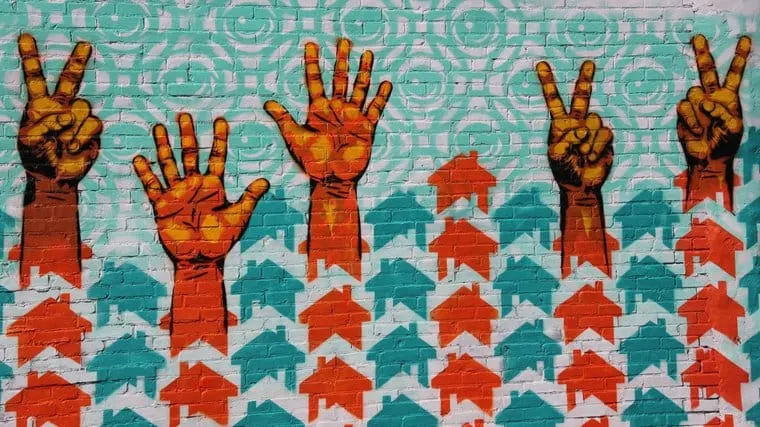
The uprisings for political democracy in the Arab world, the aftershocks of the early-21st-century global financial crisis and the decline of the US as global hegemon in the 2010s led to widespread questioning of the concept of centralised power. The powerful institutions of state and corporation came under attack, alternative political and economic models flourished, and strong civil societies were formed or re-formed across wide parts of the globe. Co-operative, participatory norms replaced competition and exclusivity.
The refusniks, those who benefited most from centralised and largely unaccountable political and economic power, found a ready home in the People's Republic of China, an economic and military superpower. The predicted Chinese hegemony did not come about, however, as the Chinese model was of little appeal to a world moving towards pluralism, decentralisation and federalism.
Years of resentment towards high levels of economic inequality, stagnating standards of living and corrupt, remote governance made the failure of the Chinese system all-but inevitable; that it was replaced by a version of the new global model is a testament to the enduring appeal of economic and political empowerment and the success of people and planet-centred economics. The political and economic order of the last two hundred and fifty years is dead, and the world can now look to the challenges of the next fifty years confident that it has the ability, resources and willpower to meet them head-on.