
A second life for the Aral Sea?
Radek Skrivanek's photo-documentary project explores the legacy of the former Soviet regime and its destructive impact on the environment of Central Asia, specifically, the Aral Sea.
The demise of the Aral Sea - once the world's fourth largest inland body of water - has been described by the United Nations as "the worst man-made environmental disaster of the 20th century". According to a 1999 UNDP report, it was estimated that the "sea" had reduced in size by more than 60% since the 1960s.
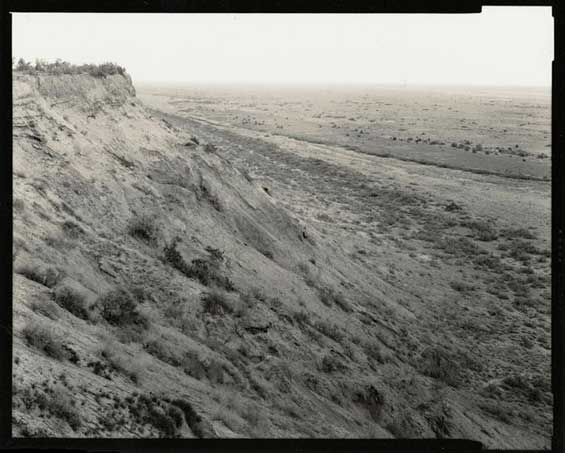
Former sea cliffs, Barsakelmesh Island, Aral Sea © Radek Skrivanek
The seeds of this water crisis were planted in 1959 when the Soviet Union picked Central Asia to serve as its cotton supplier. The scale and intensity of this new agricultural policy required that the Aral Sea's feeder rivers - Syr Darya and Amu Darya - were to be diverted to provide the vast amounts of water needed to irrigate the cotton fields.
However, life seems to be returning to the sea. A few years ago, the Kazakh government secured a $68m loan from the World Bank to build a dam and split the sea into two parts. Kazakh officials say this helped restore 40% of the sea on their side (though it is still shrinking in the Uzbek side). A new $126m loan will begin the second phase of saving the sea, and building another dam. Development experts predict that water could be back in the deserted port of Aralsk by 2010.
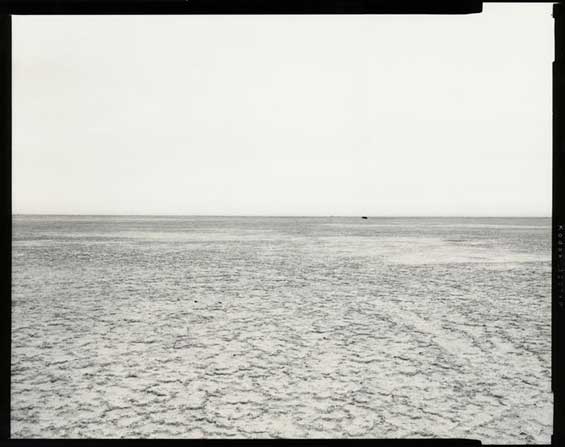
Dry seabed, near Barsakelmesh Island, Aral Sea © Radek Skrivanek
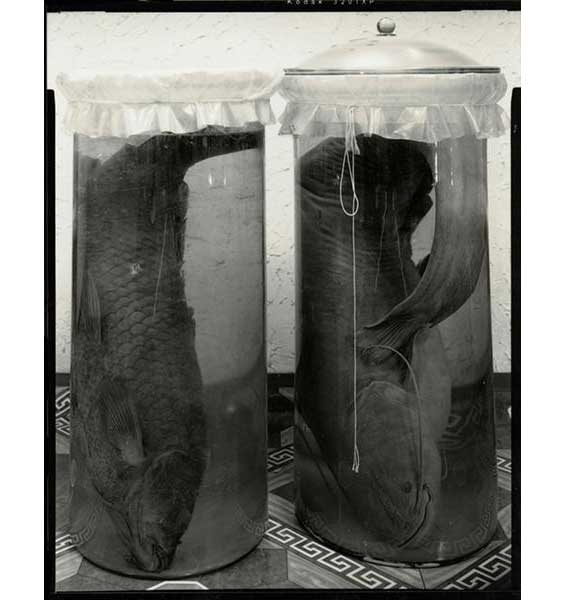
Fish in formaldehyde (Som & Sazan), lost species of the Aral Sea © Radek Skrivanek
Radek Skrivanek's work is currently exhibited at the PEER Gallery in New York through to May 15, 2007.


