

This article is part of a dossier in partnership between SyriaUntold and openDemocracy's North Africa, West Asia page, exploring the emerging post-2011 Syrian cinema; its politics, production challenges, censorship, viewership, and where it may be heading next.
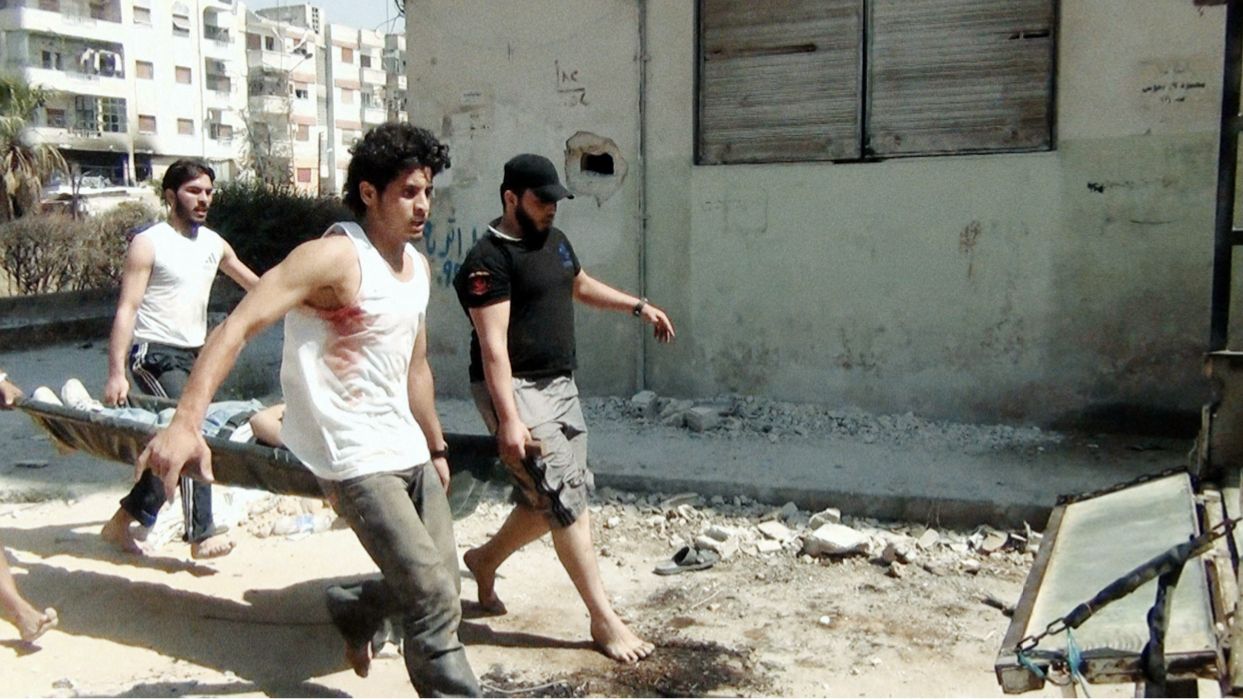
Syrian cinema has reached new levels and spaces after the outbreak of the Syrian revolution in the spring of 2011, and gained a new large audience interested in Syria and its crisis. This interest led to the screening of Syrian films in places previously unknown to Syrian cinema; from Upper Egyptian cafes and Berlin bars to global festivals, passing by international movie theatres and festivals, Syrian cinema won three times the Grand Prize for best documentary at the Sundance festival (for Return to Homs by Talal Derki in 2014, The Last Men in Aleppo by Firas Fayyad in 2017 and Talal Derki’s Of Fathers and Sons in 2018), as well as two nominations for the Academy Award for best documentary film.
In this article, I examine the Syrian cinema in the Federal Republic of Germany, exploring the difficulties it faces, the restrictions imposed on it, and the public reception. For this article, I have reached out to filmmakers and Syrians living in Germany, in order to grasp all the details and to draw the picture as accurately as possible.
