Twenty-five years ago, four simultaneous suicide attacks on U.S. soil claimed 2,977 lives. Most of the victims were people who worked in the World Trade Center’s twin towers. Hundreds of firefighters and police officers who rushed to the disaster site also died.
The trauma of the attack on American soil entrenched in U.S. politics the idea that the response had to be on the scale of war. And so it was: a global and endless war ensued, one that to this day perpetuates itself by constantly seeking new targets. It involved the invasion of several countries, the normalization of torture, and the detention of hundreds of people in secret prisons scattered throughout the world. According to Brown University’s Costs of War project, more than 900,000 people died as a direct result of the war on terrorism in the twenty years following the attacks of September 11, 2001. “Indirect” deaths caused by the collapse of the infrastructure and economies of the invaded countries are estimated at around 3.8 million people.
The current situation in Latin America redefines this date as the starting point of another aspect of the process – one that is perhaps less discussed in our region: the reconfiguration of states, their laws, institutions, practices, and balances of power, all geared toward combating terrorism as the supreme objective. The anti-terrorist state was born. And once it was set in motion, it could never be dismantled. What was built under the pretext of an exceptional situation became the norm.
In the United States, it was decided that terrorism required a military response externally, but also a reconfiguration of the state internally. Activities such as emergency response and immigration control were “securitized” and placed under the purview of a new Department of Homeland Security, created in 2002. The authority granted to intelligence agencies to collect all types of data to spy on the population itself was expanded. In terms of national and international law, the blurring of the line between criminal justice and the laws of war – coupled with an increasing emphasis on prevention and anticipation – led to a sort of parallel legal system with no right to a defense and no means of overseeing the proceedings.
A series of administrative tools based on the logic of labeling were also developed: all the state has to do is label a person or organization as a terrorist for them to face consequences without the need to present evidence or go through legal proceedings. This is how, for example, the various “lists” of designated terrorists work, from which severe sanctions are imposed on the individuals or groups included on them.
In the years following 2001, the idea that the fight against terrorism must be carried out using militarized and exceptional measures became the norm globally. This occurred because other countries, such as Russia, China, and Israel, found in this counterterrorism framework an opportunity to legitimize their actions against internal and external enemies.
A global counterterrorism architecture was also established at the UN level, based on four pillars: addressing the conditions that foster the spread of terrorism; preventing and combating terrorism; strengthening the capacities of states and the UN itself for that purpose; and, finally, ensuring respect for human rights and the rule of law in the context of the fight against terrorism. It will come as no surprise to anyone that interest in enforcing the fourth pillar was, and remains, scant or nonexistent.
Latin America remained largely on the sidelines of this trend, except in cases such as Colombia, where the approach to the internal conflict was also at times viewed as part of the global war on terrorism.
But the exceptional status of the Latin American “zone of peace” began to change in recent years. First, a number of governments in the region began to take an interest in applying the counterterrorism framework domestically. The persistence and evolution of organized crime provided the perfect excuse. Militarization, states of emergency that allow bypassing the separation of powers, and the consolidation of secrecy as a form of governance are all measures far too appealing to leaders with authoritarian tendencies.
Thus, the counterterrorism framework also began to shape several Latin American states – El Salvador, Ecuador, Honduras, Peru – with the sequence of events almost always the same. Real instances of violence establish the use of the category “terrorism” and legitimize emergency measures; once in place, these measures become entrenched and normalized, and begin to be used for the purposes of political persecution. Other countries with much lower levels of violence, such as Argentina and Chile, have spent several years attempting to label territorial conflicts involving indigenous peoples – such as the Mapuche – as terrorism. With the advent of far-right governments, they are also taking measures to reconfigure the state along the anti-terrorist lines.
This trend was exacerbated by Trump’s return to power. As part of its new global strategy, the U.S. defines Latin America as a zone of exclusive dominance.
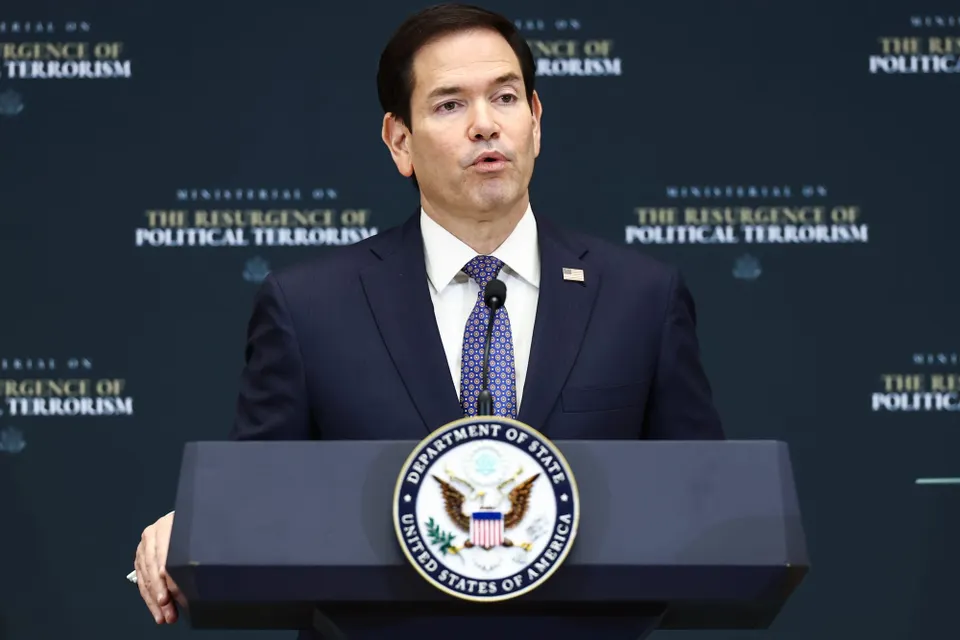
The current plan is to mobilize the entire continent toward a process of militarization subordinate to the Southern Command, using the fight against “narco-terrorism” as a pretext. To this end, it is reviving and updating many of the tools from the post-2001 anti-terrorism framework. Consequently, Latin American strategies that abuse the anti-terrorism framework are being emboldened because the U.S. promotes the application of that same framework as a hemispheric policy, in addition to using it domestically. Even the broadening of the definition of terrorism to include political persecution was explicitly promoted by Secretary of State Marco Rubio at the recent “summit” that brought together representatives from more than 60 countries to hear his warnings about the “resurgence of leftist terrorism.”
 Centro de Estudios Legales y Sociales (CELS)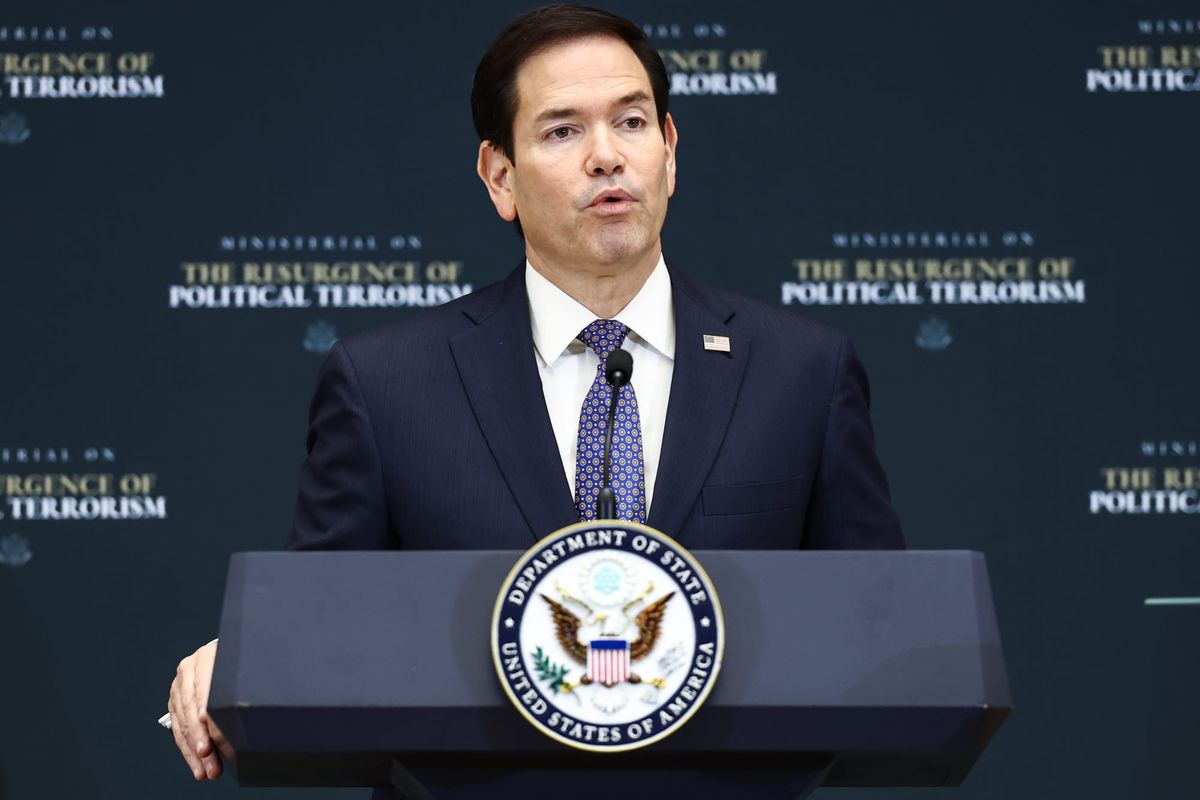
Twenty-five years after the launch of the anti-terrorist state, its shadow looms larger than ever in Latin America, exacerbating the risks of an escalation of lethal violence, recurring violations of national sovereignty with the consent of local elites, and political persecution disguised as counterterrorism.
The concept of terrorism establishes a link between politics and crime. Today this allows governments to criminalize dissent, especially those who attempt to resist current forms of subjugation (genocide, environmental destruction, impoverishment, right-wing political violence) through forms of direct action. As Argentinian scholar Pilar Calveiro pointed out in her book Violencias de Estado (State Violence), these forms of collective action ultimately refer to the “right to rebellion” – a right once recognized – which the counterterrorism framework seeks to eradicate.
Resisting the anti-terrorism framework’s ability to reshape the functioning of the state (and parts of society) in an authoritarian and violent direction is now a political priority for civil society, social movements, and democratic forces in Latin America.
 Diana Cariboni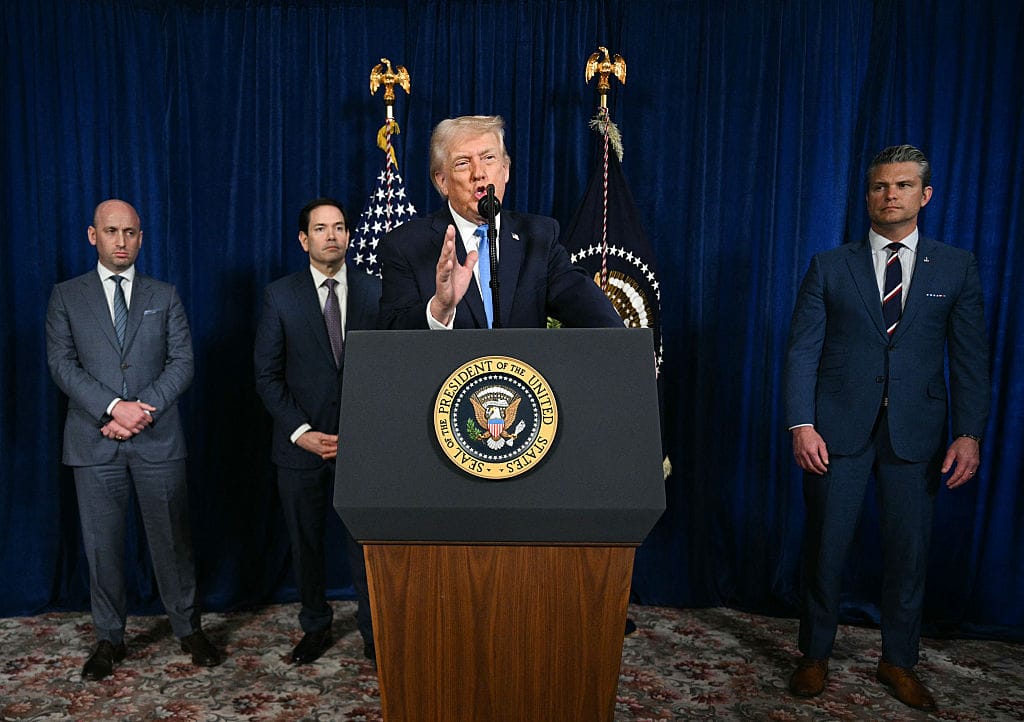
 Diana Cariboni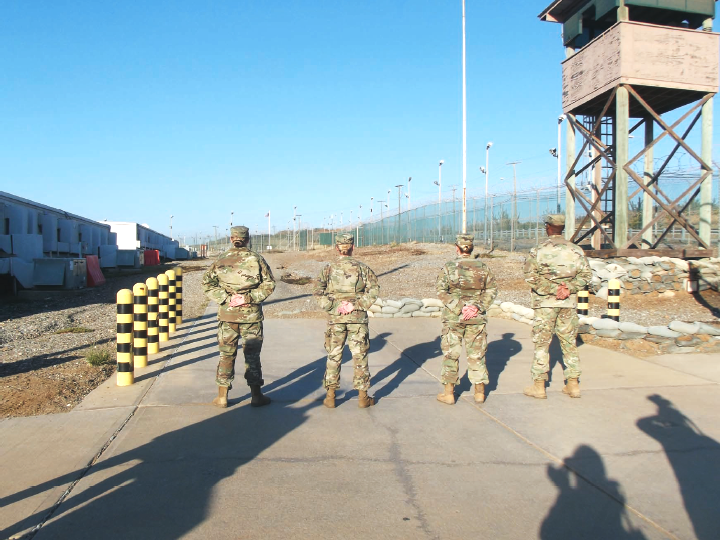
Manuel Tufró is the director of the Justice and Security Program at CELS (Centro de Estudios Legales y Sociales), an Argentine human rights organisation with a broad agenda that includes defending the right to protest.