by Jennifer Varela

I have an incredible ability I'd like to share with you all: I am incapable of seeing myself as I truly am. Women are never allowed to escape themselves. As I get dressed in the mornings, pass the hallways mirror in my office, glance at my reflection in the supermarket window, I am always, continuously, permanently aware of myself. More specifically, aware of my body. Logic evaporates from me as I am confronted with an all too-familiar sights of my "fat" self. I quickly take a ratio of knees to thighs, clock the circumference of my upper arms and the resulting diagnosis will dictate my daily outlook.
When I take out my measuring instruments, make my calculations and move the beads across the abacus, I know that I am not fat. I am not even remotely medically fat. My Body Mass Index has always within the boring healthy range - even during my "fat" years - and for the most part, I presently sport size 6 US (10 UK). Making allowances for my height of 5'9" and on a good day, I'd even humour my shape at "thin". But to have to try on a pair of trousers in a larger size, to have to step on a scale, to catch sight of an unflattering photograph - all these normal acts constitute sources of panic and anxiety. After a recent spell of weight loss, I made a pact to not know my weight, save for the yearly checkups at the doctor, as the entire ritual fills my body with nauseas dread and even the thought of the act is met with a tightening in my chest.
Jennifer Varela is attempting to be a freelance journalist, living in London, UK. She departed from her native Toronto to embark on an M.A. in Near & Middle Studies at the School of Oriental and African Studies. She counts Luis Buñuel films, '78-'82 post-punk and coffee among her friends.
But psychologically, I feel enormous. For the most part of my "thin" intervals, I simply find it impossible to correlate the size of my jeans to the reflection I see in the mirror. It is comparable to having a carnival mirror attached to me wherever I go; I know what I am but I can't see it. On bad days I want to quickly check my size, just to make sure an extra "1" hasn't magically appeared in front of the size number. To paraphrase Susie Orbach in Fat is a Feminist Issue, I simply have not had enough time to "recognize" my "thin" self. It is sticking up a middle finger to all the thin girls who had never been made to feel self-loathing: "Ha ha! I was once fat but I broke free and joined your ranks! How does it feel to be infiltrated by outsiders?"
With the onset of puberty and all of its glorious physical transformations, I was quickly informed by my peers that I was not of the "correct" body shape. Namely, that I was fat. In hindsight, I never was more than a normal-sized child growing into her adolescent shell. But graver, is that even at such a young age, as children we had already been conditioned to have strict ideas on what was to be attractive. As Naomi Wolf successfully named it, the beauty myth had already taken hold. By the time I entered high school, it had spread to a pandemic. My main concern became that of my size and how to reduce it. There were other preoccupations festering in my teenage head, of course - records, boys and simplistic Marxist theory - but all paled in the shadow of my allegedly large ass.
I did not want to be normal or healthy, but T-H-I-N. Achieving high marks in university, being part of a wide social circle and having a boyfriend did nothing to quell my desire for bodily perfection. It was never about making myself more attractive to the opposite sex. Rather, as I had been thrown out of the club at a young age, it was in defiance of their standards. This was a question of control and my inability to contort my image into that which I deemed acceptable to present the (mostly male) outside world infuriated me to no end.
By my early twenties, I had finally achieved my utmost aspiration and through a textbook routine of healthy diet and exercise (after a few stunted attempts at anorexia campaigns that never did last more than a few days due to my lack of will-power), I slimmed and trimmed my way down to a size my 14 year old self would have considered as attainable as a walk on the moon. Was I super-skinny? No. But was I smaller, thinner? Absolutely. And yet here I was, finally equipped, I felt, to face the rest of my life and it would be not my life experiences, relationships or personality but the inches across my waist that would be my source of strength. I was thin now. I am entitled to anything. I was a success.
With size comes a certain citizenship. To be thin or fat is not merely a body shape or dress size; it is a gendered classification into society. To be thin is to be elegant, intelligent, self-reliant, to never know pain or suffering or humiliation, to never have to be aware of one's self or reposition how one sits. Towards the darker end of the spectrum, thinness reveals distance, coldness and in its most extreme forms, at which point the natural curves of a woman's healthy body disappear, to be thin is to be androgynous and asexual. Namely, to be thin is to escape the prison of "female" confinement. Contrast to the attributes of the "fat" woman - curvy, sexy, voluptuous and eventually, promiscuous and vulgar.
And so here I was, finally ‘thin" and yet unhappy. I saw no difference between the smaller version of my reflection in the mirror with its former "fat" sister. It simply wasn't enough. I wasn't thin enough to immune myself from the incarceration of my sexuality and the gender violence that it promised. I did not want to be curvy or have a "nice rack" or anything that would be considered even remotely attractive by society. Instead, models were my source of thinspiration for their ability to erase their every-day eroticism through their negligible size. If my natural curves were to disappear and replaced by mere bone and whisper, then so would the stares, the wolf whistles, the seedy chat-up lines, and the profane propositions. So would everything that this patriarchal society keeps in place in order to make women never able to forget themselves or their gender and simply be. Women should be obscene and not heard.
Women are forced to make dozens of seemingly innocent decisions throughout the course of a day and yet their gendered nature creates a straightjacket of behavioural patterns. If I wear a skirt today, will a disgusting gesture be made at me? Should I wear jeans to this bar lest some guy feels it his right to feel up my thigh after a few too many drinks? Should I cross the street because a man is walking towards me during my dark walk home from work? If I wear heels, will I feel comfortable enough to walk quickly if I need to tonight? It all stems from forms of gender violence, making women question their self-worth with every car yelling, boob joke and ass rating, denied the ability to exist free of sexual fear. When even the most extreme forms of gender violence, rape, murder and physical abuse, are taken lightly by society and the justice system, how are we to combat that violence which leaves no physical mark except that which women brandish upon themselves in a painful attempt to escape the cycle?
I tried to escape my own body as I mistakenly saw it as the enemy. I was thankfully not successful but I live with the emotional fall out. Unfortunately, many women, far too many women, have been more successful than I. And yet, until the death certificates for rape victims, anorexia and bulimia patients, haemorrhaging from severe beatings, et al are listed as what they truly are - gendercide - than all women will inevitably try to eventually escape their bodies. We will all try to shrink to fit.
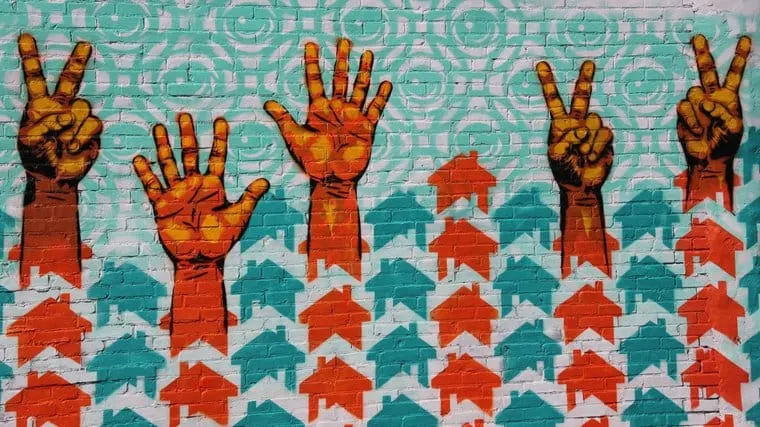
Picture: via twentyhertz's flickR account.