by Tan Copsey and the openDemocracy team
Today we mark the 4th anniversary of the invasion of Iraq. We do so in the shadow of continuing destruction, death and despair. In light of the anniversary we have invited members of the openDemocracy team to share their recollections of the day it all began.
If you have any memories and thoughts regarding the anniversary, send them our way through the comments, we'd love to read them.
Anthony Barnett – openDemocracy Founder
I held an article by David Held to run the day war began, it opens the wrong war in the wrong place at the wrong time. Todd Gitlin and I marched together against the war. My daughter sent me a text from Trafalgar square it read "best banner - Shocked but not awed".
Siobhan O’Connell – openDemocracy Podcast Editor
Not in my name
I felt enormous anger that day. Having voted for Tony Blair with such hope in my heart in '97 how had it come to pass that our country was declaring war on another? After the gloom of being a student through the Thatcher years I had wanted to believe that Blair offered a fresh chance; New Labour, new future and for me, new baby. But by the time I had come to have my third son we were at war. I marched and stuck posters in my window 'Not in my name'.
I thought of mothers in Iraq and how they must be feeling that morning, terrified for their sons' future. I felt tricked and cheated and confused. But most of all I had a great sense of foreboding, that this unlawful action had changed the world order and opened up a frightening panacea. That feeling hasn't gone away. I lost trust that day.
Kanishk Tharoor – terrorism.opendemocracy Managing Editor
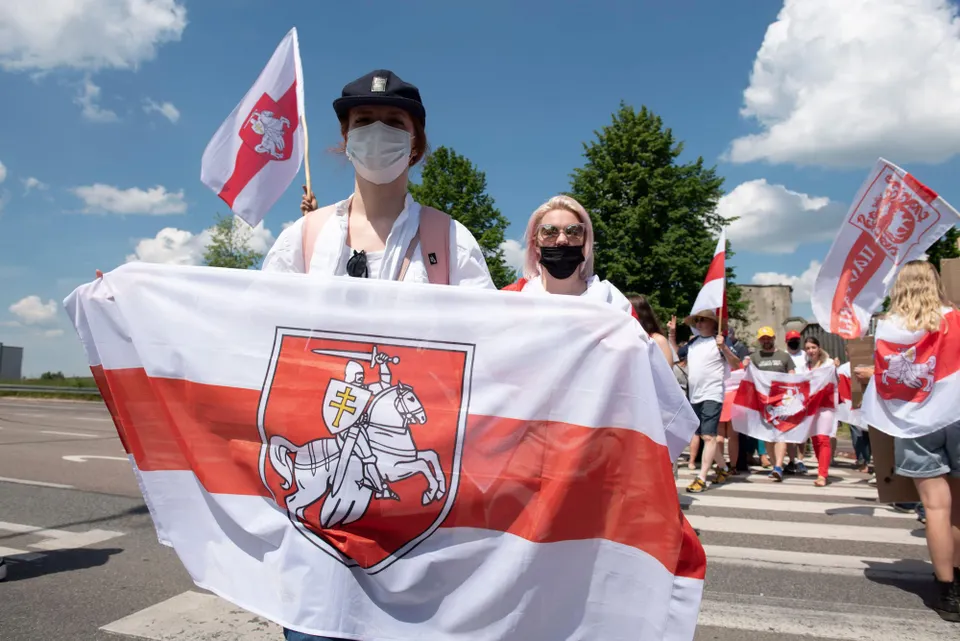
The day after the invasion began I joined the United for Peace and Justice March in New York City as it wended its way from Times Square to Washington Square Park. Though the sun shone down from blue skies, the mood of the march had nothing of the exuberance and passion of the massive protest a month before, when on a bleak February day, so many people took the to streets in opposition to the war that the New York Times described global public opinion as the "second superpower". There was nothing powerful about this sunny protest. For those of us who had been part of the anti-war movement (as I had then, in my first year at university), this silent, grieving march was more a wake than a demonstration.
Sam Geall, chinadialogue.net Deputy Editor
The day the war started, I was living in Tianjian, north-eastern China. I was queuing in a dusty, soon-to-be-demolished street market, buying steamed dumplings. A woman in her thirties asked me where I was from. She was a schoolteacher, and had never before met anyone from the UK. She quietly asked me: "Is it true that most British people don't support the war?"
Katherine Hudson, openDemocracy Development Manager
After going on a march against the first invasion of Iraq in 1990, I played hopscotch at infant school to the rhythm of '1,2,3,4 we don't want a gulf war, 2,4,6,8 why don't we negotiate'. When Iraq was invaded for the second time I was in my first year at university. I went to marches with friends and family, wrote 'not in my name' in fabric paint on my brother's old sports top and wandered round and shouted and felt righteous and furious. I wrote to MPs. I knew that I was being incredibly naïve and optimistic. But there was a feeling that if the middle class electorate politely registered its concerns it would be listened to. The opposition, from the Stop the War Coalition's decision to combine the anti-Iraq war message with 'Freedom for Palestine', to a move by the Oxford coalition to take over the Town Hall in protest which somehow leaked out, seemed, like the invasion itself, well meaning, ineffectual and misguided at best and poorly organised and inflammatory at worst.
I was dismayed by apathy but surprised at opposition to my own opposition of the war: coming back from a march in 2002 with my mother, a taxi driver refused to take us home from the station if we insisted on keeping our placards ("I'll take you but not them"). We walked. Later, at college, I couldn't believe intelligent people could possibly not be opposed to what was clearly an unethical invasion justified with alarmist, unproved claims. I had blazing rows with friends on my staircase. When I set off for London's segment of the global anti-war protest on the 15th of February (complete with blisters from the new shoes I'd worn for a Valentine's Day date the night before) I was accompanied by only one other person from my college.
For me, the invasion occurred as grainy green images of rockets streamed over a friend's laptop. I watched it for a couple of seconds at most. It was immediately familiar and terribly inevitable.
Tan Copsey – openDemocracy Editorial Assistant
I awoke to a war fought mainly in the media, Ravi Omar standing on top of a building reporting for the BBC, embedded reporters celebrating their new roles as members of the military, and The Sun’s tabloid jingoism. My anger was mixed with an inescapable compulsion, continually drawing me back to the 24 hour news coverage, the internet, and an array of newspapers bought locally from conflicted Stoke Newington Kurds. My hungover protest, registered alongside my father on a cold February morning, was that day made to seem trivial by the juggernaut momentum of the neo-con agenda, dominating the airwaves as US jets dominated Iraqi skies.
Solana Larsen, openDemocracy Commissioning Editor
After millions of people had protested all over the world. After the lies of both Bush and Blair has been exposed in detail. After no weapons of mass destruction had been found. After months of debating the invasion on openDemocracy and around the world with absolutely no consensus emerging. I felt utter disbelief that the whole thing just got pushed through anyway. It's nothing compared to my disbelief over how badly things are going now. So many people dead and dying. And politicians are still talking about it as though it were a board game that you can win. I felt sad and powerless, and still do today.
Grace Davies, openDemocracy Managing Editor
I was studying at McGill University in Montreal, Canada. I have always felt my experience of the build-up to the war in Iraq was very different to how it might have been at home. Reading developments in the British press and talking to friends and family I felt very far away, and yet also very close to them - after all this was a global issue we were all watching.
In seminars and lectures that day I debated the issues with my classmates, mostly American and Canadian, and remember being genuinely shocked by some reactions. Many of my American compatriots fully supported and passionately defended the invasion of Iraq as humanitarian interventionism. I tried to articulate the frustrations and betrayal I felt towards my government for having illegally tricked their way to war.
There was a lot of anger and confusion that day. Four years on, I wonder what those same people now feel towards their leaders. I have little doubt that there is still much anger.