
openDemocracys coverage of India and Pakistan includes articles on Hindu nationalism, Pakistans nuclear scandal, the cricket tests, Lagaan, Kashmir fears, Ayodhya myths, Keralan dreams, Gujarat pogroms, and Indias election earthquake
Laila Kazmi Your films have won numerous awards in the west. Are they geared specifically towards western audiences?
Sharmeen Obaid Yes. I think it is very important for people who come from my part of the world, south Asia, to initiate a dialogue with people who come from this part of the world, the west. And because I am a product of both Pakistan and the United States, in terms of education, I have an understanding of where people come from on both sides.
My first documentary, Terrors Children, came about while I was in Pakistan doing a story for a Canadian newspaper on Afghan refugee children. I felt that people in the west had no idea about what the conditions were really like for refugees. Unless they see it, it doesnt leave an impact. Although I had no background in film, I wrote up a proposal. Luckily the New York Times picked up my pitch and decided to fund the film.
left: Terrors Children middle: Reinventing the Taliban right: On a Razors Edge
I want to bring stories from south Asia that can help educate people in the west. However, they do carry universal messages, and its very important to me that people in Pakistan can also see my films. Reinventing the Taliban, for example, questions why a majority of secular Muslims allow a radical minority to define Islam in Pakistan. These are people who dont want anything to do with suicide bombers and terrorism, but not enough are standing up and talking about it.
Terrors Children was shown at the Kara Film Festival, and at Kara in December 2004 Ill be showing Reinventing the Taliban along with On a Razors Edge, a short film about peace between India and Pakistan. I also plan to hold private screenings in Karachi.
Laila Kazmi But can ordinary Pakistanis get to see your films? As important as the Kara Film Festival is, it has a limited audience.
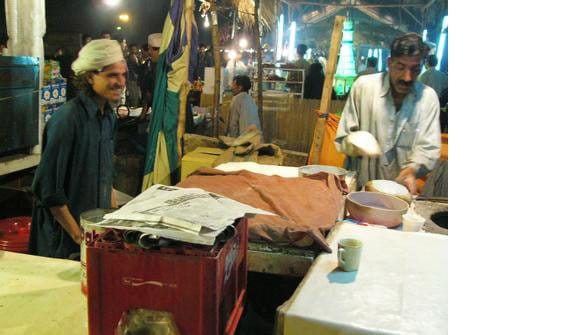
Tandoor, On a Razors Edge
Sharmeen Obaid Its true. There simply arent enough film venues in Pakistan, and its a lot harder for ordinary people to see such films. But there is a shift in how Pakistanis view film. Lollywood, the commercial film industry, is not very successful - in fact its a bit of a joke. But a new group of young, independent filmmakers is emerging who are moving beyond Lollywood formulas. Their films and documentaries will gradually find their audience beyond the elite.
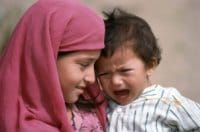
Still from Terrors Children
Laila Kazmi Terrors Children is about the difficult conditions and the extreme poverty in which Afghan refugee children are growing up in the camps in Pakistan. How difficult was it getting access to the camp?
Sharmeen Obaid In the beginning it was pretty hard because they were very suspicious of me. I was a Pakistani. They didnt view Pakistanis with a lot of trust, especially after 9/11.
It was intimidating also because I was the only woman over the age of 13 with my face showing. Once or twice a few men stopped me in the refugee camp and asked what I was doing there. They told me that I should wear a burqa, and that if I came from a right Muslim family I wouldnt even be working.
That was discomforting because in Pakistan, despite many restrictions, you still have the freedom to move around in cities without wearing a burqa. You can travel freely wearing shalwar kameez; nobody ever questions you. You can drive a car, you can work you can do lots of things. So looking at the conditions in the refugee camp, I realised then that Afghan culture and Pakistani culture are very different.
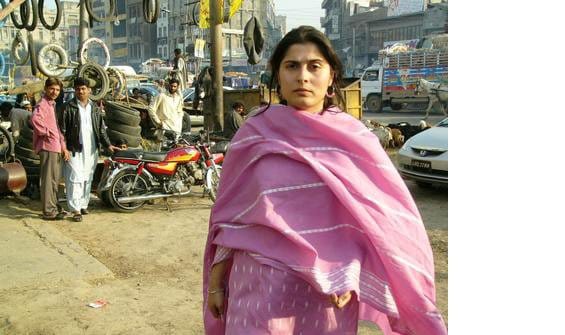
Sharmeen Obaid in Pakistan, On a Razors Edge
Yet when I sat down and talked with the men in the camp, they were actually very considerate. After that conversation I was never bothered. In fact, if they saw somebody who was giving the camera crew any trouble, they would ensure that the person was removed from the vicinity.
In a way, it even helped that I was a woman, as I was seen as perhaps less threatening. They could also see that I had built a careful relationship, during and outside of filming, with the children I was mostly working with. So they allowed me to film in a lot of normally inaccessible areas in the refugee camp.
It was heartbreaking to see these people, especially the children, living in such extreme conditions. It was hard at the end of the day to return home and think: this is my life and that is theirs.
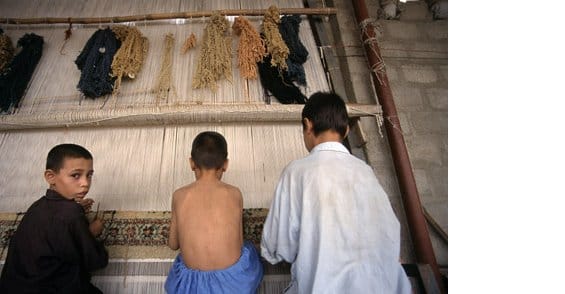
Making a carpet, Terrors Children
Laila Kazmi Reinventing the Taliban is about the effects of fundamentalism in north-west Pakistan. The scenes you filmed included a madrasa, political rallies, and a gun shop places usually closed to women. You also interviewed a few hardline clerics. How willing were they to talk to you?
Sharmeen Obaid The clerics were the most obliging, nicest, most hospitable people I met and worked with. Fun people! They made sure that I ate with them, drank tea with them, they told me anything and everything I wanted to know. They didnt have any pretensions. Sometimes they werent too happy that I was challenging them, but they never stopped me asking questions and always gave me their own opinion.
Maulana Sami-ul-Haq
Most of these clerics had never encountered a female journalist. Before the interviews, we had long conversations about, say, sport or the weather. I got them comfortable and familiar with me, and that really worked, especially with Maulana Sami-ul-Haq arguably the most intimidating man in Pakistani politics and in the whole madrasa system. He really took a liking to me. He wanted me to see things his way and I wanted him to see things my way. It made the interviews more lively.
Laila Kazmi Do you think that you made any impact on these clerics?
Sharmeen Obaid No, none at all. But the older clerics at least always asked me what I thought about their answers. They would never agree with me, but the fact that they wanted to engage and know what someone like me would think was encouraging.
Laila Kazmi Some Pakistanis have complained that Reinventing the Taliban focuses too much on the fundamentalists and presents Pakistan in a very negative light.
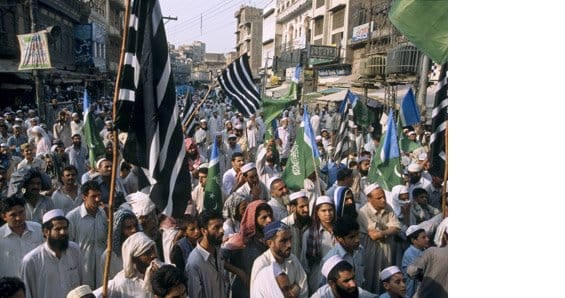
A rally in Peshawar, Reinventing the Taliban
Sharmeen Obaid Reinventing the Taliban is primarily about the rise of Islamic political parties and the impact they are having on peoples rights, so it shows rallies and Islamic fundamentalists. It would have been unfair and absurd to show a modern, carefree Pakistan without any threat from Islamic fundamentalism. But it also shows secular Pakistanis and everyday people who sing, paint and work, who are educated and vocal, who embrace life.
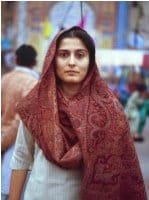
Sharmeen Obaid, filming Terrors Children
I do get more criticism from Pakistanis because I am Pakistani, and they dont expect that from me whereas they expect a foreigner to portray Pakistan negatively. A Pakistani filmmaker is expected to be loyal to the country, but I am not Pakistans PR agent, Im a journalist who happens to be Pakistani. I also want to hold true to proper journalistic standards and principles.
Laila Kazmi How real is the threat of fundamentalism in Pakistan?
Sharmeen Obaid It is very real. The appointment of Maulana Fazlur Rehman as opposition leader of the national assembly is only one sign. These people are gaining ground and by doing it step-by-step they are being very intelligent about it. Pakistan today is like Iran before its revolution in 1979. There are high levels of poverty, and immense inequalities.
But a hopeful sign is the improving atmosphere between Pakistan and India. The talks, the cricket tests and the better relations are something that my generation greatly values because weve never experienced anything like this. In my generation an average Pakistani has never met an average Indian. The borders have been closed for so long, how can we meet each other? This has contributed to so many misconceptions. My third documentary, On a Razors Edge, explores this issue.
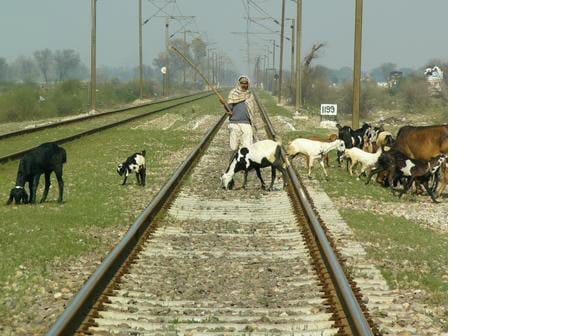
On the train to Pakistan, On a Razors Edge
In early February 2004, I travelled by train from India to Pakistan and spoke with families long separated by political division. I was in Pakistan for basant (kite and colours festival) and met there Indian families who had crossed the border for the first time.
I did lots of street interviews where everyone said they wanted peace even more so in the middle of the nuclear scandal involving Abdul Qadeer Khan, which broke out while I was filming.
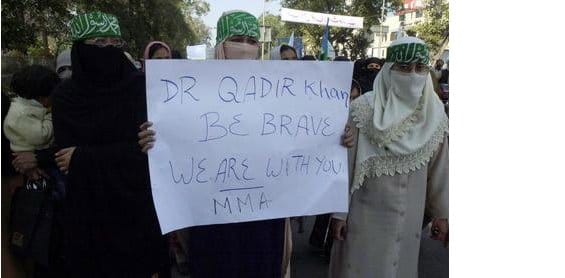
March in support of Abdul Qadeer Khan, On a Razors Edge
Laila Kazmi What do you want your films to say? Why are they important to you?
Sharmeen Obaid After 9/11, one of the most important things about being a Muslim woman is that we now have the opportunity to tell our story and to do it from our part of the world.
My films try to show a reality thats largely ignored by western media. Im trying to bridge the gap between the image of Pakistan on, say, American television, and whats actually happening there. What government officials and important people say may be familiar, but my films look beyond that to the unheard voices of ordinary Pakistani citizens and what they want for the future of their country.
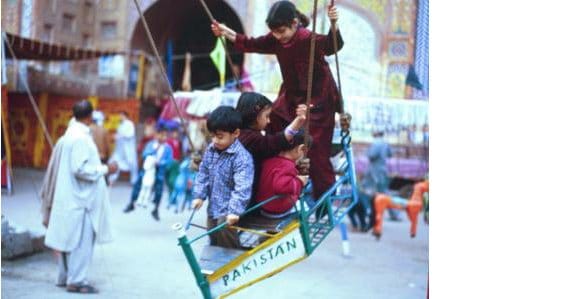
Kids on a swing, On a Razors Edge. For more images and information on these films, go to www.sharmeenobaidfilms.com

