
openDemocracy brings you the first of a two-part exclusive photo feature. In April 2004 journalist Keirón Allen returned to Afghanistan after six years. The experience made him rethink his preconceptions of the American military, and especially their dealings with the Afghan people. His striking and thoughtful photography questions and looks beyond the stereotypes and, in one of the most dangerous places in the planet brings an unexpected hope and humanity.
Its hard to fight an enemy who has outposts in your head
Sally Kempton
Most depictions of the American military both in the movies and in the media show be-shaded, un-smiling stormtroopers using blunt power to achieve their goals. Most depictions of Afghans are of bearded men with AK47s or women in burkhas; all emphasise the destruction, violence and poverty of the country. Unfortunately this has led to the demonisation and dehumanisation of Muslims and Americans alike. This in turn has led to an escalation in the polarity and extremity of views held by each side and erected barriers to understanding and compassion.
I was keen on this visit to Afghanistan to avoid adding to the number of death and destruction pictures and look for images of hope and humour in the hope of humanising both sides. This chapter, one of five in total, looks at the American military. Initially sceptical of this beast, my experience of the troops at the forward area of Khost (near the Pakistan border, and former al-Qaida stronghold) was one at odds with the view held by most people I meet in the west. Yes, they were expert at killing and capturing the enemy, but they were also accomplished at being policemen and diplomats. 19-year-old soldiers were learning Dari and Pashtu. These soldiers held the dual belief that they were fighting for both the dead in downtown Manhattan and the people of Afghanistan. This softer approach has reaped huge dividends in engendering trust with the war-worn peoples of eastern Afghanistan. Remember when looking at, for example, the picture entitled Frisbee that this is one of the most dangerous places on the planet. Its quite clear that Afghans are tired of conflict; two generations have grown up knowing only bloodshed and as a result have the reasonable hope that no other family members will die from a rifle shot, bomb or mine.
At his inaugural address in Kabul on 7 December 2004, three years after the US-led efforts to depose the Taliban regime, Hamid Karzai paid tribute to the resilience of his fellow Afghans and their willingness to work for a free, peaceful and prosperous future after decades of civil war.
We have now left a hard and dark past behind us, and today we are opening a new chapter in our history in a spirit of friendship with the international community. He went on to swear an oath: To make great and sincere efforts for the happiness and progress of the people of Afghanistan.
Hours before President Karzai spoke at least ten people died after suspected Taliban fighters attacked military posts in Khost province.
So, in a spirit of friendship, with hope and humour, look to question these standard depictions, these slides that might at present be showing in your head.
Photography by Keirón Allen and Rupert Edis
Hope and Humour in Afghanistan: chapter one
Humanising a Beast The American Military
1. Introduction
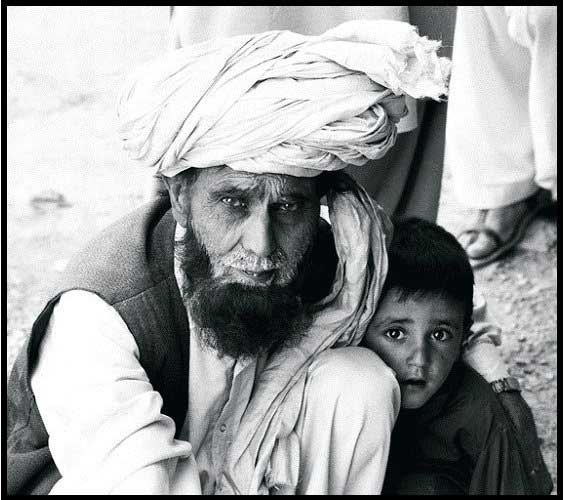
A classic picture of the people the military effort is trying to help
2. Conditions
Mines Baghram airbase is the main military airbase in Afghanistan. Large areas of the base are still littered with mines and rusting Russian air shells. Jogging is strictly limited to the roads.
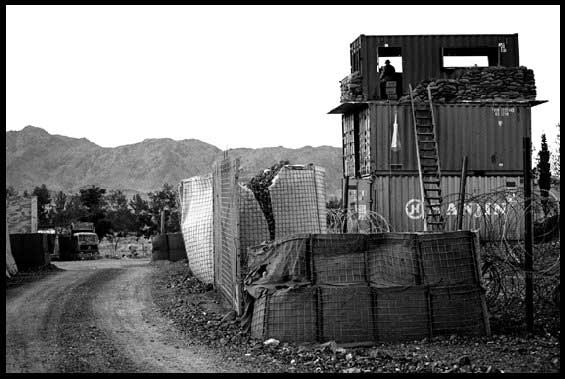
The North Gate The main and north gate of Camp Salerno, Khost home to the 501st Parachute Infantry Regiment, the Army Rangers and Special Forces
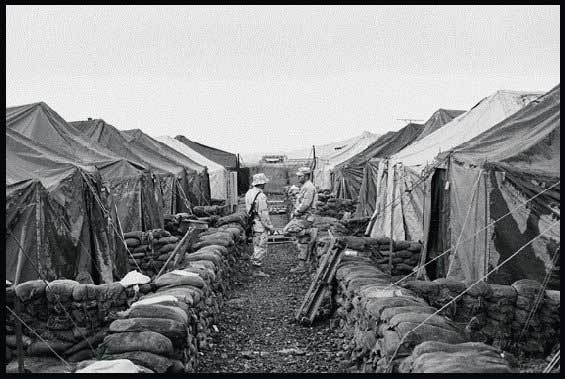
Heavy Sky The majority of soldiers now live under specially designed, modern tents and the number of more permanent structures is increasing. However, since the beginning of the conflict three years ago soldiers had to live under more basic canvas. On this day the weight of the sky seemed particularly oppressive bearing down on the soldiers boredom between sorties and patrols.
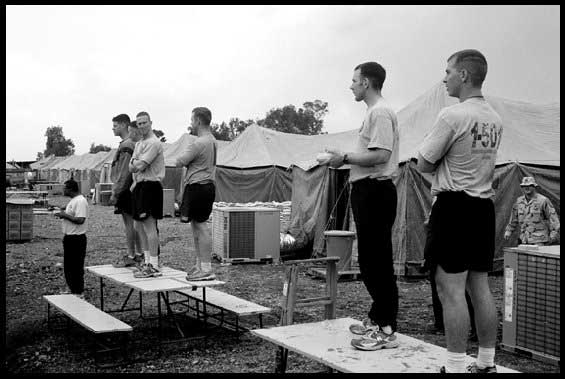
Waiting for the post When we were there the soldiers had not received their mail for over six weeks. Air transport from Khost to Baghram is strictly controlled and personal niceties such as mail may often have to take a back seat to strategic or logistical priorities. Recently, internet and telephone services have been made available.
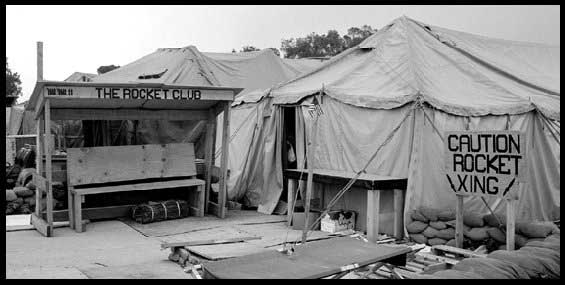
The Rocket Club
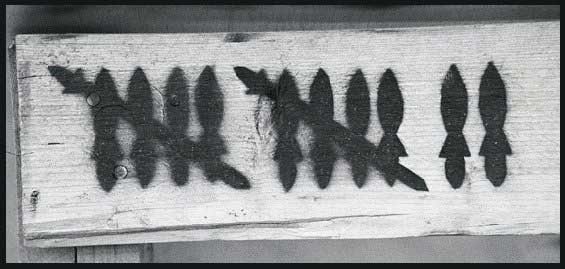
Twelve Rockets Twelve rockets had landed within the camp
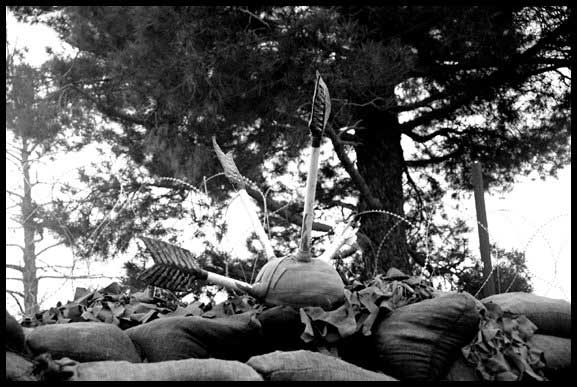
Rocket Humour
3. Depictions of the American Soldier
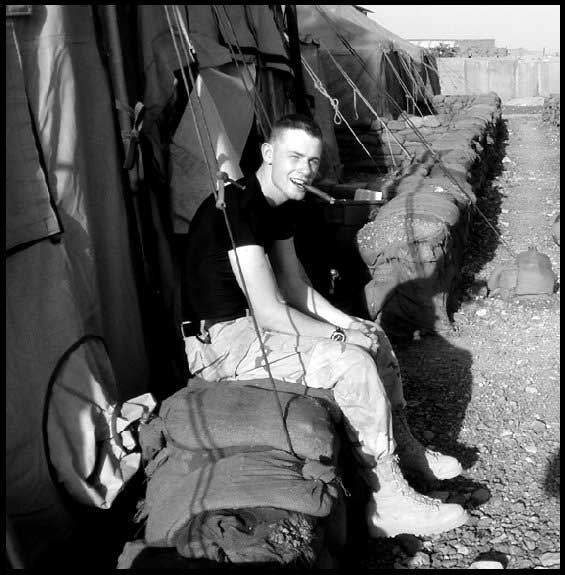
Ceegar
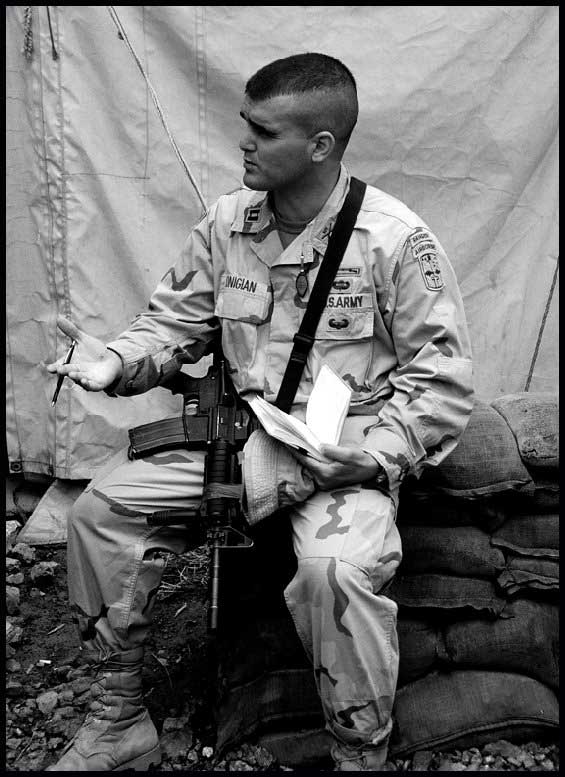
Captain Danigian, Camp Salerno
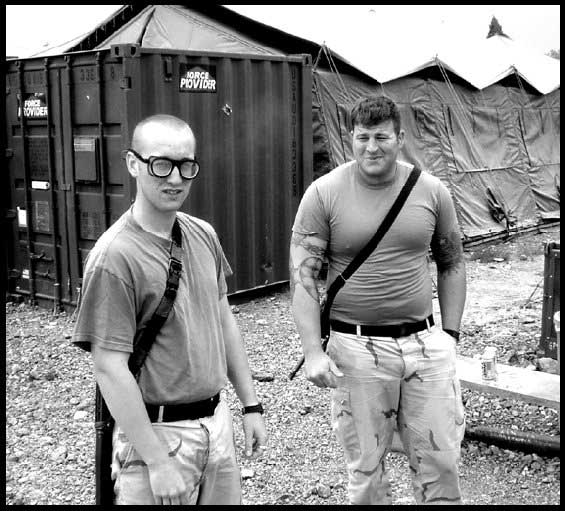
One of the soldiers above had recently fought his way out of an ambush where three of the anti-coalition were killed, Camp Salerno
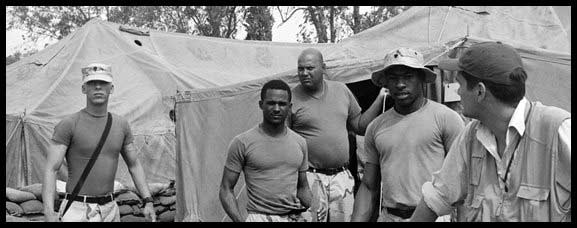
These soldiers were tasked with erecting the more permanent constructions within the camp my friend Rupert looks on, Camp Salerno
4. On Patrol
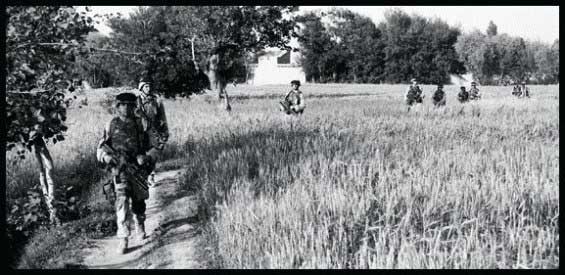
Farmers and Hunters
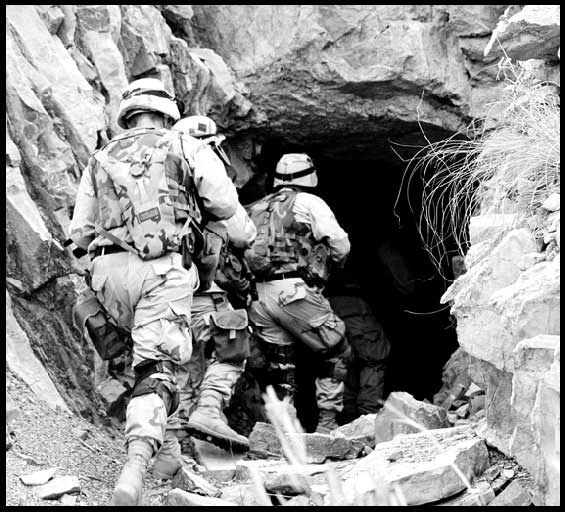
Clearing a tunnel in the mountains near the Pakistani border
5. Hearts and Minds
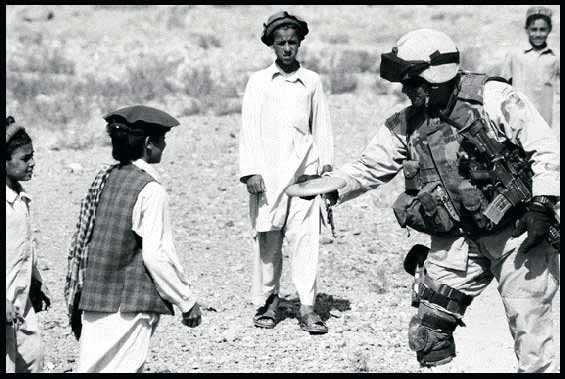
Frisbee The Khost bowl
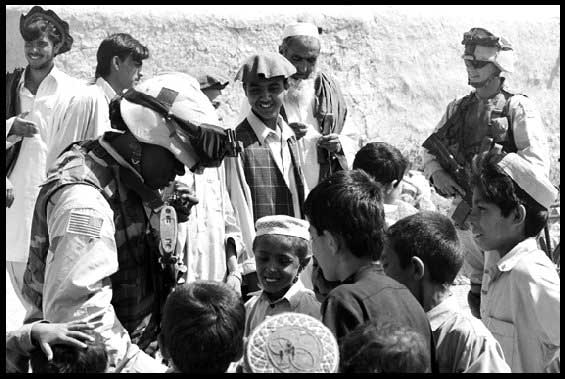
A black female soldier, the Khost bowl. Women were welcome and necessary members of the unit as it showed sensitivity to Islamic sensibilities when searching an Afghan woman or the private areas of a house.
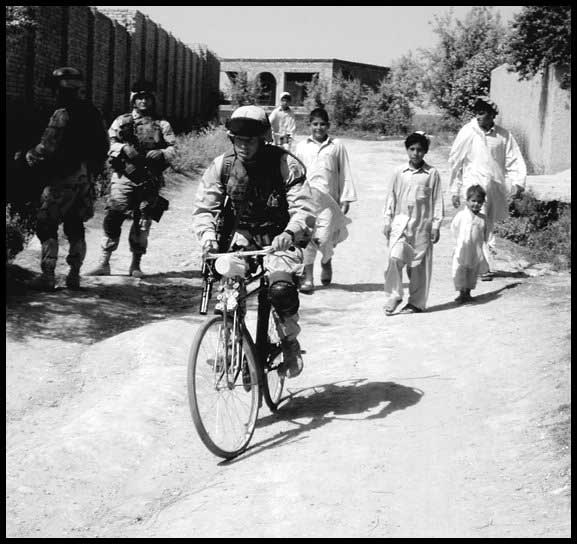
An American soldier has a go on a kids bicycle, the Khost bowl
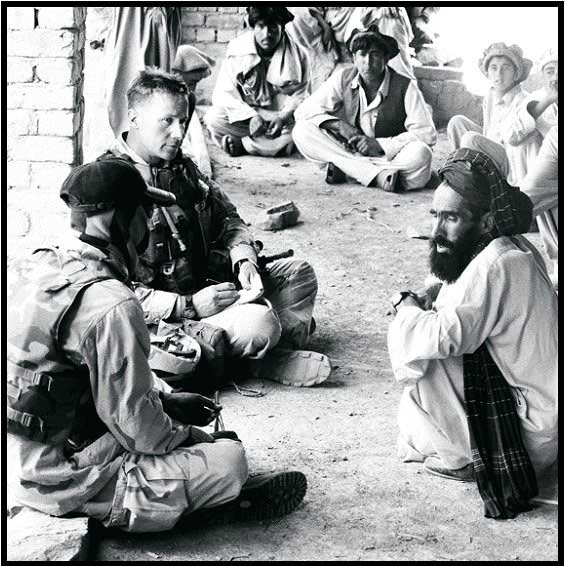
Meetings are commonly held cross-legged and helmet-less. Tea is served and often a meal. The Coalition forces have handed out blankets and wind-up radios and have built schools and drilled wells. Camp Salerno even has an emergency vet on-call. One of the soldiers said that it was easy to get along with the Afghans as they shared his sense of southern hospitality. He was from Georgia.
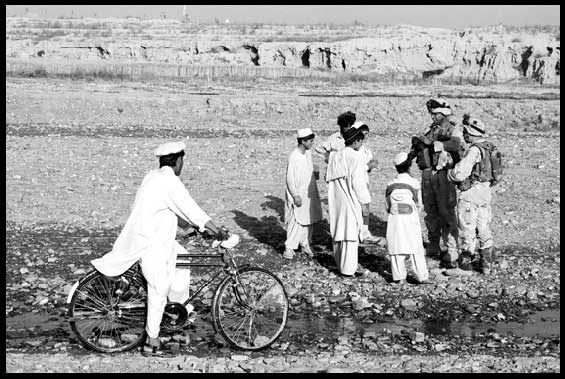
Sweets The Khost bowl
6. Side-by-Side
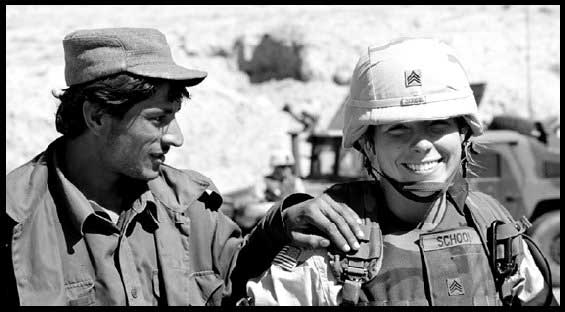
Going to School We stopped at one of the checkpoints having cleared the road to give water to the Afghan soldiers there. The sentry was very enamoured with Sergeant School, outside of Baghram
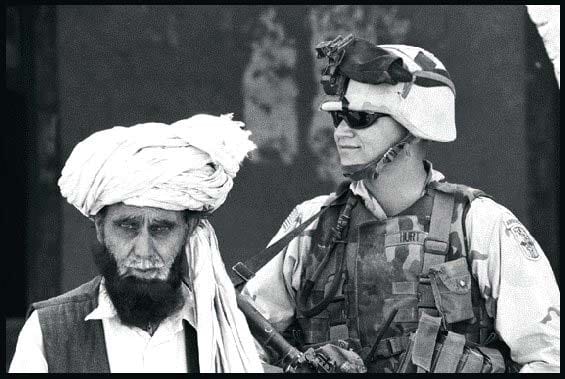
Hurt The Khost bowl
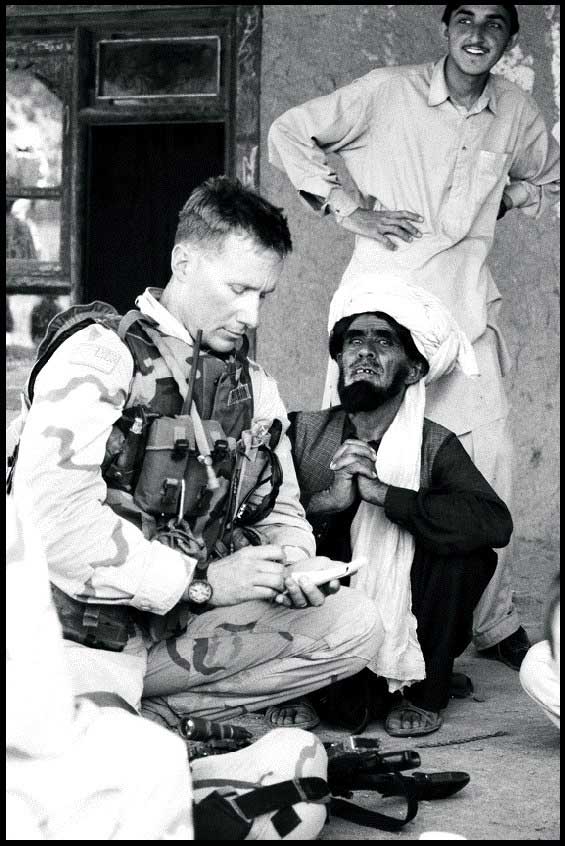
American Soldier, Easter Island & David Niven The soldier above, Special Forces Lt. Peterson was a devotee of the British explorer Richard Burton. The Khost bowl
7. The Media
Of course an essential part of bringing news and images out are the journalists themselves. I enjoyed being a part of this tough, stoic, camaraderie - but could not see myself doing it permanently. The lives of the soldier and the war journalist have a lot in common. There are long periods of filling time, waiting for transport or traveling and there is only so much planning one can do. Both soldier and journalist spend long periods of time away from their loved ones and are frequently in significant danger. The number of journalists killed in 2003 in action is a staggering figure.
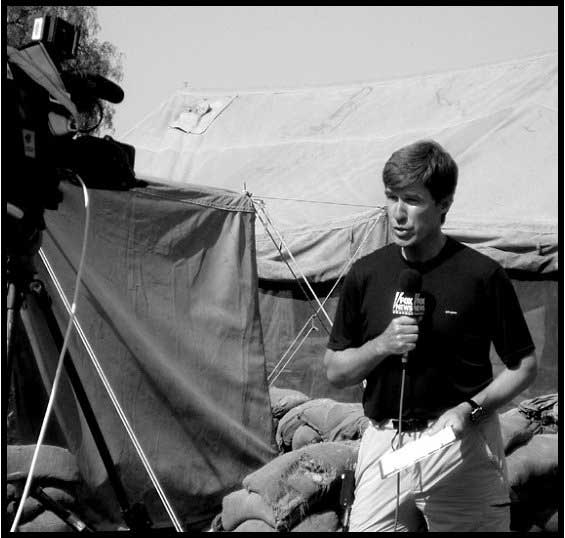
Its a deadly game here in Afghanistan Greg Palkott, Fox News Broadcast, Camp Salerno
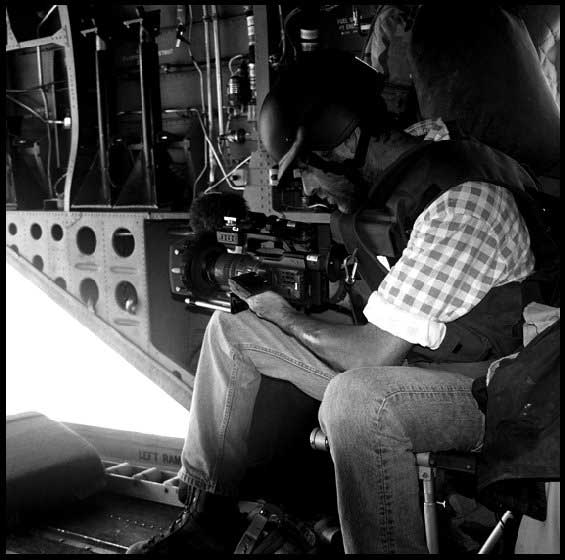
Jim Foster, Sky News cameraman, filming out of the back of a Chinook as we fly through mountain passes
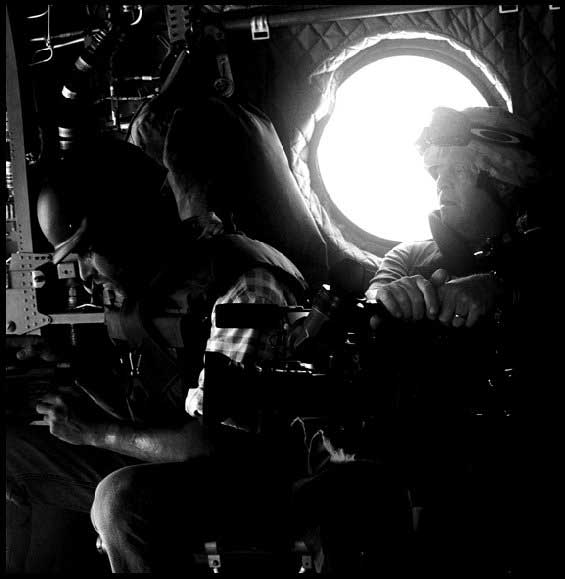
Jim Foster and Peter Sharp, Sky News
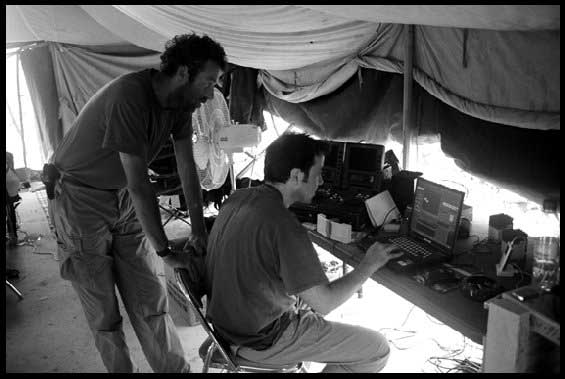
Jim Foster and Richard Vale doing a field edit, Camp Salerno
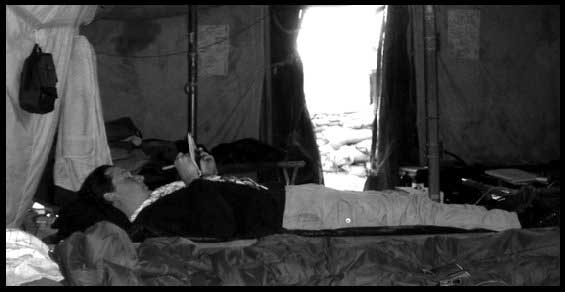
Me, Camp Salerno
8. American Graffiti
Above and below: Baghram Airbase
9. The Watch Tower
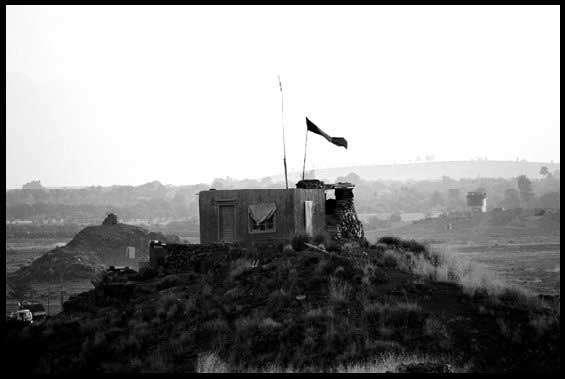
There be dragons! Camp Salerno
Keirón Allen is organising an exhibition with other photographers on depictions of Hope and Humour in Afghanistan. This is an open invitation to send him any positive depictions people may have of the situation in Afghanistan. Please email keironallen@hotmail.com.

