
When I was growing up, it seemed strange to me that my parents, who had emigrated from India to Britain in search of a new life, harboured the dream of returning to the country of their birth. When talking about India they would always complain about the rough roads and the searing summer heat, but as time passed even the most miserable memories became rose-tinted with nostalgia.
Reverse immigration to the sub-continent very rarely happens. Indeed South Asian immigrants continue to land on western shores, egged on by the promise of straight roads and clement weather. The Indian diaspora, including descendants of immigrants, now stands at approximately 20 million.
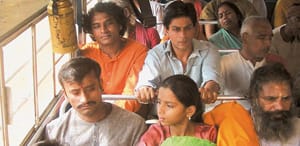
The myth of return? Mohan, played by Shahrukh Khan, braves the local bus back to his ancestral village
However the latest blockbuster out of Bombay suggests that this trend may be changing. Swades tells the fictional story of Mohan, a highly successful NASA space scientist living in a state-of-the-art bachelor pad in the United States. Unfulfilled at the peak of his career and remembering the death of his parents, he traces his roots in India and arrives in a small downtrodden village where his childhood nanny now lives.
Rural India is a far cry from his life in America but Mohan is instantly hooked. The film hilariously encapsulates what it is like to be a non-resident Indian (NRI) in India. Mohan wanders around ancient temples with an expensive camera slung round his neck, exclaiming, Beautiful! To the bemusement of the locals he even takes photos of the village panchayat (council) meeting.
Interested in cricket, avenging-angels, Bollywood and (sigh) Aamir Khan? Read Jessica Hines on Ashutosh Gowarikers big hit Lagaan: Bollywood, beyond the boundary and Pankaj Butalia on Phoolan Devi only in openDemocracy
Although he speaks perfect Hindi, Mohan is immediately marked out as a foreigner. His NASA credentials quickly evaporate. Explaining that he works with satellites, which bring information to people from far away, someone retorts that the village postman fulfils exactly the same function. Besides this muscle-bound postman, other quirky village folk pop up along the way. These include a bunch of corrupt panchayat members who want to move the village school to a smaller building and an entrepreneurial dhaba (food stall)-walla who dreams of setting up a chain of Indian food stands across America. The latter is one of many people who constantly approach Mohan to practise what little English they know and find out whether the rumours they have heard about America are true or not.
It is a story I immediately sympathised with. I moved to New Delhi last year for six months to work as a reporter. I fought a constant battle with people who refused to believe I could cook Indian food like my mother and that the west was not sinking under the low moral standards that Hollywood movies seemed to imply. I even met a man who refused to concede that western girls dont walk around the streets naked. It gave me great pleasure on the day I left when immigration officials at Indira Gandhi airport mistook me for a born-and-bred Delhiite.
Mohans dilemma, shared by countless tourists to the developing world, is that he is faced with extreme poverty, which stands in desperately stark contrast to his own wealth. He stays in a fully-kitted luxury caravan complete with shower, while nearby a family starves in a one-roomed shack. The poor cannot afford to send their children to school and the entire village suffers under a severe electricity shortage. Even the problem of child marriage is briefly touched upon.

Gita, Gayatri Joshi, as Sita in the Ramayana school play
Inspired by a growing affection for Gita, the local schoolteacher, Mohan whizzes round the houses to persuade people to send their children to school. Dont show us dreams, says one father.
The problem with the village is that there are too many wrangles between neighbours to ever get anything done. With his characteristic American can-do attitude, Mohan achieves the near-impossible by uniting the village and allowing dreams to flourish. Mohan breaks taboos by accepting food from untouchables, but in doing so also signals a green light to allow others to do the same.
Towards the end of his stay, Mohan hastily gathers the villagers together to construct a water-powered generator. With an inspirational spirit of cooperation, the generator is built and splutters into life.
In Delhi I encountered many young people of Indian origin who had arrived from the west with similar stories to tell. The booming technology, media and banking industries in India have made it an increasingly attractive country for the young and gifted.
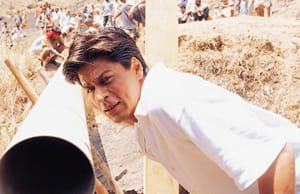
Can Mohan save the day?
But none of these people was in India to make money they were there to offer their help. I met a young American who was learning the tough art of organic farming under the tutelage of environmentalist Vandana Shiva. There was a teenager from Wales who set up a school in his ancestral village in northern India, returning periodically to check on its progress. I also made friends with a Nepalese girl who had grown up in Australia and now works as a reporter on environmental issues in Kathmandu.
Not surprisingly, the Indian government is keen to encourage this trend. It has escaped nobodys notice that British pounds and US dollars go a very long way in a developing country. Furthermore, persons of Indian origin often bring with them western education along with an existing understanding of Indian culture and language. The philanthropy of Indias western immigrants could therefore be the key to Indias future growth. The government has even created a Ministry of Overseas Indian Affairs to deal solely with these issues.
Back in the US Mohan cant help being preoccupied with the glowing memories of his trip. Like Dorothy in The Wizard of Oz, he longs for the simple pleasures of home even when surrounded by the emerald city-type wonders of a NASA scientists life. So, quite predictably, he returns to India. The lyrics of the films concluding ballad plead, This is your land.
These final scenes of Swades reminded me of the Bharatiya Janata Partys India Shining television adverts that were screened across India in the run-up to the 2004 general election, showing apparently happy citizens shining in the light of their countrys economic growth. By the end of Swades I felt like I had watched a similarly lengthy commercial. Though the India Shining campaign spectacularly failed to convince the voters, Swades managed to win me over. I was deeply tempted to re-pack my bags like Mohan and head back to India.
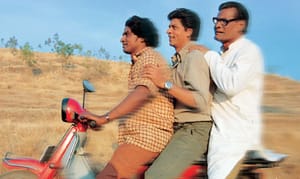
The film is a deep departure from the way NRIs have traditionally been portrayed in the Indian media. In the past Indians have looked upon their diaspora as fallen children, often thought to have forgotten their culture and language. But Indian communities abroad have proved them spectacularly wrong. Many Indian immigrants now maintain very strong links with India and are among the major sources of foreign investment, whether in the form of handouts to family members or charitable projects. As the country finally recognises the diasporas contribution to Indias growth, Swades is a much-needed invitation back home.
These pictures appear courtesy of AGPPL and Swadesh.com

