
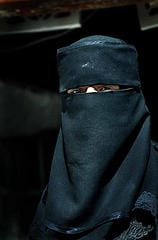
Madrid11.net’s Esther Martin-Ortega talks to Dr Reefat Drabu of the Muslim Council of Britain about the veil, Jack Straw’s remarks, and what Muslim women contribute to British society. What is your view of the remarks recently made by former British Foreign Secretary Jack Straw, who said he would prefer women not wear the face veil? Jack Straw made those comments in the media, and – given the climate the Muslim community is in at the moment – I don’t think this was the best place to air his views. He has a large Muslim constituency, where he could have had a real debate had he really felt so strongly, and had he actually wanted to address the issue. If he wants a cohesive society, the debate has to be conducted, or best conducted, within the community, in a safe environment. An environment which makes you feel empowered, not out in the media where prejudices abound and you are on the defensive. Is there any truth in the claim that the veil has become a symbol of separateness between ethnic groups? I do not believe that the veil has anything to do with the segregation of societies. The government is in denial as to what causes disillusionment amongst Muslims. The problem is that, although the government pretends to hear, it never listens to what the Muslims are saying. After the July 7 bombings, the government went up and down the country talking to Muslims. Having given them an opportunity to debate the issues, the Muslim groups then came back with many proposals. One proposal that had unanimous agreement – was that there should be an independent inquiry into the 7/7 bombings. This was totally ignored. It was also evident from the feedback that the foreign policy was fuelling the feeling of alienation in the Muslim community. Nothing has been done to address these findings. You argued that the problems that alienate (Muslim) women are to do with foreign policy... I wanted to say that alienation has nothing to do with the cloth that the Muslim women wear. If there is any alienation as far as the Muslim community is concerned it has to do with the foreign policy, and the fact that the government does not seem to listen. Let’s not forget, that the majority of ordinary people were opposed to the invasion of Iraq. Not just Muslims but the whole country. Yet, somehow, what Muslim women wear is to blame, for everything that has to do with alienation. One of your colleagues at the Muslim Council of Britain, Daub Abdullah, said that if the face veil causes discomfort to non-Muslims, it should be avoided. There are a lot of things that cause me discomfort when I am walking down the street. A group of hoodies would cause me discomfort. The problem is going to be defining what is acceptable and what isn’t, and in doing so, we shouldn’t just concentrate on Muslims. There are many situations where you feel uncomfortable or not at ease. But you should be able to learn and manage your discomfort rather than have everybody dress the same, talk the same, walk the same. Do you fear that people may come to criticise the headscarf more generally? In this country, where we have a definite right to wear the headscarf, it hasn’t caused any problems at all. I do not feel that we are going to be banning the headscarf. It is unfortunate that the ‘veil issue’ has become such a huge thing. The media have made the veil into an issue that encompasses everything. It is a very minor issue and, as I said, there is not an obligation to wear [the face veil]. Do you think that Jack Straw’s remarks give ammunition to anti-Muslim campaigns? Yes, I do. I don’t think he fully considered what effects his remarks would have. How can a better understanding between ethnic or cultural groups be achieved? What could we do to promote better community relations? It is important that the media gives a balanced portrayal of any community. I’d love to see some coverage of what Muslims are actually achieving for the common good of this country. The responsibility lies with the media and the politicians. Really, if we are committed to a cohesive society, they should back off from the Muslims. Let the Muslims have the space and confidence to question, to debate, to see how they are fitting into the society. At the moment all we are doing as Muslims is defending ourselves: ‘No, we are not all terrorists’, ‘No, we don’t all wear niqab’, ‘No, we are not all unreasonable people’. Think about it psychologically, if you demonise a community continuously it is bound to drive a wedge between them and the rest of the society creating a massive obstacle to community cohesion. Dr Reefat Drabu is Chair of the Social and Family Affairs Committee, The Muslim Council of Britain.





