
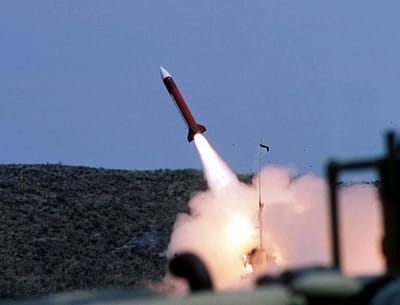
Although Iran insists its missile programme is purely meant as a deterrent, the latest test-firing manoeuvres have alarmed the international community since one of the missiles, namely the Iranian-made Shahab-3, is able to reach Israel and U.S. forces in the Gulf. by Esther Martin-Ortega
Iran unexpectedly announced Wednesday its plans to conduct an exercise called "Great Prophet" scheduled to last 10 days, in which short and long range missiles would be test-fired. According to Iranian state-run television, Iran's Revolutionary Guards test-fired last week dozens of missiles in the Gulf, the Sea of Oman and several provinces of the country. These war games have alarmed the international community as the Iranian-made Shahab-3 missile not only has a maximum range of some 2,000 km (1,250 miles), thus being able to reach Israel and U.S. forces in the Gulf, but it is also capable of carrying a nuclear warhead. Nevertheless, the actual range of the missile would depend on the weight of its warhead. The head of the Revolutionary Guards, Gen. Yahya Rahim Safavi, said in this respect "we want to show our deterrent and defensive power to trans-regional enemies, and we hope they will understand the message of the manoeuvres". Iran's manoeuvres follow US-led naval exercises in the Gulf last Monday to train forces to block ships carrying components of illegal weapons and at a time when the UN Security Council is studying a draft resolution on Iran which envisions a set of punitive measures against Tehran. This resolution is aimed at forcing Tehran to scale back atomic work, although there is no evidence showing that Iran is pursuing non-peaceful nuclear programmes. Russia and China, veto-wielding Security Council members, have consistently opposed sanctions and propounded a diplomatic solution but these latest events may force them to adopt a tougher stance led by US pressures. Mohamed ElBaradei, head of the International Atomic Energy Agency (IAEA) is due to arrive in Tehran on Wednesday to renew negotiations for tougher inspections of its nuclear power facilities.
Some information for this report was provided by AFP and Reuters





