
Despite admitting that the international community cannot remain idle while new threats emerge, the doctrine of pre-emption (or anticipatory self-defence) may have counterproductive effects caused by states feeling the next target. by Esther Martin-Ortega
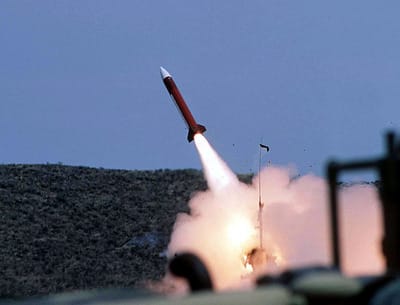
Context The 9/11 terrorist attacks were the turning point in the conception of the pre-emption strategy as a means to counter terrorism. In the light of the devastating effects of these attacks, President Bush asserted the need to not weait for threats to fully materialise before they emerge (West Point speech, 1st June 2002). This speech hinted at what would constitute a central element in the National Security Strategy (NSS) released just a few months later: the appeal to the right to take anticipatory action in self-defence. Because of the characteristics of this 'new terrorism' - global in reach, operationally decentralised and determined to inflict the greatest possible number of casualties and disruption - deterrence is no longer an appropriate security strategy. The Bush doctrine of pre-emption, however, poses a number of problems that, when considered altogether, not only make it a risky strategy to counter terrorism but also even counterproductive. Iran Iran feels threatened by Israel military capabilities - that include nuclear, chemical and biological weapons, and rockets able to reach Iranian soil -, and also by the US' counter terrorism policies: the Bush administration has long set its sights on Iran and it is one of the rogue states in the so-called 'axis of evil'. The relationship between the US and Iran has never been easy, due to its connections with terrorists groups and its overt hostility to Israel. However, since the 1979 hostage crisis, this relationship has become even more critical. The animosity between them has increased since Iran is developing a nuclear programme. US overwhelming military superiority is still a powerful deterrent for many states, but what to do with a state that seems to be developing nuclear weapons? The Bush interpretation of the doctrine of preemption, that is, waiving the conventional requirement of 'imminence' would argue it is necessary to stop Iran's nuclear ambitions before it is too late. In this case, the alleged anticipatory self-defence would be based on speculation about the intentions of a state, i.e. developing a nuclear programme for a non-civilian use, when clearly, more than conjectures are necessary when deciding whether to strike first. Furthermore, the fear of suffering a pre-emptive attack could be counterproductive for two reasons: 1) The fear of suffering a pre-emptive attack may lead a hostile state to attack first or use WMD -precisely what the military action sought to avoid - before they are destroyed and the regime overthrown. Hence, it could make a non-military conflict between countries escalate into a major crisis purely as a result of what Dan Reiter called "the spiral dynamic" caused by fear and hostility. 2) Rogue states can learn a lesson from Iraq: it would be wiser not to stop developing or pursuing acquiring WMD, as that did not stop US from going to war, but instead try to get those weapons as soon as possible to discourage enemies from attacking. Military action against North Korea is not feasible because of its nuclear capabilitites so that the US, with its entire military might finds its hands tied. The same reasoning applies in the case of Iran: the sooner it obtains these weapons, the less likely it is to suffer an attack. Conclusion As Joseph Wheatley rightly notes, "the reasoning behind pre-emption does not address the imminence of the danger posed by orgue states or terrorists - but rather the magnitude of the danger", that is, to minimize the risk of suffering another large scale attack. It is in this light that we should assess the military manoeuvres that Tehran has been conducting for almost a week. Iran's test-firing of missiles was an attempt to demonstrate its strength to the world, Secretary of State Condoleezza Rice said last Thursday. Nevertheless, it is paradoxical that what Iran conceives primarily as a weapon to guarantee their security - a defensive strategy - is seen as an offensive instrument elsewhere.





