
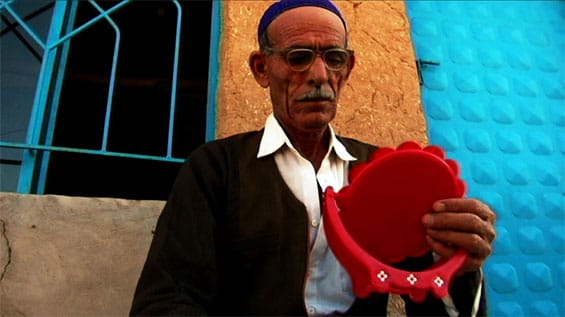
Still from Iraq in Fragments, directed by James Longley. © James Longley 2006
"Iraq in Fragments illuminates post-war Iraq in three acts, building a vivid picture of a country pulled in different directions by religion and ethnicity. Filmed in verité style, with no scripted narration, the film powerfully explores the lives of ordinary Iraqis: people whose thoughts, beliefs, aspirations, and concerns are at once personal and illustrative of larger issues in Iraq today.
Part One follows Mohammed Haithem, an 11-year-old auto mechanic in the mixed Sheik Omar neighborhood in the heart of old Baghdad. With his father missing, Mohammed idolizes his domineering boss, working feverishly for approval and affection. Several years behind in school and waylaid by wars intervention, hes torn between education and apprenticeship. Through Mohammeds eyes we see a growing disenchantment with the US-led occupation, as well as tensions between Shi'a and Sunni Iraqis. Shown in extreme close-up, Mohammeds Baghdad is a city caught between an idealized past, a dangerous present, and an uncertain future.
Part Two is filmed inside the Shiite political/religious movement of Moqtada Sadr, traveling between Naseriyah and the holy city of Najaf. As tensions mount inside the country, we see the inner workings of Iraqi local politics as the Sadr movement pushes for regional elections and enforces their interpretation of Islamic law. Assuming control over the region, armed Islamicists overtake open markets and imprison suspected merchants of alcohol. Detainees and their impoverished families plead for mercy from this new authority. As the United States provokes an armed uprising among Sadrs followers, moderate views are swept aside.
Part Three follows Iraqi Kurds as they assert their bid for independence, rebelling against the past atrocities of Baghdad rule. We follow these developments through the eyes of brick makers and childhood friends on a farm south of Arbil. An elderly farmer ruminates on his family, his people, and God, mindful of the legacy they all share, while his teenaged son tends sheep and dreams of medical school despite his fathers desire that he serve God. We hear voices of independence and nationalism, sentiments secular and religious, revealing a community where politics and faith are personal, public, and forever closely intertwined. "
For more information see the Human Rights Watch Film Festival website, and the official website for Iraq in Fragments.


