
In 2011 a third of the world lived in relative luxury at the expense of the other two thirds who survived at various levels of subsistence and poverty. However, it soon became clear that it was ‘game-over’ for this luxuriating minority. Governments desperately tried to keep the wheels turning in the increasingly stressed globalised economy but to no avail. The ‘growth at any cost’ paradigm had run into the sand of resource depletion, runaway climate change and financial chaos. The idea of ‘recovery’ was soon replaced by the reality of crisis as Peak Oil steepened the slope of the down-curve beyond what financial pundits with their ‘monetary cycles’ had ever imagined possible. This trend was further exacerbated by climate change that, by 2020, was destabilizing global food production with increasing force.
The next twenty years were characterized, as we know only to well, by devastating resource wars, famines and mass migrations that completely redrew the world map, eradicating the post World War 2 patterns of power and influence. A semblance of stability was only restored when the by then defunct United Nations was reconstituted to oversee negotiations between the devastated nations of the former European Union, the fragmented remnants of the United States and the new power centres of the ex-Russian federation, South America, China and the Middle East.
From the chaos a new consensus began to emerge. Desperate politicians, weary of the old Right-Left binaries found the courage to embrace the radical solutions that had been pioneered by early C21st political movements, ceding centralized power to increasingly diverse localized communities and, of necessity, building a society based on citizenship and sustainable ways of life.
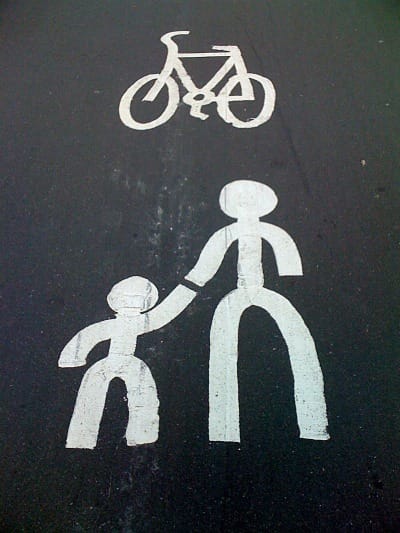
Postcard image info
"Sign" - Nick Stewart, www.nickstewart.org.uk
Author: Nick Stewart

