
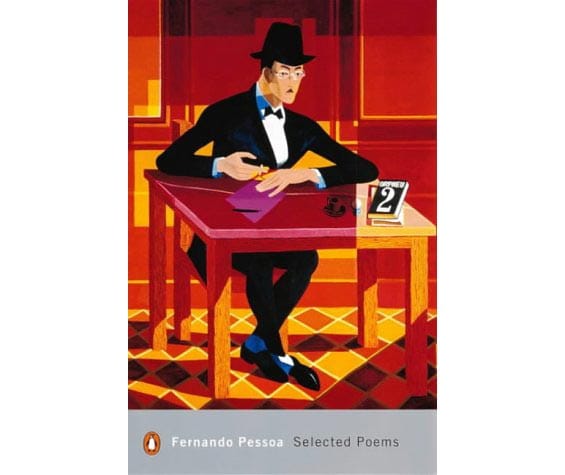
Selected Poems
by Fernando Pessoa
Penguin | November 2000 | ISBN 0141184337
Recommended by John Tranter: One of my favourite books is the Selected Poems of Fernando Pessoa, a writer whose Modernist poems gave Portuguese literature European significance. He began publishing books of English poetry in 1918, but it was not until 1934 that his first book in Portuguese, Mensagem, appeared. It attracted little attention.
Fame came to Pessoa after his death in 1935, when his extraordinarily rich dream world, peopled with alter egos or heteronyms whose poetry he produced along with his own, became generally known. The works of the imaginary poets differ in outlook and style from the work done under Pessoas own name, and they express different personalities that he felt to exist within himself. The most important of his works are Poesias de Fernando Pessoa (1942), Poesias de Álvaro de Campos (1944), Poemas de Alberto Caeiro (1946), and Odes de Ricardo Reis (1946). With a strange appropriateness, the Portuguese word pessoa means person in English, and the word person is derived from the Etruscan and Greek words for face, or actors mask.
What the publisher says: The writing of Fernando Pessoa reveals a mind shaken by intense inner suffering. In these poems he adopted four separate personae: Alberto Caeiro, Alvaro de Campos, Ricardo Reis and himself, using them to express great swarms of thought and feeling. While each personae has its own poetic identity, together they convey a sense of ambivalence and consolidate a striving for completeness. Dramatic, lyrical, Christian, pagan, old and modern, Pessoas poets and poetry contribute to the mysterious importance of existence.
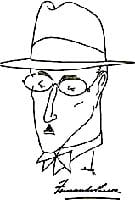
About the author: Fernando Pessoa (18881935) is considered to be the greatest Portuguese poet since Luís de Camões. He was born in Lisbon and brought up in Durban, South Africa. He returned to Portugal for good in 1905 and joined the University at Lisbon where he continued to read and write in English. During the following years he stayed with relatives or in rented rooms, making his living by translating, writing in avant-garde reviews, and drafting business letters in English and French. He began publishing criticism in 1912, creative prose in 1913, and poetry in 1914. This was also the year when the alter egos he called heteronyms Alberto Caeiro, Ricardo Reis, and Álvaro de Campos came into existence. After his death, a trunk was found in his room containing over 25,000 letters, journals, poems, fragments of writing, and at least 72 other pseudonyms.

