
Buy now: UK, US, Worldwide
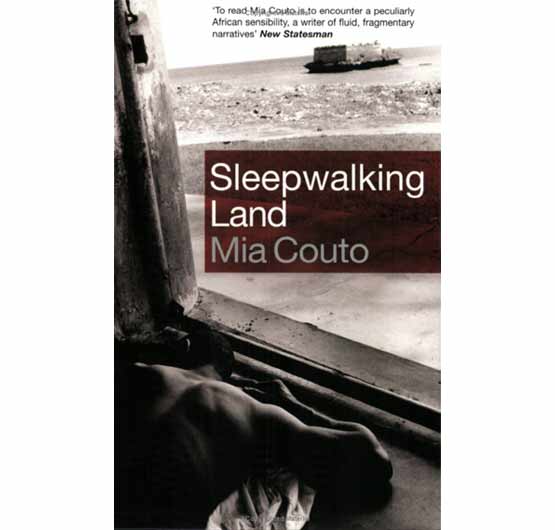
Sleepwalking Land
by Mia Couto
Serpent's Tail | February 2006 | ISBN 185242897X
Recommended by Nabeelah Shabbir: Written by Mia Couto, a white author living in his native Mozambique, "Sleepwalking Land" was first published in Portugese as "Terra Sonambula". Coutos first novel draws on memories of his war-torn country, delivering a story sensitive to the truth of its destructive past. The opening passages depict a young boy and an old man who emerge from a bloody background to follow the dull colour of a soulless, never-ending road. They are fleeing the terror of civil war "their destination is the other side of nowhere, their arrival a non-departure, awaiting what lies ahead."
What lies ahead for the reader is a complex novel structured around two stories. The couples escape set in war-ravaged real time is intertwined with a secondary plot, a story-within-a-story. This unravels as the young hero Muidiga reads through the journals of Kindzu, a dead man whose symbolic remains lie in a burnt-out bus. Muidiga is later described as the alias of Kindzu whose journey he closely follows. The protagonists keep out the "darkness in their heads" by reading about Kindzus pursuit of a noble cause, as he seeks to become a "naparama", and complete the dream of ending a terrible war.
Both the narrative structure and tone of the book recall the Latin American magic realist genre Muidigas youngest brother rapidly transforms into a cockerel, whilst a river runs dry the day after a patriarchal funeral has taken place on the water. It's all very fantastical and Couto has brewed the magic of his novel by preserving it in one of Latin Americas original languages Portuguese. The Garcia Marquez motifs are very familiar but they have been displaced to Mozambique and adapted to the onset of war.
Throughout the book there is a tone of the grotesque surrounding the disintegration experienced after the civil war and the subsequent loss of identity with a homeland. Muidiga could no longer walk, read, write or remember his name before the beginning of the story. In short he "no longer had a country his snot oozed from his whole head rather than his nose". This reminded me of Rushdies Saleem Sinai, whose alter-ego "Snotface" was so-taunted after his displacement to Pakistan from warring India.
Couto's novel is unique, and has received international acclaim the Zimbabwe Book Fair jury voted it one of the twelve best African books of the 20th century. Fourteen years after it was first published however, it has remained obscure and under-marketed Nevertheless, the book remains a triumph, etching a story in the mind which is difficult to forget.
* * *

