

Brazil’s first-round presidential vote last weekend exposed the consequences of US meddling – leaving the country’s sovereignty at stake as voters decide between two candidates.
This may seem far-fetched, but it follows a series of events in which far-right senator Flávio Bolsonaro, who may become Brazil’s next president, has played a leading role. Bolsonaro, the eldest son of former far-right president Jair Bolsonaro, won 47% of the first-round vote on Sunday, narrowly ahead of incumbent centre-left president Luiz Inácio Lula da Silva’s 45%. As neither won more than half the vote, a runoff will be held on 25 October, but the difference could prove insurmountable for Lula, and the new Congress will have a clear far-right majority.
Facing criticism over his campaign and the chronic lack of successors plaguing Latin America’s left-wing parties, Lula, who is weeks away from his 81st birthday, has made resisting US interference his campaign rallying cry. Last month, he delivered a stark warning in his opening address to the United Nations General Assembly. “Once again, we are witnessing external interference in electoral processes. Brazil is nobody’s backyard,” he said. “We will not allow the enemies of democracy, whether domestic or foreign, to undermine the will of the people. Brazilian democracy belongs to the Brazilian people. Brazil will remain a sovereign country.”
The US far right began a concerted effort to meddle in Brazilian politics in 2022, which intensified after Donald Trump re-entered office last year. His administration has waged an influence campaign on three fronts: the economy, diplomacy, and politics.
On the former, the White House imposed tariffs of up to 50% on Brazil in July 2025, with Trump writing to Brazilian officials to demand an end to the “witch hunt” against Jair Bolsonaro, who was under investigation for his role in an attempted coup after losing the 2022 election.
The US also sanctioned judges investigating the attempted coup, following a campaign reportedly driven by Flávio Bolsonaro’s brother, Eduardo, a former MP who has lived in Texas since March last year, and his loyal right-hand man, Paulo Figueiredo, the grandson of Brazil’s last dictator. Brazilian outlet Agência Pública has long reported on the pair’s efforts to win influence in the corridors and chambers of the US State Department and Congress.
Despite the Trump administration’s best efforts, Brazil did not drop the case against the former president, who was sentenced to 27 years in prison in September 2025. Lula managed to end the year on a further positive note when his government got the US to lift some of its tariffs against Brazil, despite an official meeting being cancelled hours after Eduardo gave a press interview seeking the US authorities’ support in opposing Jair’s house arrest.
Another short-lived victory followed in February this year, when the US Supreme Court ruled that a global tariff imposed by Trump had been illegal. However, the US president immediately reversed the ban, imposing new tariffs under a different legal framework.
 Alice Maciel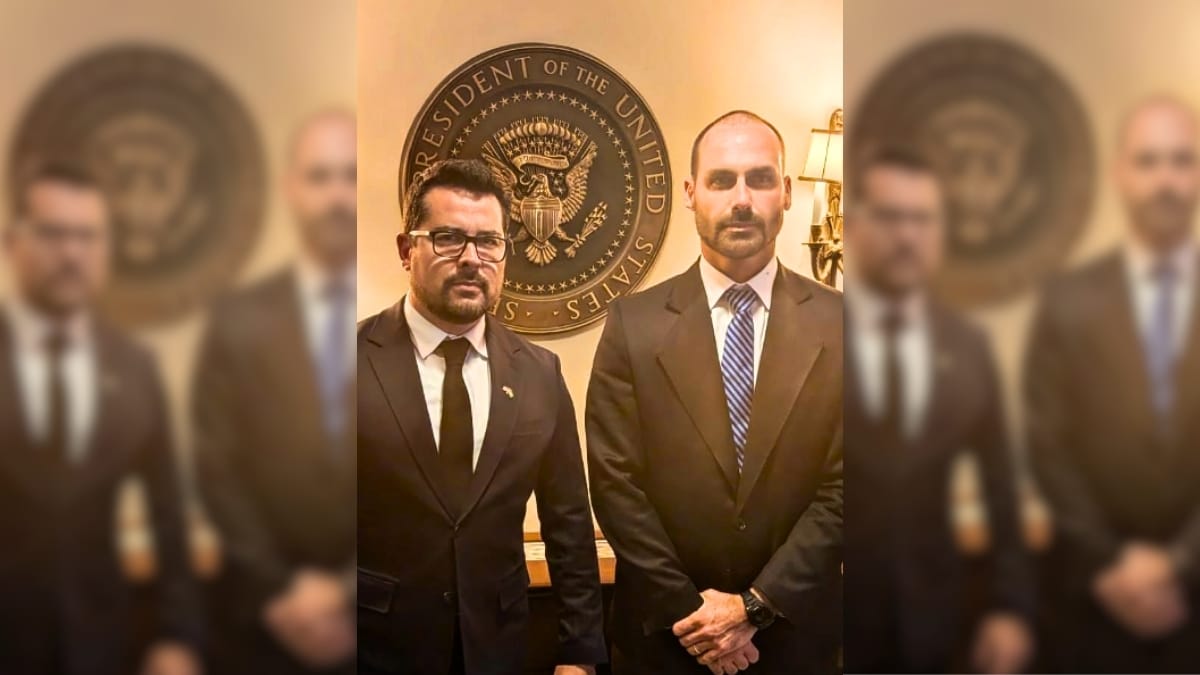
But in May, the tide began to turn against Lula.
That month, brothers Flávio and Eduardo, along with Figueiredo, met Trump at the White House – even posing for a photo together. Two days later, Washington fulfilled one of the Brazilian Flavio’s key demands: designating Brazil’s two main criminal groups, the Comando Vermelho and the Primeiro Comando da Capital, as terrorist organisations and a threat to the US’s national security.
This designation sparked concern among political analysts and led the Brazilian Intelligence Agency to warn that US interference in Brazil had reached a “critical level”, according to a report obtained by the Folha de S. Paulo newspaper. Many fear it could set a legal precedent for the US using extraterritorial force in Brazil to protect itself from external threats that it has deemed to have transnational reach.
While the groups profit from illegal means, such as violence and the trafficking of drugs and weapons, neither has a history of violence motivated by “xenophobia, race, colour, ethnicity or religion” – meaning they do not meet Brazil’s legal definition of terrorist organisations. The US’s designation has helped to intensify the far-right narrative that otherness and difference – often embodied in immigrants or non-white and non-heterosexual citizens – constitute threats.
 Ken Silverstein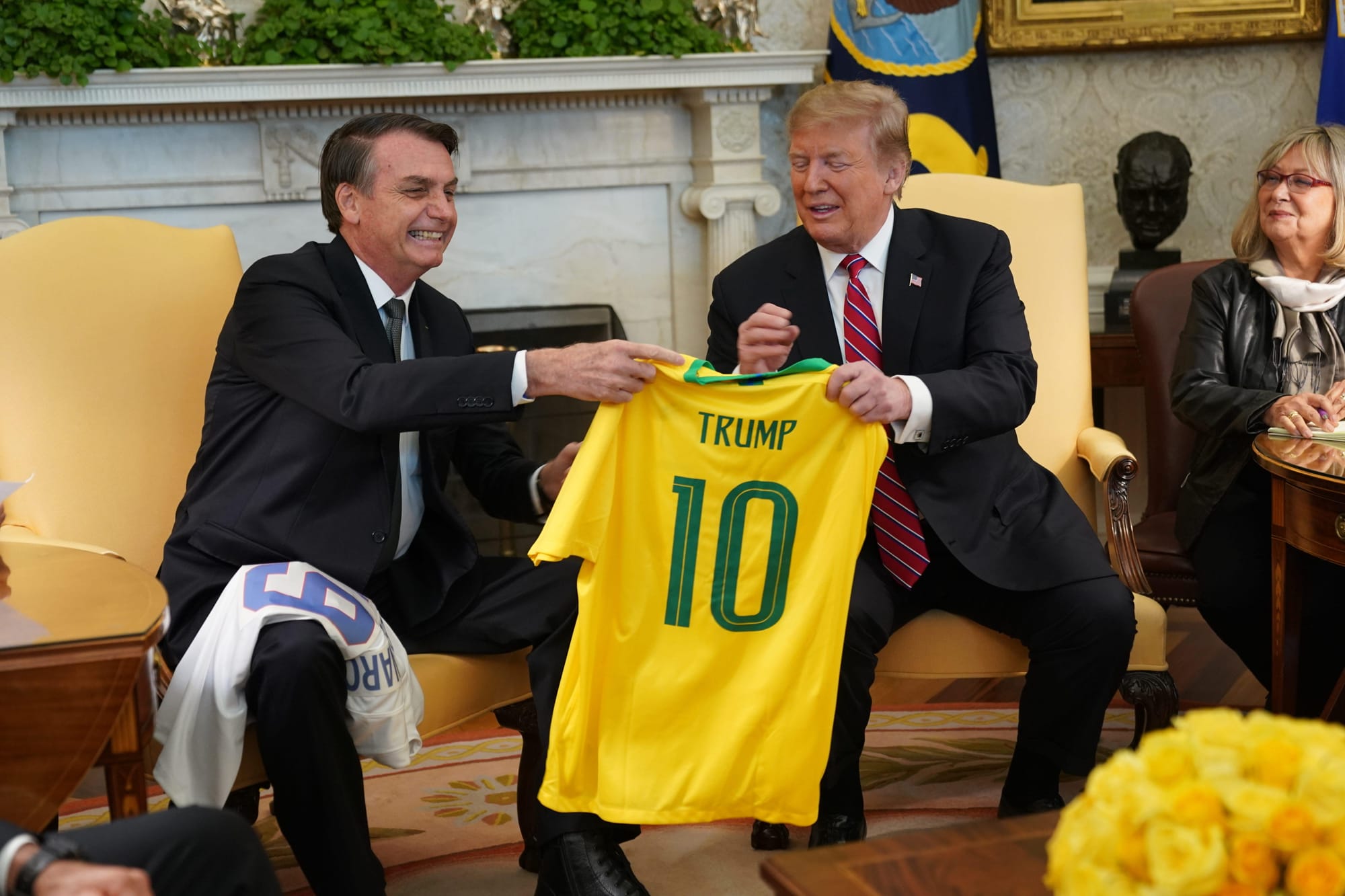
Within weeks of the designation being applied, the US also reinstated yet more tariffs against Brazil – this time of up to 37.5% – with secretary of state Marco Rubio blaming “Lula’s ego”. A document obtained by the Estadão newspaper suggests conditions imposed by Washington for lifting the tariffs included Brazil granting the Trump administration access to any negotiations over its critical minerals and allowing “dissident politicians” – a reference to Jair, who is barred from political activity while in prison – to run for election. Brazil rejected the terms.
In July 2026, three months before the presidential election, Brazil’s Foreign Ministry rejected the visas of two US diplomatic envoys, claiming they would use their visit to question the integrity of the Brazilian electoral system.
Now, as the election looms, a victory for Lula could spark a fierce US backlash against Brazil, as well as reviving accusations that his 2022 election win was the result of fraud – an allegation made by Jair in 2022 and since promoted by Flávio Bolsonaro and Trump’s allies in the US, despite repeated denials from Brazil’s electoral authorities
Will Brazil become Venezuela?
The situation in Venezuela may offer a glimpse into Brazil’s future.
Seeking to justify its operation against Venezuela’s authoritarian president, Nicolás Maduro, Trump’s administration began constructing a narrative about the threats the US faced from the country’s criminal gangs in January 2025.
On his second day in office, the US president signed an executive order establishing a process to formally label “cartels and other organisations” as Foreign Terrorist Organisations and Specially Designated Global Terrorists that threaten US national security. His administration designated a Venezuelan criminal gang, the Tren de Aragua, under these categorisations a month later.
Then, in March 2025, the US deported more than 200 Venezuelans to a maximum-security prison in El Salvador, with Salvadoran president Nayib Bukele saying that most were members of the Tren de Aragua. Between July and November last year, the US designated a second Venezuelan supposed criminal gang, Cartel de los Soles, as a Foreign Terrorist Organisation and Specially Designated Global Terrorists.
At the same time, the US ramped up attacks on vessels in the Caribbean and Pacific, which Washington said were transporting drugs – a move praised by Flávio Bolsonaro. “How envious!” he wrote on X. “I heard there are boats like this here in Rio de Janeiro, in Guanabara Bay, flooding Brazil with drugs. Wouldn't you like to spend a few months here helping us fight these terrorist organisations?”
On 3 January 2026, news broke that US forces had entered Caracas and captured Maduro. The indictment against him, published by a US court that day, stated: “The Cartel de los Soles, under the leadership of MADURO MOROS and others, prioritised using cocaine as a weapon against America and importing as much cocaine as possible into the United States.”
Days later, Maduro’s vice-president, Delcy Rodríguez, became Venezuela’s acting president with Trump’s consent, beginning to govern under orders from Washington.
Venezuela offers an extreme look at what the future could hold for Brazil – but it is far from the only instance of the current White House interfering in politics in Latin America. Last year, Trump suggested a $20bn financial bailout for Argentina was dependent on the electoral victory of the party led by president Javier Milei, and explicitly backed Honduras’s conservative candidate, Nasry Asfura, and threatened to cut US financial aid if he did not win the presidential election.
Against this backdrop of US influence, the Brazilian elections have been dominated by two contentious issues. On 25 October, 158 million voters will go again to the polls in what is shaping up to be a referendum on Brazilian sovereignty vs a supposed fight against crime – under Trump’s methods and tutelage.
 Guilherme Klein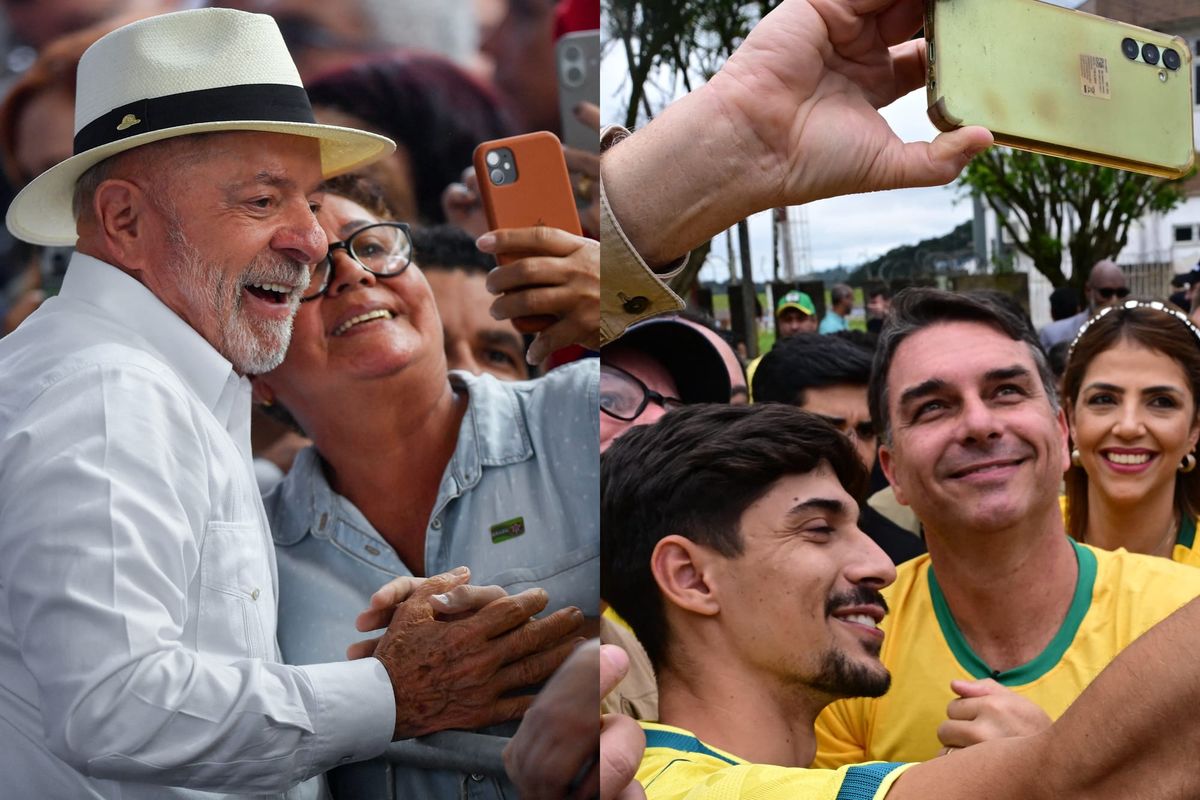
Maria Martha Bruno is a multimedia journalist and coordinator of International Collaborations at Agência Pública, a Brazilian investigative media organisation. She has worked as a producer for NBC News, Al Jazeera, the BBC and CNN, and was a correspondent for the Brazilian platform UOL in Buenos Aires. Maria Martha holds a master’s degree from Texas A&M University in the United States, where she also taught.


