
Singapore river map, 1819
The belly of the carp was the name the first Chinese settlers gave the south bank of the Singapore River estuary because of its sweeping curve, and the golden carp is symbolic of prosperity. They were prescient: the men who owned the godowns (warehouses) here made the first Singapore fortunes in the mid-1800s.
Its a tiny river, only four kilometres long from source to mouth but its importance to Singapore is immense. In 1978 it was still a working river with all its filth and fascination, but in 1983 the government decided to clean up the river and relocated the few remaining bumboats to a new jetty to the west of the island. The riverbank is now mostly restored and revamped: a home to restaurants, bars, some arts housing, shopping centres and apartments.
My book, From the Belly of the Carp, presents 96 monologues spoken by people connected to the river from its fabled past to picture-postcard present. Their voices emerge, like thin fins glimpsed rippling on the surface of another time as the reader takes a riverwalk into the shadows and shoals of vacated streets.
Some are real, many are inspired by historical record, most are ordinary working people. Raffles speaks, but not Lee Kuan Yew. Coolies, boatmen, rickshaw pullers, craftsmen, traders and travellers are its cast. As Mr. Ho the gardener remarks, we are all transplants... removed from beds in other gardens, and putting down roots as best we can, here in the Singapore soil.
To follow, six river monologues from Roger Vaughan Jenkinss collection
River walk, river talk
The nights long ago, when I was much too young,
hung starbright over the Singapore River,
while streets were dark and home to danger.
Yet the storyteller sat by the Read Bridge,
his back to the toilet where I fetched freshwater
with a pail in one hand, my father in the other,
he always had a crowd, rapt within his deft
unwinding of a tale. In his pool of amber light
we seemed to float between the plentiful stars
and the waters whisper.
Now, the storytellers gone, his audience too,
And the stars are gone beyond neon and haze.
But the river runs on,
through the lone, unheeded hours,
downstream, where the Victoria clock
holds time aloft between its upturned hands.
Who listens now?
In these lone, dark hours,
as the paws of the rat tick over the stones,
who watches?
On Read Bridge now, the Clarke Quay guard
hunches over a surreptitious cigarette;
the tourist wanders, though he knows its too late,
by waters once haunted by Conrad and Maugham;
this couple on a beach, uncomfortably
parted by its metal arm and awkward slience,
eye their reflections, fracturing;
by Empress Place an angler, patient arms on the rails,
has cast his dreams into the darkness
and lets them bob with buoyant optimism.
As the waters eddy and subside,
see the steps
where no one waits for sampan any more,
see the mud
which hazards the bumboats no more,
see the stones
where the coolie sweat falls no more.
In the turning of the tidal hours,
the waters recede and so set free,
from silt and silence and obscurity,
the Memories who murmur and meander here.
Memories:
muddy as the banks, dark as the source
and deceptively distant, elusive as fish,
troubled as a net that refuses to let go.
They abide, despite the perpetual slap
of romance against fact, like water on concrete.
It is now, as river and time intertwine on the ebb
that these Memories butt and jut out of the past,
like the water-worn poles that once treed this river
anchoring tongkangs safe through the night.
Their voices are waiting to be heard.
Malay kampongs along Kallang river, 1860s
Sir Stamford Raffles
Farquhar laughed when the anchor went down
and I said, Here we are at last
the great Singapore River!
Surely you jest? he sneered,
dabbing the persistent sweat on his brow.
What could I do with such a man?
Yes its a small river
but if only he could see
further than that inviting bend upstream.
You measure a river by more than its length
or the depth at low tide.
Behind me: a harbour to conquer the world.
Before me: an ocean of opportunity was beckoning.
And there I stood!
At the gateway of this great, albeit little river!
No Farquhar, I said, my eyes
fixed firmly on the future,
Ive never been more serious
View of Singapore Town and the sea, 1830s
Tng Too Yong, ferryman
Some people call Boat Quay
the belly of the carp
because of its broad sweep
but from the stern of my little canoe
as I paddled my fares across the river,
one duit a ride, four rides a cent,
I always saw it as the Back of 18 Houses.
Each place had its river name
and those of us who made the river home
gave each bridge and jetty its own:
Sampan Thiang Lao Pau, the place for sampans,
Cha Chun Tau, the jetty for firewood.
Nothing pretty, nothing grand,
only the way it was.
Thats how we saw the world, sat six
inches above the waves, with nothing
to view but muddied banks, wallowing boats
and the unattended jumble of the backs.
Yet I loved my work,
greeting my fares with a steadying hand
as they stepped in awkwardly
while I stood by, knee-deep in the ooze.
When you work in the cowshed
you dont notice the dung.
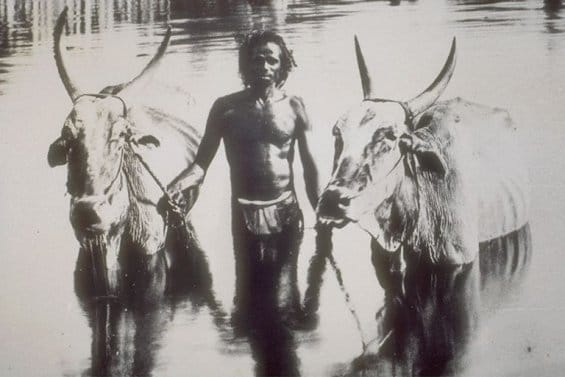
The civil servant
When surgerys a necessity, who hesitates?
When its an option, well,
that takes some thinking, doesnt it?
So it was with the river.
We lived with it for years, you see,
its notorious whiff of decay,
the bankside scum and lighter congestion,
the quaint unloading of the boats
a nostalgic reminder of a way of trade
backwatered by containers and computerization.
When the PM said, In ten years time
let us have fishing in the Singapore River.
It can be done, well it had to be.
But how? A labour of Hercules lay before us.
A river is a system fed by many streams;
clean the rivers meant clean most of the island.
A major operation.
When we began The Clean Rivers Campaign
we felt as if the surgeon had cut open the belly
to find the cancer spread through the body.
It involved so many from environment,
health, sewage, drainage, housing,
pollution control, primary production
you can imagine the problems of coordination.
And the result?
Farewell Bugis Street, goodbye Chinatown.
Relocate the bumboats to Pasir Panjang.
Resettle hawkers, close down the pig farms,
rehouse squatters far from their communities.
These were the costs we couldnt count.
Luckily, the rivers a marvellous patient:
stop the infection and it heals itself.
After the rains, fresh blood flows in old veins.
Now the citys heart pours its cleaner, greener waters
through a body working ever harder,
transformed in the 90s into well,
a human, leisure friendly river environment,
yet incomplete.
The rivers renewal made the body whole
but in the process we misplaced its soul.
We cant devise an action plan for that,
unfortunately.
View of Johnstons pier and Hong Kong-Shanghai Bank, 1905
Chiaw Chok Chiang, barrel-maker
There, then:
Winter: mountains, mist and clouds of breath.
Swallows heading south.
Spring: planting, grass grows over the horses hooves.
Mulberry blossoms and the first birdsong.
Summer: cool streams,
welcome winds stir the long meadowgrass.
Plaiting flowers in my young loves hair.
Autumn: leaves falling, chestnuts in the fire.
The village dances.
Here, now:
roads, dust, sweat-houses, jungle.
Mosquitoes whine in my ears.
Bloodhungry insects crawl out of the cane.
Heat humidity, itch and infection.
Rain, rot, ruin and rain.
Every day the same.
Back home, the river leads to tranquillity.
The oriole perches on the bankside willow.
Yellow reeds and red leaves eddying
encourage reflections.
This one is a stinking sewer
churned by oars the colour of dung.
An empty barrel rolls awkwardly
down the slope of old age.
One day I looked into the mirror:
white hairs outnumber the black.
Who can I turn to?
This is no place to grow old.
Everyone is too busy surviving
to worry about those who arent.
In a fever,
I dream of a journey home
of smiles flickering round fire
a hot cup thawing numb hands,
cattle calling in the valley below,
and a stream that babbles of childhood.
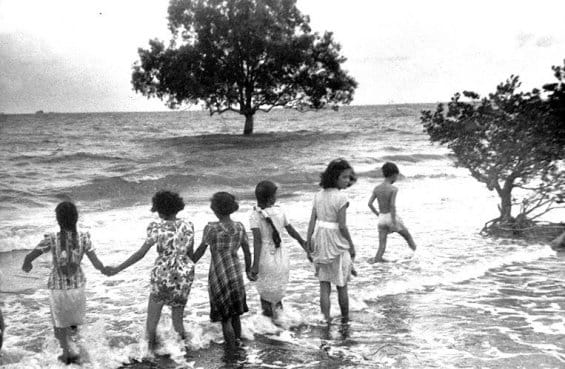
Mr. Ho, gardener
Ive loved flowers since young, even in school.
My teachers kept me in class
but my mind was always outside.
They were hopeless gardeners, my teachers,
throwing facts at us like fertilizer
and expecting us all to grow up roses.
But were not, are we?
When I left school, I went to work
in an office where grass was the carpet,
and my files held orchids, heliconia,
ixora and duranta gold.
Seeing the riverside built-up but flowerless,
I made my first Gadren of Peace
on the bank by Canton Street,
a colourful corner of odd-pot cuttings,
porcelain gods and plastic chairs for the restful.
The Ministry of I dont-know-what
told me I couldnt and cleared it away.
But plants are hardy survivors.
I started all over, another garden of stillness
on a bare bit of bank.
Again, Ministry-men came to complain.
They said my pots were a hazard.
Untidy, unsightly unacceptable.
We played this game over and over:
I brought colour and calm, bees and butterflies,
to the rivers neglected border,
and always, when they came to dig me out,
they were surprised my flowers flourished
and that I went on, despite their threats.
But in this, the Garden City, why not?
Arent we all transplants too?
Removed from beds in other gardens
and putting down roots as best we can
here in the Singapore soil?
(Mr. Ho was a unique and mysterious individual who created impromptu and informal gardens along the river in the late 1970s-early 1980s)
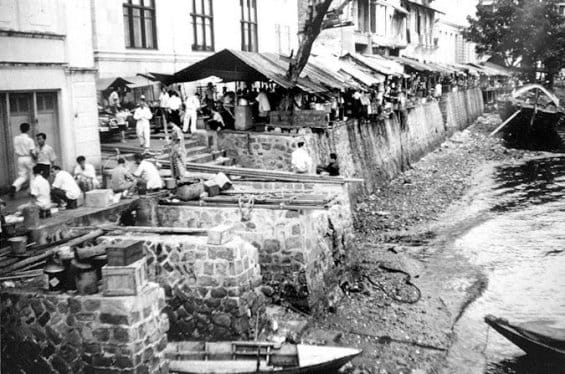
Roadside hawkers along the river, 1970s

