
The legacy of the Spanish Civil War has recently re-entered public debate in two ways. First, it was used to argue for the urgency of outside intervention in the Balkans before it was too late. The theory behind this argument was that if the Western democracies had intervened on the side of the Spanish Republic, it might have been possible to forestall Franco's victory and at least slow down the forward march of fascism.
The other reason why the Spanish events of 1936-39 are being re-examined is the availability of Moscow archives which throw some new light on the Soviet Union's intervention in the civil war. The material is analysed in Spain Betrayed: The Soviet Union in the Spanish Civil War, edited by Ronald Radosh, Mary R. Habeck and Grigory Sevostianov (Yale University Press 2001).
Spain Betrayed vindicates the view of those who believed that the Soviet Union's help in effect only helped to make the Republic's defeat inevitable. The editors of the book write that “the price the Republicans paid for the Soviet aid was the very factor which led to the Republic's eventual demise. In exchange for military aid, Stalin demanded the transformation of the Republic into a prototype for the so-called People's Democracies of postwar Eastern and Central Europe.”
The archives prove what many had suspected, namely “that Stalin sought from the very beginning to control events in Spain and to manage or prevent the spread of actual social revolution”.
The material thus gives credence to those who have long argued — from Gerald Brenan, George Orwell and Vernon Richards in the 1930s, to Murray Bookchin and Noam Chomsky in the 1960s and later — that the communists' authoritarianism and counter-revolutionary politics destroyed the capacity of the Spanish peasants and workers to fight on.
The opposing view has held that the social revolution and the anarchists' role in it only interfered with the urgency of waging a traditional military campaign against Franco's forces.
As an example, the editors use the differing analyses of Paul Preston and Burnett Bolloten. While both have dismissed the idea that the Soviet Union's aim was to hasten the Republic's victory, they have disagreed about the internal politics of the Republic.
Preston has rejected the argument that the Stalinist suffocation of the revolution in Spain led to Franco's victory. Bolloten, meanwhile, witnessed an authentic social revolution, and examined the struggle within the Republican zone between the anarchists and the independent left-wing group, the POUM on the one hand; and the middle-class/communist camp on the other. According to Bolloten, the communists' aim was to expand their power gradually and gain influence over the army, police and political apparatus.
Destroying the revolution in order to save it
The Moscow archives give ample evidence — if more evidence were needed — of the anti-revolutionary and repressive policies of Stalin's representatives in Spain. Comintern advisers' hostility to a social revolution was manifest in the alarm they felt about Spain moving towards a society favoured by anarcho-syndicalists.
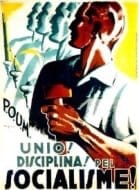
POUM poster
“Experiments in socializing and collectivizing” were seen as “criminal” and disastrous to the war effort and the Soviet influence in it. The editors of Spain Betrayed write that “the communists had determined to destroy the anarchists from the very beginning of the war, before their opponents had articulated, let alone put into effect, their wartime policies”. The Soviet secret police, the NKVD, went to great lengths to destroy all left-wing opponents of Stalin in Spain.
In the end Spanish communists did gain control over the Republic's armed forces. But, as Radosh and Habeck note, the communist-dominated army could not convince the people that it could win the fight. In his final dispatch for 1937, even Palmiro Togliatti — the Comintern adviser — had to acknowledge the growing despair felt by members of the Spanish working class.
Spain Betrayed throws some light — although nothing dramatically new — on Moscow's thinking about the international situation and the possibility of an intervention by Western democracies. The editors note the differences between various historians as to what Stalin's real social aims in Spain were, but the documents show that “in addition to the desire to defeat the rebellion first and then worry about further developing the revolution, the Comintern advocated this tactic as the only way to obtain help from Britain, France, and the United States”.
Here the communists and their Soviet supporters were in an impossible situation. While denying the reality of a social revolution in order not to alarm Western democracies, the communists' own growing influence made many people on the Republican side complain that due to the influence of the communists on the government, the democratic countries no longer had any sympathy for the Spanish Republic.
Both communists and their critics ignored the fact that the governments of Western democracies had been hostile to the Spanish government even before the civil war. They certainly weren't prepared to help the Republic while much of the country was in revolutionary turmoil.
Radosh and Habeck note that Soviet politicians' and diplomats' limited understanding of Western political and diplomatic processes made them believe that “if the Republicans were able to inflict a defeat on Franco, Chamberlain and the British would be forced to reconsider their decision not to intervene”.
Spain Betrayed does not delve deeper into this question but Bolloten, among others, has pointed out that it is impossible to understand Britain and France's attitude without realising the deep fear of Russia and communism among the elites of these countries. (See Burnett Bolloten, The Spanish Civil War: Revolution and Counterrevolution, The University of North Carolina Press, 1991.)
Others have pointed out that the majority of the British establishment supported Franco in 1936. Even if strategically it had made sense to challenge Italy and Germany in the Western Mediterranean, “class sentiment and property sense would have seemed to blind their strategic sense” — as government advisor Basil Liddell Hart expressed his disappointment in the British elite's attitude. (See Clement Leibovitz and Alvin Finkel, The Chamberlain-Hitler Collusion, Merlin Press, 1997.)
The perils of intervention
So what lessons can we learn from Western non-intervention policy during the Spanish Civil War? One conclusion has been that even if the Republicans had been able to buy arms from Western democracies, the balance of forces inside the anti-Franco forces would have made victory impossible.
On the other hand, Gerald Howson has pointed out that “the material strengths of the two sides were balanced so unequally against the Republicans that a great deal of what has been published about the history of the Spanish Civil War in general and of various battles in particular will have to be rewritten”. (See Gerald Howson, Arms for Spain: The Untold Story of the Spanish Civil War, John Murray, 1998)
Whatever the final conclusion of future historians on this matter (if such conclusion is possible at all), on a general level one could say that governments base their intervention decisions on their own — real or imagined — interests, not on truly humanitarian considerations.
This conclusion seems to apply to both the Spanish Civil War and the Balkans conflicts of our time. Also, in both cases, many Western intellectuals tended to adopt a version of events detached from the experience of local people.
In the Spanish case, they felt in the main hostile towards the spontaneous social revolution, initiated by ordinary factory workers and peasants. Western intelligentsia put their trust in the Republican government, even when the popular revolution was being crushed by counter-revolution.
In the Balkans, Western liberals helped to push their governments into military action and ignored evidence according to which outside intervention at every stage made things worse.
Dr. Biljana Vankovska, among others, has written about “the catastrophic meddling by the international community'' which first helped to slide Bosnia into war, then helped to destabilise Kosovo and finally deprived Macedonia from “a real chance to turn towards its own society and [re-define] its problems and perspectives”.
Vankovska notes bitterly that “[n]obody really cared about the locals, the natives — allegedly, everything has been done in their best interest, in a way the West saw it, of course”.

