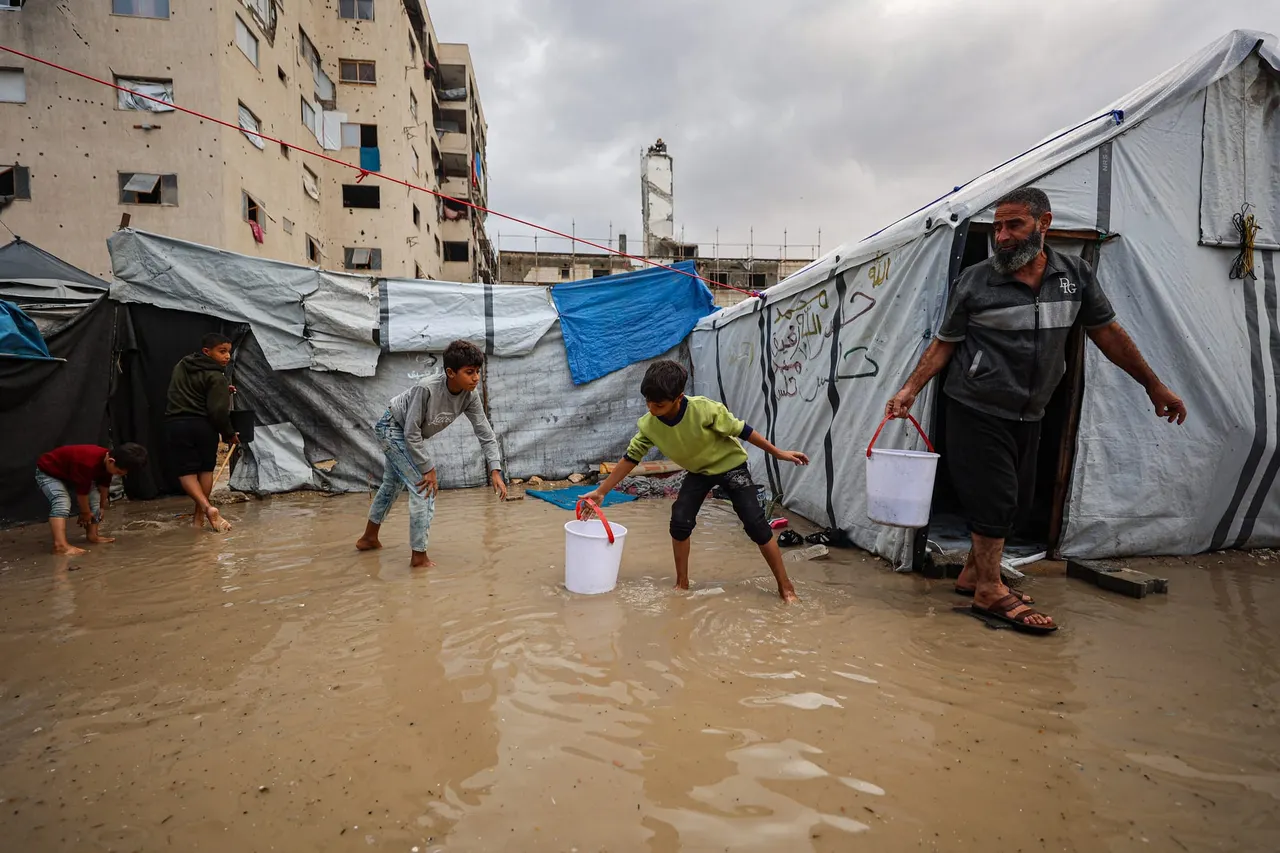
Across Gaza, families are trying to keep floodwater out of their tents. Parents are salvaging soaked mattresses and blankets, children are exposed to freezing conditions, and those who have lost almost everything are watching their remaining possessions disappear beneath the water.
Some 226,000 Palestinians have been affected by the flooding, with more than 40,000 shelters damaged and over 9,000 beyond repair, according to preliminary United Nations estimates. Thousands of families have been left without basic protection.
These people face another winter without adequate shelter, healthcare or essential supplies. The World Health Organisation warns of rising respiratory illnesses, while sewage-contaminated floodwater threatens a further public health emergency.
This is not simply a natural disaster. It follows years of bombardment, displacement and destruction by Israel, as part of what Amnesty International, the UN Independent International Commission of Inquiry, and the International Association of Genocide Scholars have declared to be a genocide.
Their findings demand more than expressions of concern. They demand action to protect Palestinian lives – including from the British government, which has already acknowledged that its response to Gaza has fallen short. That acknowledgement matters, but it must lead to meaningful change.
In a speech to the Labour Party Conference in September, foreign secretary Ed Miliband described the suffering in Gaza as a stain on the conscience of the world and Britain, echoing prime minister Andy Burnham’s assessment that Labour had not done enough and pledging to move beyond condemning injustice towards action. On the same day, Shabana Mahmood announced the reopening of the UK Resettlement Scheme, which Labour paused in December 2024. The home secretary confirmed that Palestinian refugees would be among those offered sanctuary in Britain.
As director of Reset, a UK-wide national charity for the community-led welcome of refugees, I celebrated this announcement. We have spent years advocating for expanded safe routes, including reopening the Resettlement Scheme and introducing named sponsorship. But there is a profound difference between promising sanctuary and making it accessible.
At Reset, we hear directly from Palestinians in Gaza and neighbouring countries. They contact us desperately seeking help, asking whether there is a way to reach safety in the UK and whether the government's announcements mean they might finally have somewhere to turn.
We also hear from people in Britain trying to bring Palestinian friends and family members to safety before it is too late. People are willing to open their homes and help those they care about escape danger. Behind every enquiry is someone searching for protection, or someone terrified for the lives of people they love.
The willingness to help exists. The need for protection is urgent. What is missing is a way to bring the two together.
Following Russia's invasion of Ukraine, Britain rightfully established emergency arrangements that enabled hundreds of thousands of Ukrainians to seek safety here. Despite challenges, those schemes demonstrated that protection pathways can be established quickly when the government commits the resources and political will. Palestinian lives deserve that same urgency.
The government should build on its commitment to support Palestinians by launching an emergency humanitarian admission route for those facing immediate danger in Gaza, including people with urgent medical needs and those with family in the UK. This should involve working with international partners to secure safe evacuation and onward travel, expanding medical evacuation arrangements so more patients can access urgent treatment alongside their immediate families, and restoring and widening refugee family reunion.
Community Sponsorship can play an important role. Reset has supported more than 250 community groups to welcome over 1,200 refugees to the UK since 2016, including through sponsorship and labour mobility pathways for nurses. We know that safe, practical routes to protection are possible when the government, communities and organisations work together.
But responsibility cannot rest solely with charities and volunteers. The government must ensure these routes are properly resourced, accessible and supported by practical arrangements to bring people to safety.
Crucially, offering protection must never justify the permanent displacement of Palestinians from their homeland. Palestinians have the right to remain in Palestine, return to their homes and live in safety and dignity. Israel must allow the unhindered entry and distribution of humanitarian aid into Gaza, including food, medicine, shelter and essential supplies. The international community must ensure the protection of civilians and support the rebuilding of Gaza, so Palestinians can live safely in their homeland rather than being forced to leave it.
But protecting the right to remain must not mean denying the right to seek safety elsewhere. No Palestinian should be forced to leave their homeland to survive. Equally, those facing immediate danger should be able to seek protection without surrendering their right to return.
The UK has already made arrangements for Palestinians, including bringing seriously injured children from Gaza for medical treatment with their immediate families and enabling some students to continue their education here. These measures matter but remain limited against the scale of the emergency.
At Reset, we will continue working with the government, civil society and communities to strengthen refugee protection. We know Britain has the experience and communities willing to welcome people seeking safety.
As winter begins in Gaza, families are waking to flooded shelters, freezing conditions and an uncertain future. They have already endured more than anyone should be expected to bear. Britain cannot acknowledge their suffering, recognise that its response has fallen short, promise sanctuary and then leave those seeking safety without a way to reach it.
For Palestinians facing these conditions, sanctuary is not a question for another year; it is a question of survival today.