
And I have loved thee, ocean! and my joy / of youthful sports was on thy breast to be / borne, like thy bubbles, onward: from a boy / I wantoned with thy breakers, extract from Childe Harolds Pilgrimage, Lord Byron, 1813
Ive spent most of my life at the beach. I grew up on the west coast of Florida, and we had a house right there on the shore, so I started surfing when I was about 10 years old. That was where I rode my first wave on the Gulf of Mexico. Before that, Id go swimming and sailing all the time, so it was just a natural thing to get on a surfboard.
On weekends, wed cross over the state, about a three-hour trip, to the Atlantic coast, where theres bigger surf.
As a kid Id watch what some of the well-known surfers were doing. Id look up to them, and study their moves. A good friend of mine, Allen Johnson, went on to become a professional surfer. He was really talented.
Top left: Duke Kahanamoku by A.S. MacLeod, 1931 Top right: Kahanamoku, the godfather of surfing, in a commemorative stamp Below: ancient surfers
When I was 19, Id gotten a bit fed up with the Florida surf and needed to spread my wings, get out of my home town, so I moved to California and spent fifteen years in San Diego. California is the surfing capital of the world, on a par with Australia. From there, as a stepping-off point, I was able to get to other waves Hawaii, Mexico, Fiji, Indonesia.
Theres no such thing as one kind of surfer. People surf for different reasons. Professional surfers are obviously surfing for money and recognition. Its a serious business. They go on tour to surfing events around the world: California, Hawaii, Australia, Europe. Theyre all pursuing a dream of contest surfing and doing well. Just last month there was a big contest in south-west France. Then theres the hobby or recreational surfer who might go out at the weekends, or only surf in the summer.
Then theres someone like myself. When I was in college in California I dabbled in contests while I was surfing for the college team. But that was the extent of my amateur career. Really I just surf as much as I can. Its in my blood, and it gets into your head. You base your life around it, you watch the swells, you watch the wind. It becomes something that really absorbs you. It is sport, but theres definitely something therapeutic and spiritual about it. Its something you do alone, but youre challenging yourself with nature, and what nature throws at you via the ocean. The more powerful it is, the more you test yourself.
Reading the waves
Surfers often have secret or favourite spots around the world, places they might not want to share. More often, though, they want to tell people. Thats the idea behind the Stormrider guides: local knowledge about different breaks from people who have actually surfed them. I run a travel organisation for surfers now. Guys get in touch with me, say from Cornwall or London, who want to go surf the Canary Islands, Morocco, Portugal, and I send them back information on the surf camps we work with.
Theres breathtaking surf all over the world. My personal favourite wave to date is on Fiji. Its called Cloud Break, on the island of Tavarua. Its not really a secret spot. Its quite well-known, a pretty big wave, that can get upwards of four to six metres. It breaks on a reef pass, a few kilometres offshore, so when the swell has the right direction it can be perfect: you can get an extremely long ride, while doing lots of manoeuvres.
The ultimate thrill for me is to get inside the barrel, or the tube of a wave, standing there for a number of seconds, and then exit quite gracefully. In the right conditions, a wave thats maybe two metres over your head can then throw itself out over you, so youre standing there in the barrel dragging your hand in the flow of the wave. That is the ultimate thrill.
Ryall Mills surfing his favourite wave, Cloud Break, in Fiji
A surfer learns how to read the waves, where and when to do a particular manoeuvre, how to transition your weight. Youre either surfing over a reef, rock or sand bottom. Reef breaks tend to be the most powerful. Youve got a hard bottom, coral or rock, and if the waves are coming out of very deep water, they can get really heavy. In places like Hawaii, where suddenly the waves hit an extremeley shallow reef or rock ledge, all this energy has to spill. Thats when you get extremely powerful and hollow surf, and then you just look to make the wave.
Some of the terms surfers refer to are: off the lip (dropping into the wave, shooting straight back up and coming back down) cutback, floater, and tuberide.
A perfect wave might be just over two metres, with a face anywhere from just under three metres to four metres. The best conditions come with a swell thats travelled quite a long way; the longer it travels, the cleaner the waves become.
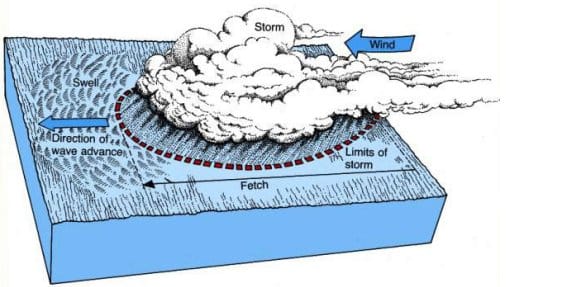
Wind creates waves, and as the waves keep travelling in the Atlantic or Pacific they can travel thousands of kilometres they get cleaner and cleaner, and the swells get further apart. Thats the first thing you want: a really clean swell.
Swell, photographed by Aaron Chang
The best conditions are usually in the early morning, with a very light offshore wind blowing off the beach, and spray lifting off the waves. An offshore wind like that creates very clean conditions, because it holds the wave up, so it can also create a really good tube. Just as that wave wants to break, and the lip of the wave wants to pitch out, its held up by the offshore breeze.
But in reverse conditions, if an onshore breeze blows onto the beach, the waves crumble and become choppy. The trick is to learn how to read the waves. You cant always tell what the seas going to do, so you have to stay focussed.
From An Illustrated life of Nichiren
Ive had some scary moments out there. In California I surfed a wave quite frequently called Blacks Beach. One particularly big day, I was caught on the inside in the impact zone with no direction to take. In panic, I actually took my leash off my leg (the leash, or leg rope, attaches the board to your ankle, so you dont lose it). I felt safer without it, a strong swimmer rather than a surfer.
I realised at that point that Id done the stupidest thing possible, and let my only floatation device go to the beach. I ended up getting pulled out in a rip current. It was a pretty scary moment. I got back to the beach, completely exhausted and with my head spinning.
But it happens, and you realise that it is just water, and that even when you take your worst wipe-out on your biggest wave, 99% of the time youre going to come back up. You might be held down though, and the scariest thing for a surfer is when youre in a big surf and you get held down and cant get to the top. And its literally the analogy that most surfers use like being in a washing machine. You get rag dolled. Youre literally at the mercy of the ocean. Its just spinning you, and twirling you and throwing you around. Finally it lets up, but it could take 20 seconds, though it feels like 2 minutes.
There are other dangers. Florida is loaded with sharks. Ive never had any problems with them. Ive never been chased out of the water, though that happens quite frequently on the east coast of Florida. The sharks come in to feed off the smaller, bait fish and end up taking a bite out of someones leg.
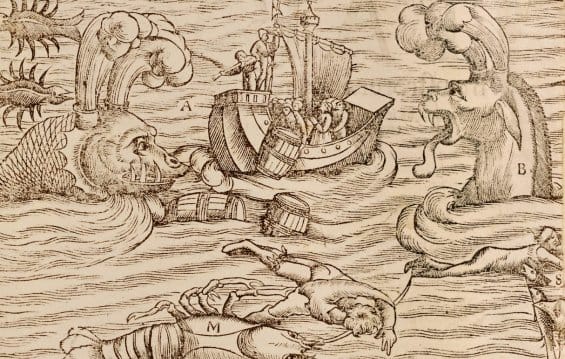
sea monsters
Surfers definitely show a level of hard commitment, or dedication, in face of the elements. Guys surfing in places like North Yorkshire, Nova Scotia, or Norway will be wearing wetsuits that are five or six millimetres thick, and trudging through the snow on the beach to get to the breaks. That takes a lot of commitment and love and purpose. It always helps to have a friend or two encouraging you.
The seduction of the sea
Id like to surf the Mentawai Islands in Indonesia, off the coast of Sumatra. The quality of the surf is fantastic. Youve got a lot of reef breaks there, and you get very clean, hollow, powerful waves: high performance waves that you can do lots of manoeuvres on off the lip, floaters, cutbacks, really long rides.
Above and below: Ribeira d'ilhas, Portugal. Photographed by Damian French, 2003
One of my best surfing moments was in India four years ago. I didnt go there with any intention of surfing, but with the Indian Ocean, I knew there had to be something somewhere. I ended up in a little town on the south-western tip of India and rented a board on the beach. By pure luck, a guy there had a surfboard of the size I normally ride. I ended up surfing there for two weeks. It was a powerful beachbreak, coming out over very deep water and then hitting a shallow sandbar.
The bigger the surf gets, the more focused you have to be, the more concentration you have to put into it. If youre not surfing well, youre going to get pounded. You think about the next set of four to eight waves thats going to come in. You sit on your surfboard between waves, and you always look for that bump on the horizon, the next set coming in.
Now that I live on Ibiza, I dont surf as much Id like to. The Mediterranean surf just doesnt have the power or the size of the Atlantic, the Pacific, or the Indian Ocean. It was a bit difficult for me to get used to, after California where I was surfing several times a week on much bigger waves. Here, its not so much of a challenge. But its still fun.
The Kahanamoku brothers, a family of long boarders
The surfing scene is changing all the time. It used to be that youd start out on a short board and then slowly but surely the length of your board would get a bit longer as you got older, until youre surfing a long board. It tended to be a natural progression. And thered be guys surfing well into their 70s. That still happens, but now in California in particular there are a lot of kids starting out on long boards, and then staying on them, surfing the tour. Its come a long way the prize money, the contest venue, everything about surfing has tripled.
To get an idea about how it was in the mid-sixties, the classic movie that every surfer has seen is Endless Summer. Its about these two guys who travel around the world in search of perfect waves. Its a classic surf film thats really admired by the surfing community. Then of course theres Big Wednesday, and a new one just out is Step Into Liquid, which is great. In the old days, the whole surfer-hippy-marijuana-bum image was quite strong. Its just not that way anymore.
Personally, Ive always stayed very focused on surfing. It became a passion very early on and I didnt stray from it. It was just absolutely what I wanted to do, and for me it has been a very healthy choice.
Now surfings even been suggested for the Olympics. I dont think thats gained any ground yet, though its definitely come across the table for sure, and might well happen one day. But you cant be surfing in Athens: the Mediterranean surf just isnt good enough. How would they do it, unless they made it a winter game? But then it depends on where you decide to hold the winter games. Obviously if you have them in Moscow, youre not going to surf!
As a kid in Florida, we used the term stoke the excitement of feeling that all you want to do is to go surfing while you draw waves in your notebook in school. Living out on the beach in San Diego I ended up getting kind of spoilt, because I had the decision to go out only when conditions were perfect.
Ribeira d'ilhas, Portugal. Photographed by Damian French, 2003
But here in the Mediterranean you have to be on it when its up, or you miss it, because the swells have very short lives maybe only a day or two, whereas in the Atlantic or Pacific swells can last for a week, sometimes even two or more. So in some ways you have to lower your expectations here.
If I should ever live on another bigger body of water again, Ill definitely appreciate what I have. I burned out in California, the whole superficial scene out there, and I thought that it was time to go to Europe, and see my family.
I was actually born in Tenerife, in the Canary Islands, but left when I was around two and a half. I grew up wondering about the place, thinking that the Canaries must have surf, but no one mentioned it back then. Then from the late 1980s and through the 1990s, articles started appearing referring to it as a surfing destination. Around four years ago I went back for the first time, and caught some fantastic waves. It was a great feeling to surf the island I was born on.
Now Im starting to think about moving to a place where theres more consistent surf. Ive got a year-old daughter, and I hope its something that she takes a liking to. But even if its sailing, diving, or fishing not surfing I hope at least she gets involved in the ocean as much I did, and loves it as much as I do. When you grow up on the water it becomes part of your life.
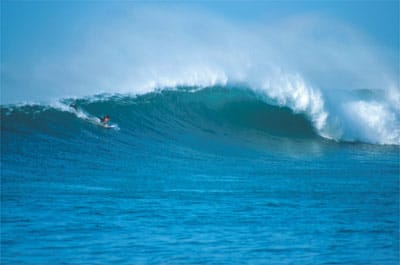
Lucky man!
