

This is a translated and edited version of the investigation originally published by Agência Pública
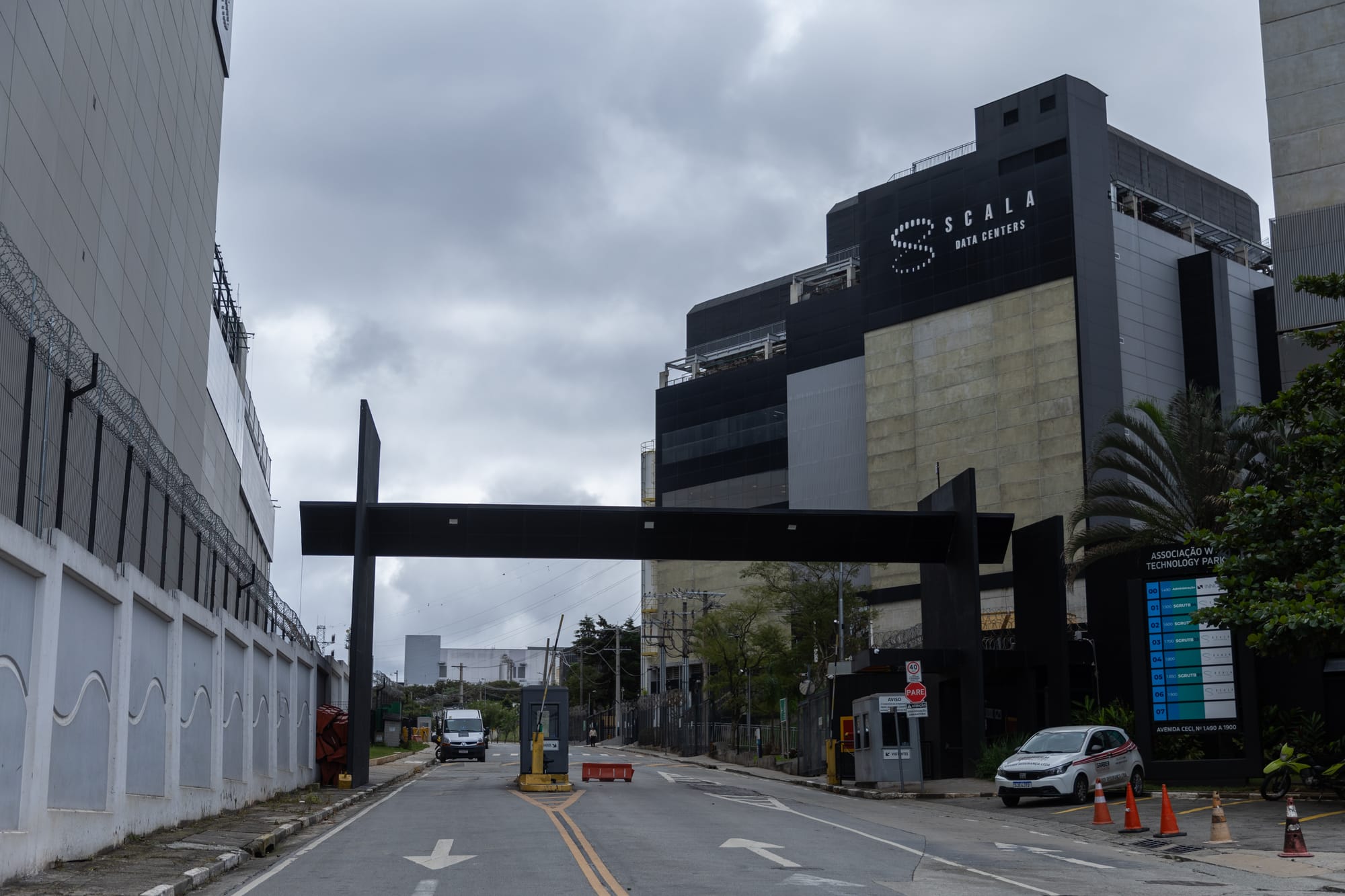
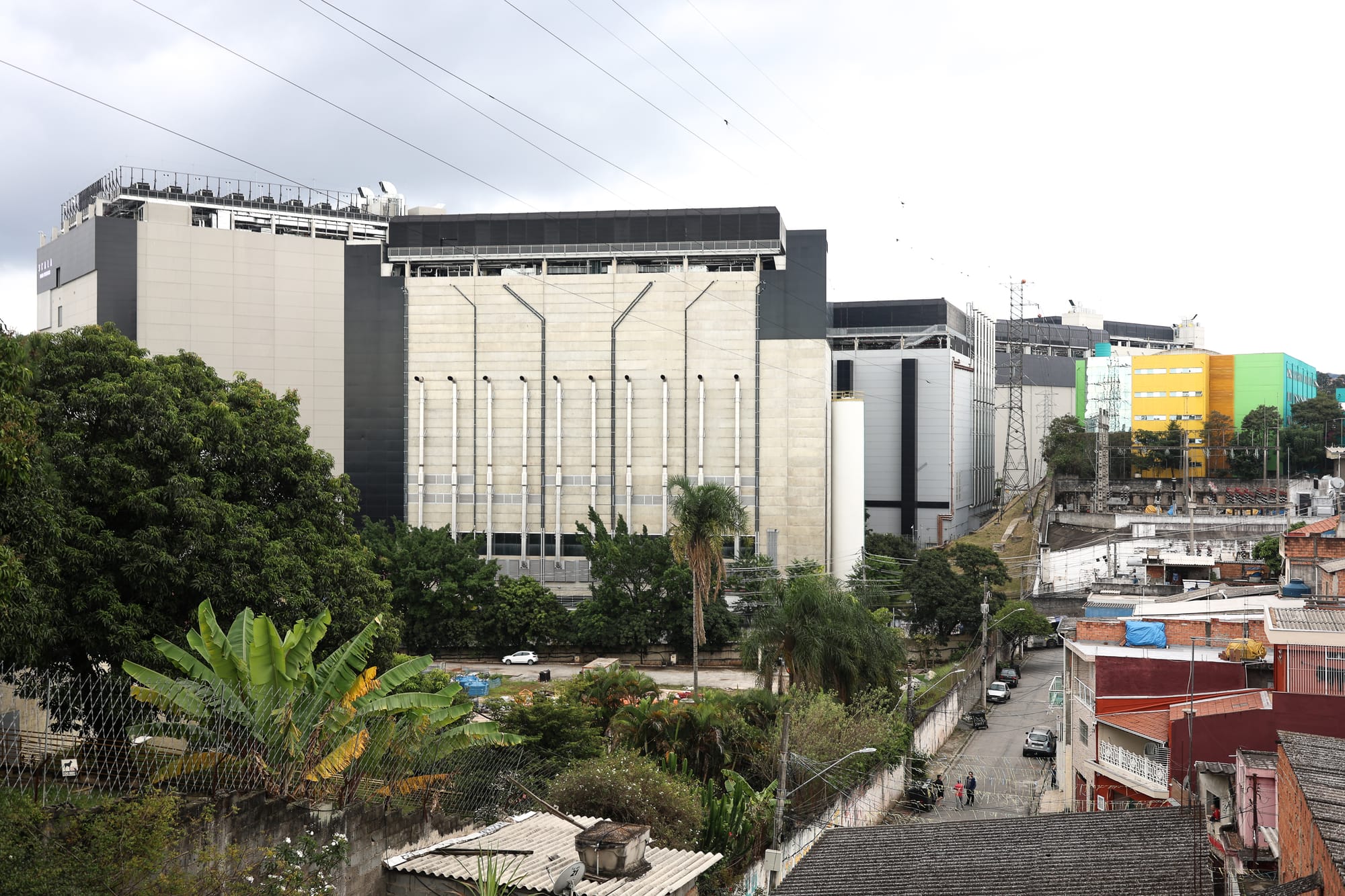
The nine glistening towers of the Scala data centre complex, which serve the data needs of some of the world’s biggest tech corporations including Amazon and Oracle, stretch out for over half a kilometre along the the Mário Covas motorway in Barueri, a municipality in Brazil’s Sao Paulo metropolitan area.
Scala has a reputation for building these mega-computing structures at breakneck speed, using proprietary construction techniques and accounts for a quarter of the installed data centre capacity in Brazil. It has plans for further expansion, including a single new facility in the southern state of Rio Grande do Sul, which could add six times more capacity than all the data centres currently installed in the country.
Brazil is the leading market for data centres in Latin America, with the federal government hoping to attract nearly two trillion reais, or nearly £300bn, in private investment in the next decade, largely off the back of a draft bill to grant generous incentives.
Yet the mad rush to roll out internet infrastructure for the AI age is driving the workers building these data sheds to the point of exhaustion, breakdown and injury, according to an investigation by Agência Pública, an investigative newsroom based in Brazil. These finds are of relevance to policy makers around the world, including here in the UK, where a recent study by infrastructure firm Manpower Horizons has estimated a crushing shortage of plumbers, electrical fitters and construction workers to build out Britain’s own data centre boom.
Workers say the pressure on them is exacerbated by Scala’s proprietary “Fast Deploy” technology, which the company claims halves the amount of time needed to install a data centre. The workers, many of whom worked as subcontractors, have their own description of the fast deploy experience.

“Hell,” is how 39-year-old Francisco Rodrigues heard his colleagues describe their experience of working on Scala’s data centres in Barueri.
“They said they wanted to get out of that hell. I managed to stick it out, but there were times when I thought about giving up,” said Rodrigues, a former assembler, adding that he had to work 70-hour weeks for a month, well above the legal mandate of 54 hours a week including overtime.
In a statement, Scala said it prioritises “the safety, health and wellbeing of people in all its operations”.
Praying they sack me
To understand the working conditions at data centre construction sites, Agência Pública reviewed 11 cases before Brazil’s labour courts, interviewed workers and trade unionists, and submitted freedom of information requests to officials at the labour prosecutors’ office.
Almost all claims relate to unpaid overtime, missing dues for hazardous work, and unhealthy working conditions. The complaints also mention the assignment of duties outside the scope of the contract, a lack of personal protective equipment, absence of proper training on site, and some even seek compensation for emotional distress caused by harassment suffered.
Of the 11 cases, one worker managed to reach a settlement, two workers are appealing a ruling after their cases were dismissed, and three cases have been dismissed outright. The remaining five cases are still making their way through the court process.
Separately, the labour prosecutor’s office confirmed three ongoing investigations into working conditions at Scala data centres in Barueri, including gruelling workdays; overtime beyond permissible limits, often without legally mandated breaks; negligence in the use of personal protective equipment; and a workplace accident that left an employee with burns.
“At first, I’d wake up happy to go to work, but after a while I’d be praying to God that I wouldn’t have to go to the data center anymore, that they’d sack me,” said a 44-year-old assembler who asked not to be named for fear of reprisals.
“I was at my wits’ end; it was really taking its toll on me,” he added, explaining that he eventually left the job after a year after suffering from chronic gastritis.
Data center work is dangerous work: both in construction of these structures and in their maintenance. Each unit is essentially a giant, temperature-controlled shed, packed with high-voltage electrical wiring and equipment that often consumes as much power as a small city, making it vitally important that workers receive the right training and equipment.
Worker testimonies indicate this was not the case at Scala’s sites.
Some said the voltage in some parts of the site was so high, they could feel their feet tremble as they stepped on insulated cables.
Anderson Soares was working for a subcontractor when he called to fix a fault with the temperature regulating thermal cladding panels before the datacentre was handed over to Scala.
“We had already finished several rooms and it was in the last one that it happened,” Soares recalled.
“In that room, we had to crawl along the false ceiling; we couldn’t stand up. I moved and touched [the machine], and then I felt the electricity pulling at my arm,” he added, recalling the tingling feeling in his body and the “sparkles” in his vision following the shock.
Soares and his colleagues said the accident could have been avoided if Multiway, the subcontractor working for Scala, had followed proper procedures.
“We should have waited for the safety technician to give us permission to go up, but that day the foreman told Soares, ‘Go on, it’ll only take a moment, and you’ll sort it out’,” said a former assembler who asked to remain anonymous.
No report of an accident at work was submitted to the Ministry of Labour, as is mandatory for companies. “He didn’t report it for fear of being sacked,” said Rodrigues, a claim confirmed by Soares. The workers said that the work was conducted without the requisite paperwork, but they were subsequently coerced into signing the work authorisation form backdated to the day of the accident, thereby falsifying the document.
Multiway, the company responsible for the service, claimed its “works are supervised by occupational safety professionals, and activities are preceded by the relevant risk assessments”.
Pattern of neglect
Soares’ accident, workers say, was part of a pattern of inadequate training and safety protocols.
“I was cutting iron six metres up, in a confined space, with the machine between my legs. But I only had gloves and goggles to protect myself,” said Rafael Suriano, 34, a former subcontracted assembler at Scala’s data centres in Barueri.
According to his lawyers, Suriano was neither provided with protective equipment nor “training on measures to ensure the worker’s physical and psychological safety during such duties”, and was often tasked with working on unstable platforms several metres above the ground.
While Suriano’s case was eventually dismissed by a labour court, workers said safety equipment and harnesses, particularly so-called lifelines (a system of cables that anchors workers working on elevated structures) were often incorrectly
attached.

One assembler, who did not wish to give his name, said lifelines were often attached to false ceilings, or heavy, movable machinery that was unstable on the sloping surfaces of the construction site.
On one occasion, he said, three fellow workers were on a platform when it collided with another machine, causing it to sway violently. “By the grace of God, it didn’t tip over, because if it had, it would have killed all three lads.”
Multiway responded that “it neither instructs nor authorises the carrying out of activities without the protective equipment required for the identified risks”.
Theory vs. Practice
In the cases examined for this report, the companies refuted the workers’ claims, arguing that they distributed protective equipment correctly and provided adequate training. In five cases, the courts ruled in favour of the companies.
Workers say the evidence presented by the contractors in court does not reflect what actually happened in the workplace.
“Everything they say is a lie; it’s exactly the opposite of what they claim,” said one of the workers. “You go in there, they give you a piece of paper to sign saying you’ve done training, but there was no training at all.”
In some cases, training was delivered only after the workers had already started carrying out the tasks covered in the training.
Rodrigues, the assembler, said he spent quite some time using dangerous machines like jackhammers and sanders (a rotary tool used for metal work) without any training. When he finally got his training he realised the mistakes he had been making such as pulling the tool’s spinning metal disc towards his chest, rather than pointing away from him. Fortunately he wasn’t injured.
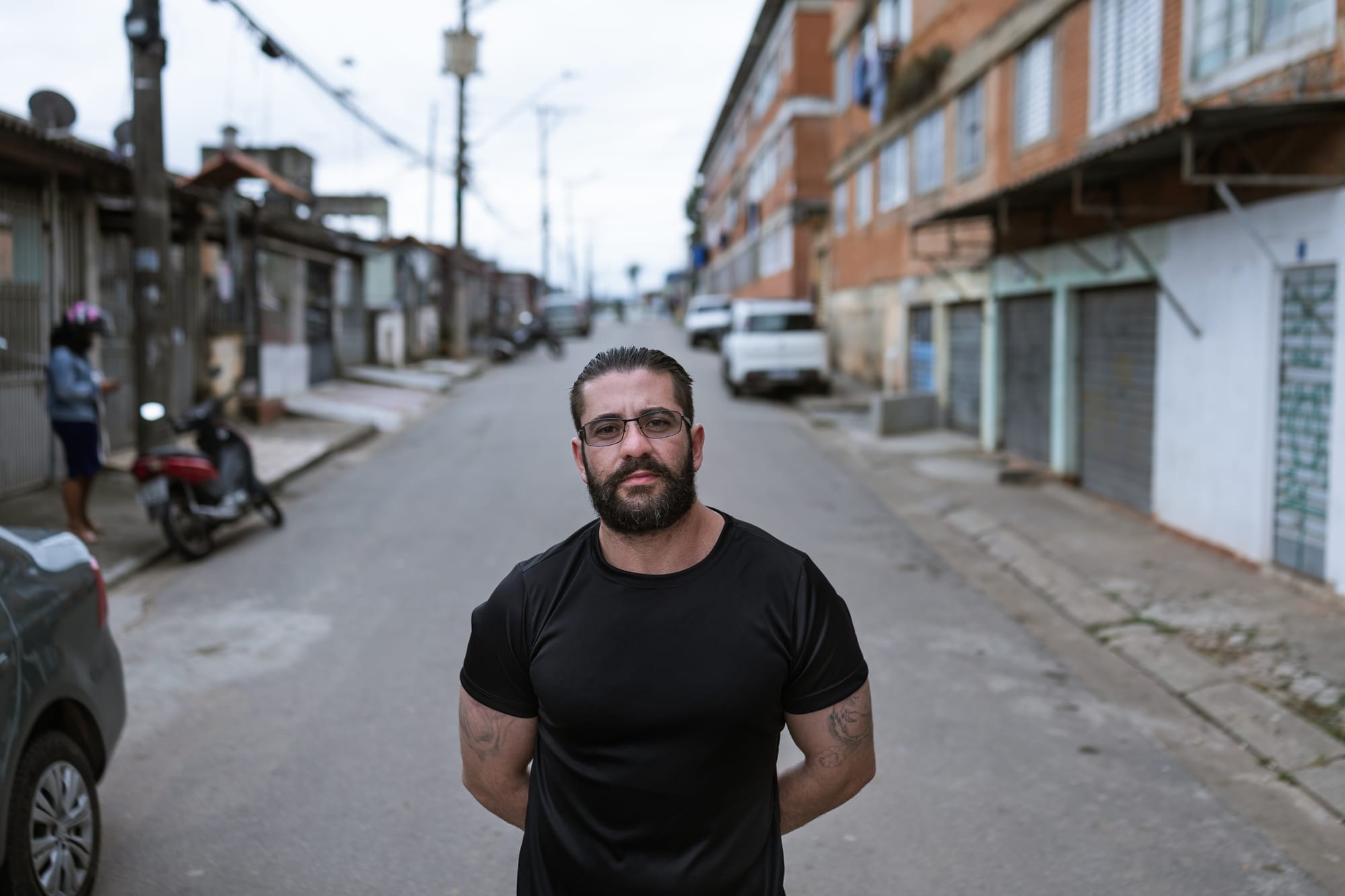
Renato Gonçalves, aged 37, was not so lucky. Gonçalves partially lost his hearing while using a jackhammer because, he said, he hadn’t been taught how to wear his protective equipment correctly. Gonçalves had been hired by Multiway to work on the Scala site, but said his safety drills did not include a single hour of hands-on, practical training. He was subsequently deployed at another site where the accident occurred.
According to his lawyers, the company that hired him “did not file a work-related accident report nor offer him any support” and fired him following the submission of medical certificates. The case is currently suspended in the logjam of the legal system. The hearing loss, according to Gonçalves, is partial and reversible, and he is on a waiting list to undergo corrective surgery.
Multiway stated that it “provides training on the safe use of machinery and equipment, including in accordance with NR-12 [a labour standard rule on the use of rotating machinery] where applicable, in addition to the training courses and guidance provided for by other Occupational Health and Safety regulations relevant to the activity”.
‘British punctuality’
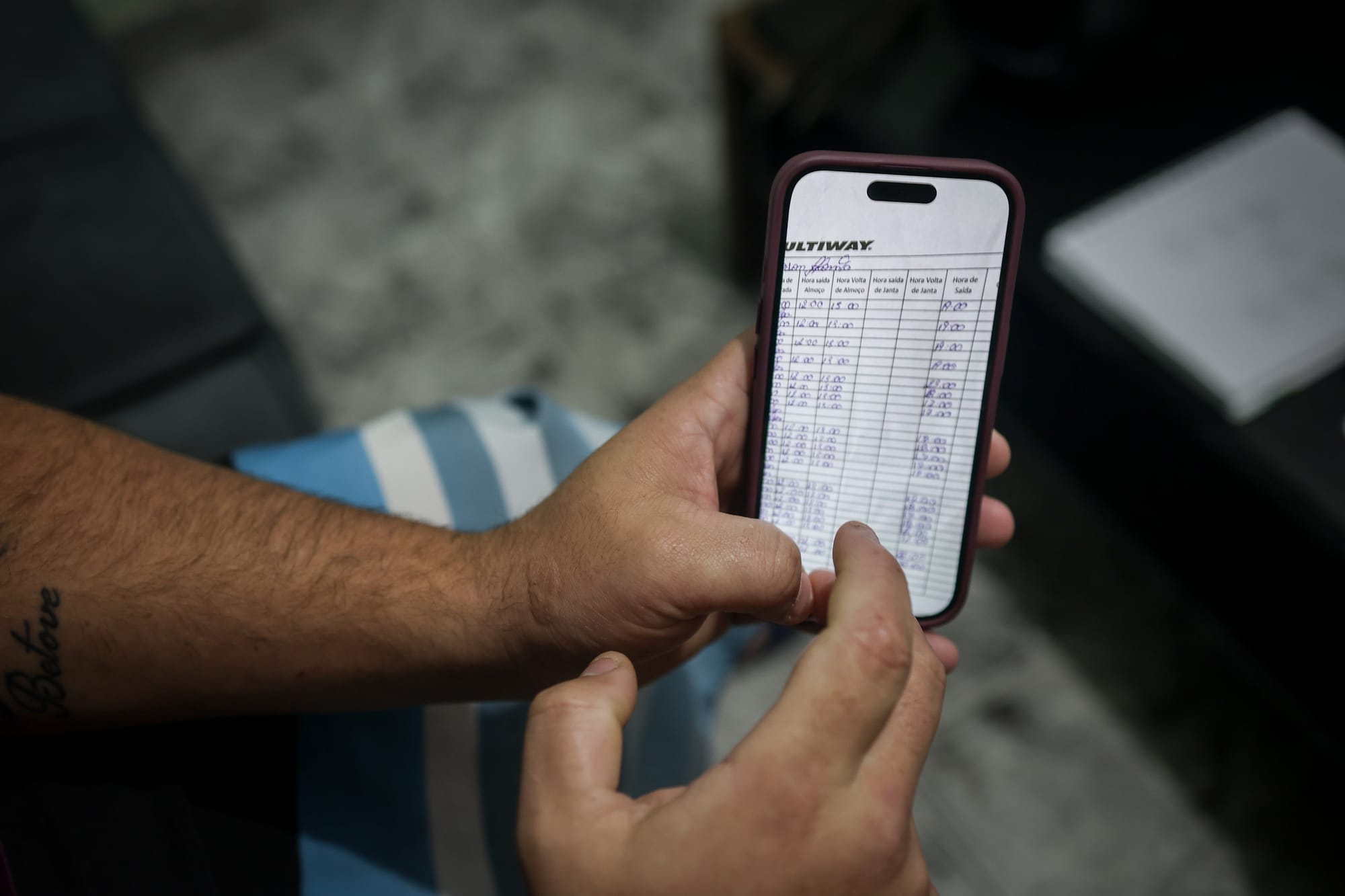
The workers also claim that the companies fudged the number of hours they worked, despite shifts that sometimes began at seven in the morning and ended at 4am the next day.
“We didn’t clock in; everything was done ‘by eye’. It was all via WhatsApp. And there were many hours of overtime that we weren’t paid for,” said Soares. “There were times when I’d leave there at 2am and be back by 9am to start the next shift.”
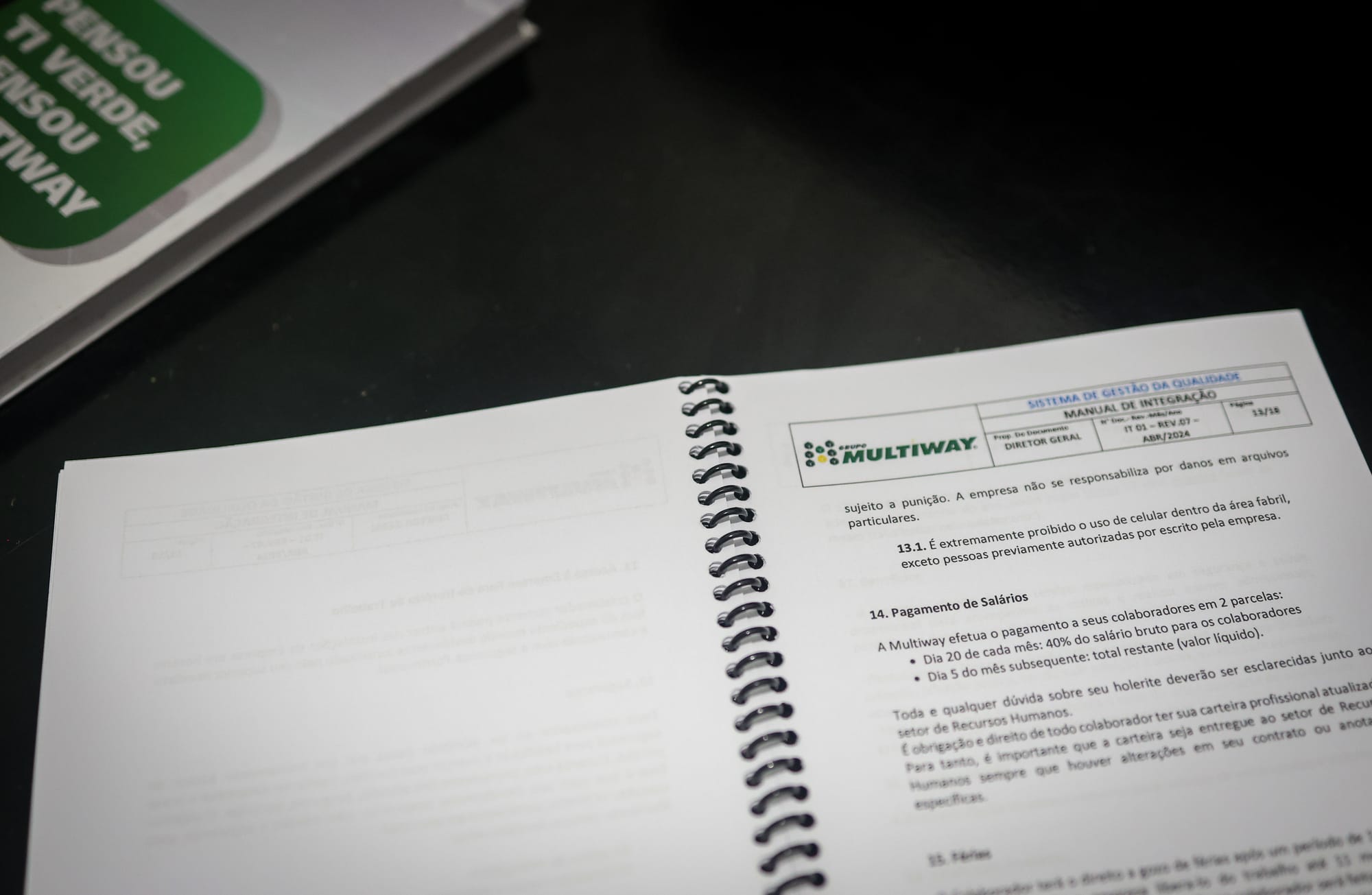
Multiway claims that it “has top-of-the-range software” to keep attendance records. Yet, complaints about excessive overtime were a recurring theme amongst the workers interviewed and in the court files, with one claim asserting that a worker worked an average of 78 hours of overtime per month, as well as a monthly average of 13 hours of overtime on public holidays, for which he was not correctly paid.
Even in cases where workers lost in court, judges recognised something unusual in the evidence presented by the companies. “The attendance records compiled by the defendant show symmetrical entries with signs of British punctuality,” noted a judge’s ruling in one of the cases, referring to an unusual level of uniformity in the attendance record.
Gilberto Almazan, the president of the Osasco and Region Metalworkers’ Union, said workers were being pressed to work long hours over extended periods of time with poor support facilities such as toilets and canteens.
“There is a lot of pressure to deliver results. Workers are being pressured to stay on until later. But it’s one thing to do that for a day, two days, a week and quite another for the company not to have enough staff and to force everyone to work a 10-hour shift every day,” said Almazan.
“I thought working in a data center would open doors for me,” former assembler Renato Gonçalves, who has been left partially deaf, said. “But the opposite happened, and today my physical condition prevents me from getting certain jobs. It saddens me greatly.”
Companies are doing great
Even as workers suffer, the companies building these datacentres are thriving.
Scala was founded in 2020 by DigitalBridge, a US fund management firm set up by a friend of President Donald Trump and recently acquired by Japan’s SoftBank.
Other investors in the company include the International Finance Corporation (IFC), a subsidiary of the World Bank; the investment fund Coatue – with offices in the United States, Hong Kong and London; the Canadian pension fund IMCO; and the Olayan Group, a multinational “with a global investment portfolio valued at several billions”.
In Brazil, the state-owned National Development Bank (BNDES) granted Scala a loan of 300 million reais (£44m), while Banco do Brasil approved funding of $21.6m to boost the manufacture of prefabricated modules for data centres. Bradesco, Itaú, Santander and UBS banks have participated in the company’s bond issues and debt securities.
Agencia Pública sought comments from all the financial institutions, but only the IFC, the BNDES, UBS and Santander responded, emphasising their policies on protecting workers’ health and safety. Their statements can be found at the end of this article.
In Brazil, data centres are promoted as innovative projects with the potential to create jobs on a massive scale. In Eldorado do Sul, the company promises to create 3,000 direct and indirect jobs during the construction phase.
“This is an opportunity to turn Rio Grande do Sul into Brazil's new Silicon Valley,” said Ernani Polo, Rio Grande do Sul’s secretary for economic development.
But a report by Rio Grande do Sul Legislative Assembly’s subcommittee on data centres warned that “the establishment [of the data centre] may generate a significant number of jobs, but this tends to be temporary; therefore, it should not be seen as a component of an employment public policy”.
Worker Rodrigues said: “The data centres claim they create lots of jobs, but only until construction is finished. Once construction is complete, I reckon 90% of the jobs are cut.”


