

Guarded by police, thousands of people from Brazil’s Indigenous ethnic groups descend on Paralela Avenue, near the Bahia state legislative assembly. There is tension in the air in the city of Salvador, in north-eastern Brazil.
The police are intimidating in full riot gear. By contrast, people wearing the distinctive feathered headdresses and ornaments of various Indigenous groups – Pataxó Hã-Hã-Hãe, Pataxó, Kaimbé, Kiriri, Tumbalalá, Pankararé́ and others – dance and chant. Anti-government slogans and shouts of "Fora Bolsonaro!” (“Out with Bolsonaro!”) resound
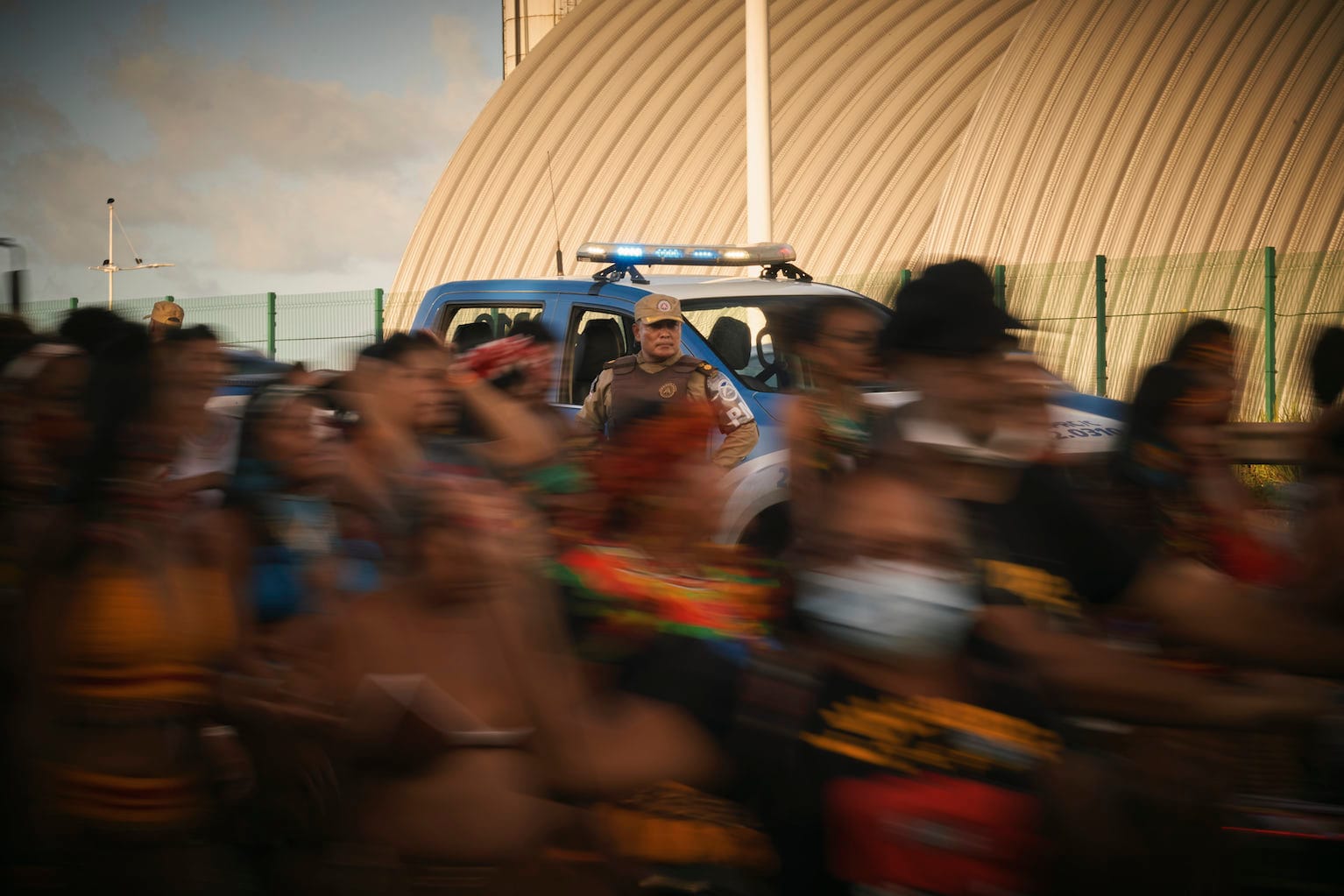
But the march ends without incident, unlike the previous day when a scuffle broke out between police and protesters. It happened near the Bahia Administrative Centre (CAB), where a large camp of Indigenous groups from all corners of Bahia state has been holding several days of debates and workshops to assert their rights.
