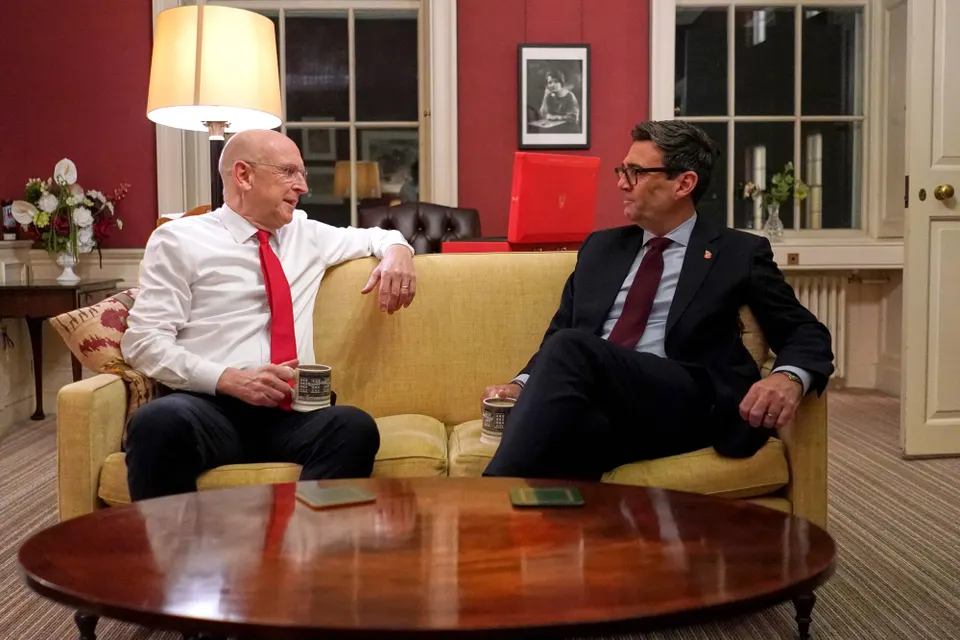
“I am ready to do things my predecessors wouldn’t. I will make a break with the direction of the past 40 years and put Britain on a new path. Build a new economy and a new politics.”
That’s the pitch Andy Burnham made to the country at last month’s Labour Party Conference.
The new prime minister promised to undo 40 years of “deindustrialisation, deregulation, privatisation, austerity and Brexit”, which, he said, have left us with “a country run for vested interests. Not in the public interest.”
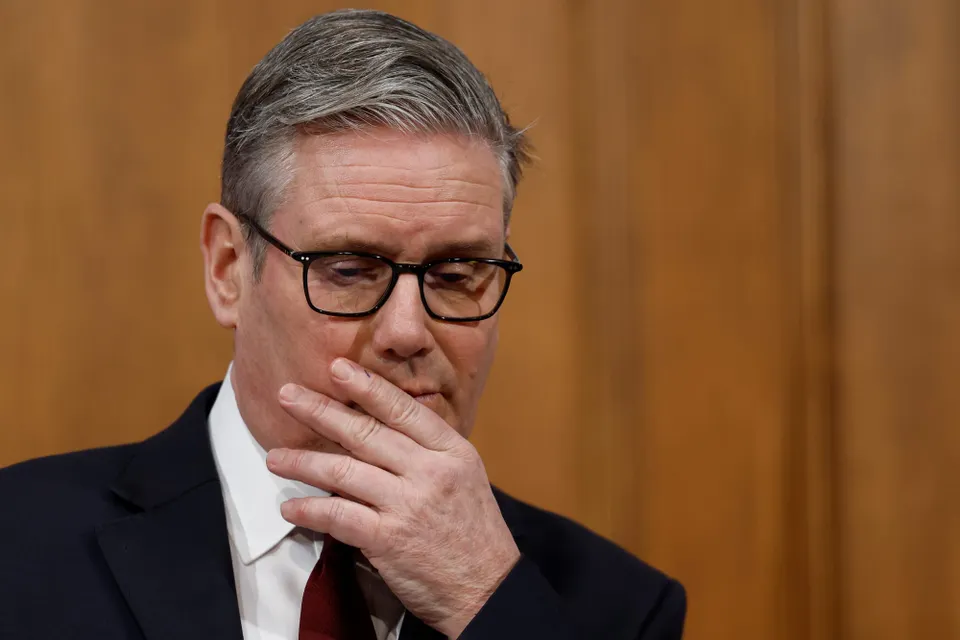
This week, as chancellor John Healey delivered his first Budget, we finally got a look at just how Burnham’s government will fix Britain. Except, we didn’t really.
As academics, politicians, and campaigners have written for openDemocracy, the Budget was something of a non-event. A few policies that will go some way to helping struggling families up and down the country, but none that will bring about desperately needed wealth redistribution.
Below, they explain how opportunities were missed to tax banks’ huge profits and rein in private companies’ profiteering through public ownership, while money that could have lowered energy and food prices was thrown at US defence companies and domestic data centres.
A Budget for markets and the wealthy
—Prem Sikka, Labour peer
John Healey needed to use his first Budget to make the economy and households more resilient. In the end, he delivered little on either front, limited by self-imposed revenue-raising constraints due to obedience to fiscal rules and a foolish manifesto promise against increasing most taxes.
The result was a chancellor left floundering, and an underwhelming Budget.
Energy companies have escaped a windfall tax. Banks will pay a puny 3% more for 15 months, yielding £1.5bn. Tax on gambling through slot machines is to rise from 20% to 25%, far lower than the 40% the industry expected.
The commitment to spend 3% of GDP on defence by 2030 has been reaffirmed. The biggest beneficiaries will be US arms corporations, as the UK has weakened its manufacturing base. An extra £1.5bn will be allocated to social housing, to deliver around 10,000 homes in England, taking total investment in the Social and Affordable Homes Programme to more than £40bn over ten years. The waiting list for social housing is around 1.3 million households and recent governments have failed to hit the housebuilding targets. Reindustrialisation remains a distant goal.
The freeze on income tax thresholds that started in 2021 will continue – hitting the poorest hardest. Someone with an annual salary of £17,000 will pay nearly £1,000 more in income tax and National Insurance in this financial year. Gestures such as a £100 reduction in energy bills for households in council tax bands A to D, promises of absorbing gas supply standing charge into unit prices, and cuts to VAT on electricity will not eliminate the impact of fiscal drag. Millions will remain in poverty.
Middle classes will welcome the abandonment of the plan to reduce Cash ISA investment from £20,000 to £12,000. It will do nothing for 39% of the adults with savings of £1,000 or less.
Overall, the Budget appeases markets and the super-rich. It does little to improve infrastructure or disposable income of the bottom 50%, making sustained economic growth difficult.
The military-industrial complex swallowed Labour’s Budget
— Kevin Cashman, Transition Security Project
John Healey resigned as Keir Starmer’s defence secretary in June after failing to secure the additional £28bn in military funding defence officials said they needed from government. Now, in his first Budget as Andy Burnham’s chancellor, we are seeing what his ambitions cost the rest of us.
To help fund the eventual £15bn Defence Investment Plan, Healey announced the government will cut a further £3bn across other departments, on top of £6.8bn in cuts announced by Starmer earlier this year. These spending priorities undermine Burnham’s cost of living agenda.
Taken together, the cuts could cost roughly 15,000 net jobs, according to a newly updated version of the analysis that we at the Transition Security Project, a research centre investigating the US and UK military-industrial complexes, carried out earlier this year. Military spending supports fewer domestic jobs than the investment being cut, partly because spending on imported weapons flows overseas, especially to the United States.
Longer-term military spending commitments imply a colossal transfer of wealth from the public to the military sector. Starmer was strong-armed by the US into raising military spending to 3.5% of GDP by 2035 – a decision that Healey has repeatedly reaffirmed. Meeting this target would require an estimated £280bn in extra spending by 2035, or about £28bn more a year. If £15bn over four years requires these sacrifices, what will successive budgets sacrifice?
This Budget makes the consequences for households clear. It cuts £1bn from the Warm Homes Plan – a scheme to upgrade millions of homes, cut fuel poverty and support the transition to low-carbon heating – reducing investment that would help bring down energy bills. Meanwhile, the government’s immediate support on energy bills is welcome, but falls far short of the increase in bills expected this winter.
These military commitments show the ambition the government should bring to tackling rising living costs, as Burnham has promised to do. The military can help, too. A new National Security Strategy that ends Britain’s complicity in the conflicts driving up our bills, in favour of defence, diplomacy and de-escalation, would lower our household costs.
The public will judge Burnham on living standards – including clean, affordable energy and reliable public services – not new fighter jets or submarines. As temperatures fall, the time to change course is now.
Post-industrial Britain deserves better than data centres
—Sacha Hilhorst, post-doctoral research fellow at the London School of Economics
On the face of it, this Budget spoke to the everyday concerns of people across the country: high energy bills, declining high streets, powerless communities.
These themes come up often in the former mining and manufacturing towns of the Midlands where I conduct ethnographic research. People there will approve of how the Budget hit betting shops, vape shops and big banks, in favour of breathing life into pubs and shops, and curbing rising energy bills. Passing surpluses in coal industry pension schemes on to retired miners will be popular, too.
On a structural level, however, this was a small fiscal event. Insofar as the Budget revealed a strategic direction, it saw the government double down on defence spending and AI. Post-industrial England is already feeling the effects on both counts: in Nottinghamshire, a large data centre will be built near the former Ratcliffe-on-Soar power station, while another is proposed on erstwhile Rufford pit. Politicians seem to have run out of other ideas for these vast tracts of previously industrial land.
Then there is the commitment to military spending at the expense of other investments. Already, there is local outrage over plans to defund infrastructure projects across the East Midlands and redirect cash to the Ministry of Defence. Military spending has smaller employment effects than other investments, so this will lead to net job losses.
In his speech, Healey spoke with pride of the Regional Development Agencies (RDAs) he had promoted as a Treasury minister in Gordon Brown’s New Labour government. In the Midlands, flagship ‘successes’ included a site for a massive, exploitative Sports Direct warehouse and a ‘regeneration route’ that now hosts Amazon.
If the RDAs’ history shows us anything, it is this: politicians must be far more ambitious in their policies for post-industrial areas. Devolution efforts are welcome, but we need a break with the prevailing economic system, which this budget did not offer.
Burnham promised a rupture. Healey delivered tinkering
—Jon Trickett, Labour MP
Chancellor John Healey said he would secure growth in every postcode. A £100 one-off energy payment is very welcome, but the energy sector has been ripping consumers off for a generation, while retail giants take advantage of their market power by driving up the cost of groceries.
If we really want to help people in every area of the country, why not take on the privatised monopolies directly, not with a few more rules, but with proper public ownership?
Finding additional money for defence is an inevitable choice for a chancellor who helped precipitate Keir Starmer’s downfall by resigning as defence secretary. But the defence industries are concentrated in a small number of regions and will do little in terms of growth for the large part of the country.
Healey has delivered a Budget within the same fiscal constraints as his predecessors, one that simply does not shake off the cloying grip of neoliberal ideology, Treasury orthodoxy, and the usual vested interests lobbying the government. If the chancellor cannot deliver radical change at a macro-economic level, the only option is to tinker around the edges with micro-economic policy.
But that strategy simply doesn’t transform the country in the way Burnham promised Makerfield, and Britain, he would. What is clear is that over-reliance on official institutions, which Burnham has spoken strongly against, has produced a budget that is at best mildly progressive.
Of course, there are good things in the Budget. Healey’s pledge that every penny of the Miners’ Pension Fund will go to miners was welcome – although questions remain over when and how that will happen – as was his recognition of the need for “breathing room” from the cost of living crisis, especially by imposing a 6% levy on banks’ profits above £100m. But the truth is that this levy is less than it ought to be, and will apply for only 15 months. It does not go far enough at a time when banks make billions in super profits as many struggle.
NHS founder Nye Bevan once said socialism is a language of priorities, a mantra that any Labour chancellor should heed in a budget. That’s why it is disappointing that the chancellor is pushing ahead with plans to abandon the pensions triple lock, a move projected to save £15bn a year, while ignoring policies such as equalising capital gains tax, which could raise over £19bn a year by 2030. Britain doesn’t have to choose between offering a decent pension and decent care. We can, and should, provide both.
This is an edited extract of an article Jon Trickett wrote for openDemocracy. Read in full here.
Stuck in Britain’s gas trap
—Ewan Gibbs, senior lecturer in economic and social history at the University of Glasgow
Energy was the headline policy area of this year’s Budget. The cost of energy, disagreements over climate action and debates over North Sea drilling have dominated British politics since the Russian invasion of Ukraine in 2022 sent oil and gas prices spiralling. More recently, Donald Trump and Binyamin Netanyahu’s new war in the Persian Gulf turbocharged concerns over oil supply and affordability.
In this context, the central measure in the chancellor’s plan to give “breathing space” to those struggling amid high cost of living is a one-off £100 “energy payment” for most households in England (those in council tax bands A-D). Devolved administrations have indicated they’ll follow suit. Along with the direct alleviation itself, Burnham’s government is signalling that it understands the pressures facing pensions and workers, as wages lag behind spiralling bills.
But £100 is paltry by contrast to the annual increases consumers are facing. It may well communicate only that the government cannot, or at least will not, meet the challenge of an energy system patently failing citizens and industry.
The other energy measure that grabbed pundits’ attention is the scrapping of standing charges for gas customers, which is estimated to typically save billpayers £45 per annum. These monthly charges have long been in the sights of fuel poverty campaigners. Scrapping them will save most households money, especially poorer households. It’s left opponents on the back foot, with the Scottish National Party seemingly committing a vault face by shifting from calling for the measure to condemning it. The saving will be welcome and follows on the removal of VAT on electricity, but, as with the energy payment, will be marginal in the face of the energy price headwind.
A less prominent announcement was the removal of a green levy from consumer bills. The levy, which funds hydrogen projects, will now instead be covered by central government. While a relatively minor measure, it would signal a major drift in the direction of funding energy investment if it were applied across the board. Contract for Difference, the UK’s main subsidy scheme for encouraging developers to build wind and solar farms, currently makes up nearly 5% of electricity bills.
Ultimately, this Budget does not mark any significant break with the status quo. The privatisation of our energy system, especially electricity and gas utilities, along with the ‘dash for gas’ that saw energy companies abandon coal in favour of new gas power stations, was fundamental to the making of a neoliberal Britain in the 1980s and early 1990s. One consequence has been the consolidation of a pricing structure that left electricity prices dependent on gas prices.
Since 2022, the British government has spent a net £55bn on subsidising gas prices. Today’s measures are only tinkering around the side, leaving Britain dependent on an expensive, impoverishing, inefficient and carbon-based energy system.
A Budget that still leaves women waiting
—Daniella Jenkins, Women’s Budget Group
Healey’s Budget offers a few much-needed measures to address the cost of living, primarily by shielding households from even steeper energy bills. But many women, particularly single parents on low incomes, won’t see enough help with the scale of financial pressures they face going into this winter.
Housing was one of the clearest omissions. The focus was on supporting aspiring homeowners, but for many women the immediate challenge is making next month's rent. Women now spend an average of 57% of their earnings on private rent, compared with 41% for men, leaving many financially exposed. While increasing funding to end rough sleeping is welcome, preventing homelessness is equally important. By failing to unfreeze Local Housing Allowance, the chancellor has missed a crucial opportunity to ease pressure on renters and protect more women from being pushed into poverty and homelessness.
The government has promised to unlock growth in every postcode and boost living standards across the UK, yet this Budget continues to overlook the social infrastructure that makes economic participation possible. Investment in care, childcare and support for families is too often treated as secondary to traditional infrastructure spending. That comes at a significant cost. Our analysis estimates that the UK loses £113bn in economic output because women's skills and labour are underutilised.
There were some positive steps. Extending statutory paternity pay to self-employed fathers and removing the Carer’s Allowance earnings cliff edge are important reforms that recognise the value of unpaid care, much of which is carried out by women. Yet these changes will take years to reach families, leaving many waiting until the end of the decade for meaningful support
While the chancellor did say the paternity pay was a ‘down payment’ on wider reforms to parental leave, he also needed to address the inadequacy of maternity pay, which continues to put many mothers under severe financial pressure. Our analysis has shown that improving maternity pay would put more than £1bn in families’ pockets and deliver social and economic gains.
And while a new fund to tackle misogyny is welcome, £5m a year for three years is a drop in the ocean. It is, notably, just half the amount allocated to a single new parkway station in Cardiff.
Read the rest of the Women’s Budget Group’s response to the Budget here.
While we ration heating, the ultra-rich fly tax-free
—Myles Cummins, climate charity Possible
Labour’s 2024 manifesto promised action against the worst polluters and fossil-fuel giants. Yet once again, the super-rich and their climate-wrecking habits have escaped penalty, just a week or so after the government approved the Jackdaw gas field, and with approval of the Rosebank oil field remaining an alarming possibility.
Helping business does not mean continuing to give the wealthiest few a leg up. Our small business owners do not receive anywhere near the leniency that big corporation owners continue to benefit from.
We are left wondering, ‘How do the ultra-rich keep getting away without paying their fair share for the damage they’re doing to the environment?’ They insult us all with their private flights to luxury holiday destinations, while the poorest in our society are likely to have to ration their heating this winter.
Yet we constantly see them being given an easy ride, paying no fuel duty at all on the kerosene fuel used for their super-expensive private jet journeys, and severely undertaxed compared to our ordinary economy or standard airline travel. The fact that air passenger duty on private jet flights increased by only the same inflation metric as tax on ordinary flights encapsulates this perfectly.
For how long can we be told nothing can be done to even slightly level the playing field between the haves and the have-nots? It’s frankly insulting that the government thinks that we can be placated by a few pounds off our grocery bill each month, while private jets continue to fly all over Europe to luxury locations at their leisure, while paying a much lower real rate of tax.
We watch our living standards tumble and see mega-polluting jets show no sign of slowing down, and we pick up the bill for the damage being unleashed upon the climate.
It’s past time for a Labour government to do more to get the wealthiest few to start paying their fair share, particularly while ordinary people keep feeling the pinch. That’s why we’re not giving up the fight for a better, fairer system, to ensure the vast majority of us don’t have to keep on feeling like the system is stacked against us all the time.
We need to introduce fair taxes on private jets, which would need to increase by a factor of 30 times the current rate to match the relative rate that ordinary people pay on their tickets. This would raise valuable funds (potentially £2.7bn) that could be used to actually ease the cost of living, and to help protect all of us against some of the worst harms of the climate crisis.