
The photojournalist Jan Banning listens to and portrays Dutch and Indonesian prisoners-of-war forced into slave labour and denied even minimal rights by their Japanese captors during the brutal Pacific war of 1941-45. openDemocracy presents three portraits of extraordinary resilience and quiet heroism from his prize-winning book Traces of War.
Introduction
East Asia was one of the most brutal killing-grounds of the second world war. The conflict there destroyed millions of lives and left those who remained with legacies of grief and bitterness that in many cases lasted decades.
Among the least-heard voices from that era are the survivors of prison camps administered by Japans military administration in the territories it conquered as part of its Greater East Asia Co-Prosperity Sphere.
In Traces of War the Dutch photographer Jan Banning has interviewed and photographed just 24 of the Dutch and Indonesian survivors who were forced to work on the construction of the Japanese military railways in Burma and Sumatra. The haunting images show them as they worked, naked from the waist up. The words elicit, with a matter-of-fact disinterest, the misery of their intense ordeal.
Dutch, British, Australian and American prisoners-of-war were among more than a quarter of a million Asians so called romushas forced by the Japanese to work on the railways. They worked in desperate conditions. At least half of the romushas did not survive the ordeal, and many of them died in transit. The sinking of the Junyo Maru, for instance, resulted in the deaths of 4000 romushas and 1500 prisoners-of-war.
The exhibition of Traces of War will be launched at the Trolley Gallery on 15th August, the 60th anniversary of Emperor Hirohitos capitulation. The photographs and testimonies tell a story far removed from the euphoria of victory that will be celebrated on that day.
The exhibition is from 15th August 11th September 2005, Trolley Gallery, 73a Red Church Street, London.
Dulrahman, nicknamed Sidul
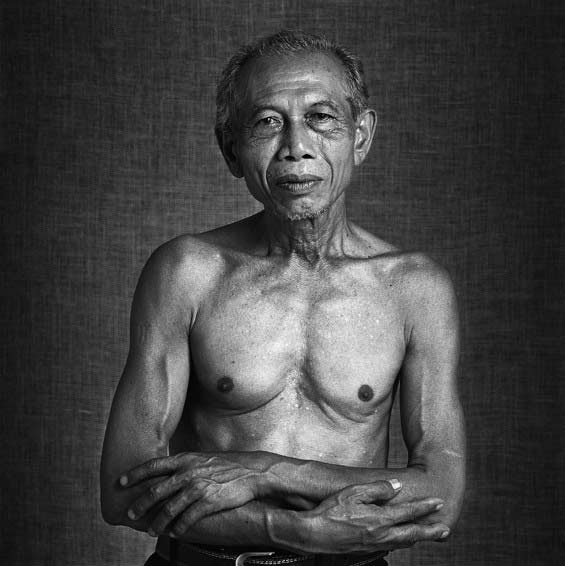
Born 5 March, 1920, in the village of Tahunan in the Gunung Kidul region near Yogyakarta, Java. He was a romusha in various locations, finally on the Burma Railway. He is a farmer with just over an acre of land on which he raises corn, cassava, rice and peanuts. He also has some coconut trees and teak for fences and firewood.
During the Dutch period, my father was a forester on an enormous estate of some 25 by 30 miles. There were seven of us, and I was the sixth child. From age seven on, I lived with my grandfather. He was a nose, throat and ear specialist in Yogya. Thats why I could attend the Javanese school there. We didnt use the Latin alphabet but Javanese script instead. The school had a three-year program. This is about as far as people belonging to the lower classes would get. You could only continue your education if you were descended from the kraton (the court of the sultan). So I went back to my parents and I assisted my father in his capacity as forester. Then the war started.
In June 1942, a Japanese soldier by the name of Kawakubu came to our village and asked my father if there were any people who could work, for wages, of course. My father then gave him my name. They first assigned me to help build a tunnel at Parangtritis, south of Yogya, on the coast. We didnt get paid at all, however, and they told my father theyd kill him if hed come to fetch me. Sure, the Japanese told us repeatedly: Weve come to free you from colonial oppression. But meanwhile they forced us to work for them!
We left from Gunung Kidul for Parangtritis with about 500 people. My estimate is that about 300 survived. Its hard to be precise, for people were not buried but simply tossed into the sea. Some eight months later they shipped us out by the hundreds, including about 100 people belonging to the Gunung Kidul group. It turned out that they had taken us to Digul (in Irian Jaya, a former Dutch penal colony in what was then New Guinea) to cut trees for building a road and a prison. Compared to this place, Parangtritis had been pleasant. There at least we got a piece of cassava the size of my fist, and we could fetch water from a small mountain lake. In Digul, however, we were left to our own devices and so we had to forage for ourselves. For food, you had to look in the jungle. We ate leaves, and any snake youd find was good for roasting.
That lasted for three months. They promised theyd give us a present if we did really well. So I started to work extra hard. But I got nothing. And nobody got anything. We dared not make any demands, either, for fear of being killed. Many of us died there, including a lot of my friends. Especially because of hunger, but also because of bad treatment.
I already said: there were about 100 of us from Gunung Kidul who went to Digul. When we left three months later, there were 75 of us left. I was not exactly in good shape anymore, and that was true for most of us. Many of them were ill, but I wasnt. We were just skin and bones and wed lost all strength. At first it took just four of us to drag a tree trunk, but toward the end it easily took 12 men to do so.
Finally, they told us we could go home. Everybody was elated. Things are already going fine with your country, they told us. My parents received a batik cloth of the brand Becak, which I was alleged to have sent them, but I knew nothing about it. But about halfway, in the middle of the ocean, we began to ask ourselves: Where on earth are they taking us this time? There was no land to be seen anywhere. The voyage took a month. Sometimes it was quite scary, with high waves, and several times the boat couldnt continue because of engine failure. We finally arrived and got off the ship and thats when we panicked: Where on earth were we? This wasnt Indonesia, but then what country was it? This was certainly the case when we met people we couldnt understand. After one week, I found out that we were in Burma. Thats what other romushas told us. And we asked them: Where then is Burma? Well, they didnt know, either.
In Burma, life for a romusha was terrible. But compared to Digul it was better. I was fortunate to have a Syrian for my supervisor. He didnt beat people, wasnt cruel. However, there were Japanese there, too, and if we did anything wrong, theyd beat us up vigorously with their rubber truncheons. That was no joke. If you got beaten with that truncheon it would remove your skin when bouncing back, and that caused a lot of pain.
This is where I had to dig away dirt and stones for laying the track. Once I was smothered by an avalanche of earth. We were digging a tunnel when, all of a sudden, the walls caved in and I was buried. People were lying on top of me and underneath me. I was, therefore, not directly covered with earth and still had a bit of room to breathe. There had been quite a lot of us, maybe 50 or so, and only about seven survived. After two days and two nights, they dug me out, using a bulldozer. Im still alive, Im still alive! I cried. But all those lying on top of me were dead. I immediately lost consciousness after this and I didnt come to until a week later.
Whenever wed come back from work to our barracks, Id lie and think: How will I ever get home again? And where is home? I do not even know how to get there. Also, what am I going to eat? It was pure torture. There wasnt anybody without edema: We were all swollen, but not because of our good health. When you pressed into our skin, little marks would remain. It was all moisture. Everybody was suffering hair loss, and later I heard that it had to do with malnutrition. Well, what do you expect, considering the food we got. What one man eats today, we had to share with the five of us.
During the day, while working, my thoughts went in all directions. I especially thought of my parents and my family. Would they still be alive, or had the Japanese maybe killed them already? And did the Japanese actually still rule Indonesia? It made it all more difficult. We often talked about our families, too. That made us quite emotional, and we cried. I really didnt have any hope left that Id ever get free. Whether or not Id stay alive or be murdered was something I left up to God.
I had a friend called Selam, who came from the same village I did. He was so without any hope at all that he simply gave up one day and died. Eleven of us had left my village of Parangtritis as a romusha. Four were either beaten or kicked to death. One of them died in Digul, and then Selam died in Burma.
The five of us were very sad when he died. Whether we wept openly or not, we all wept in our hearts. We didnt know either if or where hed been buried, at sea or on land. Hed been wrapped in a cloth and the Japanese had taken him away in a truck. Following his death, the bond between the five of us only grew stronger. If you die here, then for all intents and purposes I will die here, too, thats what the mood among us was. Were all in this together. We tried to cheer up one another, especially by telling stories: Old Javanese histories and myths. One of us could tell stories from the Ramayana well, another about the history of the ancient kingdom of Demak (the first Islamic kingdom in 16th century Indonesia).
I think every one of us had something special, a force that helped us to survive. One of us got tied up by the Japanese one day and kept under water for over five hours. His head, too. But yet he survived! How, I couldnt tell, that I do not know. But after that the mandurs (foremen) were afraid of him. There were five principles we clung to: honesty, obedience to Japanese rules, not being selfish, to conquer hunger with patience, and the belief that the five of us would return as one alive to our families. This came about after Selams death.
We spent exactly one year in Burma. One of my friends kept track by putting little stripes on his arm. We couldnt bathe, so the stripes remained visible. One day, our Syrian foreman let it slip that wed be going home in two weeks. He said: Dont tell the other mandurs I told you. But when you will all be back in your own country, then please let me know what has become of you.
I didnt quite trust this news, thinking: for all we know well be killed now. However, after a month on board the boat, sometimes with high waves again, we arrived in Surabaya. From there, the five of us went back to Gunung Kidul. We tried to hitch a ride with trucks, but since we looked like a bunch of beggars or vagabonds nobody stopped. In the end, we began to walk: it took us 21 days.
When I arrived, everybody cried. They thought Id been dead long since. I certainly looked quite different, because of the edema. During the first month, my family treated me a bit like a retiree, as it were. I was not allowed to work and they fed me very well.
The five of us, meanwhile, could think of nothing but revenge. We wanted to find that Kawakubu, the Japanese soldier who had enticed us to come along with his false pretenses, and we wanted to make him pay. However, just then Sultan Hamengkubuwono IX of Yogya decreed that people could not take justice into their own hands. Vengeance was forbidden. And the sultan possessed certain powers. He could be in more places than one at the same time, for example. And if he should get angry with you and wish you dead, then youd die, just like that and all at once. We feared him and so we abandoned our notions of revenge.
Because of all these experiences a person changes, naturally. Before I left, I had experienced nothing, let alone such a bitter experience as this. That changes the way you think entirely. I tend to think a lot more about things nowadays. Ive learned to control myself. Anger only makes things worse. Through self-control you are actually able to prevent a situation from getting worse, from ever getting as bad as it was then.
I still dream a lot about those days, especially about the work we did: dragging stones, that sort of thing. And about that voyage across the sea. Those high waves. That results in a nightmare once in a while, and then I find myself screaming out loud. Whenever that happens, my wife has to wake me up. Then she says: Better have something to drink first, and then tell me what that dream was all about. My gosh, to think that after 50 years Im still dreaming about that!
I still think about it a lot and I often talk about it with my children and grandchildren. At first they could not believe I had experienced such cruelty. They simply could not comprehend it. They couldnt until they had read books from the library.
I tell them these things so that they will treat other people well, not oppress or hurt them. Yes, and that includes the Japanese as well. Especially by reading Javanese books, I came to the realization that those dark emotions are no good. We are all brothers. Hostility among people only makes us weaker. And in the end, all that evil has still resulted in something good where Indonesia is concerned: our independence. Without it, we would never have become independent.
Ferrie Portier
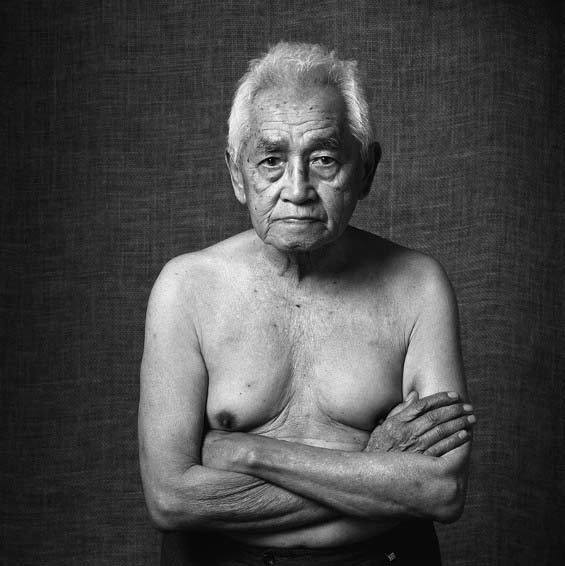
Born 15 May, 1916, in Malang, Java. Employed before the war by the HVA trading company in Amsterdam, the largest of its kind in the Indies. As a POW, he was sent to work on the Burma Railway in May 1942. After the war, he was among other things once again employed by the HVA, then chief of the motorized transportation service in Surabaya and Banjuwangi, director of a shipyard in New Guinea, and, in the Netherlands, a customs officer.
Following our surrender, they shipped me to Burma in the very first group. We first worked on the airfield at Tavoy. And after that we had to walk to the north, to Thanbyuzayat. Thats where the Burma Railway began.
We were working in Wagale. Thats where I bolted. Whatever gave me the idea to run off? Well, already back in Tavoy Id been thinking: Hey, Tavoy, thats close to Colombo, Ceylon close to, that is, several thousand kilometres by sea and maybe I can steal a sail boat. But the west monsoon was blowing, so that was bad. So I ended up working on the railroad. Once there, you were nothing but an animal. They kicked you, gave you no food, nothing. You were nothing, you had nothing. And I just couldnt stand it there, with those Japanese.
Thats when I got my chance. The Japs had cows, for slaughter. They were looking for a cowboy. Now it so happened that my grandfather had been a butcher, so ever since I was small Ive seen how they do that. I was thinking: hey, thats something for me, then Ill be done with that railway and I can look at our surroundings.
One evening in September 1942, our commander arrived. Hed been enjoying a few days of beatings with the Japs to make him sign a document promising that wed do nothing against the Japs and wouldnt run away. And he had to see to it that wed also sign. However, if you signed and still ran away, then you were a goner for sure.
Thats when I decided that I would skedaddle that same evening, for on the next day we had to sign. Im saying I, but there were the four of us. I first sounded out Piet van Heemert, a real Indies guy, a fine man and a military police officer: Van Heemert, you know how to sail a boat. In addition, Hoffman, who could find his way in the jungle. Then myself, I knew a little about the area. And Schuurman.
Well, you know, there was nothing to escaping from prison camp, because the Japs didnt have any guards. Where could you go? Nothing but jungle. Malaria. Two months earlier, seven Australians had escaped. They were brought back that afternoon by the Burmese, who got 50 rupees a head. The Aussies first were beaten horribly. Then they were bayoneted. Right in front of us.
Still, we wanted to risk it. All we had in the way of food was rice. But we also had an axe, and a machete. We walked quite a ways through the riverbed so as not to leave any tracks. And after that, God help us, we went into the bush. And the bush is nothing but one dark cavern.
Only at noon did we see a glimmer of sunshine. We had no way of determining our direction. And we were terribly afraid. By God, you really didnt know what to do. The first two weeks were absolute misery. It was the rainy season and you couldnt make a fire, because smoke is something you smell from a great distance. So we kept on walking, hoping for the best. We checked to see which way the rivers ran and such. Because water runs down to the coast, that gave some sense of direction. And after fifteen days, we were back at Wagale. We had made a complete circle!
Then we walked more in a southern direction. At a certain moment, we must have been on the outside for over a month by then, we spotted a hut. There is always rice there. But we could not afford to meet any people. Because you never knew if they would give you away. After all, they got money to turn us in.
Look, Burma, they say, is where the Burmese live. But there are over 14 tribes there, all of them dependent of one another, same as in the Dutch Indies. So this area was inhabited by the Karen. They are a mountain people, fairly stocky and sturdy. I look like a Karen, so it was my turn. I went there and the man didnt speak one word of English, all he said was Village, English. And I said to him: Eat, and We are not Japanese. We are Malays, coolies. For there were romushas there, too. He gave us some rice. Then we went with him to this village.
The people there were actually the best guys Ive ever met anywhere. We came to the hut of Karen who spoke some English. The headman said: The Japanese have promised money if we point you out. But we are not going to. But tomorrow we take you to our centre. That was called Kyaing, about 50 miles away, in the Amherst district. But when we got there, they told us: You can not stay here, because nearby are Japanese. We will take you somewhat further away, to a camp of runaway military men. There were all sorts of types and all kinds of riffraff there. In fact, it was a pack of robbers.
Then what? Van Heemert said: Well go to that village of robbers and well train them to fight for when the English get here, or the Chinese. So thats where we stayed. And we attacked Japanese police stations, five at least, and we turned out to be a pretty good unit.
How did we get through it all? You know that youre wanted, you know that there are others hunting you down, you spend your days and nights worrying about the slightest noise. My instincts and my hearing are such that I can hear it if anybody is walking through the forest kilometres away. After we attacked a police post, we would all split up and go into the jungle. Once I spent three months on a little tampat (sleeping mat) up in the mountains. Completely alone. When I had nothing to eat, well, then I didnt eat. Ive eaten young grass. And even there it was dangerous, for there were lots of wild animals such as tigers, bears, and particularly snakes. And if you had fallen ill or if youd accidentally eaten something poisonous, then youre dead. That almost did me in. I constantly had to be on the lookout to stay alive.
Hoffman left us quite early on. He was a great guy. But a bit too good. He said: If I go it alone, Ill be safer. And left just the three of us. They murdered him later on, killed in action, just like that. But somebody else joined us in his place: Knoestler. He had escaped, too, together with three officers. Those three were apprehended and shot. But not Knoestler. I dont know how he did it, but I didnt trust him a bit.
One of the robber chiefs liked me particularly. He told me: They cant touch me, for Ive got amulets here. Karen are tattooed all over their body, except for their anus. See to it that you get tattooed also. Its a sure way to stay alive. But I didnt like the idea. So he gave me a shirt covered with all kinds of signs and symbols.
That silly shirt saved my life. On the last day that I was a free man, in September or October of 1944, the Japs and their men were after us with dogs and machetes, and the circle kept getting smaller and smaller. Then I said to Van Heemert: Piet, you and I are going to make it. But not if those two stay with us! One of them, Schuurman, was night blind, because of malnutrition. And Knoestler was altogether too stupid to well, lets just say that if you took him a 100 yards in a different direction, hed be unable to find his way home. He kept running this way and that like a stuck tjeleng (a wild pig), not knowing where to go. They were useless. We could have headed south. Piet, shall I shoot them? I had the one rifle with four bullets in it. Then Van Heemert said: No, in for a penny, in for a pound. Okay. So I threw away the rifle.
Schuurman was a good guy. He was a special person to me, also after the war. I never told him Id been on the verge of shooting him. I did take a closer look at his daughter later on, though. It would have been terrible having to tell her I knocked off her dad. I still meet his wife regularly. But I managed to forgive myself later on. Had I done it, it would have been in a state of momentary madness, seeing that circle get smaller all the time, and then seeing those two helpless people. It would have been an easy death for them.
But speaking of that silly shirt, there I noticed those guys getting closer and closer. They had dogs, sabres, all kinds of machetes, and so on. And all of a sudden theres this Burmese guy running into me. He had a rifle. He was very nervous, for I had the reputation of being a holy man of sorts. Id been out there all this time, and they simply couldnt believe it. They simply couldnt believe that youd been on the run for over two years. Anyway, the guy fired: A dud! Again. Misfired again! The guy gave out a loud yell, threw the thing away, and ran off as if hed seen a ghost, no less. Then I went to look at the rifle. It turned out to be mine, with those four bullets, two of which proved to be duds!
Well, then the Japs arrived, and thats when I got the beating of my life. And then they handed us over to their commander of the Kempetei (the Japanese Gestapo). Thats where the truth came out. Maybe you are spies sent in from British India. But certainly you are not the guys who escaped from Wagale. Its simply impossible that youve been on the outside for over two and a half years. We said: We never lifted a finger against you, no, we would not have dared! But they still did not believe us. Then they interrogated the Karen chief, Maung Mela his name was, and he said: These people are harmless, theyve been working for us.
They really tortured him, butchered him so to speak. But Maung Mela never changed his story. The next day, they poured kerosene over him and set him on fire. And even the Japs paid him their last respect. As they were burning him, they saluted him. How on earth is that possible? And we were thinking, well, we would have screamed well before being treated like this. But not Maung Mela. He didnt make a sound. He left a wife and a son. Those Karen are a great people. I told my daughter, whose name is Karen for that very reason: If ever those people get their freedom, well go there. Ive praised the Karen to the sky and it has rubbed off for shes an anthropologist.
Some vignettes of our stay with the Kempetai: Theyd put you into a crate. It was impossible to either stand or sit in it. It was one yard high, one yard wide. Once a day, they let you out for a pee. Well, thats when I caught malaria. I sat there shaking like a leaf. A low-level Kempetai officer, who could hit like the best, asked me: Are you sick? He returned with two blankets and some quinine. Then you ask yourself, is he crazy? Heres a guy who at one point beats the hell out of you, who cheerfully hits you over your bare skull, and then comes to your aid like this!
I was being interrogated by a different guy. Sits there, laughing. Gives me a smoke. And just as Im ready to light up, he hits me so hard that I flip around. So there you were. Sometimes hed laugh, and sometimes hed yell. Your headache was so severe you couldnt open your eyes. I may seem even-keeled, but I was seething with fear. Take this, for example: When we were interrogated by the Kempetai, they made me dig a hole there 30 times. They told me: Now youre going to die. But then it doesnt happen. And they stood there and laughed.
I tried to commit suicide. When they caught me. We were lying on the floor, and I said: Theyre going to kill us tomorrow anyway, you know what, we are going to commit suicide. I still had a bit of a razor blade hidden in my sarong. Well, Piet, what do you think? You are the oldest. Do you want them to do you in, or do you want to kill yourself?
Do it myself.
Schuurman, what do you think?
Yes, me too.
Only Knoestler didnt want to. So I said to him: Thats your business. Theyll probably set fire to you.
To Van Heemert I said: You know, its easy enough, Piet. All you do is cut and its over. You cut yourself and stay calm. Youll just fall asleep.
Thats pure fantasy. Secretly, I was scared to death. Then Piet said: Do you want to help me do it? He lacked the courage, see. Now I can easily enough shoot a man, but that I didnt want to do. At some stage he said: No. Maybe well get saved. Were not going to do it. But I dont know even half how hard I had been pleading to be released from it all, pleading just to die.
After about two months, they took us to headquarters in Bangkok. Thats where they sentenced us to death. We were not surprised. But then: Our imperial leader has decided differently. Instead of the death sentence you will all get forced labour for the next twenty years. Because, I think, the end of the war was already in sight.
Still, death was preferable to forced labour. Because Ive done time in the Outram Road Jail in Singapore. Oh my God, oh my God, that was worse than hell itself. You were beaten all the time. My job was cleaning shit barrels or making reels for cables. There were almost 80 of us. Every so often, new idiots would be admitted, guys who had struck a Japanese soldier, for example. On average, about 10 men a day died there. Starvation and such. They just left you to croak there. Van Heemert died of hunger there.
Id been in Outram Road for about three or four months, and then, all of a sudden, it was over, bang, just like that. The bomb had been dropped, and on 15 August I got out. I weighed 27 kilos at the time.
Ill tell you, the Japs misbehaved a lot, tried everything to break me. But when it was over, I said: Whats done is done. You guys didnt do it for fun, either. We got a bunch of those Japanese in Surabaya, and there they were kicked by the folks there. I said: Why are you doing that? Why didnt you do that sooner? That I couldnt stand.
They wanted to give me the MWO*. One colonel told me: Thou art a brave man, indeed! And: You have fought for the queen and the flag. I said: Me, fight for the queen? Ive never seen her here. And for the flag? Do you really want to know what flag I looked at? That flag with that red ball in it! Because thats how I knew the Japanese were about. I was fighting for my life! That is all.
Then he said: For bravery and conduct then, and if not for loyalty, then surely for endurance. They gave me the bronze cross for the time I fought in Burma: For courage, conduct, and endurance. Courage I had for sure, there was conduct, too - for I survived but loyal I was not! So I got a medal one rank below the other one, ha! The hell I care. As far as Im concerned, you can toss it away.
After the war, all I did was look for danger, I was that anxious for something to happen. Why? I dont know. Walking about at night, there would be those idle loafers. I would head for them on purpose. I had this fine dagger. I had a revolver, too. My point of view is: It doesnt matter if you die. But I need a servant. So Ive got to take somebody with me! I dont get it, either, when people fail to act whenever anyone gets beaten or raped out in the street. I am the first on the scene.
My daughters can do anything they please. Theyre free where Im concerned. They go out at night, they have my permission, but Ill tell them how to defend themselves. One of them has a brown belt in judo.
Unfortunately, a month or so ago, I threw my revolver into the river Rhine. My wife, you see, she didnt approve. Neither did my children. The police dont allow it, and my family kept on whining: Youll get into trouble with the law if you get caught. But Ive still got my klewang, my machete, here, underneath my bed. Often I jump out of bed, my heart thumping inside my head, thinking there is somebody there. I go straight for my weapon.
I cant sleep without my klewang. Simply because I think Ill be attacked. I wake up whenever a door opens. I stay very alert. My hearing, everything I think and do: my entire life is still focused on that one thing. Its still not over where Im concerned, it still haunts me. And I keep telling everyone: For Gods sake, please dont just walk into my room at night, because Im fast, Im very fast, and thats when theres the risk of something happening. Its just not something you can unlearn, the fear that theyll get there before you can. Youve got to be fast, otherwise youre dead.
* Militaire Willemsorde, the Netherlands highest medal, for bravery, conduct and loyalty, and tantamount to a knighthood.
Dolf Winkler
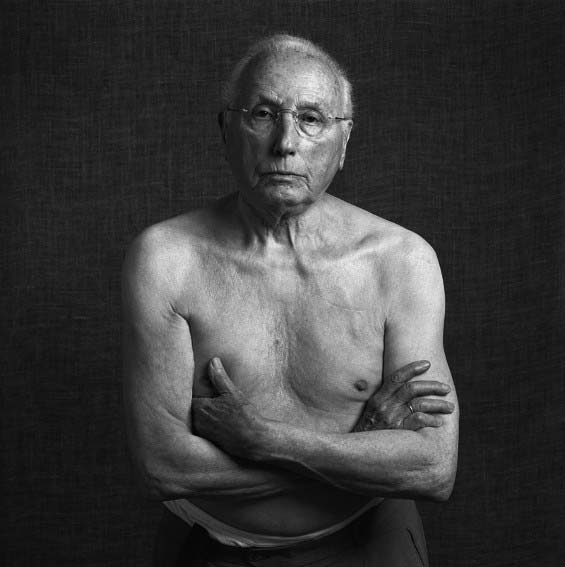
Born 8 April, 1917, in Amsterdam. In 1940, he went to the Dutch East Indies as a soldier to escape unemployment during the Great Depression. As a POW, he worked first on the Burma Railway, then in a coalmine in Japan. After the war, he was, among other things, an interior decorator, designer, entrepreneur, and council member of the city of Emmeloord, the Netherlands, representing the Labour Party. He also held various management jobs.
Following our surrender, we had to bury the people whod been killed in the fortifications at Ciater. There, 72 men had been shot dead, and their bodies were still lying about. All you had to do was follow your nose; their bodies were practically decomposed. We had to dig a deep pit, but the stench was unbearable, with the bodies almost falling apart. The next day, our commanding officer got us some cologne to make the air a bit more bearable.
Then we went to Cilacap. We were left standing on our feet for over 24 hours. They wanted us to sign a form stating that wed obey the Japanese code of military conduct and that wed not attempt to escape. Our Dutch commanding officers told us not to sign. The result was that we all got a terrible beating.
In our army, it is customary to stand at ease with your hands folded behind your back. Not so in the Japanese army, where they hold their hands down along their sides. I didnt know about that. At some stage this one Japanese guy sneaked up on me from behind. Using his leather army belt, he beat me up severely, my eyes nearly popping from their sockets, as it were. Im reminded of this whenever I tighten my belt.
After a while, we went to Batavia (now Jakarta) and from there by ship to Singapore. From there, packed like sardines, we went by train to Thailand. The wagons were made of corrugated iron, hotter than hell during the day and icy cold at night. Five days and five nights we had of this. Then we arrived in Banpong, and from there we had to go to Kinsayok. That turned out to be an almost 30-mile walk. There were guys who simply couldnt hack it and they just dropped dead alongside the road, exhausted. It was cold, we didnt possess a thing, just a small bag with a few things, like some snapshots you wanted to salvage. We slept alongside the road. Fortunately, this was during the dry monsoon.
When we finally arrived, we still had to construct our own barracks, using bamboo. We were not familiar with this, and the whole thing was so flimsily built that the mosquitoes zipped right through it. I, too, got a good dose of malaria, with a burning fever and cold shivers. My buddies carried me to the side and put me close to the forest, in the shade and away from the job. Ill never forget how that rotten Jap, whom we called Horse Face, spotted me lying there and beat me up. When he was through, he threw me into the kali, the river, where I could cool off.
I ended up in the sickbay with doctor Van der Meulen, a man with a great deal of experience in tropical medicine. He asked me to assist him, showed me the ropes a bit, and so, for a few weeks, I walked around as a male nurse. One of the things I had to do was to scrape and clean out tropical sores. That was something horrendous. The patient would be held down by force, while I had to scrape the wound clean with a spoon. Van der Meulen also experimented using maggots, instead. That way, a lot of the guys got to keep their legs. The English doctors used to amputate. But this guy put maggots onto the sores, which they ate clean. Unfortunately, the doctor later died of cholera.
After the railway was done in October 1943, we all had a medical check-up. And I belonged to the so-called fit men. These were taken to Singapore first, and then shipped out to Japan in old, rotten boats. Five ships in all. Three of them were torpedoed. Several thousand boys lost their lives that way.
In Japan, in the town of Mizumaki, we were put to work in their coalmines. That was a real nightmare, far scarier than the whole Burma Railroad thing had been. There, at least, we had worked out in the open. Down in the mine, however, everything was dark, and then there was the ever-present fear of collapse. We had to work in shafts with supports at every five or six yards only, whereas Dutch coalmines have supports at every yard, at least. It was all slate, very brittle and extremely dangerous. I handled the drill, so I was up front.
There came a moment when everything behind me went whap, and the three of us found ourselves cut off. When our batteries were dead, we couldnt see a hand in front of our eyes anymore. I started beating myself on the head and pressing my fingernails into my own body. Nobody said a thing till someone started to scream, another began to pray, and I started to swear. We were beside ourselves with fear. We were very lucky that oxygen seeped through the cracks.
For years, Ive walked around with the memory of that collapse, which trapped us for several days. Ill never quite get over it. Its not that Im afraid of going into a basement or something like that, Im over that now, but there are things you see on TV that remind you of it. I personally dont have psychological problems anymore. On the other hand, I still say that that war will continue for as long as we live.
During the first couple of years following the war, I walked around with a great deal of anger and resentment. Since 1970, Ive visited Indonesia three or four times, together with my wife, whos not from the Indies. And Ive been to Thailand with her, where Ive relived everything. Thats were I first was confronted with the graves of friends, alongside the railroad, and that was a bit of a downer. I felt guilty. They were dead, and I wasnt. A funny feeling.
I still had my own business then, Winklers Furniture, employing 35 people. To forget about the war, a lot of people sought their refuge in pushing themselves, in working hard, myself included. There were times I had to drive down to Keierbach in southern Germany. Id leave at three in the morning in a fast Mercedes, and Id be back that same night. That meant I had driven some 700 miles. Crazy. You still felt yourself pursued by the Japanese, still hounded, as it were. So the time came when I just could not go on anymore. Id been working too hard, and I was spent.
In 1976, I was for half a year in the care of Dr. Bastiaans, the psychiatrist, who told me: Listen, there are so many things you can do, now go and do something else. Hes the one who put me on the right track. Thats when I put an ad in the paper, sold my business and started visiting people. I made recordings on tape of all our conversations. I collected all sorts of materials, which I donated to the Museon, the museum of education in The Hague.
In 1980, they asked me to put together an exhibition. I entered politics and became the provincial president of the ANBO, an interest group for the elderly. I became a member of the city council representing the Labour Party and I was on the board of the SWO, a foundation assisting the elderly. I became advisor to a housing corporation. In short, Ive done all sorts of things, but all of them worthwhile, enjoyable things.
During the war in the Mizumaki coalmine, I met Tamura. He was a Japanese man who took pity on us. He, too, was forced to work in the coalmines. He was a supervisor there, although his real profession was something quite different. He was a very humane person, who often gave us a rest break. He never beat us. Of the little food he had he shared with us some small fish. He also looked after me during a spell of malaria. That man has never been out of my thoughts. He set me to thinking that there must have been more Japanese who were indeed good people. So one day I told my wife: You know what? Id like to go to Japan and visit the coalmine where I worked. And I want to try and meet that man Tamura again.
Off to Japan we went, in 1985 that was. The train took us as far as Fukuoka, some 40 miles from the city of Mizumaki. The little station was exactly as I remembered it, but I could no longer find the road leading to our camp for everything was paved over and such. So I said: Lets go to the police station and ask there. Well, the policeman in charge thought the whole thing very odd, for the town is hardly a tourist spot. However, I do speak a bit of broken Japanese and I managed to make myself understood.
The man called an official at city hall, I got on the phone, they ordered a cab, and thats how I ended up at the coalmines office. They received us like royalty, they served tea and what have you, and then we visited the mines and the camp. The next day our hotel was overrun by television crews and journalists, who all interviewed me. At the site of the camp, they made a documentary about me. Thats where I saw memorials dedicated to Japanese men who had died in the coalmines, and then I asked them: Isnt there any memorial for us? Thats when a journalist took me over to a small, mossy cross.
There had been a time when two Australian prisoners had escaped from camp. They had been caught and shot to death by firing squad. After the war, several Australian judges came over to try the war criminals. The Japanese then quickly put up a niche with a small cross on top dedicated to POWs who had died there. I think they did it to elude prosecution.
I told them: Is this all there is? I find this an outrage. Im going to tell people about this. Anyway, I got to talk to the mayor of Mizumaki, I wrote to the Dutch ambassador to Japan and the Ministry of Foreign Affairs to get this monument restored. The Foreign Ministry subsequently told us that the monument had been cleaned up. I told my wife: You know what? Im off to Japan again. I want to turn this into something. I had to pay for the whole thing myself, you know.
Sure, it had been cleaned, but oh boy, the whole thing was broken down, and thats when I started making some demands. I proposed listing on the monument the names of all 53 boys who had died, all men from that coalmining camp, camp number 6. Thats what happened. And thats when I said: Thats not enough, I want to see it made into an even bigger monument, one with wings added to it, bearing the name of every Dutchman who died in Japan.
Yes, Mr. Winkler, but those people didnt die here, not in our town. Wed like to help you, but not at our expense.
Well, sure, I could see their point, and so I got things rolling, back in the Netherlands. Thats when I received some money from the Ministry of Foreign Affairs. Ive spent days with the people from the war graves commission, all those names had to be traced, but in short, we saw the whole project through. And thats how the monument came to be fine and finished in the end.
In one of the TV broadcasts, I had said that I wished to meet Tamura, that good Japanese man. The next day his daughter-in-law called me up to say he was still alive. They organized everything for us; he lived some 375 miles away somewhere. The whole village came to meet us. It did me a world of good how nicely those people treated me, people who had their own share of guilt. Sure, the Japanese have that too, you know, guilt about their parents misdeeds.
Anyway, that inspired me to continue, despite the threats I got at first. There was quite a lot of consternation among a lot of people who said: You are a Jap lover! They made death threats to me over the phone, saying: I know where to find you. I find the whole thing pitiful. Walking around with feelings of hatred all your life, that just isnt healthy, you know. A culture of victimization often is still prevalent within Indies communities. Those are people unable to break out of whats in fact a vicious circle.
Of course, you cant forget the war, but there comes a time when you have to put a period behind it all. My feelings of hatred have altogether disappeared because of my trips to Japan, meeting its youth, the present generation of Japanese, whom you simply cant hold accountable for the misdeeds of the previous generation. When I was a member of the Emmeloord city council, I fought for and got money to establish a youth exchange program. Every year now, theres an exchange between the children here and children in Japan, and theyve established a club called The Friends of Japan. Thats a good thing right there.
Ive established a foundation called EKNJ for former POWs in Japan and their descendants. Weve published three books in Japan. We provide information to schools. Together with the Museon here, I organized an exhibit in Osaka, Japan. Thousands of schoolchildren have been to see it. We tell what happened and about the bad things that were done. But I also tell them about the things we, the Dutch, did in Indonesia before the war. About the shenanigans of Mr. Van Heutz and Mr. Daendels and Mr. Westerling*, and the thousands of Indonesians killed. We occupied the Indies for 400 years. Weve done good things but plenty of bad things as well.
Weve managed to see to it that schools in Japan take weekly turns cleaning the monument. At the time, we were thinking of giving them a high-pressure cleaner. No, one of their teachers told us, theyve got to use their hands, because they have to feel what has happened. During a memorial service those children sing the Dutch national anthem. By now, they know the lyrics better than we do.
Those people have become my friends. The mayor of Mizumaki has been to visit me. I was the first former POW to give a speech in Hiroshima, a speech that was broadcast by radio. And after meeting Tamura again, I started thinking: Id like to involve others in the things Ive been through. That is why Ive been to visit Japan with other former POWs. Increasingly, more people joined me, close to 300 by now. And those same people returned cured, as it were, healed, just like me. Im so glad that they, too, feel liberated.
* They were, respectively, a notorious Dutch general during colonial wars in Aceh; a governor-general who built a road across Java at the expense of many Indonesian lives; and a soldier turned mercenary during the Indonesian wars of independence.

