

In this week’s issue
- Race to build Brazil’s mammoth AI data centres is driving construction workers to the point of exhaustion and severe injury.
- Law meant to protect emergency workers is criminalising domestic abuse victims who call police for help, data reveals.
- Nigel Farage’s brand has one key weakness, research into political messaging suggests.
- Resisting the far right requires addressing real social grievances, German activists warn.
- UK’s fractured left must form an alliance to counter the billionaire-funded threat of Farage’s Reform.
- Feminists preparing to protest at Berlin’s ‘March for Life’ warn Germany’s anti-abortion movement is becoming more influential.
Could Reform’s £72m gift, delivered in matching £36m tranches by two crypto-billionaires, actually hurt Nigel Farage by finally convincing his supporters that their working-class hero is actually just a crypto-bro puppet?
You would have to be a hopeless optimist to think so, but as polling expert Morgan Jones writes for us this week, “Reform’s image among target voters, we have found, is damaged by messages foregrounding any appearance of self-enrichment or financial malfeasance”.
To be clear, the £72m is a rubicon crossed; it is hard to see British politics recovering from this US-style cash injection unless the government gets serious about reforming political funding. The money, as longtime contributor Paul Rogers notes, is part of a plan to shake up the UK’s right-wing ecosystem, which includes the “new Reform-linked think tank, the Centre for a Better Britain, which appeared on the scene last year and aims to raise £25m to support Reform’s work over the next three years”.
Switching gears, our cover story this week explores a previously unreported aspect of the AI-led data centre boom: Who is actually building these massive computing warehouses that consume as much electricity as most cities, and under what conditions? We’ve translated and edited an investigation by Agencia Pública, a newsroom in Brazil, that examines how the AI boom is pushing workers to the brink. As I read the story, I was reminded of the reportage of the workers building the football stadia for the 2022 World Cup in Qatar under punishing conditions.
The next election is only three years away, and we are determined to prevent the rise of the far right. To do that, we want to recruit 500 new monthly donors by the end of 2026. We're a third of the way there – but still have a long way to go
Will you be part of the movement to fight the far right, with a monthly donation today?
Also in this edition: Nandini Naira Archer speaks to the activists fighting the far-right in Germany, Sian Norris on how hundreds of abuse victims have been arrested when calling for help, and much more.
A huge thank you to all our readers who chipped in to help us attend and report from the Labour conference later this month. Reform may have its crypto billionaires, but we rely on readers like you to support our reporting each month. If you aren’t a regular donor, consider becoming one today – we appreciate any amount you can spare.
Have a great weekend
Aman
Ps: We’re trying something new with the poll this week. Please don’t hate it.
 Naira Hofmeister
 Sian Norris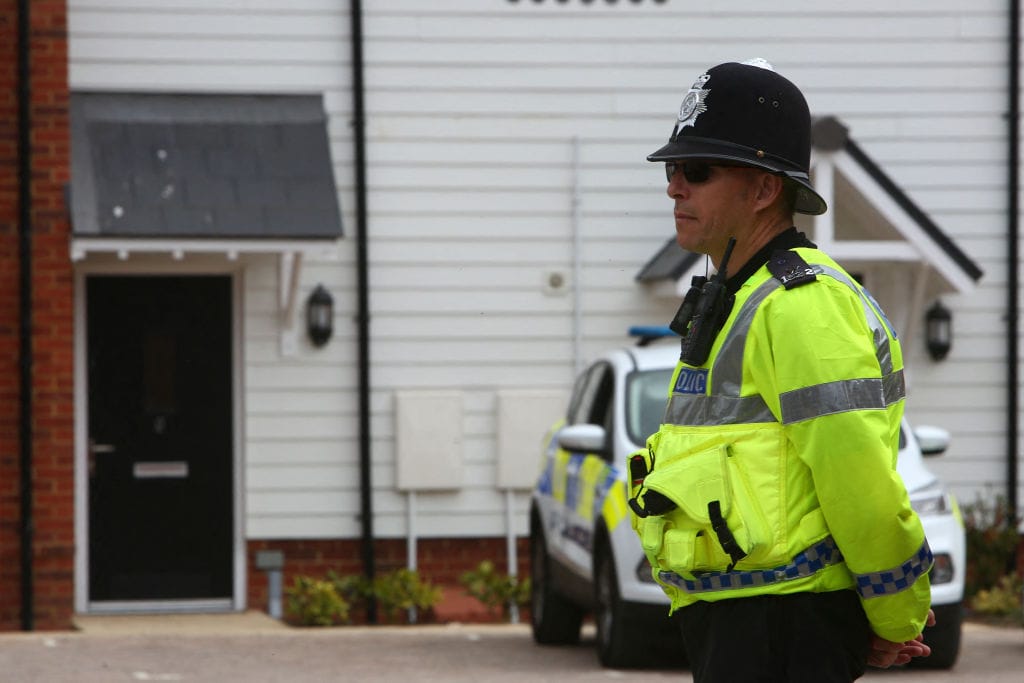
 Morgan Jones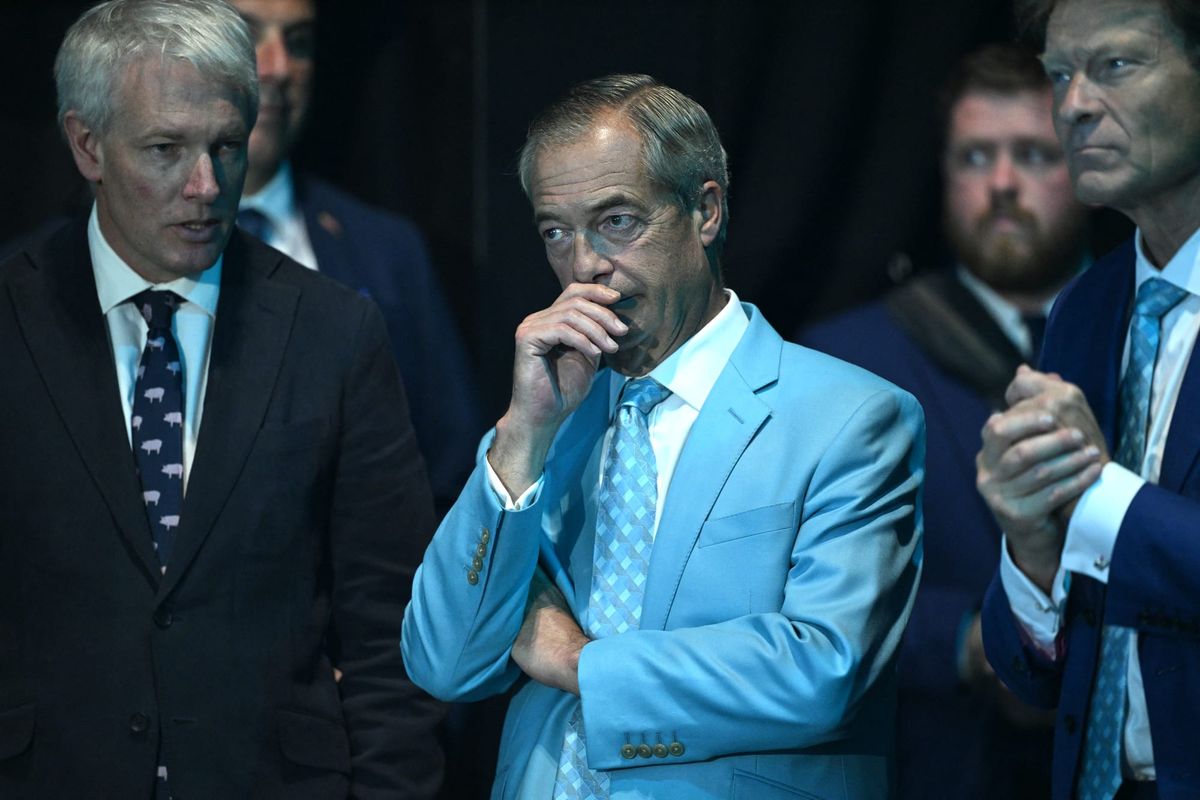
 Nandini Naira Archer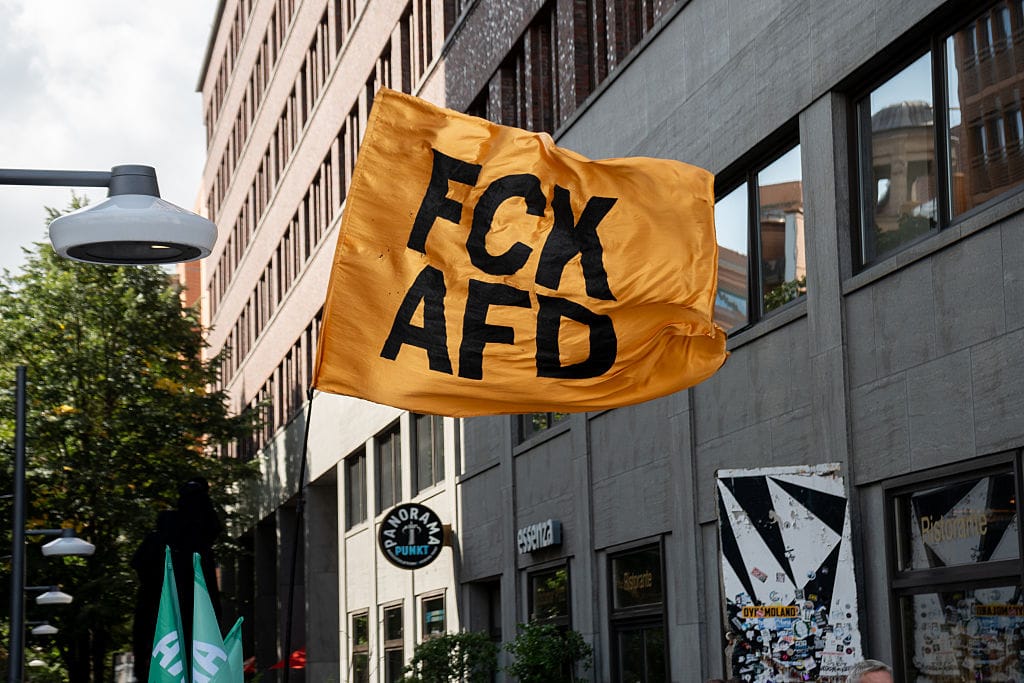
 Paul Rogers
 Nandini Naira Archer
Weekly Poll
How does your opinion compare to the rest of our readership? Take our new look weekly poll and find out!
Will Reform’s £72m ‘gift’ dent the party’s image?
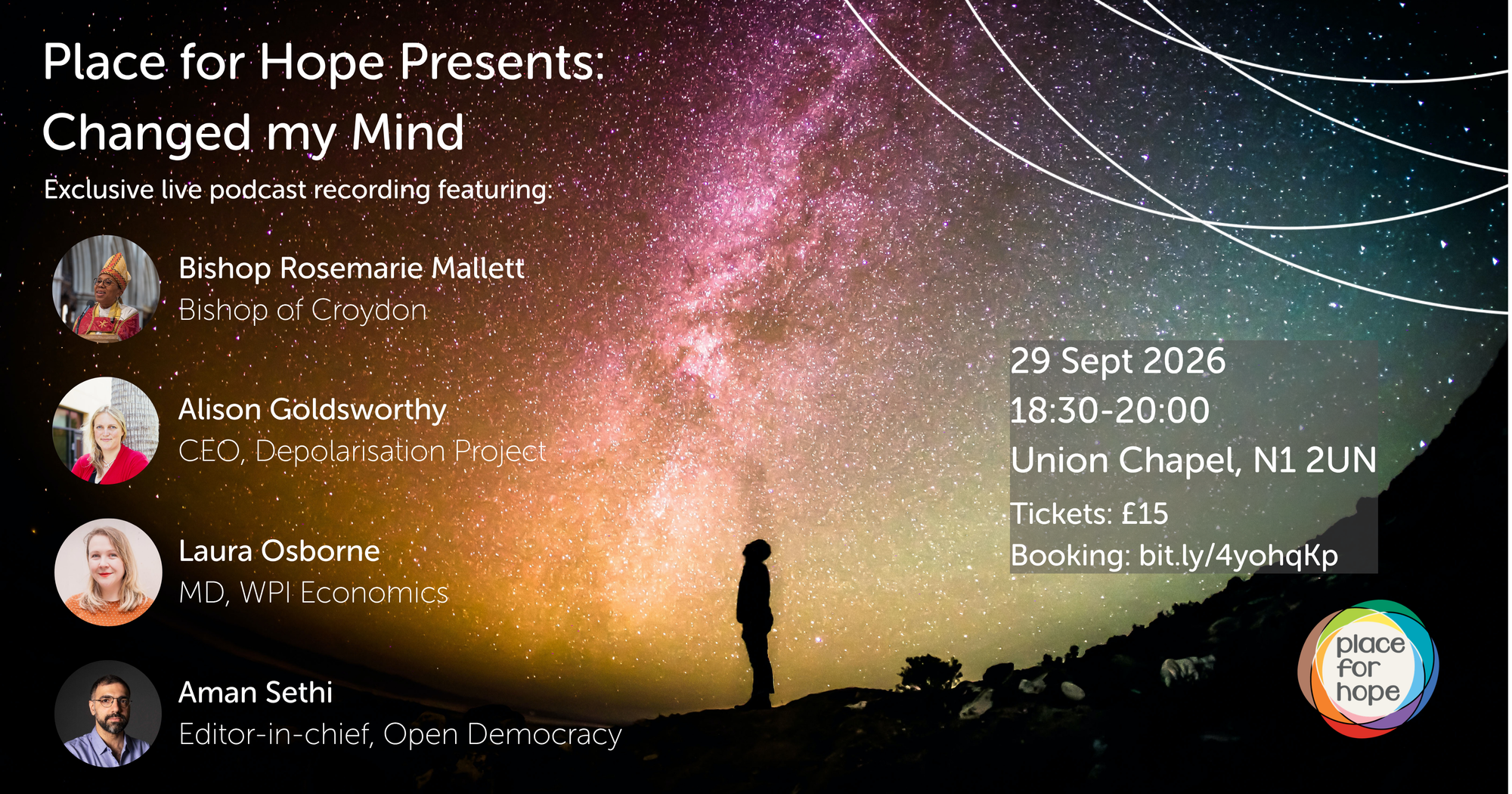
Join us for an exclusive live recording of Changed My Mind, the podcast that explores the thinking behind serious shifts of opinion. This panel discussion will feature Rosemarie Mallet, the bishop of Croydon, Aman Sethi, the editor-in-chief of openDemocracy, Alison Goldsworthy, the CEO of The Depolarisation Project, and Laura Osborne, the managing director of WPI Economics. You can get a flavour of Changed My Mind by listening to the podcast or via this article.
Reader Comments
openDemocracy receives so many carefully considered messages about our work that it seems a shame to keep them to ourselves.
These comments are edited for clarity, accuracy and length, and are not a reflection of openDemocracy's editorial position.
Lots of great work has already been done in this space by Audrey Tang - AI is potentially very enabling of participatory democracy - to a radical extent. we can also use it to effectively depolarise discussion and help us arrive quickly in alignment and consensus. There can be some very helpful speeding up and radical widening of democratic processes, that could transform our democracies today, and pretty much overnight (for example - see what happened in Taiwan).
kerubo1 | Re: Frontier Politics: AI and the Crisis of the Democratic Form
This week in history
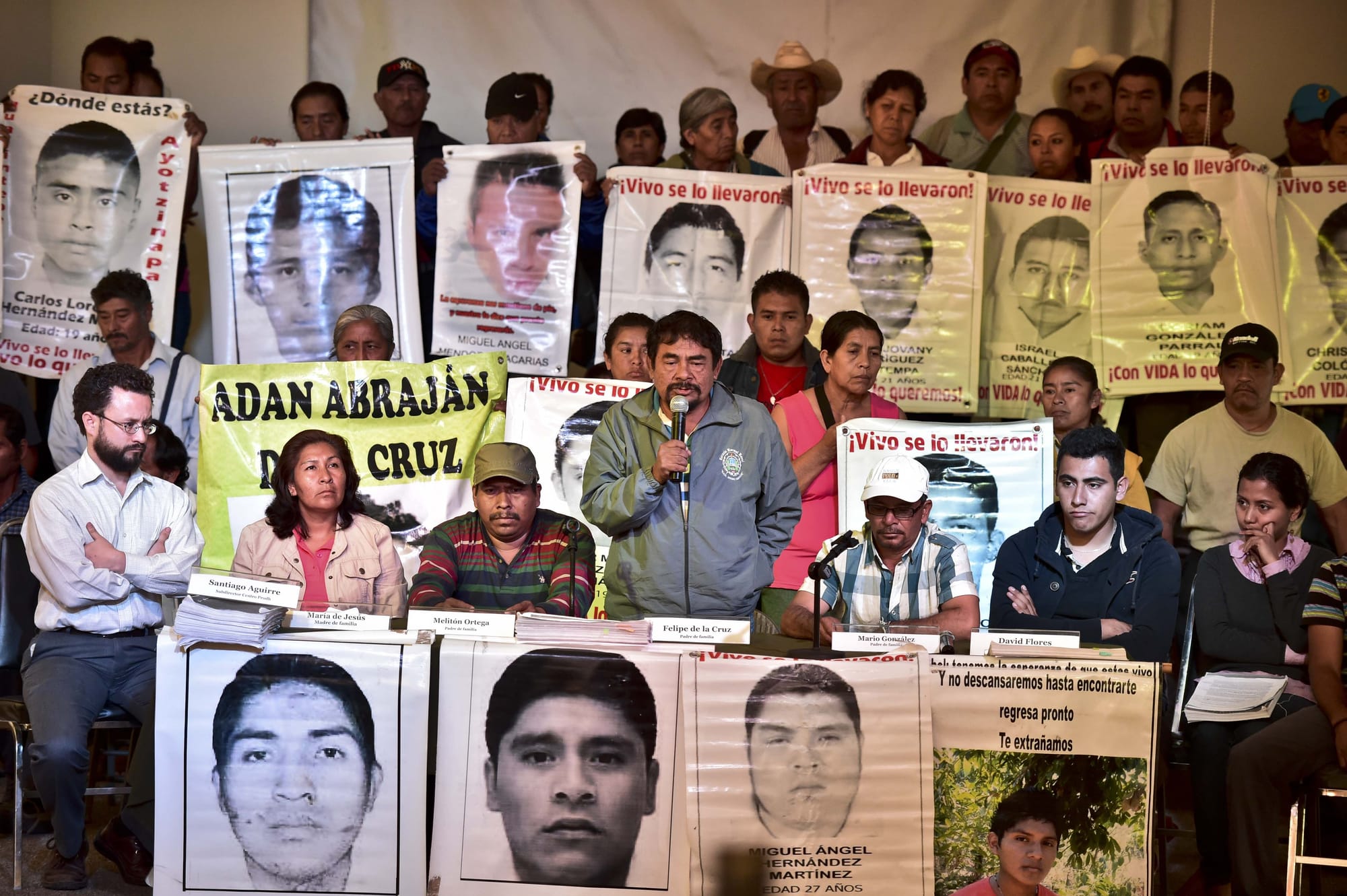
The Ayotzinapa disappearances • 26 September 2014
On the night of 26 September 2014, 43 student teachers from the Ayotzinapa rural college in Mexico were abducted by police and handed to a drug cartel. They have never been found. The case exposed the collusion between local government, police and organised crime. "Ayotzinapa was the State," became the defining slogan of the ensuing protests.
 Gema Kloppe Santamaría
What we're reading
A Spy Alone, Charles Beaumont
I only started reading spy novels a few years ago. I blame Mick Herron. Or maybe it’s the fault of the kind of journalism I do? But recently I can’t get enough of stories about corruption, dark money, dodgy deals – and determined if flawed heroes who will stop at nothing to expose the inner workings of power. Which is why I loved A Spy Alone. Simon is a former spy trying to make a living in the private sector when he is hired to investigate a dodgy Russian oligarch. The investigation draws him back to his student days in Oxford, and the libertarian circle around a charismatic and terrifying don. Has Simon discovered a new Russian spy ring in the heart of the British elite? Beaumont has written a fantastically gripping novel that deftly portrays how Russian influence poisoned our politics, filled with memorable characters including Simon’s effervescent colleague Sarah du Cane. Even better, there’s a follow up called A Spy At War, and, sources tell me, a third book to come! Perfect reading for an autumnal weekend.
Sian Norris, senior investigations reporter

This article is published under a Creative Commons Attribution-NonCommercial 4.0 International licence. If you have any queries about republishing please contact us. Please check individual images for licensing details.


